Blog Archives

The Time to Practice The Greatly Fierce, Secret Gekhö

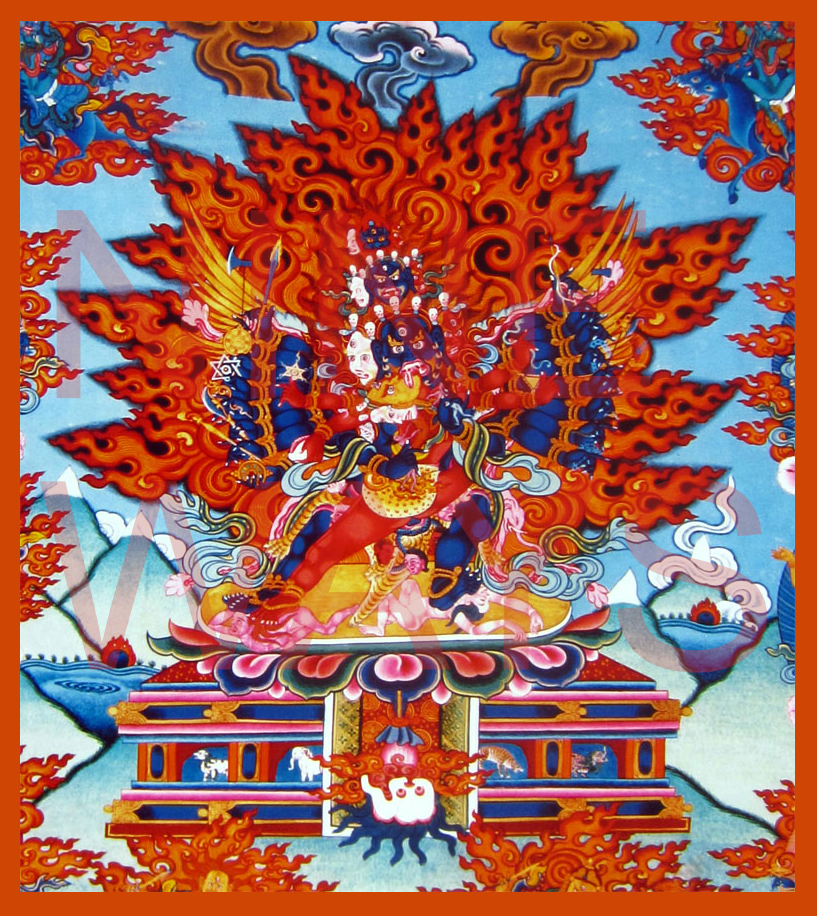
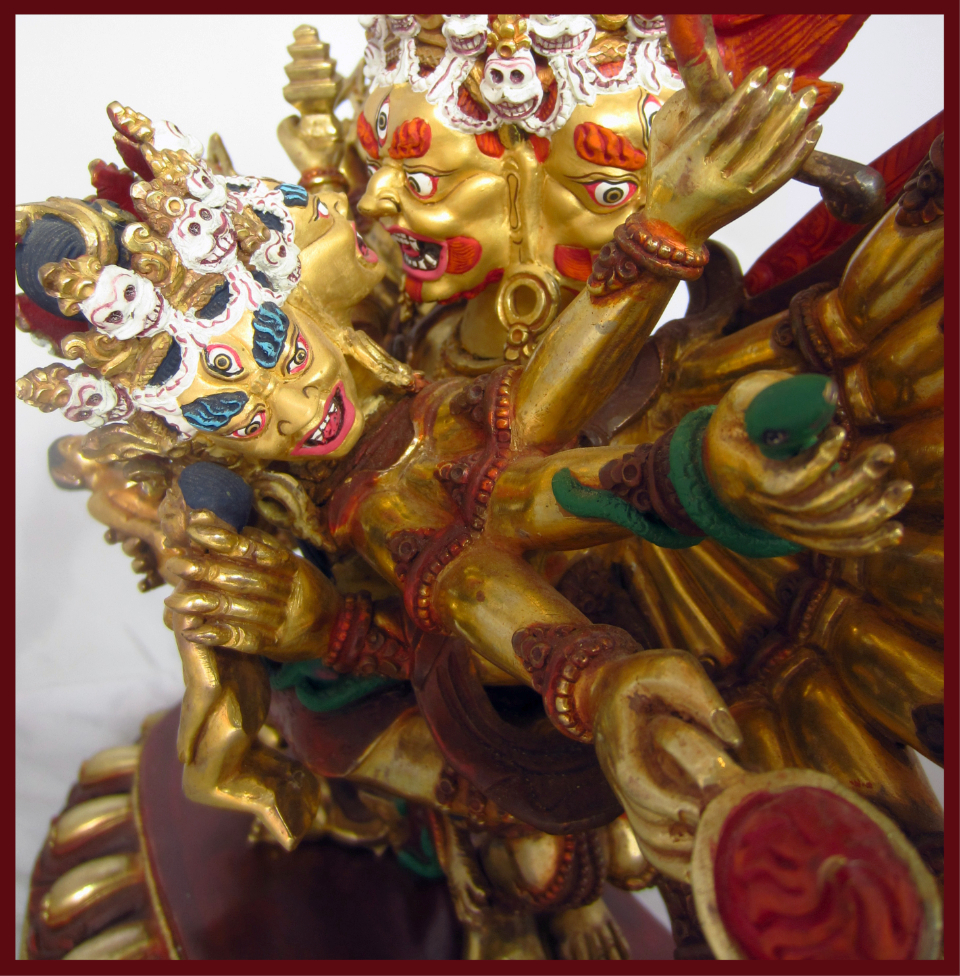
Walchen Gekho with his consort, Queen of the Drala

Each year from the 22nd-29th lunar days of the Eighth Tibetan month, Menri Monastery in Dolanji, India holds an intensive retreat for the fierce yidam Walchen Gekhö. Specifically, they perform the practice from the text compiled by the Second Buddha Nyammé Sherap Gyaltsen Rinpoche, “Gekhö Sangwa Drakchen, The Greatly Fierce, Secret Gekhö.” In 2023, these lunar dates correspond with October 6th-13th on the Western calendar.

The tantric cycle of Gekhö contains 360 deities. Within the cycle of the Father Tantras, Walchen Gekhö is the manifestation of enlightened quality among the Five Supreme Embodiments. (See previous post: https://ravencypresswood.com/2016/06/05/the-five-supreme-embodiments/

Gekhö is a deity associated with the ancient land of Zhang Zhung, and his tantric practice was widespread throughout the kingdom. In the Zhang Zhung language, “Gekhö” means “demon tamer.” It is said that he originally descended upon the sacred mountain of Gang Tisé (also known as Mount Kailash), and that he and his retinue dwell there. However, even though there is a close association with an earthly abode, he is not a worldly guardian. Rather, he is the embodiment of enlightened quality that manifests as a meditational deity who protects Yungdrung Bön practitioners.

“In order to lead those who have not gained realization, Walchen Gekhö possesses the Five Bodies and the Five Primordial Wisdoms. Through the truth of pacification, and through these forceful, wrathful means, those who are untamed will be tamed!”

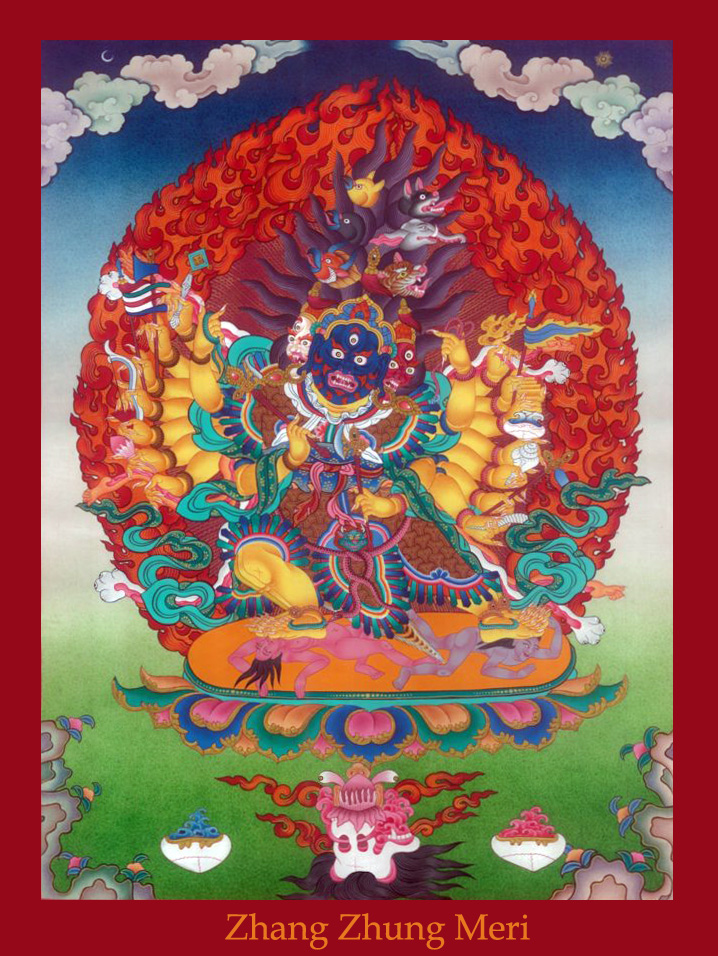
From the Essence Practice of the Fierce Champion, Zhang Zhung Meri

One manifestation of Walchen Gekhö is Zhang Zhung Meri. This yidam deity is closely associated with the dzogchen practice of the Zhang Zhung Nyen Gyü, The Aural Transmission of Zhang Zhung. The view of dzogchen is, by definition, perfected and beyond needing to apply any methods to develop or perfect it. However, because the practitioners of dzogchen have not yet fully realized this primordial perfection, the deity Zhang Zhung Meri offers protection and support while they are on the path of realization.
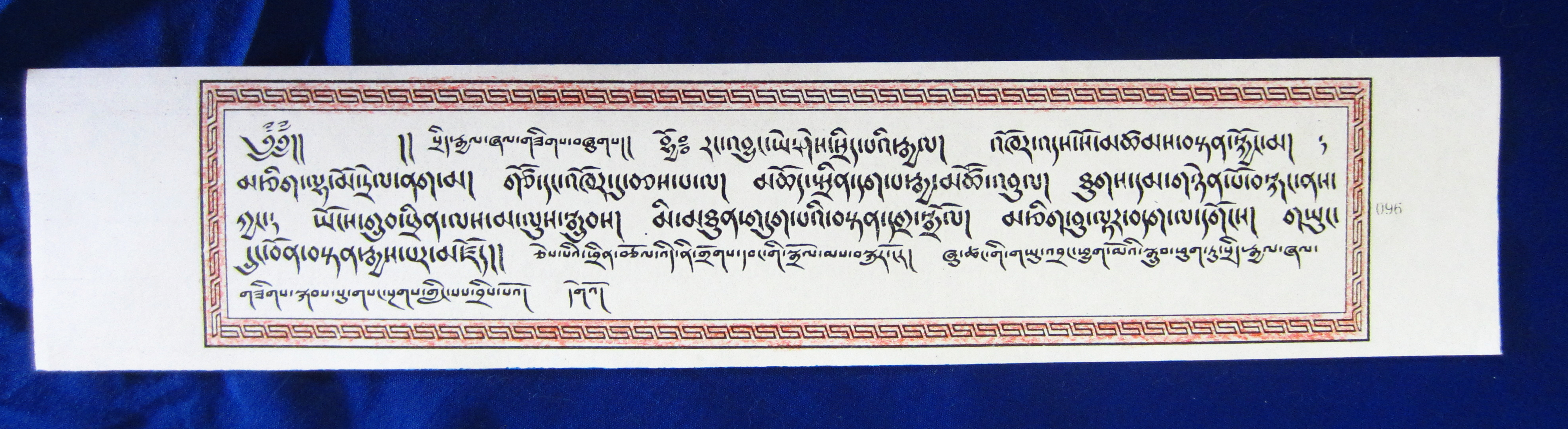
“É AH

Namo!

Buddhas of the three times, please listen and pay heed to me!

Having ignorance and a body of flesh, because of the influence of the material body and the afflictive emotions, I am not connected with the five wisdom bodies but are connected with deluded thoughts and afflictive emotions. I offer this open admission of wrongdoing to the buddhas of the three times. Please bestow the vivid accomplishment of the Five Enlightened Bodies to me!

Without the activities of compassionate, skillful means, and because of the afflictive emotion of pride that grasps at an identity, I have committed wrongdoing by elevating myself and lowering others, and I have acted from wrong views. I request tolerance from Ati Muwér! Please bestow the accomplishment of being equal to the changeless state!

Not equal with the state of powerful compassion, and overcome with the contamination of the cumulative actions of ignorance and hatred such as causing killing and condemnation, I openly admit my wrongdoing to the state of Walchen Gékhö. Please bestow the accomplishment of uninterrupted compassion! 

Because of anger and hatred that are produced, and not having a mind of loving kindness, I have been involved in killing and cutting the life force. I openly admit my wrongdoing to the gathering of Gékhö deities. Please bestow the accomplishment of being endowed with compassion and a mind of loving kindness!

Because of not being endowed with a state of clear wisdom, I have been lazy and acted from a clouded mind and delusion. I have improperly exploited and taken advantage of others. I openly admit my wrongdoing to the root deity Walchen Gékhö. Please bestow the accomplishment of a state of all-clear wisdom!

Because of having a hateful mind and not speaking truthfully, through pride and meaningless words, I have accumulated anguish [for others]. Because of the activity of deluded speech, I could become mute [in the future]. I openly admit my wrongdoing to the root deity Walchen Gékhö. Please bestow the accomplishment of a pleasant voice of truthful words!

Not having a mind of supreme generosity and devotion, I have been overcome by attachment, desire, and aggression. Because of the karma of improper, aggressive desire, I could become a cannibal-like spirit [in the future]. I openly admit my wrongdoing to the root deity Walchen Gékhö. Please bestow the accomplishment of a great rainfall of generosity!

Without a suitable intellect and not being broadminded, and because of the influence of jealousy, I have exalted myself and lowered others. Because of that, I could always be born as a human in an outlying, savage place [in the future]. I openly admit my wrongdoing to the root deity Walchen Gékhö. Please bestow the accomplishment of an easygoing, greatly broad mind! 

Not endowed with the compassionate state of the four elements, and with an imperfect nature in respect to the four times, I grasp the illusory body. I openly admit my wrongdoing to the state of the four mothers who are doorkeepers of the four times. Please bestow the accomplishment of overcoming phenomenal appearances!

From compassion, the four emanated sons display a spectacular form and perform wrathful activity. Enemies and obstructers are their servants who are entrusted to act. I openly admit my wrongdoing to the four youths who are emanations. Please bestow the accomplishment of attaining generosity and the two accomplishments! 

Not connected with the skillfulness of the primordial nature where there is no duality of true or untrue words, whatever is in contradiction to the enlightened mind of Kuji Mangké, I openly admit to the state that is equal with the natural mind. Please bestow the accomplishment of attaining the fulfillment of compassionate activities!” 

From The Irreversible Golden Razor, Scripture for the Accomplishment of the Secret, Greatly Fierce Demon Subduer, Walchen Gékhö

All translations from the Tibetan by Raven Cypress Wood ©All Rights Reserved

Raven Cypress Wood ©All Rights Reserved. No content, in part or in whole, is allowed to be used without direct permission from the author.

Don’t want to miss a post? Scroll to the bottom and click “Follow this blog.”

Want to join the mandala of Nine Ways supporters? Follow this link https://ravencypresswood.com/donate/ It’s easy through Paypal and Zelle.

Walchen Gekhö and consort statue. Photo credit: Raven Cypress Wood

Menri Monastery: Annual Retreat of the Great Loving Mother

Jamma Chenmo, the Great Loving Mother

Each year during the 23rd-29th lunar days of the 5th month, members of the Menri Monastery ordained community undergo a retreat for Jamma Chenmo, the Great Loving Mother. This year, those lunar dates coincide with July 10th-16th, 2023 on the Western calendar.

Jamma Chenmo, the Great Loving Mother, is a Buddha who manifests as a loving mother to care for each and every sentient being as though they were her only child. In her manifestation as one of the Four Transcendent Buddhas of the Yungdrung Bön religious tradition, she is called by the Zhang Zhung name Satrik Érsang.

Buddha Jamma Chenmo, also known as Sherap Jamma, can manifest in any way necessary to act for the welfare of sentient beings. She magically emanates as the Five Wisdom Families who are the manifestation of her enlightened body, the Eight Protectors who are the manifestation of her enlightened speech, the Sixteen Door Openers who are manifestations of her enlightened mind, the thirty-two emanations who are manifestations of her enlightened qualities, the fifty-two emanations that are manifestations of her enlightened activity, the 108 emanations who are the source of many Jamma scriptures, the 360 emanations who keep watch over the five elements of the phenomenal world and every kind of sentient being, the 5,500 emanations that are yungdrung sempa [Sanskrit:bodhisattvas], and the many limitless emanations who are part of her retinue and who work on her behalf.

The Five Wisdom Manifestations of Jamma Chenmo

Jamma Chenmo’s Five Wisdom Family emanations all have a peaceful appearance and collectively embody the five wisdoms and purify the five poisons. These five manifestations are Künsel Jamma, Tabgyi Jamma, Mönlam Jamma, Tukjé Jamma, and Topgyi Jamma. Künsel Jamma, the All-clear Loving Mother, is a fiery golden color.  She has one face, two arms, and two legs. In her right hand, she holds a golden vase of nectar. In her left hand, she holds a udumbara flower. At the flower’s apex is a round mirror symbolizing wisdom. She wears bracelets of crystal, and around her neck is an ornament of forty wisdom tiklés. She is the embodiment of the wisdom of emptiness.

Tapgyi Jamma, Loving Mother of Skillful Means, is white with one face, four arms, and two legs. In her two right hands, she holds a net and a lotus. In her two left hands, she holds a lightening bolt and a yungdrung. She is the embodiment of mirror-like wisdom.

Mönlam Jamma, Loving Mother of Aspiration, is also known as Namkha Dzö Dzinma, Holder of a Sky Treasury. She is green with one face, four arms, and two legs. In her right two hands, she holds a razor and a staff. In her two left hands, she holds a renunciate’s begging bowl and a vase of lustral water. She is the embodiment of the wisdom of equanimity.

Tükjé Jamma, Loving Mother of Compassion, is like the queen of all the khandro and also manifests as the great consort, Chema Ötso. She is red with one face, four arms, and two legs. In her right two hands, she holds a lasso and a sun. In her left two hands, she holds a precious jewel and a victory banner. She is the embodiment of discriminating wisdom.

Topgyi Jamma, Loving Mother of Power, is also known as Nang Si Kün Drakma, Goddess who is renowned throughout the phenomenal universe. She is blue with one face, four arms, and two legs. In her right two hands she holds a dagger and a military banner. In her left two hands, she holds a horoscope and an utpal flower. She is the embodiment of all-accomplishing wisdom.

Jamma Chenmo and her retinue

This cycle of tantric teachings of Künsel Jamma Chenmo are found in the 8th Way of Bön, The Way of the Primordial Shen.

“Although Bön is abundant and plentiful, this Great Vehicle of the Primordial Shen is different from the lower 7th Vehicle. The king of all oral transmissions, those transmissions spoken with words, is the Bön cycle of Künsal Jamma Chenmo.”  

— From Jamma’s 100,000 Empowerments

Raven Cypress Wood ©All Rights Reserved. No content, in part or in whole, is allowed to be used without direct permission from the author.

Don’t want to miss a post? Scroll to the bottom and click “Follow this blog.”

Want to join the mandala of Nine Ways supporters? Follow this link https://ravencypresswood.com/donate/

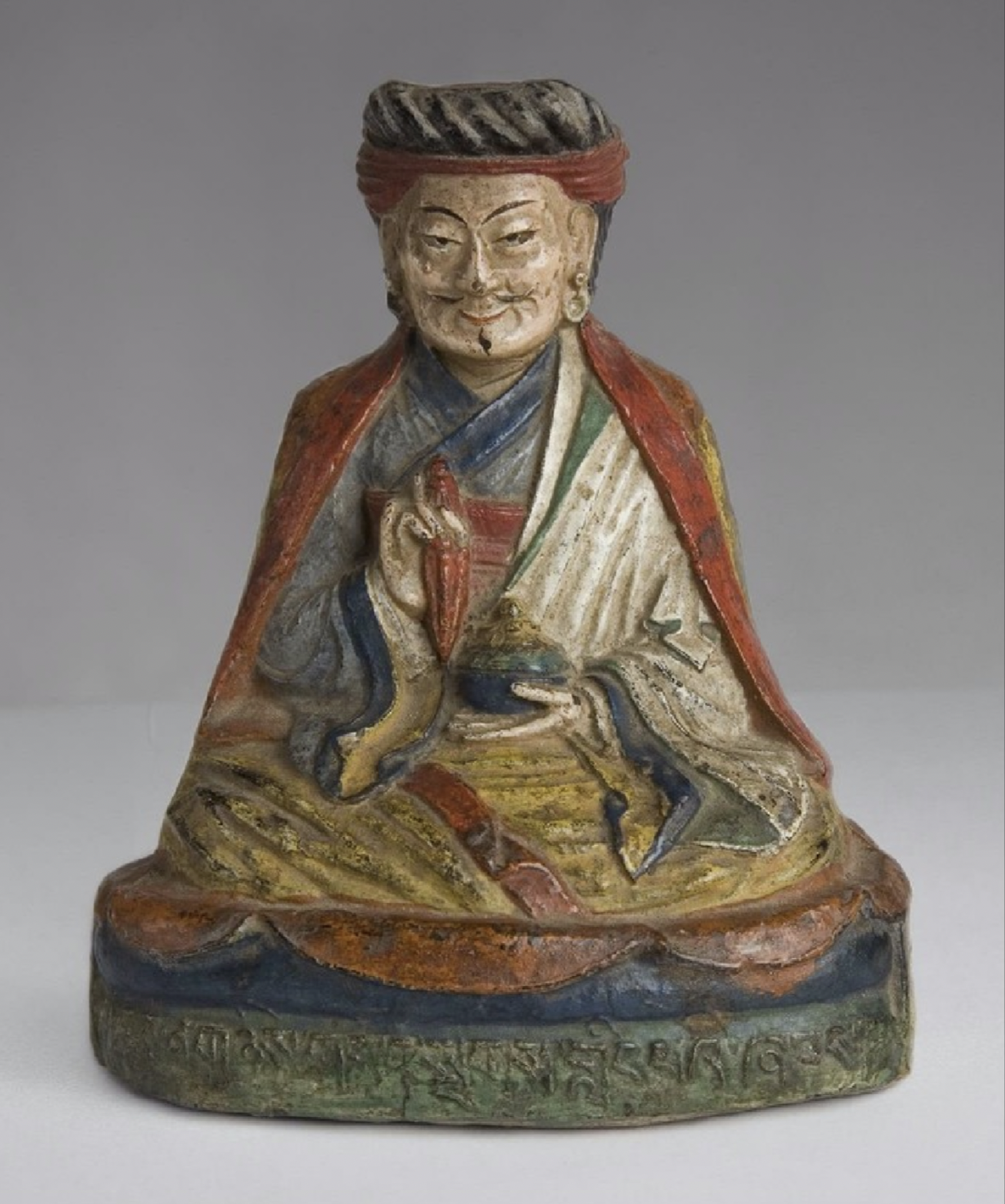
A Modern-day Tertön: Sang Ngak Lingpa

Painted sa tsa image of Sang Ngak Lingpa. Photo credit: Himalayan Art Resources. himalayanart.org

Sang Ngak Lingpa, also known as Nyak Ter Sang Ngak Lingpa or Rikdzin Sang Ngak Lingpa, was born in 1865 CE in Nyak Shö Eastern Tibet. His father was Tsering Tashi and his mother was Pema Kyi. He became a great tertön, revealer of sacred hidden treasure, and was both a disciple and lama of Shardza Tashi Gyaltsen. The Hagiography of the A Tri Lineage Lamas written by Shardza Rinpoche contains a brief overview of his life and accomplishments.

From a young age he had a pleasant and gentle demeanor, and could read and write at the age of four. He went on to have many lamas and worked together with his companion Khandro Dechen Wanggi Dronma, also known as Khandro Dechen Wangmo, who was also a renowned tertön and lama. (See previous post https://ravencypresswood.com/2016/07/31/modern-day-khandro-treasure-revealer/ ) Both he and Khandro Wangmo were nonsectarian. Thus, they are associated with both the Yungdrung Bön and the New Bön religious traditions.

Tertön Lingpa met Shardza Tashi Gyaltsen at the latter’s hermitage, Dechen Ritro, and they had a profound influence upon one another’s life and works. Due to the advice and assistance of Sang Ngak Lingpa, Shardza Rinpoche created xylographic copies of his extensive compositions. Tertön Lingpa bestowed many teachings and empowerments upon Shardza Rinpoche, and also advised him regarding the finding and revealing of terma, or sacred hidden treasures. Many of the tertön’s revelations were made as a direct result of a personal request by Shardza Rinpoche to reveal a terma in order to benefit the multitude of suffering sentient beings.

Tertön Sang Ngak Lingpa

While staying in the meditation cave of Yudrang Chukmo, he had a spontaneous vision of the enlightened religious protector Sipé Gyalmo. In response to a fervent request by Khandro Dechen Wangmo regarding his vision, he composed a short exhortation for the sacred activity of Sipé Gyalmo.

“JO! Self-arising wisdom appears as Sipé Gyal, protector of the teachings within the boundaries of cyclic existence and nirvana.

To you, the principal deity, Single Mother, a goddess riding a black mule, and to your retinue; I present a vast expanse of pure clouds of offerings.

Having repaired and fulfilled my sacred commitments with you, thoroughly establish the accomplishment, without exception, of spontaneous, enlightened activity!

Liberate the antagonistic and malevolent enemies of the teachings!

Think of me like a mother for her child! Spread the teachings of the Yungdrung Bön!”

A brief list of Tertön Sang Ngak Lingpa’s textual terma includes:

  • Exoterical
    • A Rainfall of Nectar which is like an Ocean
    • Rites for the Lu
  • Esoterical
    • The Secret Mantra of Meri for Forceful Protection
    • Accomplishment of Takla for Subduing Phenomena
    • Peaceful and Wrathful Rites for the Lord of the Dead
    • Cycle of Practices for Red Mule Sipé Gyalmo
    • Cycle of Practices for Black Mule Sipé Gyalmo
    • Quintessential Instructions for Fixation and Agitation
    • General Collection of the Tantra of Sangwa Düpa
    • A Cycle of Longevity Practices
    • The Inner Essence of the Accomplishment of Longevity
    • Accomplishing Longevity for the Lama
  • Secret
    • Practices of the Great Completion for Accomplishing the Two Stages of the Three Bodies
    • Cycle of Instructions for the Chöd Practice of Tukjé Kündrol
    • Accomplishment of Mawé Sengé
  • Extraordinary
    • Hagiography of the Immortal and Great Tsewang Rikdzin
    • Hagiography of the Widely Known Drenpa Namkha

Raven Cypress Wood ©All Rights Reserved. No content, in part or in whole, is allowed to be used without direct permission from the author.

Don’t want to miss a post? Scroll to the bottom and click “Follow this blog.”

Want to join the mandala of Nine Ways supporters? Follow this link https://ravencypresswood.com/donate/ It’s easy through Paypal and Zelle.

Annual Retreat of the Peaceful & Wrathful Walsé Ngampa

The Yidam Walsé Ngampa and the Great Mother Ngammo Yumchen Tröpe Taktenma

Each year on the 23rd-29th lunar days of the 2nd lunar month, Menri Monastery performs a week-long retreat of the yidam Walsé Ngampa. In 2023, these dates correspond to April 13th-19th on the Western calendar. The retreat includes recitation of the complete yidam text along with accumulation of the mantra, one hundred feast offerings to the yidam and his retinue, as well as a ritual of protection to turn away malevolent forces as well as the causes for illness, accidents, conflicts, and other types of harm and danger.

The yidam Walsé Ngampa is one of the Five Supreme Embodiments, or literally the Five Supreme Citadels of the Father Tantra that are manifestations of the enlightened body, speech, mind, quality, and activity of Buddha Tönpa Shenrap Miwoché. Walsé Ngampa is the embodiment of Enlightened Body. He is dark blue with nine heads and eighteen arms with which he holds various weapons for subduing obstacles. He is the manifested form of the wisdom of emptiness. His consort has the nature of Buddha Satrik Érsang and is known as Ngammo Yumchen Tröpé Taktenma with a body color that is dark green with blue hair and eyebrows. In her right hand, she holds an amulet containing the earth and sky. In her left hand, she holds a vase of nectar. And she wears a necklace of the planets and stars.

The main ritual text for this deity is entitled, Stages of Practice for Walsé which was composed by the great sage Drenpa Namkha and rediscovered as a terma by Matön Drol Dzin in 1091 from a rock in Dangra Khyung-dzong. Reciting this text and performing the associated rituals has a profound benefit of blessing and protection. Menri Monastery will be performing this sacred activity or the benefit and welfare of all beings in support of their happiness and development of wisdom.

Raven Cypress Wood ©All Rights Reserved. No content, in part or in whole, is allowed to be used without direct permission from the author.

Don’t want to miss a post? Scroll to the bottom and click “Follow this blog.”

Want to join the mandala of Nine Ways supporters? Follow this link https://ravencypresswood.com/donate/ It’s easy through Paypal and Zelle.
The Fifth Way: In the Service of Virtue

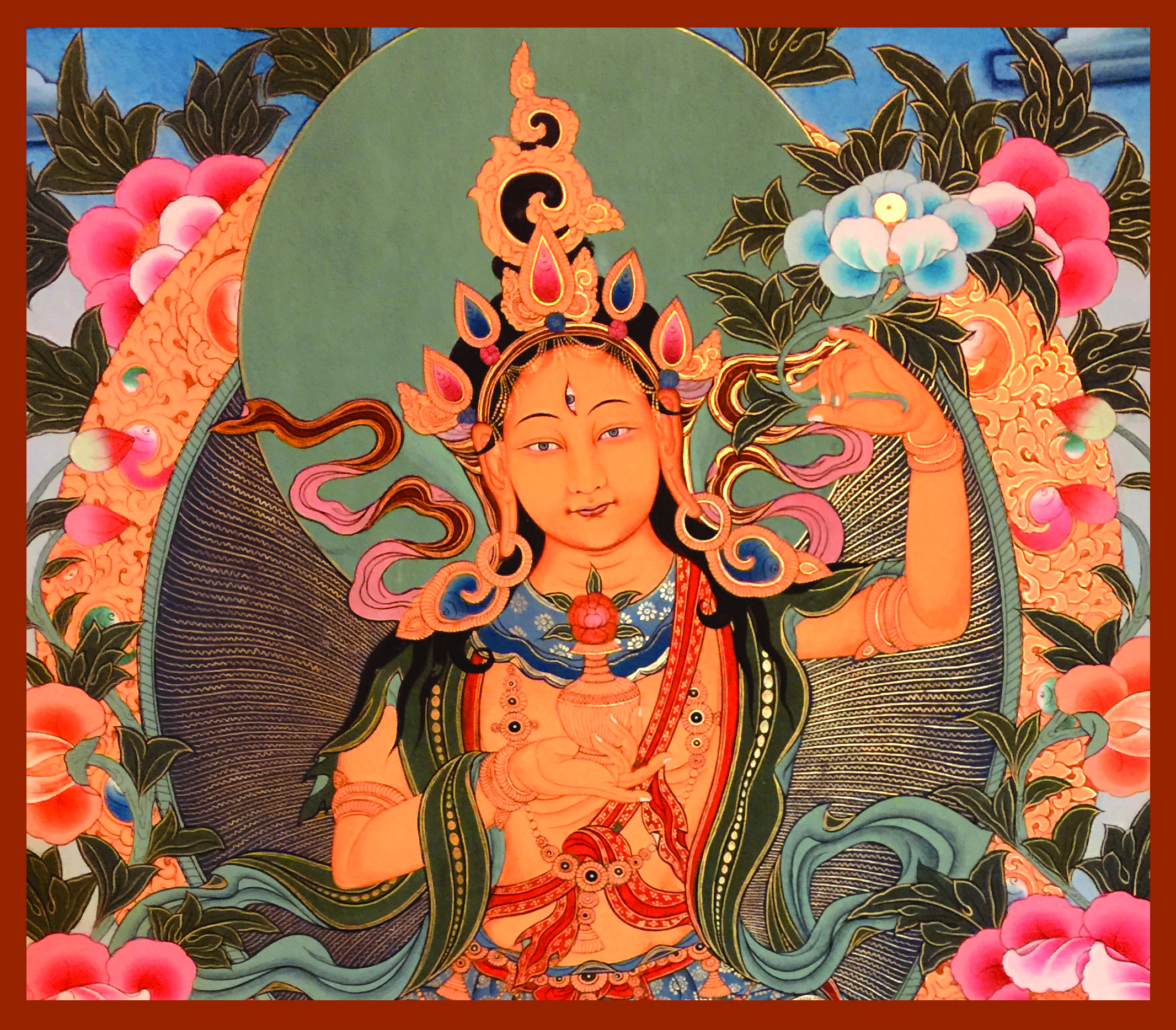
Central Figure of the Tibetan Thangkha Painting Related to The Fifth Way

Within the Nine Ways of Bön, the Fifth Way is called The Way of the Virtuous Lay Practitioners and specifies the proper conduct and commitments of a lay person taking vows. This Fifth Way is the first of the Nine Ways classified as ‘Ways of the Result’ or ‘Bön of the Fruit.’ In the Tibetan language, a lay practitioner is called ‘gen nyen’ [Tib. dge bsnyen] which literally translates as ‘one who serves virtue’ or ‘one who draws near to virtue.’ When asked the meaning of these concepts, the enlightened all-knowing teacher, Buddha Tönpa Shenrap Miwo answered,

“Virtuous means without negative actions. This is one who is committed to serve virtue through their body, speech and mind. Service means serving without holding contradictory views and properly remaining steadfast in service to virtue.”

In general, the lay practitioner commits to practicing the ten virtuous actions and renounces the ten non-virtuous actions of body, speech and mind.  Buddha Tönpa Shenrap defines this kind of renunciation as 1) not performing the actions, 2) not requesting or encouraging others to perform them and 3) not feeling pleased that others have performed the negative actions. Similarly, one commits to 1) acting according to the ten virtuous actions, 2) encouraging others to participate in these activities and 3) feeling joy that others have performed virtuous actions. This is the inner practice.

The Three Virtuous Actions of the Body:

  1. Rather than killing, protecting the life of other beings.
  2. Rather than stealing, practicing generosity.
  3. Rather than engaging in sexual misconduct or causing others to break their vows, keeping one’s own vows and respecting the vows of others.

The Four Virtuous Actions of Speech:

  1. Rather than lying, speaking the truth.
  2. Rather than creating discord, speaking in a way that brings people together.
  3. Rather than using hurtful speech, speaking gently and kindly.
  4. Rather than gossiping or mindlessly talking, speaking in a useful way or reciting prayers.

The Three Virtuous Actions of the Mind:

  1. Rather than coveting the possessions and accomplishments of others, being generous and open.
  2. Rather than wishing harm to others or feeling resentful, cultivating the desire to help others.
  3. Rather than holding wrong views, practicing the teachings of Yungdrung Bön and establishing a true and authentic view.

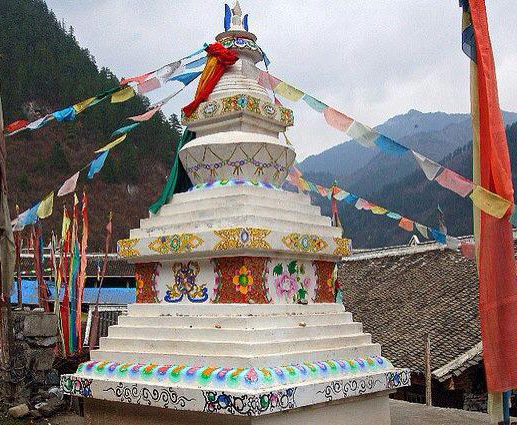
When asked to teach the outward form of the lay practitioner, The All-knowing Teacher, Tönpa Shenrap first instructed the gathered assembly to construct the first Elegant Yungdrung Chorten [Sanskrit: stupa] according to his detailed instructions. Once completed, he consecrated the chorten and then began teaching the outer forms and behavior of a gen nyen or lay practitioner.

Elegant Yungdrung Bon Chorten edit

The Elegant Yungdrung Chorten which represents the stages of enlightenment

The practitioner must go before a pure lama who guides disciples and take the appropriate vows. According to a commentary written by the 23rd abbot of Menri Monastery, His Holiness Nyima Tenzin Rinpoché:

“As for the vows of a gen nyen: There are five kinds of lifetime vows.  To abandon killing, to abandon taking what is not given, to abandon impure, wrong kinds of sexual conduct, and to abandon false speech are four.  Abandoning one of the four kinds of food is the fifth.  Some people have taught abandoning alcohol as a branch vow.

This is the gen nyen of completely renouncing according to the five kinds of established laws.  Because of that, the gen nyen of pure behavior has renounced the basic kinds of impure activity.”

As for killing, one must abandon killing in anger especially another human being. One must abandon stealing, especially when it is driven by desire. One must avoid sexual contact that is damaging or abusive, one must avoid harmful speech especially if it creates a division within the spiritual community, and one must avoid lying especially about one’s spiritual experiences and attainments. As for the fifth which is a branch vow, one renounces either one of the four kinds of food. In this context, the four kinds of food are 1) meat, 2) garlic, 3) solid food after the mid-day meal, and 4) intoxicants such as drugs and alcohol. Regarding drugs and alcohol, the deeper meaning is the renunciation of intoxication which is an obstacle to mindfulness and incites negative behavior.

According to Buddha Tönpa Shenrap in The Nine Ways of Bön,

“As for the lifelong inner rules, one must abandon killing due to the influence of anger, abandon taking what is not given due to the influence of desire or attachment, abandon acting secretly to get what one wants without consideration of cause and effect due to the influence of ignorance, abandon performing unclean work due to the influence of pride, and abandon rough and abusive speech, meaningless talk, and telling lies. One must apply one’s self to their opposites.”

The Buddha goes on to describe the outer practices.

“As for the five intermediate principles, one should perform pure water-cleansing rites, perform prostrations and circumambulations with devotion and aspiration, create and place tsa tsa, and offer torma. Presenting offerings is a branch of gathering the [two] accumulations.”

All translations and content by Raven Cypress Wood ©All Rights Reserved. No content, in part or in whole, is allowed to be used without direct permission from the author.

Don’t want to miss a post? Scroll to the bottom and click “Follow this blog.”