Blog Archives

What is Lungta?

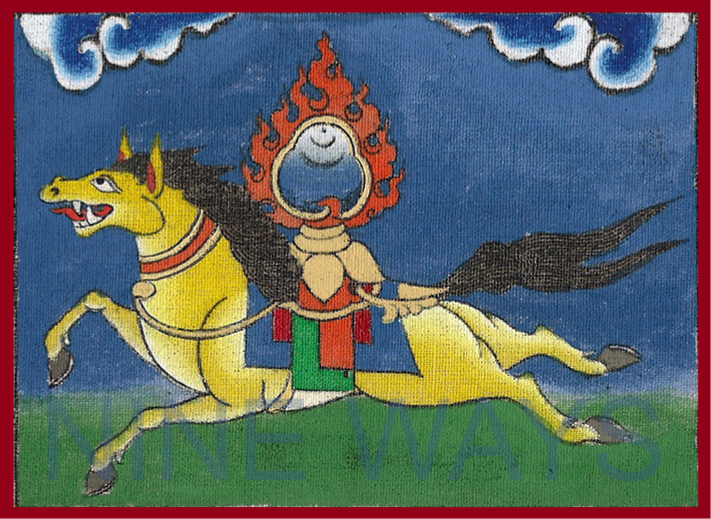
Image of a windhorse as painted on a prayer flag thangka. Photo credit: Raven Cypress Wood

“Lungta” is a compound of two words: “lung” and “ta.” To have a deeper understanding of lungta, it is necessary to look at its two variant spellings. Both words are pronounced exactly the same, but the different spellings have different meanings. The written form “lungta” is a standard phonetic rendering of the Tibetan. To illustrate the different Tibetan spellings for those unfamiliar with the Tibetan syllabary, the standard Wylie transliteration method of Romanizing the Tibetan language can be used. The spelling difference applies to the first syllable of the first word. Transliterated from the Tibetan, the original spelling is klung rta and begins with the syllable “ka.” The modern, changed spelling is rlung rta and begins with the syllable “ra.” Although these syllables are silent and do not change the pronunciation, they do influence the meaning of the word.

The modern spelling is rlung rta. By itself, the word “rlung” means “wind.” This refers to wind from its most subtle form of energy to the most gross manifestation as an external element. “Ta,” the main syllable of the second word transliterates as “rta,” and means “horse.” This spelling is the same for both words. “Horse” in this context refers to the supreme horse which is endowed with extraordinary qualities somewhat similar to the mythic horse Pegasus. Because the horse was the mode of traveling with the greatest speed in ancient times, it symbolizes the swift reversal of bad fortune to good fortune, illness to health, poverty to prosperity, ignorance to wisdom, and so on. Therefore, the compound “rlung rta” literally translates to “windhorse.” The symbol of this, also known as a windhorse, can be seen in the center of many prayer flags carrying a flaming, wish-fulfilling jewel. In modern Tibetan astrological texts, all references to lungta are spelled with “ra” as the first syllable.
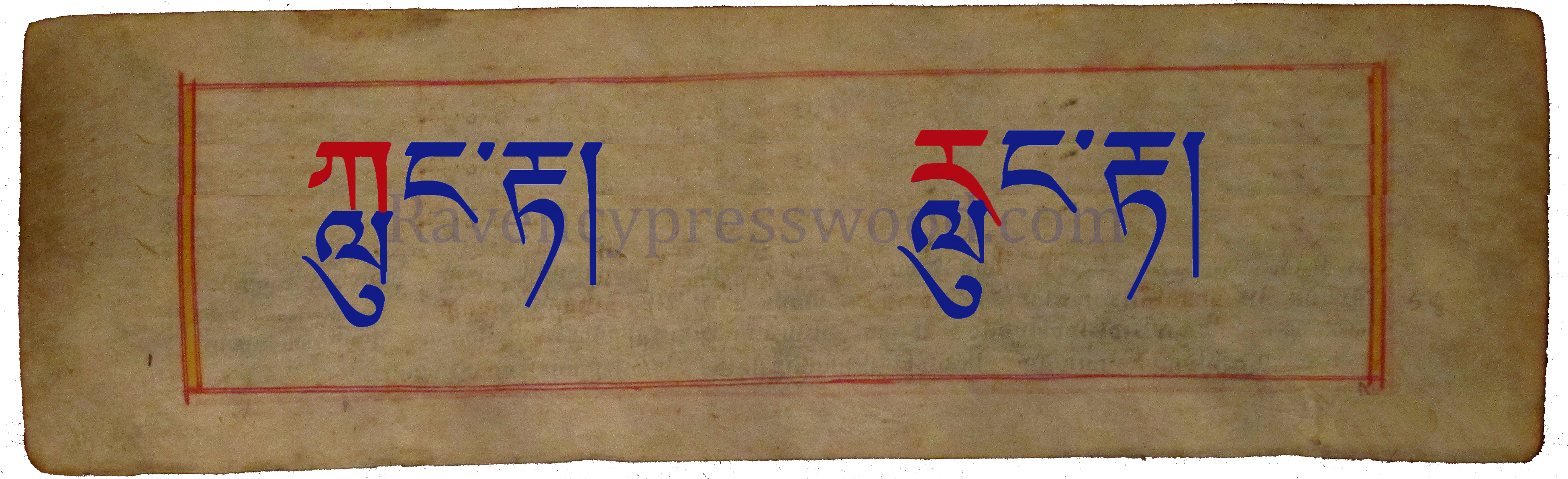
Left: klung rta with the syllable “ka” in red. Right: rlung rta with the syllable “ra” in red.

In many Bön texts, especially the ancient texts, lungta is spelled with the syllable “ka” as “klung” which can be translated as “fortune,” and sometimes as “river.” Some Tibetan dictionaries list one of the meanings of “klung” as “the element of space.” For the Bönpo, every Tibetan syllable is associated with a specific elemental characteristic, and the syllable “ka” arises from the element of space. The syllable “ra” arises from the element of fire. More specifically, the syllable “ka” is related to the vast, pervasive quality of space. This understanding points to the function of the force of lungta [klung rta]. It is a pervasive, protective force. As one of the five natal energies, it acts to support the other four natal energies of health, personal power or wangtang, vitality, and soul to have a quality of pervasiveness and to support them from diminishing. The compound “klung rta” refers to an individual’s force of good fortune and field of protection. If an individual’s lungta is strong, it enlivens the other four natal energies and naturally protects from negativity. Lungta has the ability to pervade everywhere like the sun. And like the sun, it can be experienced as being diminished or blocked due to external circumstances.

In this way, an individual’s lungta can be experienced as being weaker or stronger, increasing or diminishing. For example, each year is astrologically associated with one of the five elements. Inevitably, some years will be in a conflicting relationship with an individual’s natal lungta element. The year 2022 is ruled by the element of water. For individuals whose lungta is ruled by the element of fire, the element of water is in an enemy relationship with the element of fire that governs their lungta. When this occurs, lungta can be experienced as becoming weaker or blocked and result in chronic bad luck, obstacles to success, disharmony in relationships, and so on. Within the Yungdrung Bön, there are many methods to remove what is blocking the flow of lungta and thereby restore and strengthen it. One of the easiest and most common methods is the raising of prayer flags. Particularly, raising prayer flags of the same color as the element associated with an individual’s lungta. The element/color associations of the five elements are: earth=yellow, water=blue, fire=red, wind/wood=green, and space/metal=white. Additional practices that are effective methods to increase lungta include practices that strengthen the element associated with the lungta, rituals such as the fumigation and offering of smoke, performing acts of virtue and devotion such as circumambulating chortens or making satsa, reciting mantra and/or prayers, and practicing with the internal winds are all effective methods to increase lungta. The specific method used depends upon the knowledge, circumstance, and capacity of the individual. When the force of the lungta is strong there is a feeling of ease and flow to life. There are auspicious circumstances, success, good fortune, harmony, and a general feeling of well-being and support. Any task that is undertaken is successful and supportive circumstances naturally occur.

For more information about raising prayer flags, see previous article: https://ravencypresswood.com/2020/02/15/the-immeasurable-benefit-of-raising-prayer-flags/ For more information about the ritual of fumigation and offering of smoke, see: https://ravencypresswood.com/2021/11/19/new-book-release-sacred-smoke-the-ritual-practice-of-fumigation-and-offering-in-the-yungdrung-bon-religious-tradition/

“May my life force and vitality increase! May the strength of my body increase! May my personal power increase! May my lungta be well developed! May my soul and prosperity increase! May all lungta, soul, and prosperity that have decreased become well developed! May external, internal, and secret obstacles be cleared! May these wishes bring the accomplishment of all goals and intentions!”  

-Prayers on a Yungdrung Bön lungta prayer flag

Tibetan translation by Raven Cypress Wood ©All Rights Reserved. No content, in part or in whole, is allowed to be used without direct permission from the author.

Did you enjoy this content? This article is made possible by generous donors who want content like this to continue to be available. Don’t want to miss a post? Scroll to the bottom and click “Follow this blog.”

Join the mandala of Nine Ways supporters by donating through one of the services listed below.

Creating A Foundation for Spiritual Development: The Eight Freedoms that are Difficult to Obtain

Statue of Shardza Tashi Gyaltsen Rinpoche in Amdo, Tibet

In order to have a stable foundation upon which to further develop spiritual practice, it is necessary to begin with the sincere practice of the preliminary practices. Among the external preliminary practices is the single-pointed reflection upon the Eight Freedoms and the Ten Fortunes that are difficult to obtain. In his An Ocean of Instructions for the Preliminary Practices of the A Tri, Shardza Tashi Gyaltsen Rinpoche explains the eight freedoms in his section on the external preliminary practices. Without these conditions of freedom, it is not possible to practice the Bön teachings. By deeply reflecting upon the truth of each of these freedoms, the practitioner realizes the importance of not wasting the opportunity to practice.

The Eight Freedoms that are Difficult to Obtain:

  1. Freedom from Being Born a Hell-being

The cause of being born as a hell being is the negative karma of hatred and anger. The result is having to undergo the suffering and misery of heat and cold. The torment of heat and cold for the hell-beings is continuously unbearable and there is no freedom to act on the intention to practice Bön. 

2. Freedom from Being Born a Hungry Ghost

The cause of being born as a hungry ghost is the negative karma of desire and greed. The result is having to undergo the suffering and misery of hunger and thirst. The torment of hunger and thirst for the hungry ghosts is never-ending and there is no freedom to ever act on the intention to practice Bön.

3. Freedom from Being Born as an Animal or Beast of Burden

The cause of being born as an animal or a beast of burden is the negative karma of mental dullness. The result is having to undergo the suffering and misery of being stupid, mute, and being exploited for work.

From Shardza Rinpoche,

“When born as an animal, there is no opportunity to practice even a little bit of virtue. Even among the highest of the animals in the human world, such as horses and mules etc., even if you explain to them from a hundred different texts, apart from a little benefit from hearing, there isn’t the opportunity to understand even a single word. If they could recite the MA TRI a single time, they could have the opportunity to become enlightened. Because of having to experience the suffering and misery of stupidity and muteness, and never having an opportunity for any recitation, there is no freedom to ever act on the intention to practice Bön.”

From The Sutra of True Sincerity,

“Because there is no opportunity for study or listening during the time of having the body of a hell-being, hungry ghost, or animal along with their suffering and misery, there is no understanding. Because there is no understanding, there is no accomplishment. If there is no accomplishment, how can they attain enlightenment?” 

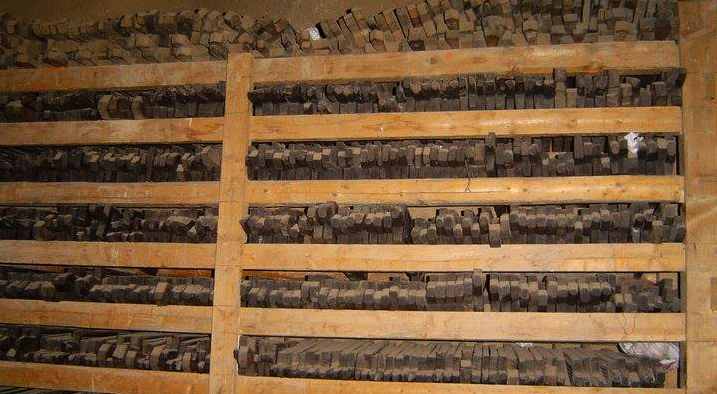
Woodblocks of Shardza Rinpoche’s compositions

4. Freedom from Being Born as a Long-lived God

Again from Shardza Rinpoche,

“Being a so-called “long-lived god” is one part of the result of the gods that are in a state of sustained concentration. However, there is no concept of good or bad. From the time that they are born, except for the moment of their death, conceptual thought has stopped. They remain for many great eons until this karma has been exhausted and they are reborn in the lower realms.  Because there isn’t any teaching, listening, or meditation practice regarding Bön, there is no opportunity to progress towards enlightenment.

5. Freedom from Being Born as a Savage or in a Remote Place

“When one is born as a savage, such as those who believe that killing is a good activity, they will never experience even the mere sound of the word “Bön.” When killing, they experience intense negative emotions. Afterward, they see the act of killing human beings and taking life as good. They inherit this negative activity from their parents and all of this becomes a non-virtuous way of life. Because of that, there is no freedom to practice Bön. When one is born in a remote or outlying area where the teachings of Tönpa Shenrap have not spread, there is no opportunity to practice Bön.” 

6. Freedom from Being Born without the Five Senses or with Profound Mental Impairment

“If someone is born mute, even though they encounter the Buddha’s teachings, they are unable to perform mantra recitations. A blind person cannot see the images and objects of enlightenment that support faith and devotion. The deaf cannot hear the sound of Bön speech. Those with profound mental impairments can’t understand what to cultivate and what to abandon. Therefore, there is no freedom to practice Bön.”

7. Freedom from Having Wrong Views

When someone has mistaken concepts that are incompatible with Bön, such as having the view that actions have no result or believing that the teachings of enlightenment are not valid etc., this contaminates the mind-stream. Having contaminated the mind-stream, they are unable to generate devotion towards the completely pure teachings of Buddha Tönpa Shenrap. Therefore there is no freedom to practice Bön.

8. Freedom from Being Born During a Time When a Buddha has not Appeared

For those who will be born during a dark era devoid of the presence of a buddha, there will be no freedom to practice Bön. 

Reflecting again and again upon these freedoms brings the recognition of being in possession of a precious opportunity. By deeply appreciating the positive circumstances that support the opportunity to practice Bön, a lasting foundation for spiritual development and motivation is established.

Tibetan translation by Raven Cypress Wood ©All Rights Reserved. No content, in part or in whole, is allowed to be used without direct permission from the author.

Don’t want to miss a post? Scroll to the bottom and click “Follow this blog.”

Want to join the mandala of Nine Ways supporters? Follow this link https://ravencypresswood.com/donate/

Feast Offering to the Deities of the Mother Tantra

Untitled

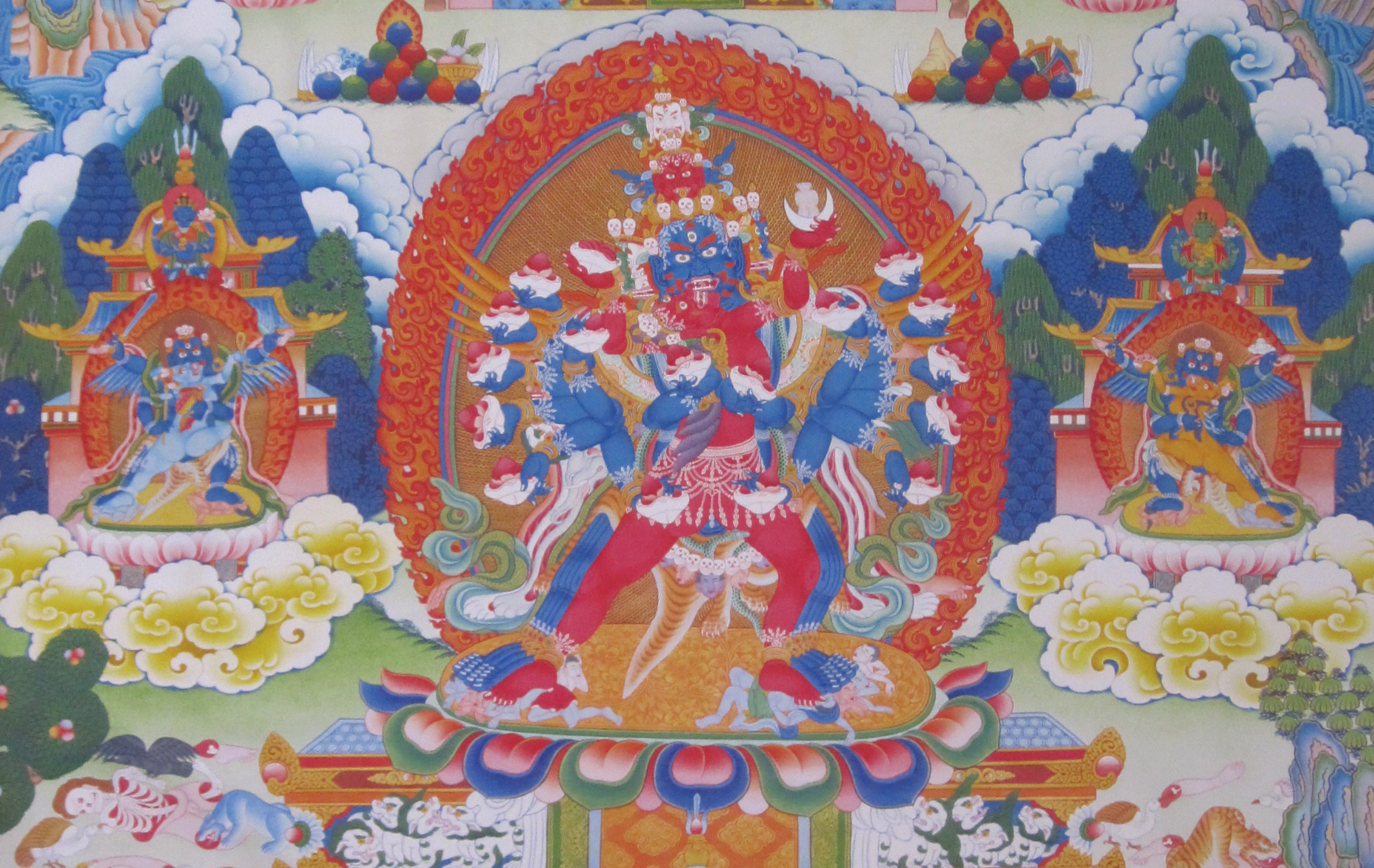
Mother Tantra deities as painted by Lama Kalsang Nyima. Photo credit: Raven Cypress Wood

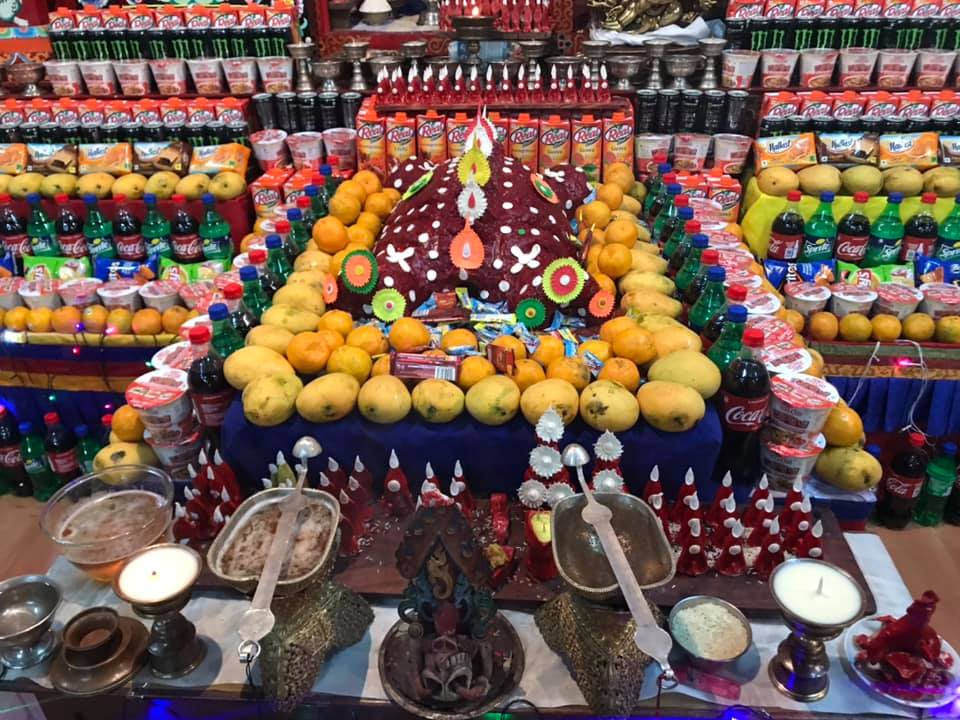
On the 21st and 22nd lunar days of the 1st month, Menri Monastery in Dolanji, India will perform a feast offering to the deities of the Mother Tantra according to the Shen tradition. These dates are March 23rd and 24th, 2022 on the Western calendar. This kind of feast offering, known as tsok [Tibetan: tshogs] literally means “collection, accumulation, assembly.”

The source of the Mother Tantra within the Yungdrung Bön religious tradition is the primordial Buddha Küntu Zangpo. It has three cycles: external, internal and secret. Each cycle has a root text and a commentary that was written by the sage Milu Samlek. The main yidam of the Mother tantra is Sangchok Tartuk and his consort Khandro Chema Ötso. Of the two types of either peaceful or wrathful, the tsok of the Mother Tantra is categorized as wrathful.

menri ma gyud tsok 2021

Tsok offerings for the principal deities and retinue of the Mother Tantra. Photo credit: Unknown

For those who have vows with a yidam deity, performing a tsok is an opportunity to repair broken vows or commitments related to the yidam practice and increase merit and wisdom. Having offered to the enlightened beings, we gain more power and energy. Additionally, past negative actions and the obstacles and imbalances of daily life are purified. Qualities such as health, longevity, prosperity, confidence, stability are enhanced. When undergoing a deity retreat, a tsok is performed during the final session of practice each day.

When performing a tsok, the ritual can be done in its condensed, medium-length, or extensive forms. This is determined by the purpose of the tsok, the sponsor, the circumstance, and the umdzé or ritual director of the feast offering. However, every tsok has a similar structure consisting of preparation, preliminaries, prayers related to the specific deity together with their retinue, and the concluding prayers.  In general, once the length of the tsok is determined the necessary sacred substances, offering torma, and food offerings are prepared. Everything must be clean, prepared according to the text, and placed in its proper position in the shrine area. The preliminary practices consist of the usual foundation of setting an boundary in order to keep out obstacles and to keep in the blessings, going for refuge, generating the mind of enlightenment for self and others and admission of wrongdoing and purification.

The tsok offerings are then ritually cleansed with water and incense. The tsok is then empowered through visualization and mantra and becomes delicious, containing the eight qualities of nutrition, as well as limitless auspiciousness and positive qualities. The principal deity are retinue are formally invited to tsok and asked to reside in the objects of support such as the yidam torma or image that has been centrally placed on uppermost level of the shrine. Now that the enlightened deity is present, prostrations are offered. One can also take this opportunity to confess any broken vows or commitments to the deity and receive purification and renewal of those vows.

wrathful tsok

A wrathful tsok offering. Photo credit: Unknown

The eight offering goddesses are imagined to present the eight external offerings to the assembly of deities. Then, rakta mixed with tea is offered and is symbolic of a blood offering. This represents offering the liberation of our desire and attachment. Next, the ritually prepared medicinal alcohol is empowered and presented to the yidam deities which represents offering our wisdom. The tsok is then liberated by being cut. The top-most portion is offered to the deities, and the next portion is offered to the lineage lamas of the practice being performed. The linga torma represents outer enemies and obstacles as well as the inner five poisons, wrong views etc. This torma is now presented to the yidam, liberated by cutting, and then offered while requesting the ordinary and supreme attainments of the practice. The Yungdrung Bön protectors are presented with offerings, the prayer of delighting the deities and the lineage with the tsok is performed, and the prayer of attainment is performed.

“Within this mandala where marvelous things arise,

there is a collection of enjoyable things such as sights, sounds, smells, tastes, things to touch, ornaments, Bön treasures, etc.

Through this unsurpassed cloud of offerings, both actually set out and imagined,

may our sacred commitments be fulfilled!

Through the blessings of having fulfilled our sacred commitments to you,

may the enlightened teachings of the Yungdrung Bön spread!

Dispel into space all external, internal, and secret obstacles!”

And,

“Emaho!

This sacred food is the essence of spiritual attainment.

I will partake of it and receive both the ordinary and the supreme spiritual attainments!”

Then, by eating the tsok, we renew our vows with the yidam deities and receive their blessing and empowerment. We then share the leftovers of the tsok offerings as a charitable gift to those lower beings who are powerless to take part in the tsok and depend upon our generosity to receive its blessings.

The concluding practices include prayers of aspiration and auspicious followed by dedicating all of the virtuous activity performed during the tsok for the benefit of every sentient being within cyclic existence.

For more information about the cycle of Mother Tantra texts, see previous article: https://ravencypresswood.com/2021/12/18/a-brief-introduction-to-the-mother-tantras-of-yungdrung-bon/

Tibetan translations by Raven Cypress Wood

Raven Cypress Wood ©All Rights Reserved. No content, in part or in whole, is allowed to be used without direct permission from the author.

Don’t want to miss a post? Scroll to the bottom and click “Follow this blog.”

Want to join the mandala of Nine Ways supporters? Follow this link https://ravencypresswood.com/donate/

2022: Year of the Water Tiger

Thangkha depicting the Tibetan astrological symbols and their relationships. Private collection: Raven Cypress Wood

The twelve animals of Tibetan astrology according to the Yungdrung Bön texts are the Rat, Elephant, Tiger, Rabbit, Dragon, Horse, Snake, Sheep, Garuda, Monkey, Dog and Pig.  Each animal has a specific element associated with its life-force and a position direction determined by that element. Each year one of these twelve animals is associated with one of the five elements of: metal, wood, fire, water, or earth. In other contexts, metal is referred to as space, and wood is referred to as wind or air. It takes sixty years for all twelve animals to be associated with each of the five elements. When this happens, it is considered one complete cycle that repeats again and again.

March 3, 2022 begins the Tibetan New Year and the Year of the Water Tiger. Therefore, people born on or after March 3rd will be a Water Tiger and will have an emphasis of the specific qualities associated with the Tiger.

The element which governs the life-force of the Tiger is Wood and its positive direction is East.  So, if a Tiger person wanted to strengthen their life-force, they would focus upon strengthening the element of Wood internally and externally. Their positive direction is East. So, facing this direction while meditating, doing healing rituals or just relaxing and taking deep breaths is beneficial.

In general, the Tiger is considered to be courageous, independent, unpredictable, artistic and passionate.  The Tiger tends to go after life with passion and daring.  Making its own path, it tends to gravitate towards unconventional lifestyles and avoids following traditions or social conventions.  The Tiger is a fierce and determined leader that can be quick-tempered and protective of its ego.  The Tiger wants to live life to the fullest in its own way, and without being told what to do.

The Tiger’s soul day is Thursday and the life-force day is Saturday.  These are the best days for beginning new projects and activities that are meant to increase or develop something.  The obstacle day is Friday.  This day is best for cleansing and letting things go.  It is not a favorable day for beginning new things.

Tiger years include: 1926, 1938, 1950, 1962, 1974, 1986, 1998, and 2010

If you were born during a previous year of the Tiger, this year as well as other Tiger years are considered a time of vulnerability to obstacles. This same astrological principal applies for all of the other eleven animal signs during their associated year. Therefore, it is recommended to engage in practices that support vitality, good fortune and spiritual merit such as hanging prayer flags, having a soul and life-force retrieval ritual performed, restoring any deterioration or violation of one’s spiritual commitments or any damaged relationship with one’s spiritual brothers and sisters, and/or performing prayers and rituals to remove obstacles. In general, making an effort to engage more with virtuous activities of body, speech and mind and committing to engage less with non-virtuous activities is supportive. According to the words of Buddha Tönpa Shenrap Miwoché, the practice of developing sincere unbiased and unlimited compassion is the greatest of all protections.

Although the associated elements to four of the five natal forces change according to the birth year, the element of the life-force is determined by the animal sign and remains the same regardless of the birth year. Therefore, it is possible to calculate the relationship of the year of the Water Tiger in regards to the life-force of each of the other natal animals without having knowledge of the specific birth year.

The influence of the Water Tiger year on the life-force of each of the Tibetan astrological signs:

  • Rat: Neutral
  • Elephant: Very bad
  • Tiger: Bad
  • Rabbit: Bad
  • Dragon: Very bad
  • Snake: Excellent
  • Horse: Excellent
  • Sheep: Very bad
  • Monkey: Very good
  • Garuda: Very good
  • Dog: Very bad
  • Pig: Neutral

For each of these animal signs, there remains the four other natal constituents to consider in order to have a better idea of the influence that 2022 will have upon the individual. For example, although the life-force calculation could be bad, the calculations for health, personal power, lungta, and soul could be excellent. Traditionally, these calculations are done yearly.

If the yearly horoscope calculations result in any challenging aspects, preventive measures can be taken in order to remove or at least decrease the potential for any problems to manifest. Common methods used to eliminate these obstacles are hanging prayer flags, rituals to reverse negativity, making or renewing spiritual commitments, pilgrimage, making charitable donations, and so on.

According to the words of Buddha Tönpa Shenrap Miwoché, the practice of developing sincere, unbiased and unlimited compassion is the greatest of all protections, and avoiding non-virtue and engaging more with virtue supports all of the natal forces to be strong and balanced.

A common prayer within the Yungdrung Bön tradition that is used to remove obstacles is the Bar Che Lam Sel, The Spontaneous Wish-fulfillment of Removing Obstacles from the Path. The English, Spanish and Portuguese translations of this prayer are offered free for personal use on the Nine Ways Publications page. Click on the Publications tab above and scroll down to find the download link for the prayer.

Geshe Yongdong Losar. Photo: Courtesy of Sherab Chamma Ling

For those interested in a traditional Tibetan astrological horoscope to calculate the influence of 2022 on each of their natal constituents of life-force, health, personal power, lungta and soul, Geshe Yongdong Losar of Sherab Chamma Ling in British Columbia, Canada offers Tibetan astrological horoscopes through his website. Follow this link for more information about Geshe Yongdong and his astrological calculations: https://sherabchammaling.com/product/astrology-reading/

Raven Cypress Wood© All Rights Reserved

Don’t want to miss a post? Scroll to the bottom and click “Follow this blog.”

Want to join the mandala of Nine Ways supporters? Follow this link https://ravencypresswood.com/donate/

Lunar Calendar: Time for the Practice of Nyammé Sherab Gyaltsen Rinpoché

His Holiness the 1st Menri Trizin Nyammé Sherab Gyaltsen Rinpoché

Every new moon, the monks and nuns of Menri Monastery perform the Nyammé La Drup, the lama practice of Nyammé Sherab Gyaltsen Rinpoché who established Menri Monastery and brought together the scattered transmission lineages. This practice has its own preliminary prayers, main practice including a tsok offering, and concluding prayers such as prayers of blessing, aspiration and dedication. The next new moon coincides with Tuesday, February 1, 2022.

You are like a golden sunrise over the world

during the final 500 years of degeneration in this negative time.

From your great, thunderous river of Bön speech, 

your disciples’ afflictive emotions are washed clean at the very root.

Through the roar of your extensive knowledge of the three kinds of teachings,

you destroy the ignorant reasoning of variant tenet systems.

A majestic lion among men and leader of Menri,

I prostrate to you, crown ornament of abbots!

Homage to His Holiness the 1st Menri Trizin Nyammé Sherab Gyaltsen Rinpoché

Tibetan translation and content Raven Cypress Wood ©All Rights Reserved. No content, in part or in whole, is allowed to be used without direct permission from the author.

Don’t want to miss a post? Scroll to the bottom and click “Follow this blog.”

Want to join the mandala of Nine Ways supporters? Follow this link https://ravencypresswood.com/donate/