Blog Archives

A Modern-day Tertön: Sang Ngak Lingpa

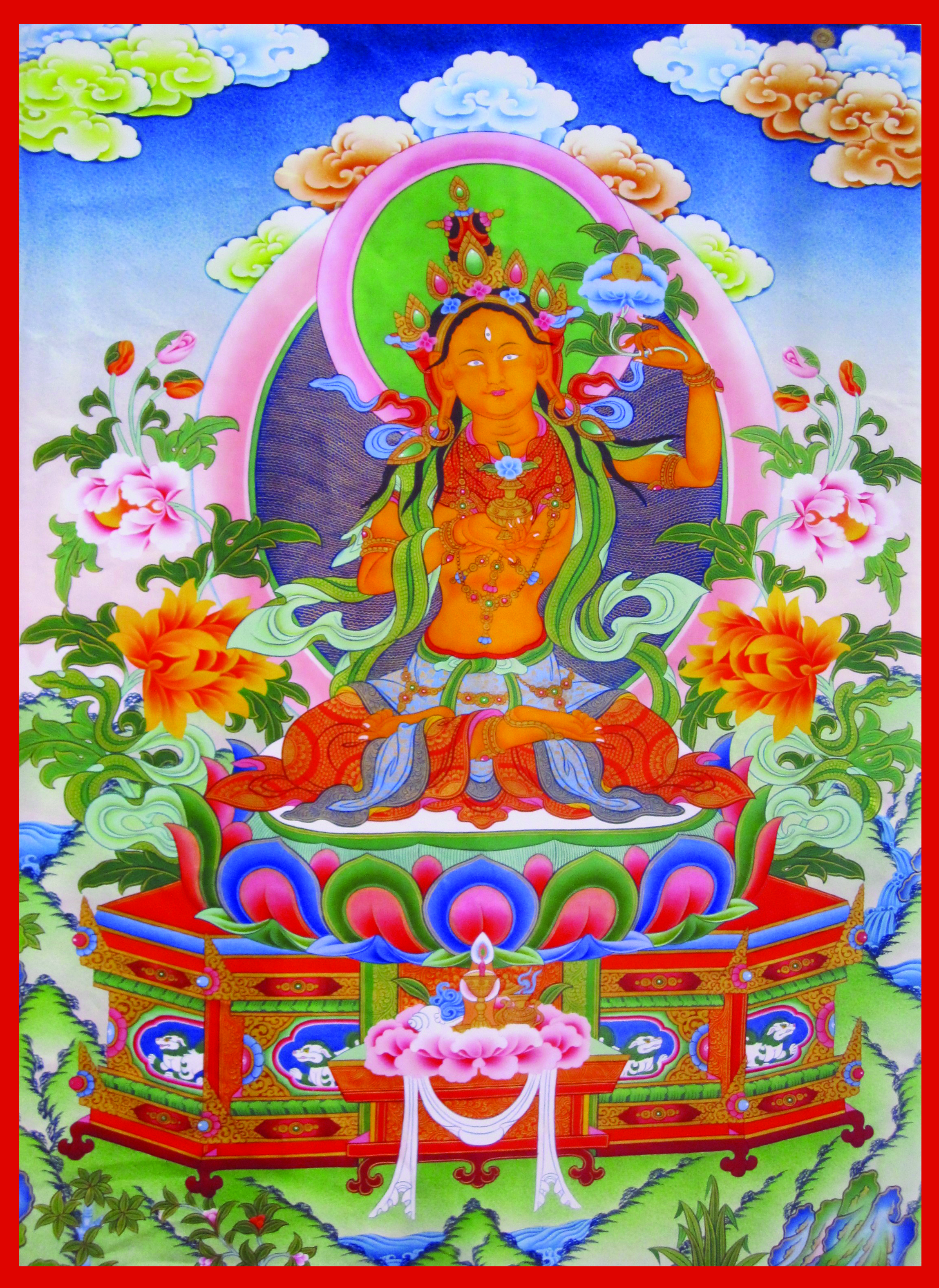
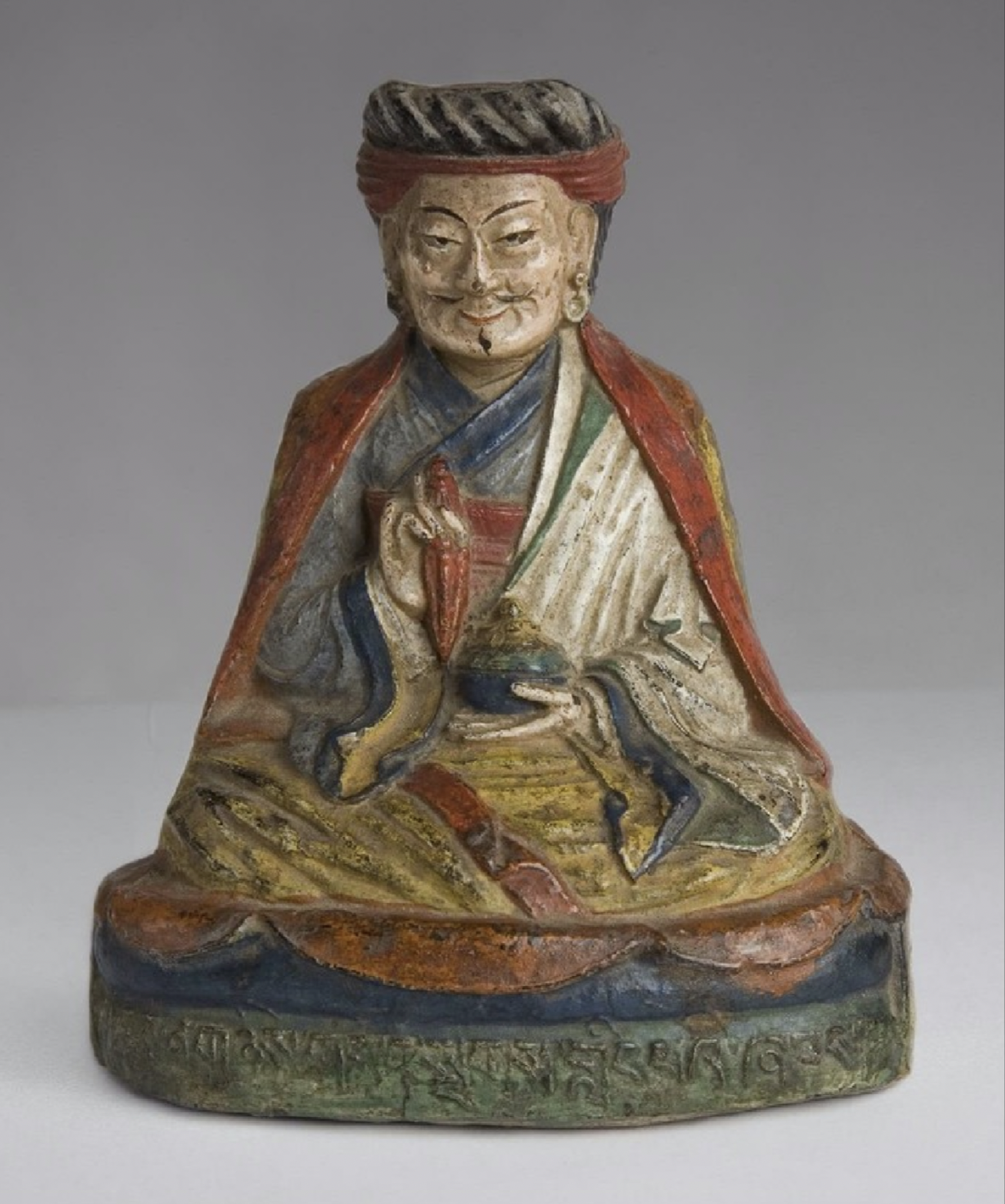
Painted sa tsa image of Sang Ngak Lingpa. Photo credit: Himalayan Art Resources. himalayanart.org

Sang Ngak Lingpa, also known as Nyak Ter Sang Ngak Lingpa or Rikdzin Sang Ngak Lingpa, was born in 1865 CE in Nyak Shö Eastern Tibet. His father was Tsering Tashi and his mother was Pema Kyi. He became a great tertön, revealer of sacred hidden treasure, and was both a disciple and lama of Shardza Tashi Gyaltsen. The Hagiography of the A Tri Lineage Lamas written by Shardza Rinpoche contains a brief overview of his life and accomplishments.

From a young age he had a pleasant and gentle demeanor, and could read and write at the age of four. He went on to have many lamas and worked together with his companion Khandro Dechen Wanggi Dronma, also known as Khandro Dechen Wangmo, who was also a renowned tertön and lama. (See previous post https://ravencypresswood.com/2016/07/31/modern-day-khandro-treasure-revealer/ ) Both he and Khandro Wangmo were nonsectarian. Thus, they are associated with both the Yungdrung Bön and the New Bön religious traditions.

Tertön Lingpa met Shardza Tashi Gyaltsen at the latter’s hermitage, Dechen Ritro, and they had a profound influence upon one another’s life and works. Due to the advice and assistance of Sang Ngak Lingpa, Shardza Rinpoche created xylographic copies of his extensive compositions. Tertön Lingpa bestowed many teachings and empowerments upon Shardza Rinpoche, and also advised him regarding the finding and revealing of terma, or sacred hidden treasures. Many of the tertön’s revelations were made as a direct result of a personal request by Shardza Rinpoche to reveal a terma in order to benefit the multitude of suffering sentient beings.

Tertön Sang Ngak Lingpa

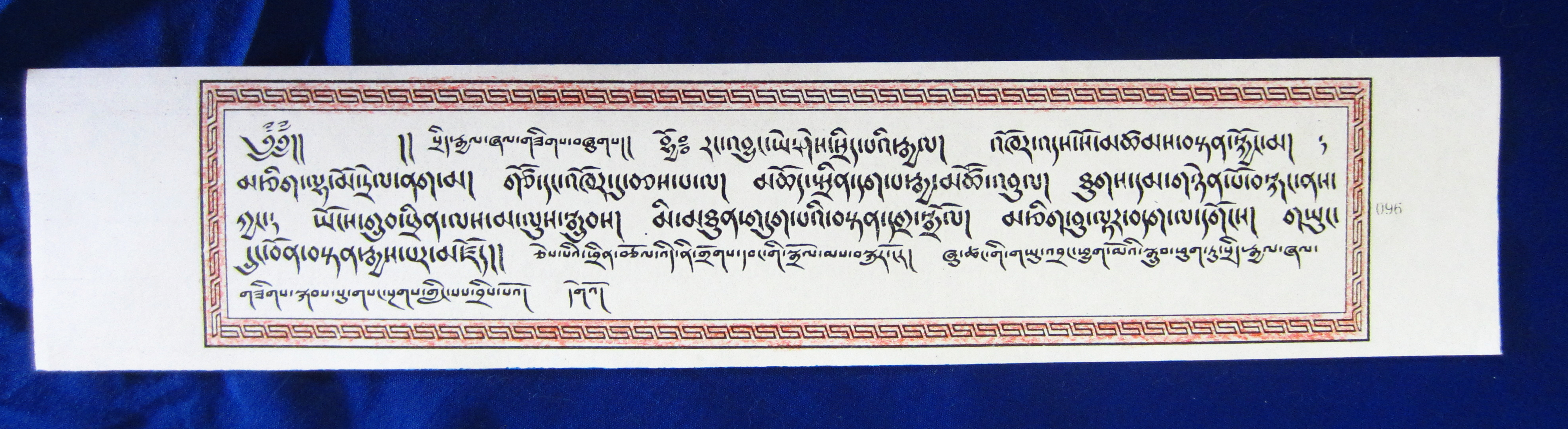
While staying in the meditation cave of Yudrang Chukmo, he had a spontaneous vision of the enlightened religious protector Sipé Gyalmo. In response to a fervent request by Khandro Dechen Wangmo regarding his vision, he composed a short exhortation for the sacred activity of Sipé Gyalmo.

“JO! Self-arising wisdom appears as Sipé Gyal, protector of the teachings within the boundaries of cyclic existence and nirvana.

To you, the principal deity, Single Mother, a goddess riding a black mule, and to your retinue; I present a vast expanse of pure clouds of offerings.

Having repaired and fulfilled my sacred commitments with you, thoroughly establish the accomplishment, without exception, of spontaneous, enlightened activity!

Liberate the antagonistic and malevolent enemies of the teachings!

Think of me like a mother for her child! Spread the teachings of the Yungdrung Bön!”
A brief list of Tertön Sang Ngak Lingpa’s textual terma includes:

  • Exoterical
    • A Rainfall of Nectar which is like an Ocean
    • Rites for the Lu
  • Esoterical
    • The Secret Mantra of Meri for Forceful Protection
    • Accomplishment of Takla for Subduing Phenomena
    • Peaceful and Wrathful Rites for the Lord of the Dead
    • Cycle of Practices for Red Mule Sipé Gyalmo
    • Cycle of Practices for Black Mule Sipé Gyalmo
    • Quintessential Instructions for Fixation and Agitation
    • General Collection of the Tantra of Sangwa Düpa
    • A Cycle of Longevity Practices
    • The Inner Essence of the Accomplishment of Longevity
    • Accomplishing Longevity for the Lama
  • Secret
    • Practices of the Great Completion for Accomplishing the Two Stages of the Three Bodies
    • Cycle of Instructions for the Chöd Practice of Tukjé Kündrol
    • Accomplishment of Mawé Sengé
  • Extraordinary
    • Hagiography of the Immortal and Great Tsewang Rikdzin
    • Hagiography of the Widely Known Drenpa Namkha

Raven Cypress Wood ©All Rights Reserved. No content, in part or in whole, is allowed to be used without direct permission from the author.

Don’t want to miss a post? Scroll to the bottom and click “Follow this blog.”

Want to join the mandala of Nine Ways supporters? Follow this link https://ravencypresswood.com/donate/ It’s easy through Paypal and Zelle.

Annual Retreat of the Peaceful & Wrathful Walsé Ngampa

The Yidam Walsé Ngampa and the Great Mother Ngammo Yumchen Tröpe Taktenma

Each year on the 23rd-29th lunar days of the 2nd lunar month, Menri Monastery performs a week-long retreat of the yidam Walsé Ngampa. In 2023, these dates correspond to April 13th-19th on the Western calendar. The retreat includes recitation of the complete yidam text along with accumulation of the mantra, one hundred feast offerings to the yidam and his retinue, as well as a ritual of protection to turn away malevolent forces as well as the causes for illness, accidents, conflicts, and other types of harm and danger.

The yidam Walsé Ngampa is one of the Five Supreme Embodiments, or literally the Five Supreme Citadels of the Father Tantra that are manifestations of the enlightened body, speech, mind, quality, and activity of Buddha Tönpa Shenrap Miwoché. Walsé Ngampa is the embodiment of Enlightened Body. He is dark blue with nine heads and eighteen arms with which he holds various weapons for subduing obstacles. He is the manifested form of the wisdom of emptiness. His consort has the nature of Buddha Satrik Érsang and is known as Ngammo Yumchen Tröpé Taktenma with a body color that is dark green with blue hair and eyebrows. In her right hand, she holds an amulet containing the earth and sky. In her left hand, she holds a vase of nectar. And she wears a necklace of the planets and stars.

The main ritual text for this deity is entitled, Stages of Practice for Walsé which was composed by the great sage Drenpa Namkha and rediscovered as a terma by Matön Drol Dzin in 1091 from a rock in Dangra Khyung-dzong. Reciting this text and performing the associated rituals has a profound benefit of blessing and protection. Menri Monastery will be performing this sacred activity or the benefit and welfare of all beings in support of their happiness and development of wisdom.

Raven Cypress Wood ©All Rights Reserved. No content, in part or in whole, is allowed to be used without direct permission from the author.

Don’t want to miss a post? Scroll to the bottom and click “Follow this blog.”

Want to join the mandala of Nine Ways supporters? Follow this link https://ravencypresswood.com/donate/ It’s easy through Paypal and Zelle.

The Fifth Way: In the Service of Virtue

Central Figure of the Tibetan Thangkha Painting Related to The Fifth Way

Within the Nine Ways of Bön, the Fifth Way is called The Way of the Virtuous Lay Practitioners and specifies the proper conduct and commitments of a lay person taking vows. This Fifth Way is the first of the Nine Ways classified as ‘Ways of the Result’ or ‘Bön of the Fruit.’ In the Tibetan language, a lay practitioner is called ‘gen nyen’ [Tib. dge bsnyen] which literally translates as ‘one who serves virtue’ or ‘one who draws near to virtue.’ When asked the meaning of these concepts, the enlightened all-knowing teacher, Buddha Tönpa Shenrap Miwo answered,

“Virtuous means without negative actions. This is one who is committed to serve virtue through their body, speech and mind. Service means serving without holding contradictory views and properly remaining steadfast in service to virtue.”

In general, the lay practitioner commits to practicing the ten virtuous actions and renounces the ten non-virtuous actions of body, speech and mind.  Buddha Tönpa Shenrap defines this kind of renunciation as 1) not performing the actions, 2) not requesting or encouraging others to perform them and 3) not feeling pleased that others have performed the negative actions. Similarly, one commits to 1) acting according to the ten virtuous actions, 2) encouraging others to participate in these activities and 3) feeling joy that others have performed virtuous actions. This is the inner practice.

The Three Virtuous Actions of the Body:

  1. Rather than killing, protecting the life of other beings.
  2. Rather than stealing, practicing generosity.
  3. Rather than engaging in sexual misconduct or causing others to break their vows, keeping one’s own vows and respecting the vows of others.

The Four Virtuous Actions of Speech:

  1. Rather than lying, speaking the truth.
  2. Rather than creating discord, speaking in a way that brings people together.
  3. Rather than using hurtful speech, speaking gently and kindly.
  4. Rather than gossiping or mindlessly talking, speaking in a useful way or reciting prayers.

The Three Virtuous Actions of the Mind:

  1. Rather than coveting the possessions and accomplishments of others, being generous and open.
  2. Rather than wishing harm to others or feeling resentful, cultivating the desire to help others.
  3. Rather than holding wrong views, practicing the teachings of Yungdrung Bön and establishing a true and authentic view.

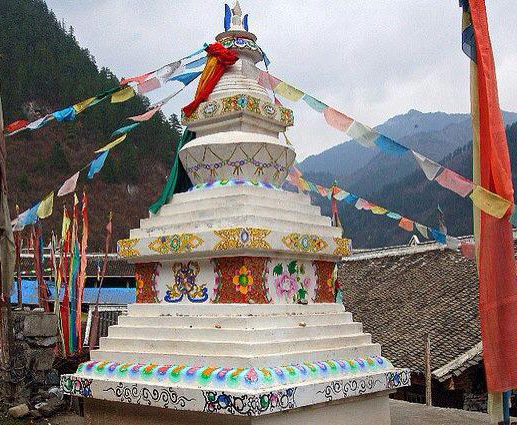
When asked to teach the outward form of the lay practitioner, The All-knowing Teacher, Tönpa Shenrap first instructed the gathered assembly to construct the first Elegant Yungdrung Chorten [Sanskrit: stupa] according to his detailed instructions. Once completed, he consecrated the chorten and then began teaching the outer forms and behavior of a gen nyen or lay practitioner.

Elegant Yungdrung Bon Chorten edit

The Elegant Yungdrung Chorten which represents the stages of enlightenment

The practitioner must go before a pure lama who guides disciples and take the appropriate vows. According to a commentary written by the 23rd abbot of Menri Monastery, His Holiness Nyima Tenzin Rinpoché:

“As for the vows of a gen nyen: There are five kinds of lifetime vows.  To abandon killing, to abandon taking what is not given, to abandon impure, wrong kinds of sexual conduct, and to abandon false speech are four.  Abandoning one of the four kinds of food is the fifth.  Some people have taught abandoning alcohol as a branch vow.

This is the gen nyen of completely renouncing according to the five kinds of established laws.  Because of that, the gen nyen of pure behavior has renounced the basic kinds of impure activity.”

As for killing, one must abandon killing in anger especially another human being. One must abandon stealing, especially when it is driven by desire. One must avoid sexual contact that is damaging or abusive, one must avoid harmful speech especially if it creates a division within the spiritual community, and one must avoid lying especially about one’s spiritual experiences and attainments. As for the fifth which is a branch vow, one renounces either one of the four kinds of food. In this context, the four kinds of food are 1) meat, 2) garlic, 3) solid food after the mid-day meal, and 4) intoxicants such as drugs and alcohol. Regarding drugs and alcohol, the deeper meaning is the renunciation of intoxication which is an obstacle to mindfulness and incites negative behavior.

According to Buddha Tönpa Shenrap in The Nine Ways of Bön,

“As for the lifelong inner rules, one must abandon killing due to the influence of anger, abandon taking what is not given due to the influence of desire or attachment, abandon acting secretly to get what one wants without consideration of cause and effect due to the influence of ignorance, abandon performing unclean work due to the influence of pride, and abandon rough and abusive speech, meaningless talk, and telling lies. One must apply one’s self to their opposites.”

The Buddha goes on to describe the outer practices.

“As for the five intermediate principles, one should perform pure water-cleansing rites, perform prostrations and circumambulations with devotion and aspiration, create and place tsa tsa, and offer torma. Presenting offerings is a branch of gathering the [two] accumulations.”

All translations and content by Raven Cypress Wood ©All Rights Reserved. No content, in part or in whole, is allowed to be used without direct permission from the author.

Don’t want to miss a post? Scroll to the bottom and click “Follow this blog.”

Iconography: Animals Under a Throne

Sherap Jamma with lions underneath her seat as painted by Lama Kalsang Nyima. Photo credit: Raven Cypress Wood

Iconography is the use of images and symbols to convey meaning or concepts especially in a spiritual context. The iconography within the Yungdrung Bön religious tradition is detailed within many volumes of scriptures. Symbolic meanings are specific and often complex depending upon the context. Meaning is attributed to includes composition, proportions, color, hand objects, clothing, ornamentation, etc.  Sometimes, a few of these details are left to the interpretation of the artist but they are most often prescribed within the sacred text.

Elephant throne

A throne depicting elephants under the main figure

The Tibetan thangkha is a painting on canvas that is framed in brocade and has dowels at the top and bottom to enable the painting to be hung and also rolled like a scroll.  These paintings are rolled from the bottom towards the top.  There are often ties at the top that are used to fasten the rolled painting and allow it to be easily carried.

Horse throne

A throne depicting horses under the main figure

An example of the use of iconography within the Yungdrung Bön religious tradition is demonstrated by the images of animals depicted underneath the throne of enlightened deities. This position symbolizes that the deity tames or transforms the quality associated with the animal. According the oral teachings of the preeminent scholar and spiritual master His Eminence Yongdzin Tenzin Namdak Rinpoche, the five common animals depicted in this way symbolize the following:  the lion symbolizes anger, the elephant symbolized ignorance, the garuda symbolizes desire, the horse symbolizes jealousy, and the dragon symbolizes pride.

Garuda throne

A throne depicting garudas under the main figure

For example, although the buddha Sherap Jamma has all of the perfected qualities, emphasis is placed on her teaching sentient beings to transform anger and hatred into love and kindness.  This is symbolized by lions being depicted on the throne underneath her as she sits peacefully.

Throne with all 5 animals

A throne depicting each of the five animals.All translations and content by Raven Cypress Wood ©All Rights Reserved. No content, in part or in whole, is allowed to be used without direct permission from the author.

Don’t want to miss a post? Scroll to the bottom and click “Follow this blog.”


The Monastery of Blissful Meditation: Déden Samten Ling

Samling Temple complex. Photo credit: Unknown

The high altitude temple of Déden Samten Ling, or in its shortened form simply Samling, has been significant in the preservation of the Yungdrung Bön religious tradition. The main temple was established more than 900 years ago by Yangtön Gyaltsen Rinchen in a remote and mountainous region of Dolpo, Nepal near the Tibetan border. Since that time, this monastery, as well as others in Dolpo, has been maintained by a hereditary line of lamas within the Yangtön family. (For more information about the prestigious Yangtön family lineage, see previous post: https://ravencypresswood.com/2017/05/27/yangton-sherap-gyaltsen/)

map of dolpo copy

According to a text detailing the history of the Yangtön family lineage, some time during the 13th century Yangtön Gyaltsen Rinchen was staying near Mt. Tisé in Western Tibet [Mt. Kailash] when he was visited in a dream by the Bönpo sage and great lama Drenpa Namkha who instructed him to travel to Dolpo and build a temple. Having traveled the long distance to Dolpo and searched throughout its rugged terrain, Yangtön Gyaltsen Rinchen had a series of auspicious dreams while staying in the area of Bijer that convinced him that he had finally found the proper place to construct a Yungdrung Bön temple.

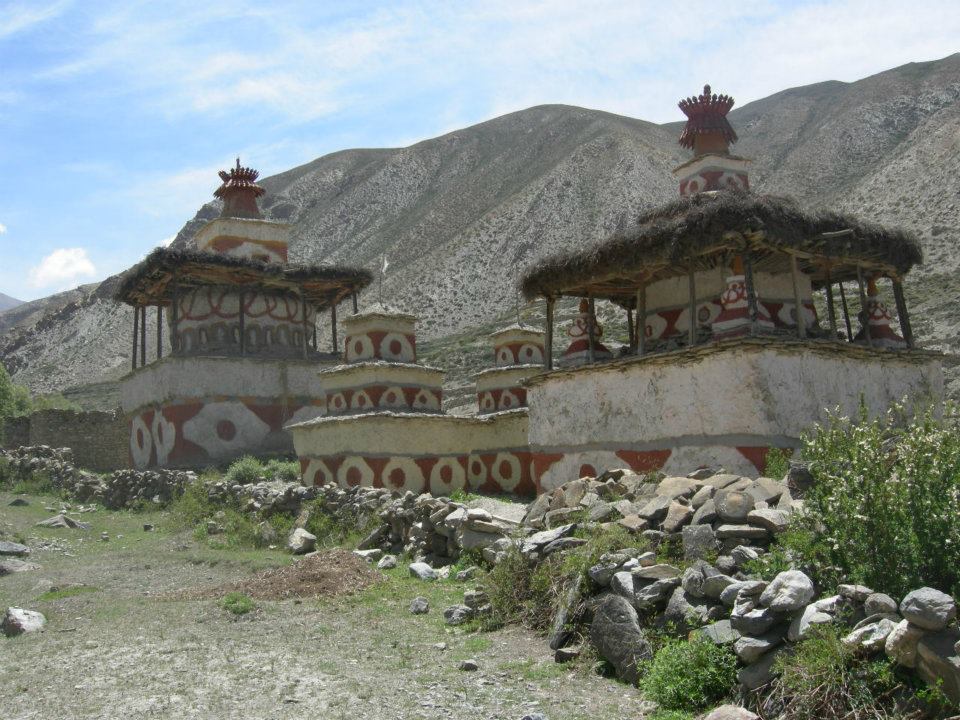
Chortens of Samling. Photo credit: Unknown.

He became the first of many Yangtön lamas at Samling to collect and preserve sacred Yungdrung Bön texts. Because of this, many volumes of scripture have been preserved throughout the course of many centuries. It was during a trip to Samling Monastery in 1961 C.E. that Dr. David Snellgrove discovered a copy of the Zi Ji, a hagiography of Buddha Tönpa Shenrap. He subsequently wrote and published extracts from this text as one of the first English language translations of a Yungdrung Bön text, The Nine Ways of Bön. The Zi Ji volume that he consulted for his translation was estimated to be approximately 400 years old.

Currently, Lama Sherap Tenzin Rinpoche is the head of the monastery.  He was born in 1953 C.E. and has received extensive religious training and has been trained in the science of Tibetan medicine.

Left: H.E. Menri Ponlop Yangtön Thrinley Nyima Rinpoche, Center: H.H. 33rd Menri Trizin Rinpoche, Right: Yangtön Lama Sherap Tenzin Rinpoche. Photo credit: Unknown.

Nine Ways has a new Shop! Click the tap at the top of this page to see what practice support items are available. Currently, the Nine Ways Shop is fundraising in support of a memorial chorten that will be built in Tsarka Dolpo, Nepal for Yangtön Lama Tashi Gyaltsen. For more information about this chorten, go to this article: https://ravencypresswood.com/2025/10/18/in-support-of-a-memorial-chorten-for-yangton-lama-tashi-gyaltsen-rinpoche/

Raven Cypress Wood ©All Rights Reserved. No content, in part or in whole, is allowed to be used without direct permission from the author.

Did you enjoy this content? This article is made possible by generous donors who want content like this to continue to be available. Don’t want to miss a post? Scroll to the bottom and click “Follow this blog.”

Join the mandala of Nine Ways supporters by donating through one of the services listed below.