Blog Archives

Summer Ritual at Menri Monastery: The Great Secret Dō Ritual of The Vast Sky

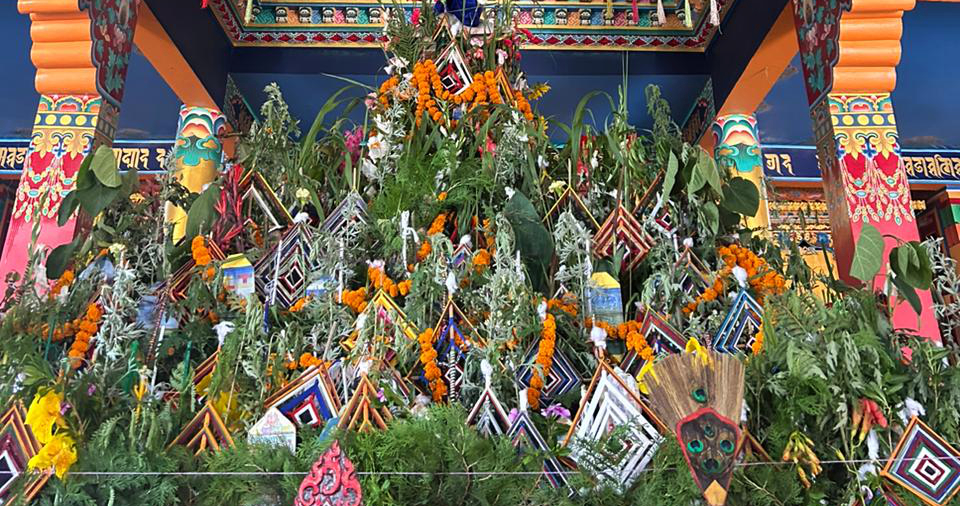
Representation of the phenomenal world with its wondrous and desirable contents created at Menri Monastery

During the 12th-16th lunar days of the 5th lunar month, Menri Monastery together with the Rayna Menling Nunnery will conduct the annual Kha Long Sangwé Dō Chen, The Great Secret Dō Ritual of the Vast Sky. In 2025, these dates correspond with July 7th-11th. The purpose of this elaborate ritual cycle is to pacify or expel obstacles and malevolent energies, rebalance the five elements, attract good fortune, longevity, and positive circumstances, and to bring healing and harmony to the environment and its seen and unseen inhabitants. This ritual was taught directly by the enlightened Lord Tönpa Shenrap Miwoché as a skillful method to work with external, worldly forces that interfere with the happiness and success of sentient beings. These teachings are part of the Second Way of Bön, The Way of the Shen of the Phenomenal World. As in every teaching and ritual of the Yungdrung Bön, the foundation of the practice is unbiased, unlimited compassion. Even when so-called “malevolent spirits” are expelled because of their unwillingness to stop harming others, the expulsion is from a base of compassion for both those being harmed as well as for those causing the harm. By interrupting their harmful actions towards others, it also prevents them from accumulating negative karma. Additionally, every ritual concludes with prayers of aspiration that all beings be happy and peaceful, and ultimately to realize the ultimate state of enlightenment that is beyond any kind of suffering or unhappiness.

To support the ritual of The Great Secret Dō Ritual of the Vast Sky, a representation of the phenomenal world is created along with all the good and precious things within it. These things are offered to the enlightened ones, the worldly protectors, powerful spirits, and all the six kinds of sentient beings. By offering to the deities, the accumulation of merit is increased and previous negative actions are purified. By offering to the worldly protectors, they are delighted and continue to fulfill their vows of protection and bestowing abundance. By offering to the powerful spirits, we bring harmony to our relationship with them and pay any debts that might invoke their retribution. By giving to all the six kinds of sentient beings, we fulfill their desires and their minds become peaceful and satisfied.

His Eminence Menri Pönlop Thrinley Nyima Rinpoche instructing the monks in creating namkha

About Namkha

In addition to the many offerings of torma, precious gems, foodstuffs, flowers and greenery, fragrant smells, soft materials, and so on; this ritual makes abundant use of the ritual object known as a namkha. The Tibetan term namkha literally translates as “sky” or “external space.” This term is often translated as “thread-cross.” There are many different kinds of namkha that have a diversity of form and function. Just as the shape, color, ingredients, and use of a torma is determined by its ritual purpose, so is the shape, color, and function of a namkha determined by its ritual purpose. As for the actual construction, a namkha is created by affixing thin pieces of bamboo or wood together to establish a frame. Then, beginning at the center and working outward, strands of colored wool, yarn, or thread are used to weave a net-like pattern over the frame. The length of the wood or bamboo is notched to allow the colored strands to catch and stay in place. There is a great variation in framework and patterns. For example, if the namkha is being used as a temporary abode of a deity or spirit, the pattern and colors used will be representative of the physical characteristics and hand objects of that deity or spirit. Namkha are used as a dwelling for deities or spirits during a ritual, to attract or repel specific energies and qualities, for protection from danger and disease, and as offerings, among other purposes.

Namkha created for the fire ritual of the deity Duk Kar, the White Umbrella Goddess

Dō Rituals

Buddha Tönpa Shenrap Miwoché taught 365 different types of rituals. The Great Secret Dō Ritual of the Vast Sky is categorized as a type of ritual. Because many of the dō rituals make use of namkha, some Western scholars have erroneously stated that the terms [Tibetan: mdos] and namkha are synonymous. This is incorrect. There are dō rituals that do not use namkha, and there are many namkha that are used in rituals other than those categorized as dō. In general, dō rituals are the most important of the ransom rituals used for eliminating harm to the life force, diseases, danger, and other disturbances from nonhuman beings. In general, the nonhuman beings causing harm are offered an exchange of desirable things for the release of those being harmed. Namkha are used to invite the enlightened deities who are the objects of refuge for the ritual, and the protectors who subdue the malevolent forces. Other types of namkha are made as offerings to the deities and gifts of exchange for the ransom. Still other types of namkha act as supports for the return of the life force, and the rebalancing of the external, internal, and secret five elements. There are different kinds of dō rituals in order to appeal to the variety of nonhuman beings that create disturbances for humanity and the environment.

Namkha of various auspicious symbols

The scripture for the Kha Long Sangwé Dō Chen is almost one thousand pages in length. It includes chapters dedicated to instructions for the construction of ritual items, texts for the ransom rituals for men, women, and children, rituals for stopping and healing illness and contagious disease, rituals for renewing and fulfilling sacred vows, rituals for calling upon the magically powerful and benevolent worldly protectors, rituals for strengthening the life force and prosperity, rituals for appeasing the many kinds of nonhuman spirits, rituals for forcefully repelling negative forces, and so on. The overall purpose of all of these rituals is to bring peace and happiness within the world of appearances, and to generate faith in the Yungdrung Bön teachings which will guide all sentient beings to the ultimate goal of liberation from all the suffering of cyclic existence.

Raven Cypress Wood and Khenpo Nyima Künchap Rinpoche prepare namkha for an elaborate ritual offering to the lu [Sanskrit: naga]

Raven Cypress Wood ©All Rights Reserved. No content, in part or in whole, is allowed to be used without direct permission from the author.

Did you enjoy this content? This article is made possible by generous donors who want content like this to continue to be available. Join the mandala of Nine Ways supporters by following this link: https://ravencypresswood.com/donate/

Don’t want to miss a post? Scroll to the bottom and click “Follow this blog.”

Welcoming and Installing the Sacred Remains of the Spiritual Master

His Holiness the 34th Menri Trizen, His Eminence Menri Pönlop, Khenpo Ronpoche and others escort the sacred Ku dung to be installed at Triten Norbutse Monastery

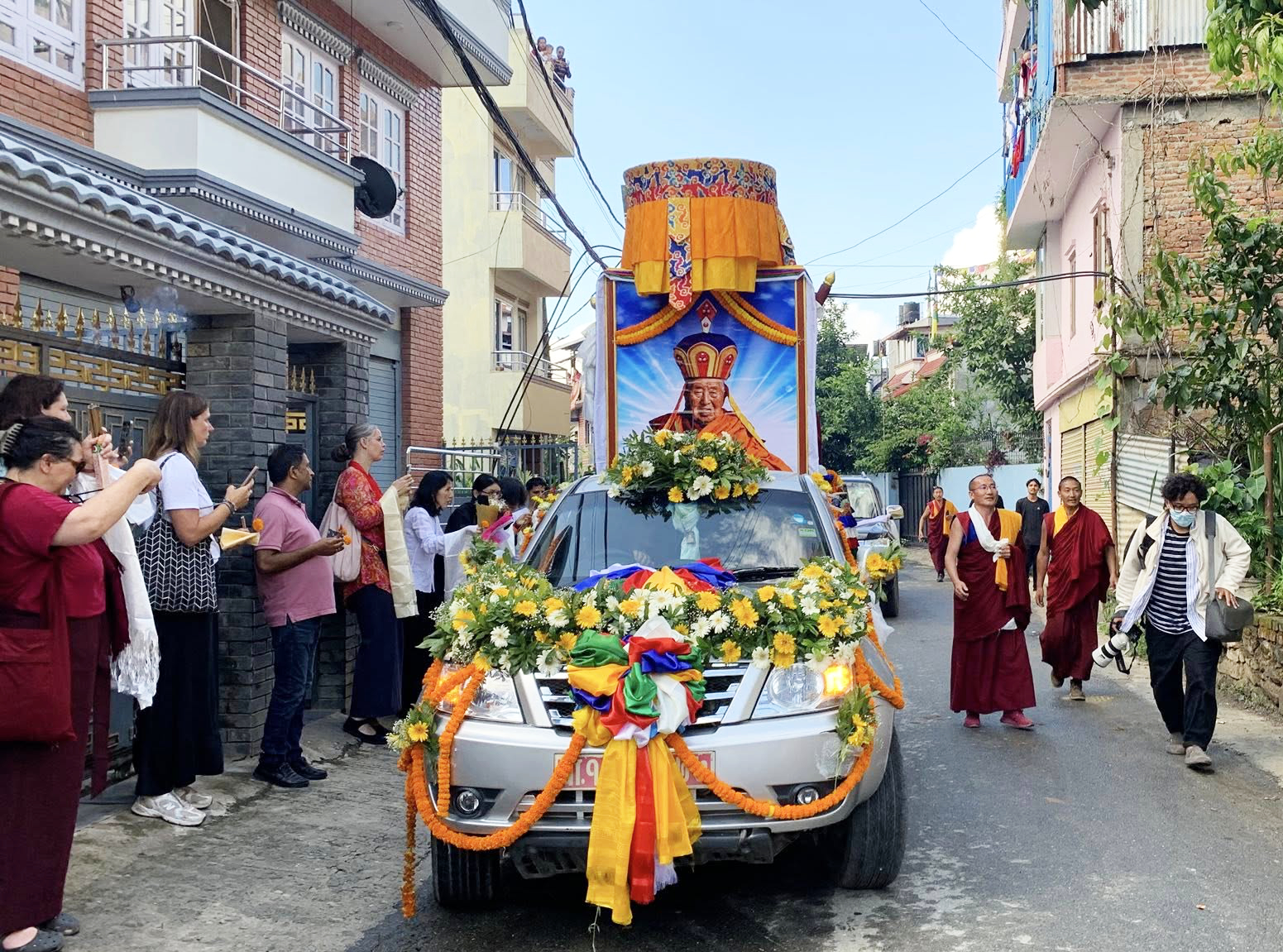
On the evening of June 20, 2025 with wondrous signs in the environment, the lord of refuge His Eminence Yongdzin Tendzin Namdak Rinpoche passed from his state of tukdam and left his sacred physical remains. On June 21, 2025, accompanied by His Holiness the 34th Menri Trizen, His Eminence Menri Pönlop Rinpoche, Khenpo Tenpe Yungdrung Rinpoche, and other khenpos, geshes, and an ocean of faithful disciples, the sacred remains were escorted to Triten Norbutsé Monastery.

The road was lined with faithful followers, and the path to the monastery was ornamented with auspicious symbols drawn with golden flowers. There were victory banners flowing, sweet-smelling incense, and the sacred sound of drums, cymbals, and chanting filled the air.

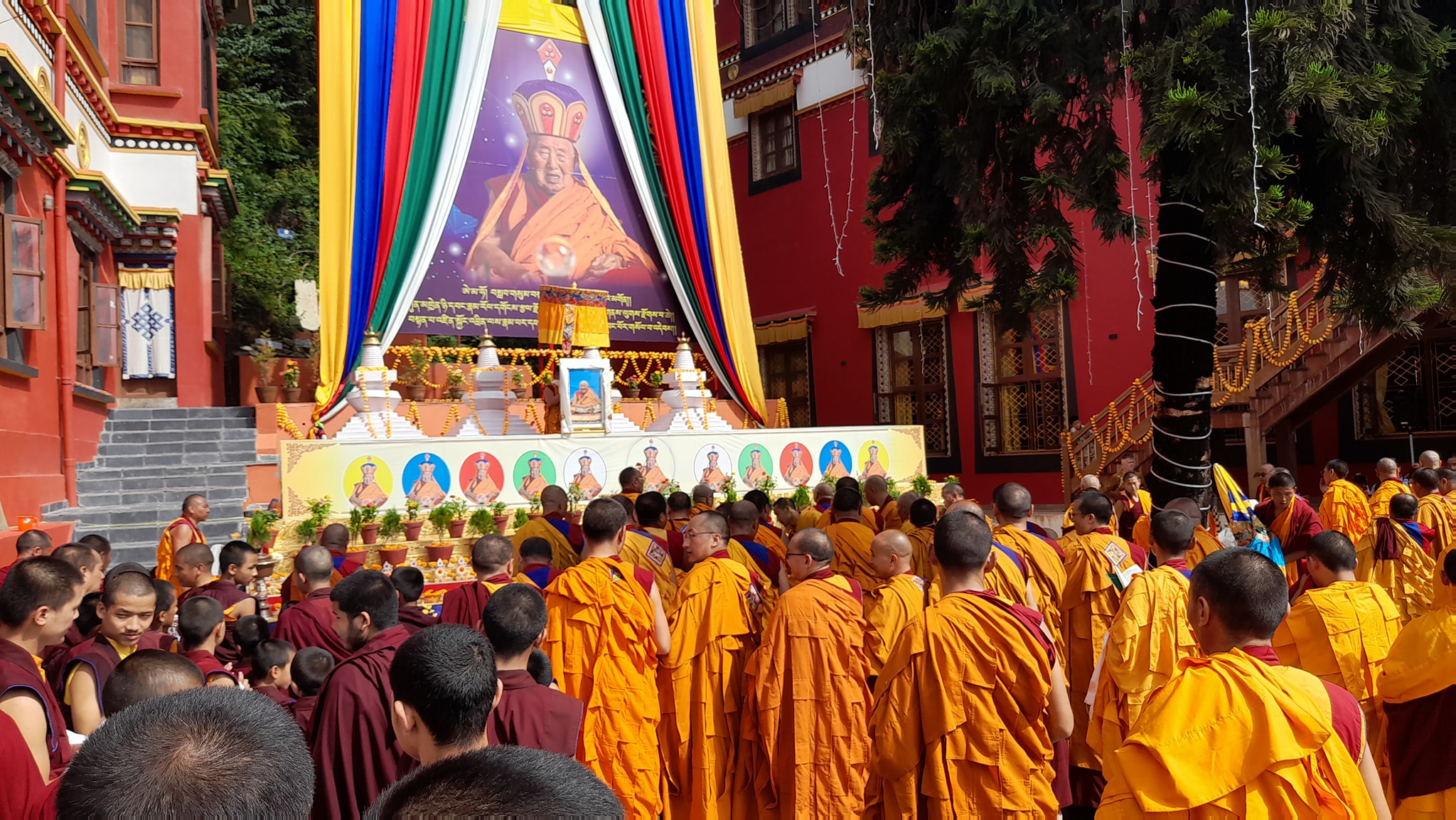
The precious remains were installed at the monastery with auspicious signs. The monastic community presented the five offerings and repeatedly made fervent prayers of praise and aspirations. The times for visiting and viewing the sacred remains by the faithful will soon be announced.

A video of the sacred procession can be viewed at this link: https://www.facebook.com/watch/?v=1258612932653054

Raven Cypress Wood ©All Rights Reserved. No content, in part or in whole, is allowed to be used without direct permission from the author.

Did you enjoy this content? This article is made possible by generous donors who want content like this to continue to be available. Join the mandala of Nine Ways supporters by following this link: https://ravencypresswood.com/donate/

Don’t want to miss a post? Scroll to the bottom and click “Follow this blog.”

When the Lama Passes Beyond: A Brief Explanation

On the 16th day of the sacred Saga Dawa month in the Tibetan Wood Snake year, June 12, 2025, at 7:45 AM, His Eminence Menri Yongdzin Lopon Tenzin Namdak Rinpoche, master of the three lineages and spiritual elder of the Yungdrung Bön religious tradition, passed beyond this life and entered into a state of deep meditation, tukdam, at his lama residence at Triten Norbutse Monastery. In general, tukdam refers to a state of meditative stability attained by meditation masters that continues after the external breath of their physical body has ceased but the internal breath, or winds, remain.  Therefore, the subtle channels through which these winds move remain stable. The area of the body containing the heart chakra remains warm to the touch.  The skin remains soft, and the face retains a glow of vitality.  Often, the master is sitting in meditation posture, but can also be in the yogic posture of the “sleeping lion” lying upon the right side of the body, knees together and slightly bent with the right hand under the head and the left arm resting upon the body.  During this time, great care is taken to not disturb the body or interrupt the state of mediation.  Great blessings can be received by connecting with the master during this important time.

After an indeterminate number of days, the internal winds cease, the channels collapse, the physical body slumps, and the warmth dissipates from the heart center. At that time, chants related to the cleansing of the sacred body are recited while the physical remains are ritually bathed with water mixed with special herbs.  Sacred seed syllables are then written on the body and the body is wrapped in a pure white cloth. Disciples who connect with the lama during this time either by being near the sacred remains or at a distance, can receive great blessings.

Tsok offerings

Because the master has attained a state of enlightened realization, the prayers and rituals that are offered during this time are different than that for an ordinary being.  Rather than offering prayers to support their experience of death, disciples focus upon practices to honor the teachings of the master.  These prayers and practices include performing acts of virtue to benefit all beings, reciting aspirational prayers such as Tséwang’s Precious Mala of Beneficial Aspiration Prayers, the Tséwang Monlam, and practicing guru yoga in a pure and fervent way. The English language translation of Tséwang’s Precious Mala of Beneficial Aspiration Prayers has been made publicly available for personal use by and can be downloaded at this link: https://drive.google.com/file/d/1d1LOlW-w3zlTV1HRbedK625IEcwwImPI/view?usp=share_link. Additionally, the monastic community offers many tsok, or sacred feast offerings. At the time of cremation, an elaborate fire ritual called Kün Rik is performed during which a wide variety of offerings are presented to the entire cycle of deities. In honor of the great kindness and generosity of His Eminence Yongdzin Tenzin Namdak Rinpoche throughout his life, who shared his guidance and teachings with countless sentient beings in order for them to escape the misery of cyclic existence, the English language translation of Prayers to the Lama is being made publicly available for the personal use of the worldwide Yungdrung Bön family. The prayer can be downloaded at this link: https://drive.google.com/file/d/1H0npefK4YasUAiDGTM3tLgwwbyNPypmc/view?usp=share_link

Although the master has attained the ultimate state of realization and therefore does not experience the 49 days of transiting the bardo, the 49 day period is still observed as a time to continue with aspirational and devotional prayers, renewal of vows especially those received from the master, fervent guru yoga, and acts of virtue in order to honor the teachings and spiritual guidance of the master.

Supplication to the Lord of Refuge, Menri Yongdzin Lopön Tenzin Namdak Rinpoche

How marvelous! Teacher of the three trainings and protector of migrating beings, you are an emanation of the omniscient Nyiwang who perfects enlightened intention with dynamic energy. Having the total perfection of the abiding nature of sutra and trantra, you hold and protect the teachings through your completely pure enlightened activities. To Yongdzin Mawé Wangpo I supplicate! (Written by the supreme Lord of Refuge, the 33rd Menri Trizen Rinpoche on the 8th lunar day of the 3rd lunar month.)

Raven Cypress Wood ©All Rights Reserved. No content, in part or in whole, is allowed to be used without direct permission from the author.

Don’t want to miss a post? Scroll to the bottom and click “Follow this blog.”

Want to join the mandala of Nine Ways supporters? Follow this link https://ravencypresswood.com/donate/ It’s easy through Paypal, Zelle, and Venmo.

Annual Reading of the Enlightened Teachings of Lord Buddha Tönpa Shenrap

Nuns of Rayna Menling reading from the teachings of Buddha Tönpa Shenrap

Each year at Pal Shenten Menri Monastery and Rayna Menling Nunnery on the 14th and 15th lunar days of the 4th month, the enlightened teachings of Lord Buddha Tönpa Shenrap Miwoché are read out loud. In 2025, these dates coincide with June 10th and 11th on the Western calendar. The sacred volumes containing these teachings are carried by both the ordained and laypeople as they circumambulate the temple. As a sign of respect for the sacredness of these texts, they are carried above the waist. Most often, they are carried on the shoulder. After bringing them into the temples, offerings such as incense are presented, and the text are distributed to the ordained for two full days of reading. Reading the scriptures aloud is considered one of the thirteen activities for a meaningful human life. (See previous article: https://ravencypresswood.com/2020/03/21/the-thirteen-yungdrung-bon-activities-for-a-meaningful-human-life/) For those inspired to read the words of Buddha Tönpa Shenrap on these days, The Beneficial Mantric Praise of Künsal Jamma Chenmo, The Jamma Ngak Tö, is considered a root text for the practice of Sherap Jamma that was spoken by the Buddha himself. Through the verses of praise for each of the syllables of Jamma’s root mantra, the profundity of the innumerable manifestations of Jamma is revealed. The teaching and transmission for this text has been widely shared in both the East and West.

“The mantra of the twenty-one victors, the praise of the Victorious Jamma of Bön, was spoken by the Victor Tönpa Shenrap. These twenty-one verses are, without exception, beyond cyclic existence and a completely pure practice. By reciting out loud the twenty-one praises, one will obtain immeasurable benefits. Praise to Tönpa Shenrap for revealing these twenty-one praises of the root mantra!”

Extract from The Beneficial Mantric Praise of Künsal Jamma Chenmo
His Holiness the 34th Menri Trizen, His Eminence Menri Pönlop Rinpoche, and other monks of Menri Monastery carry texts containing the words of Buddha Tönpa Shenrap.

The canon of sacred Yungdrung Bön texts is divided into two categories. The first category of texts contains the teachings of the primordial enlightened ones and Lord Buddha Tönpa Shenrap. This category is known as Ka [Tibetan: bka’] meaning “enlightened words or speech.” These texts are further divided into four primary categories: (1) Dō [Tibetan: mdo], Sutra, (2) Bum [Tibetan: ‘bum], The Hundred Thousand, (3) Gyü [Tibetan: rgyud], Tantra, and (4) Dzö [Tibetan: mdzod] The Treasury. In some catalogues, there can also be a fifth category of miscellaneous texts. Although each Yungdrung Bön temple in Tibet had a significant collection of Ka scriptures, the collections were not necessarily complete. This was especially due to repeated persecution throughout history of the Yungdrung Bön tradition which necessitated the hiding of texts. It is thought that only one complete collection survived. According to a catalogue of the Ka done by the 23rd abbot of Menri there are a total of 175 volumes. This number can vary according to various collections due to the availability of texts that could be copied, whether only main titles were counted as a volume, and so on. Regardless, the Sutra section contains texts such as the hagiography of Buddha Tönpa Shenrap, The Ritual Practice of the Medicine Buddha, The Root Scripture for Jamma, the four volumes of medical texts, and so on. The Hundred Thousand section contains the sixteen volumes of the Khams Gyé, The Unsurpassed Scripture Regarding the Eight Realms, the Yum Dō, The Heart Sutra of the Mother of the Great Vehicle, and so on. The Tantra section includes the Buddha’s teachings of the Mother Tantras, the Father Tantras, Phurba, Walsé, and so on. The Treasury section includes the teachings of dzogchen such as The Aural Transmission of Zhang Zhung.

“Gyajin, a ruler of the gods, rose from his seat and, having removed his upper robe from one of his shoulders, he set his right knee upon the ground. Having placed his hands together, he made a request of The Teacher with these words: “Free from the fault of wrongdoing, you have perfected every good quality. You are the source from which arises all happiness and exalted qualities. Good omniscient Shenrap, what should one do to practice or make use of the Essence of the Mother of the Great Vehicle?”

In response to that, Shenrap bestowed his teaching. 

“Gyajin, ruler of the gods, and all you yungdrung sempa, when practicing or making use of the Essence of the Mother of the Great Vehicle, all phenomena that arise from worldly existence, that arise as precious ornaments, that arise as an appearance, that arise from emptiness, that arise from individual clarity, that arise from self-awareness, that arise from the changeless and indestructible vast expanse, or that arise from equanimity; are neither appearance nor emptiness, neither existent nor nonexistent, neither eternal nor nothingness, neither born nor negated. Why is that? All of those, in every way, are unobjectifiable. Even their self-nature is unobjectifiable. Therefore, they are primordially without a source and without a birth. They have no beginning. Abiding within the equanimity of no beginning is the unfabricated, perfected, single sphere.

Extract from The Heart Sutra of the Mother of the Great Vehicle to be published in the forthcoming A Mala of Blazing, Wish-fulfilling Jewels: A Collection of Daily Practices of the Yungdrung Bön Religious Tradition by Raven Cypress Wood
Monks and nuns of Menri Monastery circumambulating with the scriptures of the Ka.

The second category of canonical texts is known as the Ka Ten [Tibetan: bka’ brten], Relying upon the Words. The Bön canon is referred to within Bön texts as the Ka and the Ka Ten. (This differs from the Buddhist canon which is referred to as the Kangyur and the Tengyur.) The Ka Ten includes commentaries, practices, rituals, and so on that rely upon the scriptures of the Ka for the root text. In order for a text to be included in the Ka Ten, it must undergo a rigorous and methodical analysis. There are over 300 volumes included within the Ka Ten. Some catalogues do not include texts after the 14th century which are thought to be mainly texts of the New Bön tradition. Other catalogues do include these texts as well as the collective writings of other Bön sages such as Shardza Tashi Gyaltsen. Additionally, many texts are incredibly rare and are guarded from outsiders. Therefore, few if any copies of these texts exist. Some texts are considered valid to be included in the Ka Ten by some, while being considered invalid and thus excluded by others. Titles can be included within unrelated volumes or counted individually, and so on. Even so, it is generally accepted that there are over 300 volumes of Ka Ten scriptures. These volumes include commentaries and practices based upon scriptures of the Ka such as The Practice Manual of the Aural Transmission of Zhang Zhung by Dru Gyalwa Yungdrung, scriptures of philosophy and logic, biographies, historical accounts, compositions of sacred songs, poetry, and advice for disciples, collections of liturgical texts, and so on.

I, of inferior intelligence, but for the benefit of beings and for the sake of explaining at least part of the meaning, will explain the Sky Ladder to Freedom, an Abridged Commentary of the Meaning of the Heart’s Blood of Bön, the Mantric Praise of Jamma. If one were able to explain the commentary on the merits of Jamma in great detail including the characteristics of each of the deities, it would amount to twenty-one great chapters in many volumes. ”  

Extract from A Sky-Ladder to Freedom: An Abridged Commentary Regarding the Meaning of the Words of the Mantric Praise of Jamma, the Deity Who Protects From All Things composed by the great 23rd abbot of Menri Monastery His Holiness Nyima Tenzin Rinpoche
Traditionally wrapped and labeled Yungdrung Bön scriptures.

Tibetan translations by Raven Cypress Wood

Raven Cypress Wood ©All Rights Reserved. No content, in part or in whole, is allowed to be used without direct permission from the author.


This article is made possible by generous donors who want content like this to continue to be available. Want to join the mandala of Nine Ways supporters? Follow this link https://ravencypresswood.com/donate/


Don’t want to miss a post? Scroll to the bottom and click “Follow this blog.”

Developing Knowledge & Wisdom through the Power of the Lion of Speech

Mawé Sengé, Lion of Speech, with a sword of knowledge and a scripture.

After the Tibetan New Year celebrations, students at Menri Monastery enter into an intensive retreat to cultivate the qualities of the wisdom deity Mawé Sengé, Lion of Speech. This retreat begins on the 24th lunar day of the 1st month and concludes on the 30th lunar day. In 2025, these dates are March 23rd – March 29th on the Western calendar. The purpose of this retreat is to receive the blessings and empowerment of the wisdom deity Mawé Sengé in order to develop and sharpen the students’ intellect to support their upcoming studies in the new school year. The practice of Mawé Sengé is performed many times each day and the mantra of the deity is recited as much as possible throughout the retreat with a minimum accumulation of one hundred thousand mantra recitations.

Mawé Sengé is the manifestation of the Dzok ku, the enlightened state that spontaneously expresses perfected qualities. If practiced regularly as a yidam deity, he clears away the darkness of confusion, develops the intellect, and gives a quick and steadfast memory without forgetfulness. If his practice is properly applied and accomplished, there are seven specific signs that arise. These are called The Seven Signs of Attaining Wisdom that Blazes Like Fire. These seven signs are:

  1. The sign of having removed the darkness of lack of knowledge from the intellect. Specifically, this refers to removing a weak or unclear intellectual understanding. 
  2. The sign of having the eye of wisdom. This is the attainment of clairvoyance, expansive knowledge and wisdom.
  3. The sign of being like a lion of glorious poetry. This refers to the ability to write expert discourses, specifically scholastic poems and compositions.
  4. The sign of the sun of superior knowledge arising. This refers to the capability of having clear knowledge, without any confusion, regarding the qualities of any knowable object. 
  5. The sign of attaining the recollection of intelligence that is never forgotten. This refers to a steadfast capability of remembering what has been learned without forgetfulness.
  6. The sign of being like a thunderbolt when debating. This refers to the capability to brilliantly overcome all others, without defeat or fear, when debating any subject whatsoever.
  7. The sign of the intellectual memory being fast like lightening. This refers to an extraordinary ability of having a clear and quick memory.

“I go for refuge to the wisdom deity for the intellect. I generate the supreme mind of enlightenment for the benefit of vigorous training in the highest wisdom. Having compassionately purified all karmic obscurations without exception, please bestow the attainments of an increased intellect, useful knowledge, and a divine voice!”  

— From The Short Practice of Mawé Sengé. Tibetan translation: Raven Cypress Wood

Mawé Sengé holding a sword and a butter lamp

In the Yungdrung Bön tradition, there are two principal forms of the wisdom deity Mawé Sengé. Both of these forms share most characteristics. However, one form holds a sword and a scripture as the hand objects. The other form holds a sword and a butter lamp. This second principal form of Mawé Sengé is according to the prayer, An Offering of Praise for the Supreme Wisdom Deity Sherab Mawé Sengé, A Garland of Utpala Flowers composed by the highly revered Nyammé Sherab Gyaltsen Rinpoche.

“With a sword of wisdom held in your right hand, you cut the root of deluded thoughts and self-grasping.

With a butter lamp of clarity held in your left hand, you dispel the dark intellect and ignorance of migrating beings.

In the space to your right and left, the sun and moon blaze with the splendor of the inseparability of method and knowledge.”

— Extract from An Offering of Praise for the Supreme Wisdom Deity Sherab Mawé Sengé, A Garland of Utpala Flowers

Tibetan translations by Raven Cypress Wood

Raven Cypress Wood ©All Rights Reserved. No content, in part or in whole, is allowed to be used without direct permission from the author.


Did you enjoy this content? This article is made possible by generous donors who want content like this to continue to be available. Join the mandala of Nine Ways supporters by following this link: https://ravencypresswood.com/donate/


Don’t want to miss a post? Scroll to the bottom and click “Follow this blog.”