
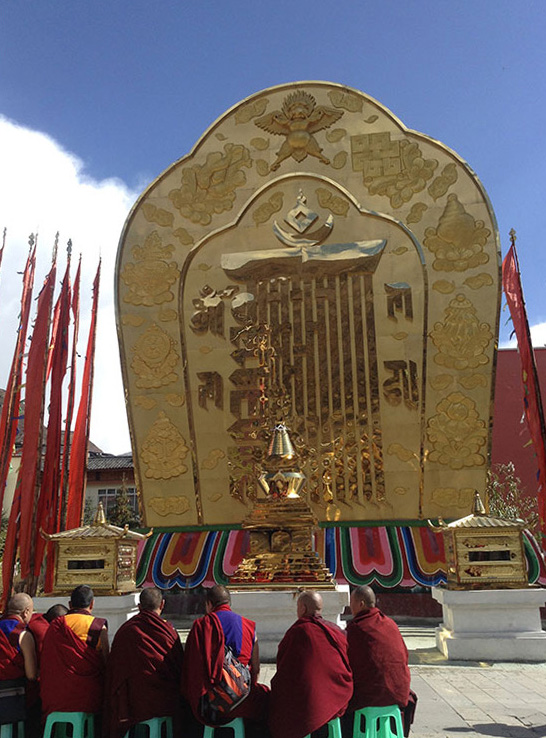
The Eight Auspicious Symbols displayed on a shrine before an image of Lord Tonpa Shenrap at Triten Norbutse Monastery. Photo credit: Raven Cypress Wood
In the Yungdrung Bön tradition, the Eight Auspicious Symbols are displayed in order to bring good luck and increase positive circumstances. In the Tibetan language, they are called Tashi Dze Gye. Each symbol has a specific meaning and energy.
 The Glorious Endless Knot, Tibetan: Pal Be’u, symbolizes the interdependence of all things. It also represents activities and knowledge.
 The White Conch Shell, Tibetan: Düng Kar, symbolizes the far-reaching sound of the Buddha’s teachings as well as melodious sound in general.
 The Wheel, Tibetan: Khorlo, sometimes referred to as The Wheel of Dharma, symbolizes the Buddha’s teachings. Each aspect of the wheel such as the rim, the hub and the spokes all have meaning according to the context within which the wheel appears.
 The Golden Fish, Tibetan: Ser Nya, symbolize freedom and liberation, as well as skill with handicrafts and power in the hands for healers.
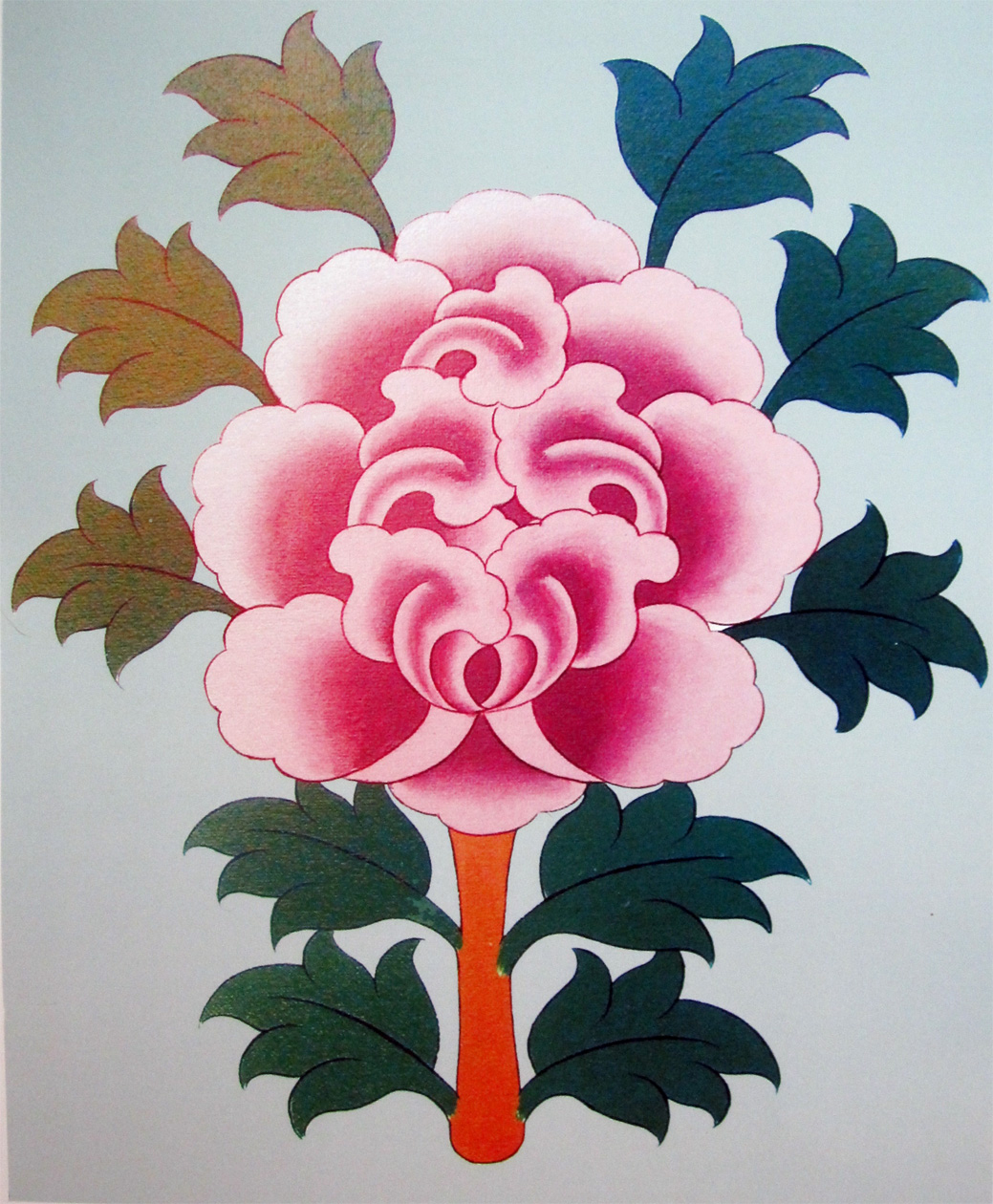 The Lotus, Tibetan: Pema, symbolizes purification.
 The Victory Banner, Tibetan: Gyaltsen, symbolizes victory over all obstacles, as well as gaining happiness.
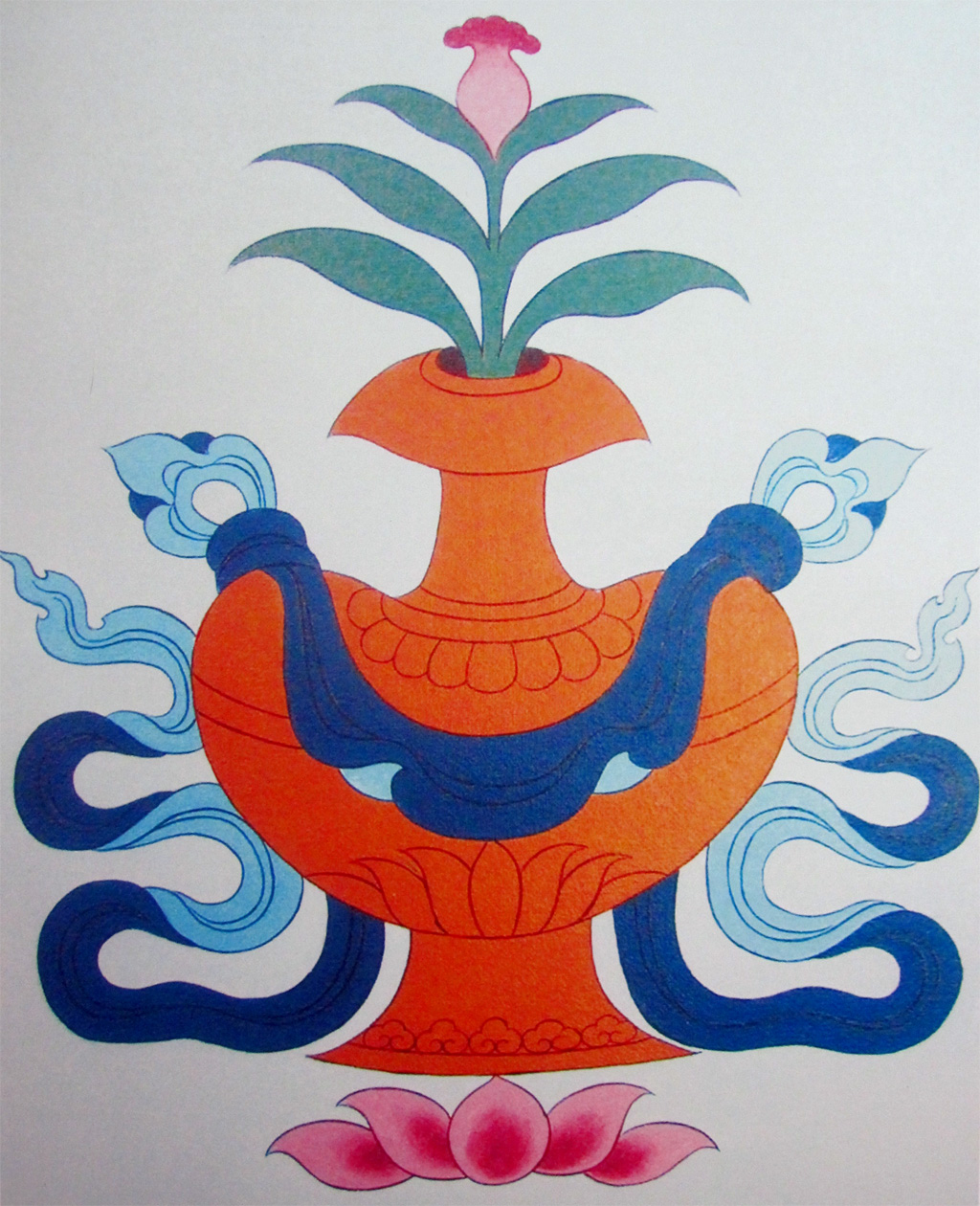 The Vase, Tibetan: Bumpa, symbolizes wealth and virtues.
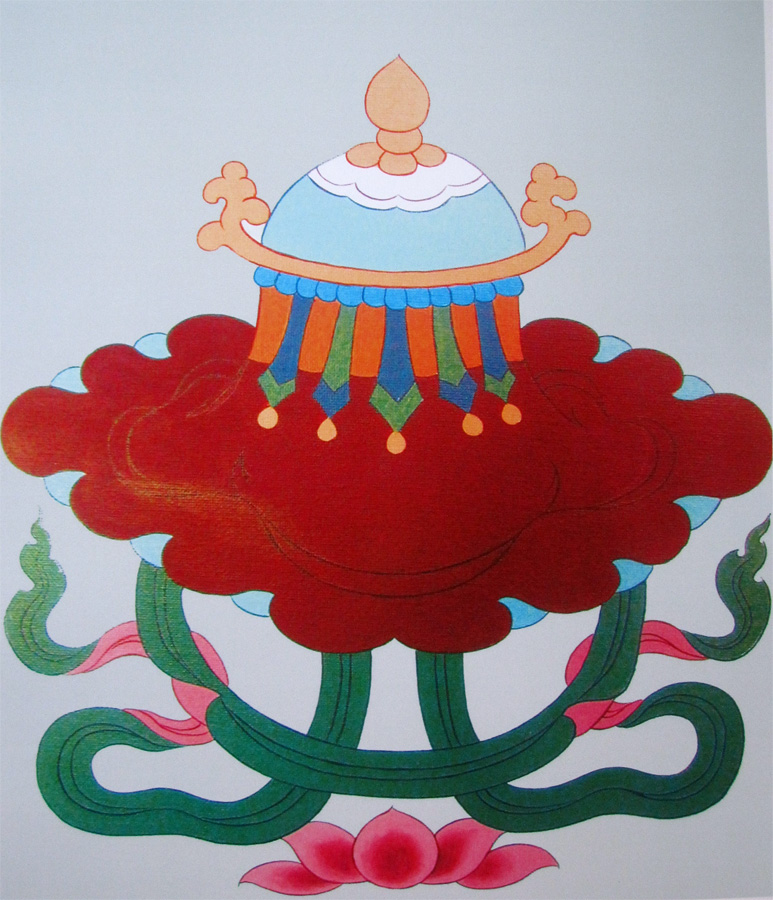 The Parasol, Tibetan: Duk, symbolizes being protected from suffering as well as prosperity and good luck for the head.

 Nine Ways