Category Archives: Tibetan Lunar & Religious Calendar

Feast Offering to the Deities of the Mother Tantra

Untitled

Mother Tantra deities as painted by Lama Kalsang Nyima. Photo credit: Raven Cypress Wood

On the 21st and 22nd lunar days of the 1st month, Menri Monastery in Dolanji, India will perform a feast offering to the deities of the Mother Tantra according to the Shen tradition. These dates are March 23rd and 24th, 2022 on the Western calendar. This kind of feast offering, known as tsok [Tibetan: tshogs] literally means “collection, accumulation, assembly.”

The source of the Mother Tantra within the Yungdrung Bön religious tradition is the primordial Buddha Küntu Zangpo. It has three cycles: external, internal and secret. Each cycle has a root text and a commentary that was written by the sage Milu Samlek. The main yidam of the Mother tantra is Sangchok Tartuk and his consort Khandro Chema Ötso. Of the two types of either peaceful or wrathful, the tsok of the Mother Tantra is categorized as wrathful.

menri ma gyud tsok 2021

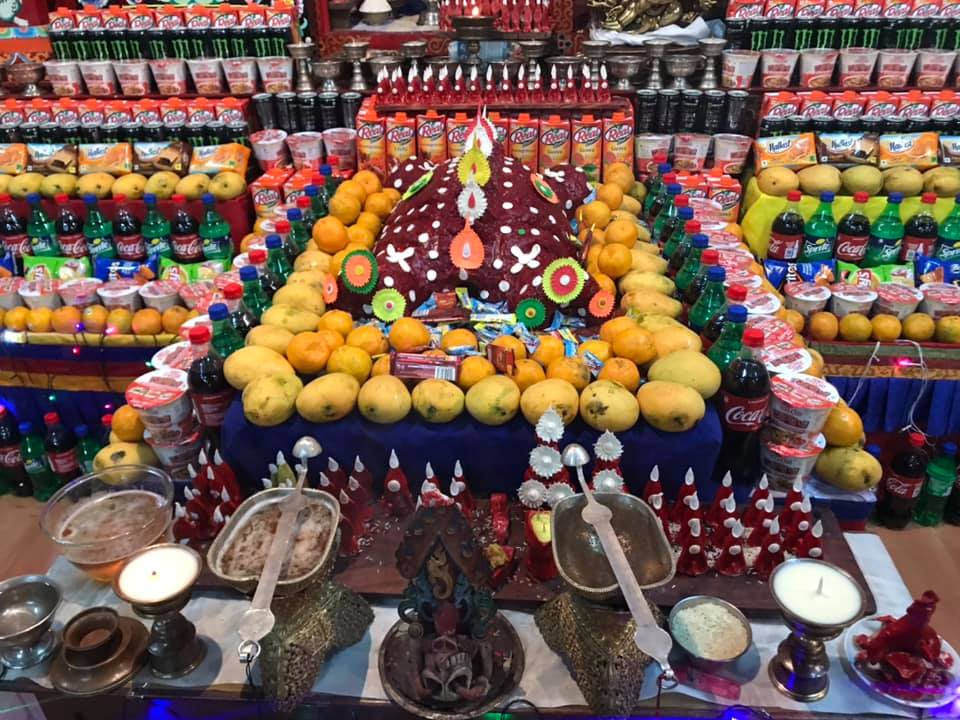
Tsok offerings for the principal deities and retinue of the Mother Tantra. Photo credit: Unknown

For those who have vows with a yidam deity, performing a tsok is an opportunity to repair broken vows or commitments related to the yidam practice and increase merit and wisdom. Having offered to the enlightened beings, we gain more power and energy. Additionally, past negative actions and the obstacles and imbalances of daily life are purified. Qualities such as health, longevity, prosperity, confidence, stability are enhanced. When undergoing a deity retreat, a tsok is performed during the final session of practice each day.

When performing a tsok, the ritual can be done in its condensed, medium-length, or extensive forms. This is determined by the purpose of the tsok, the sponsor, the circumstance, and the umdzé or ritual director of the feast offering. However, every tsok has a similar structure consisting of preparation, preliminaries, prayers related to the specific deity together with their retinue, and the concluding prayers.  In general, once the length of the tsok is determined the necessary sacred substances, offering torma, and food offerings are prepared. Everything must be clean, prepared according to the text, and placed in its proper position in the shrine area. The preliminary practices consist of the usual foundation of setting an boundary in order to keep out obstacles and to keep in the blessings, going for refuge, generating the mind of enlightenment for self and others and admission of wrongdoing and purification.

The tsok offerings are then ritually cleansed with water and incense. The tsok is then empowered through visualization and mantra and becomes delicious, containing the eight qualities of nutrition, as well as limitless auspiciousness and positive qualities. The principal deity are retinue are formally invited to tsok and asked to reside in the objects of support such as the yidam torma or image that has been centrally placed on uppermost level of the shrine. Now that the enlightened deity is present, prostrations are offered. One can also take this opportunity to confess any broken vows or commitments to the deity and receive purification and renewal of those vows.

wrathful tsok

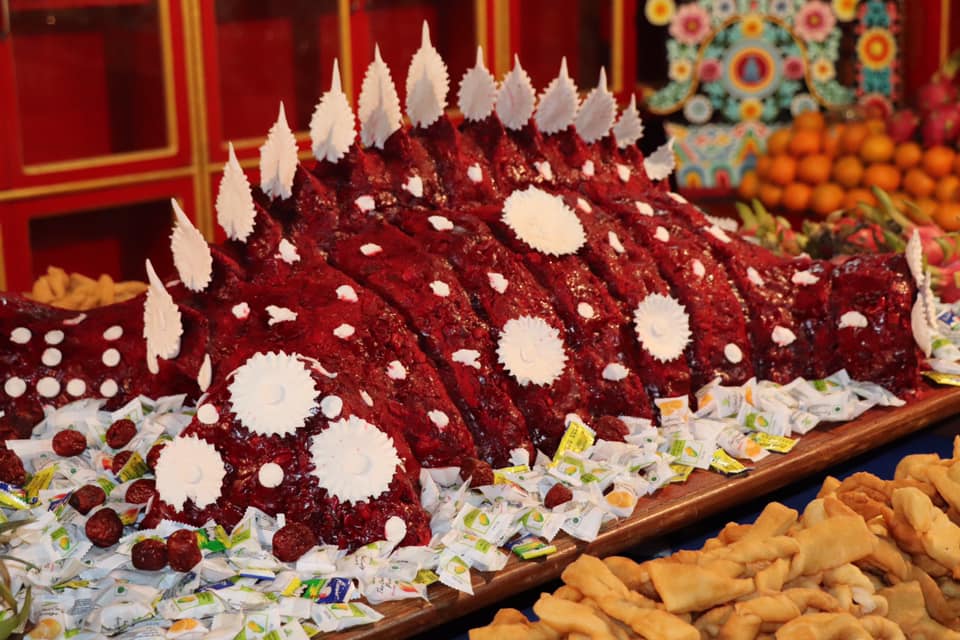
A wrathful tsok offering. Photo credit: Unknown

The eight offering goddesses are imagined to present the eight external offerings to the assembly of deities. Then, rakta mixed with tea is offered and is symbolic of a blood offering. This represents offering the liberation of our desire and attachment. Next, the ritually prepared medicinal alcohol is empowered and presented to the yidam deities which represents offering our wisdom. The tsok is then liberated by being cut. The top-most portion is offered to the deities, and the next portion is offered to the lineage lamas of the practice being performed. The linga torma represents outer enemies and obstacles as well as the inner five poisons, wrong views etc. This torma is now presented to the yidam, liberated by cutting, and then offered while requesting the ordinary and supreme attainments of the practice. The Yungdrung Bön protectors are presented with offerings, the prayer of delighting the deities and the lineage with the tsok is performed, and the prayer of attainment is performed.

“Within this mandala where marvelous things arise,

there is a collection of enjoyable things such as sights, sounds, smells, tastes, things to touch, ornaments, Bön treasures, etc.

Through this unsurpassed cloud of offerings, both actually set out and imagined,

may our sacred commitments be fulfilled!

Through the blessings of having fulfilled our sacred commitments to you,

may the enlightened teachings of the Yungdrung Bön spread!

Dispel into space all external, internal, and secret obstacles!”

And,

“Emaho!

This sacred food is the essence of spiritual attainment.

I will partake of it and receive both the ordinary and the supreme spiritual attainments!”

Then, by eating the tsok, we renew our vows with the yidam deities and receive their blessing and empowerment. We then share the leftovers of the tsok offerings as a charitable gift to those lower beings who are powerless to take part in the tsok and depend upon our generosity to receive its blessings.

The concluding practices include prayers of aspiration and auspicious followed by dedicating all of the virtuous activity performed during the tsok for the benefit of every sentient being within cyclic existence.

For more information about the cycle of Mother Tantra texts, see previous article: https://ravencypresswood.com/2021/12/18/a-brief-introduction-to-the-mother-tantras-of-yungdrung-bon/

Tibetan translations by Raven Cypress Wood

Raven Cypress Wood ©All Rights Reserved. No content, in part or in whole, is allowed to be used without direct permission from the author.

Don’t want to miss a post? Scroll to the bottom and click “Follow this blog.”

Want to join the mandala of Nine Ways supporters? Follow this link https://ravencypresswood.com/donate/

Lunar Calendar: Time for the Practice of Nyammé Sherab Gyaltsen Rinpoché

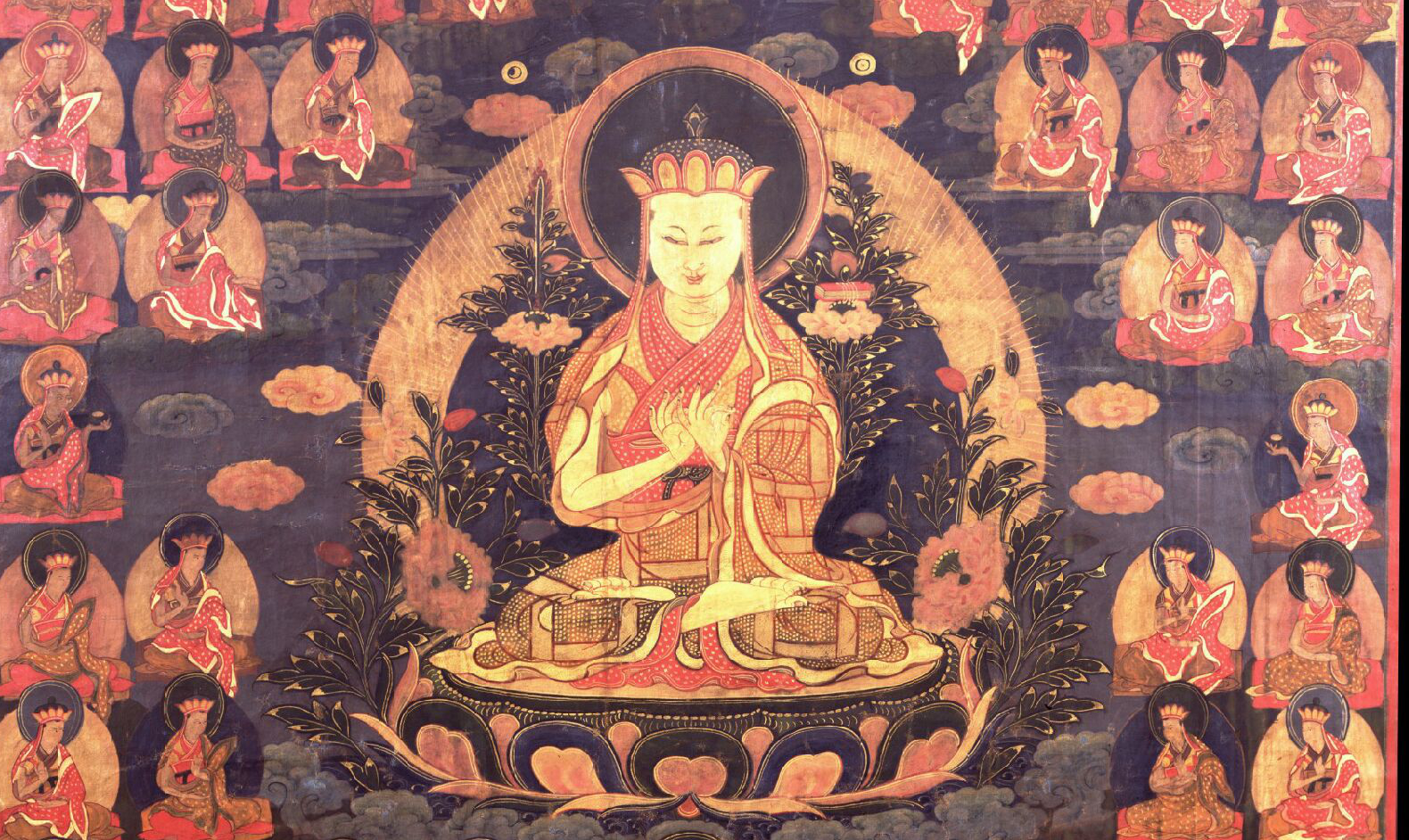
His Holiness the 1st Menri Trizin Nyammé Sherab Gyaltsen Rinpoché

Every new moon, the monks and nuns of Menri Monastery perform the Nyammé La Drup, the lama practice of Nyammé Sherab Gyaltsen Rinpoché who established Menri Monastery and brought together the scattered transmission lineages. This practice has its own preliminary prayers, main practice including a tsok offering, and concluding prayers such as prayers of blessing, aspiration and dedication. The next new moon coincides with Tuesday, February 1, 2022.

You are like a golden sunrise over the world

during the final 500 years of degeneration in this negative time.

From your great, thunderous river of Bön speech, 

your disciples’ afflictive emotions are washed clean at the very root.

Through the roar of your extensive knowledge of the three kinds of teachings,

you destroy the ignorant reasoning of variant tenet systems.

A majestic lion among men and leader of Menri,

I prostrate to you, crown ornament of abbots!

Homage to His Holiness the 1st Menri Trizin Nyammé Sherab Gyaltsen Rinpoché

Tibetan translation and content Raven Cypress Wood ©All Rights Reserved. No content, in part or in whole, is allowed to be used without direct permission from the author.

Don’t want to miss a post? Scroll to the bottom and click “Follow this blog.”

Want to join the mandala of Nine Ways supporters? Follow this link https://ravencypresswood.com/donate/

The Sadak Nye Lam Dé Zhi Ritual: Restoring Environmental Peace & Harmony

Mandala palace for the Sadak Nye Lam Dé Zhi ritual.

At Triten Norbutse Monastery each year during fourth lunar month from the 12th – 16th lunar days the Sadak Nye Lam Dé Zhi ritual is performed. In 2020, these dates coincide with June 3rd-6th. This ritual is performed in both monasteries and households throughout Tibet and His Eminence Yongdzin Tenzin Namdak Rinpoché has established this ritual as part of the yearly religious calendar at Triten Norbutsé Monastery. It is more commonly referred to by its shortened name “Nye Lam Dé Zhi” and monks often refer to it simply as “the Summer ritual.” The literal English translation of “Sadak Nye Lam Dé Zhi” could be rendered as “the four kinds of shortcut to the sadak.” The term “sadak” means rulers of the earth and the ritual primarily addresses four specific groups of sadak within this broad category: 1) the lu [Sanskrit: naga] who are associated with bodies of water, 2: a subgroup of sadak that are associated with the earth and soil 3) nyen who are associated with open fields and the sky, and 4) tö who are associated with boulders and cliffs especially red boulders and rocks. The purpose of the ritual is to appease, restore and cleanse all the worldly spirits due to disturbances caused by humanity. Thereby, it restores harmony between us and heals the natural environment and its elements of earth, water, fire, and wind. The Nye Lam Dé Zhi text that is used for the ritual was discovered as a terma, or hidden treasure, by Pönsé Khyunggö Tsal in the 12th or 13th century at Mt. Tisé [a.k.a Mt. Kailash.]

The Nye Lam Dé Zhi ritual includes prayers of apology to the four groups of worldly spirits for disturbing them by cutting trees, interfering with the natural course of waterways, digging into the earth, destroying or moving rocks, and generally causing the destruction of the natural environment. Our manipulation and control of these natural systems causes imbalances and disharmony between the elements and becomes a source of disruption, illness and upset for these worldly spirits. Therefore, we are subjected to epidemics, droughts, failing crops, increasing violence and military conflicts, as well as natural disasters from the elements such as floods, earthquakes, tornadoes, and landslides.

Namkha and offerings for the Sadak Nye Lam Dé Zhi. Photo credit: Unknown

Through their acceptance of our offerings and our heartfelt words of apology during the Nye Lam Dé Zhi ritual, we request that they stop causing or supporting the occurrence of epidemics, natural disasters, droughts, military conflicts, accidents, and misfortune etc. This ritual action combined with meditative focus has the power to pacify the vengeful and aggrieved minds of these spirits and therefore avert any further harm or injury caused by them. Additionally, these spirits will act to support and increase our prosperity, protect and increase crops and domestic animals, protect us from danger and accidents, and generally act on our behalf.

In general, it takes many monks for four full days to complete the preparations for the size of the ritual performed at the monastery. The construction of the dö, which represents the entire universe, begins with the creation of a sand mandala which is an architectural representation of the immeasurable palace within which the enlightened deities and worldly deities will be ritually invited to reside and stay during the ritual presentation of the offerings.

Yungdrung Bön monks creating the sadak nyelam sand mandala at Gyalshen Institute. Photo credit: Unknown.

In the center of the mandala upon four petals are the four seed syllables of the four principal enlightened lords of the Yungdrung Bön tradition: 1) Satrik Érsang, 2) Tönpa Shenrap, 3) Sangpo Bumtri, and 4) Shenlha Ökar. (For more information, see previous article: https://ravencypresswood.com/2016/08/20/the-four-principal-enlightened-ones/ ) Just beyond that is the four seed syllables of the four principal ones that subdue the four kinds of worldly spirits and the seed syllables for the four subduing garudas. Beyond that in the outer corners of the mandala are the seed syllables for the four kinds of worldly spirits which are the primary focus of the offerings and recitations. Beyond that are the four gateways in each of the four directions which are the entrances into the mandala palace. This palace is then filled with thread-crosses and torma that act as a support for the presence of the deities and worldly guests. It is then ornamented with greenery, grains, and other precious substances. Surrounding it are the various offerings that will be presented.

The actual ritual begins with the usual preliminaries which purify and consecrate all of the offerings, ritual implements and participants. Then, a brief ritual is performed in order to ask the earth goddess, Sayi Lhamo, for her permission and blessing to perform the Sadak Nye Lam Dé Zhi. Then, a ritual boundary is established that will remain until the conclusion of the ritual. These preliminaries are only necessary at the beginning and will not be performed again in the following days. After the preliminaries, the enlightened deities are invited to take their seats within the mandala palace, their respective mantras are recited and offerings are presented to them. Similarly, the subduers and the worldly spirits are invited. This too only needs to be performed once. Now that the presence of the deities is within the mandala palace, no one is allowed to come near the ritual dö unless it is to present offerings or pay homage. Much of the rest of the ritual recitations such as praising the qualities of the deities and the respective prayers for presenting each type of offering are repeated throughout the course of each of the days of the ritual. In conclusion, the four groups of spirits having become completely satisfied and happy with the ritual are asked to return to their respective homes. Then, prayers of aspiration for health, happiness, prosperity and good fortune are recited with the final prayer being that of dedicating the merit of the virtuous ritual activity for the benefit of all suffering beings. During this multi-day ritual performance, the specific texts associated with the lu, sadak, nyen and tö [Lu Bum, Sadak Bum, Nyen Bum, and Tö Bum] are continually recited by groups of monks in ancillary rooms.

In addition to the elaborate ritual of the Sadak Nye Lam Dé Zhi, there is much guidance and skillful methods for our interactions with the worldly spirits within the Yungdrung Bön religious tradition. Following these instructions prevents us from disturbing the spirits within the environment or creating an imbalance of the natural elements while still providing for ourselves from the earth’s resources. For example, before beginning the construction of a building, it is important to examine the characteristics of the land in order to locate the appropriate place to dig into the earth. Traditionally, areas of land are seen in the form of a turtle. If you build upon the turtle’s ‘head’, then the spirit of the land will die and the soil will become barren and empty. The best is to build within the area of the turtle’s ‘stomach’ because there is more empty space in this area and no ‘major organs’ will be disturbed. Once the appropriate location has been determined, it is then important to communicate with the spirits residing at that location and to assure them that you mean no harm to them and that you apologize in advance for any disturbance created by the construction. In this way, we maintain a harmonious relationship with the environment and its inhabitants while also mindfully providing for our needs as human beings.

A ritual often used for groundbreaking is entitled Nang Sa Nang Gyé Düs Pa and referred to simply as Nang Sa, Permission for the Land. 

“AH OM HUNG

To the gods above, the lu below, and the nyen in-between, 

to the thirty nyenpo above, the nine kinds of yen töpo in-between and the eleven greater yen upon the earth,

to the local spirit owners of this mountainous area and to the eight classes of gods and demons of this isolated place,

accept this torma made of the essence of grain together with this golden drink.

Now, because of my melody and offering this precious torma, whatever my activities upon this land or wherever I travel in any direction upon this land, don’t become jealous or upset.”  

— Condensed extract from Permission for Using Land from the Eight Classes of Gods and Demons

All translations and content by Raven Cypress Wood ©All Rights Reserved. No content, in part or in whole, is allowed to be used without direct permission from the author.

Don’t want to miss a post? Scroll to the bottom and click “Follow this blog.”

Yungdrung Bön Auspicious Days for Spiritual Practice

The Supreme Shen Buddha Tönpa Shenrap Miwoché.

According to the Yungdrung Bön religious tradition, each month there are auspicious days which are determined by the teaching activities of the Supreme Shen Buddha Tönpa Shenrap. These are lunar dates according to the Tibetan lunar calendar.

30th Day of the Month, New Moon: On this day, Buddha Tönpa Shenrap taught the beings in the formless realm. This is a good day to purify wrong views. The power of any virtuous activity or meditation performed on this day is doubled. Also, because of its significance in the lunar cycle, it is one of the four monthly auspicious days to perform prayers and virtuous activities, and for those with genyen or monastic vows to avoid eating meat.

1st Day of the Month: On this day, Buddha Tönpa Shenrap taught the space gods in the highest and purest of places in the formless realm. This is a good day to purify greed and attachment and engage in acts of generosity.

8th Day of the Month: On this day, Buddha Tönpa Shenrap taught the clear-light gods. This is a good day to purify broken vows and to recite one of the three essence mantras of the Yungdrung Bön tradition. Also, because of its significance in the lunar cycle, it is one of the four monthly auspicious days to perform prayers and virtuous activities, and for those with genyen or monastic vows to avoid eating meat.

14th Day of the Month: On this day, Buddha Tönpa Shenrap taught the Gaden gods of the form realm. This is a good day to purify sexual misconduct and desire.

15th Day of the Month: On this day, Buddha Tönpa Shenrap taught the gods of the desire realm atop Mt. Meru. This is a good day to purify the killing of someone important such as a lama, a family member or another practitioner in either this or a previous life. Also, because of its significance in the lunar cycle, it is one of the four monthly auspicious days to perform prayers and virtuous activities, and for those with genyen or monastic vows to avoid eating meat.

16th Day of the Month: On this day, Buddha Tönpa Shenrap taught the four great gods of the desire realm and the four great kings. This is a good day to purify disagreements or misunderstandings with parents, a lama, or another practitioner from either this or a previous life.

19th Day of the Month: On this day, Buddha Tönpa Shenrap taught the Tsang Ri gods of the form realm. This is a good day to purify any accidental killing.

22nd Day of the Month: On this day, Buddha Tönpa Shenrap taught the demi-gods of the desire realm who reside on the sides of Mt. Meru. This is a good day to purify the killing of a human being or lying to the lama. Also, because of its significance in the lunar cycle, it is one of the four monthly auspicious days to perform prayers and virtuous activities, and for those with genyen or monastic vows to avoid eating meat.

29th Day of the Month: On this day, Buddha Tönpa Shenrap taught the lu [Sanskrit: naga] of the desire realm. This is a good day to purify stealing during this or a previous life.

The practice of the admission of wrongdoing and purification is a powerful and effective method to purify non-virtuous activities of body, speech and mind and repair our sacred vows and commitments. The efficacy of the practice relies upon the so-called “four powers.” These are 1) the power of witness, 2) the power of openly admitting without reservation the actions of wrongdoing and non-virtue, 3) the power of heartfelt remorse, and 4) the power of vowing to not repeat the negative activities.

“The infallible fruit of both good and bad actions is certain. May I be watchful to accept or reject situations! Having depended upon the practice of admitting wrongdoing by means of the four powers, may all karmic potentialities and defilements be purified!”

— From The Ocean of Instructions Regarding the A Tri Teachings by Shardza Tashi Gyaltsen Rinpoche

For the power of witness, the practitioner goes before a sacred object of refuge such as a shrine, a real or visualized image of an enlightened being, or a chorten. Then, the practitioner connects with the actual presence of the enlightened beings in the sky before them. For the second power which is the admission of wrongdoing, the practitioner brings into their awareness all of the non-virtuous activities of body, speech and mind that have been committed in this life, as well as any unremembered activities from this or previous lives. This includes activities of direct or indirect involvement, as well as encouraging or celebrating the non-virtuous activities of others. For the third power, the practitioner generates an intense remorse for all of these actions. For the fourth power, the practitioner makes a firm commitment to not repeat these non-virtuous activities in the future and to instead engage in activities of virtue. In this way, the negative actions and their consequences are purified. At the conclusion of the practice, the practitioner imagines and feels the blessings of the enlightened beings completely purifying them in the form of pure, wisdom light.

“I openly admit to the gathering of buddhas all non-virtue that has arisen from the five poisons from beginning-less time until this very moment. I generate intense remorse for these actions of non-virtue and immorality that I have committed in the past.  I vow that from now on, I will not commit those acts again.  Instead, I will delight in accumulating virtue.” 

— From Homage to the Lord Tönpa Shenrap Miwo

All translations from the Tibetan by Raven Cypress Wood ©All Rights Reserved. No content, in part or in whole, is allowed to be used without direct permission from the author.

Don’t want to miss a post? Scroll to the bottom and click “Follow this blog.”
Complete Victory Over Negativity

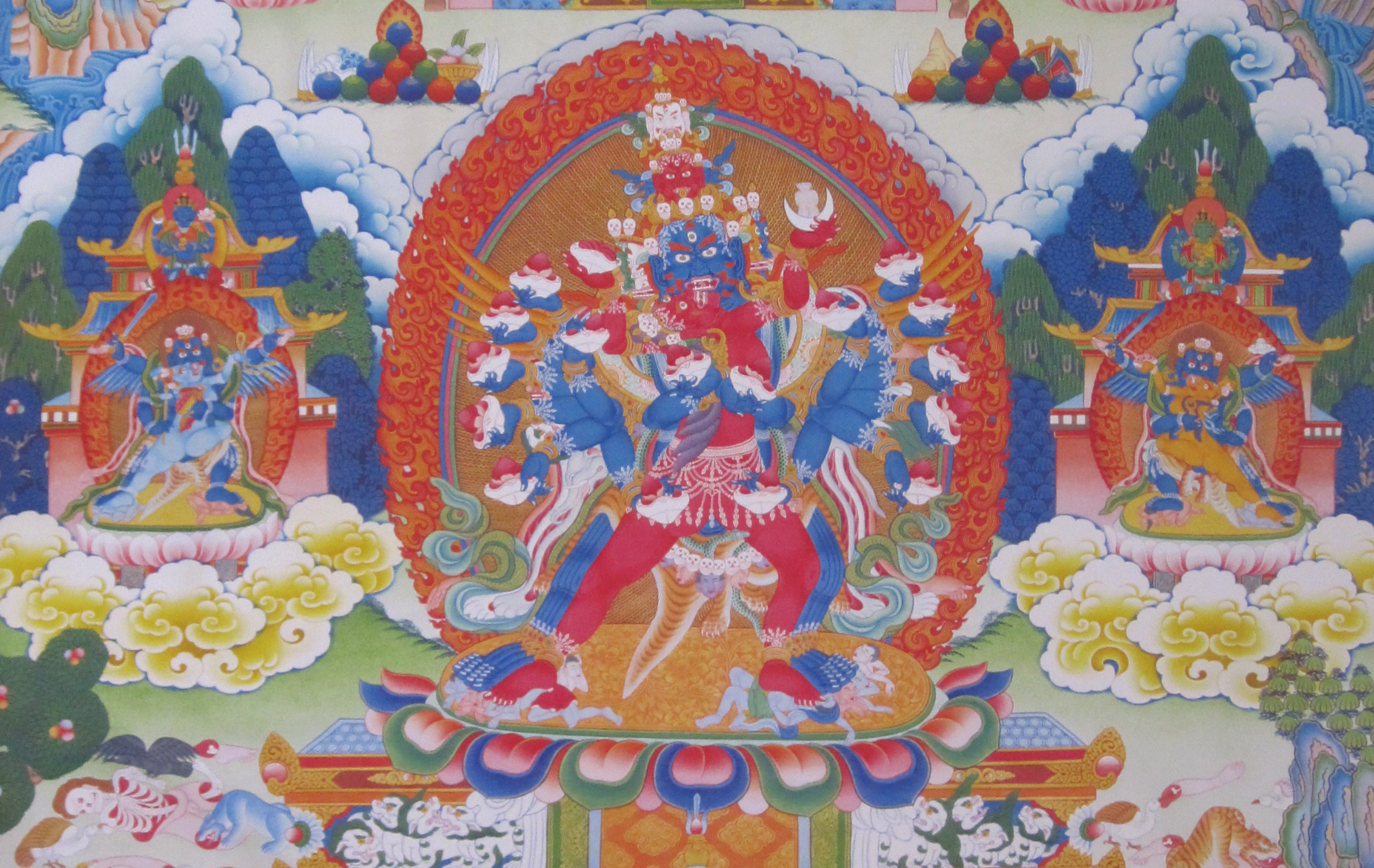
Shenrap Nampar Gyalwa

At Tashi Menri Monastery in Dolanji, India, the 22nd-29th of the 6th Tibetan month (Western date August 4th-10th 2018), is the time for the practice of Shenrap Nampar Gyalwa. This is the wrathful form of the founder of the Yungdrung Bön religious tradition, the enlightened Lord Tönpa Shenrap Miwoché. In order to protect the construction of a temple, he spontaneously manifested as Nampar Gyalwa, the Completely Victorious One. See previous post: https://ravencypresswood.com/2016/12/25/buddha-tonpa-shenraps-eighth-deed-the-deed-of-being-completely-victorious/

As one of the nine foundational practices in the Yungdrung Bön tradition, practitioners will recite the mantra of Nampar Gyalwa, known as the 100-syllable mantra, 100,000 times while imagining the purification of all negativity of the three times including every action of body, speech, and mind arising from anger, greed, jealousy, pride, and ignorance.