Category Archives: Prayer and Ritual

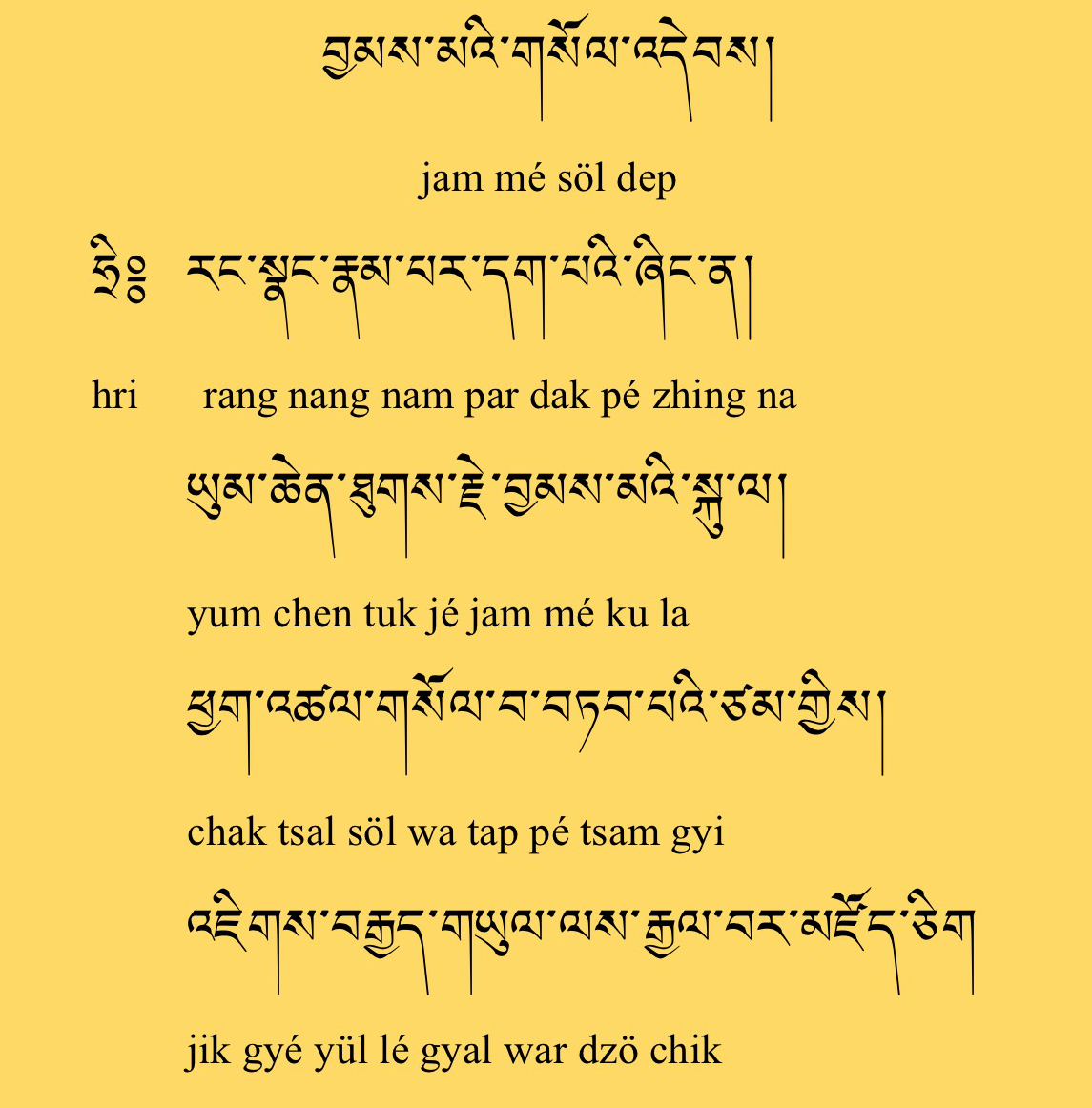
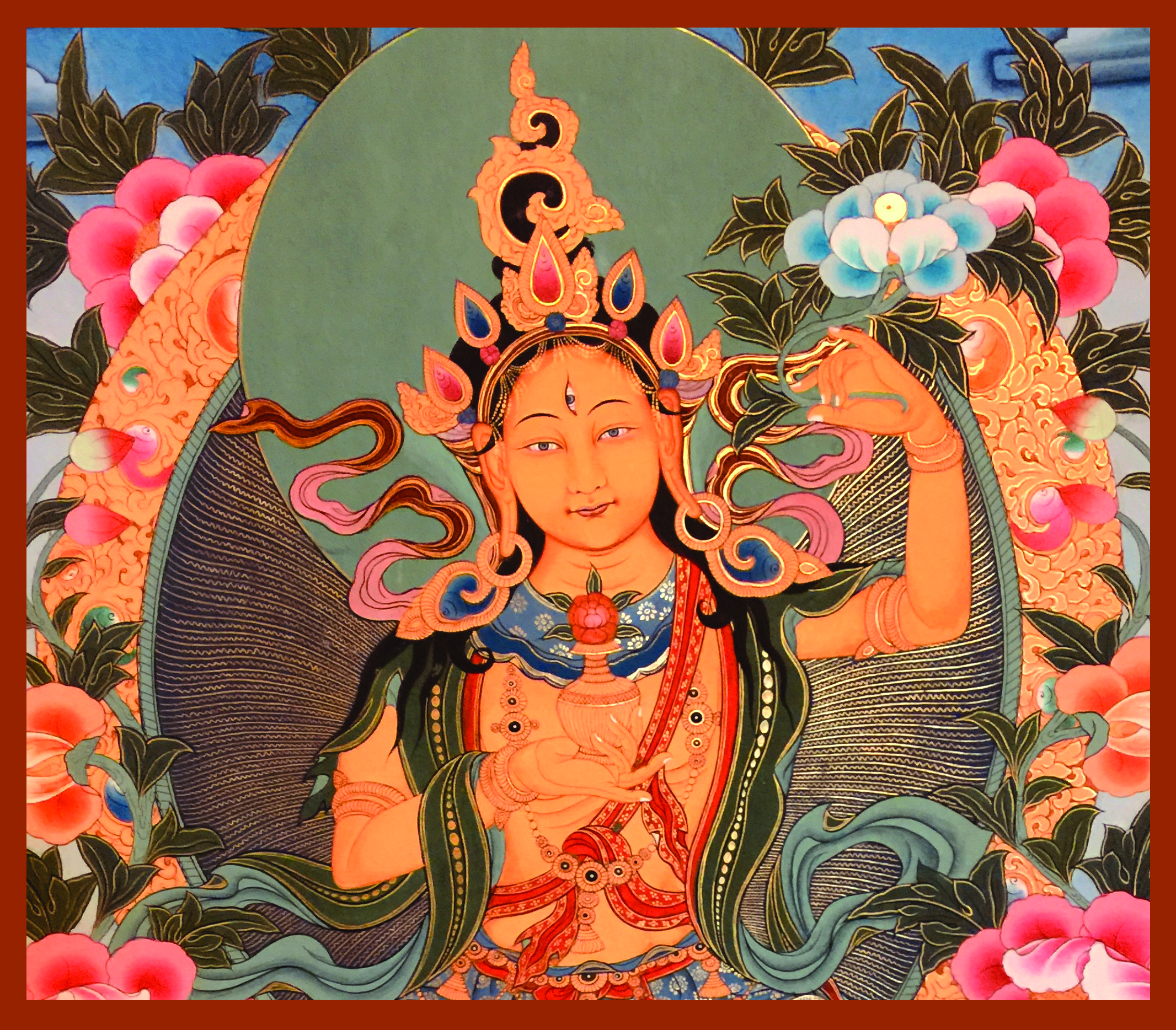
Supplication Prayer to Jamma, the Loving Mother

Jamma, the Loving Mother

” Hri!

Within a completely pure self-manifested realm,

just by paying homage and offering this supplication to the state of Yümchen Tükjé Jamma,*

please bring victory over the eight fears!”

Translated from the Tibetan by Raven Cypress Wood

Audio for the Tibetan language chanting has been kindly recorded and posted to Facebook by Geshe Yongdong, president and spiritual director of Sherab Chamma Ling. Check his page for the recording.

Raven Cypress Wood ©All Rights Reserved. No content, in part or in whole, is allowed to be used without direct permission from the author.

Don’t want to miss a post? Scroll to the bottom and click “Follow this blog.”


The Immeasurable Benefit of Raising Prayer Flags

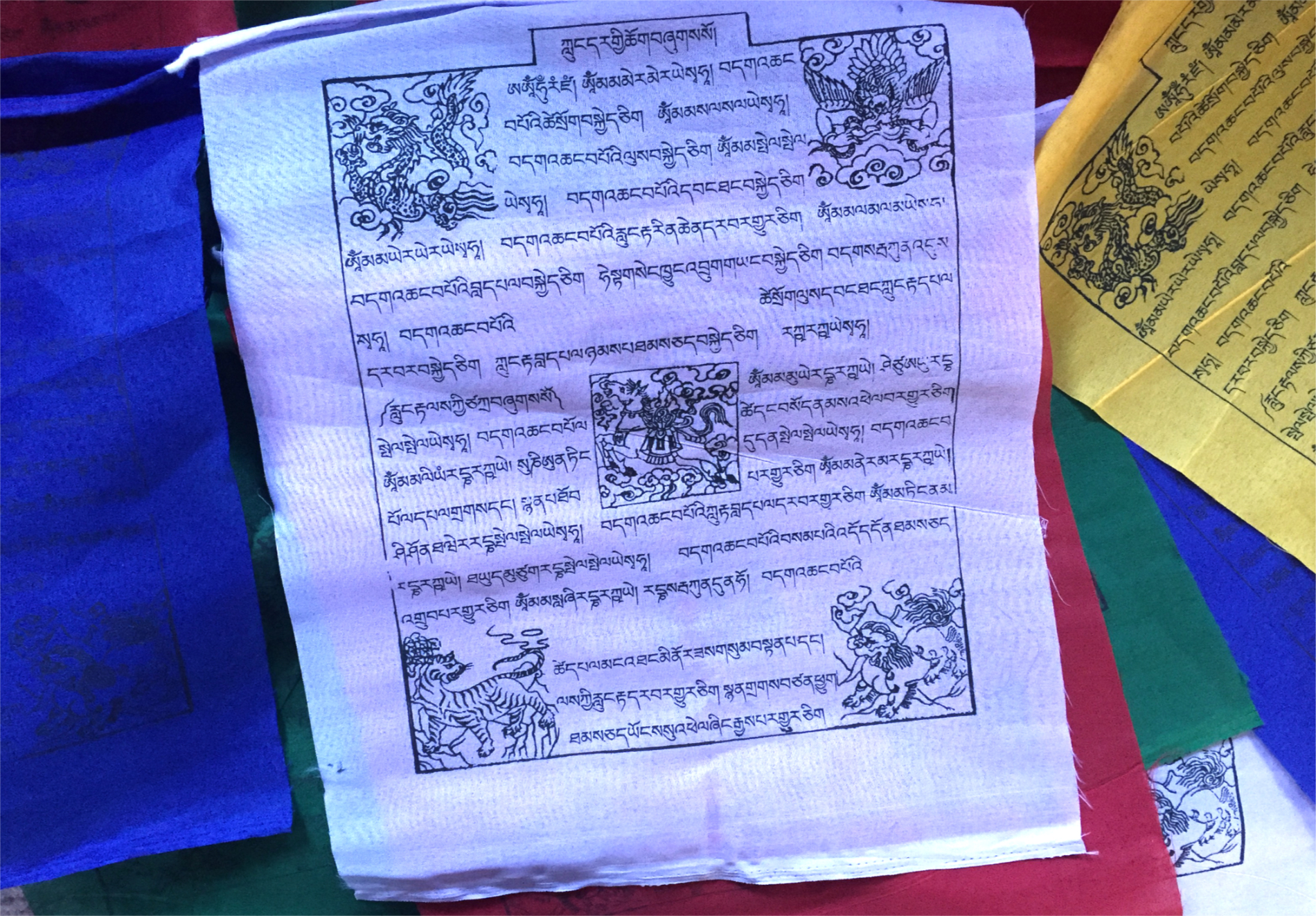
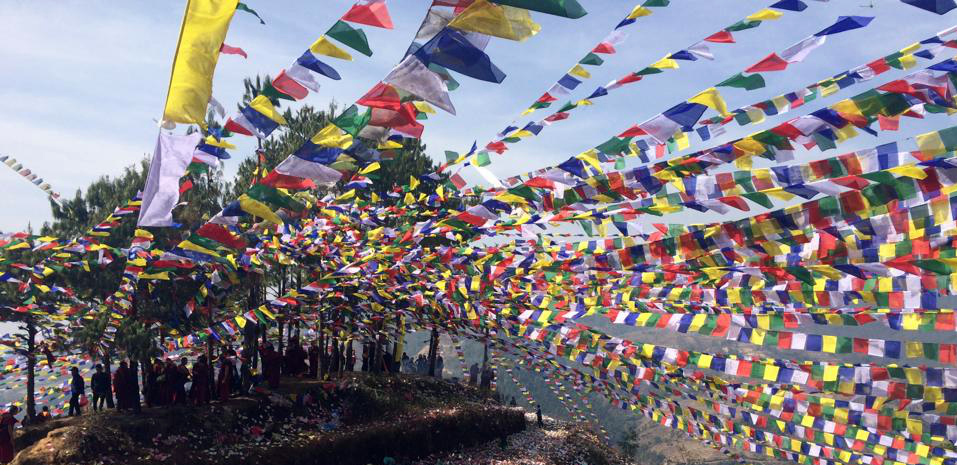
Yungdrung Bön lungta prayer flags available for a limited time from Nine Ways. Photo credit: Raven Cypress Wood

Prayer flags originated with the Yungdrung Bön religious tradition and the teachings of Buddha Tönpa Shenrap Miwoché.  According to the eminent scholar Yongdzin Tenzin Namdak Rinpoché, in ancient times the Bönpo would blow mantras and prayers onto strips of colored wool. These strips of wool were then draped over the branches of bushes and trees. This practice eventually evolved into the kind of prayer flags that we are familiar with today. According to the modern-day saint Shardza Tashi Gyaltsen Rinpoché, the very best size for a prayer flag is five arm spans,  the next best is three arm spans, and other sizes are acceptable as long as they are larger than the palm of the hand. Writing the prayers and mantras in gold or silver is the very best, using cinnabar is next best and writing with ink mixed with various medicines and the six excellent ingredients, or other blessed substances is the minimum.

Before being raised, prayer flags must be consecrated and blessed. Then, in the early morning or at least before noon, one must perform the practices of going for refuge, generating the mind of enlightenment and admitting wrongdoing and receiving purification. Then, the flags are hung outside where they will be exposed to the wind.  Preferably, in a high and clean place where they can be left undisturbed. Afterwards, prayers of aspiration and dedicating the merit of the virtuous activity are performed.  When prayer flags are raised in this proper way, the benefit is unimaginable. Some of the best days for raising prayer flags are during the 1st month of the lunar New Year especially on the 3rd day, on the auspicious lunar days of full moon, new moon, 8th, or 22nd, on the anniversary of the birth or paranirvana of a buddha, or whenever the sacred teachings of Yungdrung Bön are being bestowed.

As for the extensive benefit of raising prayer flags, it is said if they are raised atop a high mountain, whoever eats food or drinks water from that mountain or whoever sees the flags with their eyes, they will attain buddhahood. If they are raised at a sacred place, that person will definitely be reborn into a buddha land. In general, prayer flags support the fulfillment of the wishes and intentions of this lifetime and the attainment of buddhahood in a future lifetime. Raising prayer flags purifies negative actions of body, speech and mind. Even the most vile of actions can be purified when prayer flags are established in the proper way and with sincerity. Additionally, they can remove obstacles for the recently deceased. According to Shardza Rinpoché:

“After someone has died during the 49 days of the intermediate state, if 49 prayer flags are established, the deceased will certainly not fall into lower rebirths.”

As for the power of raising prayer flags,

“Raising 1,008 prayer flags is better than a shen of magical power erecting a buddha statue made of gold.”

Also from Shardza Rinpoché:

“It is said that if prayer flags are raised at the riverbank of a large city, the sentient beings of that area will attain buddhahood. In those places, harm from epidemics and poison will never strike. If they are raised at the riverbank of a retreat place or gompa, the virtuous practice and vows of any spiritual friend or advisor of that place will be renewed.”

And from Drupthop Atang Tsazen Rinpoché:

“Having written these secret yungdrung mantra such as the mantras of the buddhas, the 100-syllable mantra, the three essence mantras, or the six syllables upon cotton or tree bark; when it is exposed to the wind whoever among sentient beings sees it with their eyes will obtain a state of happiness.”

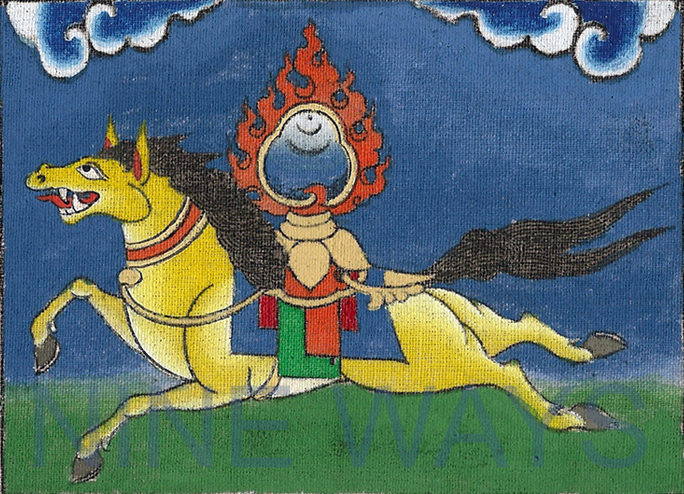
A windhorse carrying a flaming jewel.

There are many kinds of prayers and mantras that are appropriate to be written on prayer flags, By far, the most common type of prayer flags are raised to increase lungta. Lungta is sometimes translated as the force of good luck. It is the force that has the ability to uplift the other individual forces of health, vitality, charisma, and the soul. When the lungta is weak however, the other individual forces will become diminished. Lungta [Tib. rlung rta] means “windhorse” and it is this image that is depicted at the very center of the prayer flag. This symbolizes the incredible speed with which prayer flags can raise the lungta. Each of the four corners display one of the four guardian animals of the four directions: a lion, tiger, garuda, and dragon. Most often, prayer flags are grouped together as a set of five with each flag being one of the colors of the five elements. The elements and their corresponding colors are: earth=yellow, water=blue, fire=red, air=green, and space=white.

Lungta-type flags are not raised for the deceased since their primary activity is to strengthen and protect the health, lifespan etc. However, when raising lungta prayer flags, the merit of that virtuous activity can be dedicated to those who are deceased along with all other sentient beings..

Raven Cypress Wood ©All Rights Reserved. No content, in part or in whole, is allowed to be used without direct permission from the author.

Don’t want to miss a post? Scroll to the bottom and click “Follow this blog.”

The Meaning & Benefit of Offering Torma

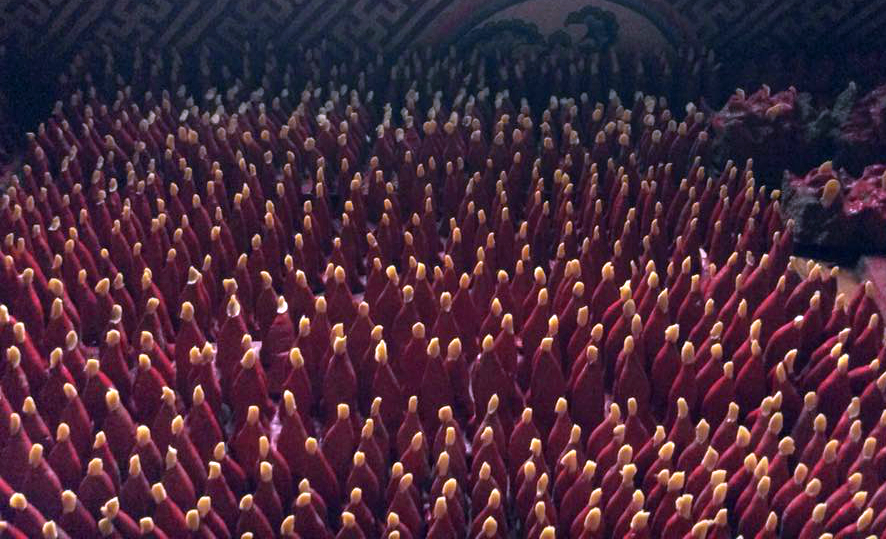
100,000 torma offering to the enlightened protector Sipé Gyalmo. Photo credit: Unknown

The offering of torma is a common practice within the Yungdrung Bön religious tradition. The Tibetan term “torma” [gtor ma] literally means “something that is thrown, tossed, or strewn.” This refers to the action of many kinds of torma being tossed into the sky as an act of offering. However, not every torma is offered in this way. External torma can be offerings of the three white things: butter, milk, and salt-free cheese, and the three sweet things: honey, crystallized sugar, and dark sugar such molasses or maple syrup. External torma are also commonly made from roasted barley flour called tsampa which is mixed with sacred substances and shaped according to the particular kind of offering being made. In general, peaceful offering torma of this kind have a round base and wrathful torma have a triangular base. One of the many kinds of daily offering torma within the Yungdrung Bön tradition is the water torma which is one of the four daily offerings of generosity.

Buddha Tönpa Shenrap Miwoché was born into the human realm in the ancient land of Tazik. He only traveled into the country of Tibet one time. During this brief visit, his teachings to the Tibetan people were centered around compassion and the use of torma as offerings as a substitute for killing animals to use as offerings.

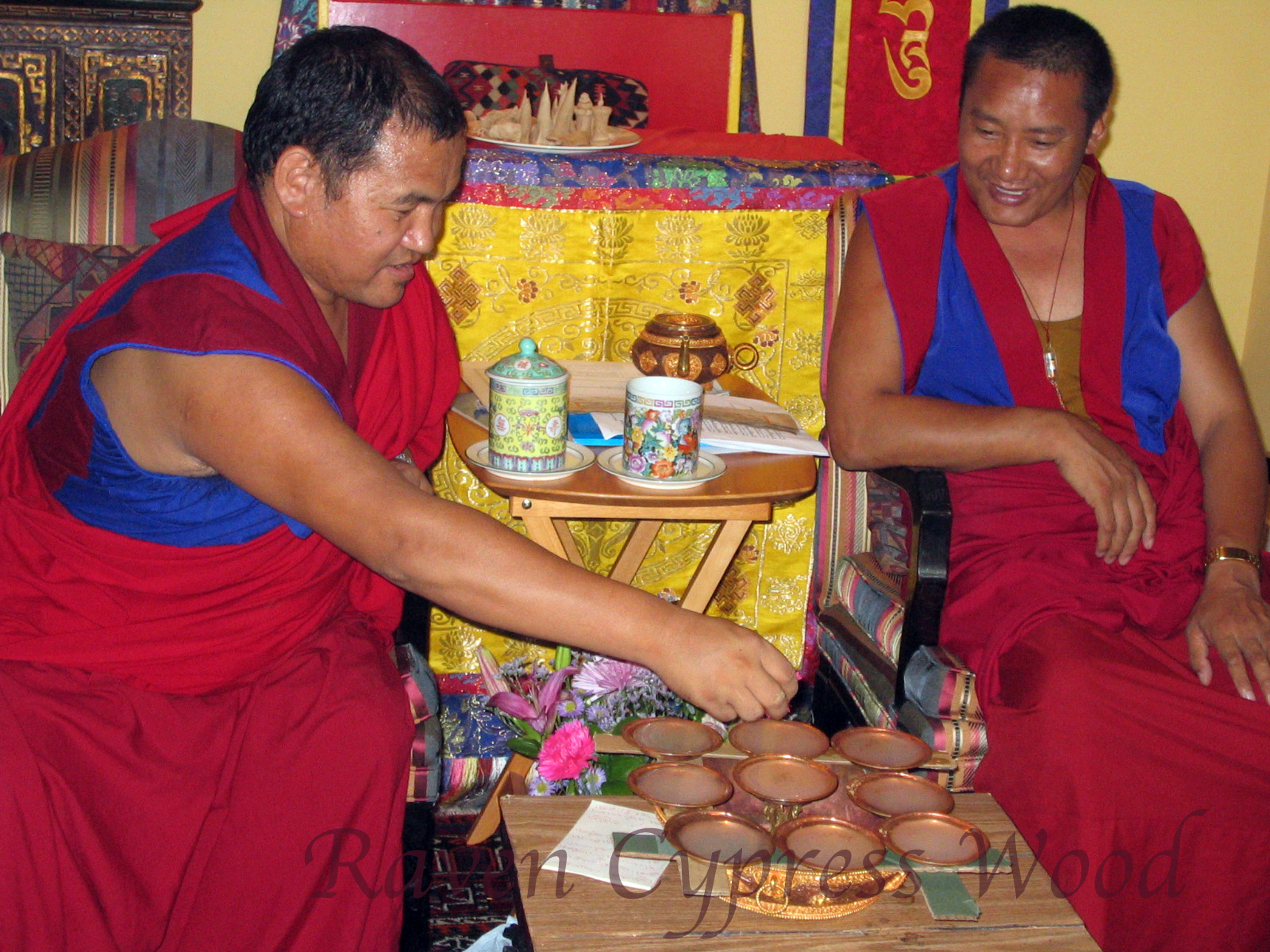
Geshe Nyima Kunchap Rinpoche and Geshe Tenzin Yeshe Rinpoche prepare to perform the daily water torma offering. Photo credit: Raven Cypress Wood

Every kind of torma offering has three parts: the preparation, the main practice and the conclusion. The specifics of these are according to the particular practice being performed and the kind of torma being offered. In general, When preparing the torma, the hands and utensils are washed and any container or plate used to present the torma must be clean and without any defect or damage. After being properly made and arranged, it must be ritually cleansed with incense and water. Having generated an intention of compassion and generosity, the torma is offered to a clean place. When possible, the torma are tossed onto roofs as being a place free of the defilement of having been walked upon and also being a higher place to offer to higher beings. For offering to lower beings, the torma are placed upon the ground in a clean place.

“Come here now and keep your protection vow! Accept these offerings of smoke and torma! Act as a companion to me! Expel the causes for harm and obstacles! Act to accomplish this entrusted activity!” 

— Extract from The Invocation of Chammo Lamlha, Goddess of Travel

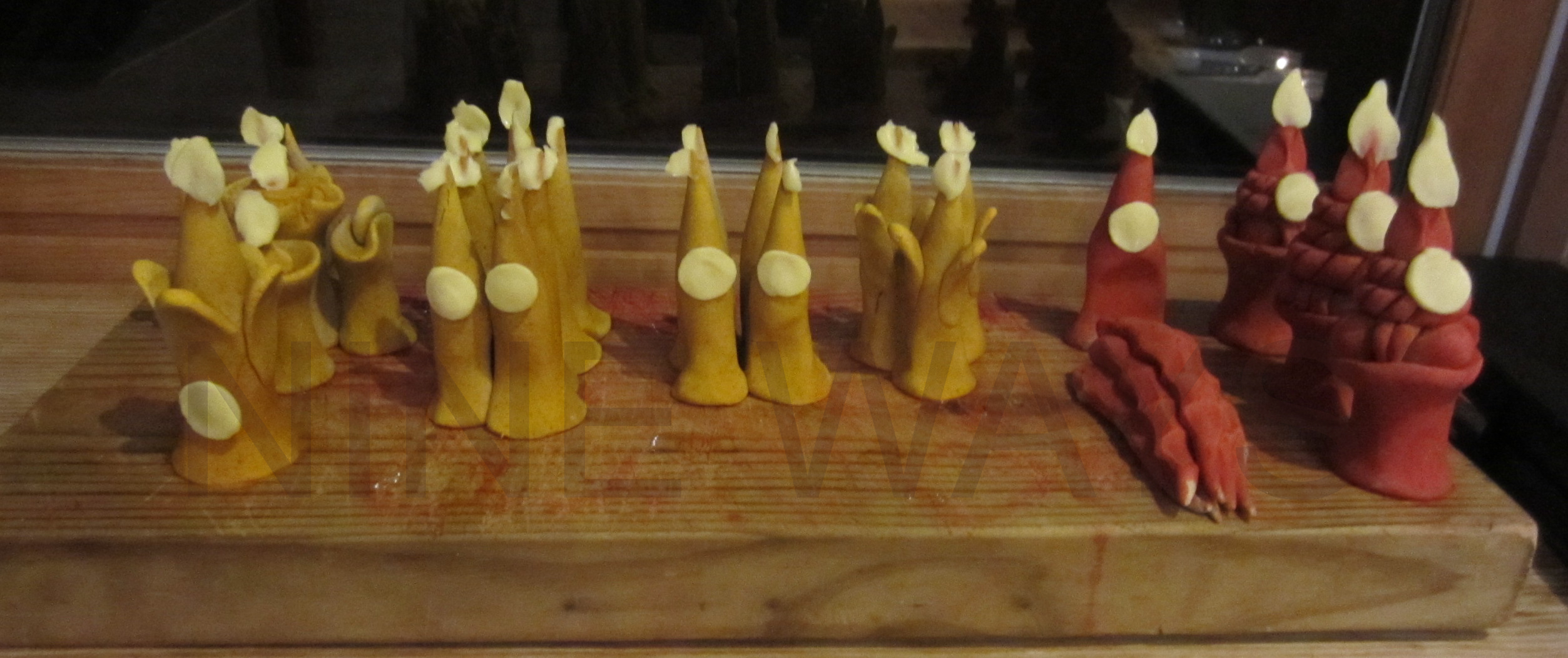
Various peaceful and wrathful torma offerings. Photo credit: Raven Cypress Wood

The recipients of the torma offerings are both the enlightened beings as well as the six kinds of beings within cyclic existence. The recipients can be classified in many ways. They can be classified into four categories known as “The Four Guests.” These are 1) the guests of reverence which are the enlightened beings, 2) the guests of exalted qualities which are the powerful, worldly protectors, 3) the guests who are among the eight classes of spirits and demons, and 4) the guests of compassion or charity. We offer to the enlightened beings to purify our sacred commitments with them, elicit their blessings and protection, and to develop our positive qualities of devotion and generosity. We offer to the worldly protectors in order to elicit their powerful and magical protection. We offer to the eight classes of spirits and demons in order to repay any karmic debts that we might owe to them so as to pacify any feelings of revenge or harm that they might harbor against us. And we offer to the guests of charity to alleviate their suffering and misery.

Torma offerings for the lu. Photo credit: Raven Cypress Wood

“I offer this inexhaustible, decorated torma to the twenty-five classes of lu* who are surrounded by millions of friends and associates. Because we dig the earth, break the rocks, chop down trees, drain the ponds and streams, create contaminated smoke, and commit immoral acts near the homes and places of the lu; they faint, go mad, become angry, or grow weak.

Regardless of whatever violence, disagreements, or ill will have occurred in the past, because of offering this torma of nectar, may the diseases of the lu be pacified! May their hopes and wishes be fulfilled!”

— Extract from The Ritual of Regularly Giving Torma to the Lu

*Lu [Sanskrit: naga]

In general, the offering of torma increases wealth and resources. Secret torma is the offering of the body such as in the practice of chod. This conquers the view of the self as inherently existing. Ultimately secret torma is maintaining the view without self-grasping. This increases realization and is the greatest of all torma offerings.

Additionally, by offering torma we naturally practice six of the ten perfections.

  1. By giving food and water, we engage in the practice of perfecting generosity.
  2. By ensuring that everything is clean, we engage in the practice of perfecting discipline.
  3. By offering charity without greed or resentment, we engage in the practice of perfecting patience.
  4. By putting forth the effort to continually offer torma, we engage in the practice of perfecting joyful effort.
  5. By abiding in meditation, we engage in the practice of perfecting concentration.
  6. By understanding the emptiness of the giver, the recipient and what is given, we engage in the practice of perfecting wisdom.

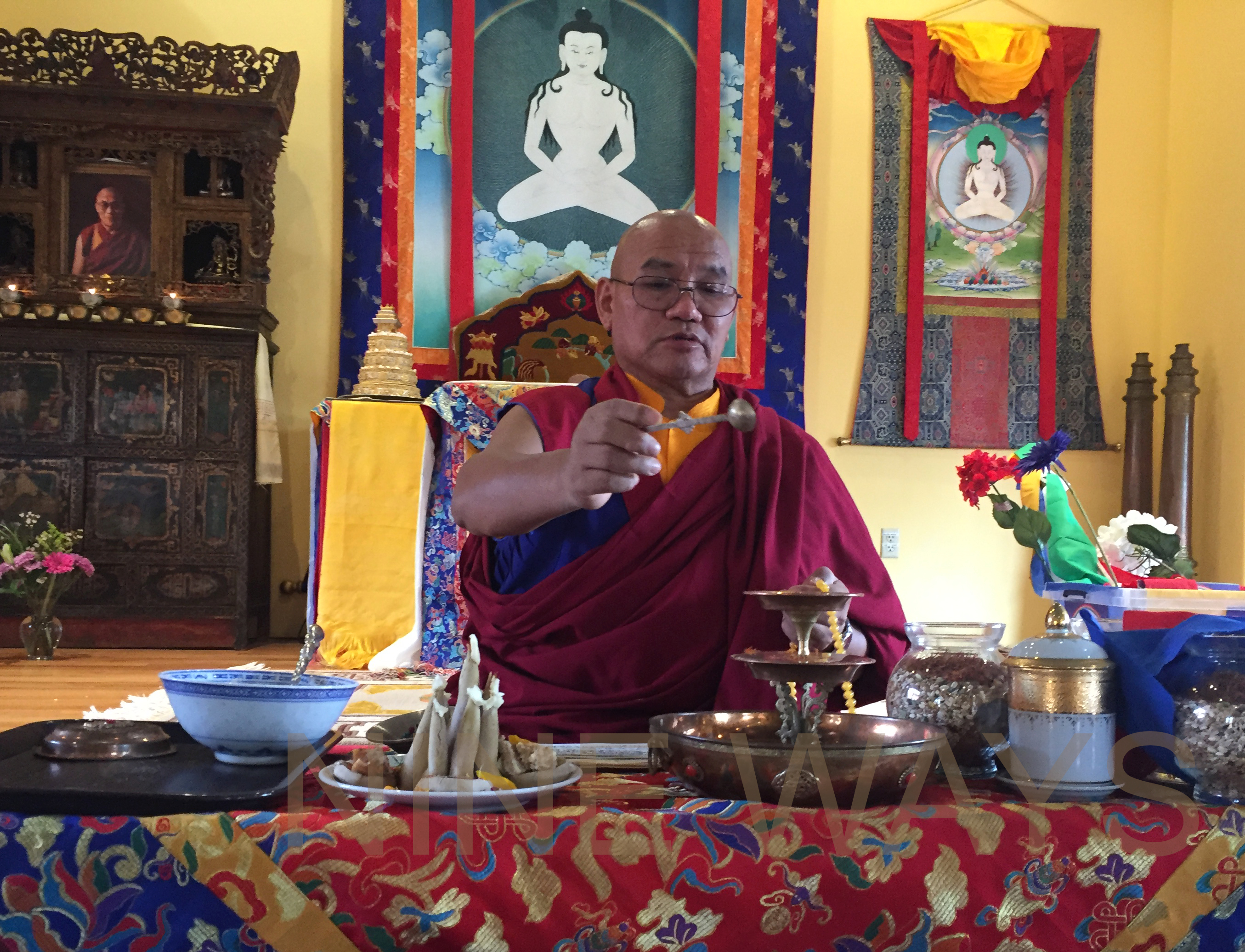
The ritual specialist Geshe Nyima Kunchap Rinpoche offering a water torma to the lu. Photo credit: Raven Cypress Wood

By offering torma we engage in the vow of individual liberation through our act of generosity and therefore eliminating the mind of harming other beings, and we engage in the bodhisattva vow through offering to the guests of charity. Additionally, our longevity, merit, good fortune and personal power increase. And we purify the causes to be reborn into the lower realms.
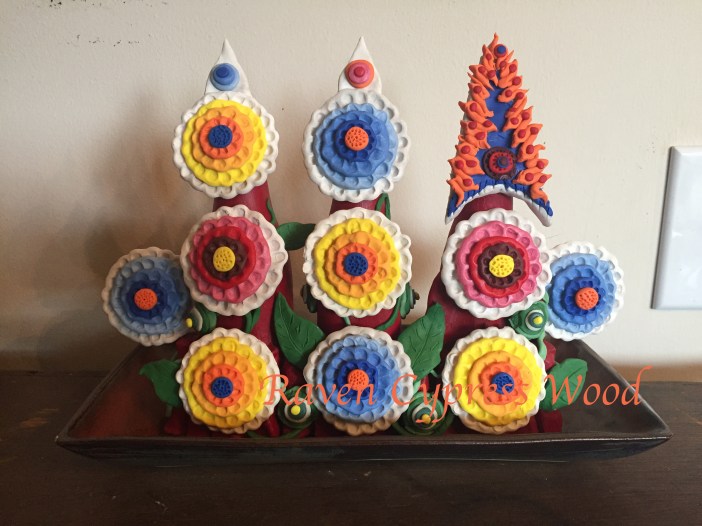
Yidam torma of the lama, yidam and khandro of the Mother Tantra. Photo credit: Raven Cypress Wood

It is important to note the difference between “offering torma” and “yidam torma.” Although both are referred to as “torma” they serve very different purposes. A yidam torma is also prepared from tsampa mixed with sacred substances and has a specific form and attributes according to the associated meditational deity or yidam. However, the purpose of the yidam torma is to act as a sacred support for the presence of the deity during empowerments and meditation upon the yidam. This kind of torma is not offered. Once it has been consecrated, it is placed in the highest position upon the shrine and treated as the sacred abode of the deity.

All translations and content by Raven Cypress Wood ©All Rights Reserved. No content, in part or in whole, is allowed to be used without direct permission from the author.

Don’t want to miss a post? Scroll to the bottom and click “Follow this blog.”

The Power of Aspiration

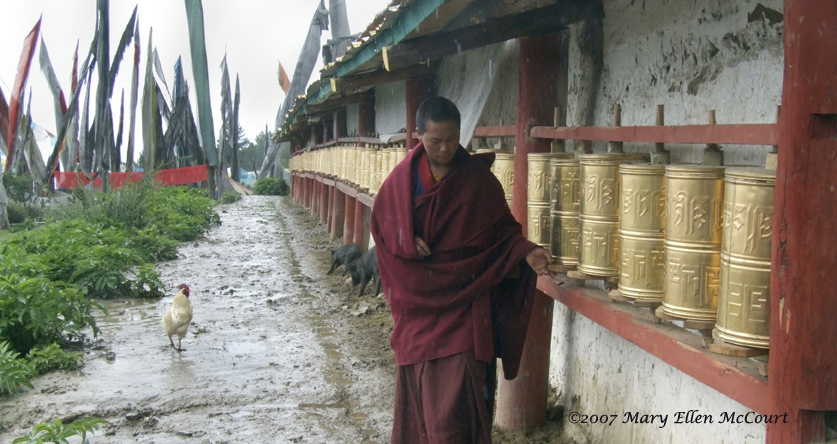
Yungdrung Bön nun circumambulates. Photo credit: Mary Ellen McCourt

“Never being separate from the divine places of refuge and having brought together the causes and conditions of faith and compassion, may I generate the mind of enlightenment for the benefit of all migrating beings!

With the establishment of mindfulness as well as a vast and pure renunciation, and through the four kinds of miraculous abilities along the path of accumulation, and because of these roots of virtue which are in accord with the path of liberation, may my mind-stream become ripened!

Instantly having perceived the clearly manifest meaning of the essential nature which is non-dual clarity and emptiness, may I be free from the activities of this world and obtain the ground beyond only having a mere taste of experience!

Unwavering from the state of pure space and having accomplished benefit for others through the unsurpassed ten perfections, may I proceed along the path of meditation and fulfill the two accumulations!”

— Extract from The Eight-branched Aspiration Prayer

All translations and content by Raven Cypress Wood ©All Rights Reserved. No content, in part or in whole, is allowed to be used without direct permission from the author.

Don’t want to miss a post? Scroll to the bottom and click “Follow this blog.”
 

Clearing Away the Darkness

Butter lamp offering. Photo credit: Unknown

“EMAHO!

Throughout the ten directions of the immeasurable three thousand-fold universe are many kinds of goddesses including the butter lamp offering goddesses.

Within these small, circular containers is placed a wick of twisted gauze.

They are filled with clarified, melted butter which is a divine, concentrated essence.

By lighting these bright offering lamps, the fire of the lamps clears away darkness and obscurations and radiates throughout the vast, clear space of the sky.

I offer this fire which has manifested from the vast space of wisdom to the dimension of the divine assembly of peaceful deities.

And may this offering fulfill my sacred vows with the divine assembly of wrathful deities.

Please accept this enjoyable offering!”

— Extract from Raising a Victory Banner of Butter Lamps

All translations and content by Raven Cypress Wood ©All Rights Reserved. No content, in part or in whole, is allowed to be used without direct permission from the author.

Don’t want to miss a post? Scroll to the bottom and click “Follow this blog.”