Author Archives: Raven Cypress Wood

Shardza Hermitage

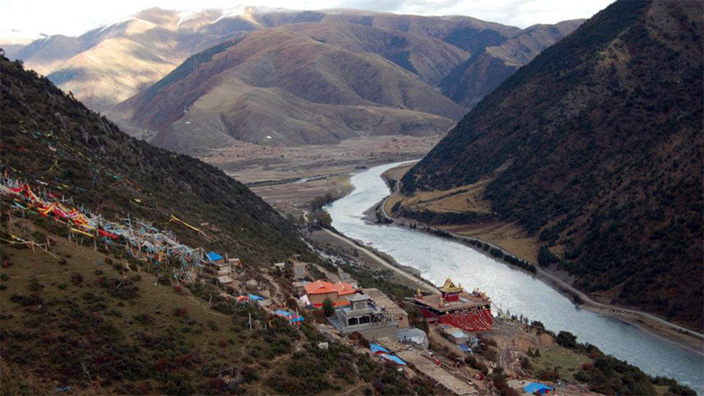
Shardza Ritro

This mountain hermitage was founded by the great master Shardza Tashi Gyaltsen in 1890 at the age of 33.  It is located in the Kham region of Tibet on the Northeast bank of the Dzachu river and is inaccessible by vehicle.  The place where Shardza lived and meditated is located further up the mountain and referred to as the ‘upper hermitage’, or Dechen Ritro, the mountain hermitage of great bliss.  Below, is the ‘lower hermitage’ consisting of the temple where he taught his disciples as well as a small printing house.
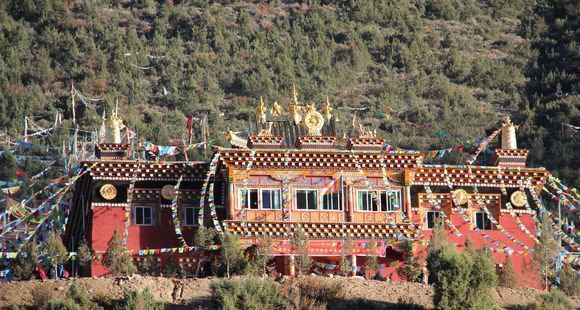
Shardza Ritro gompa

(The temple at Shardza Hermitage)

During Shardza’s lifetime, the hermitage only housed a few of his disciples.  Now, however, it is a famous pilgrimage place for both Bönpo and for Buddhist.  It is also a place for personal retreat, especially long-term.  Because it is a hermitage rather than a monastery, retreatants provide for their own food and necessities although laypeople do offer some donations of meat and roasted barley flour, or tsampa, a traditional Tibetan food.

Shardza Tashi Gyaltsen statue with blue background(Statue of the famous yogi, scholar, and lama, Shardza Tashi Gyaltsen)

In 1934 at the age of 76, Shardza Tashi Gyaltsen attained the rainbow body as a sign of his great realization.  Rainbow light was seen coming from the tent where he had retreated, and upon entering the space, his disciples discovered that his body had shrunk to the proportional size of a 1 year old and that it was levitating above his meditation seat.  His remains were placed in a reliquary chorten which has been seen to emit rays of clear or rainbow colored light.
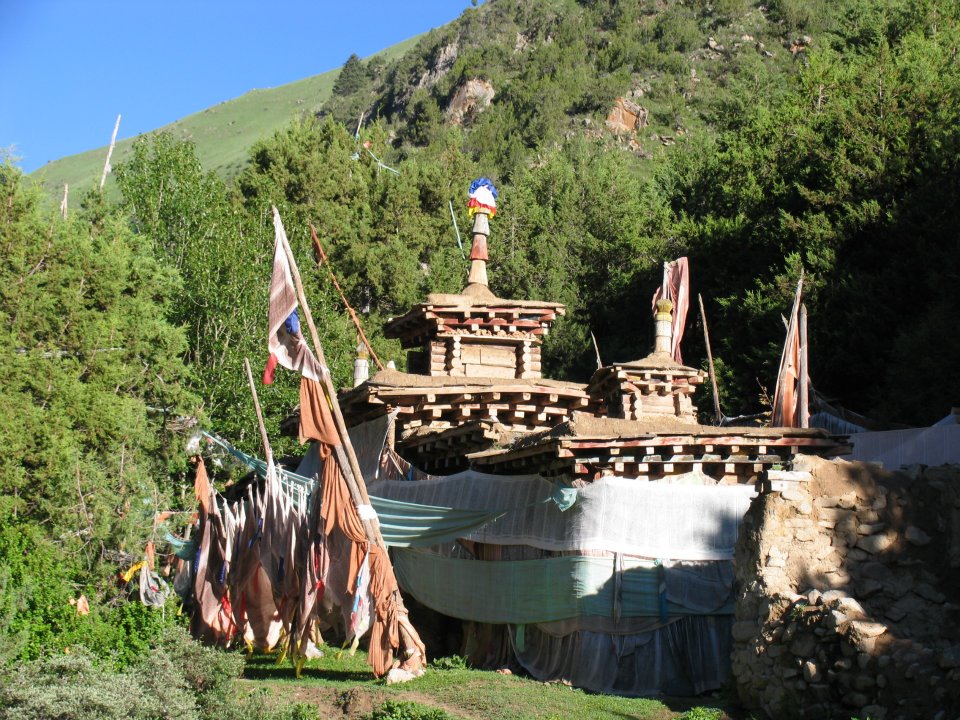
the place of Shardza's rainbow body(The actual holy place at Shardza Hermitage where Shardza Tashi Gyaltsen attained the rainbow body of light.)
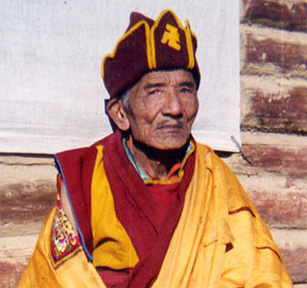
Gyaltsab Thutop Namgyal

The current successor of Shardza Tashi Gyaltsen at the hermitage is Gyaltsab Thutop Namgyal.
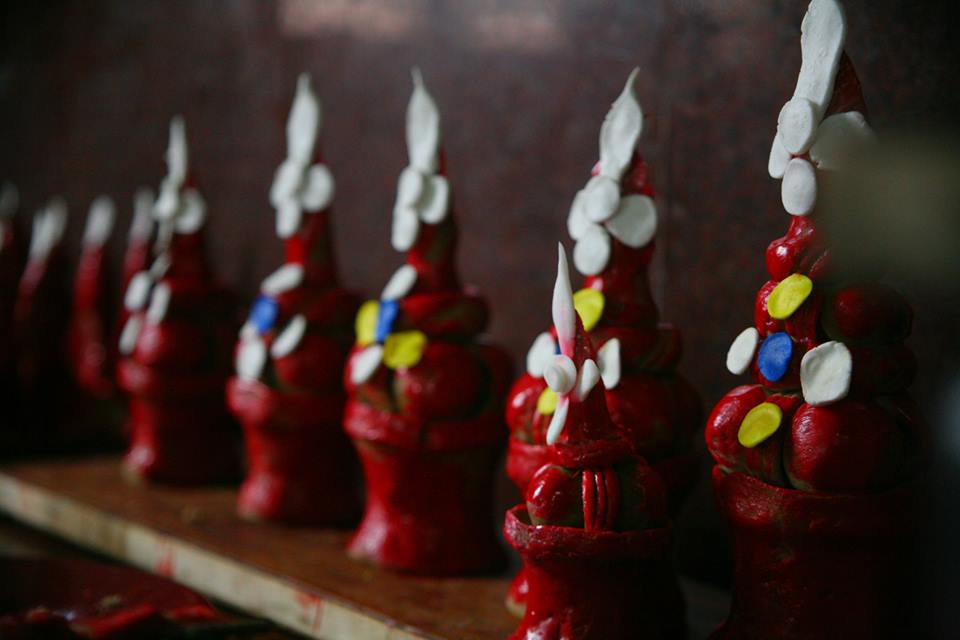
Offering to the Divine

Photo Credit: Unknown

Offerings of torma at the Yungdrung Bön Monastery of Triten Norbutse near Kathmandu, Nepal

Zhang Zhung Element Syllables

5 elements ZZ edit

Here, the seed syllables of the five elements of space, air, fire, water and earth are written in the Zhang Zhung mar chen script.  From left to right, the seed syllables are AH, YANG, RAM, MANG, AND KHAM.

The Forty Magical Letters of Zhang Zhung

 Over 18,000 years ago, the founder of the Yungdrung Bon tradition was born into a human body and was known as the Supreme Shen, the Enlightened Teacher, Buddha Tonpa Shenrap Miwoche.  He had many students and his teachings flourished in the ancient kingdom called Zhang Zhung.

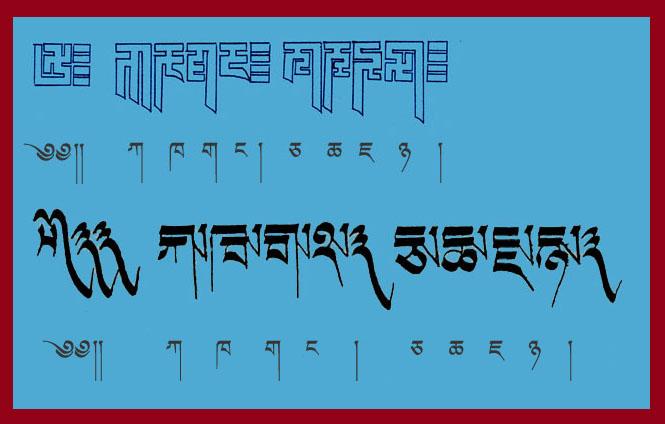
This ancient kingdom included what is now Western Tibet and the sacred Mount Tise, also known as Mount Kailash.  The Zhang Zhung language includes forty letters, and  according to Yungdrung Bön texts, these ‘Forty Magical Letters’ were taught by Tonpa Shenrap Miwo. The two standard scripts were called Zhang Zhung mar chen and Zhang Zhung mar chung, ‘excellent capital letters of Zhang Zhung’ and ‘excellent lesser letters of Zhang Zhung.’ 

Zhang Zhung mar chen and mar chung samples

Above, a sample of Zhang Zhung mar chen. Below, a sample of Zhang Zhung mar chung. Both have the corresponding Tibetan script underneath. (Zhang Zhung fonts from the website: himalayabon.com)

The divine words of the Buddha Tonpa Shenrap were written down using this script.  Due to the murder of King Ligmincha of Zhang Zhung by king Trisong Detsen of Tibet in the 8th century, the Zhang Zhung kingdom fell and the power and influence of Tibet increased.  Therefore, the Zhang Zhung script was transformed and called ‘Tibetan’.  According to the ‘Far-reaching Lamp of Clarity’:

“Mar chen was changed into [the formal Tibetan] u chen script, and mar chung was changed into informal script.”

A Yungdrung Bon ritual text begins a section with “According to the language of Zhang Zhung Mar…”

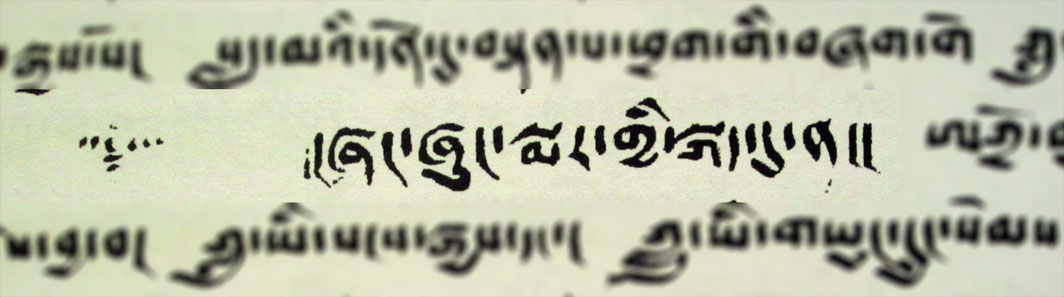
Today, the titles of many Yungdrung Bön texts are written in both the Zhang Zhung mar chen script as well as in the Tibetan script.  Additionally, many Zhang Zhung words are found within the texts and even significant section headings are given in both the Zhang Zhung and Tibetan language.

The title page from a Yundgrung Bon text with the title written in Zhang Zhung script above and Tibetan script underneath.

For more information regarding the Zhang Zhung language: (all English language sources)

  • The Light of Kailash Vol 1 and 2 by Chogyal Namkhai Norbu Rinpoche
  • A Lexicon of ZhangZhung and Bonpo Terms edited by Yasuhiko Nagano & Samten Karmay
  • Zhang Zhung-Tibetan-English Contextual Dictionary by Namgyal Nyima

The Sacred Syllable OM

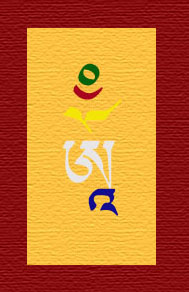
Bon OM


The Yungdrung Bon syllable ‘OM’ has five parts.  The meaning and symbolic color of each of these five parts depends upon the specific practice being done.  These five parts can variously represent the Five Wisdoms, the Five Enlightened Bodies and the manifested deities of the five directions.  Here, the color of each of these five parts is according to the practice of the great mantra, OM MA TRI MU YE SA LE DU.