Author Archives: Raven Cypress Wood

The Ten Perfections of the Yungdrung Bön

The Enlightened deity, Shenlha Okar, embodies all perfected, positive qualities.

In the Yungdrung Bön tradition, the practice of the Ten Perfections has vast and profound benefits.  For example, in the Mother Tantra it is said that the practice of the Ten Perfections is one of the primary practices in order to prepare for the intermediate state after death.  The Ten Perfections are: Generosity, Moral Discipline, Patience, Zeal, Concentration, Power, Compassion, Aspiration, Skillful Means and Wisdom.

1- Generosity: In Tibetan, Jin pa.  In general, there are three kinds of generosity: 1-generosity with possessions, 2- generosity of giving protection, and 3-generosity of sharing the sacred teachings.  This kind of generosity is without expectation of anything in return and therefore diminishes attachment and self-centeredness.  In the Yungdrung Bön tradition, there are four daily practices of generosity: offering of fumigating smoke, the water offering, offering of burnt food, and the symbolic offering of one’s own body.

2- Moral Discipline: In Tibetan, Tsultrim. In general, this refers to ethical behavior and the practice of discipline in abandoning the non-virtuous activities of body, speech and mind.  There are external, internal and secret teachings related to moral discipline.

3- Patience: In Tibetan, Zöpa. This refers to being patient and accepting of others as well as being patient with our own spiritual practice and development.  Additionally, it is the practice of being patient when we are suffering.

4- Zeal: In Tibetan, Tsöndru.  Specifically, it is an energetic and enthusiastic kind of effort.  The feeling of joy and enthusiasm in performing any kind of spiritual practice or virtuous action is the practice of tsöndru.  If you are not enthusiastic about something, even a small hindrance can feel like an insurmountable obstacle.

5- Concentration: In Tibetan, Samten.  In order to fulfill any intention, it is important to have the ability to focus and to not become distracted.  Concentration is needed for both study and meditation.

6- Power: In Tibetan, Tob.  Whatever practice or virtuous activity that you are performing, you need energy and strength.  This is the opposite of lack of confidence.

7- Compassion: in Tibetan, Nyingjé. Whatever specific practice we are focused upon, our foundation should be compassion.  Specifically, compassion is the heartfelt wish that every sentient being be released from their suffering and misery.

8- Aspiration: In Tibetan, Monlam.  In this practice, we cultivate a sincere wish for our spiritual development and realization so that we can be of benefit to both our self and others.  This practice inspires us to continue.  Aspiration can be as vast as possible.  It does not mean that it is something that has to be accomplished in this lifetime.  For example, we develop compassion and pray that we may be of benefit to all sentient beings.  Once enlightenment is attained, enlightened beings return to help sentient beings due to the power of their previous aspiration and not because of any force of desire or karma.

9- Skillful Means: In Tibetan, Tab. In general, this refers to the act of dedicating the merit of all of the virtuous activity of our body, speech and mind for the benefit of every sentient being without exception.  Dedication is the skillful means to prevent exhausting the merit that has been accumulated during our practice.

10- Wisdom: In Tibetan, Yeshe.  In general, this refers to understanding the laws of cause and effect and discriminating between accepting or rejecting actions according to their virtue or non-virtue.  Principally, it is understanding the ultimate view, the true nature.

“Having cleansed all defilements of the conceptual mind, may non-conceptual wisdom arise within my mind-stream!

Having pacified all obstacles to virtue and all adverse circumstances, may I accomplish all my wishes and complete the ten virtues!

Having spread the teachings and lived a long time, may I benefit all sentient beings who come into contact with me!

When the great time of impermanence arrives at the moment of death, may unobscured, unimpeded, innate self-awareness appear!”

~Excerpt from the Tsewang Monlam, Tsewang’s Precious Garland of Aspiration Prayers.  Translated by Raven Cypress Wood© All Rights Reserved

Raven Cypress Wood ©All Rights Reserved. No content, in part or in whole, is allowed to be used without direct permission from the author.

Don’t want to miss a post? Scroll to the bottom and click “Follow this blog.”

Sacred Landscape

The Yungdrung Bon monastery of Yungdrung Ling in Tibet Photo credit: Unknown

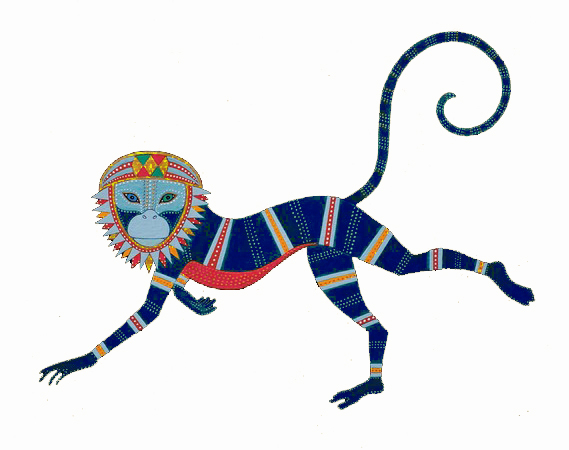
The Twelve Animals of Tibetan Astrology: The Monkey

In Tibetan astrology, there is a twelve year cycle.  Each of these years is characterized by a different animal and associated with one of the five elements.  Therefore, a full cycle of the twelve animals being associated with each of the five elements takes sixty years.  The twelve animals according to the Yungdrung Bön texts are the Rat, Elephant, Tiger, Rabbit, Dragon, Horse, Snake, Sheep, Garuda, Monkey, Dog and Pig.  Each animal is associated with a specific element for its life-force as well as a specific direction which is determined by the life-force element.  Not only are these twelve animals associated with a particular year, they are also associated with particular months, days and hours.

monkey astrology

2016 will be the year of the Monkey. Therefore, people born during this year will be a Monkey and will have an emphasis of the specific qualities associated with Monkey.  (This year corresponds with the Tibetan lunar calendar and begins February 08, 2016.)  The element which governs the life-force of the Monkey is Metal (space) and its direction is West.  So, if a Monkey person wanted to strengthen their life-force, they would focus upon strengthening the element of Metal internally and externally.  The positive direction West.  Therefore, facing this direction while meditating, doing healing rituals or just relaxing and taking deep breaths is beneficial.

In general, the Monkey is friendly, adaptable, playful and thinks outside of the box.  The Monkey does not like to be trapped in any way and can use its ingenuity and keen sense of strategy to keep itself free.  Although the Monkey has a good sense of humor and a sharp mind, too often it is tempted to use these qualities to elevate itself while lowering others.  The Monkey is skilled at finding ways to benefit from an opportunity.  Even when faced with difficulty, the Monkey most often lands on its feet.  The Monkey has an insatiable desire for knowledge and study, but can grow bored once it has reached a level of mastery.

The Monkey‘s soul day is Friday and its life-force day is Thursday.  These are the best days for beginning new projects and activities that are meant to increase or develop something.  The obstacle day is Tuesday.  This day is best for cleansing and letting things go.  It is not a favorable day for beginning new things.

Monkey years include: 1944, 1956, 1968, 1980, 1992, 2004, 2016

If you were born during a previous year of the Monkey, this year as well as other Monkey years are considered a time of vulnerability to obstacles. This same astrological principal applies for all of the other eleven animal signs during their associated year. Therefore, it is recommended to engage in practices that support vitality, good fortune and spiritual merit such as hanging prayer flags, having a soul and life-force retrieval ritual performed, restoring any deterioration or violation of one’s spiritual commitments or any damaged relationship with one’s spiritual brothers and sisters, and/or performing prayers and rituals to remove obstacles. In general, making an effort to engage more with virtuous activities of body, speech and mind and committing to engage less with non-virtuous activities is supportive. According to the words of Buddha Tönpa Shenrap Miwoché, the practice of developing sincere unbiased and unlimited compassion is the greatest of all protections.

A common prayer within the Yungdrung Bön tradition that is used to remove obstacles is the Bar Che Lam Sel, The Spontaneous Wish-fulfillment of Removing Obstacles from the Path. The English, Spanish and Portuguese translations of this prayer are offered free for personal use on the Nine Ways Publications page. Click on the Publications tab above and scroll down to the download links for the prayer.

Raven Cypress Wood© All Rights Reserved

Don’t want to miss a post? Scroll to the bottom and click “Follow this blog.”

A Purifying Activity for Body, Speech and Mind

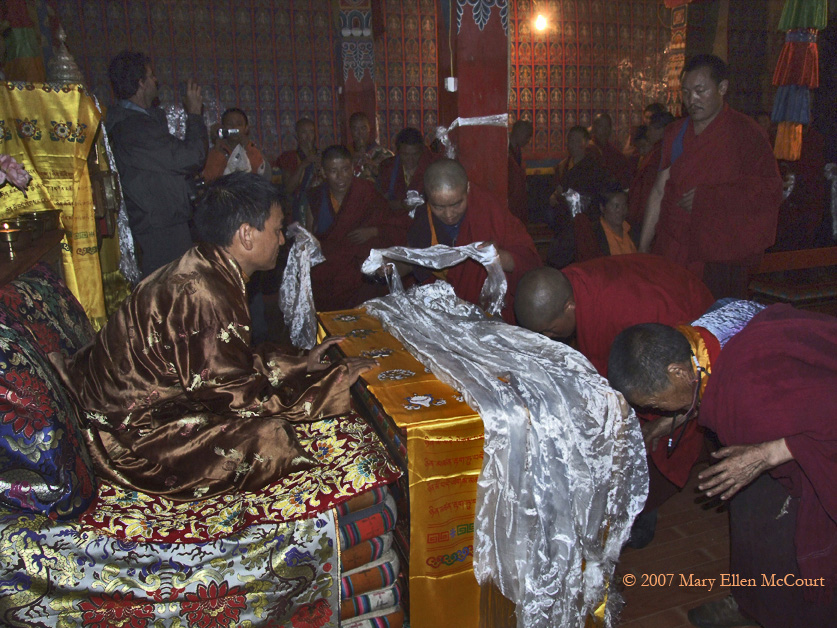
Yungdrung Bon nuns offer khata and prostrations to Geshe Tenzin Wangyal Rinpoche

There are three types of prostration. There is the prostration of the body through performing the physical action of bowing and prostrating.  There is the prostration of the speech through chanting prayers and mantras.  And there is the prostration of the mind through generating devotion and trust to the four places of refuge.  Of these three, the greatest is the prostration of the mind.  However, these three are commonly unified so that as the practitioner is performing the physical prostration they are also reciting prayers or mantras with a heartfelt feeling of devotion.  Among the foundational practices which purify the mind-stream, this unification of the three kinds of prostration is performed 100,000 times.

Buddha Tonpa Shenrap’s Sixth Deed: The Deed of Emanating

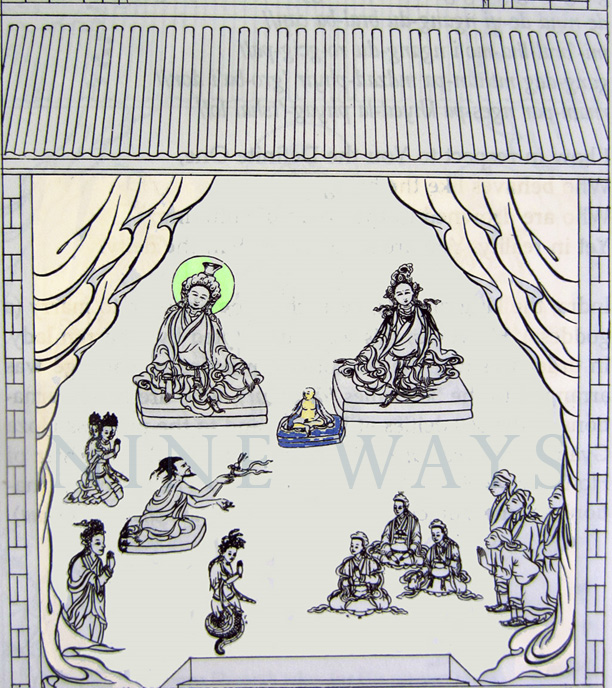
sixth-deedAlthough Buddha Tönpa Shenrap Miwoche was already a fully enlightened being and therefore has no worldly lineage, in order to continue the royal lineage into which he was born and in order to benefit sentient beings, he had ten children.  The first born was his son, Tobu Bumsang.  Auspicious signs occurred during each of the births and all of the children possessed the major and minor marks of an extraordinary being.

His eight sons were:

  • Tobu Bumsang
  • Chebu Trishe
  • Lungdren Salwa
  • Gyüdren Dronma
  • Kongtsa Wangden
  • Kongtsa Trulbu
  • Oldruk Tangpa
  • Dungtsop Mucho Demdruk

His two daughters were:

  • Shensa Nechen
  • Shensa Nechung

His children were also his disciples and some were given the responsibility of being lineage holders.  Lord Tönpa Shenrap’s son Chebu Trishe was given the knowledge and responsibility for holding the lineage of medicine.  In that capacity, he is known as Menlha, Deity of Medicine.  His body is radiantly blue and he lifts a chakshing, or symbol of a double Yungdrung, to his heart level with his right hand and with his left hand he holds a healing plant.  As the source of the lineage of medicine, Lord Tönpa Shenrap is depicted as the Medicine Buddha with a similar body color and hand objects.  However, he holds the chakshing towards the earth.

Chebu Trishe in his aspect as Menlha, the Deity of Medicine