Author Archives: Raven Cypress Wood

Complete Victory Over Negativity

Shenrap Nampar Gyalwa

At Tashi Menri Monastery in Dolanji, India, the 22nd-29th of the 6th Tibetan month (Western date August 4th-10th 2018), is the time for the practice of Shenrap Nampar Gyalwa. This is the wrathful form of the founder of the Yungdrung Bön religious tradition, the enlightened Lord Tönpa Shenrap Miwoché. In order to protect the construction of a temple, he spontaneously manifested as Nampar Gyalwa, the Completely Victorious One. See previous post: https://ravencypresswood.com/2016/12/25/buddha-tonpa-shenraps-eighth-deed-the-deed-of-being-completely-victorious/

As one of the nine foundational practices in the Yungdrung Bön tradition, practitioners will recite the mantra of Nampar Gyalwa, known as the 100-syllable mantra, 100,000 times while imagining the purification of all negativity of the three times including every action of body, speech, and mind arising from anger, greed, jealousy, pride, and ignorance.

Ancient Lineage

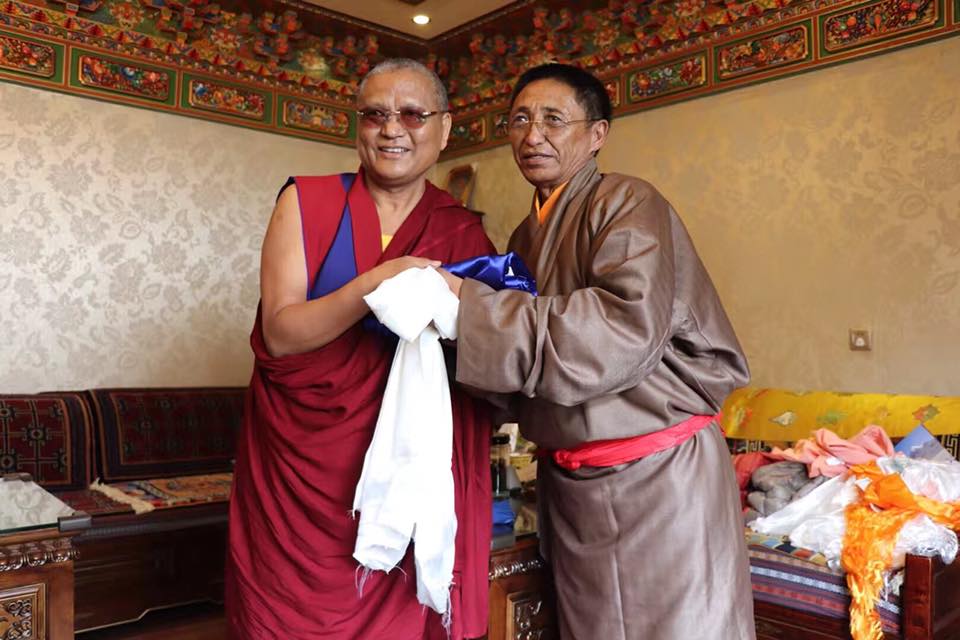
Menri Ponlop Rinpoche Yangton Trinley Nyima meets with the Shen lineage holder and direct descendant of Lord Tonpa Shenrap, Gyalwa Shense Rinpoche. Photo credit: Unknown.

For more information about the descendants of Lord Tönpa Shenrap and the sons of Gyalwa Shensé Rinpoche, see previous post:

https://ravencypresswood.com/2015/03/19/direct-descendants-of-the-enlightened-lord-tonpa-shenrap-miwoche/ 

A Chorten for Barlé Village

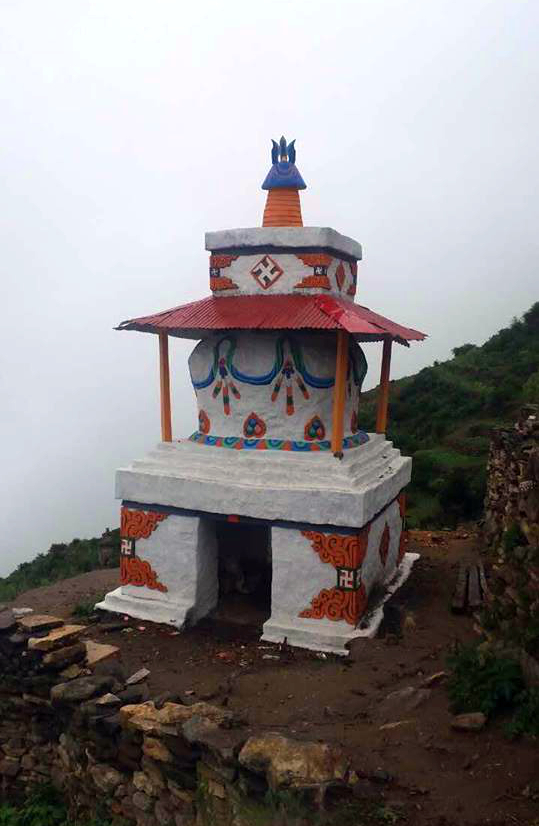
Chorten in Barle Village Dolpo, Nepal. Photo credit: Geshe Nyima Kunchap Rinpoche.

In the village of Barlé located in Dolpo, Nepal and approximately 185 miles from Kathmandu, a new Yungdrung Bön chorten (Sanskrit: stupa) has been erected by Murig Geshe Nyima Künchap as a gift to the village residents. The chorten is located near the Barlé gompa. From July 22nd to July 28th, Geshe Künchap Rinpoche will perform the full consecration of the chorten.

Inside Barle stupa. Photo credit: Geshe Nyima Kunchap Rinpoche

Inside the chorten above the doorways, it is ornately painted with sacred Yungdrung Bön images. In the four directions, are the Four Principal Enlightened Ones: Satrik Érsang, Shenlha Ökar, Sangpo Bumtri, and Tönpa Shenrap. As is traditional, each of these enlightened ones is surrounded by two hundred fifty Buddhas for a total of one thousand Buddhas. (For more information about the Four Principle Enlightened Ones, see previous post: https://ravencypresswood.com/2016/08/20/the-four-principal-enlightened-ones/ ) On the ceiling above are nine mandalas whose purpose is to act as an appropriate dwelling place for the related enlightened qualities. In the center is the mandala of the Sutra of the Indestructible Vast Expanse (Tib. mdo g.yung drung klong rgyas). Then, beginning in the East (middle left) and continuing counter-clockwise, are the mandalas of: The Peaceful AH that Clears (Tib: zhi ba a gsal),  Red Garuda (Tib: khyung dmar), The Stages of Walsé (Tib. dbal gsas las rim), the Great Mother Jamma (Tib: rgyal yum byams ma), Complete Space (Tib: Kun dyings), the Precious Lamp of the MA TRI (Tib: ma tri rin chen sgron ma), Shenrap Nampar Gyalwa (Tib: gshen rab rnam rgyal), and The Lamp that Purifies Obscurations and Removes the Darkness (Tib: sgrib sbyong mun sel sgron ma).

Geshe Kunchap preparing a ritual palace for the lu spirits. Photo credit: Raven Cypress Wood

Murig Geshe Nyima Künchap Rinpoche was born in the village of Barlé and spent many years as a student of his root lama, Barlé Rinpoche. In 1982, he received ordination as a monk from HH 33rd Menri Trizen and HE Yongdzin Tenzin Namdak Rinpoche. In 1994, after many years of rigorous study, he received his geshe degree from Menri Monastery. He is a master of sutra, tantra, and dzogchen. However, he is considered a ritual specialist. Of the 360 rituals given by the Enlightened Lord Tönpa Shenrap Miwoche, it is believed that only 68 remain. Geshe Künchap Rinpoche holds the transmission, empowerment, and teaching for each of these 68 rituals.

Murig Geshe Nyima Kunchap Rinpoche. Photo credit: Unknown

Raven Cypress Wood ©2018

Receiving Blessings and Protection

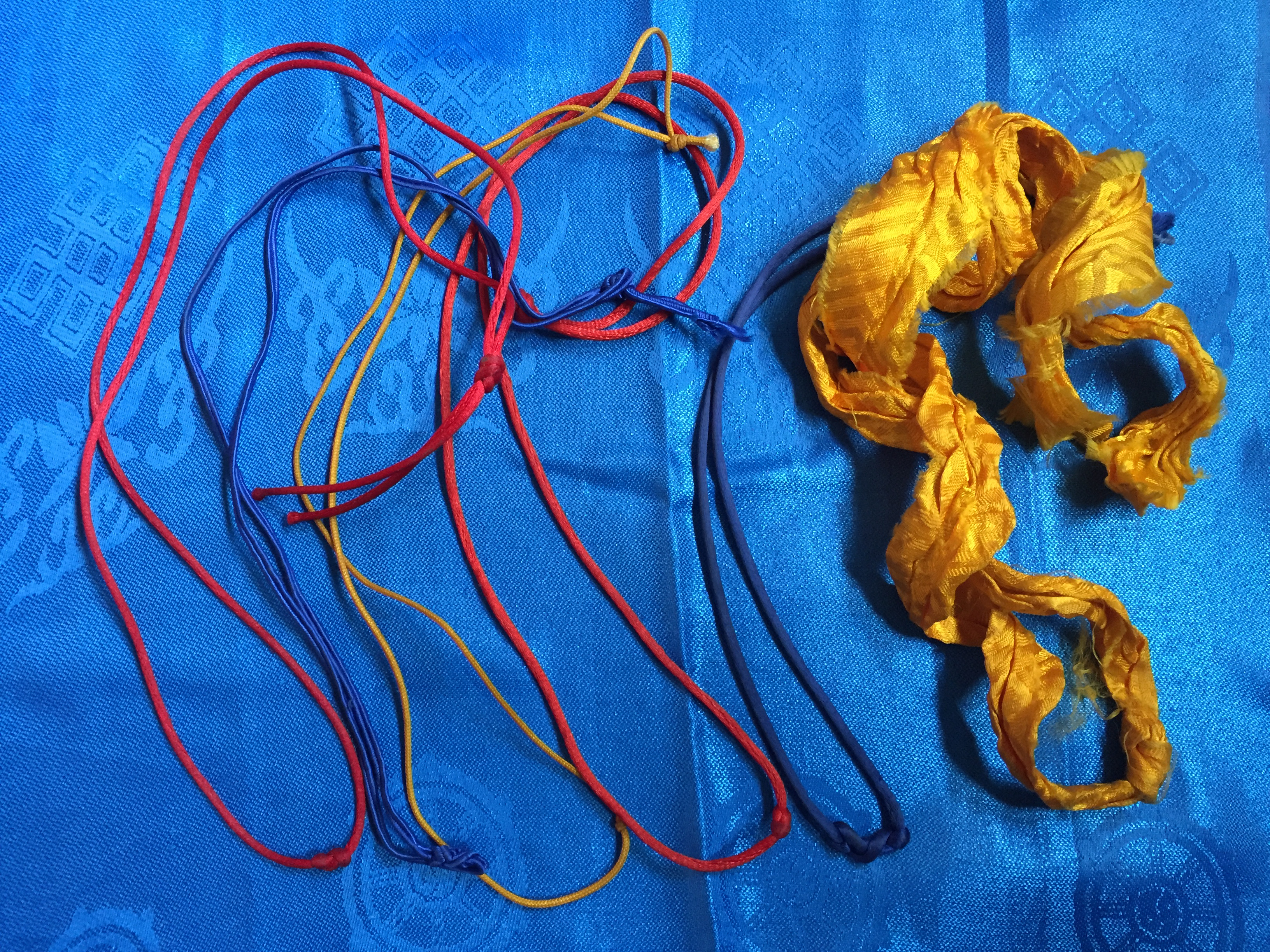
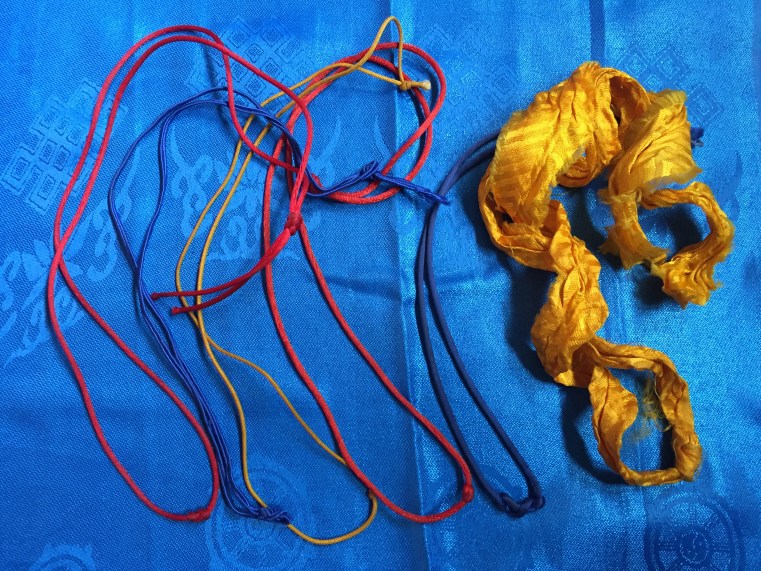
Various types of protection cords. Photo credit: Raven Cypress Wood

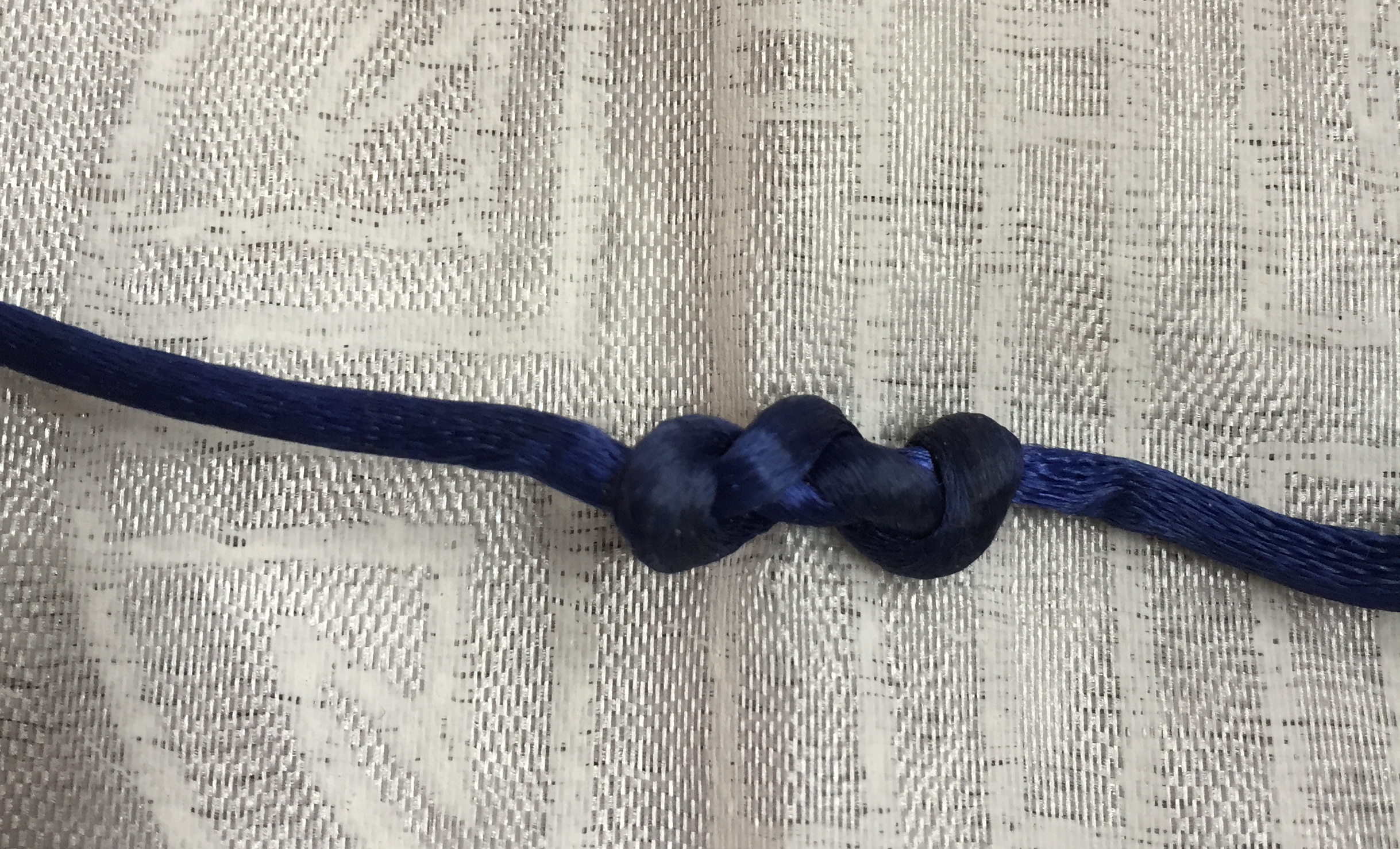
Within the Yungdrung Bön religious tradition, there is the custom of lamas giving their disciples so called “protection cords.” The Tibetan name, sung dü [Tib. bsrung mdud], literally translates as “knot of protection”. This refers to the special knot at the center of the string, or strip of material, that holds the protection.
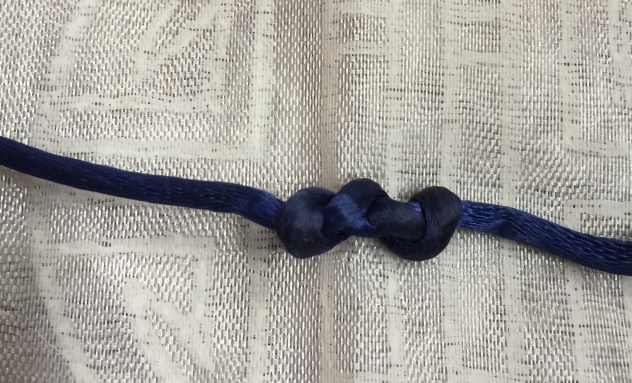
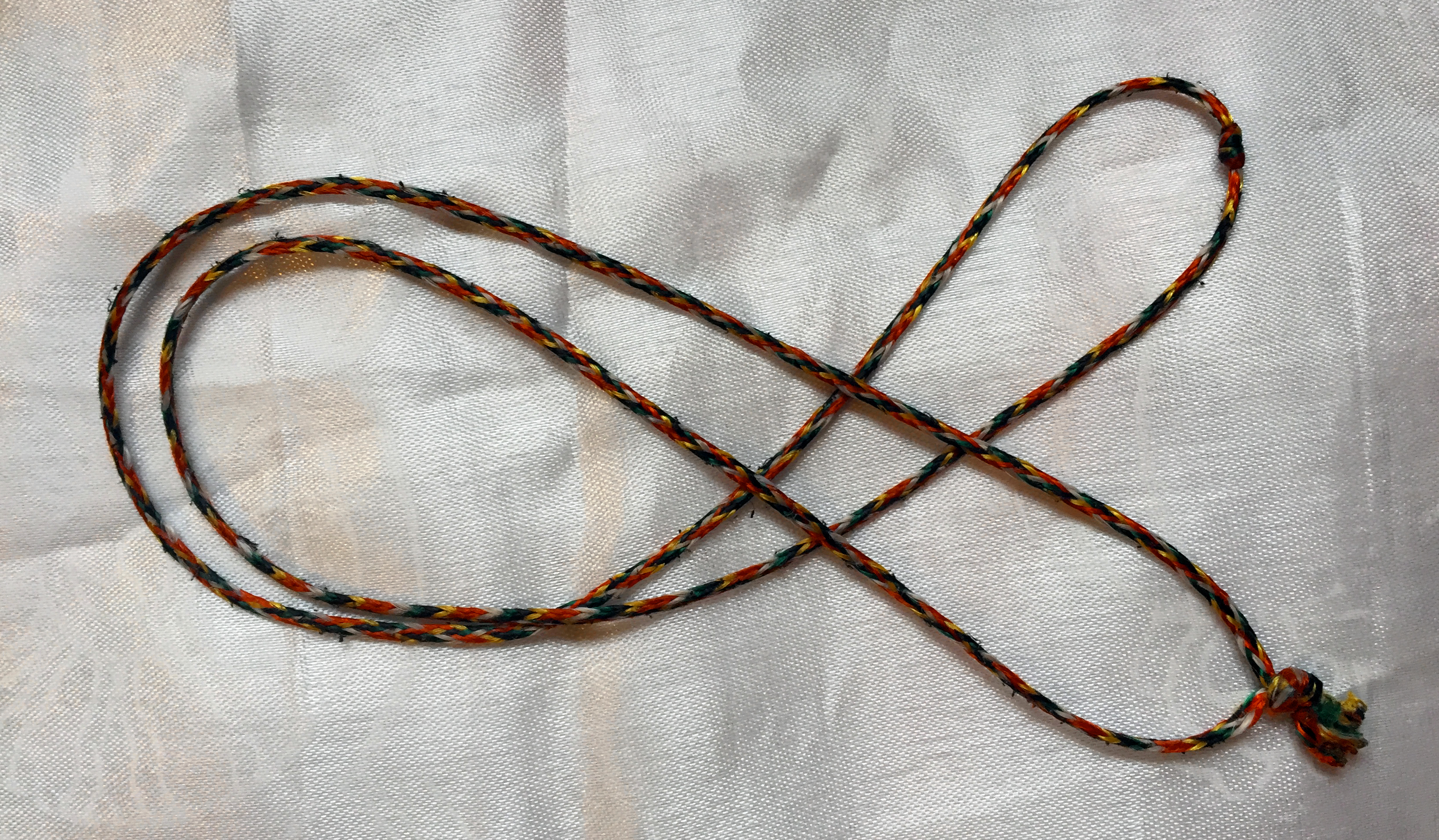
The special knot of a Yungdrung Bon protection cord. Photo credit: Raven Cypress Wood

The string, or strip of material, can be of any of the five colors: white, green, red, blue, or yellow. It can also be of all five together. However, some practices specify the use of a particular color for the construction of a protection cord. For example, at the conclusion of the seven-day longevity retreat of Lama Tséwang Rikdzin, the text instructs the practitioner to create a sung dü using a white cord or string, and tying twenty-one of the special knots together with the recitation of the longevity mantra of Khandro Tukjé Kündrol.
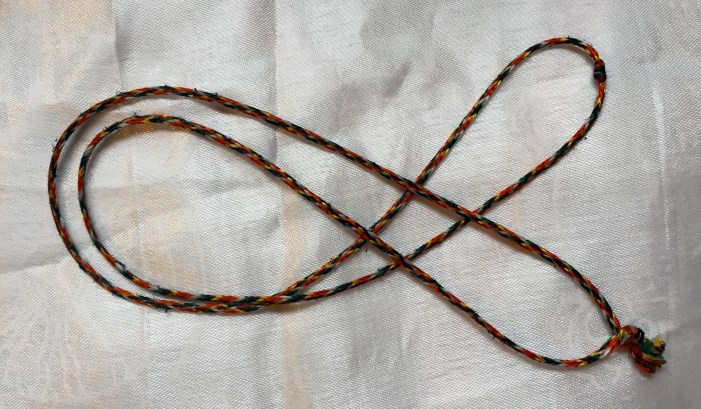
Protection cord of the five colors of the elements. Photo credit: Raven Cypress Wood.

These special square knots are tied as a mantra is blown onto them, and therefore act to hold the blessing and protection of the mantra. They are created only by those who have actually accomplished the power of the mantra through extensive practice according to the scriptures. These knots should never be opened. These sung dü are most often worn around the neck, or placed in a ga’u, or special locket. The area of the body above the waist is considered higher and more respectful than the area below the waist. Therefore, keeping a blessing cord in a pocket below the waist is not ideal. Sometimes, they are worn on the wrist, but there should be mindfulness to keep the protection cord uncontaminated.

Upon receiving a protection cord, it should be worn for at least three nights. After that, it can continue to be worn, placed in a respectful and sacred place such as a shrine, or burned as a respectful method of disposal. As with any sacred object, it should be kept off the floor or other unclean places. It should never be thrown in the trash or mindlessly discarded.

Raven Cypress Wood ©2018

Cycles of the Elements and Time: The Namchu Wangden

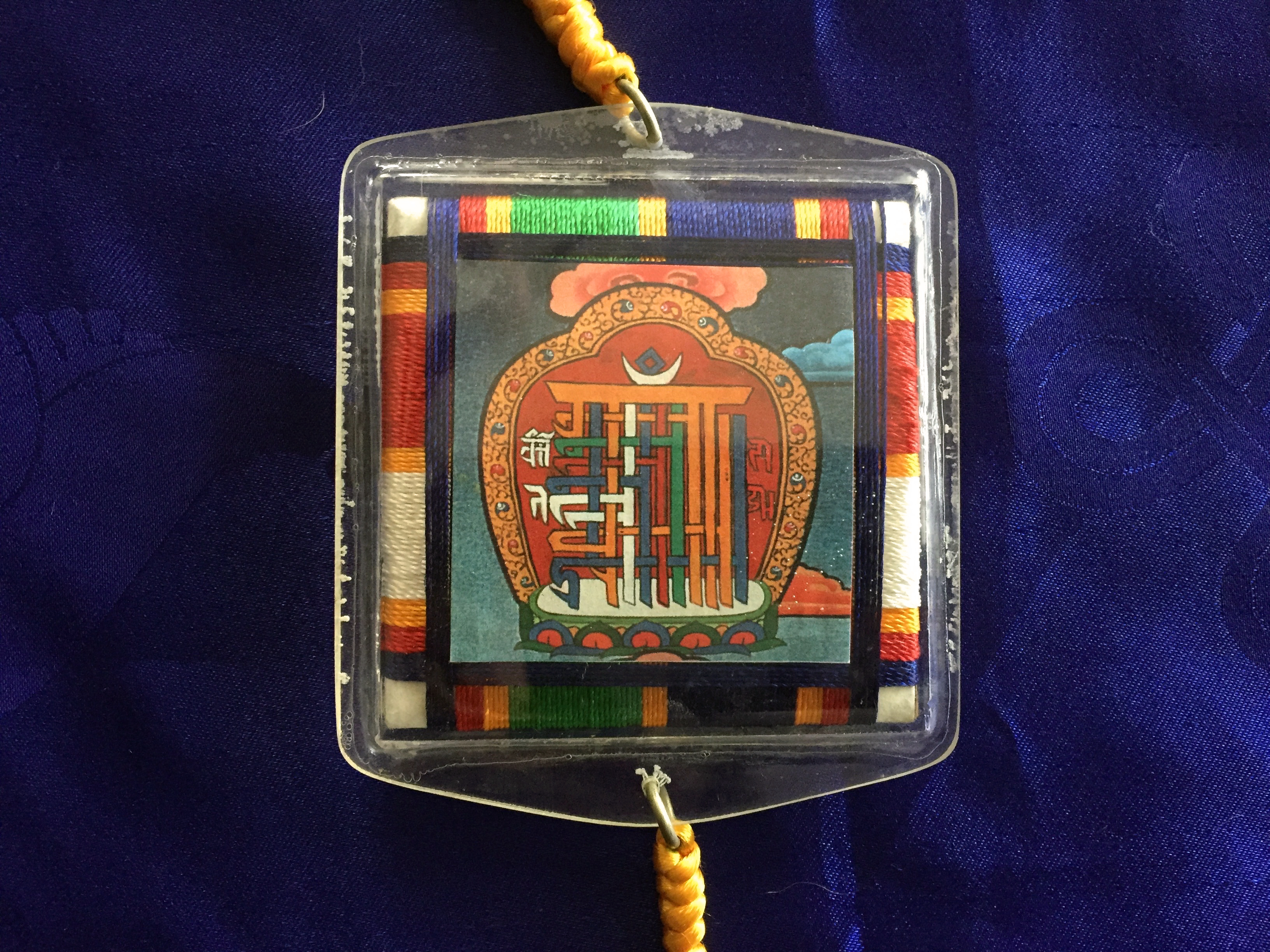
The symbol for The Ten-fold Powerful One, the Namchu Wangden.

The Namchu Wangden, or The Ten-fold Powerful One, is a symbol of great protection within the Yungdrung Bön religious tradition. It contains the seed syllables for seven hundred and twenty deities.

According to an explanation written by the 23rd Menri Trizin Nyima Tenzin Rinpoche:

“From the tantra, The Cycle of the Elements and Time, found within the 100,000 glorious scriptures of the indestructible, great vehicle, is this ten columns and nine letters of the Namchu Wangden, which contains the seed syllables of Enlightened Mind. AH is the seed syllable for Yungdrung Yéwang Gyalpo, the earth deities, their body color is golden. YANG is the seed syllable for Kündrol Yingjuk, the wind deities, and they are green in color. RAM  is the seed syllable for Künrik Barwa, the fire deities, and they are red in color. MANG is the seed syllable for Künjom Gyalpo, the water deities, and they are blue in color. KHAM is the seed syllable for Kündü Chenpo, the iron deities, and they are white in color. DRUM is the seed syllable for the immeasurable tent of protection, and the four nyémjé ma, and they are golden in color. HUNG is the seed syllable for the queens of the four times at the inner door. At the middle door, are the four guardians. At the outer door, are four fierce ones who are dark-blue in color. OM on the right,*  is the seed syllable for the grandfather of primordial, phenomenal existence, Sangpo Bumtri and the Four Families, and they are white in color. DU on the left,* is the seed syllable for the four mothers of cause and the eight shen, and they are golden-red in color. In brief, this symbol includes the seed syllables for the seven hundred and twenty deities of the Five Families. It is said that the Namchu Wangden destroys all fear!”

*Right and left are according to the point of view of the object not the subject.

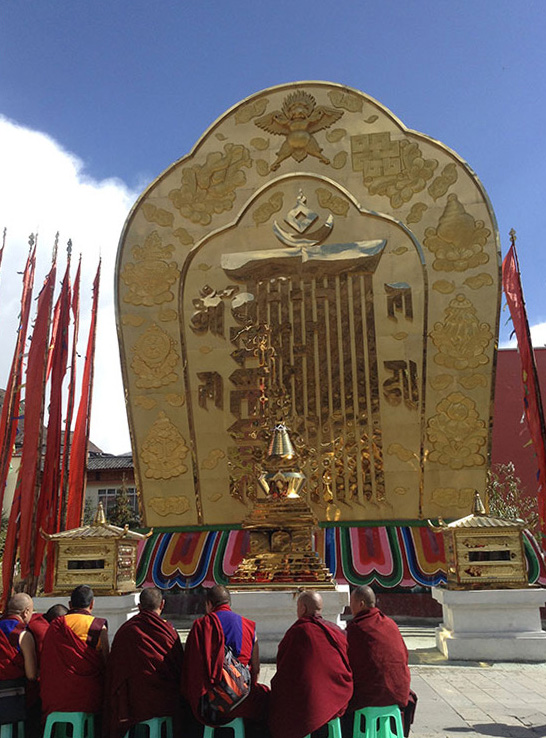
The Namchu Wangden of Yungdrung Bon being consecrated in Amdo, Tibet. Photo credit: Unknown.

Displaying this image protects from destruction by the five elements, as well as protects the life-force, health, personal power and lungta.  It gives protection from the eight classes of beings, as well as from astrologically negative events. Traditionally, this image is placed at the entrance to the home as a means of protection. In modern times, the Namchu Wangden protection amulet is commonly placed in cars as well.

Protective amulet, or sung khor, of the Namchu Wangden. Photo credit: Raven Cypress Wood

Tibetan Translation Raven Cypress Wood©2018