Author Archives: Raven Cypress Wood

Lunar Calendar: The Practice of Tséwang Rikdzin

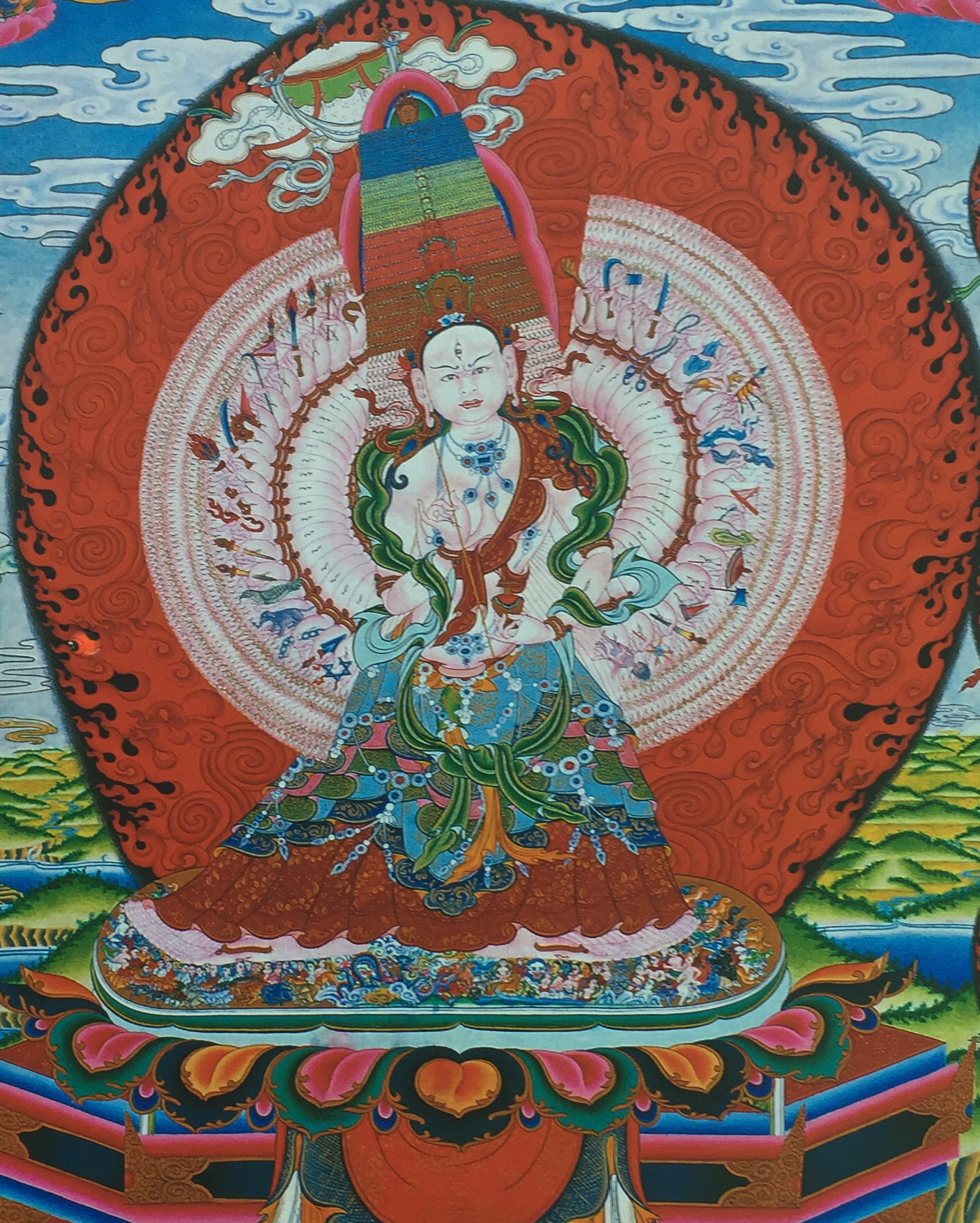
Mural of Lama Tsewang Rikdzin from Yanggon Monastery in Dolpo, Nepal. Photo credit: Unknown.

According to the lunar calendar of the Yungdrung Bön, the 10th lunar day of each month is the day for the practice of the three sages: the great lama Drenpa Namkha and his two twin sons, Tséwang Rikdzin, and Péma Tongdrul. This coincides with April 3, 2020. This day is set aside specifically to pay homage and make offerings to these lamas, as well as to recite the mantras associated with their respective practices.

“You are like the embrace of a thousand cloudless suns upon the very white, snow mountain, Mount Meru.

A hundred praises to the deathless Tséwang Rikdzin, who overcomes the darkness of the suffering of sentient beings during this degenerate time!”

— From The Sword that Cuts the Noose of Death found within the Tséwang Jarima, The Teachings of Tséwang given at Jarima

Indestructible: The Longevity Practice of Lama Tséwang Rikdzin.  http://www.lulu.com/spotlight/SacredSky

Raven Cypress Wood ©All Rights Reserved. No content, in part or in whole, is allowed to be used without direct permission from the author.

Don’t want to miss a post? Scroll to the bottom and click “Follow this blog.”


The Thirteen Yungdrung Bön Activities for a Meaningful Human Life

Khenpo Nyima Künchap Rinpoche reciting scripture. Photo credit: Raven Cypress Wood

The Thirteen Yungdrung Bön Activities are practices that perfect the two accumulations of merit and wisdom. These activities develop our positive qualities and diminish negative tendencies, and provide a way to take advantage of our precious human life. Engaging in these activities also has the benefit of protecting the mind from fear, anxiety and obsessive thoughts by focusing upon sacred actions of body, speech and mind.

  1. Writing the sacred syllables
  2. Reading sacred books
  3. Reciting the scriptures
  4. Turning the wheel of Bön
  5. Presenting offerings and prostrations
  6. Stopping ordinary speech and maintaining silence
  7. Reflecting upon the meaning of the words
  8. Listening to the sacred teachings for one’s self
  9. Teaching the sacred teachings for others
  10. Meditating upon the actual meaning
  11. Practicing towards a goal
  12. Exerting one’s self in performing virtuous activity
  13. Exerting one’s self with the causes to obtain a precious human body

Instructions for writing the Tibetan syllable AH. The syllables are drawn from the top downwards and from left to right.

“To the embodiment of all the places of refuge, the root lama,

I pay homage, admit my wrongdoing, present offerings, and supplicate!

Please pacify all obstacles, and guide me along the path of liberation!

Bestow your blessings that my wishes will be spontaneously fulfilled!

Through the force and the power of this, wherever I am, may the labels “illness,” “hunger,” “weapons,” “conflict,” and “disharmony” not even exist!”

— Extracted from The Spontaneous Wish-fulfillment of Removing Obstacles from the Path, The Oral Transmission of Khandro Shérap Lopélma

For the full English, Spanish, or Portuguese translation of The Spontaneous Wish-fulfillment of Removing Obstacles from the Path, The Oral Transmission of Khandro Shérap Lopélmafollow this link to the Publications page of this website. https://ravencypresswood.com/publications/ This prayer is commonly recited each day within the Yungdrung Bön religious tradition.

A young monk making an offering of light at Menri Monastery. Photo credit: Unknown.

Present and Future Refuge

The Great Lama and yidam deity, Drenpa Namkha

“Now, during this negative time, infectious diseases and epidemics occur,

heat and cold within the body are reversed, and medicine doesn’t help.

You are surrounded by the Medicine Buddha and his retinue.

I pray to the Great Lama and his two sons, to the subduer of demons, Drenpa Namkha: completely overcome infectious diseases and epidemics!

Look upon me with your unbiased compassion morning and night, during the past, present, and future! Turn back both seen and unseen enemies!

My present and future refuge and protector bless me to accomplish all of my intentions!”

— Extracted from The Prayer of Fourteen Stanzas to Drenpa Namkha translated by Raven Cypress Wood

In general, there have been three separate manifestations of Drenpa Namkha. Each was a reincarnation of the previous manifestation. There was the Drenpa Namkha of the ancient kingdom of Tazik, Drenpa Namkha of the ancient kingdom of Zhang Zhung, and Drenpa Namkha of Tibet. Drenpa Namkha of the ancient kingdom of Zhang Zhung was a prince who lived during 914 BC. He married an Indian Brahman girl and had twin sons, Tséwang Rikdzin and Péma Tongdrül, who were born in the year 888 BC.

Drenpa Namkha of Tibet was born in the year 753 AD in Southern Tibet.  During this time, the kingdom of Tibet was ruled by King Trisong Detsen who had many Bön priest in his court, including Drenpa Namkha. When the king decided to convert the kingdom to the new Indian religion of Buddhism, he began to drive out the Bön priests and to destroy their texts. The Bön lamas were given the choice of exile from the kingdom, suicide, or conversion to the new religion.  Many lamas chose to escape with texts and to try and preserve the teachings elsewhere. Drenpa Namkha chose to stay and protect the teachings and the texts from within Tibet. So, at the age of 31, he cut his own hair with a blade of gold and ordained himself a Buddhist.

After his conversion, he had many YUngdrung Bön texts hidden within chortens, statues and columns at the monastery of Samyé. He continued to compose texts and to teach. Among his many students was the king himself, Trisong Detsen. Years later, the king allowed him to openly return to his practice of the Yungdrung Bön teachings.

All translations and content by Raven Cypress Wood ©All Rights Reserved.

No content, in part or in whole, is allowed to be used without direct permission from the author.

Don’t want to miss a post? Scroll to the bottom and click “Follow this blog.”
Supplication Prayer to Jamma, the Loving Mother

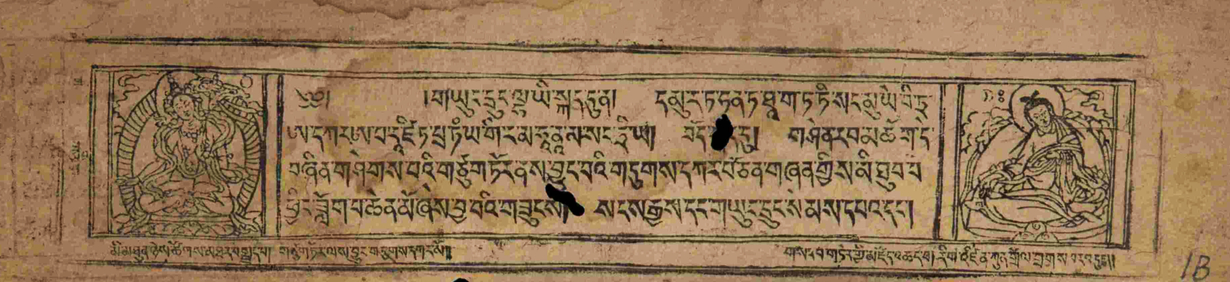
Jamma, the Loving Mother

” Hri!

Within a completely pure self-manifested realm,

just by paying homage and offering this supplication to the state of Yümchen Tükjé Jamma,*

please bring victory over the eight fears!”

Translated from the Tibetan by Raven Cypress Wood

Audio for the Tibetan language chanting has been kindly recorded and posted to Facebook by Geshe Yongdong, president and spiritual director of Sherab Chamma Ling. Check his page for the recording.

Raven Cypress Wood ©All Rights Reserved. No content, in part or in whole, is allowed to be used without direct permission from the author.

Don’t want to miss a post? Scroll to the bottom and click “Follow this blog.”


The Immeasurable Benefit of Raising Prayer Flags

Yungdrung Bön lungta prayer flags available for a limited time from Nine Ways. Photo credit: Raven Cypress Wood

Prayer flags originated with the Yungdrung Bön religious tradition and the teachings of Buddha Tönpa Shenrap Miwoché.  According to the eminent scholar Yongdzin Tenzin Namdak Rinpoché, in ancient times the Bönpo would blow mantras and prayers onto strips of colored wool. These strips of wool were then draped over the branches of bushes and trees. This practice eventually evolved into the kind of prayer flags that we are familiar with today. According to the modern-day saint Shardza Tashi Gyaltsen Rinpoché, the very best size for a prayer flag is five arm spans,  the next best is three arm spans, and other sizes are acceptable as long as they are larger than the palm of the hand. Writing the prayers and mantras in gold or silver is the very best, using cinnabar is next best and writing with ink mixed with various medicines and the six excellent ingredients, or other blessed substances is the minimum.

Before being raised, prayer flags must be consecrated and blessed. Then, in the early morning or at least before noon, one must perform the practices of going for refuge, generating the mind of enlightenment and admitting wrongdoing and receiving purification. Then, the flags are hung outside where they will be exposed to the wind.  Preferably, in a high and clean place where they can be left undisturbed. Afterwards, prayers of aspiration and dedicating the merit of the virtuous activity are performed.  When prayer flags are raised in this proper way, the benefit is unimaginable. Some of the best days for raising prayer flags are during the 1st month of the lunar New Year especially on the 3rd day, on the auspicious lunar days of full moon, new moon, 8th, or 22nd, on the anniversary of the birth or paranirvana of a buddha, or whenever the sacred teachings of Yungdrung Bön are being bestowed.

As for the extensive benefit of raising prayer flags, it is said if they are raised atop a high mountain, whoever eats food or drinks water from that mountain or whoever sees the flags with their eyes, they will attain buddhahood. If they are raised at a sacred place, that person will definitely be reborn into a buddha land. In general, prayer flags support the fulfillment of the wishes and intentions of this lifetime and the attainment of buddhahood in a future lifetime. Raising prayer flags purifies negative actions of body, speech and mind. Even the most vile of actions can be purified when prayer flags are established in the proper way and with sincerity. Additionally, they can remove obstacles for the recently deceased. According to Shardza Rinpoché:

“After someone has died during the 49 days of the intermediate state, if 49 prayer flags are established, the deceased will certainly not fall into lower rebirths.”

As for the power of raising prayer flags,

“Raising 1,008 prayer flags is better than a shen of magical power erecting a buddha statue made of gold.”

Also from Shardza Rinpoché:

“It is said that if prayer flags are raised at the riverbank of a large city, the sentient beings of that area will attain buddhahood. In those places, harm from epidemics and poison will never strike. If they are raised at the riverbank of a retreat place or gompa, the virtuous practice and vows of any spiritual friend or advisor of that place will be renewed.”

And from Drupthop Atang Tsazen Rinpoché:

“Having written these secret yungdrung mantra such as the mantras of the buddhas, the 100-syllable mantra, the three essence mantras, or the six syllables upon cotton or tree bark; when it is exposed to the wind whoever among sentient beings sees it with their eyes will obtain a state of happiness.”

A windhorse carrying a flaming jewel.

There are many kinds of prayers and mantras that are appropriate to be written on prayer flags, By far, the most common type of prayer flags are raised to increase lungta. Lungta is sometimes translated as the force of good luck. It is the force that has the ability to uplift the other individual forces of health, vitality, charisma, and the soul. When the lungta is weak however, the other individual forces will become diminished. Lungta [Tib. rlung rta] means “windhorse” and it is this image that is depicted at the very center of the prayer flag. This symbolizes the incredible speed with which prayer flags can raise the lungta. Each of the four corners display one of the four guardian animals of the four directions: a lion, tiger, garuda, and dragon. Most often, prayer flags are grouped together as a set of five with each flag being one of the colors of the five elements. The elements and their corresponding colors are: earth=yellow, water=blue, fire=red, air=green, and space=white.

Lungta-type flags are not raised for the deceased since their primary activity is to strengthen and protect the health, lifespan etc. However, when raising lungta prayer flags, the merit of that virtuous activity can be dedicated to those who are deceased along with all other sentient beings..

Raven Cypress Wood ©All Rights Reserved. No content, in part or in whole, is allowed to be used without direct permission from the author.

Don’t want to miss a post? Scroll to the bottom and click “Follow this blog.”