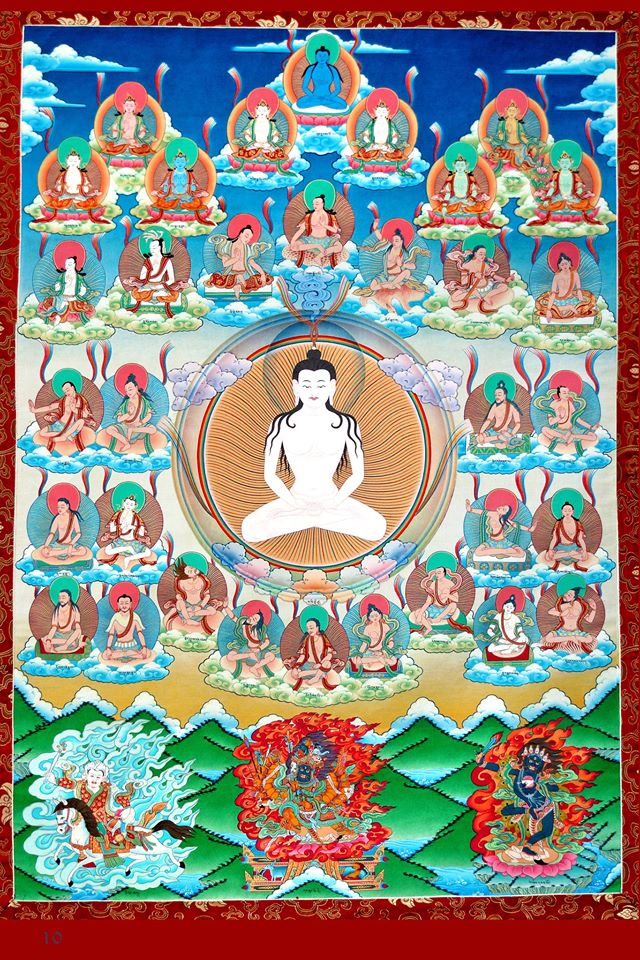
Although this website purposely does not share or discuss the dzogchen teachings or practices, this article explains the relationship of three separate texts within one of the most treasured cycle of dzogchen teachings: The Zhang Zhung Nyen Gyü, The Aural Transmission from Zhang Zhung. Of the three, sometimes counted as four, primary lineages of dzogchen in the Yungdrung Bön tradition, the Zhang Zhung Nyen Gyü stands out as being especially treasured. Although the other scriptures were hidden or kept secret during the persecution of the 8th century C.E in Tibet, the Zhang Zhung Nyen Gyü was given protected status by the persecuting king. Thus, the transmission of this high teaching from one master to the ear of one student down through generations was never broken. Although it has traditionally been kept very secret, due to changing circumstances in modern times the protectors of the scripture have given permission to allow the teaching to be shared more openly.
The Zhang Zhung Nyen Gyu: The full title of the text is The Zhang Zhung Nyen Gyu Ka Gyü Kor Zhi, The Four Cycles of the Enlightened Words of the Aural Transmission of Zhang Zhung. It is commonly referred to as either The Nyen Gyü or The Kor Zhi. This is the root text. The source of these teachings is the primordial enlightened one, Küntu Zangpo. The teachings were transmitted mind-to-mind from Küntu Zangpo through eight other enlightened ones to Sangwa Düpa. This Sangwa Düpa was born a prince of Tazik and is considered by Bönpos as the previous incarnation of Shakyamuni Buddha. He transmitted the teaching using both his awareness and spoken words to a human, a lu [Sanskrit: naga], and a god. These three disciples are the beginning of the lineage known as the twenty-four masters who all successively attained the rainbow body of light as a sign of the ultimate realization of dzogchen. From there, the transmission continued to the esteemed yogi Nangzher Lopo who was instrumental in protecting the Zhang Zhung Nyen Gyü from having to be hidden in order to not be destroyed during the time of persecution. With permission from Tapihritsa, he first wrote down the core teachings given to him by Dawa Gyaltsen and Tapihritsa in the 8th century C.E.. These included teachings such as The Four Goodnesses, The Six Lamps, The Twenty-One Nails, and so on. In the 10th century, Pöngyal Tsenpo, aka Pönchen Tsenpo, translated those teachings from Zhang Zhung into Tibetan and also wrote down descriptions of the Trul Khor movements.
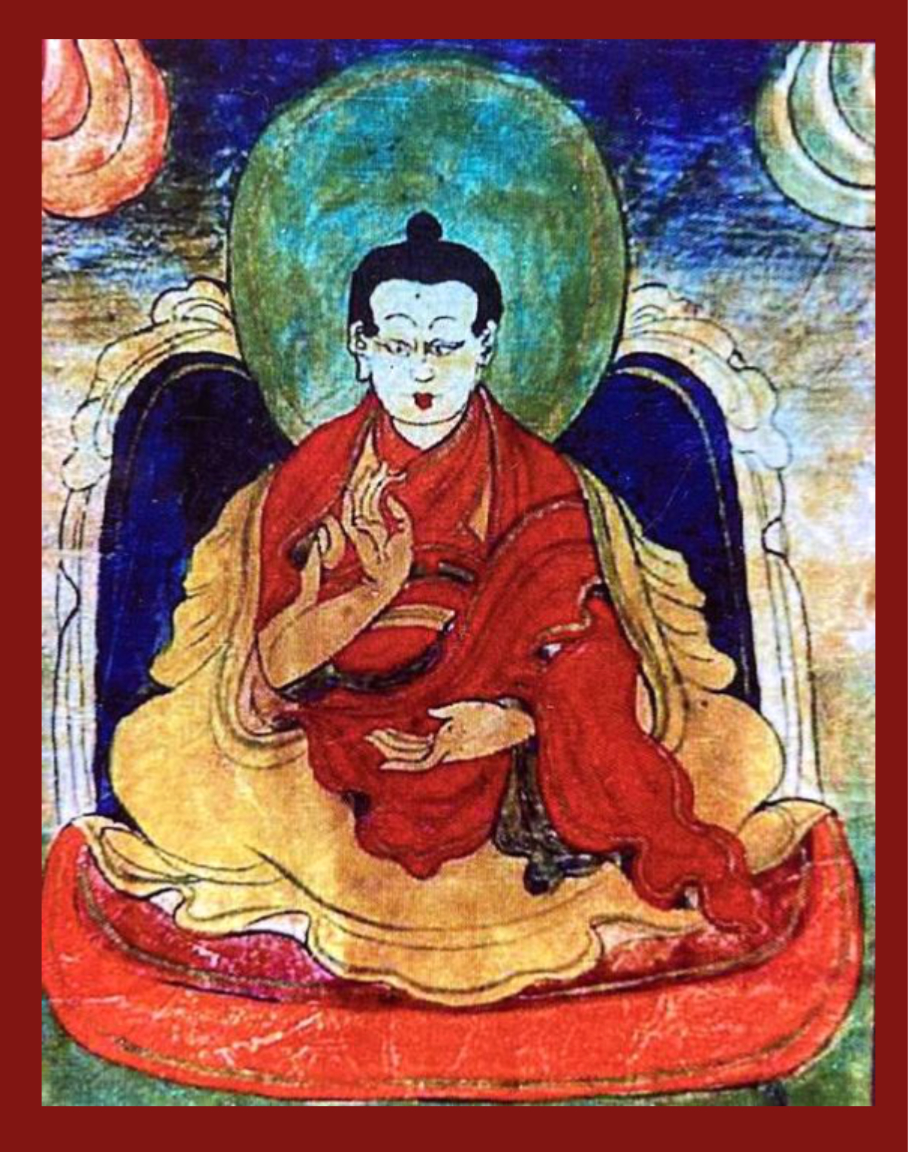
Later in the 11th century, Yangtön Chenpo Sherap Gyaltsen, a member of the esteemed Yangtön clan of Dolpo, received the full transmissions for the upper and lower systems of teachings, thus uniting them. He wrote down this compilation of teachings as well as commentaries. He is considered to have had great kindness for disciples by writing the complete teachings of the Nyen Gyud and Nyam Gyü down for the first time as they are known and practiced today in order to make it easier for their study and practice. However, it is believed that by writing down the secret teachings, an obstacle was created and his lifespan was shortened because he died at the age of 63 rather than the prophesied age of 75. (For a fuller list of the lineage lamas of the Zhang Zhung Nyen Gyü, see previous article: https://ravencypresswood.com/2015/01/18/the-field-of-accumulation-the-aural-transmission-of-zhang-zhung/ )
The Zhang Zhung Nyen Gyü is a relatively large volume containing titles such as The Twelve Small Tantras and its corresponding commentary, The Twenty-one Nails and its corresponding commentary, The Six Lamps and its corresponding commentary, instructions on the practice of trul khor and tsa lung, the story of Tapihritsa and Nangzher Lopo including teachings of The Four Goodnesses, Quintessential Instructions for practicing with the mind, Self-purification of the Six Destinies, invocations of the Zhang Zhung Nyen Gyü guardians Nyipangsé and Menmo Namchi Gunggyal, and so on. Some volumes begin with chapters dedicated to short biographies of the lineage masters.

The Nyam Gyu: The more complete title is The Zhang Zhung Nyen Gyü Nyam Gyü, The Experiential Transmission of the Aural Lineage of Zhang Zhung. This is commonly known as The Nyam Gyü, The Experiential Transmission. This text is a collection of spiritual experiences and subsequent advice and pith instructions of the masters practicing the Zhang Zhung Nyen Gyü. There is a condensed collection, a medium-length collection, and an expanded collection of pith instructions. Perhaps best known is the condensed collection of pith instructions known as the Tor Bu. This was written down in the 11th Century by Orgom Kündul at the request of Yangtön Chenpo.
The Chak Tri: This text is commonly known as The Chak Tri, The Practice Manual. In the 13th century C.E., Druchen Gyalwa Yungdrung, esteemed abbot of Yeru Wensaka Monastery, received the single transmission of the Zhang Zhung Nyen Gyü. He went on to compile the practice manual for the Zhang Zhung Nyen Gyü in order to organize the teachings into a logical sequence of practice. In addition to creating a step-by-step guide for the Zhang Zhung Nyen Gyü teachings, he also included bits of his own advice for teachers guiding students in their spiritual development. The Chak Tri has twelve chapters which are sometimes grouped into five general categories.
- Chapter One contains the hagiography of many of the lineage masters of the Zhang Zhung Nyen Gyü.
- Chapter Two contains the chanted prayers and verses for the ngondro or preliminary practices.
- Chapter Three contains the actual instruction and visualization practices for the nine preliminary practices.
- Chapter Four contains instructions for the primary meditation practice of dzogchen. These instructions include practices for recognizing and stabilizing the mind.
- Chapter Five contains instructions concerning the view of dzogchen.
- Chapter Six contains instructions regarding dzogchen meditation.
- Chapter Seven contains instructions regarding integration of the view with the behavior and activities of a dzogchen practitioner.
- Chapter Eight contains instructions and clarifications regarding the result of Dzogchen practice.
- Chapter Nine contains instructions for practices to remove obstacles and strengthen realization.
- Chapter Ten contains instructions on the yogic exercises of trul khor to remove obstacles and enhance meditative experience.
- Chapter Eleven contains instructions regarding the forty-nine day dark retreat.
- Chapter Twelve contains instructions regarding the yogic exercises of tsa lung to remove obstacles and enhance meditative experience.
Did you enjoy this content? This article is made possible by generous donors who want content like this to continue to be available.
Join the mandala of Nine Ways supporters by following this link: https://ravencypresswood.com/donate/
It’s easy through Paypal, Zelle, or Venmo. RCW108@gmail.com

Don’t want to miss a post? Scroll to the bottom and click “Follow this blog.”

Discover more from Nine Ways
Subscribe to get the latest posts sent to your email.
 Nine Ways
Thank you so much Raven. So clear! 💕Sent from my iPhone
You are very welcome. Hugs
Such informative and precious information, many thanks Raven for sharing this.
Brian, you are very welcome. I’m so glad to know that you benefited from the article. Sincerely, Raven