Blog Archives

Receiving Blessings and Protection

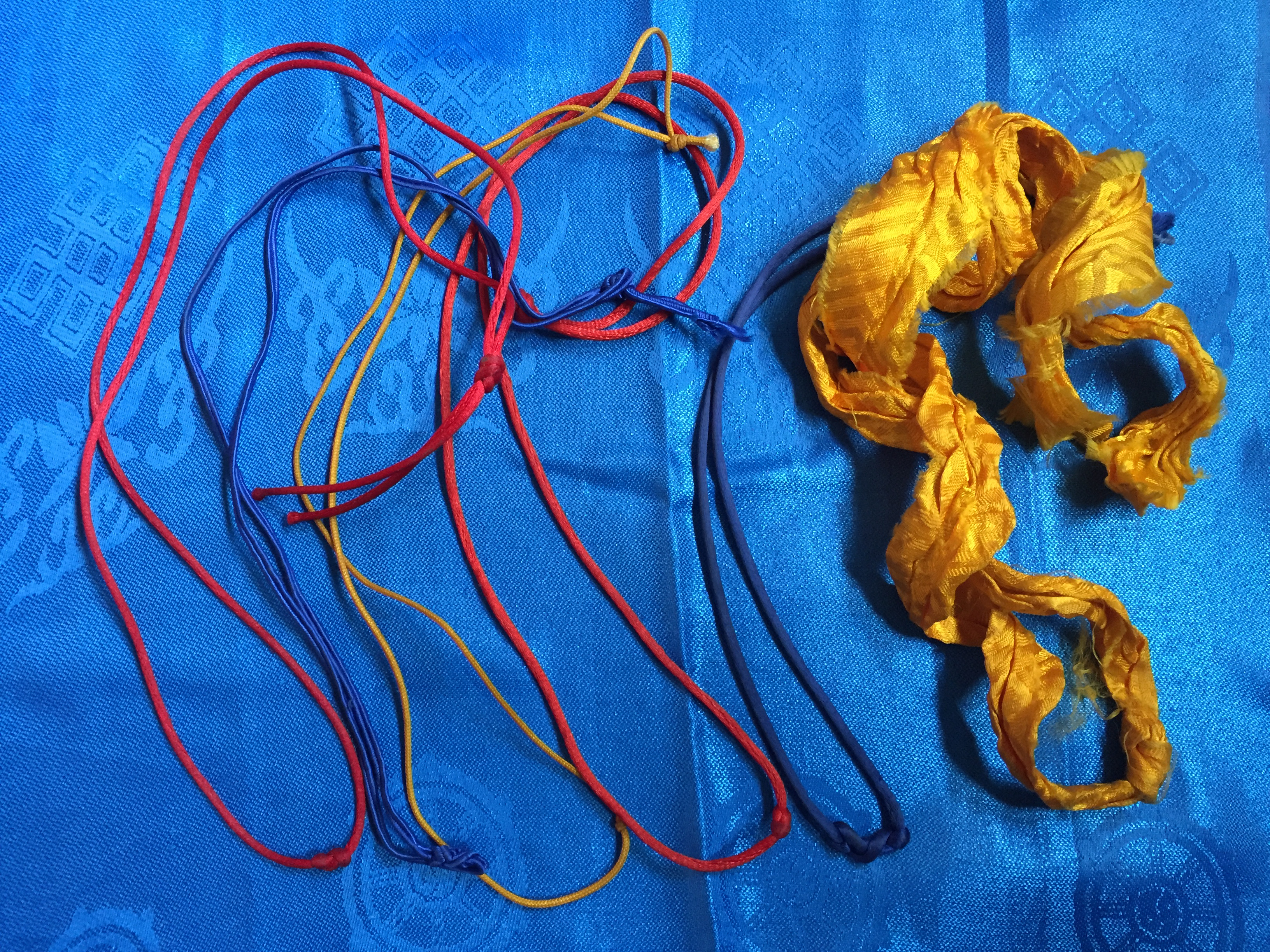
Various types of protection cords. Photo credit: Raven Cypress Wood

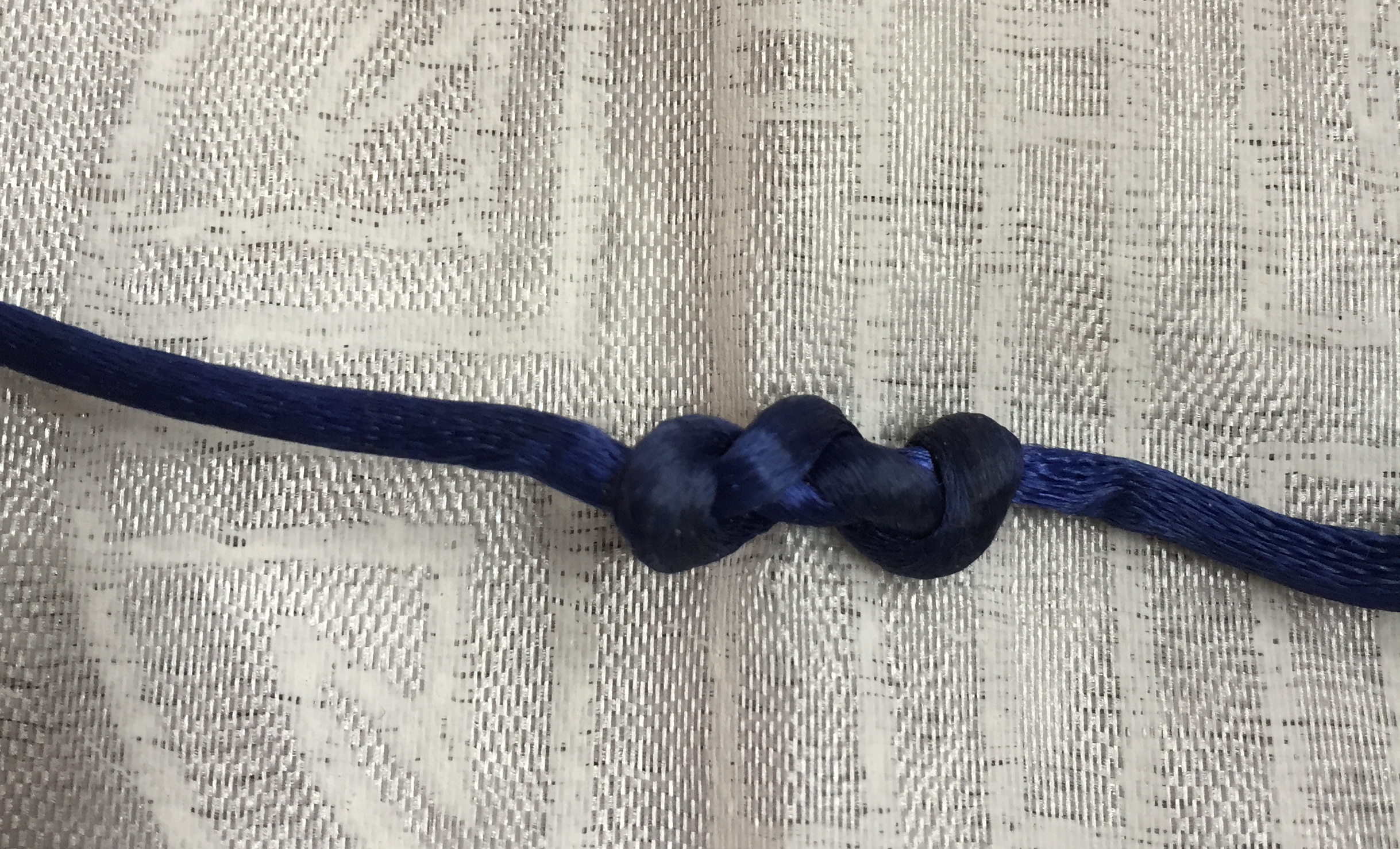
Within the Yungdrung Bön religious tradition, there is the custom of lamas giving their disciples so called “protection cords.” The Tibetan name, sung dü [Tib. bsrung mdud], literally translates as “knot of protection”. This refers to the special knot at the center of the string, or strip of material, that holds the protection.

The special knot of a Yungdrung Bon protection cord. Photo credit: Raven Cypress Wood

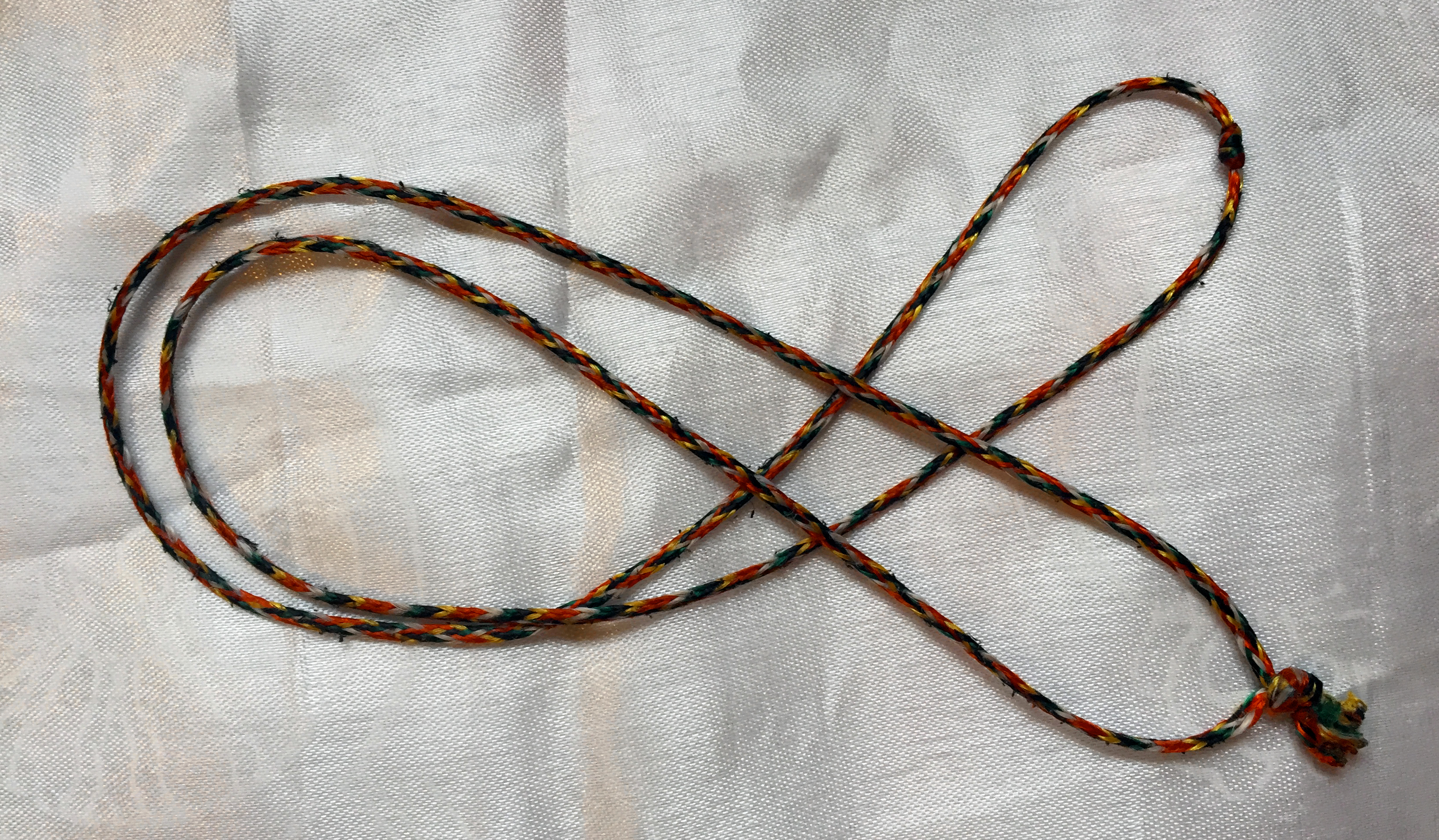
The string, or strip of material, can be of any of the five colors: white, green, red, blue, or yellow. It can also be of all five together. However, some practices specify the use of a particular color for the construction of a protection cord. For example, at the conclusion of the seven-day longevity retreat of Lama Tséwang Rikdzin, the text instructs the practitioner to create a sung dü using a white cord or string, and tying twenty-one of the special knots together with the recitation of the longevity mantra of Khandro Tukjé Kündrol.

Protection cord of the five colors of the elements. Photo credit: Raven Cypress Wood.

These special square knots are tied as a mantra is blown onto them, and therefore act to hold the blessing and protection of the mantra. They are created only by those who have actually accomplished the power of the mantra through extensive practice according to the scriptures. These knots should never be opened. These sung dü are most often worn around the neck, or placed in a ga’u, or special locket. The area of the body above the waist is considered higher and more respectful than the area below the waist. Therefore, keeping a blessing cord in a pocket below the waist is not ideal. Sometimes, they are worn on the wrist, but there should be mindfulness to keep the protection cord uncontaminated.

Upon receiving a protection cord, it should be worn for at least three nights. After that, it can continue to be worn, placed in a respectful and sacred place such as a shrine, or burned as a respectful method of disposal. As with any sacred object, it should be kept off the floor or other unclean places. It should never be thrown in the trash or mindlessly discarded.

Raven Cypress Wood ©2018

Cycles of the Elements and Time: The Namchu Wangden

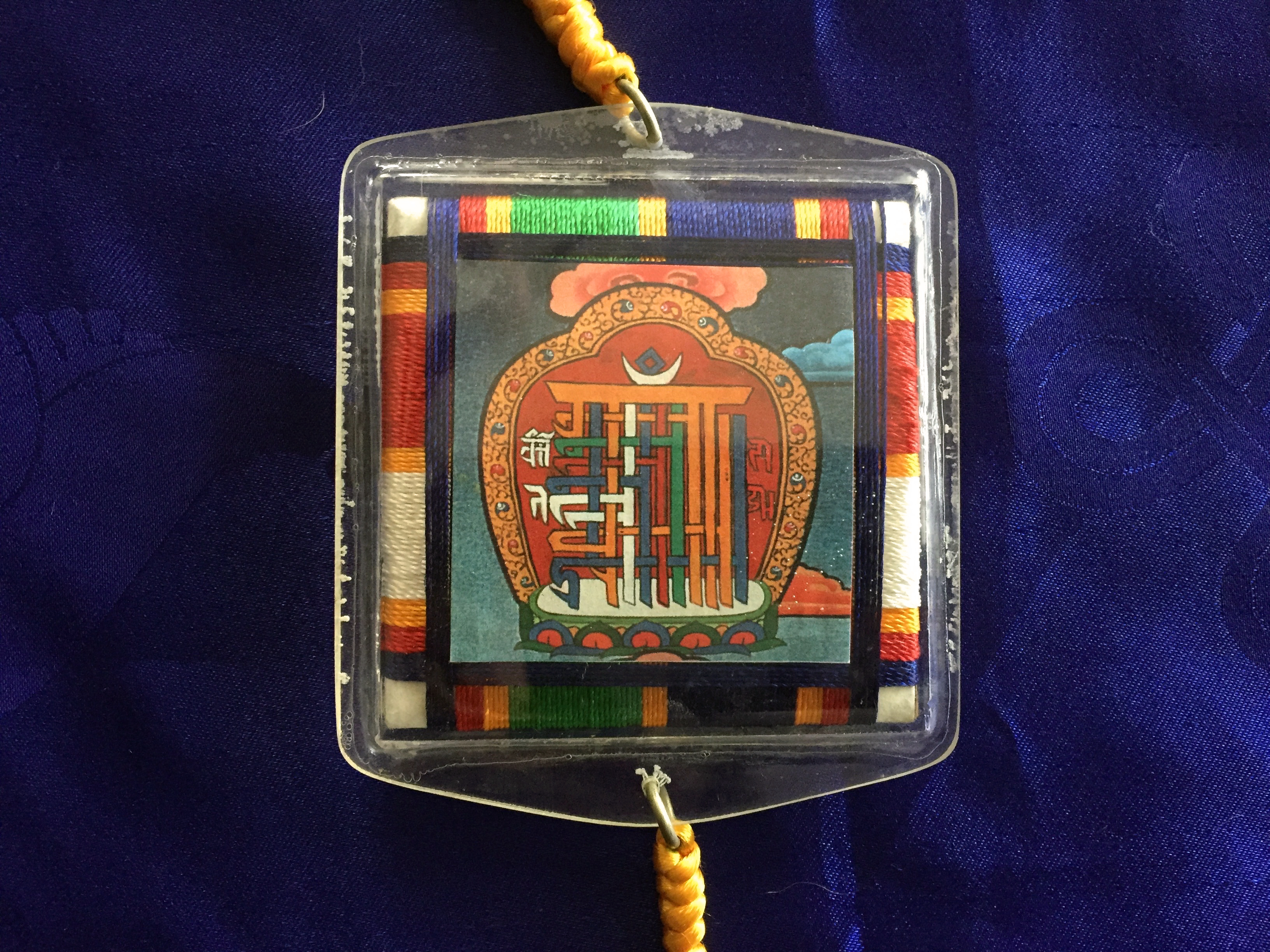
The symbol for The Ten-fold Powerful One, the Namchu Wangden.

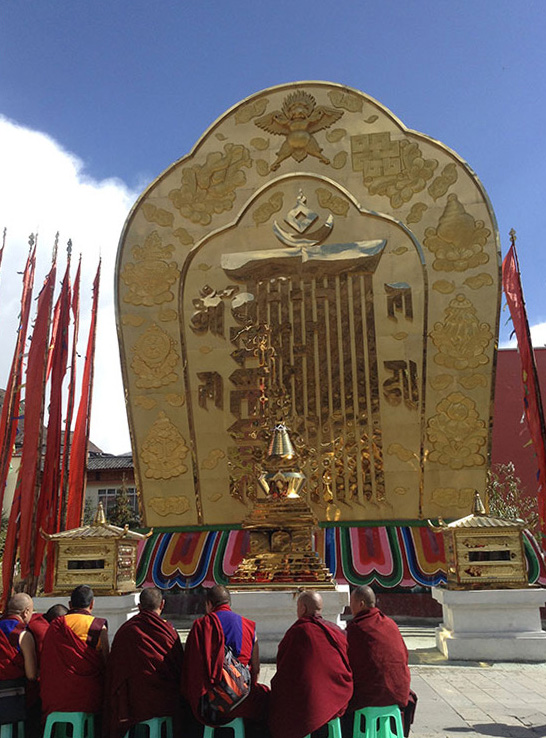
The Namchu Wangden, or The Ten-fold Powerful One, is a symbol of great protection within the Yungdrung Bön religious tradition. It contains the seed syllables for seven hundred and twenty deities.

According to an explanation written by the 23rd Menri Trizin Nyima Tenzin Rinpoche:

“From the tantra, The Cycle of the Elements and Time, found within the 100,000 glorious scriptures of the indestructible, great vehicle, is this ten columns and nine letters of the Namchu Wangden, which contains the seed syllables of Enlightened Mind. AH is the seed syllable for Yungdrung Yéwang Gyalpo, the earth deities, their body color is golden. YANG is the seed syllable for Kündrol Yingjuk, the wind deities, and they are green in color. RAM  is the seed syllable for Künrik Barwa, the fire deities, and they are red in color. MANG is the seed syllable for Künjom Gyalpo, the water deities, and they are blue in color. KHAM is the seed syllable for Kündü Chenpo, the iron deities, and they are white in color. DRUM is the seed syllable for the immeasurable tent of protection, and the four nyémjé ma, and they are golden in color. HUNG is the seed syllable for the queens of the four times at the inner door. At the middle door, are the four guardians. At the outer door, are four fierce ones who are dark-blue in color. OM on the right,*  is the seed syllable for the grandfather of primordial, phenomenal existence, Sangpo Bumtri and the Four Families, and they are white in color. DU on the left,* is the seed syllable for the four mothers of cause and the eight shen, and they are golden-red in color. In brief, this symbol includes the seed syllables for the seven hundred and twenty deities of the Five Families. It is said that the Namchu Wangden destroys all fear!”

*Right and left are according to the point of view of the object not the subject.

The Namchu Wangden of Yungdrung Bon being consecrated in Amdo, Tibet. Photo credit: Unknown.

Displaying this image protects from destruction by the five elements, as well as protects the life-force, health, personal power and lungta.  It gives protection from the eight classes of beings, as well as from astrologically negative events. Traditionally, this image is placed at the entrance to the home as a means of protection. In modern times, the Namchu Wangden protection amulet is commonly placed in cars as well.

Protective amulet, or sung khor, of the Namchu Wangden. Photo credit: Raven Cypress Wood

Tibetan Translation Raven Cypress Wood©2018

In the Language of Zhang Zhung: MU RA TA HEN

The Zhang Zhung language was a written and spoken language which predates the Tibetan language. In ancient times, the Yungdrung Bön scriptures were translated from Zhang Zhung into Tibetan, as well as many other language such as Chinese and Sanskrit.

There remains examples of the Zhang Zhung language throughout the texts. This Zhang Zhung language reference to Tönpa Shenrap Miwo, Buddha and founder of the Yungdrung Bön religious tradition, occurs twice within the commonly practiced one hundred syllable mantra.

Giving Support to the Dead

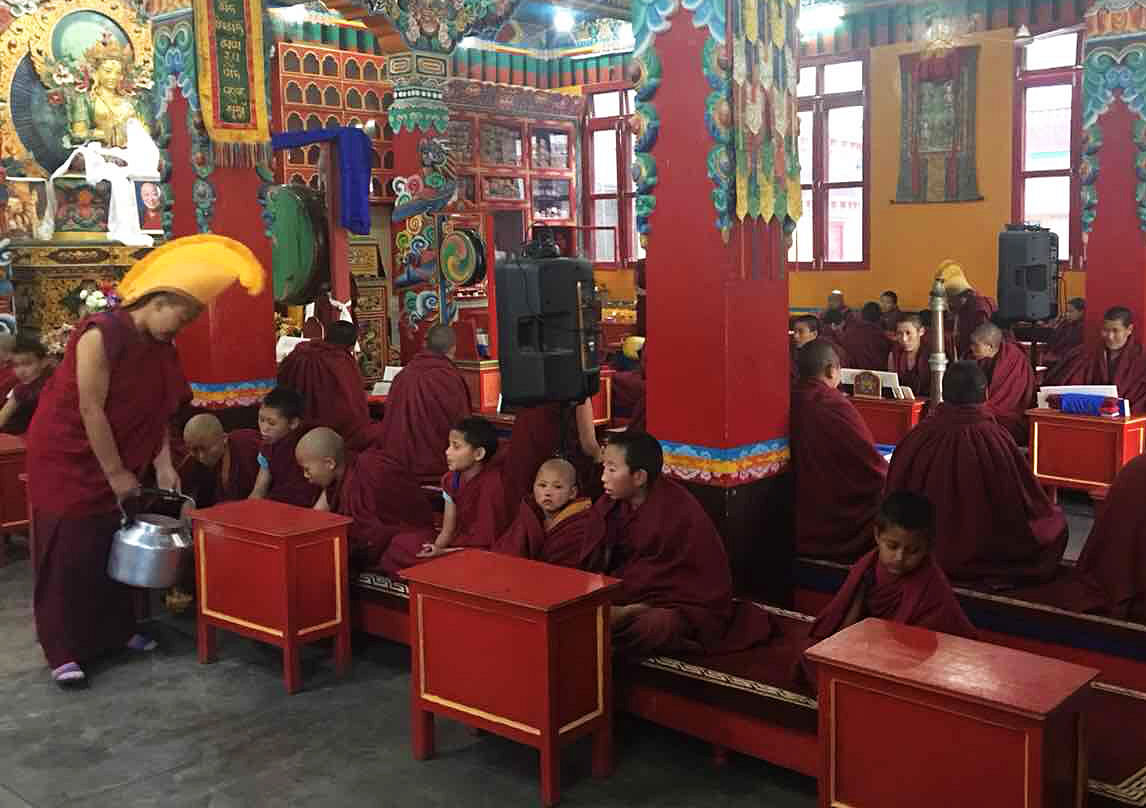
Nuns of Tsüngon Rayna Menling in Dolanji, India gather for a tea ceremony. Photo Credit: Khedup Gyatso

In the Yungdrung Bön tradition, when someone dies and enters the forty-nine day period of the intermediate state between death and rebirth, there are many ways to offer support for the one who has died. One of these ways is the Mang Ja , or large tea ceremony. During the tea ceremony sponsored by the family of the deceased, each nun is given tea, a snack, and a small donation. Afterwards, everyone participates in offering prayers for the deceased in order to alleviate their suffering in the transition between death and rebirth, and to support their liberation from cyclic existence. Traditionally, a tea ceremony is sponsored each of the seven weeks of the intermediate state, or bardo. However, if this is not possible due to the financial circumstances of the family, a tea ceremony during the first and seventh week, or at least the seventh week is sponsored. Through the offering of this donation and sustenance to the ordained, merit is generated on behalf of the deceased. This merit, together with the prayers, acts as a positive support to alleviate suffering, support the circumstances for a positive rebirth, and ultimately, lead to complete liberation.

The Indestructible Yungdrung Bön

Yungdrung Bon monks performing a ritual. Photo credit: Unknown.

“Like the sun rising at dawn, through uncontrollable power, may the teachings of Yungdrung Bön spread!”

From A Storehouse of Treasure, The Main Practice of Blue Dzambhala

Translation: Raven Cypress Wood