
Murig Geshe Nyima Kunchap Rinpoche leads a Sherap Jamma ritual for the Yungdrung Bon community in the Dolpo capital of Dunai, Nepal. Photo credit: Unknown.
Murig Geshe Nyima Kunchap Rinpoche leads a Sherap Jamma ritual for the Yungdrung Bon community in the Dolpo capital of Dunai, Nepal. Photo credit: Unknown.
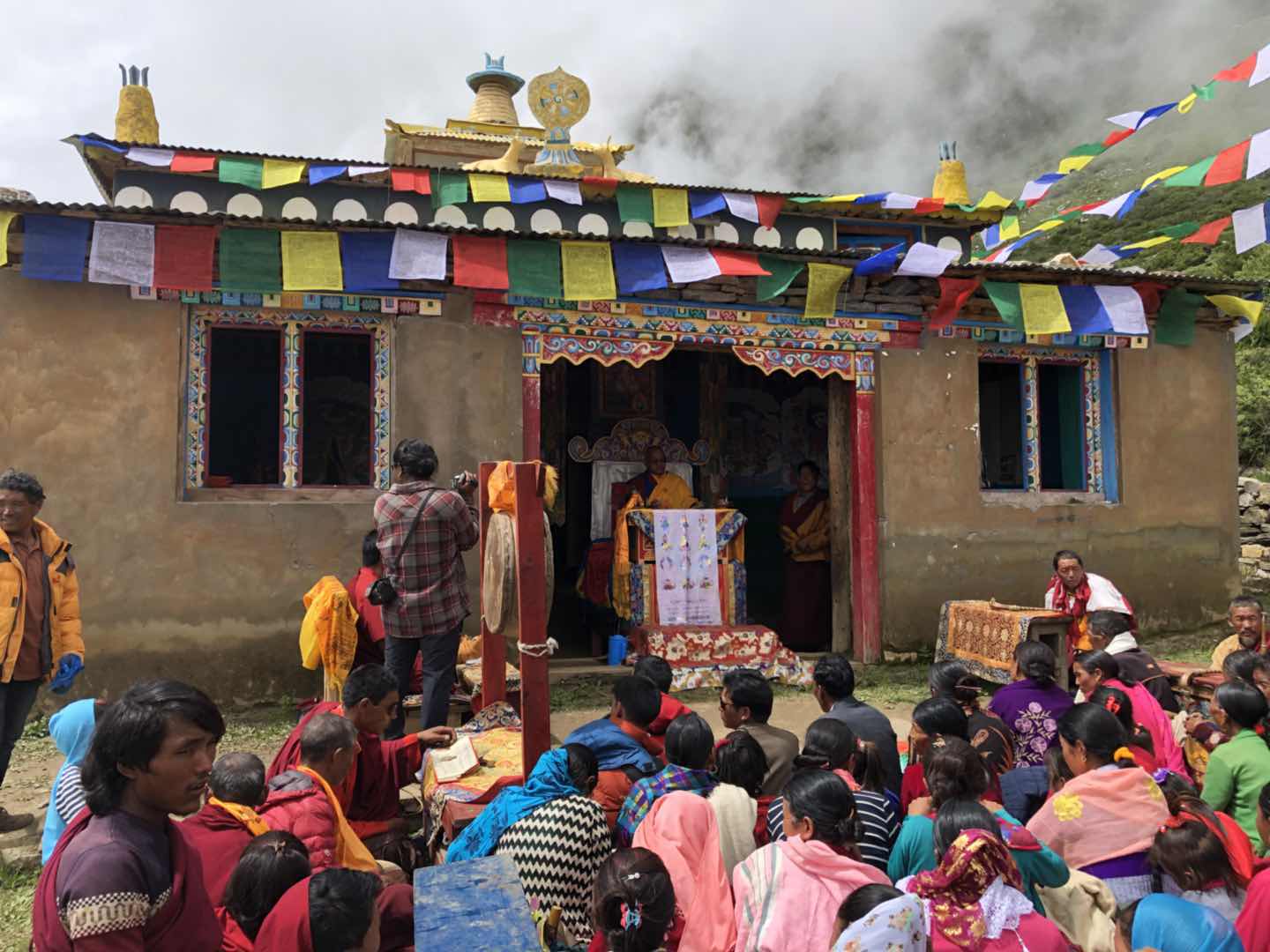
Murig Geshe Nyima Kunchap bestowing an empowerment of longevity at Barle Gompa 2018. Photo credit: Unknown.
A twenty minute walk from the village of Barlé in Dolpo, Nepal is the Barlé gompa called Yungdrung Shuk Tsal Ling. The main part of the temple located next to the lama residence is said to be over 500 years old. The surrounding area is very green in Summer and the village residents rely heavily upon agriculture. Although the village is a mix of both Bön and Buddhist families, they visit each other’s temples and sacred sites.
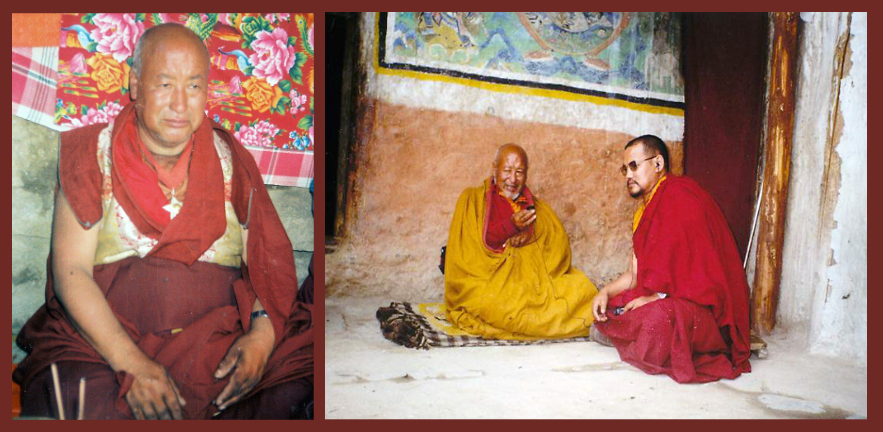
Left: Barle Rinpoche Right: Barle Rinpoche with Geshe Künchap Rinpoche
The Barlé gompa was renovated by the father of Barlé Lama Tsukphü Gyaltsen, who assisted in the work. Although most of the Barlé lamas have been ngakpas, or householder lamas, Barlé Lama Tsukphü Gyaltsen did not want to follow this lifestyle and instead received monk’s vows at the age of eighteen. He traveled to Samling and stayed there for three years. He received teachings and initiations from Yongdzin Tenzin Namdak Rinpoche as well as from Sangye Tenzin Rinpoche. Eventually, he returned to the village of Barlé and immediately began to look for a proper place for secluded meditation.
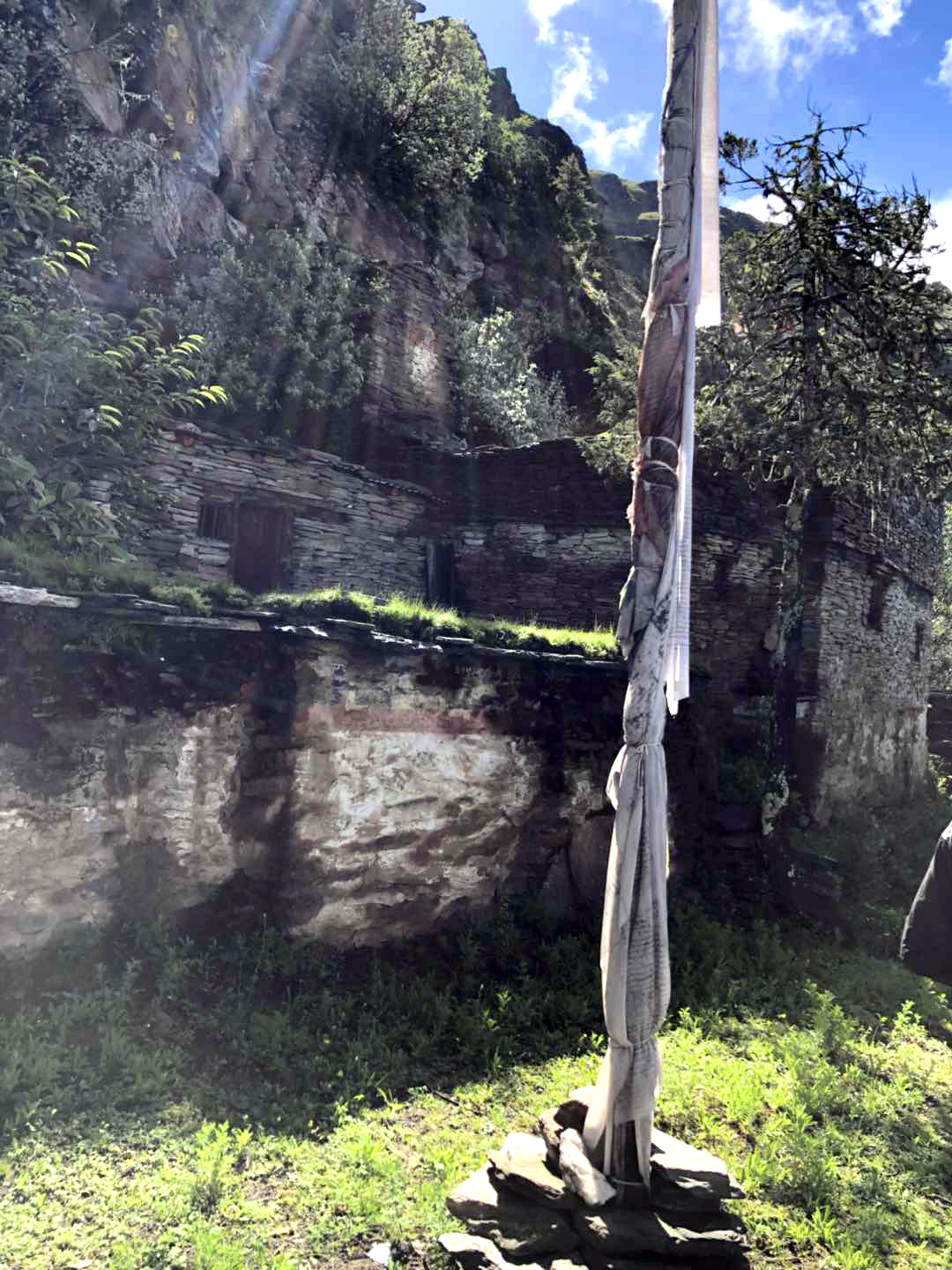
The cave hermitage of Barle Rinpoche. Photo credit: Geshe Nyima Kunchap
A thirty minutes walk from the gompa, up a steep cliff, he found the spot that he was looking for. The nearby rock formation naturally resembled a chorten and there was a stone painting of the enlightened Lord Tönpa Shenrap nearby. Here, he began to construct Drak Gön hermitage, literally “Stone Temple Hermitage.” The first part was completed in 1962. For thirty years, from 1970-2000, he remained in retreat at the hermitage. On the 27th lunar day of the 4th month in the Western year 2000, his outward breath stopped. His body remained in the five-fold meditation posture for three full days.

Recently erected chorten overlooking Barle village. Photo credit: Geshe Nyima Kunchap.
After the passing of Barlé Rinpoche, his nephew Lama Lhakpa assumed the duties of the main lama of Barlé. He was a householder and lived in the lama residence. He unexpectedly passed away in 2015 and his son took up the duties of being the village lama.
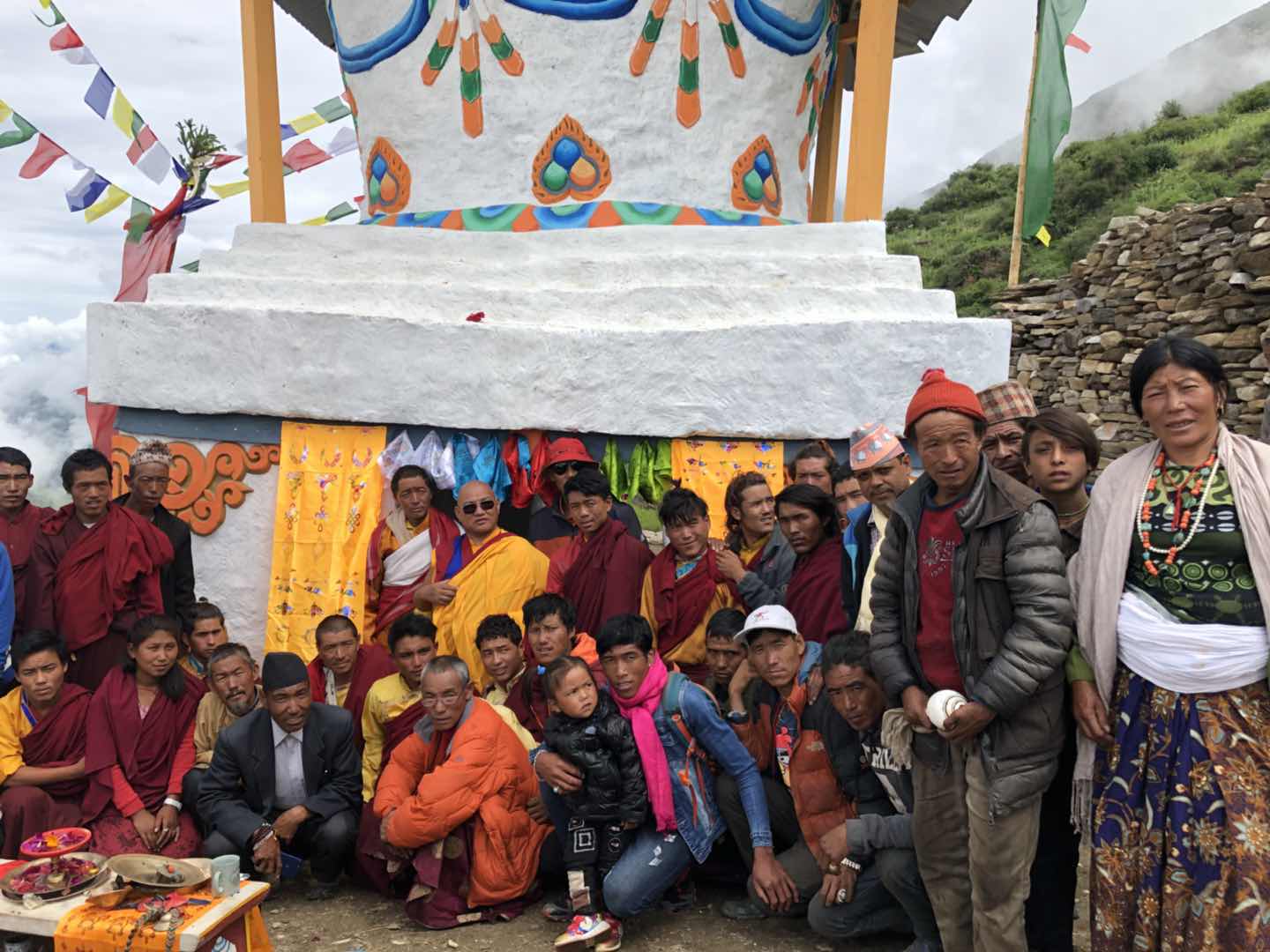
Murig Geshe Nyima Kunchap Rinpoche with the residents of Barle at the newly erected chorten. Photo credit: Unknown
Both a relative and student of Barlé Lama Tsukphü Gyaltsen Rinpoche, Murig Geshe Nyima Künchap Rinpoche was born in the village of Barlé. At the age of eight, he began learning the Tibetan language and thangkha painting. At the age of fourteen, he learned to make torma and practiced the ngondro, or foundational practices. Strongly wanting to become a monk, he left the village of Barlé and made his way to India where he received renunciate vows from HH 33rd Menri Trizen Rinpoche and HE Yongdzin Tenzin Namdak Rinpoche. Completing his studies in the dialectic program, he received his doctorate of Geshe in 1994. Subsequently, he worked as the Bön department chairmen at the Central Institute of Higher Tibetan Studies in Varanasi. He founded and acted as president of the Dolpo Bön Society and founded the Dolpo Bön School for girls and boys. Although he travels worldwide teaching and performing rituals of the Yungdrung Bön tradition, he regularly returns to the village of Barlé. Most recently, he personally sponsored the construction of a sacred chorten in the village. (See previous post: https://ravencypresswood.com/2018/07/21/a-chorten-for-barle-village/) In these ways, he continues to preserve and expand the rich Yungdrung Bön traditions of his lineage for the benefit of the Barlé residents, and beyond.

Geshe Kunchap Rinpoche leading the consecration ritual for the newly erected chorten in Barle village. Photo credit: Unknown
The tulku of Barlé Rinpoche was recognized at an early age in the village of Barlé. He naturally showed the signs of being familiar with the life of his previous incarnation, Barlé Lama Tsukphü Gyaltsen Rinpoche.
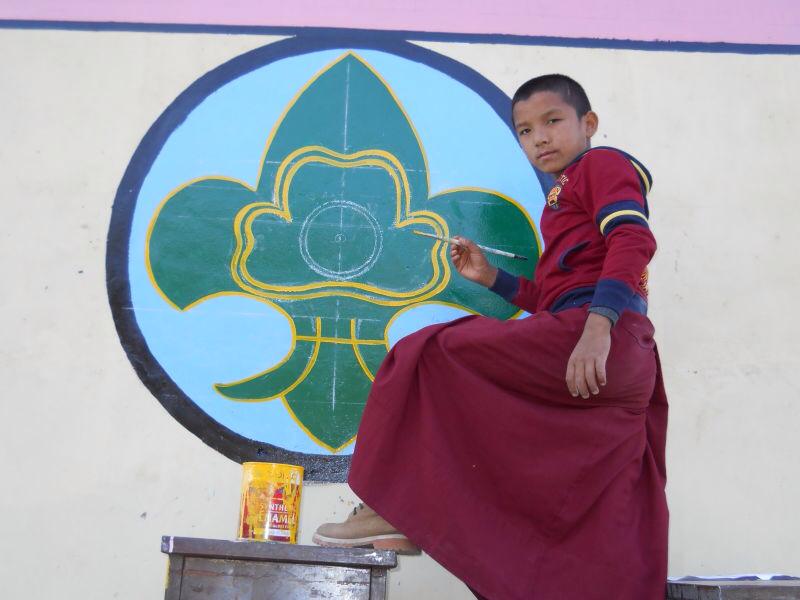
Barle Tulku, Tsewang Rigdzin Gyaltsen. Photo credit: Unknown
Although a difficult decision for his mother, she agreed to have him go to Menri Monastery in Dolanji, India in order to receive the proper training.Geshe Nyima Künchap has taken personal responsibility to ensure his well being and education.

Geshe Nyima Künchap Rinpoche and Tulku Tsewang Rigdzin Gyaltsen. Photo credit: Unknown.

Shenrap Nampar Gyalwa
At Tashi Menri Monastery in Dolanji, India, the 22nd-29th of the 6th Tibetan month (Western date August 4th-10th 2018), is the time for the practice of Shenrap Nampar Gyalwa. This is the wrathful form of the founder of the Yungdrung Bön religious tradition, the enlightened Lord Tönpa Shenrap Miwoché. In order to protect the construction of a temple, he spontaneously manifested as Nampar Gyalwa, the Completely Victorious One. See previous post: https://ravencypresswood.com/2016/12/25/buddha-tonpa-shenraps-eighth-deed-the-deed-of-being-completely-victorious/
As one of the nine foundational practices in the Yungdrung Bön tradition, practitioners will recite the mantra of Nampar Gyalwa, known as the 100-syllable mantra, 100,000 times while imagining the purification of all negativity of the three times including every action of body, speech, and mind arising from anger, greed, jealousy, pride, and ignorance.
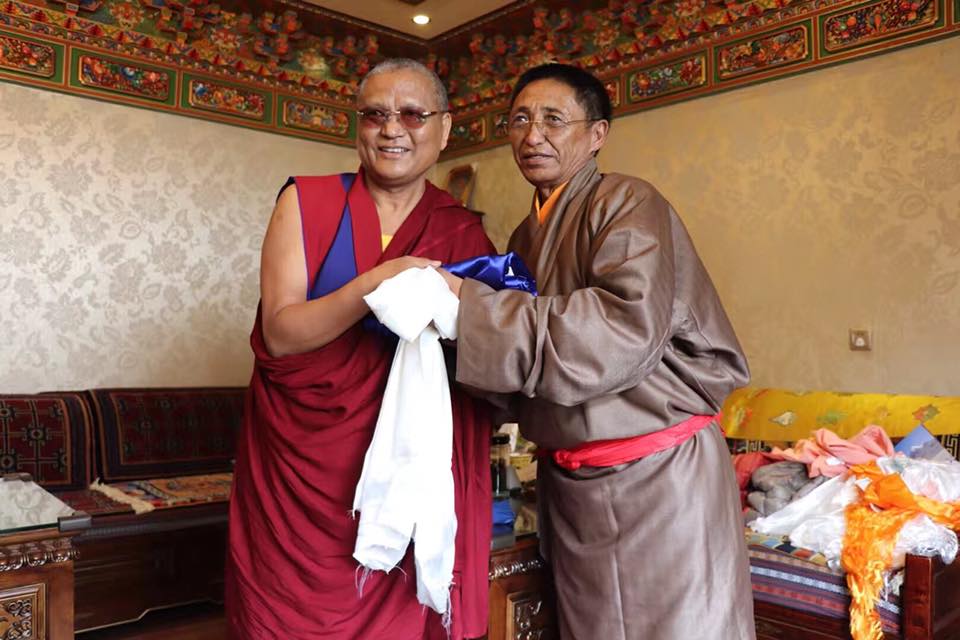
Menri Ponlop Rinpoche Yangton Trinley Nyima meets with the Shen lineage holder and direct descendant of Lord Tonpa Shenrap, Gyalwa Shense Rinpoche. Photo credit: Unknown.
For more information about the descendants of Lord Tönpa Shenrap and the sons of Gyalwa Shensé Rinpoche, see previous post:
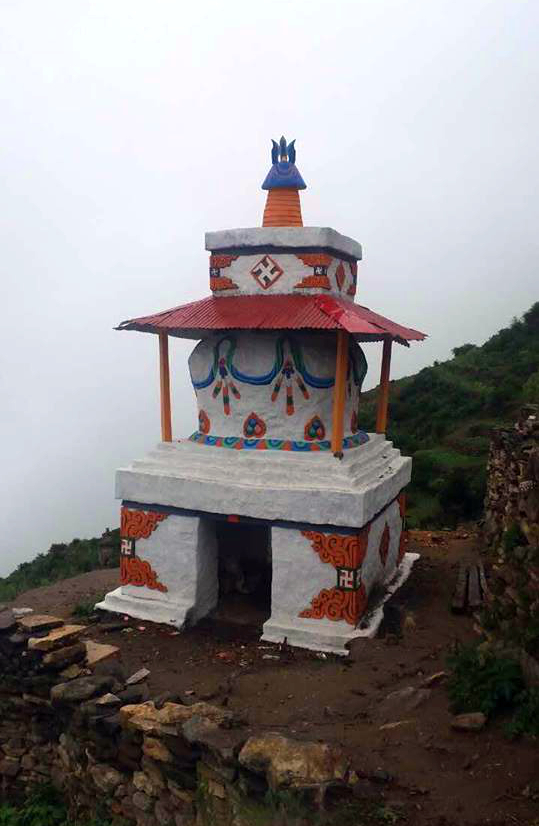
Chorten in Barle Village Dolpo, Nepal. Photo credit: Geshe Nyima Kunchap Rinpoche.
In the village of Barlé located in Dolpo, Nepal and approximately 185 miles from Kathmandu, a new Yungdrung Bön chorten (Sanskrit: stupa) has been erected by Murig Geshe Nyima Künchap as a gift to the village residents. The chorten is located near the Barlé gompa. From July 22nd to July 28th, Geshe Künchap Rinpoche will perform the full consecration of the chorten.

Inside Barle stupa. Photo credit: Geshe Nyima Kunchap Rinpoche
Inside the chorten above the doorways, it is ornately painted with sacred Yungdrung Bön images. In the four directions, are the Four Principal Enlightened Ones: Satrik Érsang, Shenlha Ökar, Sangpo Bumtri, and Tönpa Shenrap. As is traditional, each of these enlightened ones is surrounded by two hundred fifty Buddhas for a total of one thousand Buddhas. (For more information about the Four Principle Enlightened Ones, see previous post: https://ravencypresswood.com/2016/08/20/the-four-principal-enlightened-ones/ ) On the ceiling above are nine mandalas whose purpose is to act as an appropriate dwelling place for the related enlightened qualities. In the center is the mandala of the Sutra of the Indestructible Vast Expanse (Tib. mdo g.yung drung klong rgyas). Then, beginning in the East (middle left) and continuing counter-clockwise, are the mandalas of: The Peaceful AH that Clears (Tib: zhi ba a gsal), Red Garuda (Tib: khyung dmar), The Stages of Walsé (Tib. dbal gsas las rim), the Great Mother Jamma (Tib: rgyal yum byams ma), Complete Space (Tib: Kun dyings), the Precious Lamp of the MA TRI (Tib: ma tri rin chen sgron ma), Shenrap Nampar Gyalwa (Tib: gshen rab rnam rgyal), and The Lamp that Purifies Obscurations and Removes the Darkness (Tib: sgrib sbyong mun sel sgron ma).

Geshe Kunchap preparing a ritual palace for the lu spirits. Photo credit: Raven Cypress Wood
Murig Geshe Nyima Künchap Rinpoche was born in the village of Barlé and spent many years as a student of his root lama, Barlé Rinpoche. In 1982, he received ordination as a monk from HH 33rd Menri Trizen and HE Yongdzin Tenzin Namdak Rinpoche. In 1994, after many years of rigorous study, he received his geshe degree from Menri Monastery. He is a master of sutra, tantra, and dzogchen. However, he is considered a ritual specialist. Of the 360 rituals given by the Enlightened Lord Tönpa Shenrap Miwoche, it is believed that only 68 remain. Geshe Künchap Rinpoche holds the transmission, empowerment, and teaching for each of these 68 rituals.

Murig Geshe Nyima Kunchap Rinpoche. Photo credit: Unknown
Raven Cypress Wood ©2018
 Nine Ways