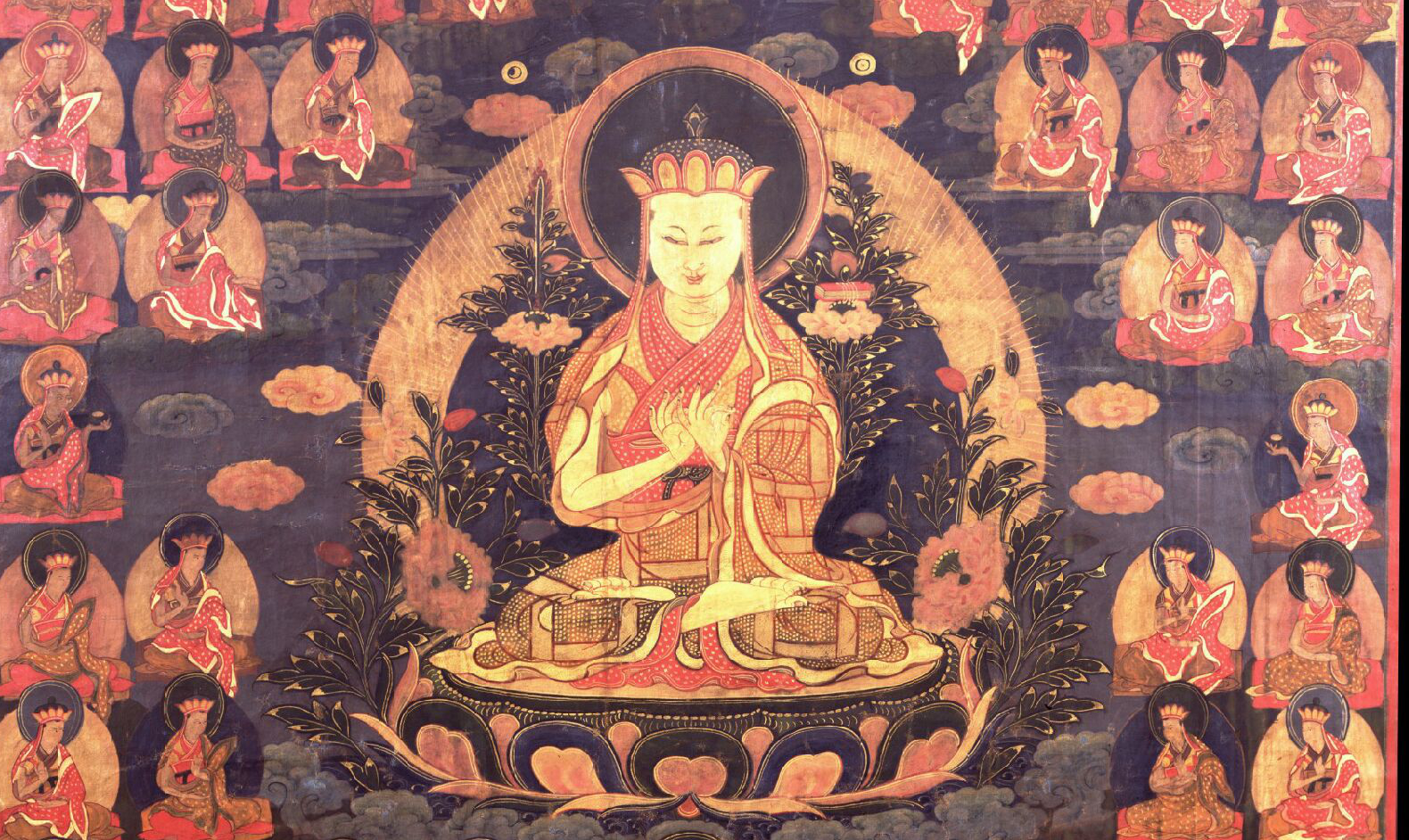
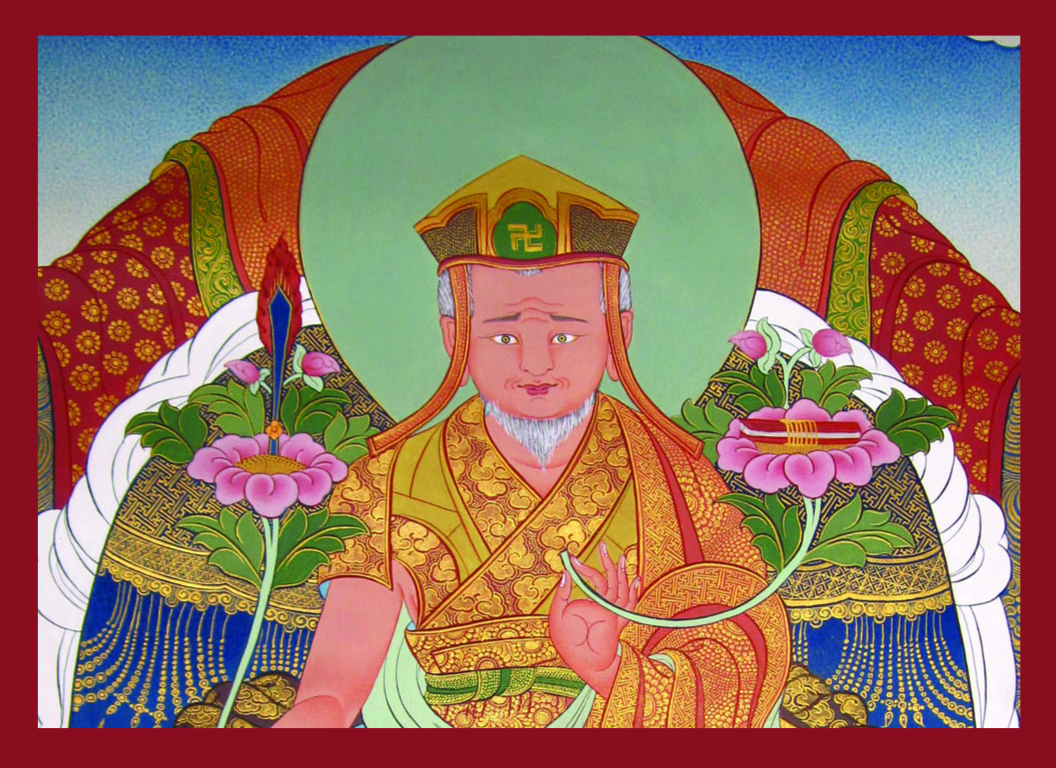
His Holiness the 1st Menri Trizin Nyammé Sherab Gyaltsen Rinpoché
Every new moon, the monks and nuns of Menri Monastery perform the Nyammé La Drup, the lama practice of Nyammé Sherab Gyaltsen Rinpoché who established Menri Monastery and brought together the scattered transmission lineages. This practice has its own preliminary prayers, main practice including a tsok offering, and concluding prayers such as prayers of blessing, aspiration and dedication. The next new moon coincides with Tuesday, February 1, 2022.
You are like a golden sunrise over the world
during the final 500 years of degeneration in this negative time.
From your great, thunderous river of Bön speech,
your disciples’ afflictive emotions are washed clean at the very root.
Through the roar of your extensive knowledge of the three kinds of teachings,
you destroy the ignorant reasoning of variant tenet systems.
A majestic lion among men and leader of Menri,
I prostrate to you, crown ornament of abbots!
Homage to His Holiness the 1st Menri Trizin Nyammé Sherab Gyaltsen Rinpoché
Buddha Tönpa Shenrap in his form of Tritsuk Gyalwa, a completely pure ascetic surrounded by his retinue.
Every full moon the monks of Menri Monastery gather together to perform the shakpa practice. The next full moon corresponds with January 17, 2022 on the Western calendar. The practice of shakpa is one of the skillful methods to purify negative karma and is of great importance within the Yungdrung Bön religious tradition. The Tibetan term “shakpa” is often translated as confession. However, this only describes one part of the practice. It does indeed involve an admission of wrongdoing, but the reason for performing this practice is for the subsequent purification of negative karma.
The doubtless result of our positive and negative actions of body, speech, and mind is taught as one of the four foundational practices that prepare the mind-stream for further spiritual development. (For more about these four foundational practices, follow this link to a previous article: https://ravencypresswood.com/2016/01/09/the-four-realizations-that-reverse-the-mind/ ) Our actions are like the seed of a plant that naturally ripens into the corresponding fruit when it meets with the proper secondary conditions. Similarly, negative actions bring future negative results and positive actions bring future positive results. As stated by the modern-day saint Shardza Tashi Gyaltsen Rinpoche:
“In general, whatever happiness or suffering is experienced, all of it is according to previous actions. For example, when a plant emerges from the ground, the fruit will ripen into whatever was planted in the autumn. Whatever actions you have done previously, will ripen into the correct result. Whatever wrongdoing that has been done, will arise as a ripened future result. Suffering and misery from unpurified karma will arise even though it is unwanted.”
— Excerpt from an untitled poem composed by Shardza Tashi Gyaltsen Rinpoche and included in his volume of works entitled Advice and Hagiographies of the A Tri Lineage Lamas
Throughout our countless previous lifetimes we have accumulated an unimaginable amount of karma. This will ripen into its corresponding result whenever secondary conditions arise. Therefore, when problems and suffering occur, rather than looking outside for a cause upon which to place blame, the Bönpo practitioner understands that suffering arises as a result of one’s own previous negative actions. The result of negative karma is not only suffering, but also the obstruction of wisdom and realization. Again from Shardza Rinpoche from his advice regarding the practice of confession,
“If the dirt on a mirror is not cleaned, you will be unable to see your own face. In the same way, the natural state will not appear due obscurations and wrongdoing.
When not produced within the mental continuum of the natural state of emptiness, cyclic existence and karma are utterly liberated and do not exist. Therefore, the realization reflected from the mirror of the base-of-all appears. Because of that, it is necessary to strive to purify the previously accumulated defilements and obscurations. It is of great importance.”
Shardza Tashi Gyaltsen Rinpoche
Regardless of whether someone practices sutra, tantra, or dzogchen, or is a renunciant, a lay practitioner, or a householder, the practice of shakpa is important in order to develop spiritually and to experience wisdom and realization. The practice of shakpa involves four powers. When each of these powers are present, the practice is profound and effective. The four powers are: (1) the power of the exalted witness, (2) the power of openly admitting wrongdoing, (3) the power of feeling strong, heartfelt remorse, and (4) the power of promising to not repeat the actions of wrongdoing.
For the power of witness, the practitioner goes before a sacred object of refuge such as a shrine, a real or visualized image of an enlightened being, or a chorten. Then, the practitioner connects with the actual presence of the enlightened beings in the sky before them. For the second power which is the admission of wrongdoing, the practitioner brings into their awareness all wrongdoing and non-virtue of body, speech and mind that have been committed in this life, as well as any unremembered activities from this and previous lifetimes. This includes activities of direct or indirect involvement, and encouraging or celebrating the wrongdoing of others. For the third power, the practitioner generates an intense remorse for all of these actions understanding that they have brought harm to others and can only harm one’s self. For the fourth power, the practitioner makes a firm commitment to not repeat these activities in the future and to instead engage in positive activities of virtue and loving kindness. In this way, the negative karma is purified and can no longer ripen into a negative result. At the conclusion of the practice, the practitioner imagines and feels the blessings of the enlightened beings completely purifying them in the form of pure, wisdom light.
There are many prayers of confession. Below is an excerpt from Purifying Remorse and Confession which is attributed to Metön Sherap Özer and uses the visualization of Tritsuk Gyalwa as the central deity who is surrounded by his retinue that fills all of space. As a gift to the worldwide Yungdrung Bön sangha, the complete version of the translated prayer can be viewed and downloaded by clicking the Publications tab at the top of this page and scrolling to the bottom of the page.
“Venerable lama, before your eyes, I openly admit and confess to having had only a small amount of devotion and respect.
Gathering of yidam deities, before your eyes, I confess to accepting and rejecting incorrect things.
Mother and sister khandro, before your eyes, I confess to not properly guarding my commitments.
Bön religious guardians, before your eyes, I confess to not making regular monthly and yearly offerings in the past.
Spiritual brothers and sisters, before your eyes, I confess to having only a small amount of respect and pure vision.”
The yidam Sangchok Tartuk and Khandro Chema Otso. Photo credit: Raven Cypress Wood
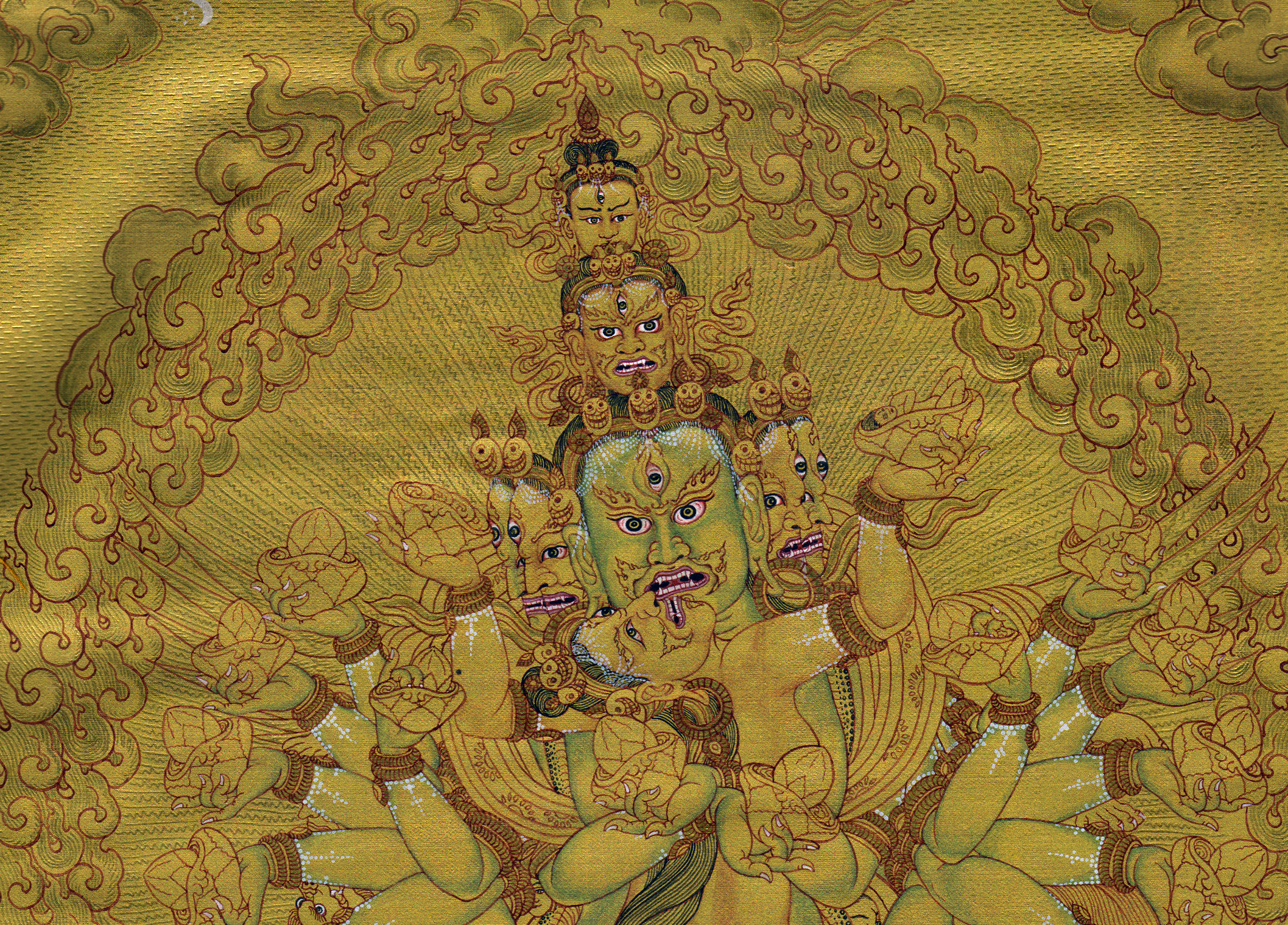
Within the Nine Ways of Bon, the so-called Mother Tantra is found within the seventh way, The Way of the White A. As with the other tantras within this category, the practices are based upon visualization as part of the generation and perfection stages. The Father Tantras emphasize the generation stage, the Mother Tantras emphasize the perfection stage, also referred to as the completion stage, and the Son tantras emphasize the unification. Today, when most people speak of the Mother Tantra within the Yungdrung Bön tradition, they are referring to the Secret Mother Tantra whose main title is Ma Gyu Tukje Nyima, The Sun of Compassion Mother Tantra. “Sun of Compassion” is a reference to the yidam deity of the tantric cycle, Sangchok Tartuk Gyal, or Sangchok Gyalpo, Supremely Secret King. His consort is Khandro Chema Ötso. The Mother Tantra is unique in that the male yidam represents the emptiness aspect and the female khandro represents the clarity aspect.
In addition to the secret cycle of the Mother Tantra, there are also cycles of the Outer Mother Tantra, and the Inner Mother Tantra. The source of these three cycles of teachings is the primordial buddha Küntu Zangpo. Zangza Ringtsun, an emanation of the buddha Sherap Jamma who had a miraculous virgin birth of Chimé Tsukpü, received the divine transmission of the Mother Tantras and passed it to Milu Samlek. He was born as a prince and was known for his intelligence. As he was practicing the Mother Tantra, the six guardian khandros appeared and asked him if he throughly understood the precepts of the Mother Tantra. He replied that he understood them very well. In response, the khandros brought a skull full of water from the ocean and dipped a reed into it. They then said to him,
The Bön of the Mother Tantras is like the ocean,
the lama’s knowledge of it is like the water in the skull,
your knowledge of it is like the water droplets remaining on the reed.
At this, Milu Samlek became quite despondent. He asked the khandros how he could completely learn the Mother Tantra and they told him that he must go and receive it from Zangza Ringtsun. He did so, and later wrote a commentary for each of the Outer, Inner, and Secret cycles.
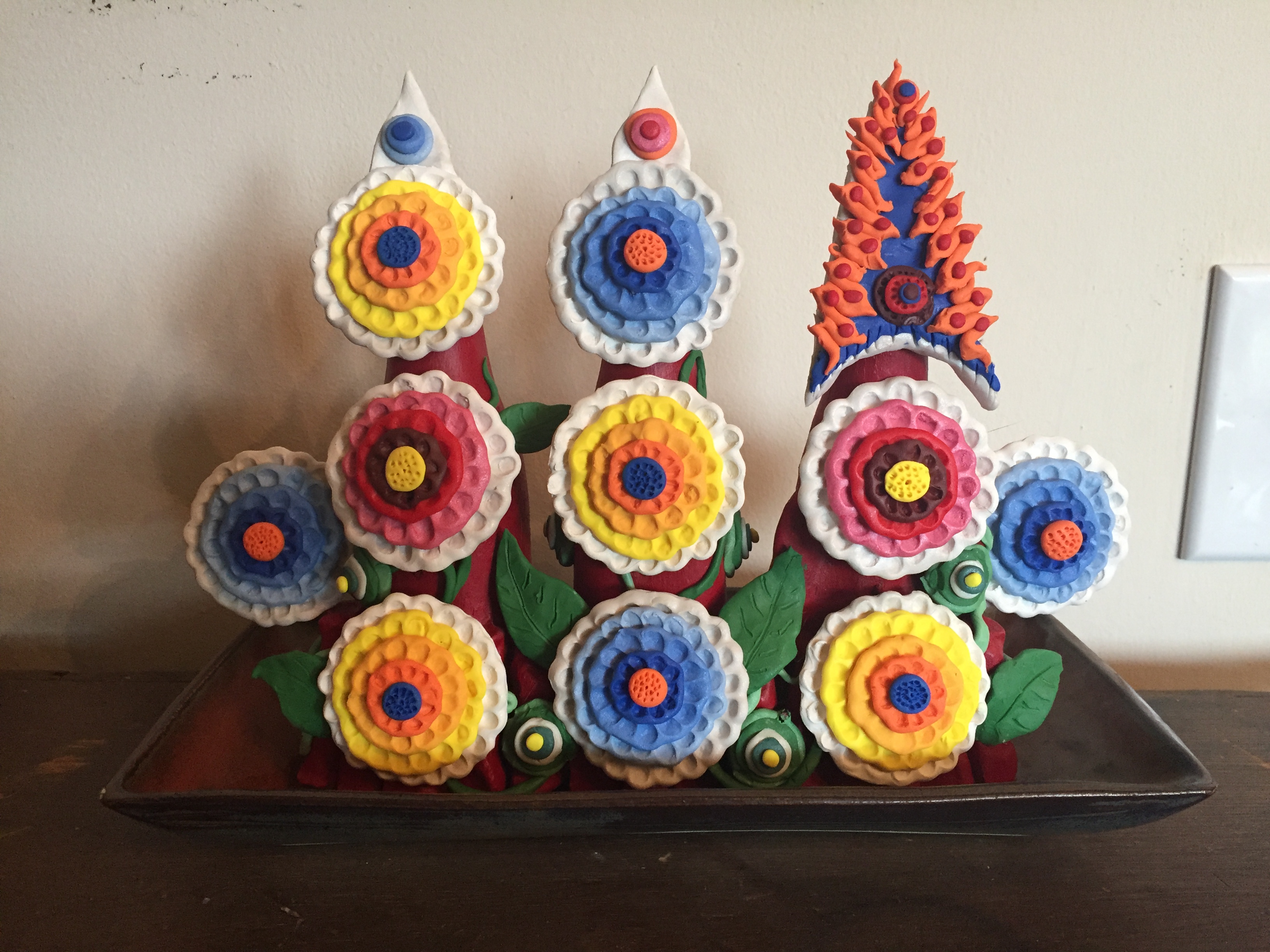
Ma Gyu torma which represents the lama, the yidam, and the khandro. Picture credit: Raven Cypress Wood
The root texts and their commentaries were handed down through the lineage until reaching Sené Gau. He translated the teachings from Zhang Zhung to Tibetan. However, it was also during this time in the 7th century that the first persecution of Yungdrung Bön began. Therefore, in order to protect the teachings for future generations, he returned the texts to the khandros who acted as guardians of the terma. Later in the time of the 11th century, the outer and inner cycles were rediscovered. The secret cycle was discovered by accident in the 12th century.
Guru Nontsé, born in 1136, was a hunter who struck a rock that then split apart to reveal a white silk wrapped around a stick and written on both sides. This was the Mother Tantra root texts along with their condensed, medium-length, and extensively detailed commentaries. He began the arduous task of copying the texts, but before he was able to finish he had a vision that the khandros wanted the white silk text to be returned to them. In that way, some of the Mother Tantra texts and commentaries remain lost to us.
During the 1st lunar month on the 21st and 22nd day, Menri Monastery performs an extensive tsok offering to the deities of the Mother Tantra according to the Shen tradition. This offering invites the deities to be present and to bestow their magnificent blessings. In this way, the practitioners’ sacred vows are renewed and they are empowered with the enlightened qualities of the Mother Tantra deities.
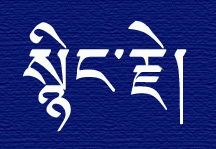
One of the Four Immeasurable Qualities is compassion, Tibetan: snying rje, pronounced nying jé. The definition of compassion is the wish that others not experience suffering. Therefore, nying jé is the practice and aspiration that all beings be free from suffering and the causes of suffering. This feeling of genuine compassion is developed towards all sentient beings without preference or bias, and until the quality is completely perfected and unshakeable. When this quality is perfected and fully realized, it is known as jang chub sem, the mind of enlightenment. Those practitioners who have developed this quality are known as sempa, Tibetan: sems dpa’, mind warriors or mind heroes. (Sanskrit: bodhisattva). There are three types of sempa: (1) yungdrung sempa: indestructible mind warriors, (2) yungdrung sempa sems pa chen po, great indestructible mind warriors, and (3) yungdrung sempa sems pa len mépa, indestructible, non-returning mind warriors. As practitioners, we aspire to develop our minds in the same way as the sempa and therefore obtain the capacity to be of benefit to other sentient beings.
Nying jé written in Tibetan uchen script
In the presence of the places of refuge visualized in the sky in front of you, earnestly reflect that not even one single sentient being, during this or previous lifetimes, has not acted as your mother, father, child or friend. These sentient beings are wandering throughout cyclic existence. Generate a genuine feeling of how worthy of compassion is all of their suffering and misery. “Now, because I am powerless to help those sentient beings who are as vast as the sky, I will obtain buddhahood while enclosed in this physical body. I will patiently lead and guide them until cyclic existence is empty.” Think in this way and perform the recitation.
From the Aural Transmission of Zhang Zhung preliminary practice of Establishing a Foundation of Immeasurable Compassion in order to Generate the Mind of Enlightenment
Compassion is the foundation of all Yungdrung Bön teachings. In order to support practitioners in developing this quality, the Yungdrung Bön teachings give seven progressive steps, or causes, for developing perfected compassion within the mind-stream.
Ma Shé, Knowing the Mother: We reflect that throughout our countless lifetimes, every sentient being has at one time been our very own mother. We open ourselves to deeply experiencing this connection with each sentient being, whether human or nonhuman, friend, enemy, or stranger.
Drin Dren, Remembering Their Kindness: We reflect in detail regarding the kindness that we have received from other sentient beings throughout countless lifetimes. Since each of them have acted as our mother, they have all sacrificed themselves in order to nourish and protect us.
Drin du Zö, Returning the Kindness: Having deeply experienced a feeling of being cared for by the countless sentient beings who are as vast as the sky, we generate a feeling of wanting to repay their kindness.
Jampa, Love: We generate a sincere feeling and wish that all these sentient beings experience happiness and have the causes for happiness.
Nying Jé, Compassion: We generate a feeling and wish that all these sentient beings be free from suffering and misery.
Lhak Sam, Profound Altruistic Motivation: Engaging in spiritual practice in order to attain realization and develop the capacity to help other sentient beings, we open ourselves to the spontaneous actions that arise from the foundation of compassion.
Jang Chub Sem, the Mind of Enlightenment: Again and again having practiced in this way and ripened our mind-stream, we obtain the fully perfected, unbiased and indestructible mind of immeasurable compassion.
Among all sentient beings who are as limitless as the sky, not even a single one has not been my mother, father, child, or friend. They are in the thick darkness of churning cyclic existence, how sad!
For the sake of all of those, I will establish the foundation of complete buddhahood and engage in this profound practice. Having obtained the path of liberation and bliss, I will continually think of sending loving kindness to them.
From The Practice to Continuously Maintain Regarding the Precious Lamp that Shakes the Depths of Cyclic Existence, the MA TRI Tantra, Composed by Drenpa Namkha
From the Forty-three Trainings for an Enlightened Mind composed by Sherap Gongyal Rinpoché:
The sentient beings of the three worlds have the same nature as my mother and father. What benefit is my own happiness when they are suffering? Because of that, in order to liberate the limitless sentient beings from the ocean of suffering and misery, I generate the mind of enlightenment.
And,
Without exception, suffering and misery arise from desiring happiness for only myself. A perfect buddha arises from a mind that benefits others.
And,
Rejoice in benefiting others with this condition of having attained a completely pure human body, and without distraction, work single-pointedly to accomplish being of benefit to others as though it is of the greatest importance.
Regardless of whether a practitioner is of lower capacity or the highest, or if they are practicing a causal vehicle or the highest dzogchen view, Buddha Tönpa Shenrap has taught that the foundation for all of these is compassion.
Because it unites method and compassion,
how marvelous is the great Bön!
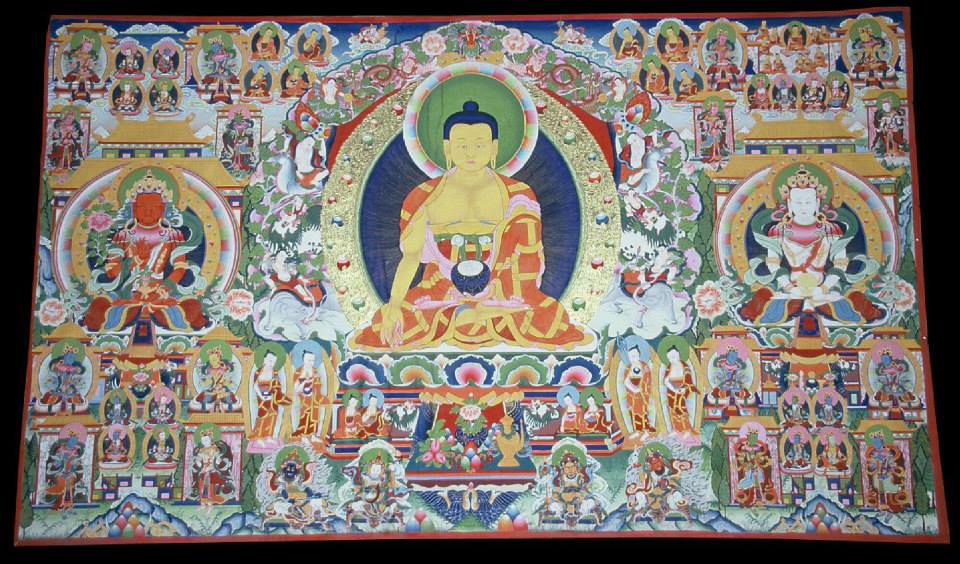
Buddha Tönpa Shenrap instructing his disciples regarding the Nine Ways of Bön in the Zi Ji
 Nine Ways