Blog Archives

18,043rd Anniversary of Buddha Tönpa Shenrap’s First Deed: The Deed of Taking Birth in Human Form

first-deed-w-watermark
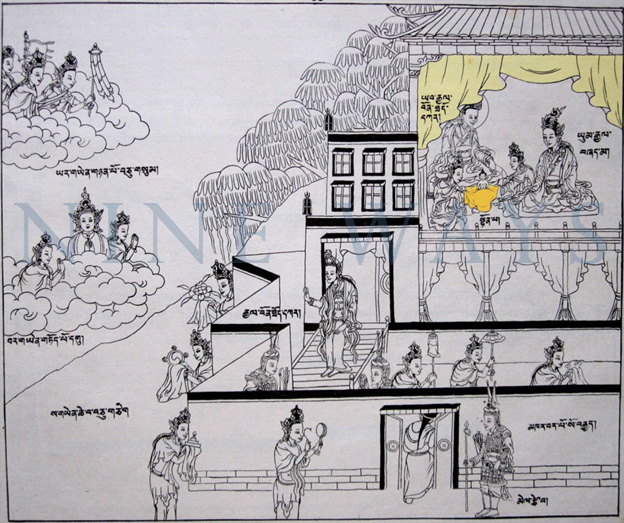
Buddha Tönpa Shenrap Miwoché being received by gods and goddesses at the royal palace of Barpo Sogyé

The 15th day of the 12th lunar month is the 18,043rd birth anniversary of the founder of the Yungdrung Bön religious tradition, Buddha Tönpa Shenrap Miwoché. In 2026, this lunar day coincides with February 1st. This is an especially auspicious time to perform acts of virtue and take sacred vows.

In the ancient past, there were three brothers named Dakpa, Salwa, and Shépa who lived in a pure world and who had studied and mastered the Yungdrung Bön teachings. With the power of their clairvoyance, they could see sentient beings within the three thousand-fold universe creating karma and experiencing suffering by being trapped in the cycle of birth, aging, sickness, death, and rebirth. They felt great compassion for these beings and went before the god of compassion, Shenlha Ökar and asked how they could help rescue sentient beings from their suffering and misery. Shenlha Ökar instructed them to go into the world one after another in order to guide beings out of suffering with the Yungdrung Bön teachings. Dakpa, being the eldest, went first to the planet Earth and ministered to sentient beings. Dakpa was born as a human being and took the name Togyal Yékhyen. For a thousand years, he taught both humans and non-human beings and countless sentient beings were liberated. Afterward, he presented an account of his time on earth to various wisdom deities and asked how it might be possible to liberate those beings who he had been unable to tame. The wisdom deities responded that even though the Yungdrung Bön was all that was needed, even the light of the sun that pervades everywhere cannot illuminate a windowless house, or a north-facing cave. Thus, sentient beings that persist in their wrongdoing because of being afflicted with the passion of their five poisons are very difficult to tame. Thus, Buddha Togyal Yékhyen wrote his teachings down with turquoise ink on ivory-colored paper and then went to see the middle brother, Salwa. He addressed him with these words:

“Although countless sentient beings have been liberated through my activities, I have left the earth and cyclic existence. After some time has passed, it will be appropriate for you to begin your work of liberating sentient beings from cyclic existence through the teachings of Yungdrung Bön.”

Time passed, and as acts of virtue declined on the earth, so did the energy of loving kindness. The generations of benevolent kings passed and the teachings of Buddha Togyal Yékhyen faded from the world. As the era came to an end, there was destruction of the land and civilizations by floods, fire, and earthquakes. After a period of emptiness, a new time period began. Salwa left his pure abode and descended to the realms of the gods to prepare for a birth of flesh and blood as a human being. He was born on earth in the land of Tazik Olmo Lungring as a prince in the Southern palace of Barpo Sogyé 18,043 years ago. He was given the name Shenrap because he was born into the Shen clan and was the highest within this clan, Rap. He was named Miwoché because he had taken a great human form. His personal name was Künlé Namgyal, Completely Victorious Over Everything. A total of seven buddhas had manifested in cyclic existence in the eons prior to his birth. This is why he is known as the eighth buddha, or the eighth guide of sentient beings. Because he was already an enlightened being and beyond cyclic existence, his taking birth in the human realm is considered a great deed of compassion.

He was born just before sunrise on the 15th day of the 12th lunar month to King Gyalbon Thökar and Queen Gyal Zhema. He had all of the major and minor marks of an enlightened being. A gathering of gods from above, a gathering of deities from intermediate space, and a gathering of powerful earth spirits all circumambulated the palace and proclaimed that they had arrived in order to be the first disciples of Tönpa, The Teacher.
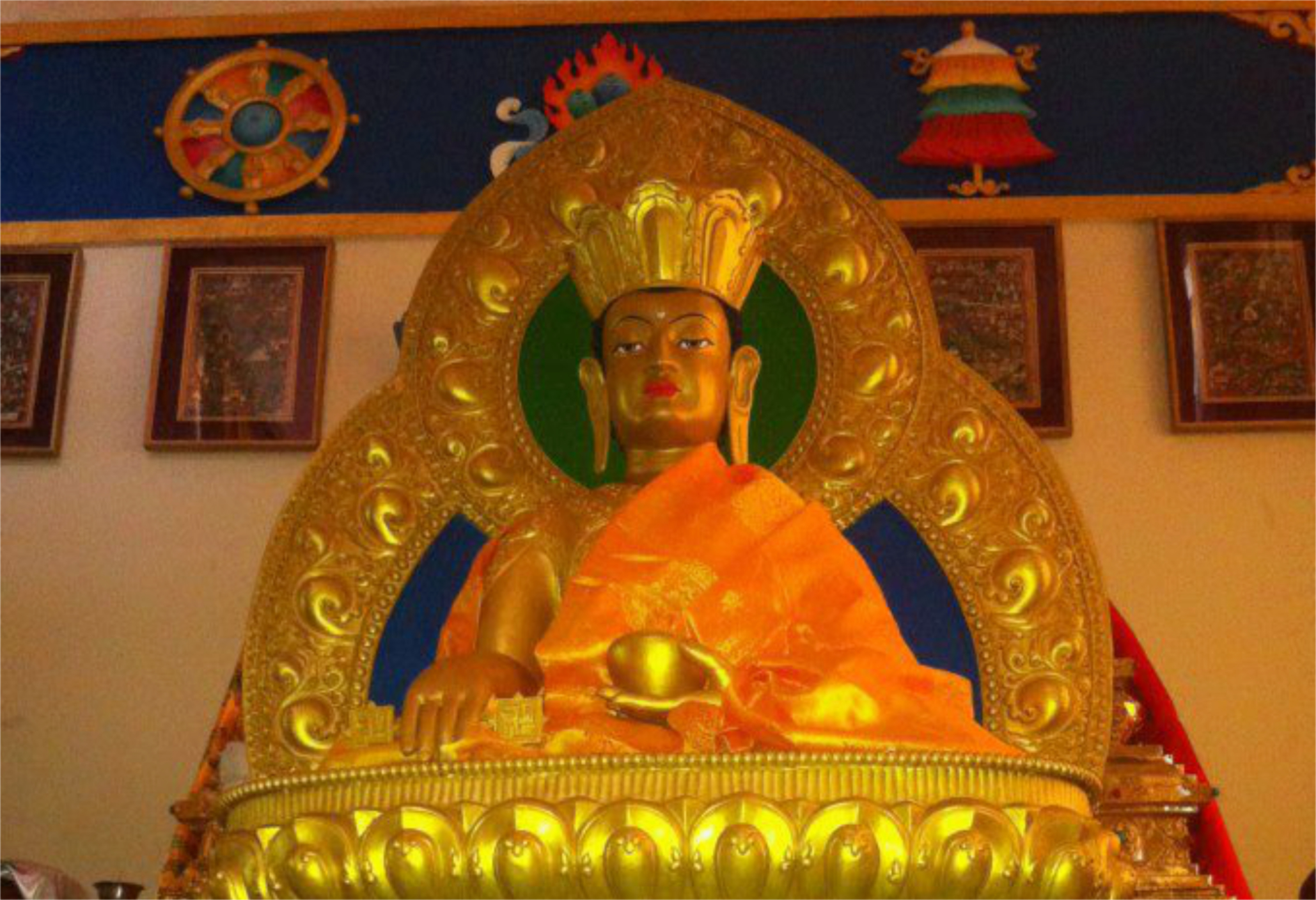
Buddha Tönpa Shenrap Miwoché

This is an especially auspicious day to recite the following Homage to Tönpa Shenrap Miwo. Many masters, including Menri Pönlop Yangtön Trinley Nyima Rinpoche, recite this prayer before giving teachings.

སྟོན་པའི་རྒྱལ་པོ་འཁོར་བ་འདྲེན་པའི་དཔལ། མུན་པའི་ཚོགས་རྣམས་འཇོམས་བྱེད་སྒྲོན་མེའི་འོད། མ་རིག་ནད་གདུང་སེལ་བ་སྨན་པའི་གཙོ། མི་ཡི་མཆོག་ཏུ་གྱུར་པ་དམུ་ཡི་རྒྱལ། དུག་ལྔའི་འདམ་དང་མཚོ་སྐེམས་མེ་ཆེན་དཔུང་། མཚན་དང་དཔེ་བྱད་སྡན་པའི་གཟི་འཕགས་པོ། དཀའ་བ་སྣ་ཚོགས་དང་དུ་བླངས་ནས་ནི། མཛད་པ་སྣ་ཚོག་མཐར་རུ་ཕྱིན་མཛད་ཅིང་། གཟིགས་ཚད་བཞི་དང་དགོངས་ཚད་དྲུག་གཉིས་ཀྱིས། བྱམས་པ་ཆེན་པོས་འཁོར་བ་སྒྲོལ་མཛད་པའི། གཤེན་རབ་སྤྲུལ་པའི་སྐུ་ལ་ཕྱག་འཚལ་ལོ།

tön pé gyal po khor wa dren pé pel, mün pé tsok nam jom jé drön mé ö, ma rik né dung sel wa men pé tso, mi yi chok tu gyur pa mu yi gyal, duk ngé dam dang tso kem mé chen pung, tsen dang pé jé den pé zi pak po, ka wa na tsok dang du lang né ni, dzé pa na tsok tar ru chin dzé ching, zik tsé zhi dang gong tsé druk nyi kyi, jam pa chen pö khor wa dröl dzé pé, shen rap trül pé ku la chak tsal lo

“Homage to the Eighth Guide of the Universe, Sangyé Tönpa Shenrap Miwo

King of Teachers, you are a glorious guide out of cyclic existence. A lamp who dispels all darkness, you are the principal physician who clears away the torment of ignorance and illness.

Most supreme among humanity, you are a King of the Mu lineage. You are a mighty fire that dries up the ocean and swamp of the five poisons and you have the major and minor marks of a noble sage.

Having undertaken many various hardships and having completed a diversity of activities, by means of the four kinds of valid perception and the six kinds of valid enlightened intention, and through great love, you liberate from cyclic existence. I prostrate to the emanated body of the highest Shen!”
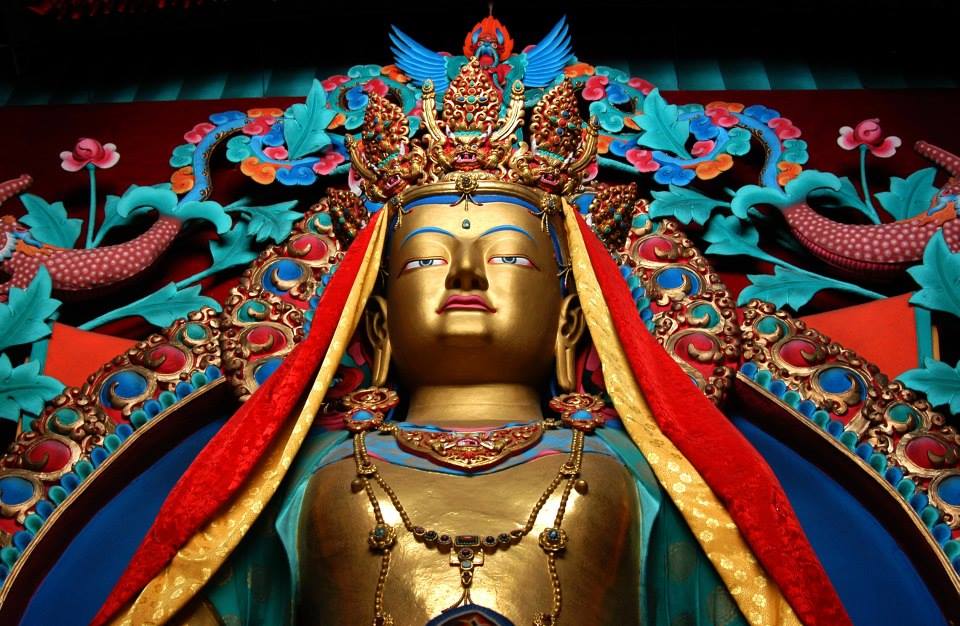
Buddha Tönpa Shenrap Miwoché

Bring Meaning & Benefit to 2026 by Taking a Vow of Nonviolence for 1 Day, Multiple Days, or a Full Year

The auspicious day of March 3, 2026 is the first full moon of the Year of the Fire Horse and marks the birth anniversary of His Eminence Menri Pönlop Yangtön Trinley Nyima Rinpoche. This is an especially auspicious time to perform virtue and receive vows because the power of the activity is greatly multiplied. By taking a vow of nonviolence to abstain from eating meat from compassionate loving kindness during this time, unimaginable spiritual merit and benefit for both self and others is generated. One can accept this vow for a single day, multiple days, or for the entire Fire Horse year. The names of all those who take the vow will be offered to His Eminence Menri Pönlop Rinpoche on February 27th for the benefit of his long life and indestructible good health. Follow this link for more information and to fill out and submit the form for your personal vow of nonviolence. https://ravencypresswood.com/2026/01/24/bringing-meaning-benefit-to-2026-by-taking-a-vow-of-nonviolence-for-1-day-multiple-days-or-a-full-year/

His Eminence Menri Pönlop Yangtön Trinley Nyima Rinpoche

Raven Cypress Wood ©All Rights Reserved. No content, in part or in whole, is allowed to be used without direct permission from the author.

Did you enjoy this content? This article is made possible by generous donors who want content like this to continue to be available. Don’t want to miss a post? Scroll to the bottom and click “Follow this blog.”

Join the mandala of Nine Ways supporters by donating through one of the services listed below.

The Time to Practice The Greatly Fierce, Secret Gekhö

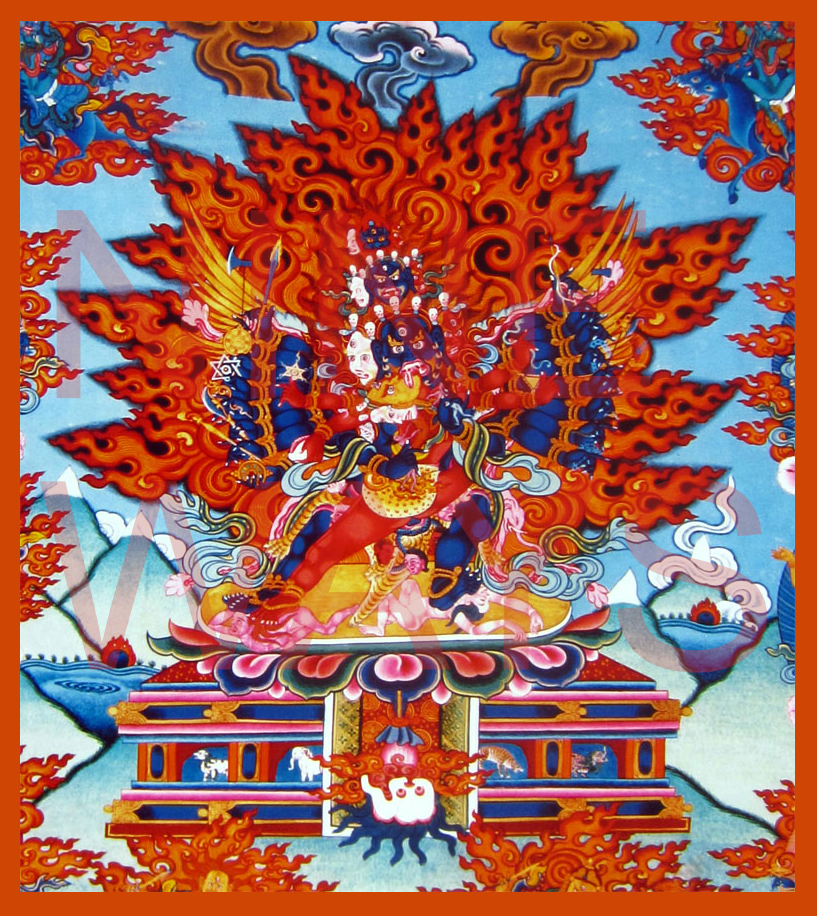
Walchen Gekho with his consort, Queen of the Drala

Each year from the 22nd-29th lunar days of the Eighth Tibetan month, Menri Monastery in Dolanji, India holds an intensive retreat for the fierce yidam Walchen Gekhö. Specifically, they perform the practice from the text compiled by the Second Buddha Nyammé Sherap Gyaltsen Rinpoche, “Gekhö Sangwa Drakchen, The Greatly Fierce, Secret Gekhö.” In 2023, these lunar dates correspond with October 6th-13th on the Western calendar.

The tantric cycle of Gekhö contains 360 deities. Within the cycle of the Father Tantras, Walchen Gekhö is the manifestation of enlightened quality among the Five Supreme Embodiments. (See previous post: https://ravencypresswood.com/2016/06/05/the-five-supreme-embodiments/

Gekhö is a deity associated with the ancient land of Zhang Zhung, and his tantric practice was widespread throughout the kingdom. In the Zhang Zhung language, “Gekhö” means “demon tamer.” It is said that he originally descended upon the sacred mountain of Gang Tisé (also known as Mount Kailash), and that he and his retinue dwell there. However, even though there is a close association with an earthly abode, he is not a worldly guardian. Rather, he is the embodiment of enlightened quality that manifests as a meditational deity who protects Yungdrung Bön practitioners.

“In order to lead those who have not gained realization, Walchen Gekhö possesses the Five Bodies and the Five Primordial Wisdoms. Through the truth of pacification, and through these forceful, wrathful means, those who are untamed will be tamed!”

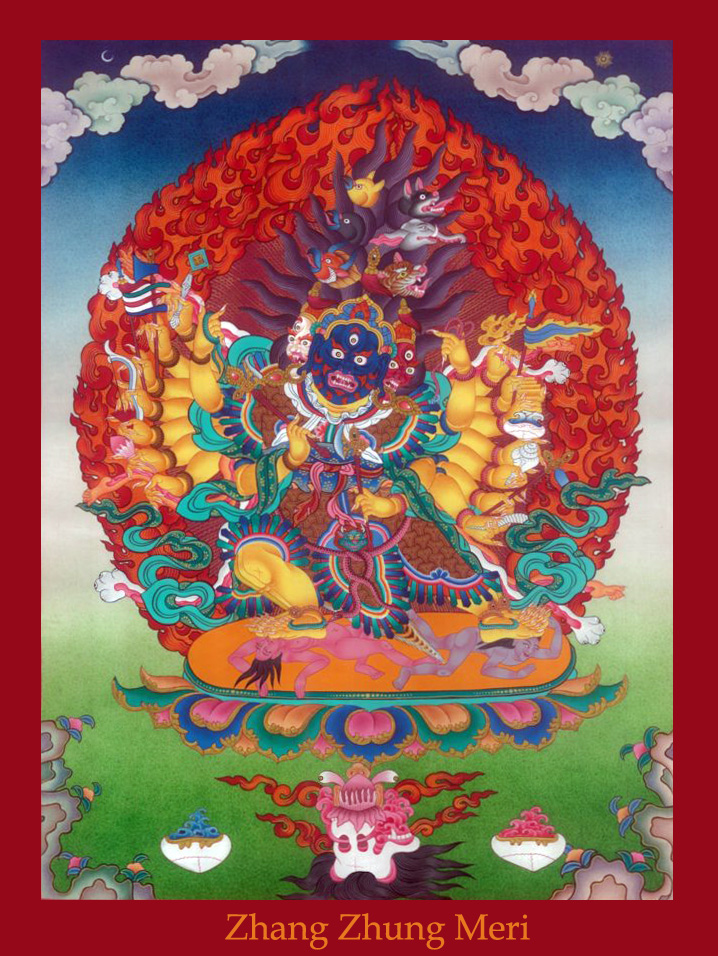
From the Essence Practice of the Fierce Champion, Zhang Zhung Meri

One manifestation of Walchen Gekhö is Zhang Zhung Meri. This yidam deity is closely associated with the dzogchen practice of the Zhang Zhung Nyen Gyü, The Aural Transmission of Zhang Zhung. The view of dzogchen is, by definition, perfected and beyond needing to apply any methods to develop or perfect it. However, because the practitioners of dzogchen have not yet fully realized this primordial perfection, the deity Zhang Zhung Meri offers protection and support while they are on the path of realization.

“É AH

Namo!

Buddhas of the three times, please listen and pay heed to me!

Having ignorance and a body of flesh, because of the influence of the material body and the afflictive emotions, I am not connected with the five wisdom bodies but are connected with deluded thoughts and afflictive emotions. I offer this open admission of wrongdoing to the buddhas of the three times. Please bestow the vivid accomplishment of the Five Enlightened Bodies to me!

Without the activities of compassionate, skillful means, and because of the afflictive emotion of pride that grasps at an identity, I have committed wrongdoing by elevating myself and lowering others, and I have acted from wrong views. I request tolerance from Ati Muwér! Please bestow the accomplishment of being equal to the changeless state!

Not equal with the state of powerful compassion, and overcome with the contamination of the cumulative actions of ignorance and hatred such as causing killing and condemnation, I openly admit my wrongdoing to the state of Walchen Gékhö. Please bestow the accomplishment of uninterrupted compassion! 

Because of anger and hatred that are produced, and not having a mind of loving kindness, I have been involved in killing and cutting the life force. I openly admit my wrongdoing to the gathering of Gékhö deities. Please bestow the accomplishment of being endowed with compassion and a mind of loving kindness!

Because of not being endowed with a state of clear wisdom, I have been lazy and acted from a clouded mind and delusion. I have improperly exploited and taken advantage of others. I openly admit my wrongdoing to the root deity Walchen Gékhö. Please bestow the accomplishment of a state of all-clear wisdom!

Because of having a hateful mind and not speaking truthfully, through pride and meaningless words, I have accumulated anguish [for others]. Because of the activity of deluded speech, I could become mute [in the future]. I openly admit my wrongdoing to the root deity Walchen Gékhö. Please bestow the accomplishment of a pleasant voice of truthful words!

Not having a mind of supreme generosity and devotion, I have been overcome by attachment, desire, and aggression. Because of the karma of improper, aggressive desire, I could become a cannibal-like spirit [in the future]. I openly admit my wrongdoing to the root deity Walchen Gékhö. Please bestow the accomplishment of a great rainfall of generosity!

Without a suitable intellect and not being broadminded, and because of the influence of jealousy, I have exalted myself and lowered others. Because of that, I could always be born as a human in an outlying, savage place [in the future]. I openly admit my wrongdoing to the root deity Walchen Gékhö. Please bestow the accomplishment of an easygoing, greatly broad mind! 

Not endowed with the compassionate state of the four elements, and with an imperfect nature in respect to the four times, I grasp the illusory body. I openly admit my wrongdoing to the state of the four mothers who are doorkeepers of the four times. Please bestow the accomplishment of overcoming phenomenal appearances!

From compassion, the four emanated sons display a spectacular form and perform wrathful activity. Enemies and obstructers are their servants who are entrusted to act. I openly admit my wrongdoing to the four youths who are emanations. Please bestow the accomplishment of attaining generosity and the two accomplishments! 

Not connected with the skillfulness of the primordial nature where there is no duality of true or untrue words, whatever is in contradiction to the enlightened mind of Kuji Mangké, I openly admit to the state that is equal with the natural mind. Please bestow the accomplishment of attaining the fulfillment of compassionate activities!” 

From The Irreversible Golden Razor, Scripture for the Accomplishment of the Secret, Greatly Fierce Demon Subduer, Walchen Gékhö

All translations from the Tibetan by Raven Cypress Wood ©All Rights Reserved

Raven Cypress Wood ©All Rights Reserved. No content, in part or in whole, is allowed to be used without direct permission from the author.

Don’t want to miss a post? Scroll to the bottom and click “Follow this blog.”

Want to join the mandala of Nine Ways supporters? Follow this link https://ravencypresswood.com/donate/ It’s easy through Paypal and Zelle.

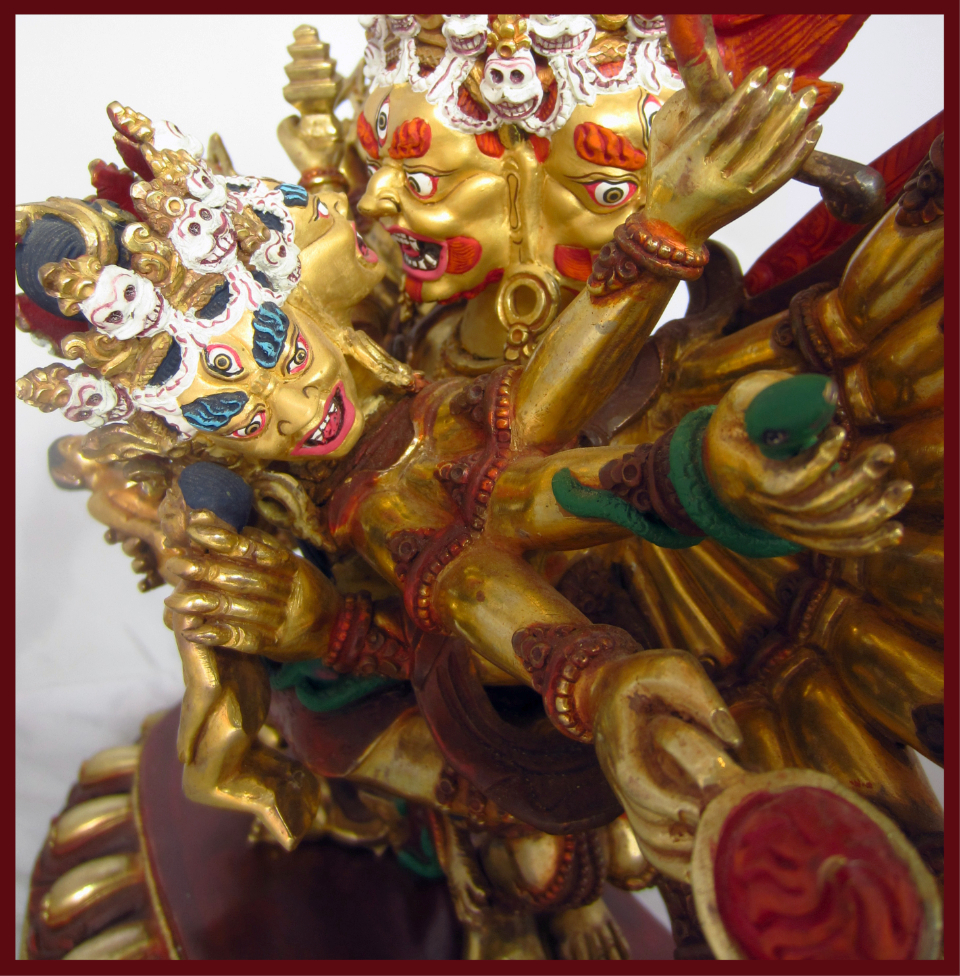
Walchen Gekhö and consort statue. Photo credit: Raven Cypress Wood

Sacred Scripture

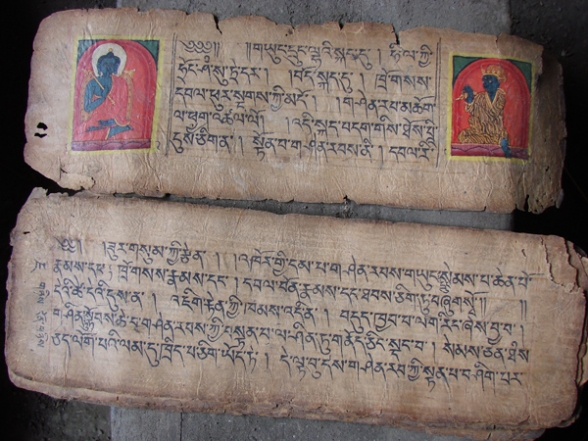
This old, illustrated scripture begins with the phrase, “In the language of the sacred Yungdrung…”

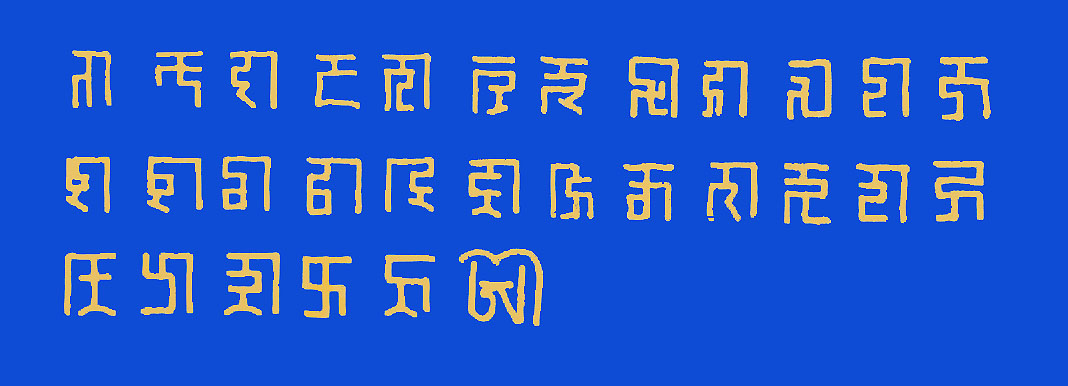
In the Language of Zhang Zhung: The Letters

zhang zhung script 1

According to the Yungdrung Bön, sometime before the 2nd Tibetan king, the letters of the Tibetan alphabet were created from the letters of the ancient Zhang Zhung alphabet.  Yung Drung Bön was the state religion of the ancient country of Zhang Zhung and the texts were written in this language.  However, due to great persecution in the 7th century, the texts had to be hidden in order to protect them from being forever destroyed. During this time, the Zhang Zhung language almost became extinct.  However, there were a few Bön lamas who passed on their knowledge of this language.  As the scriptures were being copied into the Tibetan language, many of them preserved their titles and the first few lines of texts in the old language of Zhang Zhung.  This can be seen in the scriptures today.

OM in Zhang Zhung script Geshe Chaphur 2

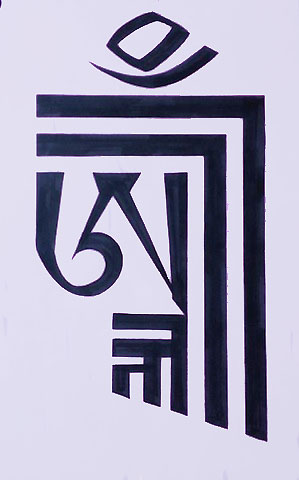
Calligraphy of the Bön syllable OM in the Zhang Zhung script as drawn by Geshe Chaphur Lhundrup of Gyalshen Institute.  If you would like to purchase a calligraphy of this, or another syllable, contact Gyalshen.org.

Pilgrimage to the Center of the World: Gang Tise

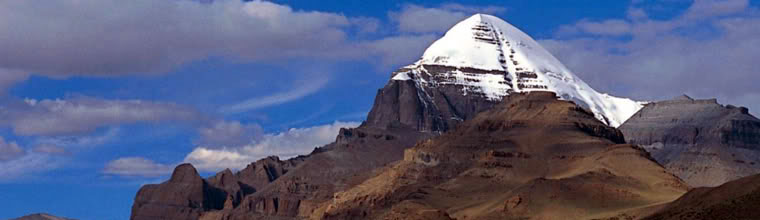
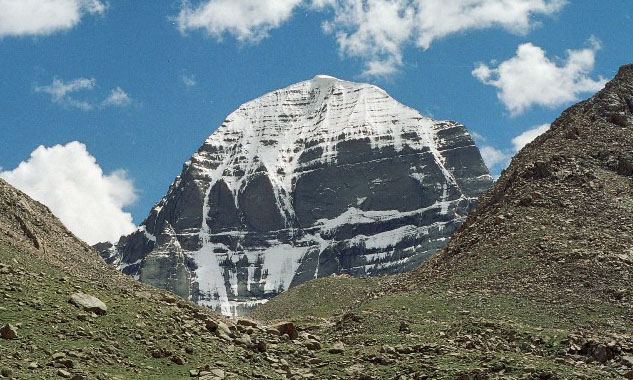
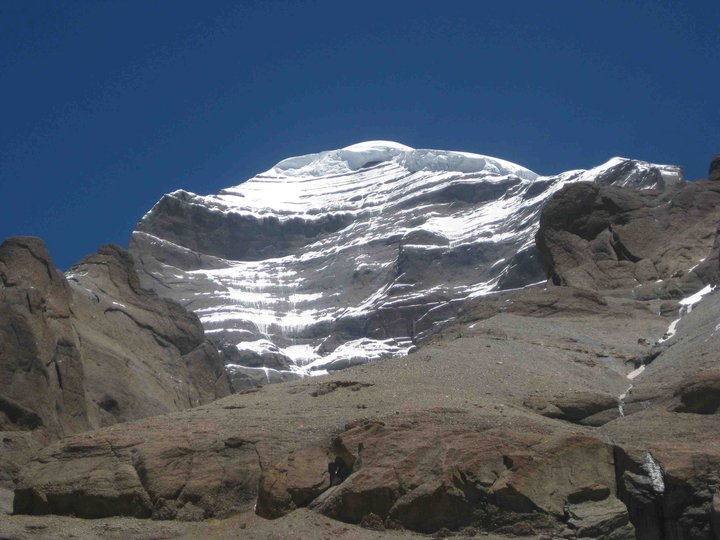
mt tise landscape view(Southern Face of Mount Tisé, also known as Mount Kailash)

It is the seat of Shiva according to Hindus.  Many Jains believe it to be the holy site where the founder of the Jain religion, Lord Rishabhdev, attained liberation.  It is the place where Milarepa lived and practiced according to Buddhists who call the mountain Gang Rinpoche, Precious Snow Mountain.  And according to the Bönpos, it is Mount Tisé, sacred dwelling place of deities, the place where Buddha Tönpa Shenrap Miwoché taught and meditated, and where many sages after him, such as the great lama Drenpa Namkha, Choza Bönmo and Lishu Taring, practiced the teachings of the Yungdrung Bön.  For all of them, to make a pilgrimage to this place and to circumambulate the mountain has great spiritual significance.  “Whoever visits Gang Tisé will achieve liberation after three lifetimes.” And, “If you cleanse with the purification waters of the four directions (of the mountain), you will be reborn in a pure realm.”

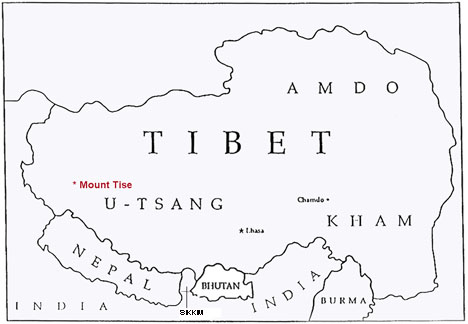
In Sanskrit and on most English language maps, it is called Mount Kailash.  It is located in far Western Tibet in the Ngari region which is a remote and arid landscape only spotted with vegetation.  With no source of wood, campfires are fueled with goat and horse dung.  Reaching the area through a pass of over 16,000 feet in altitude, the air is thin and the light intensely reflects upon every object in the landscape.  Until recent history, there were no roads in to this region.  The mountain has a 22,028 foot peak that is topped with snow year round.  Each of the four sides of the mountain are distinctively different. It has never been climbed.   For the devout, that would be an unthinkable desecration.  In 1980, Reinhold Messner was given permission to climb it by the Chinese.  However, he declined.  In 2001, a Spanish team led by Jesus Martinez Novas was given permission to climb the mountain.  However, due to international disapproval, the Chinese reversed their decision and banned all attempts to ever climb the mountain.

Mt Tise map

Mount Tisé was at the center of the ancient kingdom of Zhang Zhung.  Tisé is a Zhang Zhung word referencing the mountain as the source of many waters.  It was the soul mountain of both the Zhang Zhung king and the kingdom and was considered the center of the world.  The Zhang Zhung deity, Walchen Gekho and his 360 emanations,  reside at its summit.   It is described in many historical Yungdrung Bön texts in great detail.  “In the center of the phenomenal world is Mount Tisé, the Nine-storied Yungdrung Mountain.  From it, four rivers flow towards the four directions.”  These four great rivers which originate in the area surrounding the mountain are the Karnali, also known as the Ganges which flows Southward, the Sutlej also known as the Punjabi which flows Westward, the Brahmaputra which generally flows Eastward, and the Indus which generally flows to the Northwest from the area.  The texts say that Mount Tisé will survive the fires that will destroy the world at the end of the current eon.  The texts describe it further:  “It looks like a crystal chorten.  It’s four sides are like four equal squares in the four directions.”  And, “It has the four kinds of qualities: peaceful, expansive, powerful and wrathful.  It is an immeasurable shrine with great blessings”

Tise North side edited(Northern face of Mount Tisé)

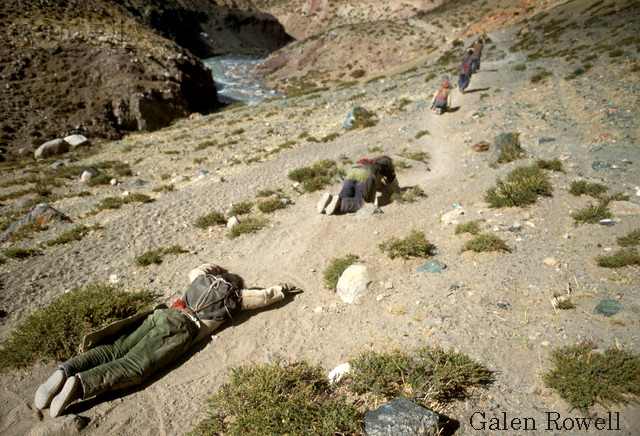
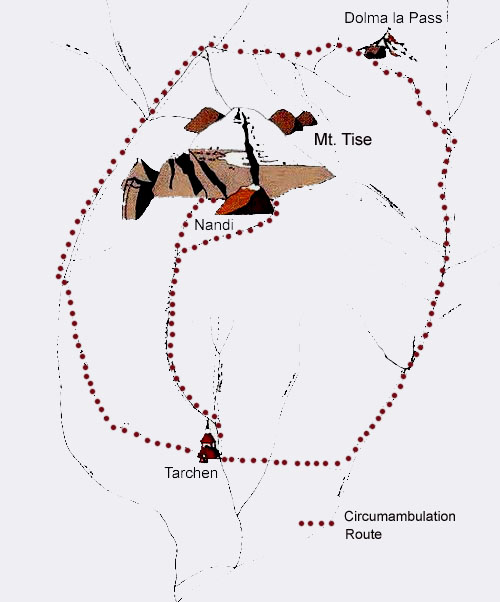
Pilgrimage season is generally May-September.  The circumambulation, or korwa, begins at Tarchen, a small settlement on the South-side of the mountain.  Until the Chinese invasion, it was a major center for the region’s trade.  Now, although the summer continues to be the busy trade season, it is much diminished from the past.  By the time a pilgrim reaches this starting point, it is possible that they have spent years getting here, often prostrating the entire journey.  Once here, if a pilgrim is unable to undergo the hardship of the korwa, here at Tarchen someone can be found to be sponsored to go in their place.  In that case, the merit generated by the virtuous activity is shared between the sponsor and the one actually doing the korwa. For the Bönpo and the Jain, the korwa is counter-clockwise.  For Buddhists and Hindus, it is clockwise.  The path is marked by many sacred places of veneration where great sages meditated or where the power and blessings of deities reside.  There are also four places designated for prostrations along the way.  These are areas large enough for the pilgrims to stop and spend time prostrating and paying homage to the sacred mountain.  However, there are those practitioners who choose to perform full prostrations the entire length of the thirty-two mile circuit around the mountain.  Doing this, a single circuit takes about two weeks.  These pilgrims must carry their provisions with them and wear thick, leather aprons and mittens to protect their body from the stoney ground.  For those who walk around the mountain, most choose to finish within three days.  Others choose to begin hours before dawn so that they can complete the journey in a single 13-15 hour day.  The pilgrim’s path rises in the thin air to an altitude of 18,500 feet at the Dolma la Pass, the highest point of the route.


Pilgrims Prostrating Themselves(Pilgrims prostrating around the mountain.)

In general, pilgrims perform three circumabulations of the mountain.  If the pilgrim is completing the circuit in a single day, they will take a day of rest in between the three korwa of the mountain.  Some make a commitment to complete 1o8 circuits.  This takes two pilgrimage seasons.  From the starting point at Tarchen, there is also an inner korwa.   Several miles North of Tarchen past a couple of monasteries, there is a smaller mountain, called Nandi, whose korwa brings the pilgrim close to the very face of Mount Tisé.  This inner korwa is forbidden until one has completed at least thirteen circumambulations of the outer korwa.

Mt Tise outer and inner korwa edited

Just seeing the mountain is a blessing.  And undergoing the arduous task of its korwa is said to purify one’s negativity.  It is vitally important in the history of Yungdrung Bön.  According to the text, “Mount Tisé, the crystal chorten, soul mountain of Yungdrung Bön, is like nine stacked yungdrungs.  Externally, it is like a chorten made of crystal snow.  Internally, it is like the palace of the three tutelary deities.  Secretly, it is the vast and profound gathering place for the mother and sister khandro.”  “Having washed away karmic traces by purifying oneself with the healing waters, you will be reborn in a joyous realm of the gods.  Having reversed obstacles and adverse circumstances by performing the korwa through prostrating, you will be able to live out the full extent of your lifespan.”  Thus it is said.

Mt Tise East face by Rikdzin lama(Eastern Face of Mt. Tisè.  Photo by Rikzin Lama)

To read more about Mount Tisé see Sacred Landscape and Pilgrimage in Tibet by Geshe Gelek Jinpa and Charles Ramble.  The Light of Kailash by Chogyal Namkhai Norbu Rinpoche.  Or The Sacred Mountain of Tibet by Russell Johnson and Kerry Moran. And in Tibetan, Gangs Tise’i sKor by HE Menri Yongdzin Tenzin Namdak Rinpoche.