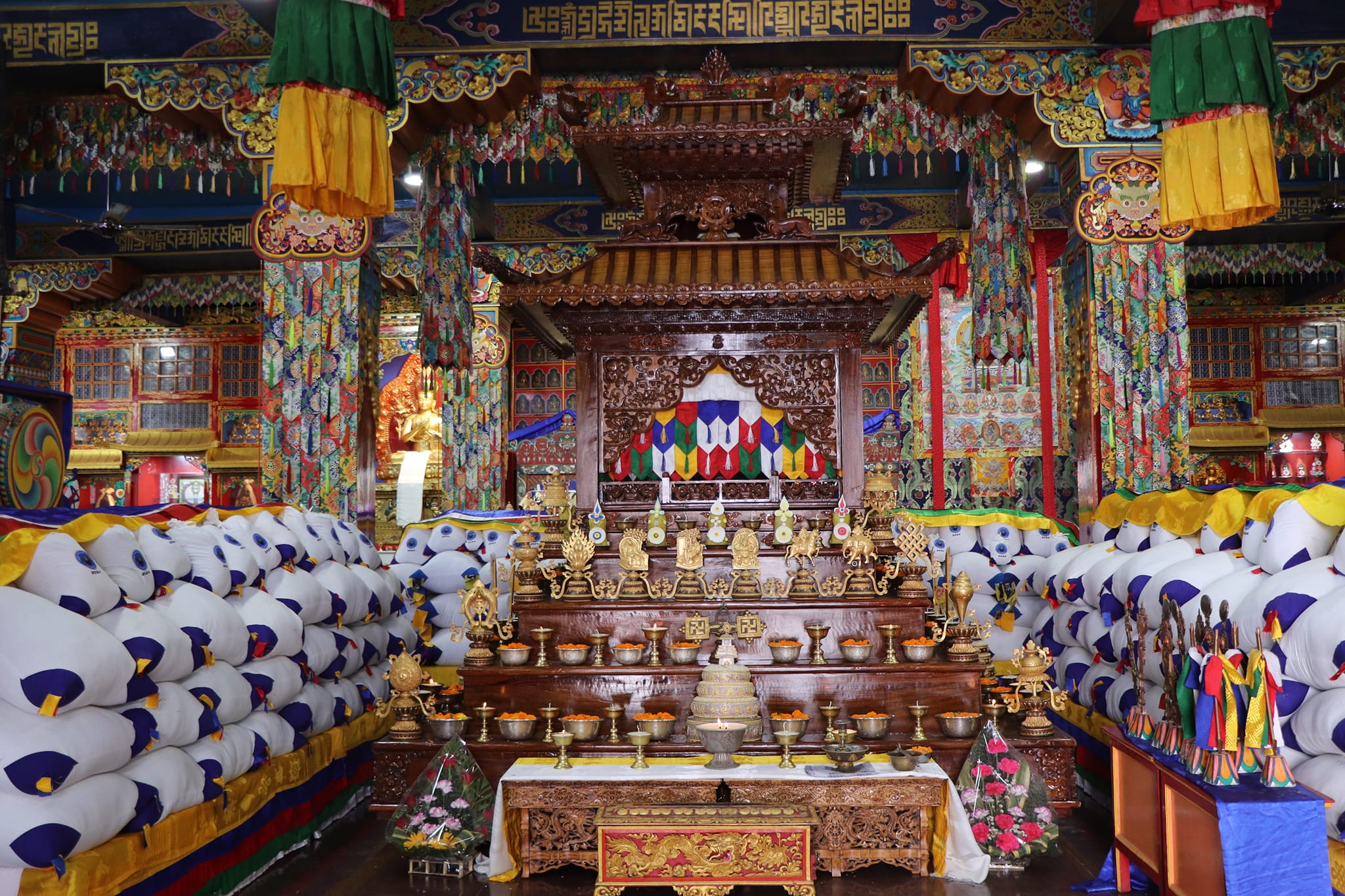
During the 3rd lunar month on the 3rd-18th lunar days which correspond with April 11th-26th on the Western calendar, Menri Monastery in Dolanji, India will perform the Great Retreat of Medicine with Swirling Rays of Light, also known as The Great Mendrup Retreat. This is one of the largest rituals within the Yungdrung Bön Religious tradition and has an unbroken lineage from the enlightened Lord Tönpa Shenrap. Once an individual is enthroned as the abbot of Menri Monastery, they are required to do three things: (1) establish a reliquary chorten for the previous abbot, and (2) bestow empowerments to disciples, and (3) perform a mendrup retreat at least once during their lifetime. His Holiness the 33rd Menri Trizin Lungtok Tenpé Nyima Rinpoche performed the great mendrup ritual three times: once before the establishment of Pal Shenten Menri Ling in India, once in 1988, and once again in 2009.

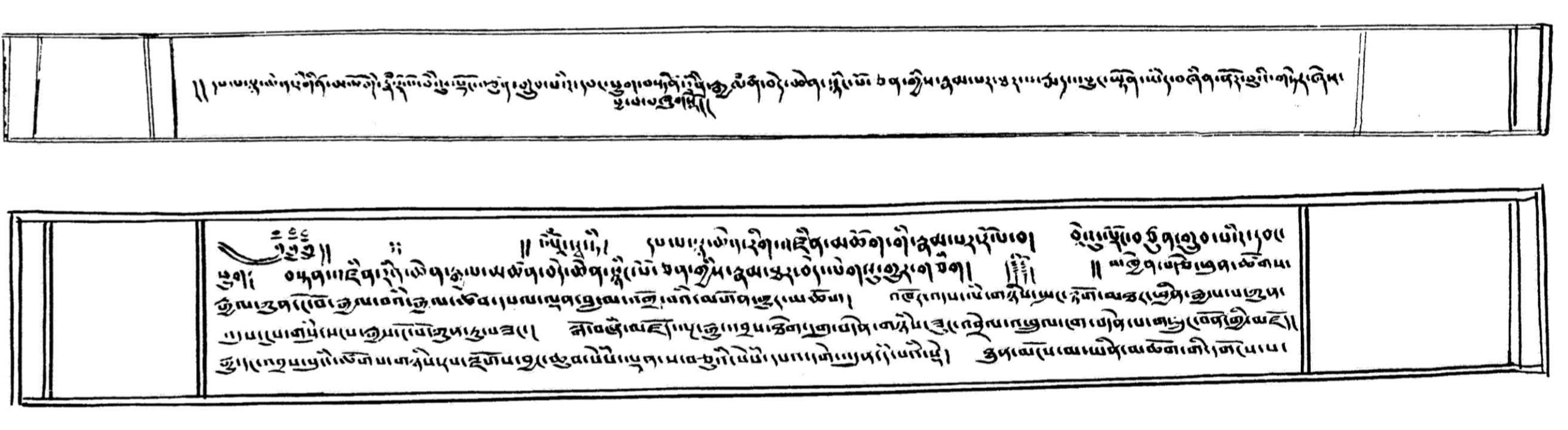
Its takes years of preparation in order to properly gather the tens of thousands of herbs, minerals, precious substances, and so on. For example, similar to acquiring ingredients for traditional Tibetan medicine, plants that are used for their warming qualities must be gathered and dried in the sun, and plants that are used for their cooling abilities much be gathered and dried in the shade in cooler areas. All of the primary and secondary ingredients are outlined within the mendrup text. There are many many traditions and texts. In this case, the text being followed is Mendrup Özer Kyilwa, Accomplishment of Medicine with Swirling Rays of Light. This ritual was taught by Buddha Tönpa Shenrap Miwoché and first performed by Buddha Chimé Tsukphu. It was passed down through the generations of masters to the great lama Drenpa Namkha in the 7th centure C.E. At that time, the Yungdrung Bön religious tradition was undergoing severe persecution from the Buddhist king and this mendrup text along with many other texts were hidden in order to protect them from destruction. In that way, many of the Bön texts and religious items became hidden treasures.
After the time of strong persecution had passed, it is said that the text was brought out of hiding along with vessels of mendrup in 1108 C.E. by Rikdzin Chenpo Gyermi Nyi Ö. This was passed to the the 4th abbot of Yeru Wensaka, Nyima Gyaltsen Rinpoche. From that time until the destruction by flood of Yeru Wesanka, the mendrup retreat was performed once in the lifetime of eighteen abbots of Yeru Wensaka. Having received the transmissions and empowerments for the mendrup cycle, the founder and 1st abbot of Menri Monastery recovered the texts and the mendrup and used them to begin the tradition at Tashi Menri Monastery in Tibet. One of the most important mendrup ingredients is a small amount of the blessed medicine that was created in previous mendrup retreats and safeguarded to be used as an ingredient in subsequent mendrup rituals. In that way, every mendrup contains some amount of mendrup from ancient times.

The Tibetan term mendrup [Wylie: sman sgrub] is a compound of two words: “men” generally meaning medicine, and “drup” meaning to accomplish or to achieve. Thus, the purpose of the ritual is create a medicine which is a consecrated and empowered panacea for both inner and outer ills and disturbances rather than a medicine for a specific illness. The final product is a consecrated and blessed, finely powdered substance that is distributed for free to the ordained, to laypersons, and to the general public. This blessed medicine is ingested orally, worn as a protective amulet, used as an offering, and included as an ingredient in many other rituals within the Yungdrung Bön religious tradition.

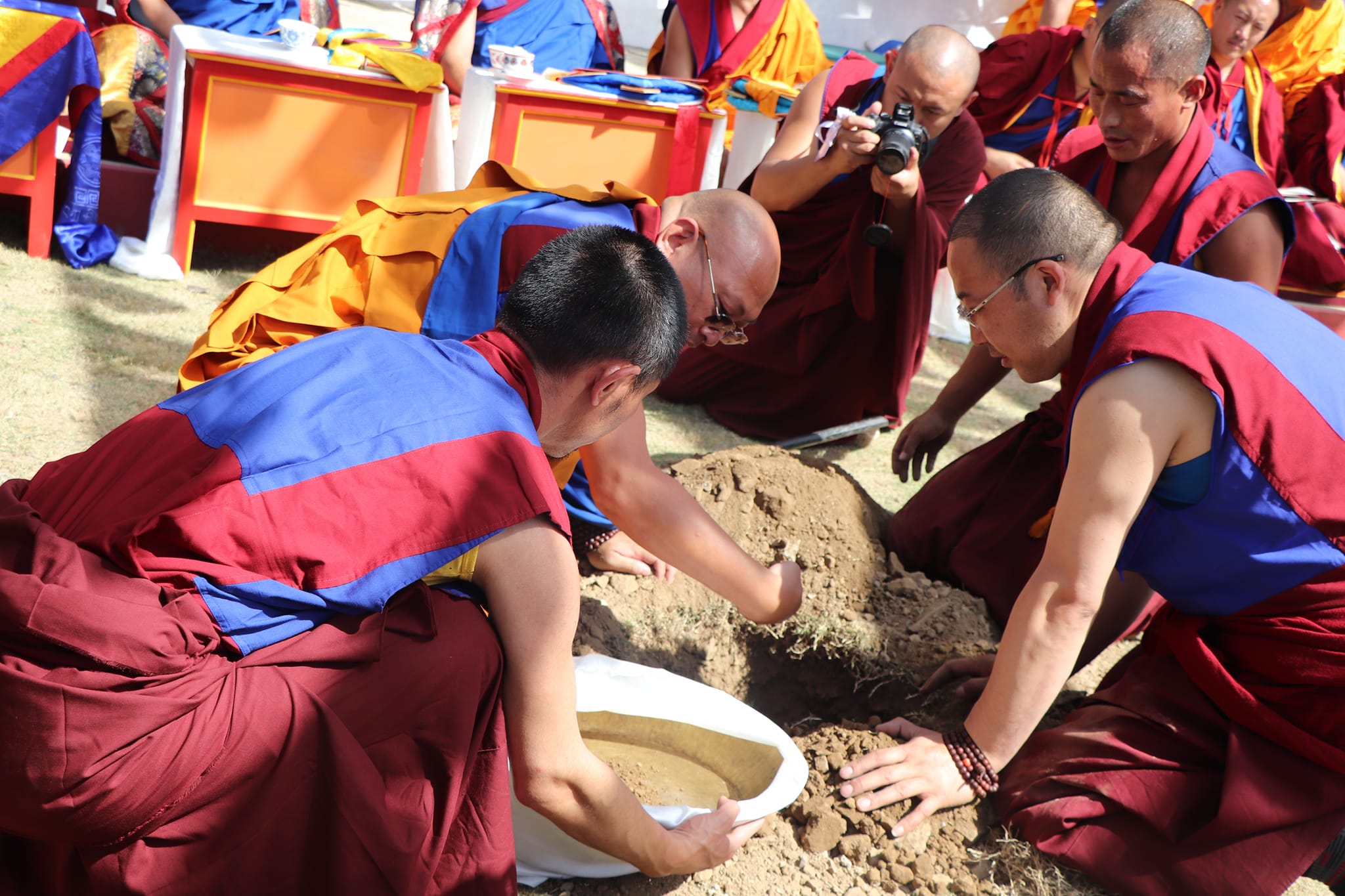
The retreat generally begins with the recounting of the origin, history, and purpose of the great mendrup retreat. Ritually, the retreat begins with a ransom ceremony in order to pacify and expel obstacles. Masked dances of the protectors are performed and a boundary is secured for the entire retreat space and all participants in order to keep out obstacles and to keep in the blessings and power generated during the retreat. After that, the ritual of Requesting Permission to Gather Soil addresses the earth spirits in order to request permission to gather soil in order to construct the necessary mandala palace for the deities.
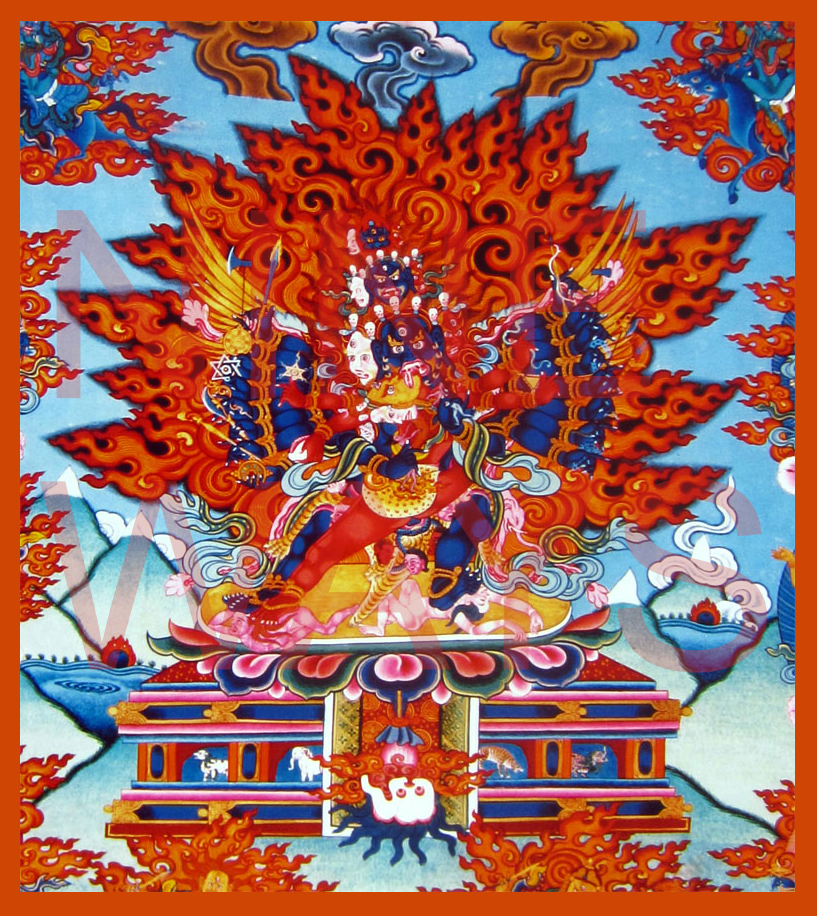
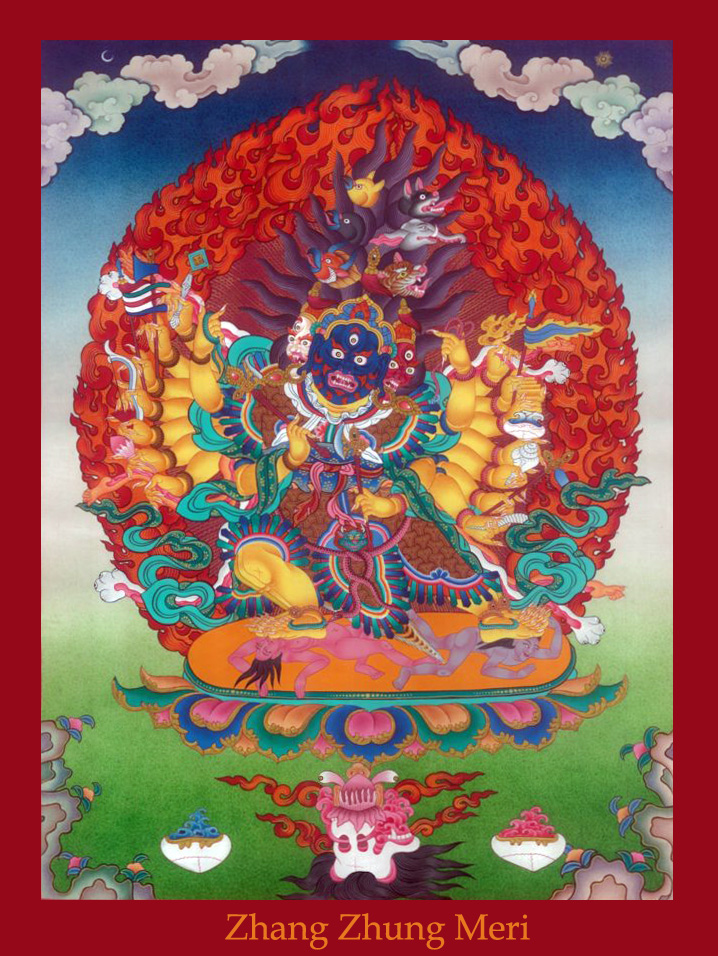
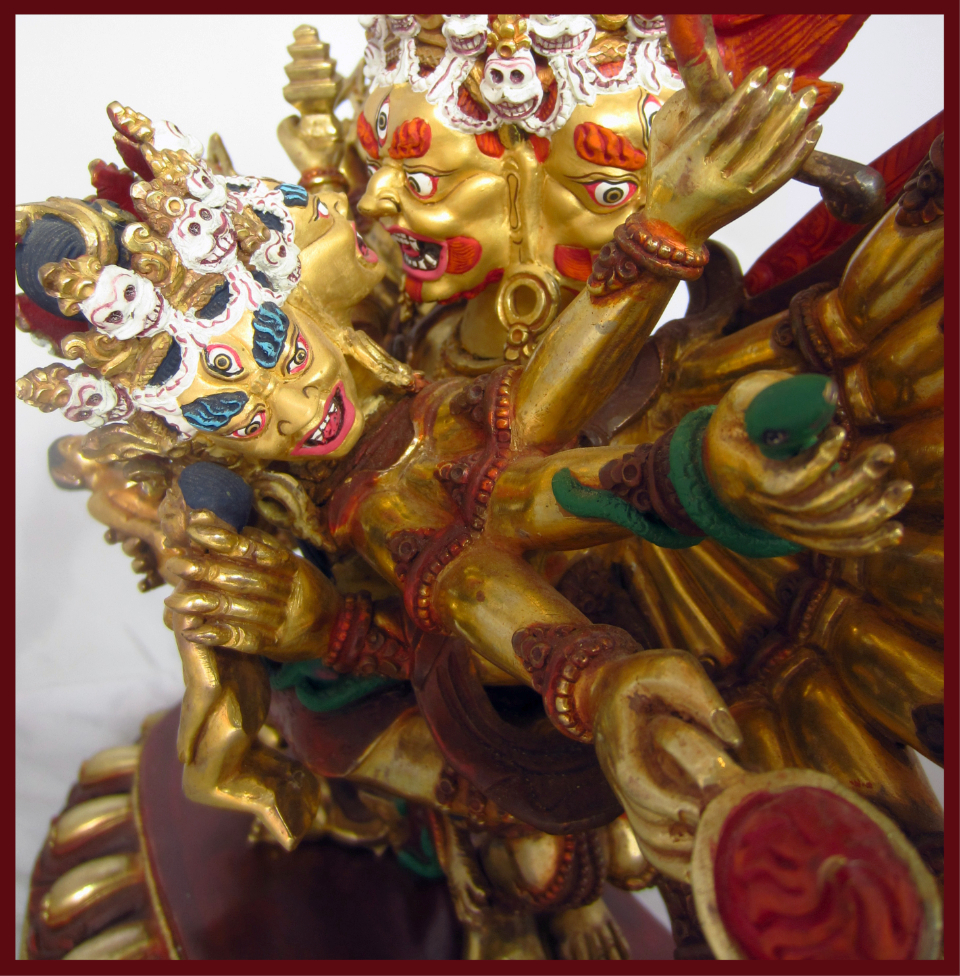
Once the mandala is constructed and a large variety of wonderful offerings are placed, the enlightened deities and their retinue are invited to come and reside within the mandala palace. After this, no one other than those involved in the ritual are allowed to come near the mandala. Thus begins the period of the foundational practices of taking refuge, generating a mind of enlightenment, admitting wrongdoing and receiving purification, and so on. Once this foundation is complete, the main ritual of the mendrup ceremony begins by requesting and receiving consecration and blessings for the substances. During this time, the mantra of blessing nectar is continuously recited by both the ordained and the lay practitioners.
Mantra of Blessing Nectar for the Great Mendrup Ceremony: SO OM BA WA DÉ NA RA SA YA NA YU DRANG DUTSI SO THA

The powdered mendrup is ingested daily, or as desired, either in water or by itself. The amount is usually a generous pinch, or about 1/4 teaspoon. It can also be placed in a locket and worn on the body. The traditional amulets worn by Yungdrung Bön followers contain mendrup as one of the required ingredients. It is also an ingredient in chortens, sa tsa, torma, and so on. When treated with faith and respect, the benefits of either ingesting or wearing mendrup are profound and immeasurable. When it is ingested or worn, the three poisons, the three kinds of illness [imbalances of wind, bile, or phlegm], and the three kinds of external disturbances [from the spirits above, the water spirits below, and the earth spirits in-between] are unable to become established and cause harm. When it is offered to the meditational deities or enlightened protectors, it purifies our sacred commitments with them and gives the ability for us to receive their blessings. In this life, it brings success to whatever goal or intention is wanted. It brings longevity, sharpens the intellect, brings wisdom, cures illness, and increases the life-force and prosperity. It is like a wish-fulfilling gem.
“Deities of the mandala will hold you within their compassion.
The poisons, illness, and malevolent forces will not be able to be established.
In this life, whatever is wanted will be accomplished.
And one will progress along the ground of the Great Seal.”
From the Result and Good Qualities of Accomplishing the Blazing Mountain of Blessed Nectar

If you would like to make a donation to support this very auspicious occasion, you can do so through H.E. Menri Pönlop’s United States retreat center by following this link: http://kwling.org/ Follow the link and then click the donate button in the upper right of the page. You can make a notation that the donation is for the mendrup ceremony.
Schedule of Events at Menri Monastery
April 11th: Welcome and speeches, the ransom effigies are sent out in order to dispel obstacles
April 12th: The procession and ritual for Requesting Permission to Gather Soil, and preliminaries for the Nam Dak and Long Gyé empowerments
April 14th: His Holiness the 34th Menri Trizin will confer the actual Nam Dak and Long Gyé ritual cycle empowerments.
April 16th: His Holiness the 34th Menri Trizin will bestow the oral transmission of the peaceful, wrathful, and medicine texts to everyone in attendance. His Eminence Menri Pönlop Rinpoche will give a talk explaining the history and benefit of the great mendrup ceremony.
April 17th: There will be a showing of the sacred objects of Rayna Menling Nunnery and a tour of their facilities.
April 18th & 19th: There will be a two-day seminar of Zhangzhung and Tibetan studies.
April 20th: Teaching on the Four Wheels of Bön and teaching on the practice of tantra
April 21st: His Holiness the 34th Menri Trizin and His Eminence Menri Pönlop Rinpoche will lead the procession to visit the medical laboratory where the medicine containers will be opened and the ingredients will be mixed, purified, and ground into a fine powder.
April 22nd: There will be an exhibition of the ritual tools, costumes, and sacred items required for the practice of the Nine Ways of Bön.
April 25th: There will be a guided tour of the Mutri Tsépo Tibet-Zhangzhung Research Center.
April 26th: His Holiness the 34th Menri Trizin will bestow the empowerments of the Künzang A Sel [Clear AH of Künzang], Chi Pung Zhi Tro [Cycle of the Peaceful and Wrathful Deities], Ö Zer Khyilwa [Swirling Rays of Light], and the Trowo Tshé Drup [Trowo’s Accomplishment of Longevity].
April 27th: The monks, nuns, and lay disciples will form a procession carrying the medicines which will later be distributed to everyone present. The ceremony will conclude with an address by His Holiness the 34th Menri Trizin and His Eminence Pönlop Rinpoche.
Raven Cypress Wood ©All Rights Reserved. No content, in part or in whole, is allowed to be used without direct permission from the author.
Don’t want to miss a post? Scroll to the bottom and click “Follow this blog.”
This website has always been supported by the donations of the worldwide Yungdrung Bön community. Want to join the mandala of Nine Ways supporters? Follow this link https://ravencypresswood.com/donate/ It’s easy through Paypal and Zelle.


 Nine Ways