Blog Archives

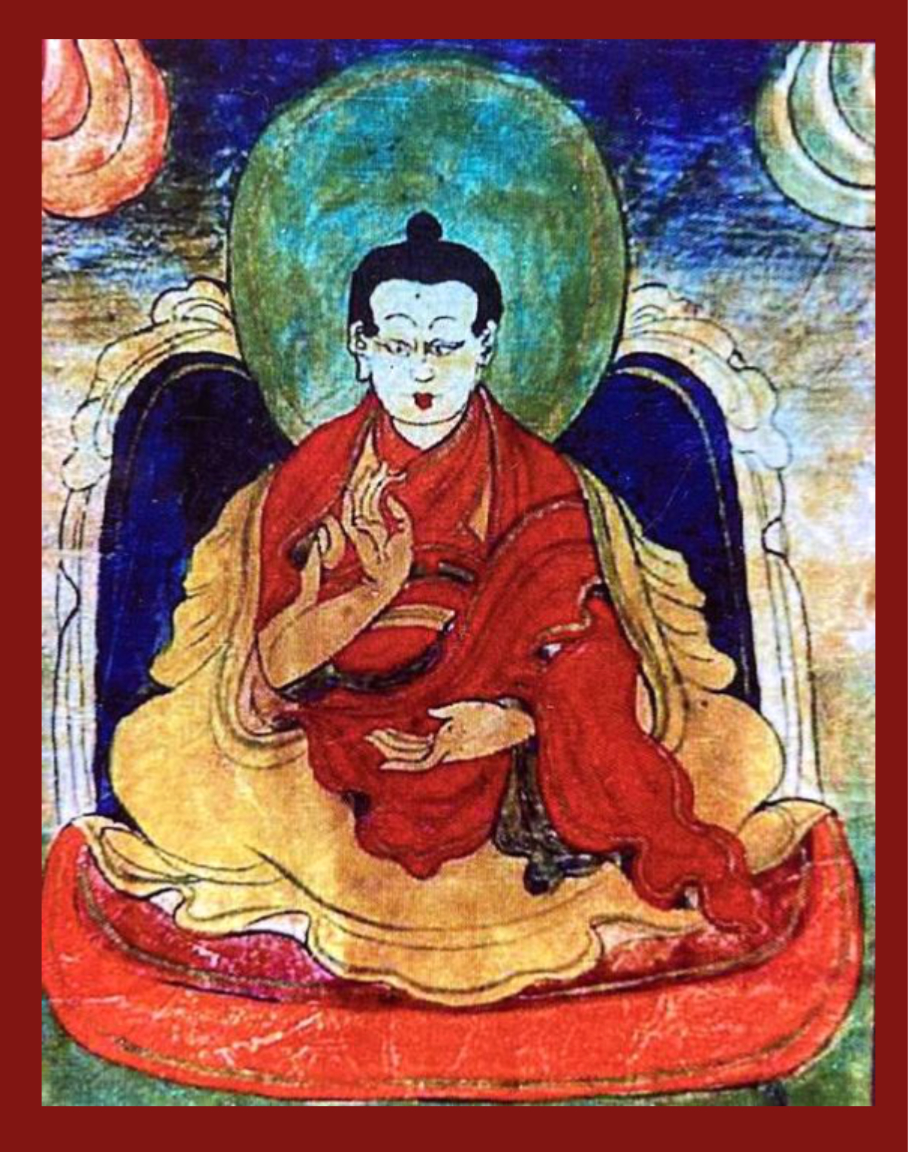
96th Anniversary of the Birth of His Holiness the 33rd Menri Trizin Lungtok Tenpé Nyima Rinpoché

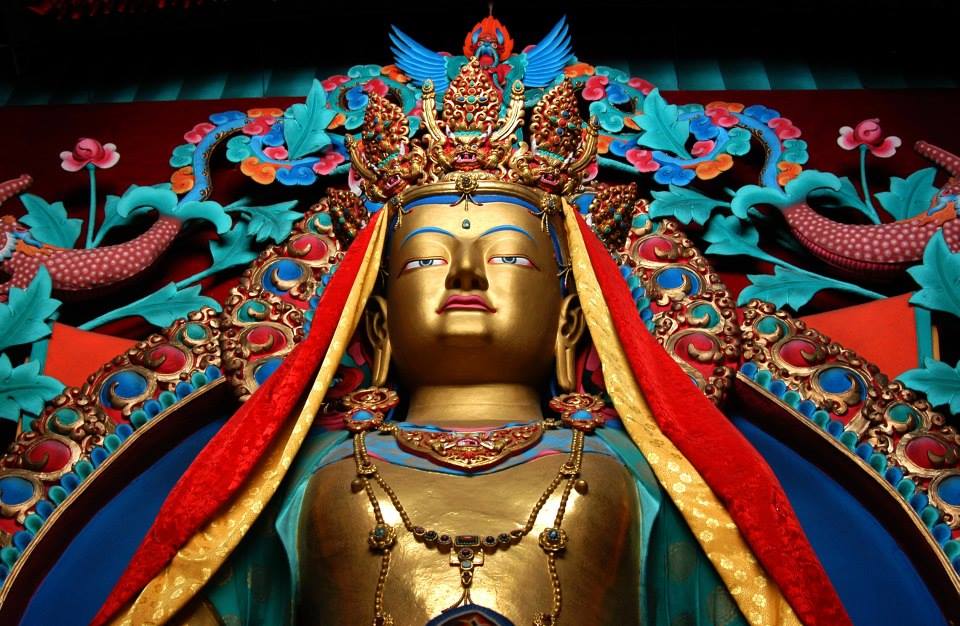
Close-up of traditional scroll painting depicting His Holiness the 33rd Menri Trizin Lungtok Tenpé Nyima Rinpoché

His Holiness the 33rd Menri Trizin Lungtok Tenpé Nyima Rinpoché was born in Tibet on the 15th day of the 5th lunar month in the Western year 1929 in the village of Kyongtsang in the far eastern province of Amdo. In 2025, this date corresponds with July 10th on the Western calendar.

When he was eight years old, his father took him to the nearby monastery of Phuntsok Dargyé Ling where he learned to read, write and chant. At the age of fourteen, he received instructions on the preliminary practices of dzogchen and completed the nine-hundred thousand accumulations three times. In 1945 at the age of seventeen, he received novice monk vows from Kyangtsang Lama Sherap Tenpé and was given the name Sherap Namdak. He completed his Geshé Degree at the age of twenty-five under the guidance of Lopön Tenzin Lodro Gyatso Rinpoché. The following year, he traveled South to the Bön province of Gyalrong, where he printed copies of the Bön Kanjur from traditional woodblocks. After gathering a vast amount of material and using mules to carry more than 100 volumes of the sacred texts, he made an arduous six-month journey back to his monastery. In 1956 at the age of twenty-eight, he traveled to the famous Yungdrung Ling Monastery and received monk vows from the Pönlop and was given the name Sangyé Tenzin. In 1960 at the age of thirty-two, as he passed through Mustang and Dolpo on his way to India, he borrowed many rare texts in order to reprint them in India and ensure their preservation.

In 1968, many esteemed Yungdrung Bön lamas gathered together in order to coordinate the process of selecting a successor of the late 32nd Menri Trizin. After several days of extensive prayers and rituals, Sangyé Tenzin’s name emerged as the one to hold the lineage of Nyammé Sherap Gyaltsen. In 1969 at the age of forty, after extensive preparatory initiations, he assumed his duties as the 33rd Abbot of Menri Monastery and began leading the effort to re-establish Menri Monastery in Dolanji, India.

His Holiness the 33rd Menri Trizin Rinpoche. Photo credit: Unknown

In 1970, he began construction of the main temple of Pal Shenten Menri Ling in Dolanji and lead efforts to restore Menri Monastery in Tibet. In 1972, he opened a dispensary at Pal Shenten Menri Ling that distributed medicine freely to the monks, the Tibetan settlers in the nearby village, as well as to the local Indians. In 1975, he began a school for the Bönpo children, and in 1978 he founded the dialectic school to continue the tradition of in-depth education of the traditional and philosophical sciences that results in the esteemed degree of geshe.

After many years of indescribable and tireless efforts on behalf of the Yungdrung Bön tradition as well as the worldwide Bön community and all sentient beings, he displayed the truth of impermanence and passed into nirvana on the 27th day of the 7th lunar month in the Western year 2017. The auspicious occasion of the celebration of his birth is an opportunity to generate great merit through spiritual practice and virtuous activities of body, speech and mind.

“EMAHO!

To the lama who is the embodiment of all of the victors and spiritual masters, who acts principally through the accomplishment of Bön for sentient beings who are as limitless as the sky,

I offer prostrations with my body, prostrating with my arms, legs and head!

I prostrate with my speech, chanting with a joyous and inspired melody!

I prostrate with my mind, paying homage with single-pointed motivation and devotion!

May the negative actions and defilements of my three doors become purified!

AH OM HUNG CHI PAR RAYNA KO PUNG AKSHO TRI TSE GU DÜN HRUN”

— From Offerings for the Lama

Raven Cypress Wood ©All Rights Reserved. No content, in part or in whole, is allowed to be used without direct permission from the author.

Did you enjoy this content? This article is made possible by generous donors who want content like this to continue to be available. Join the mandala of Nine Ways supporters by following this link: https://ravencypresswood.com/donate/

Don’t want to miss a post? Scroll to the bottom and click “Follow this blog.”

Summer Ritual at Menri Monastery: The Great Secret Dō Ritual of The Vast Sky

Representation of the phenomenal world with its wondrous and desirable contents created at Menri Monastery

During the 12th-16th lunar days of the 5th lunar month, Menri Monastery together with the Rayna Menling Nunnery will conduct the annual Kha Long Sangwé Dō Chen, The Great Secret Dō Ritual of the Vast Sky. In 2025, these dates correspond with July 7th-11th. The purpose of this elaborate ritual cycle is to pacify or expel obstacles and malevolent energies, rebalance the five elements, attract good fortune, longevity, and positive circumstances, and to bring healing and harmony to the environment and its seen and unseen inhabitants. This ritual was taught directly by the enlightened Lord Tönpa Shenrap Miwoché as a skillful method to work with external, worldly forces that interfere with the happiness and success of sentient beings. These teachings are part of the Second Way of Bön, The Way of the Shen of the Phenomenal World. As in every teaching and ritual of the Yungdrung Bön, the foundation of the practice is unbiased, unlimited compassion. Even when so-called “malevolent spirits” are expelled because of their unwillingness to stop harming others, the expulsion is from a base of compassion for both those being harmed as well as for those causing the harm. By interrupting their harmful actions towards others, it also prevents them from accumulating negative karma. Additionally, every ritual concludes with prayers of aspiration that all beings be happy and peaceful, and ultimately to realize the ultimate state of enlightenment that is beyond any kind of suffering or unhappiness.

To support the ritual of The Great Secret Dō Ritual of the Vast Sky, a representation of the phenomenal world is created along with all the good and precious things within it. These things are offered to the enlightened ones, the worldly protectors, powerful spirits, and all the six kinds of sentient beings. By offering to the deities, the accumulation of merit is increased and previous negative actions are purified. By offering to the worldly protectors, they are delighted and continue to fulfill their vows of protection and bestowing abundance. By offering to the powerful spirits, we bring harmony to our relationship with them and pay any debts that might invoke their retribution. By giving to all the six kinds of sentient beings, we fulfill their desires and their minds become peaceful and satisfied.

His Eminence Menri Pönlop Thrinley Nyima Rinpoche instructing the monks in creating namkha

About Namkha

In addition to the many offerings of torma, precious gems, foodstuffs, flowers and greenery, fragrant smells, soft materials, and so on; this ritual makes abundant use of the ritual object known as a namkha. The Tibetan term namkha literally translates as “sky” or “external space.” This term is often translated as “thread-cross.” There are many different kinds of namkha that have a diversity of form and function. Just as the shape, color, ingredients, and use of a torma is determined by its ritual purpose, so is the shape, color, and function of a namkha determined by its ritual purpose. As for the actual construction, a namkha is created by affixing thin pieces of bamboo or wood together to establish a frame. Then, beginning at the center and working outward, strands of colored wool, yarn, or thread are used to weave a net-like pattern over the frame. The length of the wood or bamboo is notched to allow the colored strands to catch and stay in place. There is a great variation in framework and patterns. For example, if the namkha is being used as a temporary abode of a deity or spirit, the pattern and colors used will be representative of the physical characteristics and hand objects of that deity or spirit. Namkha are used as a dwelling for deities or spirits during a ritual, to attract or repel specific energies and qualities, for protection from danger and disease, and as offerings, among other purposes.

Namkha created for the fire ritual of the deity Duk Kar, the White Umbrella Goddess

Dō Rituals

Buddha Tönpa Shenrap Miwoché taught 365 different types of rituals. The Great Secret Dō Ritual of the Vast Sky is categorized as a type of ritual. Because many of the dō rituals make use of namkha, some Western scholars have erroneously stated that the terms [Tibetan: mdos] and namkha are synonymous. This is incorrect. There are dō rituals that do not use namkha, and there are many namkha that are used in rituals other than those categorized as dō. In general, dō rituals are the most important of the ransom rituals used for eliminating harm to the life force, diseases, danger, and other disturbances from nonhuman beings. In general, the nonhuman beings causing harm are offered an exchange of desirable things for the release of those being harmed. Namkha are used to invite the enlightened deities who are the objects of refuge for the ritual, and the protectors who subdue the malevolent forces. Other types of namkha are made as offerings to the deities and gifts of exchange for the ransom. Still other types of namkha act as supports for the return of the life force, and the rebalancing of the external, internal, and secret five elements. There are different kinds of dō rituals in order to appeal to the variety of nonhuman beings that create disturbances for humanity and the environment.

Namkha of various auspicious symbols

The scripture for the Kha Long Sangwé Dō Chen is almost one thousand pages in length. It includes chapters dedicated to instructions for the construction of ritual items, texts for the ransom rituals for men, women, and children, rituals for stopping and healing illness and contagious disease, rituals for renewing and fulfilling sacred vows, rituals for calling upon the magically powerful and benevolent worldly protectors, rituals for strengthening the life force and prosperity, rituals for appeasing the many kinds of nonhuman spirits, rituals for forcefully repelling negative forces, and so on. The overall purpose of all of these rituals is to bring peace and happiness within the world of appearances, and to generate faith in the Yungdrung Bön teachings which will guide all sentient beings to the ultimate goal of liberation from all the suffering of cyclic existence.

Raven Cypress Wood and Khenpo Nyima Künchap Rinpoche prepare namkha for an elaborate ritual offering to the lu [Sanskrit: naga]

Raven Cypress Wood ©All Rights Reserved. No content, in part or in whole, is allowed to be used without direct permission from the author.

Did you enjoy this content? This article is made possible by generous donors who want content like this to continue to be available. Join the mandala of Nine Ways supporters by following this link: https://ravencypresswood.com/donate/

Don’t want to miss a post? Scroll to the bottom and click “Follow this blog.”

Welcoming and Installing the Sacred Remains of the Spiritual Master

His Holiness the 34th Menri Trizen, His Eminence Menri Pönlop, Khenpo Ronpoche and others escort the sacred Ku dung to be installed at Triten Norbutse Monastery

On the evening of June 20, 2025 with wondrous signs in the environment, the lord of refuge His Eminence Yongdzin Tendzin Namdak Rinpoche passed from his state of tukdam and left his sacred physical remains. On June 21, 2025, accompanied by His Holiness the 34th Menri Trizen, His Eminence Menri Pönlop Rinpoche, Khenpo Tenpe Yungdrung Rinpoche, and other khenpos, geshes, and an ocean of faithful disciples, the sacred remains were escorted to Triten Norbutsé Monastery.

The road was lined with faithful followers, and the path to the monastery was ornamented with auspicious symbols drawn with golden flowers. There were victory banners flowing, sweet-smelling incense, and the sacred sound of drums, cymbals, and chanting filled the air.

The precious remains were installed at the monastery with auspicious signs. The monastic community presented the five offerings and repeatedly made fervent prayers of praise and aspirations. The times for visiting and viewing the sacred remains by the faithful will soon be announced.

A video of the sacred procession can be viewed at this link: https://www.facebook.com/watch/?v=1258612932653054

Raven Cypress Wood ©All Rights Reserved. No content, in part or in whole, is allowed to be used without direct permission from the author.

Did you enjoy this content? This article is made possible by generous donors who want content like this to continue to be available. Join the mandala of Nine Ways supporters by following this link: https://ravencypresswood.com/donate/

Don’t want to miss a post? Scroll to the bottom and click “Follow this blog.”

Offerings to the Lama in Praise of His Enlightenment

Shrine at Triten Norbutse Monastery near Kathmandu, Nepal

On the 16th lunar day of the sacred Saga Dawa month in the Tibetan Wood Snake year, June 12, 2025, at His Eminence Menri Yongdzin Lopön Tenzin Namdak Rinpoche passed beyond this life and entered into a state of deep meditation known as tukdam. As of June 18th, his exalted presence remains in a state of tukdam while the faithful worldwide Yungdrung Bön family offerings prayers of praise, supplication, and aspirations. One of the primary prayers being recited during this time is Offerings to the Lama, also known more formally as Lama Practice, An Ornament of Wish-granting Jewels. The English language translation of the recitation portion of the prayer was made publicly available through a previous article. Now, the preliminary visualization practice, the Tibetan language, and phonetics for chanting the Tibetan have been added. This expanded translation can be downloaded and used for personal use through this link: https://drive.google.com/file/d/1FOa8sFpWyxXBqJ4swyHTJju6sUbAFlUL/view?usp=share_link

Observation of 49 days of prayers and offerings began on Sunday June 15th and will conclude on August 8th. Each Saturday during this time will mark a special weekly day of prayer. By reciting this prayer with heartfelt devotion and requesting blessings from the holy presence of Yongdzin Rinpoche, one can receive inconceivable blessings from the master.

His Eminence Yongdzin Rinpoche in tukdam after his outer breath has ceased. Photo shared only after similar photos were widely distributed by the monastery and abbot.

Once the internal winds cease, the channels collapse, the physical body slumps, and the warmth dissipates from the heart center, chants related to the cleansing of the sacred body will be recited while the physical remains will be ritually bathed with water mixed with special herbs. Sacred seed syllables will be written on the body, and the body will be wrapped in a pure white cloth and placed in a ku dung, a receptacle for sacred remains.

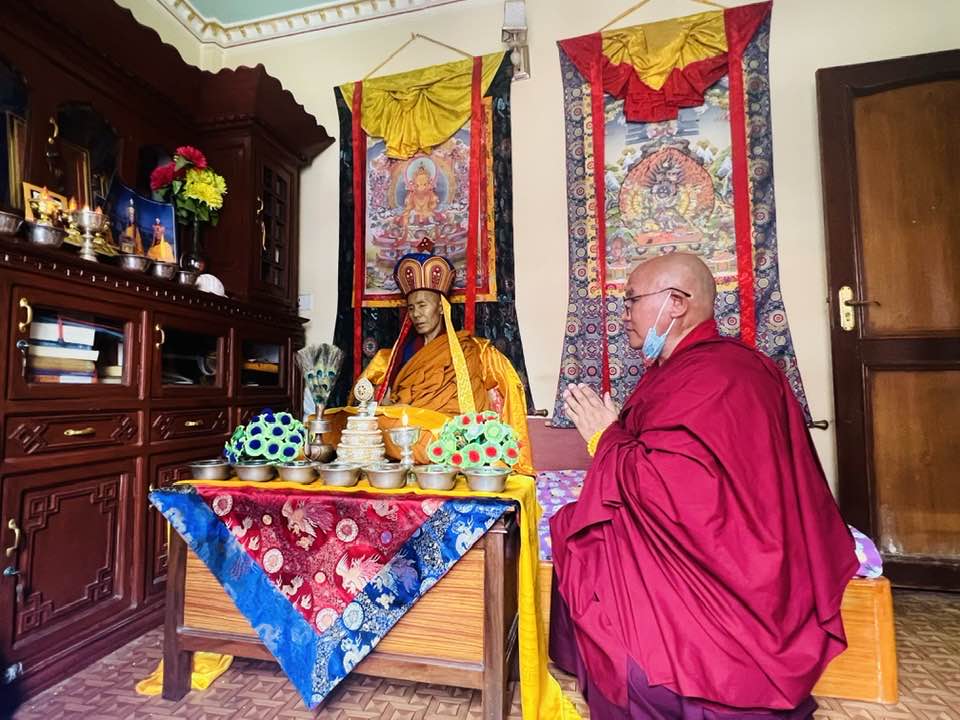
His Holiness the 34th Menri Trizen and His Eminence Menri Pönlop Rinpoche arriving from Menri Monastery in India to pay their respects to the holy presence of His Eminence Yongdzin Tenzin Namdak Rinpoche.

Raven Cypress Wood ©All Rights Reserved. No content, in part or in whole, is allowed to be used without direct permission from the author.


Did you enjoy this content? This article is made possible by generous donors who want content like this to continue to be available. Join the mandala of Nine Ways supporters by following this link: https://ravencypresswood.com/donate/


Don’t want to miss a post? Scroll to the bottom and click “Follow this blog.”

When the Lama Passes Beyond: A Brief Explanation

On the 16th day of the sacred Saga Dawa month in the Tibetan Wood Snake year, June 12, 2025, at 7:45 AM, His Eminence Menri Yongdzin Lopon Tenzin Namdak Rinpoche, master of the three lineages and spiritual elder of the Yungdrung Bön religious tradition, passed beyond this life and entered into a state of deep meditation, tukdam, at his lama residence at Triten Norbutse Monastery. In general, tukdam refers to a state of meditative stability attained by meditation masters that continues after the external breath of their physical body has ceased but the internal breath, or winds, remain.  Therefore, the subtle channels through which these winds move remain stable. The area of the body containing the heart chakra remains warm to the touch.  The skin remains soft, and the face retains a glow of vitality.  Often, the master is sitting in meditation posture, but can also be in the yogic posture of the “sleeping lion” lying upon the right side of the body, knees together and slightly bent with the right hand under the head and the left arm resting upon the body.  During this time, great care is taken to not disturb the body or interrupt the state of mediation.  Great blessings can be received by connecting with the master during this important time.

After an indeterminate number of days, the internal winds cease, the channels collapse, the physical body slumps, and the warmth dissipates from the heart center. At that time, chants related to the cleansing of the sacred body are recited while the physical remains are ritually bathed with water mixed with special herbs.  Sacred seed syllables are then written on the body and the body is wrapped in a pure white cloth. Disciples who connect with the lama during this time either by being near the sacred remains or at a distance, can receive great blessings.

Tsok offerings

Because the master has attained a state of enlightened realization, the prayers and rituals that are offered during this time are different than that for an ordinary being.  Rather than offering prayers to support their experience of death, disciples focus upon practices to honor the teachings of the master.  These prayers and practices include performing acts of virtue to benefit all beings, reciting aspirational prayers such as Tséwang’s Precious Mala of Beneficial Aspiration Prayers, the Tséwang Monlam, and practicing guru yoga in a pure and fervent way. The English language translation of Tséwang’s Precious Mala of Beneficial Aspiration Prayers has been made publicly available for personal use by and can be downloaded at this link: https://drive.google.com/file/d/1d1LOlW-w3zlTV1HRbedK625IEcwwImPI/view?usp=share_link. Additionally, the monastic community offers many tsok, or sacred feast offerings. At the time of cremation, an elaborate fire ritual called Kün Rik is performed during which a wide variety of offerings are presented to the entire cycle of deities. In honor of the great kindness and generosity of His Eminence Yongdzin Tenzin Namdak Rinpoche throughout his life, who shared his guidance and teachings with countless sentient beings in order for them to escape the misery of cyclic existence, the English language translation of Prayers to the Lama is being made publicly available for the personal use of the worldwide Yungdrung Bön family. The prayer can be downloaded at this link: https://drive.google.com/file/d/1H0npefK4YasUAiDGTM3tLgwwbyNPypmc/view?usp=share_link

Although the master has attained the ultimate state of realization and therefore does not experience the 49 days of transiting the bardo, the 49 day period is still observed as a time to continue with aspirational and devotional prayers, renewal of vows especially those received from the master, fervent guru yoga, and acts of virtue in order to honor the teachings and spiritual guidance of the master.

Supplication to the Lord of Refuge, Menri Yongdzin Lopön Tenzin Namdak Rinpoche

How marvelous! Teacher of the three trainings and protector of migrating beings, you are an emanation of the omniscient Nyiwang who perfects enlightened intention with dynamic energy. Having the total perfection of the abiding nature of sutra and trantra, you hold and protect the teachings through your completely pure enlightened activities. To Yongdzin Mawé Wangpo I supplicate! (Written by the supreme Lord of Refuge, the 33rd Menri Trizen Rinpoche on the 8th lunar day of the 3rd lunar month.)

Raven Cypress Wood ©All Rights Reserved. No content, in part or in whole, is allowed to be used without direct permission from the author.

Don’t want to miss a post? Scroll to the bottom and click “Follow this blog.”

Want to join the mandala of Nine Ways supporters? Follow this link https://ravencypresswood.com/donate/ It’s easy through Paypal, Zelle, and Venmo.