Blog Archives

In Support of a Memorial Chorten for Yangtön Lama Tashi Gyaltsen Rinpoche

Yangtön Lama Tashi Gyaltsen. Photo credit: Raven Cypress Wood

On the Full Moon day of the 5th lunar month, Western date June 22nd, in 2024, Yangtön Lama Tashi Gyaltsen Rinpoche showed the truth of impermanence by passing beyond his physical body. He remained in meditation and, according to Khenpo Nyima Künchap Rinpoche who was his attendant during this time, the vibrant glow of his complexion only increased after his outer breath had stopped. He was well-known and well-loved by Yungdrung Bön practitioners worldwide.

His nephew, Geshe Tenzin Yangtön, is currently in their home village of Tsarka in Dolpo, Nepal and planning the construction of a memorial chorten for Yangtön Lama Tashi. In order to raise funds to support this construction, Nine Ways has established an online shop containing a limited supply of quality practice support items for sale. To view the shop, simply click on the Nine Ways Shop tab at the top of the page or follow this link: https://ravencypresswood.com/nine-ways-shop/ Due to the cost and challenges of international shipping, items are only available to be shipped to the continental United States.

It is not necessary to make a purchase in order to donate towards the construction of the memorial chorten. Donations can be made either through Nine Ways using any of the Q codes at the bottom of this article. Donations can also be made directly to Geshe Tenzin Yangton through the service Wise that transfers money internationally from one bank account to another. If this is preferred, email Raven at RCW108@gmail.com in order to obtain the needed information.

Yangtön Lama Tashi Gyaltsen Rinpoche in tukdam and being attended by his dear friend Khenpo Nyima Künchap Rinpoche. (Photo used with permission.)

Some of the Items in the Nine Ways Shop

A Brief Biography of Yangtön Lama Tashi Gyaltsen Rinpoche

Yangtön Lama Tashi Gyaltsen Rinpoche was born into the esteemed Yungdrung Bön Yangtön lineage in 1954 in Tsarka, Dolpo in Northwest Nepal. After completing the traditional three year retreat, he attained the knowledge and experience of a tantric practitioner. As a young man, he was the first resident of the remote village of Tsarka to go to Menri Monastery in India at the behest of His Eminence Yongdzin Tenzin Namdak  Rinpoche. He received his monk’s vows from both His Holiness the 33rd Menri Trizen Lungtok Tenpé Nyima Rinpoche and His Eminence Yongdzin Tenzin Namdak Rinpoche. After many years of study, he received the esteemed Geshe degree in 1986. Additionally, he received the dzogchen teachings from Yongdzin Sangyé Tenzin Rinpoche, Yongdzin Tenzin Namdak  Rinpoche, and Tsundue Rinpoche.  Later, he was instrumental in bringing some of his relatives such as his cousin, H.E. Menri Pönlob Trinlé Nyima Rinpoche, to Menri Monastery.  

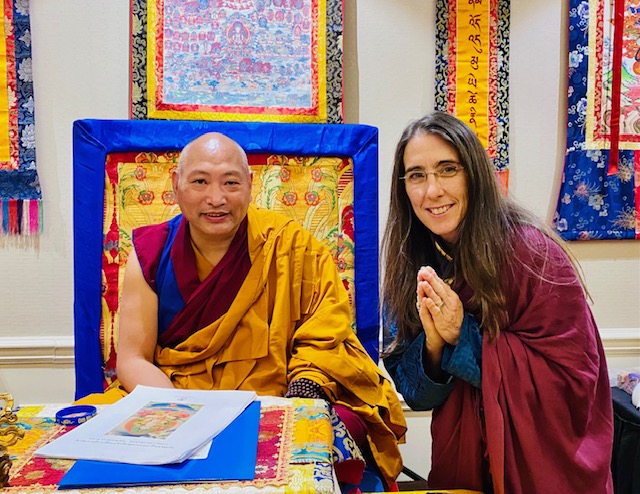
Raven Cypress Wood with Yangtön Lama Tashi in 2017. Photo credit: Khenpo Nyima Künchap Rinpoche

He then became the abbot of Yanggön Thongdrol Phuntsok Ling Monastery in Tsarka, Dolpo. There, he shared his knowledge with the male and female tantric practitioners, led ritual gatherings, and gave blessings and empowerments to the local community. He was also responsible for the training and support for those undergoing the traditional three year retreat in his village. Realizing the need for a gompa in the village, he began construction of the Yanggön Thondrol Phuntsok Ling Monastery in 1988. He then relocated the old temple which housed all of the sacred texts, Tardzong Phuntsok Ling Monastery, from the opposite side of the river nearer to the village so that it could be more accessible and closer to the newly constructed temple. After this, he built a khor khang (a prayer-wheel room), a kitchen, a residence for practitioners, and a store room. In this way, he reestablished a perfect environment for the practitioners of the three year retreat and practitioners in general. Due to the strong influence of Lama Tashi, many young Tsarka villagers have traveled to India or Nepal in order to join the schools there or to take vows and study as monks or nuns. Many times, Yangton Lama Tashi underwent the arduous journey out of Tsarka in order to travel throughout the world in order to share his teachings and wisdom with Western students.

Yangtön Lama Tashi leading The Six Dances of Dignified Movements of the View of the Male and Female Heroes at Ligmincha Institute. Photo credit: Raven Cypress Wood

Raven Cypress Wood ©All Rights Reserved. No content, in part or in whole, is allowed to be used without direct permission from the author.

Did you enjoy this content? This article is made possible by generous donors who want content like this to continue to be available.

Join the mandala of Nine Ways supporters by donating through one of the services below!

It’s easy through Paypal, Zelle, or Venmo using the email: RCW108@gmail.com

Don’t want to miss a post? Scroll to the bottom and click “Follow this blog.”

The Zhang Zhung Nyen Gyü, Nyam Gyü, & The Chak Tri: How are They Related?

The Nine Buddhas, the Twenty-four Masters, Tapihrista, and the three protectors of the Zhang Zhung Nyen Gyü

Although this website purposely does not share or discuss the dzogchen teachings or practices, this article explains the relationship of three separate texts within one of the most treasured cycle of dzogchen teachings: The Zhang Zhung Nyen Gyü, The Aural Transmission from Zhang Zhung. Of the three, sometimes counted as four, primary lineages of dzogchen in the Yungdrung Bön tradition, the Zhang Zhung Nyen Gyü stands out as being especially treasured. Although the other scriptures were hidden or kept secret during the persecution of the 8th century C.E in Tibet, the Zhang Zhung Nyen Gyü was given protected status by the persecuting king. Thus, the transmission of this high teaching from one master to the ear of one student down through generations was never broken. Although it has traditionally been kept very secret, due to changing circumstances in modern times the protectors of the scripture have given permission to allow the teaching to be shared more openly.

The Zhang Zhung Nyen Gyu: The full title of the text is The Zhang Zhung Nyen Gyu Ka Gyü Kor Zhi, The Four Cycles of the Enlightened Words of the Aural Transmission of Zhang Zhung. It is commonly referred to as either The Nyen Gyü or The Kor Zhi. This is the root text. The source of these teachings is the primordial enlightened one, Küntu Zangpo. The teachings were transmitted mind-to-mind from Küntu Zangpo through eight other enlightened ones to Sangwa Düpa. This Sangwa Düpa was born a prince of Tazik and is considered by Bönpos as the previous incarnation of Shakyamuni Buddha. He transmitted the teaching using both his awareness and spoken words to a human, a lu [Sanskrit: naga], and a god. These three disciples are the beginning of the lineage known as the twenty-four masters who all successively attained the rainbow body of light as a sign of the ultimate realization of dzogchen. From there, the transmission continued to the esteemed yogi Nangzher Lopo who was instrumental in protecting the Zhang Zhung Nyen Gyü from having to be hidden in order to not be destroyed during the time of persecution. With permission from Tapihritsa, he first wrote down the core teachings given to him by Dawa Gyaltsen and Tapihritsa in the 8th century C.E.. These included teachings such as The Four Goodnesses, The Six Lamps, The Twenty-One Nails, and so on. In the 10th century, Pöngyal Tsenpo, aka Pönchen Tsenpo, translated those teachings from Zhang Zhung into Tibetan and also wrote down descriptions of the Trul Khor movements.

Later in the 11th century, Yangtön Chenpo Sherap Gyaltsen, a member of the esteemed Yangtön clan of Dolpo, received the full transmissions for the upper and lower systems of teachings, thus uniting them. He wrote down this compilation of teachings as well as commentaries. He is considered to have had great kindness for disciples by writing the complete teachings of the Nyen Gyud and Nyam Gyü down for the first time as they are known and practiced today in order to make it easier for their study and practice. However, it is believed that by writing down the secret teachings, an obstacle was created and his lifespan was shortened because he died at the age of 63 rather than the prophesied age of 75. (For a fuller list of the lineage lamas of the Zhang Zhung Nyen Gyü, see previous article: https://ravencypresswood.com/2015/01/18/the-field-of-accumulation-the-aural-transmission-of-zhang-zhung/ )

The Zhang Zhung Nyen Gyü is a relatively large volume containing titles such as The Twelve Small Tantras and its corresponding commentary, The Twenty-one Nails and its corresponding commentary, The Six Lamps and its corresponding commentary, instructions on the practice of trul khor and tsa lung, the story of Tapihritsa and Nangzher Lopo including teachings of The Four Goodnesses, Quintessential Instructions for practicing with the mind, Self-purification of the Six Destinies, invocations of the Zhang Zhung Nyen Gyü guardians Nyipangsé and Menmo Namchi Gunggyal, and so on. Some volumes begin with chapters dedicated to short biographies of the lineage masters.

Yangtön Chenpo Sherap Gyaltsen

The Nyam Gyu: The more complete title is The Zhang Zhung Nyen Gyü Nyam Gyü, The Experiential Transmission of the Aural Lineage of Zhang Zhung. This is commonly known as The Nyam Gyü, The Experiential Transmission. This text is a collection of spiritual experiences and subsequent advice and pith instructions of the masters practicing the Zhang Zhung Nyen Gyü. There is a condensed collection, a medium-length collection, and an expanded collection of pith instructions. Perhaps best known is the condensed collection of pith instructions known as the Tor Bu. This was written down in the 11th Century by Orgom Kündul at the request of Yangtön Chenpo.

The Chak Tri: This text is commonly known as The Chak Tri, The Practice Manual. In the 13th century C.E., Druchen Gyalwa Yungdrung, esteemed abbot of Yeru Wensaka Monastery, received the single transmission of the Zhang Zhung Nyen Gyü. He went on to compile the practice manual for the Zhang Zhung Nyen Gyü in order to organize the teachings into a logical sequence of practice. In addition to creating a step-by-step guide for the Zhang Zhung Nyen Gyü teachings, he also included bits of his own advice for teachers guiding students in their spiritual development. The Chak Tri has twelve chapters which are sometimes grouped into five general categories.

  • Chapter One contains the hagiography of many of the lineage masters of the Zhang Zhung Nyen Gyü.
  • Chapter Two contains the chanted prayers and verses for the ngondro or preliminary practices. 
  • Chapter Three contains the actual instruction and visualization practices for the nine preliminary practices. 
  • Chapter Four contains instructions for the primary meditation practice of dzogchen. These instructions include practices for recognizing and stabilizing the mind.
  • Chapter Five contains instructions concerning the view of dzogchen.
  • Chapter Six contains instructions regarding dzogchen meditation.
  • Chapter Seven contains instructions regarding integration of the view with the behavior and activities of a dzogchen practitioner.
  • Chapter Eight contains instructions and clarifications regarding the result of Dzogchen practice.
  • Chapter Nine contains instructions for practices to remove obstacles and strengthen realization.  
  • Chapter Ten contains instructions on the yogic exercises of trul khor to remove obstacles and enhance meditative experience.
  • Chapter Eleven contains instructions regarding the forty-nine day dark retreat.
  • Chapter Twelve contains instructions regarding the yogic exercises of tsa lung to remove obstacles and enhance meditative experience. 
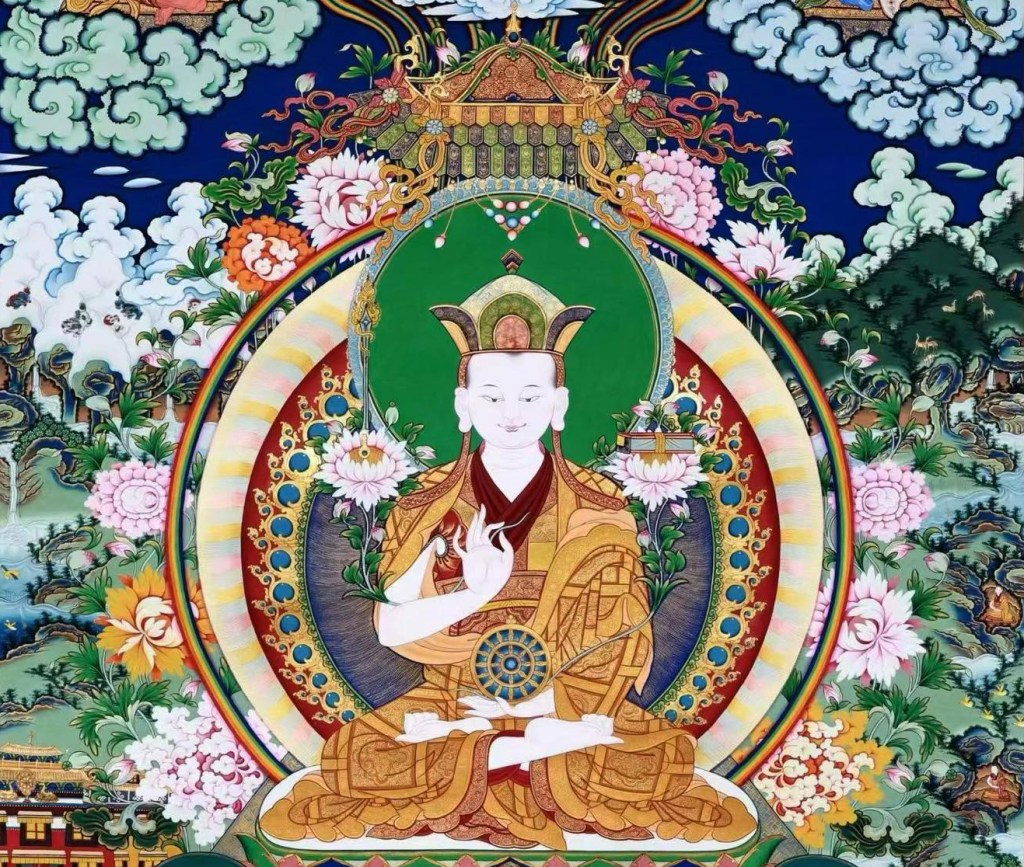
Depiction of Dru Gyalwa Yungdrung

Did you enjoy this content? This article is made possible by generous donors who want content like this to continue to be available.

Join the mandala of Nine Ways supporters by following this link: https://ravencypresswood.com/donate/

It’s easy through Paypal, Zelle, or Venmo. RCW108@gmail.com

Don’t want to miss a post? Scroll to the bottom and click “Follow this blog.”

Special Day for Healing Waters Practice

His Eminence Menri Yongdzin Pönlop Yangtön Thrinley Nyima Rinpoche gives blessed water for cleansing obscurations and bestowing blessings to the school children of the Tapriza School in Dolpo, Nepal.

The 5th lunar day of the 7th month each year is a powerful day for receiving blessed water or for practicing with water for cleansing or healing. In 2025, this lunar date corresponds with August 28th. Healing from blessed water or other types of medicine taken on this day will continue to have amplified power for seven days.

A belief shared among many religious traditions is that particular bodies of water can bestow purification, healing, eternal youth, or special knowledge. Within the Yungdrung Bön religious tradition, there are many rituals to imbue water with the blessings and power of the enlightened ones in order to wash away negativities and provide healing and protection. This kind of water and its associated ritual cleansing is known as trü [Tibetan: khrus]. There are daily practices of ritual washing that are performed at dawn in order to cleanse the body, speech, and mind. In particular, this is one of the practices adopted by genyen, or lay practitioners with vows. In Shardza Tashi Gyaltsen’s Thirteen Daily Yogas, he gives instructions for external, internal, and secret cleansing using water. According to one’s current practice, the source of purification is from Buddha Sherap Jamma, Shenlha Ökar, or Küntu Zangpo.

“OM, From the nature of enlightened body, speech, and mind from the mandala of the completely pure Bön essence, a stream of three tiklés descend. This is water of the great unborn enlightened body. May the stains of the physical body become purified! This is water of the great unceasing enlightened speech. May the stains of speech become purified! This is water of the great undeluded enlightened mind. May the stains of mind become purified! Having purified the obscurations of body, speech, and mind of myself and the limitless sentient beings, may we be endowed with the completely pure three trainings!”

— From Stainless Majestic Splendor

One of the most widespread healing practices using water is Nampar Jompa’s Healing Waters Mantra practice. The enlightened deity Nampar Jompa has a wrathful appearance with a blue-colored body with serpents as ornaments on his arms, legs, waist, and hair.

Nampar Jompa

“I, myself, as the deity Nampar Jompa hold in my right hand a vessel filled with elixir.  In my left hand, I hold a mirror which removes all illness and injury.  Having washed with this healing water, I clearly imagine that any remaining contamination is washed away because of this medicine.”  

— From The Practice of the Washing Rite within Nampar Jompa’s Healing Waters Mantra

At the conclusion of the practice after the practitioner has transformed into the deity Nampar Jompa, empowered the water with mantra, and then washed with the water, the practice text concludes with a notation emphasizing the power of the practice.

“Thus, through this supplication prayer of the washing rite, having purified all traces of previous illness and negative external influences, just like the overflow of water from a crystal vessel, imagine that all negativity and illness leave from the tips of the fingers and toes, the nostrils and the secret place.

There is no place what-so-ever for the creation of even the smallest thing to arise.  Not even a single atom remains that needs to be purified!”

Sigyal Drakngak Walmo, the enlightened deity who protects from contagious disease through empowered water

During the global pandemic of Covid-19, many Yungdrung Bön lamas advised their disciples to engage with the mantra and practice of Sigyal Drakngak who is one of the most wrathful manifestations of Sipé Gyalmo who specifically protects from infectious disease through the use of empowered water. Translation of this text, The Heartdrop of Si Gyal that is All-pervasive and Clears Away Afflictive Emotions and Illness, has been published in both English and French. Because this is a restricted text, it is available only for those who have received transmission for the practice. (If you have received transmission and would like to order a copy of the translation, email Raven Cypress Wood at the email address listed below with the name of the teacher and the year that you received transmission and you will be given the ordering information.)

“OM! This water of nectar has the nature of wisdom and medicine. May all negative karma, afflictive emotions and discursive thoughts of migrating beings be washed away! May all illness, external negative forces, karmic potentialities, and contaminations be purified!”

— From The Heartdrop of Si Gyal that is All-pervasive and Clears Away Afflictive Emotions and Illness

In addition to the practices specifically using water as a method of purification, healing, or empowerment, there are practices and mantra that can be used to transform water from an ordinary substance to one that is imbued with extraordinary qualities. Again in Shardza Rinpoche’s Thirteen Daily Yogas, he suggests using the following mantra for all daily liquids in order to transform them into nectar: SO OM MA MA MU YE A OM HUNG TING NAM DÜTSI SO TA. One should recite the mantra seven or twenty-one times, blow onto the liquid, and then drink while visualizing that it has become the nectar of wisdom. 

Also, the great mantra, OM MA TRI MU YÉ SA LÉ DU, has extraordinary power and can be recited one hundred times or more, without the interruption of ordinary speech, then blown onto clean water used for drinking or cleansing. According to the chapter within the MA TRI tantra entitled The Thirty-two Benefits of the Sufficient Recitation of the Precious Lamp:

“Anyone affected by contaminated energy, latent karmic potentialities, misfortune, or defilements, having recited this MA TRI mantra into pure, clean water, if they ritually wash for seven mornings, even karmic defilements will be purified.”

— From The Thirty-two Benefits of the Recitation Practice of the Precious Lamp

The Heartdrop of Jamma is an aural transmission from Khandro Sherap Lo Pélma who is a manifestation of Sherap Jamma and a deity who is specifically practiced in order to develop the intellect. In The Heartdrop of Jamma, the practitioner uses the power of the mantric syllables to transform each aspect of their body into one of Jamma’s countless manifestations. This text is commonly recited by Yungdrung Bön families after the final meal of the day. This texts lists many benefits of its recitation including the use of water.

“If you recite the mantra to good quality water mixed with powdered, medicinal incense containing blessed medicine and the six excellent substances, and then cleanse with that water, all illness and sickness caused by negative forces will be pacified and all defilements and contaminations will be purified.” 

— From The Heartdrop of Jamma

The English, Spanish, and French translations of The Heartdrop of Jamma have been published and are available to anyone through this link: https://www.lulu.com/search?page=1&q=raven+cypress+wood&pageSize=10&adult_audience_rating=00

Did you enjoy this content? This article is made possible by generous donors who want content like this to continue to be available.

Join the mandala of Nine Ways supporters by following this link: https://ravencypresswood.com/donate/

It’s easy through Paypal, Zelle, or Venmo. RCW108@gmail.com

Don’t want to miss a post? Scroll to the bottom and click “Follow this blog.”

His Eminence Yongdzin Rinpoche: Cremation of the Holy Physical Remains and Fire Offering Rites

The Sacred vessel containing the Holy Physical Remains of His Eminence Yongdzin Tendzin Namdak Rinpoché

Since the parinirvana of the esteemed and greatly beloved master, His Eminence Yongdzin Tenzin Namdak Rinpoché, the worldwide Yungdrung Bön community has been observing a 49-day period of veneration, prayers, and offerings to receive blessings and accumulate great spiritual merit. On Friday August 2, 2025 this 49-day period concluded. From August 4th to August 9th, an extensive fire offering rite according to the cycle of the Künrig Le Zhi Gyün Nga‘i Jin Sek will be performed. During this time on August 6th, the actual cremation of the holy physical remains will take place. The Künrig Le Zhi Gyün Nga‘i Jin Sek, is one of the primary texts in the Yungdrung Bön religious tradition used for cremation rites and the continuous fire offerings that take place. For this, a great variety and quantity of offerings are being prepared. Among these offerings are many large and small boards written with mantras and prayers that will be read by the officiating lama, consecrated with blessed substances, and then placed into the fire.

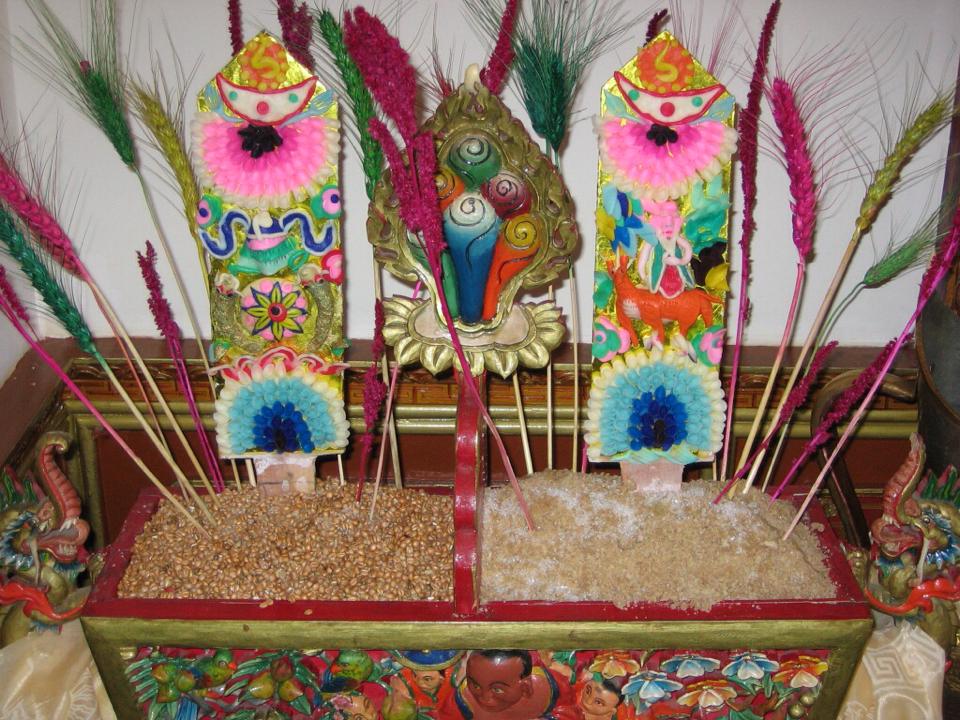
Offerings for the fire offering rites
A great accumulation of fire offerings

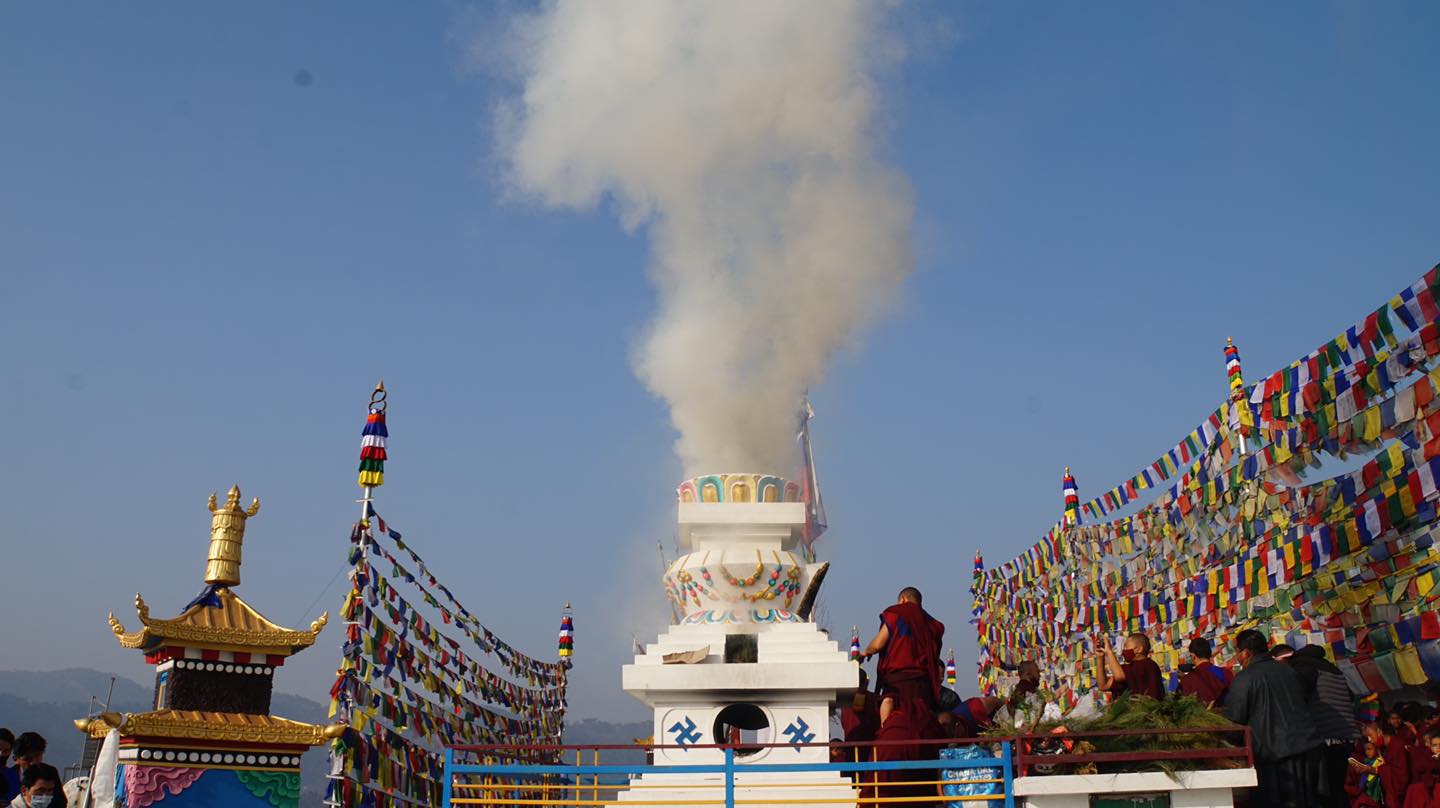
During these rites, the holy physical remains will be cremated in a specially built chorten [Sanskrit: stupa]. After the conclusion of the ritual, once the ash from the offering rites has cooled, it will be carefully collected along with any relics and saved to be placed into a reliquary chorten that will be built to hold the relics along with a variety of other sacred objects and substances. Additionally, many sa tsa will be made that will be filled with some of the cremation ash and distributed to faithful disciples and supporters.

Construction of the cremation chorten at Triten Norbutsé Monastery

Did you enjoy this content? This article is made possible by generous donors who want content like this to continue to be available.

Join the mandala of Nine Ways supporters by following this link: https://ravencypresswood.com/donate/

It’s easy through Paypal, Zelle, or Venmo.

Don’t want to miss a post? Scroll to the bottom and click “Follow this blog.”

96th Anniversary of the Birth of His Holiness the 33rd Menri Trizin Lungtok Tenpé Nyima Rinpoché

Close-up of traditional scroll painting depicting His Holiness the 33rd Menri Trizin Lungtok Tenpé Nyima Rinpoché

His Holiness the 33rd Menri Trizin Lungtok Tenpé Nyima Rinpoché was born in Tibet on the 15th day of the 5th lunar month in the Western year 1929 in the village of Kyongtsang in the far eastern province of Amdo. In 2025, this date corresponds with July 10th on the Western calendar.

When he was eight years old, his father took him to the nearby monastery of Phuntsok Dargyé Ling where he learned to read, write and chant. At the age of fourteen, he received instructions on the preliminary practices of dzogchen and completed the nine-hundred thousand accumulations three times. In 1945 at the age of seventeen, he received novice monk vows from Kyangtsang Lama Sherap Tenpé and was given the name Sherap Namdak. He completed his Geshé Degree at the age of twenty-five under the guidance of Lopön Tenzin Lodro Gyatso Rinpoché. The following year, he traveled South to the Bön province of Gyalrong, where he printed copies of the Bön Kanjur from traditional woodblocks. After gathering a vast amount of material and using mules to carry more than 100 volumes of the sacred texts, he made an arduous six-month journey back to his monastery. In 1956 at the age of twenty-eight, he traveled to the famous Yungdrung Ling Monastery and received monk vows from the Pönlop and was given the name Sangyé Tenzin. In 1960 at the age of thirty-two, as he passed through Mustang and Dolpo on his way to India, he borrowed many rare texts in order to reprint them in India and ensure their preservation.

In 1968, many esteemed Yungdrung Bön lamas gathered together in order to coordinate the process of selecting a successor of the late 32nd Menri Trizin. After several days of extensive prayers and rituals, Sangyé Tenzin’s name emerged as the one to hold the lineage of Nyammé Sherap Gyaltsen. In 1969 at the age of forty, after extensive preparatory initiations, he assumed his duties as the 33rd Abbot of Menri Monastery and began leading the effort to re-establish Menri Monastery in Dolanji, India.

His Holiness the 33rd Menri Trizin Rinpoche. Photo credit: Unknown

In 1970, he began construction of the main temple of Pal Shenten Menri Ling in Dolanji and lead efforts to restore Menri Monastery in Tibet. In 1972, he opened a dispensary at Pal Shenten Menri Ling that distributed medicine freely to the monks, the Tibetan settlers in the nearby village, as well as to the local Indians. In 1975, he began a school for the Bönpo children, and in 1978 he founded the dialectic school to continue the tradition of in-depth education of the traditional and philosophical sciences that results in the esteemed degree of geshe.

After many years of indescribable and tireless efforts on behalf of the Yungdrung Bön tradition as well as the worldwide Bön community and all sentient beings, he displayed the truth of impermanence and passed into nirvana on the 27th day of the 7th lunar month in the Western year 2017. The auspicious occasion of the celebration of his birth is an opportunity to generate great merit through spiritual practice and virtuous activities of body, speech and mind.

“EMAHO!

To the lama who is the embodiment of all of the victors and spiritual masters, who acts principally through the accomplishment of Bön for sentient beings who are as limitless as the sky,

I offer prostrations with my body, prostrating with my arms, legs and head!

I prostrate with my speech, chanting with a joyous and inspired melody!

I prostrate with my mind, paying homage with single-pointed motivation and devotion!

May the negative actions and defilements of my three doors become purified!

AH OM HUNG CHI PAR RAYNA KO PUNG AKSHO TRI TSE GU DÜN HRUN”

— From Offerings for the Lama

Raven Cypress Wood ©All Rights Reserved. No content, in part or in whole, is allowed to be used without direct permission from the author.

Did you enjoy this content? This article is made possible by generous donors who want content like this to continue to be available. Join the mandala of Nine Ways supporters by following this link: https://ravencypresswood.com/donate/

Don’t want to miss a post? Scroll to the bottom and click “Follow this blog.”