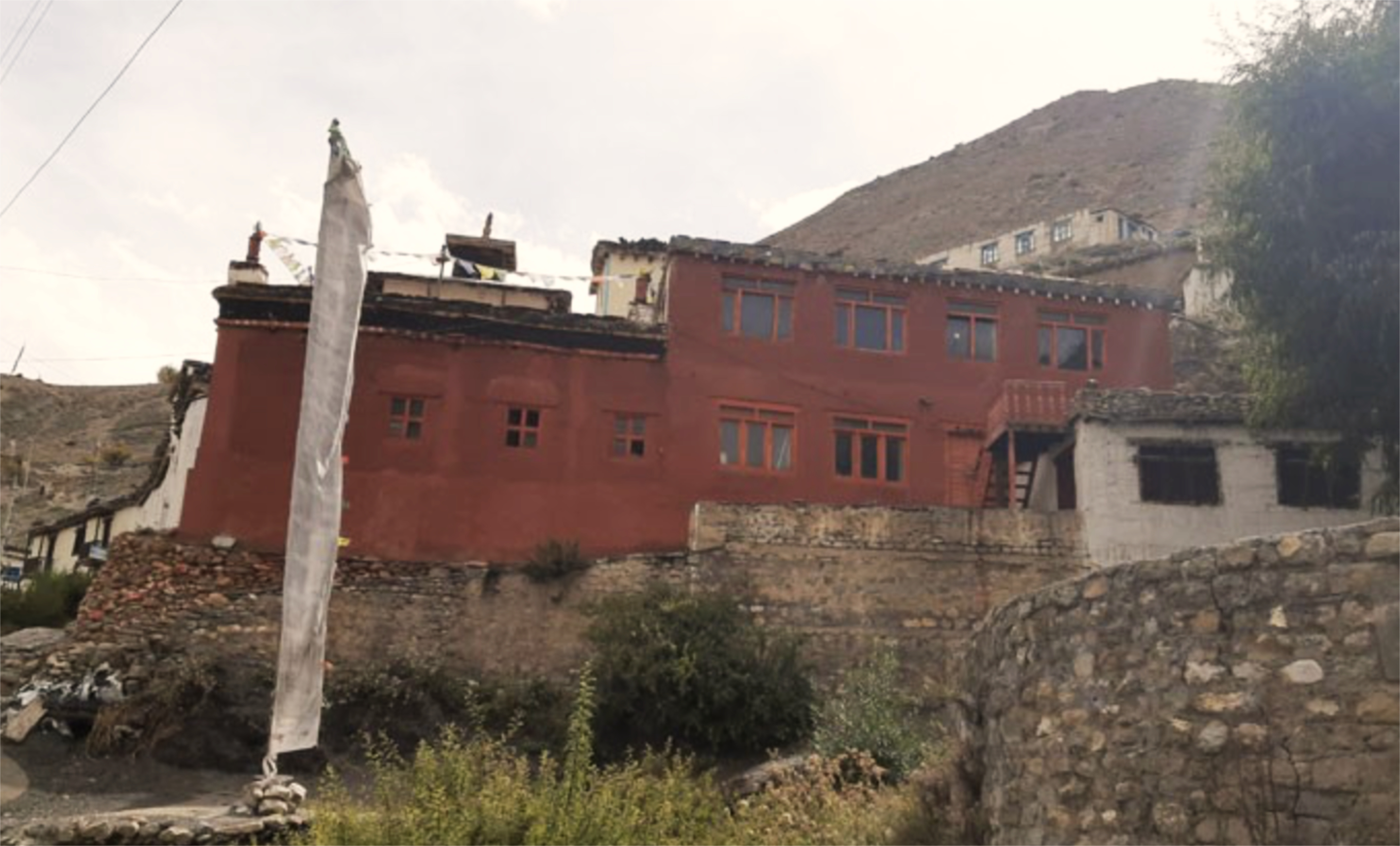
The 8th day of the 10th lunar month is the birth anniversary of the intrepid scholar and spiritual master Karu Drupwang Tenzin Rinchen Gyaltsen Dechen Nyingpo, better known as Karu Drupwang Rinpoche. In 2023, this lunar date corresponds with November 20th. Born at sunrise in 1801 C.E. to a wealthy family in Kham, Tibet, his birth was precipitated by miraculous signs and his autobiography recounts that he was urged to take rebirth by a group of deities so that he could benefit beings through his manifestation. Throughout his life, he traveled extensively on lengthy pilgrimages and was a strong advocate for maintaining the authentic history of Yungdrung Bön sacred sites while maintaining a nonsectarian view and having meaningful interactions with a wide range of people from kings to outcastes. Throughout Tibet and Nepal, he became well known for both his intellect and his magical power.
An emanation of the 8th century B.C.E. yogi Lishu Taring, the first of his many visionary encounters occurred at the young age of two years old when he was visited by this sage and given extensive, detailed spiritual instructions. At the age of six, he took monastic ordination and began his studies at the nearby Nor Ling Monastery. He was an excellent student and was highly praised by his teachers for his achievements. However, upon the death of his father when he was thirteen, the family’s wealth, status, and influence quickly began to decline. As such, his position within the monastery also declined and the previous jealousy of his peers turned to outright hostility. After a few years of suffering from insults and ill treatment, he left the monastery in order to undergo a lengthy, solitary retreat. This retreat was interrupted however due to unforeseen circumstances that required him to fulfill his monastic responsibilities at Nor Ling. Again experiencing abuse from his peers, he made the decision to begin a lengthy pilgrimage. This began his lifetime of travel, visionary encounters, and his lasting impact on the the spiritual life and culture of the people of Dolpo and Lubrak in Nepal.
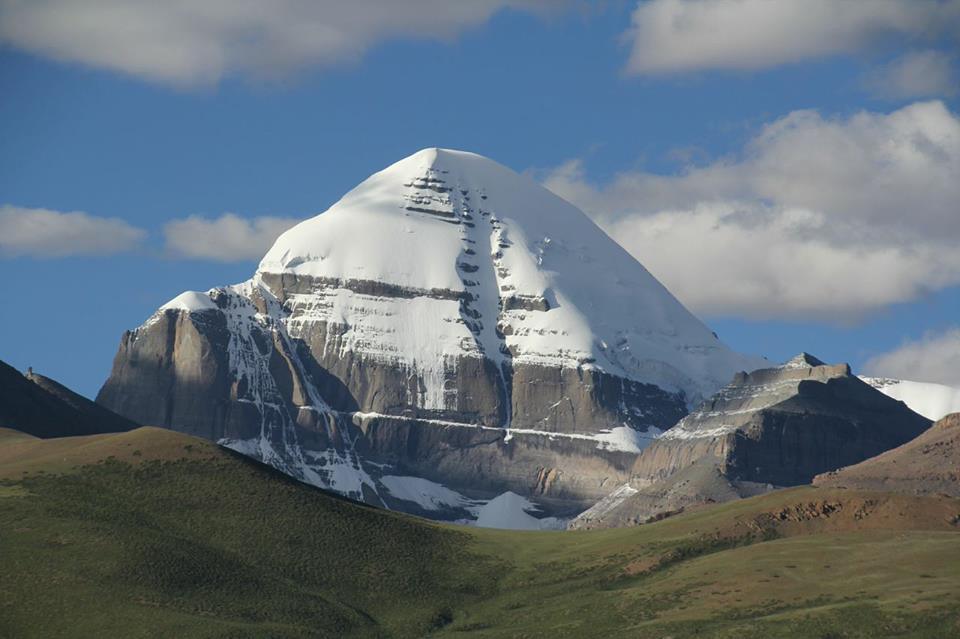
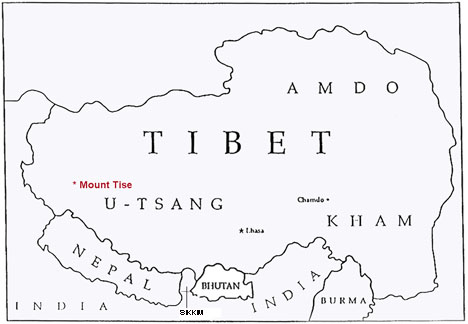
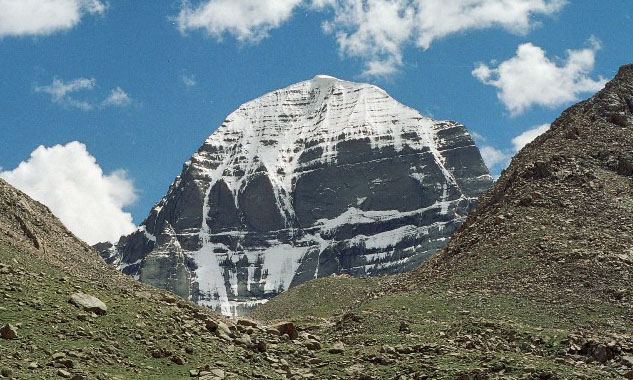
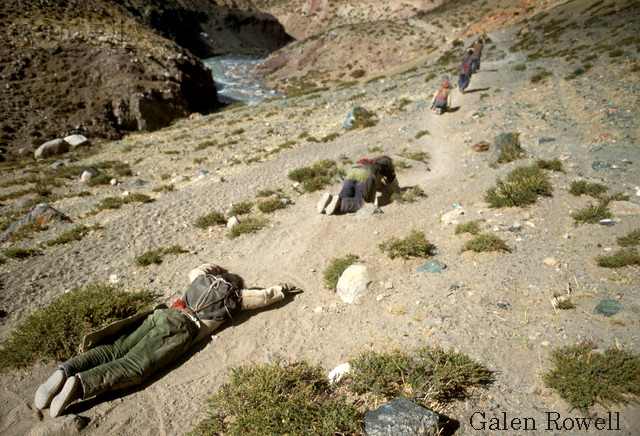
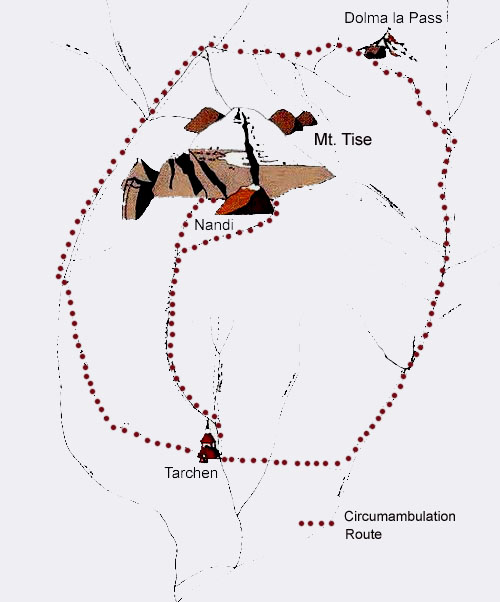
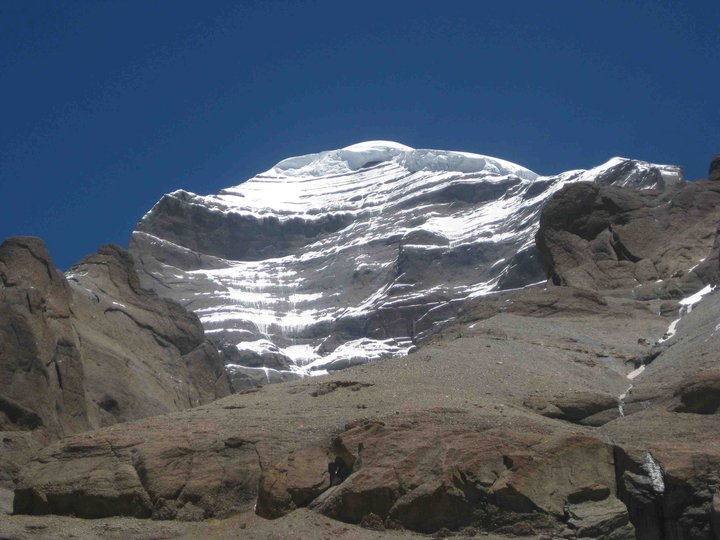
His first pilgrimage brought him to Kongpo Bönri where he had many extraordinary visionary encounters. He continued on to Tashi Menri and Kharna in Central Tibet, as well as many Zhang Zhung sacred sites as he made his way to Western Tibet. During these journeys, he would often discover that a Bönpo sacred site had been subsumed into Buddhist lore and history with no remaining Bönpo relevance. At this, he would fervently go about doing his best to correct the historical and religious record. One of his most well-known compositions is his detailed pilgrimage guide to Mount Tisé [a.k.a Mount Kailash], A Catalogue of Snowy Tisé which was written in 1844 C.E. This is the most detailed pilgrimage guide to this ancient sacred site and details its ancient connection with Yungdrung Bön.
He spent a great deal of time in the village of Lubrak and sponsored the construction of a village temple of Yungdrung Phüntsok Ling in 1846 C.E. During this time, he met an impoverished woman and her son. Being a widow, the mother was having great difficulty providing for her child. Moved with compassion and feeling a connection with the young boy, he took him under his care. This boy went on to become one of his main students and the renowned master Drogön Tenzin Nyima.
Karu Drupwang Rinpoche’s other well-known composition is the Mar Ti Duk Nga Rang Drol, Essential Instructions on the Self Liberation of the Five Poisons. He received this dzogchen text as a mind treasure when he was twenty-five years old. During one of his visits to Lubrak, he wrote this text down in order to support the spiritual needs of the community. These teachings continue to be a part of the annual ritual in Lubrak and Karu Drupwang’s original manuscript is still held in the village as one of its great treasures.
“As for mirror-like wisdom, externally, it is the wisdom of not grasping at the self-nature of appearances. Internally, it is the wisdom of not grasping at the self-nature of one’s own identity. Secretly, it is the wisdom of not grasping at one’s own natural mind. Most secretly, it is the wisdom of not grasping at one’s own essential nature.
Every appearance of ignorance and delusion that arises, is in actuality emptiness. This wisdom of knowing emptiness is the wisdom of absolute reality.”
From the Mar Ti Duk Nga Rang Drol, Essential Instructions on the Self Liberation of the Five Poisons
After spending long periods of time throughout Dolpo and Mustang, he made his way to Kathmandu, Nepal. There, he was often at the stupa of Swayambunath begging for alms. At this sacred site, Karu Rinpoche continued to have vivid, visionary encounters. He traveled throughout the Kathmandu valley encountering a variety of people and cultures. However, in 1852 C.E. he returned to Tibet and became a root lama to the esteemed 23rd Menri Trizin Künkhen Nyima Tenzin. During this time, he also became the Khenpo of his former monastery, Nor Ling.
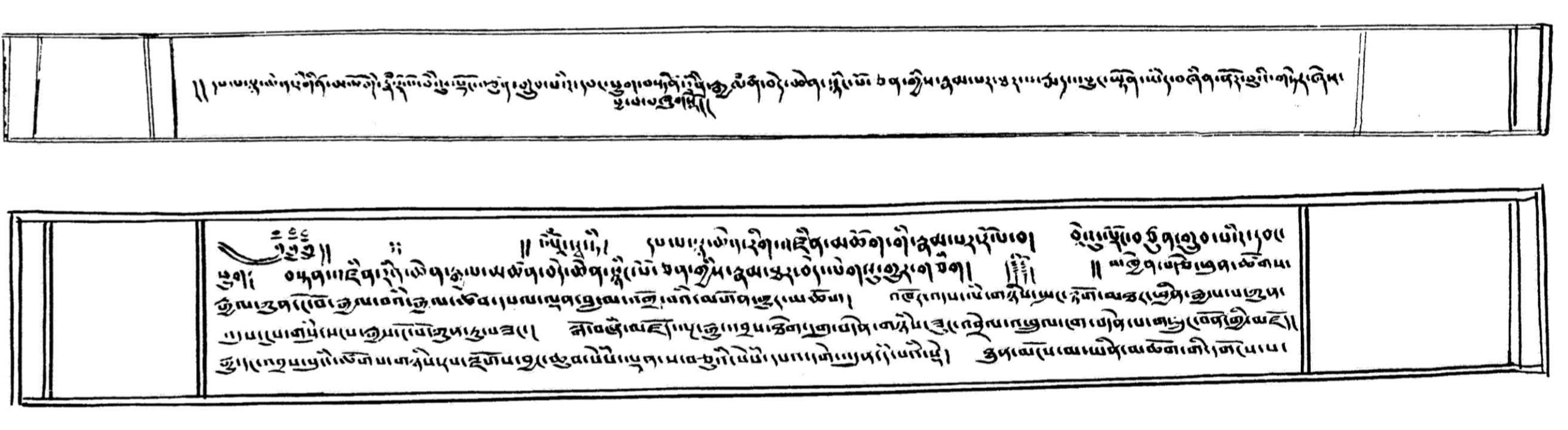
Upon the insistent urging of a disciple, he wrote an autobiography that was completed in 1845 C.E. which can be found in the temple of Samling in Dolpo, Nepal. Although the exact date of his passing beyond this life is not known, it is generally understood to have occurred some time in 1861 C.E.
Chapters within the Mar Ti Duk Nga Rang Drol, Essential Instructions on the Self Liberation of the Five Poisons:
- Teachings on the Opportunities and Good Fortunes that are Difficult to Obtain from the Systematic Guidance for the Preliminary Practices of the Essential Guidance on the Self Liberation of the Five Poisons
- Systematic Guidance Regarding the Difference Between Virtue and Wrongdoing, and Impermanence
- Systematic Guidance on Going for Refuge
- Systematic Guidance on Generating a Mind of Enlightenment
- Systematic Guidance on Purifying Wrongdoing through Admission of Wrongdoing and Purification
- Systematic Guidance on Completing the Accumulations through the Mandala Offering
- Systematic Guidance on Receiving Blessings and Self-empowerment through Supplication
- Teaching and Advice for Calm Abiding by Focusing on AH
- Teaching and Advice for Searching the Mind and Awareness
- Teaching and Advice for Introducing and Concentrating on the Mind
- Teaching and Advice on the Path of the Six Aggregates
- Teaching and Advice for Enhancing Gek Sel Practice
- Teaching and Advice for Dark Retreat and Clear Light
- Teaching and Advice for the Nourishment through Chulen [Extracting the Essence]
- Teaching and Advice on the Six Important Points of Practice
- Teaching and Advice for Abiding in the State of the Mind’s Essence
- Teaching and Advice for Fully Realizing the Bön Essence
- Teaching and Advice regarding the Result which is All-penetrating Wisdom
- Teaching and Advice on the Power to Work with Deathless Birth
- Teaching and Advice for Attaining Buddhahood with No Physical Aggregates Left Behind
- Practice of the Goddess [Jamma]
- The Clear Mirror of A Hundred Horoscopes of the Essential Instruction on the Self Liberation of the Five Poisons
- A Little Song About the Connection Between the Relative and the Absolute
- Abridged Preliminary Practices
- Supplication of the Root Lama Drupwang Tenzin Rinchen [Composition of a disciple]
- Expiation through Offering to the Lama
- A Letter to the Ghosts and Demons that Suppresses Phenomenal Existence with its Majestic Brilliance
Raven Cypress Wood ©All Rights Reserved. No content, in part or in whole, is allowed to be used without direct permission from the author.Don’t want to miss a post? Scroll to the bottom and click “Follow this blog.”
Want to join the mandala of Nine Ways supporters? Follow this link https://ravencypresswood.com/donate/ It’s easy through Paypal and Zelle.
 Nine Ways