Blog Archives

Sacred Yungdrung Bon Temple in the Himalayas

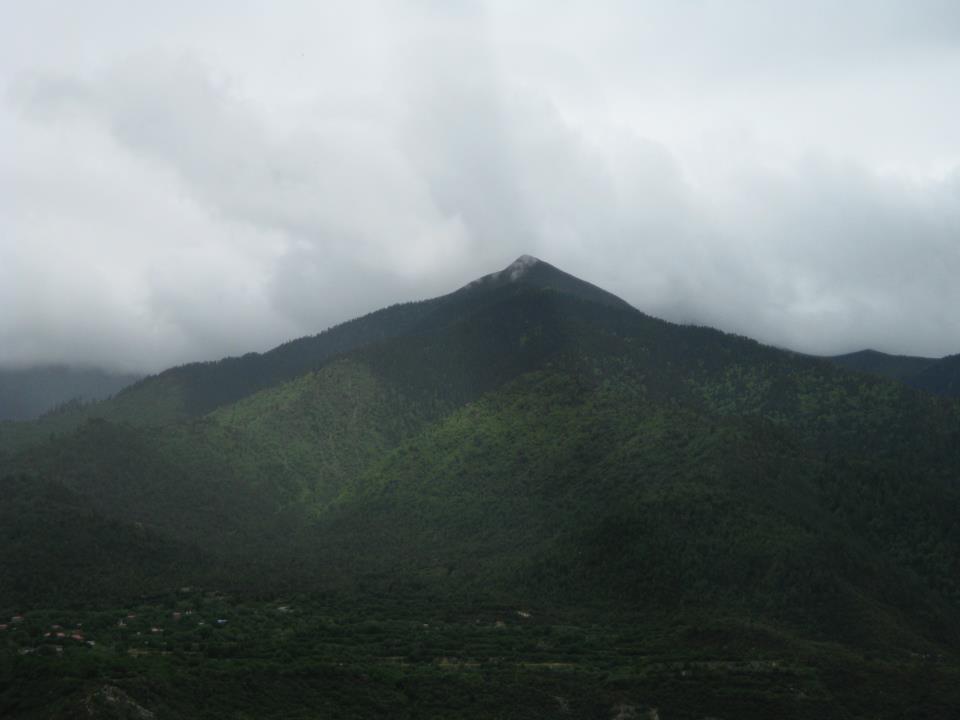
Shrine inside the Yungdrung Bon temple of Yanggon Thongdrol Puntsok Ling in the village of Tsarka in Dolpo, Nepal


Iconography: Defining Space

Illustration from the book “Tibetan Thangkha Painting, Methods & Materials” by David & Janice Jackson

Before the artist begins sketching out the images that will appear on the thangkha, they must first determine the division of space on the canvas.  First, by using chalk lines and a compass, the true center of the canvas must be found.  Second, both the horizontal and the vertical axis must be established.  In this way, the artist can allocate space to the images according to hierarchy and the number of images that need to be represented.

outline guide for center and 4 directions for thangkha

Diagram 1: Common positions when depicting a central image and 4 retinue

Diagram 2: Common positions when depicting a central image and 8 retinue


These diagrams show the most common designations of space although there are variations.  However, even with variations, the position of the retinue in relation to one another remains the same.  The retinue are positioned according to their association with the directions.  In the text, the detail of the deities position begins with the center and is then listed the Bön way, or counter-clockwise, beginning with the East.  Referencing the diagrams above: 1=Center, 2=East, 3=North, 4=West, 5=South, 6=Southeast, 7=Northeast, 8=Northwest, and 9=Southwest.  Most often, but not always, the deities are the color associated with the direction.  East=yellow, North=green, West=red and South=blue.

The Deities of the Five Buddha Families

Here, the deities of the Five Buddha Families are positioned according to diagram 1 above.  In the center is the Enlightened One, Künang Kyapa and consort.  In the east is the Enlightened One, Salwa Rangjung and consort.  In the north is the Enlightened One, Gélha Garchuk and consort.  In the west is the Enlightened One, Jedrak Ngomé and consort.  And in the south is the Enlightened One, Gawa Döndrup and consort.

Direct Descendants of the Enlightened Lord Tönpa Shenrap Miwoché

Over 18, 000 years ago, in the ancient realm of Olmo Lungrik, the founder of the Yungdrung Bön spiritual tradition was born.  The enlightened Lord Tönpa Shenrap Miwoche was born into the human realm as a prince.  He later adopted the life as a monastic in order to display the path of renunciation to his followers.  However, prior to this, he was married and had sons and daughters.  The direct descendants of this Shen lineage have continued until this very day.  Currently, there are two sons who are direct descendants of Lord Tönpa Shenrap.

Heir to the Shen Lineage, Tsukpu Namdrol Rinpoche, during a visit to the Yungdrung Bon monastery of Gangru Dargye located in Khyungpo, Tibet

Lamas of the Shen lineage

The two sons of the Shen lineage who are direct descendants of the Lord Tonpa Shenrap.

In November of 2014, His Holiness, the supreme 33rd Menri Trizen Lungtok Tenpé Nyima offered prayers to both descendants.

Shen Tsukpu Namdrol Rinpoche

Shen Tsukpu Namdrol Gyaltsen Rinpoche

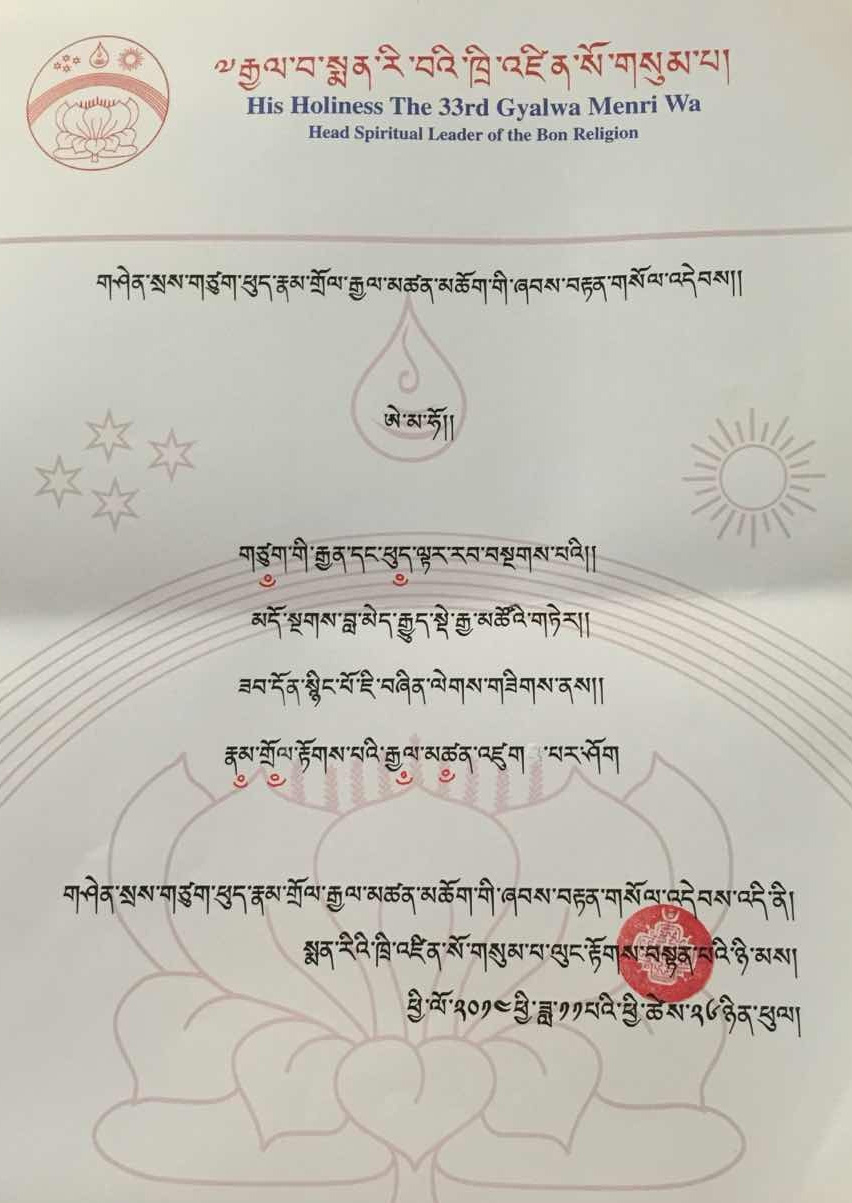
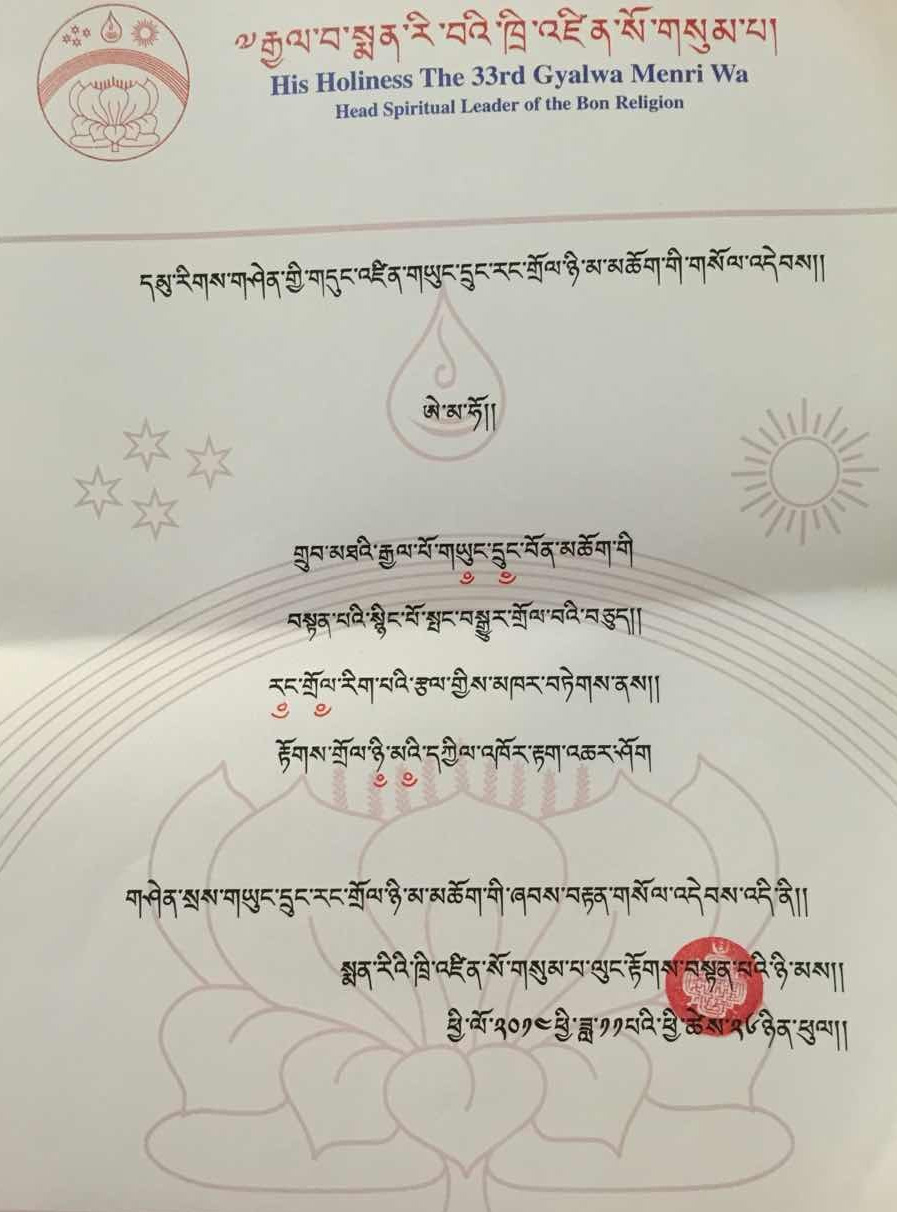
prayer to Shen Tsukpu namdrol Gyaltsen written by 33 Menri trizen 2

Prayer of Stability for the Shen Heir, the Supreme Tsukpu Namdrol Gyaltsen

EMAHO!

Highest praise for the best of crown ornaments,

   Storehouse of the ocean of sutra, tantra and unsurpassed division of teachings,

From the proper understanding of the profound meaning of the innermost essence,

May the victory banner of liberation and realization be established!

Murik Shen Yungdrung Nyima

Murik Shen Yungdrung Rangdrol Nyima Rinpoche

Shen prayer to Yungdrung Nyima

Prayer for the Shen Heir, the Supreme Murik Shen Yungdrung Rangdrol Nyima

EMAHO!

Essence of the king of doctrines, the supreme Yungdrung Bön,

Distilled essence of the teachings of renunciation, transformation and liberation,

Having raised a stronghold through the dynamic energy of self-liberated awareness,

May the sun disc of realization and liberation eternally appear!

Composed by 33rd Menri Trizen Luntok Tenpé Namdak Rinpoche on the Western date of 11/26/2014

Translated by Raven Cypress Wood

The original article first appeared on the Tibetan language website Himalayan Bön and can be viewed here: http://www.himalayabon.com/article/poem/2015-01-02/518.html

The Sixth Way: The Way of the Fully Ordained

Yungdrung Bon nuns in Tibet. Photo credit: Mary Ellen McCourt

Within the Nine Ways of Bön, the Sixth Way is the Way of the Fully Ordained.  Or, literally translated, the Way of the Straight and Righteous.  This involves accepting the renunciation vows of a monk or nun and living accordingly.  A novice receives 25 vows that form the basis of taking the further vows of the fully ordained.  For monks, there are 250 vows for full ordination.  For nuns, there are 360 vows.  According to the words of the enlightened Lord Tönpa Shenrap:

“In front of the abbot, the teacher and the witness, accept the vows with joy, faith and devotion.  Abandon the karmic tendencies of the three poisons.”

During Lord Tönpa Shenrap’s time in the human realm, he demonstrated the path of monastic discipline by becoming a monk.  At that time, he was known as Tritsuk Gyalwa.

Lord Tonpa Shenrap demonstrating the path of monastic discipline. In this form, he is known as Tritsuk Gyalwa.

“Don’t hate enemies or turn and go the other way.  Don’t be attached to friends and relatives.  Don’t cherish wordliness.  Body and mind should be single-pointed and at ease.  In your outer conduct, don’t act in an agitated manner.  In your inner ethics, don’t wander in to laziness.”

Raven Cypress Wood© All Rights Reserved

(This blog is offered for free to the worldwide students of Yungdrung Bön.  It is made possible by readers like you.  If you would like to join in making a gift of support for this blog or the translation work of Raven Cypress Wood, please go to https://www.paypal.com/home, click ‘Send’ and use Raven’s account rcw108@gmail.com.  Any amount is of great support!)

The Field of Accumulation: Abbots of Menri Monastery

Tsok zhing according to Menri

The Yungdrung Bon Merit Field of the Menri Tradition

In the Yungdrung Bön tradition, the place where the deities and objects of veneration are gathered is called the “Tsok Zhing”, the “Field of Accumulation”.  It is also sometimes translated as the “Field of Merit” or the “Merit Field” because what is being accumulated by paying homage and making offerings to this place is merit, or virtue.  The Merit Field consists of the images of the enlightened deities and protectors which represent Enlightened Body, chortens which represent Enlightened Mind, and scriptures and the sound of mantra which represent Enlightened Speech.  The lower section of the Merit Field also contains unenlightened but powerful and worldly protectors that are oath bound to protect the Yungdrung Bön.  There are many different depictions of the Merit Field according to different lineages.  However, the most well-known image is the Merit Field according to the tradition of Menri Monastery.   The Merit Field is depicted in a very specific way and this is the proper guide for a practitioner’s visualization. 

Merit Field Outline Guide 1-34

Because this Merit Field is based upon the Menri tradition, the central figures are primarily associated with the Menri Monastery.

1. The glorious teacher who has blessings and who has the nature of all of the collective Victorious Ones, the all-good essence of the kind root lama, Shenlha Ökar.  He has the 25 mudra of the Perfected Enjoyment Body.  He wears the  13 peaceful ornaments and has the 9 ways of purity.  He has the 32 major marks and the 80 minor marks.  He has the 40 items of nobility and he radiates forth a million rays of light.

2-34 are the abbots of Menri Monastery.  Beside each of the names is the year in which they became abbot of Menri Monastery.

2. The one who united the three transmissions, the Second Buddha, Nyammé Sherap Gyaltsen.  He has the appearance of a fully ordained monk.  He held the knowledge of the doors of Bön without any exceptions.  He was the abbot of the prestigious Yeru Wensaka Monastery in Tsang, Tibet.  It was destroyed by a flood and mudslide in 1386.  In 1405, he established Tashi Menri Monastery according to the Bön Dru lineage with artifacts that he had recovered from the ruins of Yeru Wensaka.  At its height, Tashi Menri Monastery could house over 300 monks and had four colleges.  It was completely destroyed during the Chinese invasion in 1966.

3. The regent of the Guide who was the Second Buddha, Rinchen GyaltsenHe became abbot in 1415.

4. The great abbot, Namkha Yeshé, 1446

5. Künzang Gyalten, 1464

6. Tenzin Rinchen Gyaltsen, 1485

7. Tsultrim Gyaltsen, 1511

8. Sonam Yeshé, 1532

9. Sonam Yundrung, 1575

10. Shétsu Drungmu, 1610

11. Shérab Özer, 1647

12. Yungdrung Gyaltsen, 1662

13. Shérab Lodro, 1677

14. Shérab Özer, 1686

15. Tsukpü Özer, 1697

16. Yungdrung Tsultrim, 1706

17. Rinchen Özer, 1722

18. Rinchen Lhundrup, 1735

19. Sherap Tenzin, 1760

20. Shérap Wangyal, 1776

21. Yungdrung Wangyal, 1789

22. Püntsok Namgyal, 1805

23. Sonam Lodro, also known as Sherap Gong Gyal, 1810

24. Nangton Dawa Gyaltsen, also known as Sonam Gyaltsen.  In 1834, he founded the renowned Yungdrung Ling Monastery.

25. Nyima Tenzin, 1836.  He was also one of the main teachers of Yungdrung Ling Monastery.

26. Sonam Püntsok,

27. Shérap Yungdrung

28. Sangye Tenzin

29. Tenzin Tsultrim

30. Püntsok Lodro

31. Gyalwa Lodro

32. Tenpa Lodro

33. Nyima Wangyal

34. Sherap Lodro.  He is the first abbot of Menri Monastery in Dolanji, India. 1968.  Upon ordination as the 33rd throne-holder of Menri Monastery, he was given the name Lungtok Tenpé Nyima.

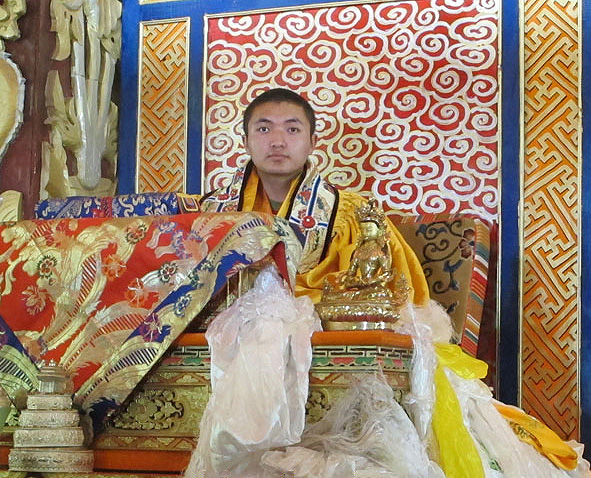
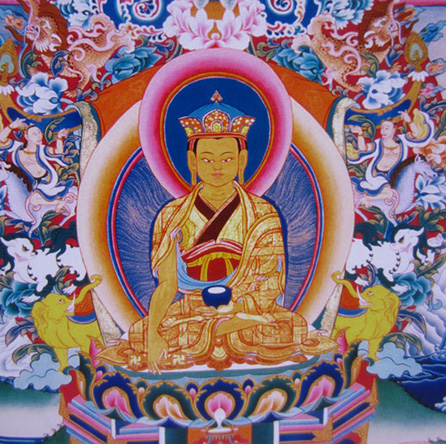
The 33rd Holder of the Golden Throne of Menri Monastery, His Holiness Lungtok Tenpe Nyima Rinpoche

(This blog is offered for free to the worldwide students of Yungdrung Bön.  It is made possible by readers like you.  If you would like to join in making a gift of support for this blog or the translation work of Raven Cypress Wood, please go to https://www.paypal.com/home, click ‘Send’ and use Raven’s account rcw108@gmail.com.  Any amount is of great support!)