Blog Archives

The Great Mantra of Yungdrung Bön

The MA TRI mantra carved on a cliff face

In the Yungdrung Bön religious tradition, there are countless mantra for various purposes such as to protect from dangers and diseases, to cure various physical ailments, to attain various kinds of magical power, to increase prosperity and extend the lifespan, and to develop positive qualities and wisdom. From all of these, there are three primary essence mantra that encapsulate the totality of the Yungdrung Bön religious teachings. These three mantra are known as the SA LÉ Ö, the MA TRI, and the DU TRI SU mantra. Of these three, the MA TRI mantra is known as “The Great Mantra” because it is the distilled essence of all 84,000 teachings of Buddha Tönpa Shenrap Miwoché. The text of the MA TRI tantric cycle is The Sufficient Recitation that is a Precious Lamp that Shakes the Depths of Cyclic Existence. It is called “The Sufficient Recitation” because this single mantra is enough for everything. When teaching thirty-two of the specific benefits of the MA TRI mantra, the Buddha began by instructing his retinue in the profundity of the mantra.

“This Precious Lamp, the extracted heart essence of all of those who have gone to bliss, is the fundamental essence of the entire collection of sacred teachings. It is the quintessential essence of all Bön. It is the ultimate of all recitations. It is the highest of all views. It is the innermost essence of  all meditations. It is the fulfillment of all activities. It is the most superior of all results. It is the heart elixir of the principal teachings. It is a key to the collection of sacred teachings. It is the lamp of the collection of oral transmissions. It is the refined gold of the quintessential instructions. It opens the door of intellectual confusion. It is a lamp that clears away the darkness of ignorance.”

From Thirty-two Benefits of The Sufficient Recitation that is a Precious Lamp

Many mantra are secret and are not to be shared with the uninitiated or to be recited loud enough to be heard beyond one’s own shoulder. The MA TRI mantra is different. It can be shared, and read, and heard by anyone. In fact, in Thirty-two Benefits of The Sufficient Recitation that is a Precious Lamp, one of the benefits specified by the Buddha involves generating compassion and then reciting the mantra aloud for all sentient beings to hear.

“As for this Sufficient Recitation that is a Precious Lamp, if the clear and pure melodic recitation of the mantra from someone who has cultivated the mind of enlightenment enters the ear of any sentient beings living on mountains, cliffs, or water, or any wild animals, birds, or any kind of human or animal; whoever hears it will attain liberation. This is the precious lamp of sufficient hearing.”

In full, the MA TRI mantra is OM MA TRI MU YÉ SA LÉ DU. Each syllable of the mantra has a unique power and potency to manifest enlightened energy and form. Although the text gives an association for each of the syllables, this is not the same as a definition or a translated meaning. Mantric syllables are beyond the limitations and restrictions of intellectual concepts and words. However, in order to support trust in disciples who may doubt that the syllables are meaningful, Buddha Tönpa Shenrap gave the following teaching.

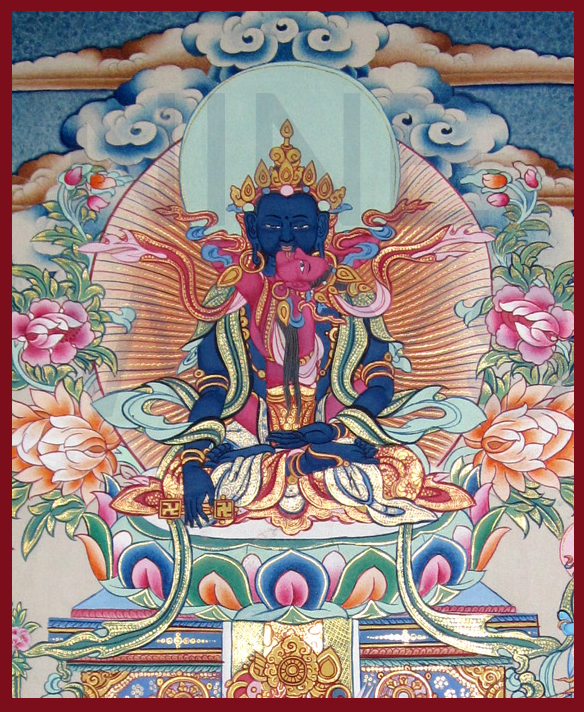
Buddha Tönpa Shenrap and Buddha Tükjé Jamma in union according to The Precious Lamp

“OM is the seed syllable of the external space of the victorious Father. MA is the expanse of phenomenal space of the Mother’s womb. TRI is the enlightened body of Mucho Demdruk who protects from the suffering of the hot and cold hells. MU is the enlightened body of Sangwa Ngangring who removes the hunger and thirst of the destitute hungry ghosts. YÉ is the enlightened body of Tisang Rangzhi who dispels the darkness of stupidity and muteness of the animals. SA is the enlightened body of lord Drajin Pungpa་who fulfills the desires of the constantly busy and impoverished humans. LÉ is the enlightened body of Chegyal Parti ་who destroys the prison of the quarrelsome demi-gods. DU is the enlightened body of Yéshen Tsukpü who arouses diligence in the gods, the lazy ones who are destined to fall.” 

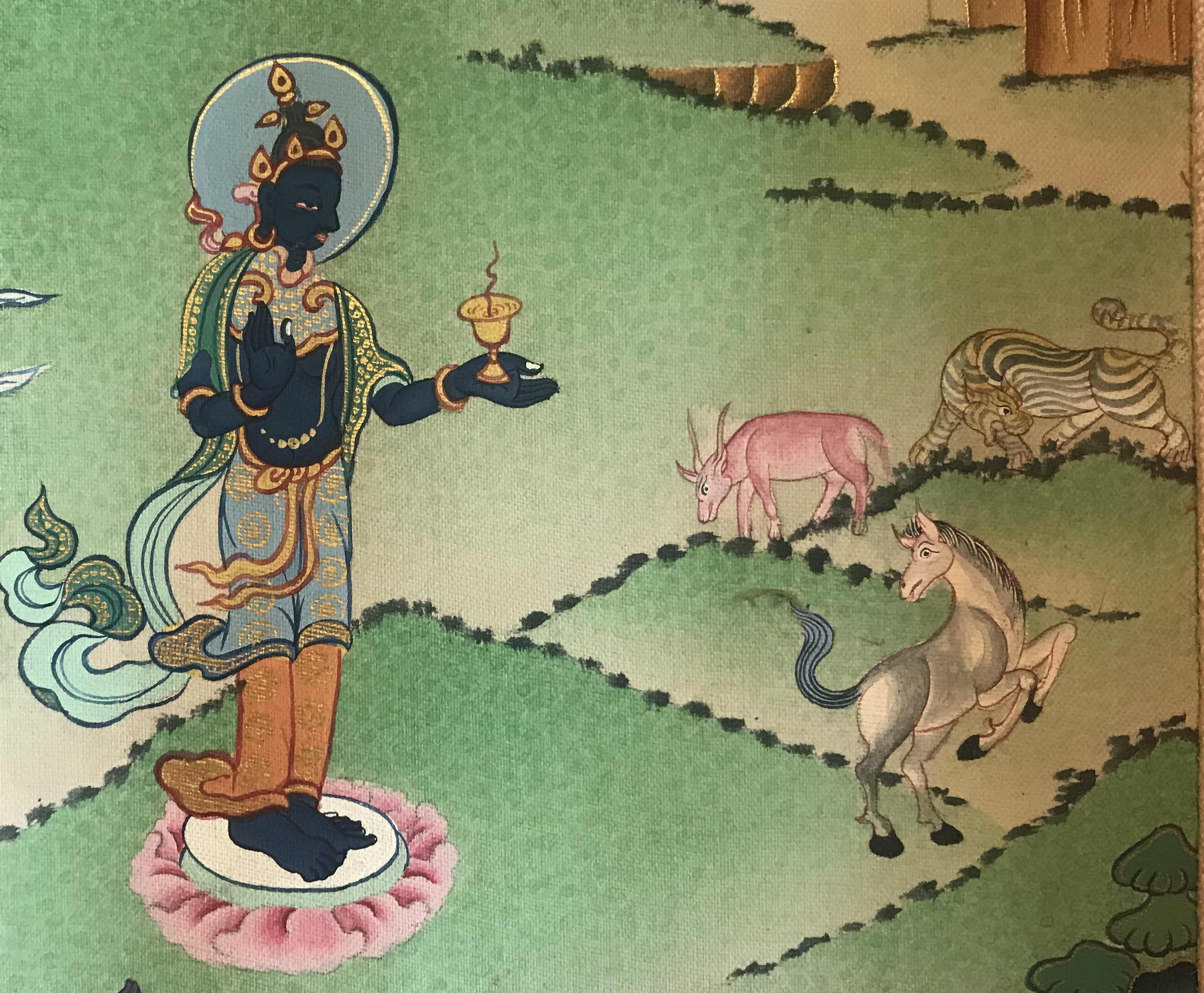
The Father is Buddha Tönpa Shenrap and the Mother is Tükjé Jamma. They manifest as the union of wisdom and skillful means. The other six seed syllables are associated with the six subduing shen who are manifestations of the Buddha Tönpa Shenrap who tame the negative emotions with their associated antidote. Buddha Mucho Demdruk tames the hatred of the beings in the hot and cold hell realms with great loving kindness. Buddha Sangwa Nangring tames the greed and desire of the hungry ghosts with great generosity. Buddha Tisang Rangzhi tames the stupidity and dull mindedness of animals with great wisdom. Buddha Drajin Pungpa tames the jealousy of humans with great openness. Buddha Chegyal Parti tames the pride of the demi-gods with great peacefulness. And Buddha Yéshen Tsukpü tames the laziness of the gods with great joyful diligence.

The syllable OM according to The Precious Lamp

Each of the mantric syllables has an associated color. The five-part syllable OM consists of five colors. The remaining syllables each have a single color that corresponds to the color of the associated deity. The syllable MA is coral red. The syllable TRI is often depicted as purple. The text states that the deity’s body color is red-blue to show his mastery over fire and water. The syllable MU is red. the syllable YÉ is blue. The syllable SA is golden or yellow. The syllable LÉ is pale blue. And the syllable DU is white.

In addition to the recitation, it is beneficial to place the MA TRI mantra over doorways. In that way, whoever passes underneath receives blessing. The MA TRI amulet has the quality of liberation through touching. Thus, it is of great benefit to wear. At the time of death, this amulet is placed at the crown of the head to support realization or at least a positive rebirth. The blessed medicine of the MA TRI cycle is one of the most commonly performed and distributed to the faithful.

Two examples of the MA TRI amulet that liberates through touching

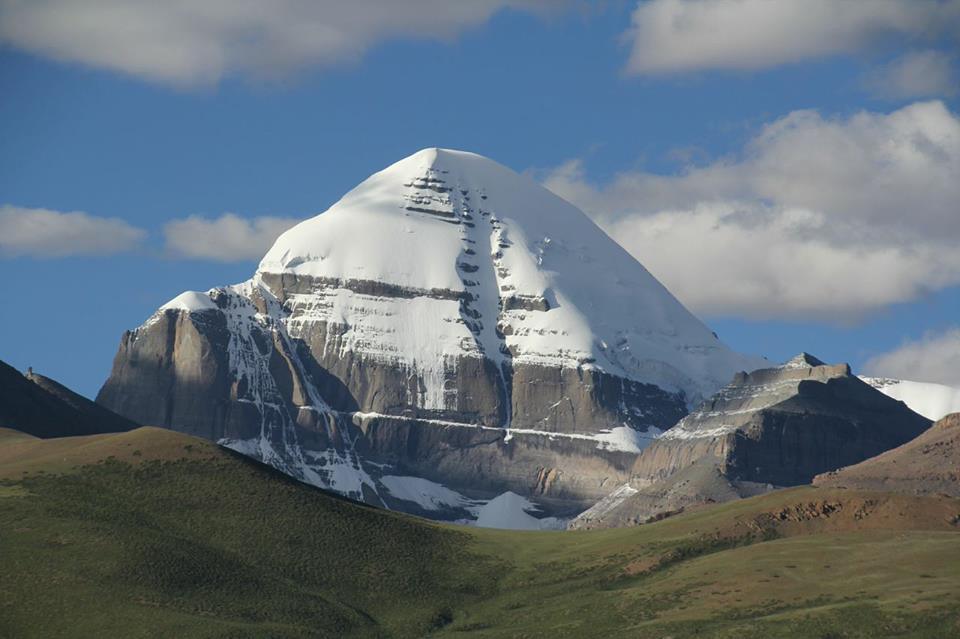
The lineage of the MA TRI tantra passed from Buddha Tönpa Shenrap to his son Tobu Bumsé who accepted responsibility for all of the teachings related to tantra. After the Buddha showed the truth of impermanence and passed into parinirvana, Mucho Demdruk was appointed his representative. He entrusted the MA TRI tantra of The Sufficient Recitation that is a Precious Lamp that Shakes the Depths of Cyclic Existence to the scholar from Tazik, Mutsa Trahé. He then divided the teachings into condensed, medium-length, and expanded versions. These he passed on to the three shen who taught among the gods, the humans, and the lu [Sanskrit: naga]. Milu Samlek was the shen who taught among the humans and while he was practicing near Mt. Tisé [MT. Kailash], he widely spread the expansive version of the MA TRI tantra. Drenpa Namkha traveled to the area to take part in a meeting of those translating the Yungdrung Bön texts into their own native languages. During that time, Mutsa Trahé presented him with the MA TRI scripture.

“Listen, Mu Shen Drenpa Namkha. Listen! This cycle of Bön is especially exalted. It is comparable to the heart inside the chest. There is nothing more profound than this Bön that purifies defilements. Great translator, this is a profound gift from me. I am entrusting it to you, fortunate shenpo. Hold this Bön in your mind. With the aspiration that it will spread until the end of time, please accept this.” 

Having accepted the responsibility to hold the lineage, Drenpa Namkha transmitted the teachings to his consort Khandro Öden Barma and spread them throughout Zhang Zhung and Tibet. However, some time later there was conflict between the two countries and the Tibetan king had proclaimed his intention to destroy Yungdrung Bön. Many scriptures were taken out of the country, some were hidden as treasures in the hopes that it would be sage to bring them out in the future, and others were destroyed. As for the MA TRI tantra, Drenpa Namkha memorized the extensive version and held it in his mind. The medium-length version was hidden as a treasure in Mount Gangkar Sha Mé in the far western area of Ngari, Tibet. Then, the practice of Yungdrung Bön declined for many years.

Then, in the Metal Rat year of 1360 CE in Khyungpo, Tibet, Tülku Loden Nyingpo was born. [He is also known as Namkha Rinchen.] He would become a renowned treasure revealer who brought many of the scriptures out of hiding. Among these scriptures was The Sufficient Recitation that is a Precious Lamp that Shakes the Depths of Cyclic Existence. During an extraordinary visionary encounter, he was invited to a pure realm where he received the transmissions of the tantra from both Drenpa Namkha and Khandro Öden Barma. He recounts this encounter in great detail in the chapter entitled The Way the Empowerments, Oral Transmissions, and Quintessential Instructions were Received. Khandro Öden Barma instructs him to keep it to himself until he feels it appropriate to begin sharing the teachings. He went on to be a wandering yogi with many disciples to whom he passed on the transmission. It has continued uninterrupted to the present day.

Buddha Tisang Rangzhi who teaches wisdom to the animals

Again and again, Buddha Tönpa Shenrap reminded his disciples that this MA TRI mantra and its practice would be especially beneficial for future generations because of its simplicity. This was stressed by Drenpa Namkha during Tülku Loden Nyingpo’s visionary encounter with him.

“Son, Listen! Fortunate son of the lineage, it is greatly amazing that you have come here to this place. Now, it has become the end of time and The Age of Conflict has arisen. In the future, men and women will not have the opportunity to achieve the attainment of single-pointedness. Illness, famine, and weapons will be widespread during this age. Rulers will have no morality and the rule of law will disappear. Ministers will be senseless and have extensive vanity. Great meditators will only pretend to follow the key points. Yogis will spend time debating over grammar and logic. Those that practice the Great Vehicle will fall into the extremes of externalism or nihilism and be stuck on the path. Masters and disciples will not be in harmony and their association will only last a short time. Spiritual friends will regret their vows, will have hidden intentions, and will speak carelessly. Acts of virtue and acts of wrongdoing will become mixed up. These are the characteristics of the Age of Conflict. For that time and circumstance, this inner essence of The Precious Lamp is recommended for the benefit of migrating sentient beings.”

From The Way the Empowerment, Transmission, and Quintessential Instructions were Received

Even though there is slight variation in the various compilations of The Sufficient Recitation that is a Precious Lamp that Shakes the Depths of Cyclic Existence, in general it consists of eight primary sections. This is why it is also referred to as The Eight-branched Sutra. Additionally, there are chapters chapters added by both Drenpa Namkha and Tülku Loden Nyingpo. The list below gives an idea of the chapters within the Volume.

  • Teaching and Ritual that Purifies Obscurations and Clears Away the Darkness: Preliminary, Main, and Concluding Practices
  • Instructions Regarding the Essence of the Precious Lamp
  • Instructions on the View
  • Instructions on Meditation
  • Instructions on Conduct
  • Instructions on Result
  • Instructions on the Mantra, The Inner Heartdrop
  • The Quintessential Instructions
  • Continuously Engaging in Recitation and Accomplishment
  • Instructions on the Ritual for the Worldly Palgön
  • Praise of the Teacher by the Retinue 
  • The Lamp that Illuminates Actual Realization 
  • The Way the Empowerment, Transmission, and Quintessential Instructions were Received
  • Maintaining a Continual Practice
  • The Refined Gold of Quintessential Instructions
  • Thirty-two Benefits of The Precious Lamp
  • Death Ransom Torma that Reverses Negativity
  • The Mirror of Accomplishment
  • Pointing Out The Precious Lamp
  • Wisdom Powa that is like a Meteor
  • Drawing the Protective Amulet
  • Drawing the Protection and Longevity Amulet
  • Drawing the Amulet the Reverses Negativity

“OM MA TRI MU YÉ SA LÉ DU Listen, fortunate ones! The long flowing river of birth is the first. The thunderous waterway of old age is the second. The raging whirlpool of illness is the third. Death that has no escape is the fourth.These four are the demon rivers from which there is no escape. Noble ones who want to cross over those rivers, proclaim the melody of the MA TRI MU YÉ!

OM MA TRI MU YÉ SA LÉ DU Listen, fortunate ones! The churning ocean of cyclic existence is the first. The profoundly deep lake of suffering and misery is the second. The raging whirlpool of unhappiness is the third. Falling into the depths from which there is no escape is the fourth. These four lakes are the four prisons of suffering and misery. Noble Ones who want to be free from those prisons, proclaim the melody of the MA TRI MU YÉ!

OM MA TRI MU YÉ SA LÉ DU Listen, fortunate ones! The legions of mental dullness are the first. The strong coat of armor of pride is the second. The trained army of envy is the third. The sharp weapons of anger and hatred are the fourth. These are the four frightening enemies that come from behind. Noble Ones who want to escape from those enemies, proclaim the melody of the MA TRI MU YÉ!

OM MA TRI MU YÉ SA LÉ DU Listen, fortunate ones! Watching, teaching, and mastering mundane diversions is the first. Laziness and procrastination is the second. Exhausting the lifespan with the fire of distraction is the third. Mistakenly going astray because of illusory appearances is the fourth. These four are hindrances on the path to liberation. Noble Ones who want to be free of those hindrances, proclaim the melody of the MA TRI MU YÉ!”

Inspirational Verses Regarding the MA TRI written by Tülku Loden Nyingpo included in the forthcoming book on The Sufficient Recitation that is a Precious Lamp by Raven Cypress Wood

All translations from the Tibetan by Raven Cypress Wood

Raven Cypress Wood ©All Rights Reserved. No content, in part or in whole, is allowed to be used without direct permission from the author.

Don’t want to miss a post? Scroll to the bottom and click “Follow this blog.”

Want to join the mandala of Nine Ways supporters? Follow this link https://ravencypresswood.com/donate/ It’s easy through Paypal, Zelle, and Venmo.

The Great Retreat of the Medicine with Swirling Rays of Light

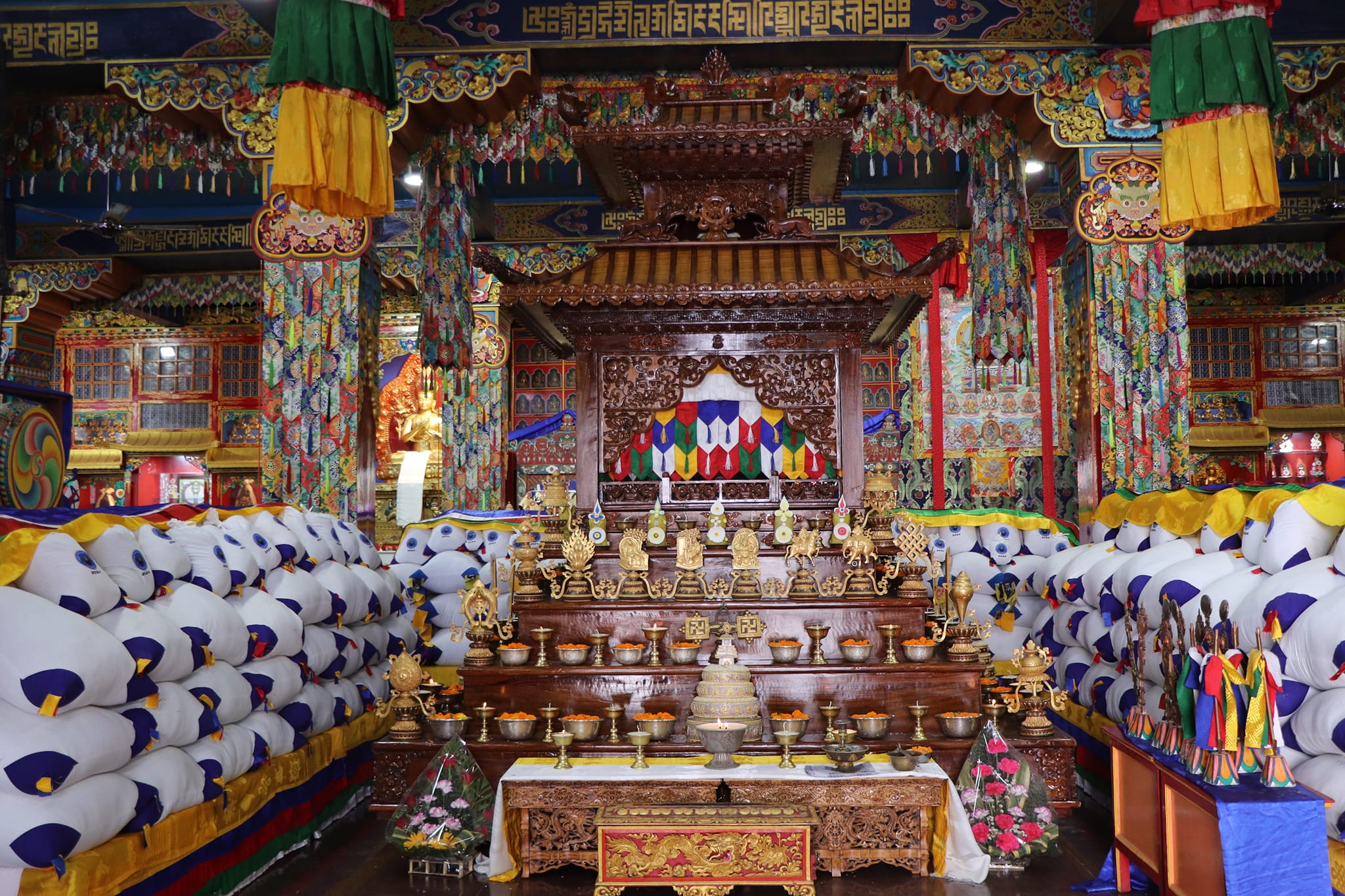
The altar for the deity surrounded by offerings and the powdered medicine

During the 3rd lunar month on the 3rd-18th lunar days which correspond with April 11th-26th on the Western calendar, Menri Monastery in Dolanji, India will perform the Great Retreat of Medicine with Swirling Rays of Light, also known as The Great Mendrup Retreat. This is one of the largest rituals within the Yungdrung Bön Religious tradition and has an unbroken lineage from the enlightened Lord Tönpa Shenrap. Once an individual is enthroned as the abbot of Menri Monastery, they are required to do three things: (1) establish a reliquary chorten for the previous abbot, and (2) bestow empowerments to disciples, and (3) perform a mendrup retreat at least once during their lifetime. His Holiness the 33rd Menri Trizin Lungtok Tenpé Nyima Rinpoche performed the great mendrup ritual three times: once before the establishment of Pal Shenten Menri Ling in India, once in 1988, and once again in 2009.

A bag containing the mendrup ingredients

Its takes years of preparation in order to properly gather the tens of thousands of herbs, minerals, precious substances, and so on. For example, similar to acquiring ingredients for traditional Tibetan medicine, plants that are used for their warming qualities must be gathered and dried in the sun, and plants that are used for their cooling abilities much be gathered and dried in the shade in cooler areas. All of the primary and secondary ingredients are outlined within the mendrup text. There are many many traditions and texts. In this case, the text being followed is Mendrup Özer Kyilwa, Accomplishment of Medicine with Swirling Rays of Light. This ritual was taught by Buddha Tönpa Shenrap Miwoché and first performed by Buddha Chimé Tsukphu. It was passed down through the generations of masters to the great lama Drenpa Namkha in the 7th centure C.E. At that time, the Yungdrung Bön religious tradition was undergoing severe persecution from the Buddhist king and this mendrup text along with many other texts were hidden in order to protect them from destruction. In that way, many of the Bön texts and religious items became hidden treasures.

After the time of strong persecution had passed, it is said that the text was brought out of hiding along with vessels of mendrup in 1108 C.E. by Rikdzin Chenpo Gyermi Nyi Ö. This was passed to the the 4th abbot of Yeru Wensaka, Nyima Gyaltsen Rinpoche. From that time until the destruction by flood of Yeru Wesanka, the mendrup retreat was performed once in the lifetime of eighteen abbots of Yeru Wensaka. Having received the transmissions and empowerments for the mendrup cycle, the founder and 1st abbot of Menri Monastery recovered the texts and the mendrup and used them to begin the tradition at Tashi Menri Monastery in Tibet. One of the most important mendrup ingredients is a small amount of the blessed medicine that was created in previous mendrup retreats and safeguarded to be used as an ingredient in subsequent mendrup rituals. In that way, every mendrup contains some amount of mendrup from ancient times.

Mendrup from various rituals

The Tibetan term mendrup [Wylie: sman sgrub] is a compound of two words: “men” generally meaning medicine, and “drup” meaning to accomplish or to achieve. Thus, the purpose of the ritual is create a medicine which is a consecrated and empowered panacea for both inner and outer ills and disturbances rather than a medicine for a specific illness. The final product is a consecrated and blessed, finely powdered substance that is distributed for free to the ordained, to laypersons, and to the general public. This blessed medicine is ingested orally, worn as a protective amulet, used as an offering, and included as an ingredient in many other rituals within the Yungdrung Bön religious tradition.

Mendrup

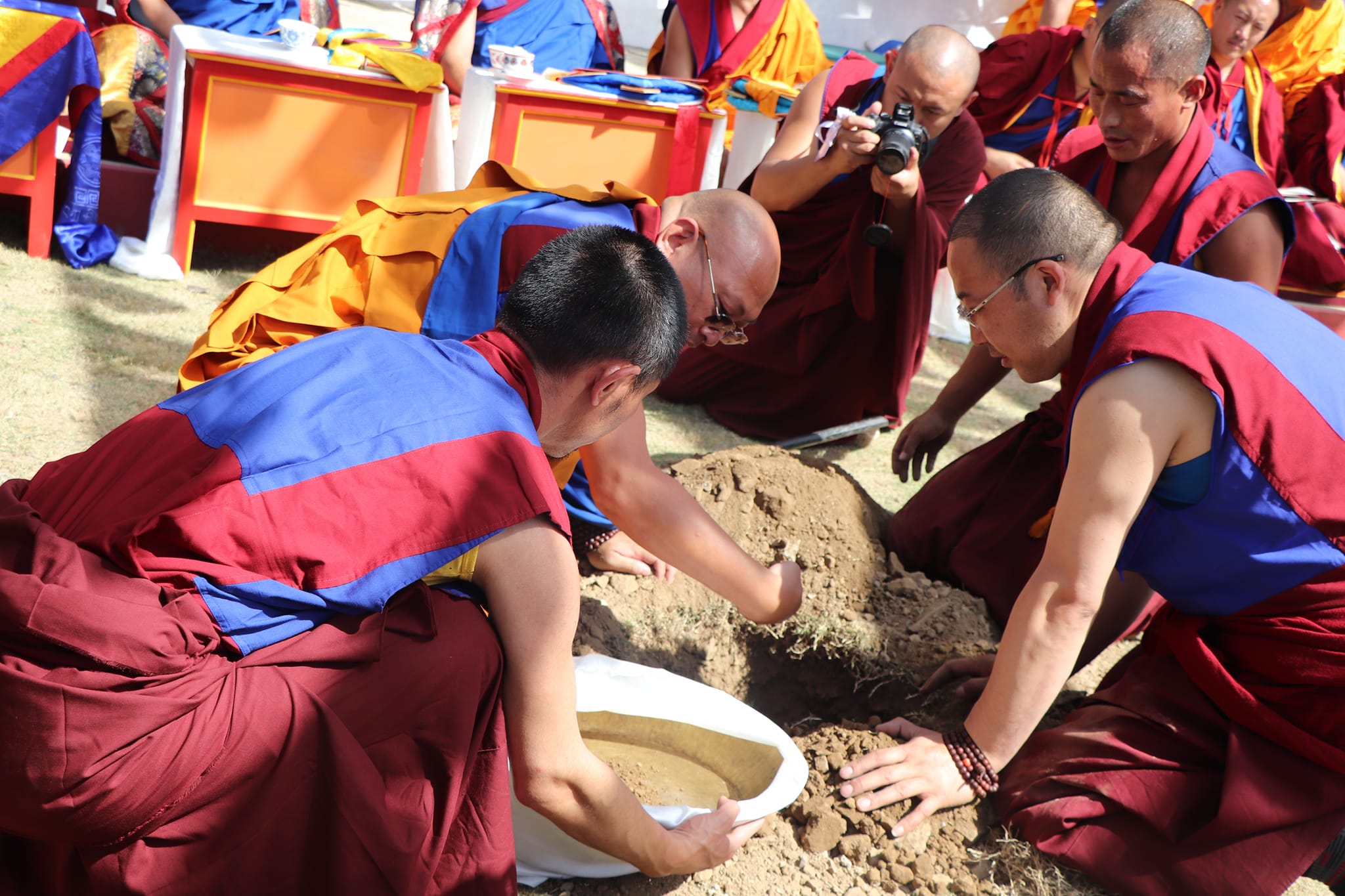
The retreat generally begins with the recounting of the origin, history, and purpose of the great mendrup retreat. Ritually, the retreat begins with a ransom ceremony in order to pacify and expel obstacles. Masked dances of the protectors are performed and a boundary is secured for the entire retreat space and all participants in order to keep out obstacles and to keep in the blessings and power generated during the retreat. After that, the ritual of Requesting Permission to Gather Soil addresses the earth spirits in order to request permission to gather soil in order to construct the necessary mandala palace for the deities.

Once the mandala is constructed and a large variety of wonderful offerings are placed, the enlightened deities and their retinue are invited to come and reside within the mandala palace. After this, no one other than those involved in the ritual are allowed to come near the mandala. Thus begins the period of the foundational practices of taking refuge, generating a mind of enlightenment, admitting wrongdoing and receiving purification, and so on. Once this foundation is complete, the main ritual of the mendrup ceremony begins by requesting and receiving consecration and blessings for the substances. During this time, the mantra of blessing nectar is continuously recited by both the ordained and the lay practitioners.

Mantra of Blessing Nectar for the Great Mendrup Ceremony: SO OM BA WA DÉ NA RA SA YA NA YU DRANG DUTSI SO THA

Masked dance of the enlightened protectors

The powdered mendrup is ingested daily, or as desired, either in water or by itself. The amount is usually a generous pinch, or about 1/4 teaspoon. It can also be placed in a locket and worn on the body. The traditional amulets worn by Yungdrung Bön followers contain mendrup as one of the required ingredients. It is also an ingredient in chortens, sa tsa, torma, and so on. When treated with faith and respect, the benefits of either ingesting or wearing mendrup are profound and immeasurable. When it is ingested or worn, the three poisons, the three kinds of illness [imbalances of wind, bile, or phlegm], and the three kinds of external disturbances [from the spirits above, the water spirits below, and the earth spirits in-between] are unable to become established and cause harm. When it is offered to the meditational deities or enlightened protectors, it purifies our sacred commitments with them and gives the ability for us to receive their blessings. In this life, it brings success to whatever goal or intention is wanted. It brings longevity, sharpens the intellect, brings wisdom, cures illness, and increases the life-force and prosperity. It is like a wish-fulfilling gem.

“Deities of the mandala will hold you within their compassion.

The poisons, illness, and malevolent forces will not be able to be established.

In this life, whatever is wanted will be accomplished.

And one will progress along the ground of the Great Seal.”

From the Result and Good Qualities of Accomplishing the Blazing Mountain of Blessed Nectar
His Holiness the 34th Menri Trizin ritually breaks the ground in order to obtain soil for the mandala of the deities

If you would like to make a donation to support this very auspicious occasion, you can do so through H.E. Menri Pönlop’s United States retreat center by following this link: http://kwling.org/ Follow the link and then click the donate button in the upper right of the page. You can make a notation that the donation is for the mendrup ceremony.

Schedule of Events at Menri Monastery

April 11th: Welcome and speeches, the ransom effigies are sent out in order to dispel obstacles

April 12th: The procession and ritual for Requesting Permission to Gather Soil, and preliminaries for the Nam Dak and Long Gyé empowerments

April 14th: His Holiness the 34th Menri Trizin will confer the actual Nam Dak and Long Gyé ritual cycle empowerments.

April 16th: His Holiness the 34th Menri Trizin will bestow the oral transmission of the peaceful, wrathful, and medicine texts to everyone in attendance. His Eminence Menri Pönlop Rinpoche will give a talk explaining the history and benefit of the great mendrup ceremony.

April 17th: There will be a showing of the sacred objects of Rayna Menling Nunnery and a tour of their facilities.

April 18th & 19th: There will be a two-day seminar of Zhangzhung and Tibetan studies.

April 20th: Teaching on the Four Wheels of Bön and teaching on the practice of tantra

April 21st: His Holiness the 34th Menri Trizin and His Eminence Menri Pönlop Rinpoche will lead the procession to visit the medical laboratory where the medicine containers will be opened and the ingredients will be mixed, purified, and ground into a fine powder.

April 22nd: There will be an exhibition of the ritual tools, costumes, and sacred items required for the practice of the Nine Ways of Bön.

April 25th: There will be a guided tour of the Mutri Tsépo Tibet-Zhangzhung Research Center.

April 26th: His Holiness the 34th Menri Trizin will bestow the empowerments of the Künzang A Sel [Clear AH of Künzang], Chi Pung Zhi Tro [Cycle of the Peaceful and Wrathful Deities], Ö Zer Khyilwa [Swirling Rays of Light], and the Trowo Tshé Drup [Trowo’s Accomplishment of Longevity].

April 27th: The monks, nuns, and lay disciples will form a procession carrying the medicines which will later be distributed to everyone present. The ceremony will conclude with an address by His Holiness the 34th Menri Trizin and His Eminence Pönlop Rinpoche.

Gathering soil for the mandala of the deities

Raven Cypress Wood ©All Rights Reserved. No content, in part or in whole, is allowed to be used without direct permission from the author.

Don’t want to miss a post? Scroll to the bottom and click “Follow this blog.”
This website has always been supported by the donations of the worldwide Yungdrung Bön community. Want to join the mandala of Nine Ways supporters? Follow this link https://ravencypresswood.com/donate/ It’s easy through Paypal and Zelle.

Happy Tibetan Year of the Wood Dragon!

Birth Anniversary of Karu Drupwang Tenzin Rinchen: Pilgrim, Sage, & Champion of Yungdrung Bön

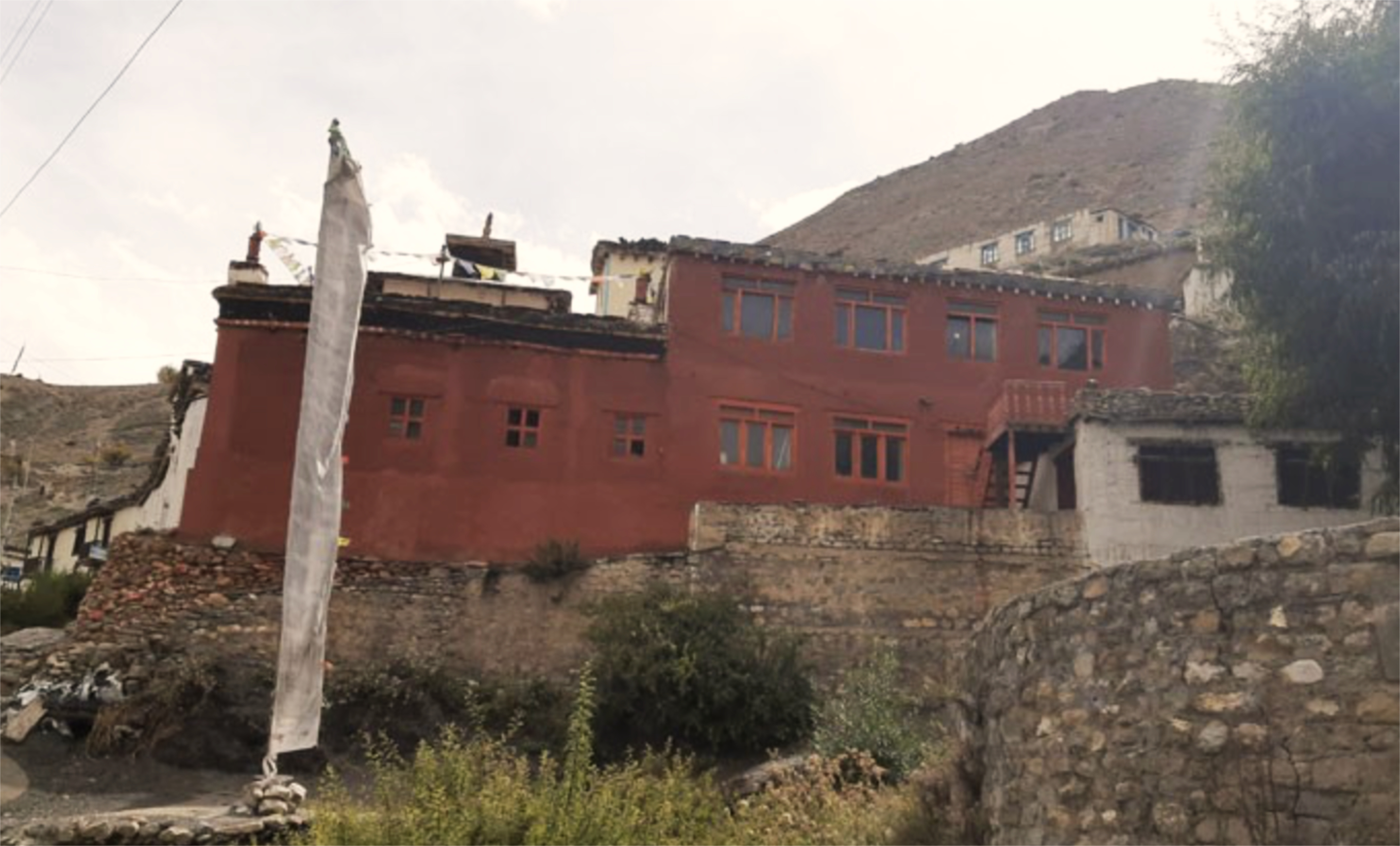
Yungdrung Phüntsok Ling in the village of Lubrak

The 8th day of the 10th lunar month is the birth anniversary of the intrepid scholar and spiritual master Karu Drupwang Tenzin Rinchen Gyaltsen Dechen Nyingpo, better known as Karu Drupwang Rinpoche. In 2023, this lunar date corresponds with November 20th. Born at sunrise in 1801 C.E. to a wealthy family in Kham, Tibet, his birth was precipitated by miraculous signs and his autobiography recounts that he was urged to take rebirth by a group of deities so that he could benefit beings through his manifestation. Throughout his life, he traveled extensively on lengthy pilgrimages and was a strong advocate for maintaining the authentic history of Yungdrung Bön sacred sites while maintaining a nonsectarian view and having meaningful interactions with a wide range of people from kings to outcastes. Throughout Tibet and Nepal, he became well known for both his intellect and his magical power.

An emanation of the 8th century B.C.E. yogi Lishu Taring, the first of his many visionary encounters occurred at the young age of two years old when he was visited by this sage and given extensive, detailed spiritual instructions. At the age of six, he took monastic ordination and began his studies at the nearby Nor Ling Monastery. He was an excellent student and was highly praised by his teachers for his achievements. However, upon the death of his father when he was thirteen, the family’s wealth, status, and influence quickly began to decline. As such, his position within the monastery also declined and the previous jealousy of his peers turned to outright hostility. After a few years of suffering from insults and ill treatment, he left the monastery in order to undergo a lengthy, solitary retreat. This retreat was interrupted however due to unforeseen circumstances that required him to fulfill his monastic responsibilities at Nor Ling. Again experiencing abuse from his peers, he made the decision to begin a lengthy pilgrimage. This began his lifetime of travel, visionary encounters, and his lasting impact on the the spiritual life and culture of the people of Dolpo and Lubrak in Nepal.

His first pilgrimage brought him to Kongpo Bönri where he had many extraordinary visionary encounters. He continued on to Tashi Menri and Kharna in Central Tibet, as well as many Zhang Zhung sacred sites as he made his way to Western Tibet. During these journeys, he would often discover that a Bönpo sacred site had been subsumed into Buddhist lore and history with no remaining Bönpo relevance. At this, he would fervently go about doing his best to correct the historical and religious record. One of his most well-known compositions is his detailed pilgrimage guide to Mount Tisé [a.k.a Mount Kailash], A Catalogue of Snowy Tisé which was written in 1844 C.E. This is the most detailed pilgrimage guide to this ancient sacred site and details its ancient connection with Yungdrung Bön.

The Southern side of Mount Tisé

He spent a great deal of time in the village of Lubrak and sponsored the construction of a village temple of Yungdrung Phüntsok Ling in 1846 C.E. During this time, he met an impoverished woman and her son. Being a widow, the mother was having great difficulty providing for her child. Moved with compassion and feeling a connection with the young boy, he took him under his care. This boy went on to become one of his main students and the renowned master Drogön Tenzin Nyima.

Karu Drupwang Rinpoche’s other well-known composition is the Mar Ti Duk Nga Rang Drol, Essential Instructions on the Self Liberation of the Five Poisons. He received this dzogchen text as a mind treasure when he was twenty-five years old. During one of his visits to Lubrak, he wrote this text down in order to support the spiritual needs of the community. These teachings continue to be a part of the annual ritual in Lubrak and Karu Drupwang’s original manuscript is still held in the village as one of its great treasures.

“As for mirror-like wisdom, externally, it is the wisdom of not grasping at the self-nature of appearances. Internally, it is the wisdom of not grasping at the self-nature of one’s own identity. Secretly, it is the wisdom of not grasping at one’s own natural mind. Most secretly, it is the wisdom of not grasping at one’s own essential nature.

Every appearance of ignorance and delusion that arises, is in actuality emptiness. This wisdom of knowing emptiness is the wisdom of absolute reality.” 

From the Mar Ti Duk Nga Rang Drol, Essential Instructions on the Self Liberation of the Five Poisons

After spending long periods of time throughout Dolpo and Mustang, he made his way to Kathmandu, Nepal. There, he was often at the stupa of Swayambunath begging for alms. At this sacred site, Karu Rinpoche continued to have vivid, visionary encounters. He traveled throughout the Kathmandu valley encountering a variety of people and cultures. However, in 1852 C.E. he returned to Tibet and became a root lama to the esteemed 23rd Menri Trizin Künkhen Nyima Tenzin. During this time, he also became the Khenpo of his former monastery, Nor Ling.

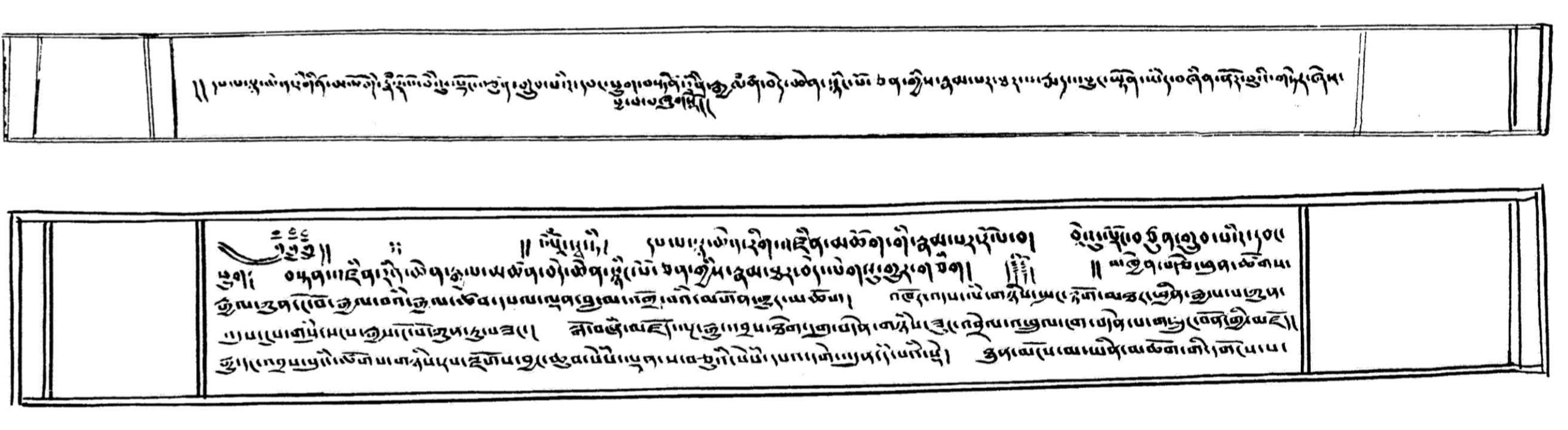
First pages of the Autobiography of Karu Drupwang Tenzin Rinchen

Upon the insistent urging of a disciple, he wrote an autobiography that was completed in 1845 C.E. which can be found in the temple of Samling in Dolpo, Nepal. Although the exact date of his passing beyond this life is not known, it is generally understood to have occurred some time in 1861 C.E.

Chapters within the Mar Ti Duk Nga Rang Drol, Essential Instructions on the Self Liberation of the Five Poisons:

  • Teachings on the Opportunities and Good Fortunes that are Difficult to Obtain from the Systematic Guidance for the Preliminary Practices of the Essential Guidance on the Self Liberation of the Five Poisons
  • Systematic Guidance Regarding the Difference Between Virtue and Wrongdoing, and Impermanence
  • Systematic Guidance on Going for Refuge
  • Systematic Guidance on Generating a Mind of Enlightenment
  • Systematic Guidance on Purifying Wrongdoing through Admission of Wrongdoing and Purification
  • Systematic Guidance on Completing the Accumulations through the Mandala Offering
  • Systematic Guidance on Receiving Blessings and Self-empowerment through Supplication
  • Teaching and Advice for Calm Abiding by Focusing on AH
  • Teaching and Advice for Searching the Mind and Awareness
  • Teaching and Advice for Introducing and Concentrating on the Mind
  • Teaching and Advice on the Path of the Six Aggregates
  • Teaching and Advice for Enhancing Gek Sel Practice
  • Teaching and Advice for Dark Retreat and Clear Light
  • Teaching and Advice for the Nourishment through Chulen [Extracting the Essence]
  • Teaching and Advice on the Six Important Points of Practice
  • Teaching and Advice for Abiding in the State of the Mind’s Essence
  • Teaching and Advice for Fully Realizing the Bön Essence
  • Teaching and Advice regarding the Result which is All-penetrating Wisdom
  • Teaching and Advice on the Power to Work with Deathless Birth
  • Teaching and Advice for Attaining Buddhahood with No Physical Aggregates Left Behind
  • Practice of the Goddess [Jamma]
  • The Clear Mirror of A Hundred Horoscopes of the Essential Instruction on the Self Liberation of the Five Poisons
  • A Little Song About the Connection Between the Relative and the Absolute
  • Abridged Preliminary Practices
  • Supplication of the Root Lama Drupwang Tenzin Rinchen [Composition of a disciple]
  • Expiation through Offering to the Lama
  • A Letter to the Ghosts and Demons that Suppresses Phenomenal Existence with its Majestic Brilliance

Raven Cypress Wood ©All Rights Reserved. No content, in part or in whole, is allowed to be used without direct permission from the author.Don’t want to miss a post? Scroll to the bottom and click “Follow this blog.”

Want to join the mandala of Nine Ways supporters? Follow this link https://ravencypresswood.com/donate/ It’s easy through Paypal and Zelle.

2023: Year of the Water Rabbit

The twelve animals of Tibetan astrology according to Yungdrung Bön are the Rat, Elephant, Tiger, Rabbit, Dragon, Horse, Snake, Sheep, Garuda, Monkey, Dog, and Pig. Each animal has a specific element associated with its lifeforce and a positive direction determined by that element. Each year, one of these twelve animals is associated with one of the five elements of either metal, wood, fire, water, or earth. In other contexts, metal is referred to as space, and wood is referred to as wind or air. It takes sixty years for all twelve animals to be associated with each of the five elements. When this happens, it is considered one complete cycle that repeats again and again.

February 21, 2023 begins the Tibetan Royal New Year and the Year of the Water Rabbit. The year of the Water Rabbit continues until February 9, 2024. Therefore, people born on or after February 21st will have the natal astrology of a Water Rabbit with its associated characteristics. In general, Rabbit years are considered to be times of calm and ease that bring beauty and harmony. They are periods with less suffering and conflict. Thus, people have more time for entertainment, pleasure, and enjoyment. Because of this, there is the temptation to become lazy and distracted especially if the previous year was especially difficult. Also, Rabbit years are often times of population growth.

In general, the Rabbit is kind and polite, and enjoys elegance and comfort. It protects its peaceful environment and will make an effort to avoid conflict and confusion which can give others the impression of being indifferent or aloof. If the Rabbit feels directly threatened, it will express its anger through subtlety and cleverness rather than outbursts.

The element which governs the lifeforce of the Rabbit is Wood and its positive direction is East. So, if a Rabbit person wanted to strengthen their lifeforce, they would focus upon strengthening the element of Wood internally and externally. This could be as simple as wearing the color green which is associated with the element Wood. The Rabbit’s positive direction is East. So, facing this direction while meditating, reciting prayers, or just relaxing and taking deep breaths is beneficial. The negative direction is West. This is the direction from which danger or obstacles are most likely to arise and it is the direction towards which to release and let go of negativity or for ritual offerings to pacify negative forces.

The Rabbit’s soul day is Thursday and the life-force day is Saturday. These are the best days for beginning new projects, activities to increase or develop something, or meeting new people. The obstacle day is Friday. This day is best for cleansing and letting things go. It is an unfavorable day for beginning new projects or taking risks.

Rabbit years include: 1915, 1927, 1939, 1951, 1963, 1975, 1987, 1999, and 2011

Thangkha depicting the Tibetan astrological symbols and their relationships. Private collection: Raven Cypress Wood

According to Tibetan astrology, there are five factors associated with each year that have a corresponding element. These five factors are lifeforce, health, personal power, lungta or the force of good luck, and soul. The elements associated with these five factors change each year. For the Water Rabbit year of 2023, these five factors and their associated elements are:

  • Lifeforce: Wood
  • Health: Metal
  • Personal Power: Water
  • Lungta: Fire
  • Soul: Water

Although the associated elements to the five factors change each year, the element associated with the lifeforce is determined by the animal sign. Therefore, it is possible to calculate the influence of the year of the Water Rabbit upon the lifeforce of each of the other natal animal signs without having knowledge of the respective birth year. This influence is calculated by the relationship of the five elements to one another. For example, the element of Wood is considered the Mother of the element of Fire. Thus, a Wood to Fire relationship is considered Excellent. However, a Fire to Wood relationship is considered Neutral. There are six possible types of combinations that result in a relationship that is either Excellent, Very Good, Good, Neutral, Bad, or Very Bad. The influence of the Water Rabbit year on the lifeforce of each of the astrological signs is as follows:

  • Rat: Neutral
  • Elephant: Very Bad
  • Tiger: Bad
  • Rabbit: Bad
  • Dragon: Very Bad
  • Snake: Excellent
  • Horse: Excellent
  • Sheep: Very Bad
  • Monkey: Very Good
  • Garuda: Very Good
  • Dog: Very Bad
  • Pig: Neutral

Because these are calculations regarding the lifeforce, if the prediction is negative it would be particularly beneficial for those individuals to protect the lifeforce of other beings, to perform or sponsor the performance of a Life Release ritual which frees those animals that would be otherwise killed, or to contribute to the care of homeless people and/or stray animals. Also, it would be very beneficial to perform longevity practices such as The Longevity Practice of Tsewang Rikdzin (https://www.lulu.com/shop/raven-cypress-wood/indestructible-the-longevity-practice-of-tsewang-rikdzin/hardcover/product-23499207.html?page=1&pageSize=4), and to recite many longevity mantras. These activities specifically protect and strengthen the lifeforce.

This calculation concerns only one factor among five and is only a partial view of the totality of the possible influence of the year. Tibetan astrology includes calculations based upon the influence of both the five elements as well as calculations based upon the influence of the constellations. In order to have a complete prediction of possible influences or events, it is necessary to look at a complete astrological calculation based upon an individual’s date and time of birth.

However, especially if a person was born during a previous year of the Rabbit, this year is considered a specific time of vulnerability to obstacles and illness. Therefore, it is recommended that those individuals take preventive measures to reverse or at least diminish the potential for any problems or obstacles to arise. It is important for them to avoid any risky behavior and take extra care with their health and safety. Making an effort to engage more with virtuous activities of body, speech, and mind and engaging less with non-virtuous activities as well as encouraging this behavior in others is a method to eliminate obstacles. Additionally, spiritual activities that support merit, good fortune, and health such as hanging prayer flags, donating to spiritual practitioners or any kind of charitable work, repairing damaged or broken spiritual commitments with one’s lama, spiritual community, or enlightened beings, connecting with the protectors and meditational deities, having a soul and life-force retrieval ritual performed, and regularly performing prayers and/or rituals to remove obstacles are skillful methods to reverse potential negativity. According to the words of Buddha Tönpa Shenrap Miwoché, the practice of developing sincere, unbiased and unlimited compassion is the greatest of all protections.

A common prayer within the Yungdrung Bön tradition that is used to remove obstacles is the Bar Che Lam Sel, The Spontaneous Wish-fulfillment of Removing Obstacles from the Path. The English, Spanish, and Portuguese translations of this prayer are offered free for personal use on the Nine Ways Website. Click on the Publications tab above and scroll down to find the download link for the prayer.

“By reciting this Spontaneous Wish-fulfillment of Removing Obstacles from the Path a single time, obstacles of an entire year are pacified. By reciting it one hundred times, obstacles of one lifetime are pacified.

Furthermore, by merely reciting it, it has the ability to protect from fear or injury from gods, demons, and humans, fear of not having food, wild animals, the five elements, etc. It pacifies illness and negative spirits, and reverses all negative predictions or divinations.”

— Excerpt from Spontaneous Wish-fulfillment of Removing Obstacles from the Path
Geshe Yongdong Losar. Photo: Courtesy of Sherab Chamma Ling

For those interested in a traditional Tibetan astrological horoscope to calculate the influence of 2023 on each of their natal factors of lifeforce, health, personal power, lungta, and soul, Geshe Yongdong Losar of Sherab Chamma Ling in British Columbia, Canada offers Tibetan astrological horoscopes through his website. Follow this link for more information about Geshe Yongdong and his astrological calculations: https://sherabchammaling.com/product/astrology-reading/

Raven Cypress Wood© All Rights Reserved

Don’t want to miss a post? Scroll to the bottom and click “Follow this blog.”

Want to join the mandala of Nine Ways supporters? Follow this link https://ravencypresswood.com/donate/