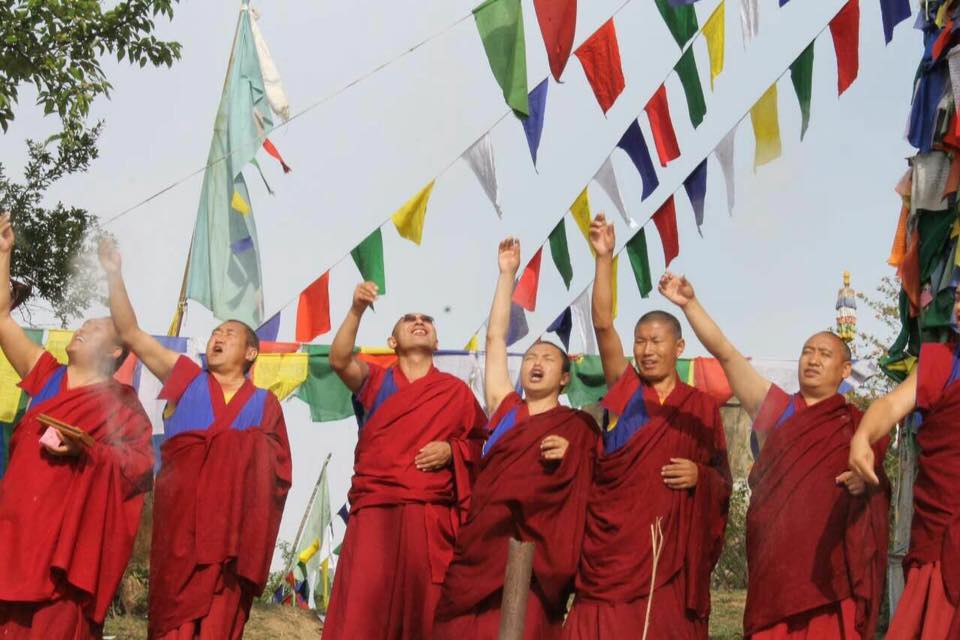
Monks at Menri Monastery in Dolanji, India performing an offering for universal harmony
Monks at Menri Monastery in Dolanji, India performing an offering for universal harmony

The Embodiment of Enlightened Body, the yidam Walse Ngampa
In the Yungdrung Bön tradition, there is a group of five yidam deities from the Father Tantra who embody the Enlightened Body, Speech, Mind, Quality and Activity of the Enlightened Lord Tönpa Shenrap Miwoche. This group of five yidam deities is collectively known as the Sé Khar Chok Nga, The Five Supreme Embodiments, or literally The Five Divine Fortresses.
The yidam deity, Walsé Ngampa is the embodiment of Enlightened Body. He is dark blue with nine heads and eighteen arms with which he holds various weapons for subduing obstacles. The main ritual text for this deity is entitled, “Stages of Practice for Walsé” which was composed by the great sage Drenpa Namkha. His consort has the peaceful nature of the enlightened Great Mother Satrik Érsang and is known as Ngammo Yumchen Tröpé Taktenma. Her body is dark green.
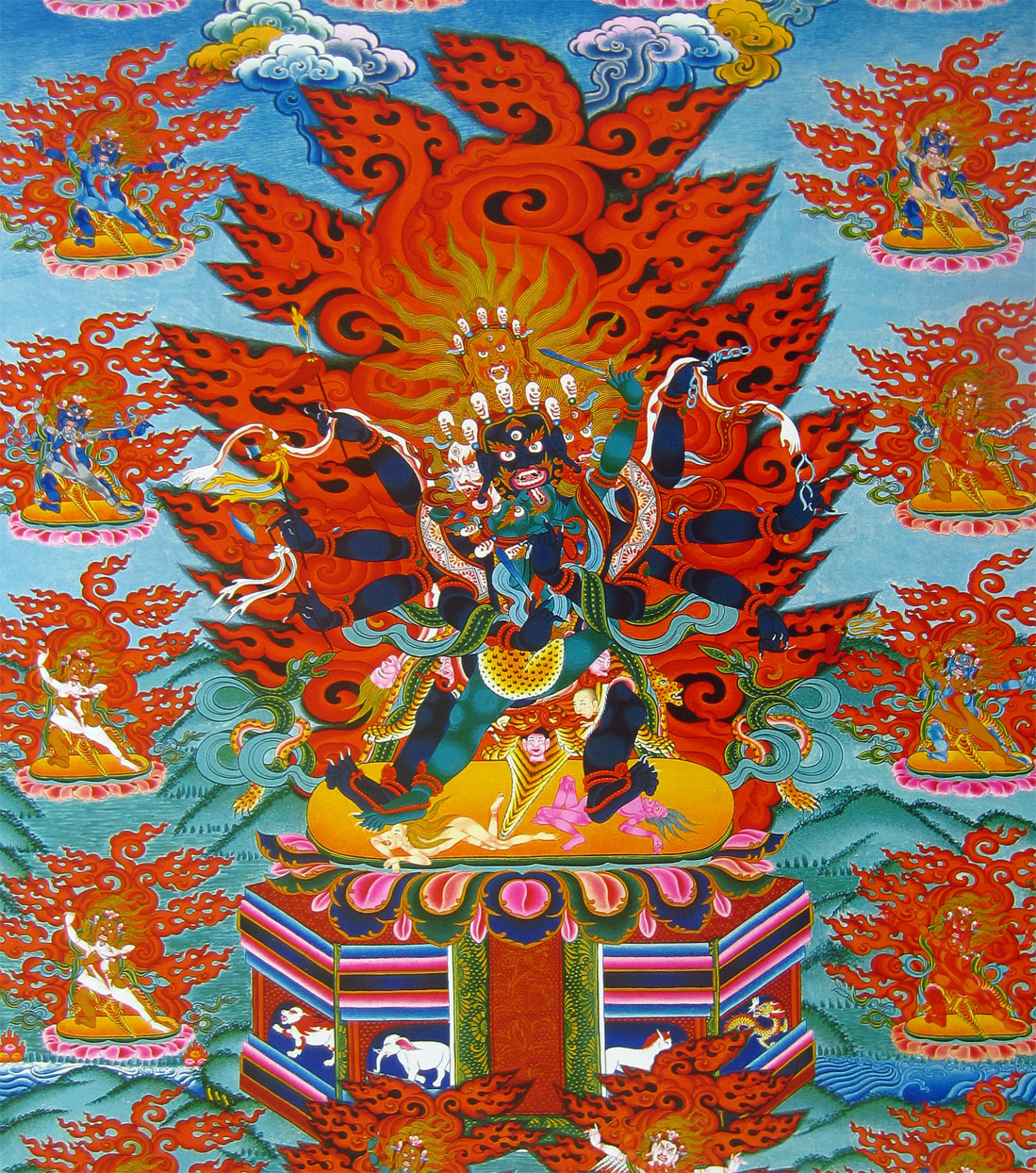
Embodiment of Enlightened Speech, the yidam Lhago Tokpa
The yidam deity, Lhagö Thokpa, is the embodiment of Enlightened Speech. He is dark blue with four heads and ten arms with which he holds various weapons for subduing obstacles. This yidam is not widely practiced at present. His consort has the nature of Sipé Gyalmo and is known as Jangnak Tröma. Her body is dark green and she has blue turquoise-colored hair.
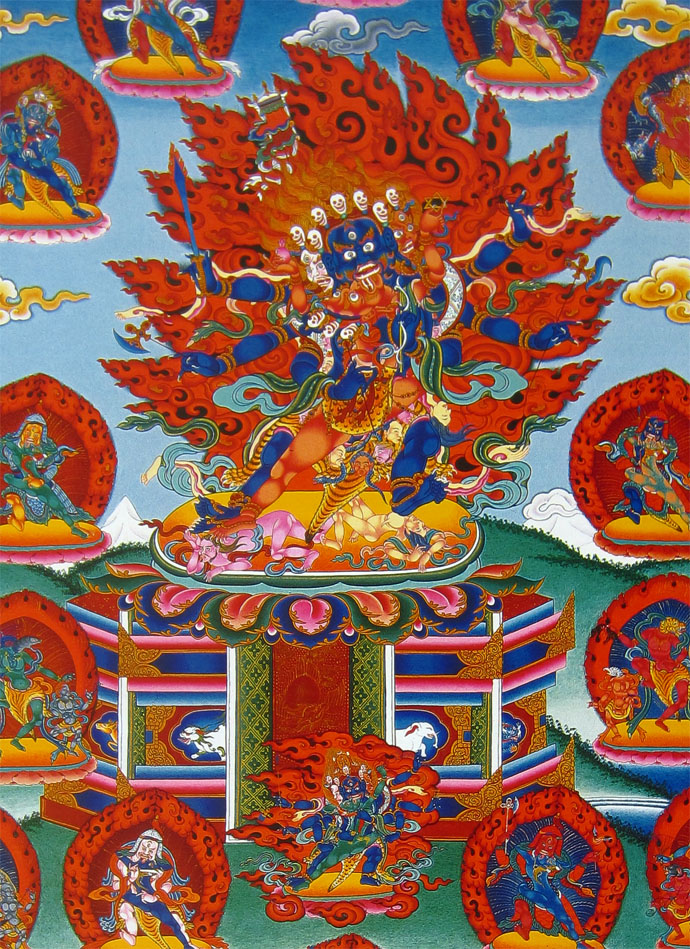
Embodiment of Enlightened Mind, the yidam Trowo Tsochok Khaygying
The yidam deity, Trowo Tsochok Khagying, is the embodiment of Enlightened Mind. He is dark blue with three heads and six arms. The main ritual text for this deity is known by the abbreviated title, “The Great Empowerment of Trowo.” His consort is Khala Dukmo. Her body is red and she wears a sun, moon and stars as a head ornament.
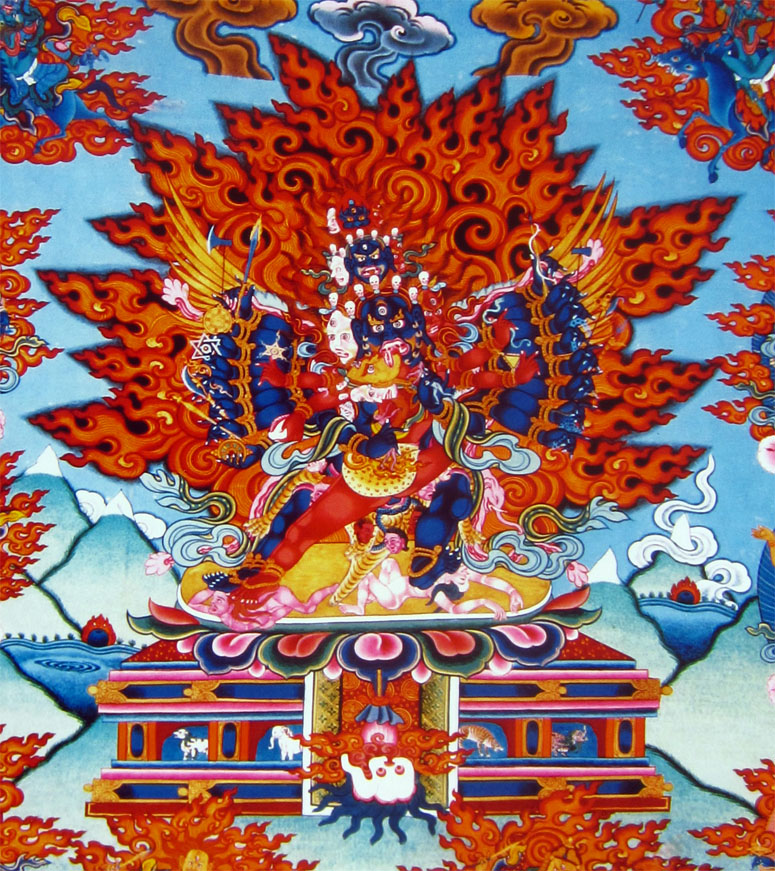
Embodiment of Enlightened Quality, the yidam Walchen Gekhko
The yidam deity, Walchen Gekho, is the embodiment of Enlightened Quality. This deity is closely associated with the ancient kingdom of Zhang Zhung and Mt. Tisé (Mt. Kailash). He is dark blue with nine heads, four legs and the wings like a garuda. He has eighteen arms with which he holds various weapons for subduing obstacles. There are five tantric texts associated with the yidam. One of them was compiled by the esteemed first abbot of Menri Monstery, Nyammé Sherap Gyaltsen, and is entitled, “Secret Fierce Gekho.” His consort is the queen of the Drala and has a body that is red.

Embodiment of Enlightened Activity, the yidam Drukse Chempa
The yidam deity, Walpur Drukse Chempa, is the embodiment of Enlightened Activity. This yidam is also referred to as Phurba. He has three faces and six arms, each of which are holding a phurba, or ritual dagger. He and his consort’s body are joined below the waist and form a single phurba adorned with snakes. Both the yidam and his consort have wings. There are many ritual texts associated with Trowo Drukse Chempa.
Raven Cypress Wood© All Rights Reserved

According to the Yungdrung Bön religious tradition, the Eight Worldly Concerns for human beings are distractions from the path of spiritual development. These Eight Worldly Concerns are:
Another way of categorizing these Eight Worldly Concerns:
Raven Cypress Wood© All Rights Reserved
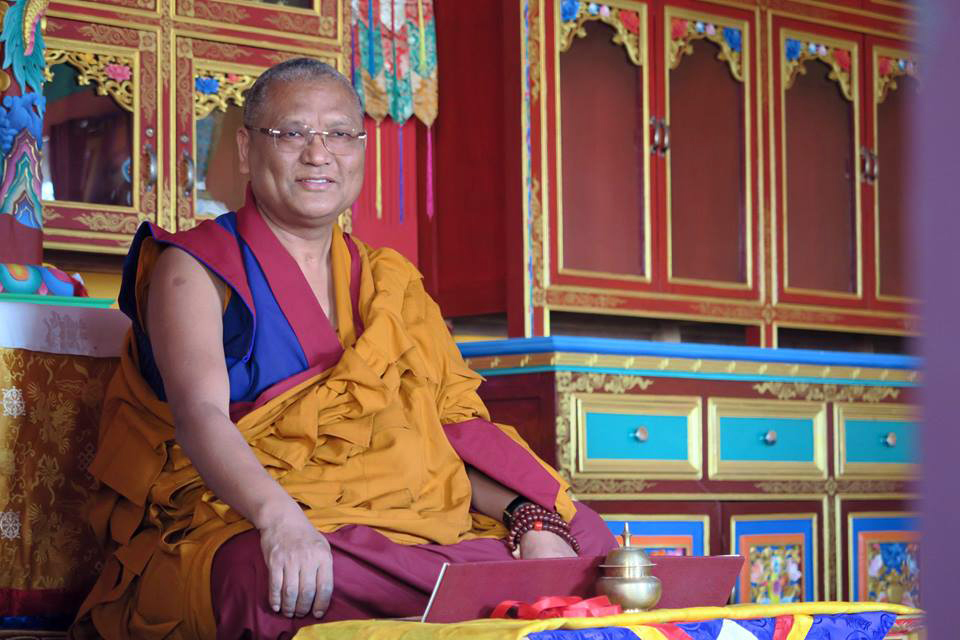
His Eminence Menri Lopon Yangton Thrinley Nyima Rinpoche

A Condensed Prayer of Aspiration
I pray to the Supreme Refuge, my root lama,
During this and all my future lives,
May I directly realize the nature of my mind, free from elaboration,
And may I have the capability to continually practice without interruption!”
~Written by 25th Menri Trizen HH Nyima Tenzin Rinpoche B. 1813-D. 1875. Translated by Raven Cypress Wood©

The Six Excellent Substances are added to the dry tsampa when making torma. Photo credit: Raven Cypress Wood
A common group of ingredients needed for making torma, and used in many Tibetan medicines is called Zang Druk, the Six Excellent Substances. These six substances are: 1) Chu gang, 2) Gur gum, 3) Li shi, 4) Dza ti, 5) Suk mel, and 6) Ka ko la. These substances are ground into powder and mixed together.
There are three types of Chu gang: 1) Tree Chu gang, 2) Rock Chu gang, and 3) Water Chu gang. Tree chu gang comes from an Indian tree similar to bamboo. It forms a milky white juice at the joints of the tree. Rock chu gang is hard like a stone, and water chu gang comes from rivulets found on mountains such as Mount Tisé.

The plant which produces saffron is Crocus sativus.
The common name for Gur gum is saffron. In general, there is low, medium and high quality grades of saffron. The common name for Li shi is cloves. The common name for Dza ti is nutmeg. The common name for Suk mel is cardamom. This is also known as green cardamom. The common name for Ka ko la is black cardamom.
Raven Cypress Wood© All Rights Reserved
 Nine Ways
