Lunar Calendar: Cutting Hair & Nails

moon phases 4

According to Tibetan astrology, the lunar cycle has a strong influence upon our daily activities.  Therefore, on certain days of the lunar month some activities are avoided while others are emphasized.  For example, the hair and nails are believed to be connected with the vital life-force.  Therefore, when a practitioner is performing longevity practices, the hair and nails are not cut for the duration of the retreat.  Special attention is also paid to which day of the lunar month is favorable for cutting the hair and nails in general.  It is believed that if they are cut on an unfavorable lunar day, it could diminish the vital life-force.

According to Tibetan astrology, the favorable lunar days for cutting the hair and nails are: 8th, 9th, 10th, 11th, 26th and 27th.  If they are cut on the 8th, it promotes longevity.  If they are cut on the 26th or 27th, it brings good luck.  Unfavorable lunar days for cutting the hair and nails are: 4th, 6th, 15th, 17th and the 30th.  If they are cut on these days, it is thought to be detrimental to vitality and/or good luck.  This belief is especially true when pertaining to a child’s first haircut.

Raven Cypress Wood© All Rights Reserved

The Precious Master who Guides Us

His Eminence Menri Lopon Trinley Nyima Rinpoche in Dolpo, Nepal. Photo credit: Unknown

Doorway to Zhang Zhung

The Six-peaked Doorway into Zhang Zhung. On the right, is the meditation cave of Drenpa Namkha. On the left, is the meditation cave of his son, Tsewang Rikdzin. Photo credit: Unknown.

The Field of Accumulation: The Yungdrung Sempa

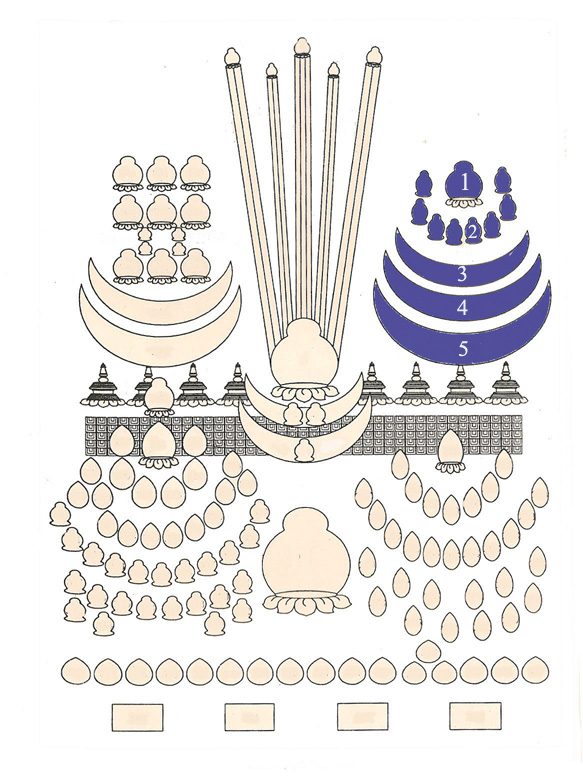
The Field of Accumulation according to the Menri Tradition

Yungdrung Sempa, Changeless & Ceaseless Warriors of the Mind

The term ‘Bodhisattva’ is a commonly used Sanskrit word referring to a practitioner who has fully developed their compassion as well as their intention to attain enlightenment in order to benefit other beings as well as themselves.  In the Yungdrung Bön, the term is jang chub sempa.  This literally translates as a ‘warrior or hero of the mind who has attained purification and understanding.’  There are many levels of jang chub sempa.  Depicted in the Field of Accumulation in the Menri tradition are the Yungdrung Sempa, the Changeless and Ceaseless Warriors of the Mind.  Among this group of Yungdrung Sempa, there are the Great Yungdrung Sempa and the Unsurpassed Yungdrung Sempa.  The Great Yungdrung Sempa are the warriors of the mind who have reached one of the first seven grounds which are still considered impure.  The Unsurpassed Yungdrung Sempa have reached one of the final three grounds which are considered pure.

A Yungdrung Sempa can manifest as any kind of sentient being in order to be of benefit.

  1. Dung Tsop Mucho Démdruk: He is the Speech manifestation of the Enlightened Lord Tönpa Shenrap.  In the Wood Dragon year of 6016 B.C., he descended from Ölmo Lungrik to the earth in order to benefit sentient beings.  This was 1,801 years after Lord Tönpa Shenrap showed the appearance of passing into parinirvana.  During this time, many scholars appeared.  In the Water Rabbit year of 5717 B.C., he went to the realm of the demi-gods in order to give teachings.
  2. Yungdrung Sempa of the Ten Stages of the Path of Meditation
  3. Yungdrung Sempa of the Path of Seeing
  4. Yungdrung Sempa of the Path of Preparation
  5. Yungdrung Sempa of the Path of Accumulation

Raven Cypress Wood© All Rights Reserved

Sacred Gathering

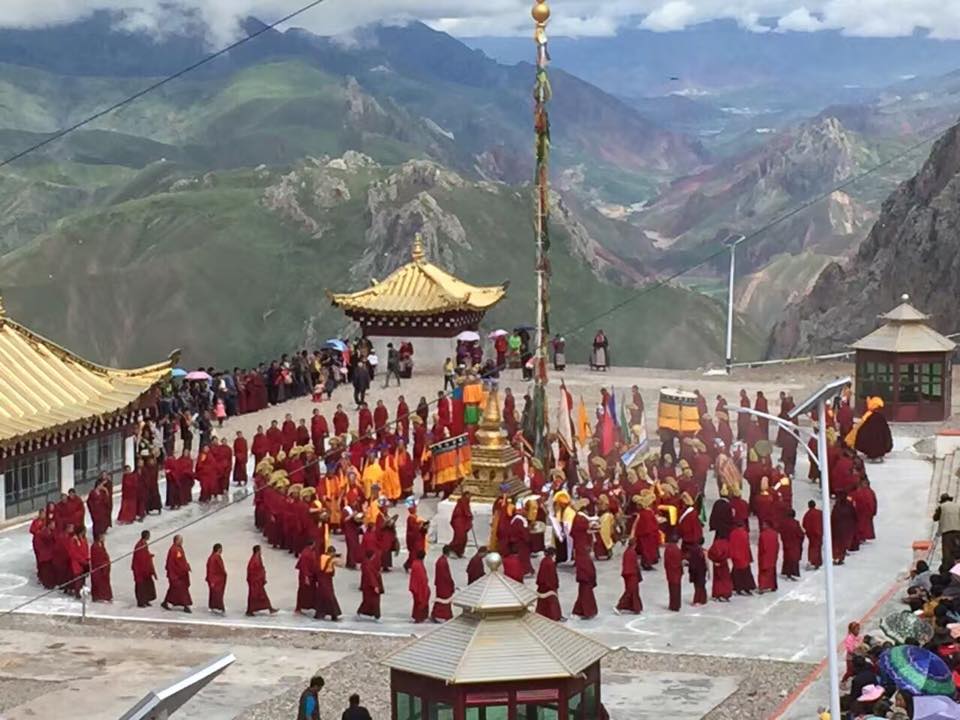
A public festival at Ri Tsedruk Ling Monastery in Khyungpo Tibet