
The flag of the Yungdrung Bön with each of the colors of the five elements and the golden chakshing with 2 turquoise-colored yungdrungs as held by Buddha Tönpa Shenrap Miwoche
The flag of the Yungdrung Bön with each of the colors of the five elements and the golden chakshing with 2 turquoise-colored yungdrungs as held by Buddha Tönpa Shenrap Miwoche
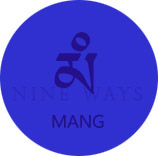 The element of Water is called chu in Tibetan. It is symbolized by the shape of a circle and its color is blue. The unique vibration of this element is the sound ‘MANG’. It is associated with the direction South. In general, Water provides joy and comfort.
Environmentally, our dependence upon the element of Water is evidenced by the value placed upon its ‘ownership’ by principalities and governments. Civilizations have been founded upon the availability of water for agriculture, travel, trade and fishing. Dependent upon this resource for the health of their citizens as well as their commerce, civilizations have also fallen when access to water became restricted for various reasons. In the Yungdrung Bön tradition, it is believed that one of the spirits who live in water is called lu, also referred to as naga. These lu also live in trees and rocks, but are primarily associated with water. Frogs and many other water inhabitants are thought to be used by the lu as their domestic animals. The lu realm and the human realm are thought to be in continuous relationship with one another. In ancient times, accomplished lamas, as well as the Buddha himself, taught the sacred teachings to the lu. Therefore, among this group of beings, there are followers of the Buddha who act to protect the teachings. However, just like any group of beings, there are those among the lu who have less compassion and patience with the actions of humanity that cause damage and destruction to their environment. Because of this, there are rituals and prayers specifically for apologizing to the lu, purifying the damage that we have caused, and thereby pacifying their grievances against us.
Within our bodies, the element of Water rules our blood. More specifically, it is associated with the kidneys. When the element of Water is balanced within us, we feel comfort with ourselves, happy and contented with our life. Our emotions are balanced and there is joy in our spiritual practice rather than it being a dry, intellectual exercise. If Water is in excess, we can be lost in our comfort and lack the energy to be productive. We can become too fixated on pleasure and enjoyment. Or we can be lost in our emotions, making our decisions based solely upon the ebb and flow of our moods. To the extreme, we spend the day either weeping or laughing. If the Water element has become weakened, we are uncomfortable with ourselves and others. We do not feel content or happy with whatever is happening around us. We constantly feel unsatisfied.
In order to bring the element of Water back into balance, there are methods such as Tibetan medicine, ritual and meditation practices. There are specific yogic exercises within the Yungdrung Bön tradition which use the focus of the mind together with the breath and movement of the physical body to balance and strengthen the elements within us. To learn more about these yogic exercises see Healing with Form, Energy and Light by Tenzin Wangyal Rinpoche. Additionally, if the Water element has become weakened, we can spend time near a river, stream or ocean and focus upon experiencing the feeling of the water in the body and energy. Literally, drink more water. But do so with the awareness that this is restoring strength to your Water element. Practice being more generous with your time and with your possessions. Take advantage of opportunities in which you can offer even a little kindness to those with whom you come into contact. If the Water element is in excess, focus less on your own comfort and focus more upon improving the comfort of others who are less fortunate or who have less capacity to do this for themselves. When the element of Water is balanced within us, we can maintain joyful effort in our daily activities and feel happiness, satisfaction and gratitude in our lives.
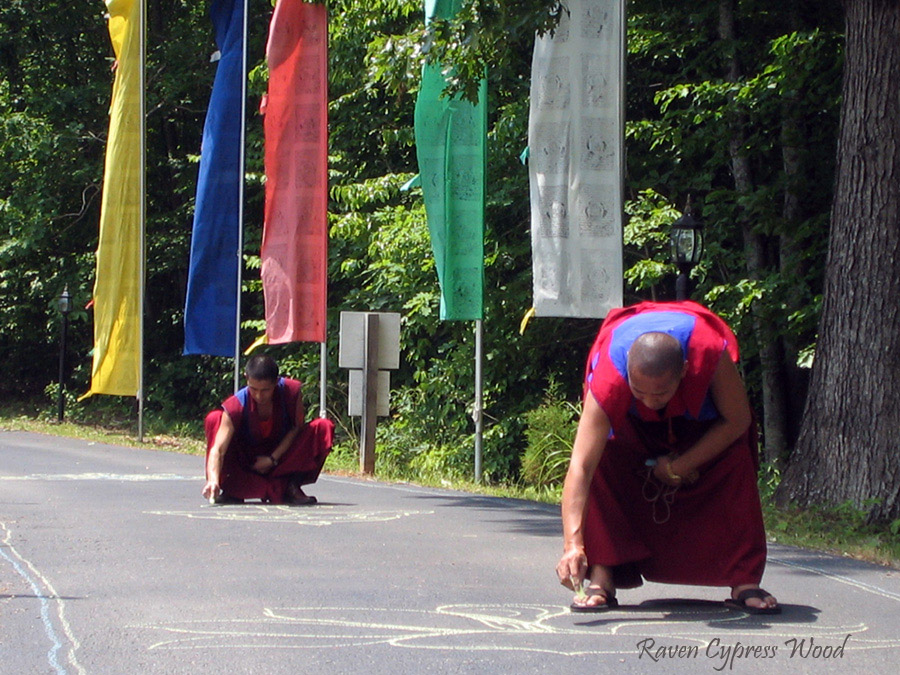
Bön Buddhist monks prepare for the arrival of the 33rd Menri Trizen, spiritual leader of the Bönpo, by drawing the eight auspicious symbols.
 The element of Earth is called sa in Tibetan. It is symbolized by the shape of a square and its color is yellow, or golden. The unique vibration of this element is the sound ‘KHAM’. It is associated with the direction East. From the Yungdrung Bön point of view, East is one of the cardinal directions but it is also associated with ‘the front’. For instance, when looking at the image of a deity, East is always considered the front of the deity. Earth provides solidity and stability.
Environmentally, our dependence upon the element of Earth is obvious since this is the name of the very planet that we live upon. Additionally, it is the soil in which we grow our food and the foundation upon which we build our homes. In the Yungdrung Bön tradition, one’s relationship with the environmental element of Earth is not only with the form. It includes the spirits of the element itself as well as seeing the land as a living being. Before beginning construction of a building, it is important to examine the characteristics of the land. Traditionally, it is seen as a turtle. If you build upon the turtle’s ‘head’, then the spirit of the land will ‘die’ and the soil will become barren and empty. It is best to build in the ‘stomach’ of the turtle because here, there is more empty space and no ‘major organs’ will be disturbed. Once the proper location has been determined, it is important to communicate with the spirits of the land that are already in residence at that location and to assure them that you mean no harm and that you apologize for any disturbance that the building causes them. To simply begin digging holes, cutting down trees and erecting buildings would be similar to someone barging into your house and rearranging furniture and knocking down walls without even acknowledging your existence. Therefore, these things are considered important for maintaining harmony.
Within our bodies, the element of Earth rules our flesh. More specifically, it is associated with the spleen. The element Earth, along with the other elements, also exist within us in a more subtle form as a kind of wind that ideally moves upwards in our bodies and brings nourishment to our five senses and to our brain. The balance or imbalance of this subtle Earth wind affects our internal experience. When the element of Earth is balanced within us, we feel stable, secure, confident and able to handle whatever comes our way. We are steady and consistent in our relations, our commitments, and our routines. We feel that we have enough support for our life. And we have sustained concentration and diligence in our meditation practice. If Earth is in excess, then we feel lazy, weighed down, and heavy. Our bodies and minds literally plod along. Our thinking is dull and lacks creativity or inspiration. To the extreme, we become depressed and only want to sleep. If Earth has become weakened, we are literally ungrounded. It is difficult to maintain focus on anything long enough to finish it or follow through. We are filled with doubt and find it difficult to make decisions. We feel insecure and dissatisfied.
In order to bring the element of Earth back into balance, there are methods such as Tibetan medicine, ritual and meditation practices. There are specific yogic exercises within the Yungdrung Bön tradition which use the focus of the mind together with the breath and movement of the physical body to balance and strengthen the subtle elements within us. To learn more about these yogic exercises see Healing with Form, Energy and Light by Tenzin Wangyal Rinpoche. Additionally, there are other methods available to us. For example, if the Earth element is weakened, spend time feeling the pull of gravity upon your physical body. Sit and meditate upon the image of a mountain. Eat heavier foods and avoid caffeine and being overly busy. Sit still. If the element of Earth is in excess, then get up and move the body. Go for a walk or do other kinds of exercise. Eat lighter more easily digested foods. Avoid the temptation to sleep too much. Spend time with people who are active and creative. Pay more attention to the wind and the movement of things around you. When the element of Earth is balanced within us, we can remain grounded and focused in any situation without getting stuck or losing the ability to change and be flexible.
 Nine Ways