Category Archives: Yungdrung Bon Monasteries

A Time of Fasting & Asceticism for Body, Speech, and Mind

Nuns in Rayna Menling Nunnery in Dolanji, India. Photo credit: Unknown

Each year in every Bönpo monastery, the 1st-7th days of the 8th lunar month is a time of observing strict vows of discipline and ascetic behavior as practiced by the founder of the Yungdrung Bön religious tradition, Lord Buddha Tönpa Shenrap Miwo. In 2023, these dates coincide with September 15th-22nd.

This is the ritual of Ka Tup, ascetic fasting. Specifically, there are three kinds of ascetic fasting. Fasting through the body which involves limiting food and drink, and being diligent to avoid non-virtue of the body such as physically harming others, stealing, and so on. Fasting through the speech involves stopping meaningless speech, gossip, harsh words, and so on. And, fasting through the mind which involves stopping thoughts driven by the five poisons especially thoughts of harming others.

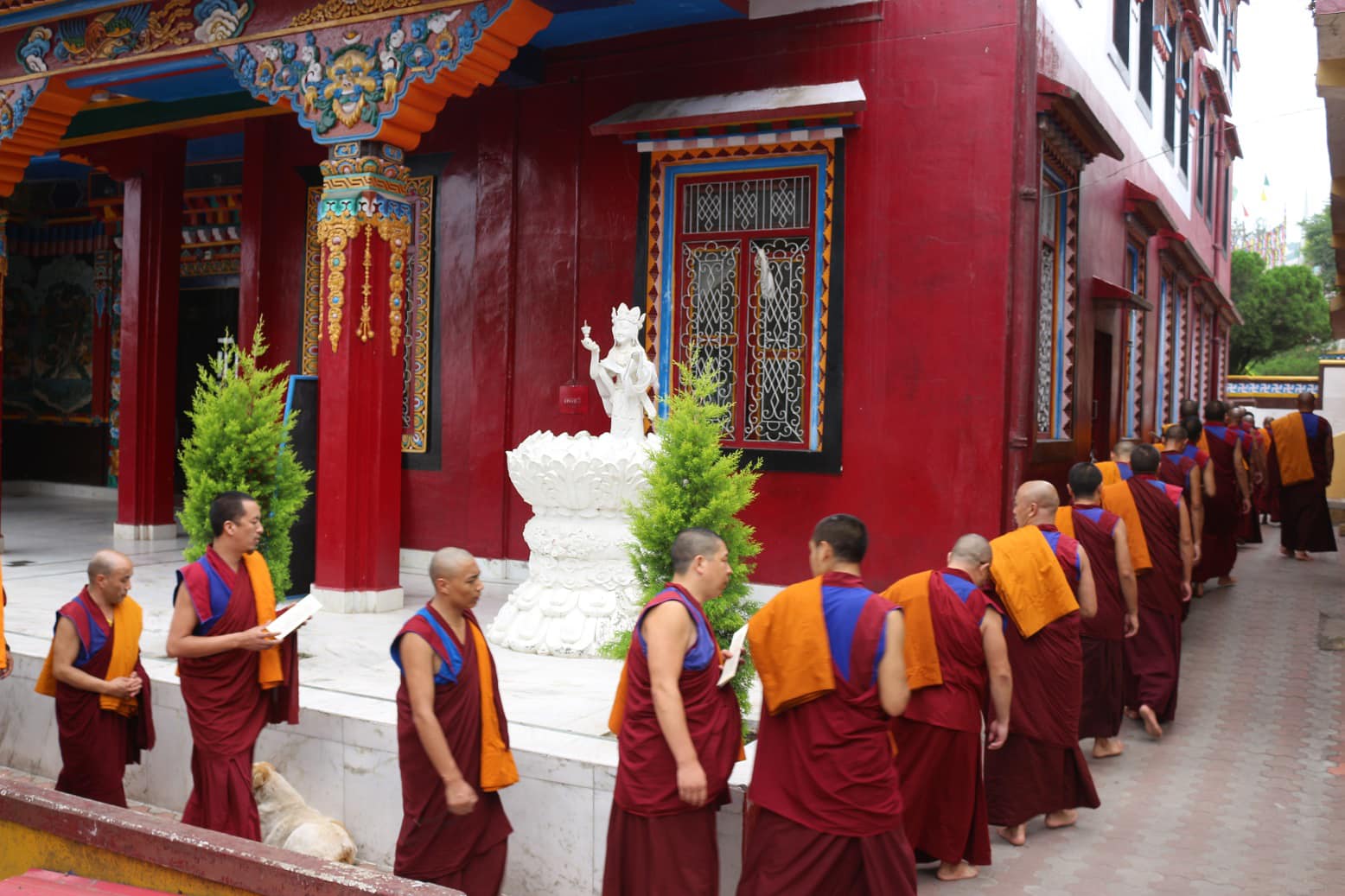
During these seven days, the monks and nuns will get up before sunrise, go to the temple, and prostrate in the presence of the images of the thousand buddhas. Then after breakfast, they will gather in their respective temples and receive explanations and advice according to monastic discipline, the proper way to dress and conduct themselves, the difference between monks’ and nuns’ vows, and so on. After the final meal at mid-day, they will circumambulate the temples and recite the DU TRI SU mantra of purification. They continue these practices until 11 p.m. and then rise again at 4 a.m. the next day.

Monks within Triten Norbutsé Monastery. Photo credit: Unknown

When Lord Tönpa Shenrap was 31 years old, he took a vow to live as an ascetic. He removed his princely robes and jewels and ritually bathed with lustral water in order to show a method of purification. He left all of his possessions, associates, and disciples to practice alone in isolation. Some of his disciples supported his decision but many others turned away from him to continue their worldly affairs. The day after his public vow at dawn, he arose and recited the names of the thousand buddhas. He then went to the great temple of Shampo Lhatsé. At the first light of sunrise, he circumambulated and recited the names of the thousand buddhas. When the sun has fully risen, he recited the three essence mantras of the Yungdrung Bön. After that, he wrote down the rules of disciple for those who receive ordination. He decided which foods he would and would not allow for himself and then he transformed into a shang shang bird and flew into the sky.

He practiced asceticism for a total of three years. The first year, during the daytime he practiced in the outward form of a bird. Each day, he only took a single grain of rice that was offered by the swan king, and a single dewdrop of water. At night, he assumed the form of a human being. During that year, he practiced virtue and taught the gods that dwell at the summit of Mt. Meru. The second year, during the daytime, he practiced in the outward form of a monkey. Each day, he only took a single fruit that was offered by the monkey king. During that year, he practiced virtue and ministered to the Four Great Kings and the multitude of spirits that were their associates. The third year, he practiced in the outward form of a human being. Each day he only took one small vegetable that was offered by the Shang shang king [a bird with a human head], a single leaf containing the essence of honey that was offered by the bee king, and a palmful of water that was offered by the turtle king.

Monks circumambulating the Menri temple in Dolanji, India during Ka Tup. Photo credit: Unknown

Thus, he demonstrated a method of overcoming desire and attachment. He did not need to do this for himself because he was already an enlightened being. However, he showed this example for the benefit of others an example for others. Living in this way, Tönpa Shenrap became very emaciated. The demon prince who had previously been creating great obstacles for him spied on him to assess his practice. At seeing his condition, the demon was overwhelmed and perplexed at why such a powerful being would choose such a course of action. To this, Buddha Tönpa Shenrap began to teach the demon prince and his troops the truth of impermanence and how desire and attachment cause great suffering. He then instructed them in the skillful method of renunciation a way to overcome suffering and misery and attain freedom and happiness. In this way, he completed his 9th deed of renouncing cyclic existence and showing the path of renunciation.

Raven Cypress Wood ©All Rights Reserved. No content, in part or in whole, is allowed to be used without direct permission from the author.

Don’t want to miss a post? Scroll to the bottom and click “Follow this blog.”

Want to join the mandala of Nine Ways supporters? Follow this link https://ravencypresswood.com/donate/ It’s easy through Paypal and Zelle.
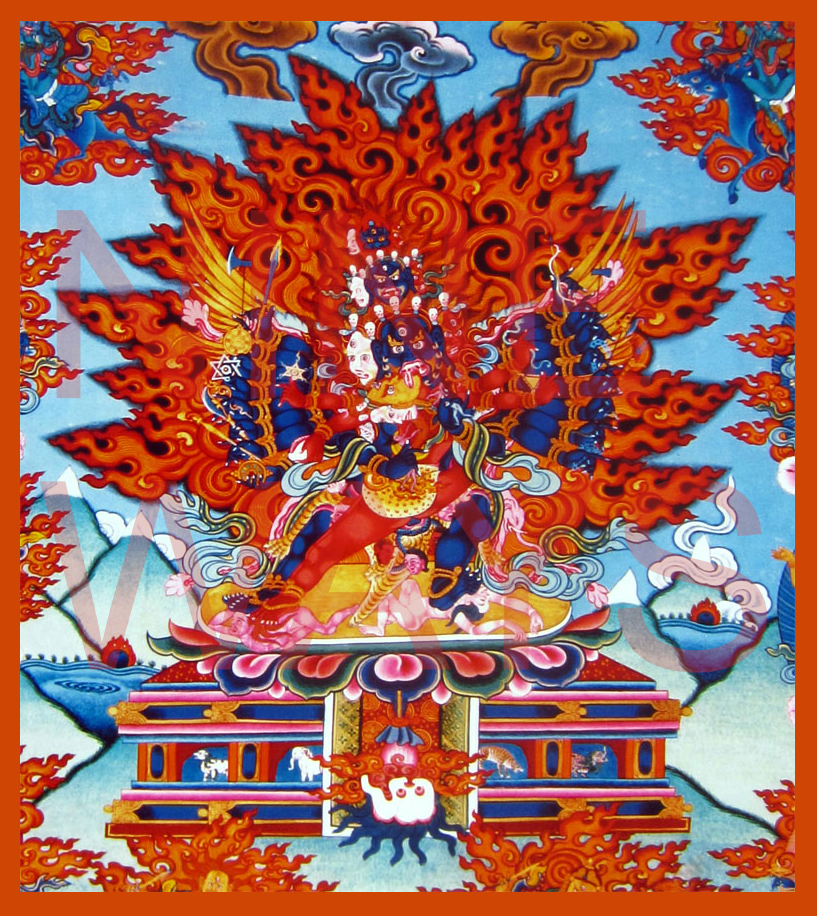
Menri Monastery: Annual Retreat of the Great Loving Mother

Jamma Chenmo, the Great Loving Mother

Each year during the 23rd-29th lunar days of the 5th month, members of the Menri Monastery ordained community undergo a retreat for Jamma Chenmo, the Great Loving Mother. This year, those lunar dates coincide with July 10th-16th, 2023 on the Western calendar.

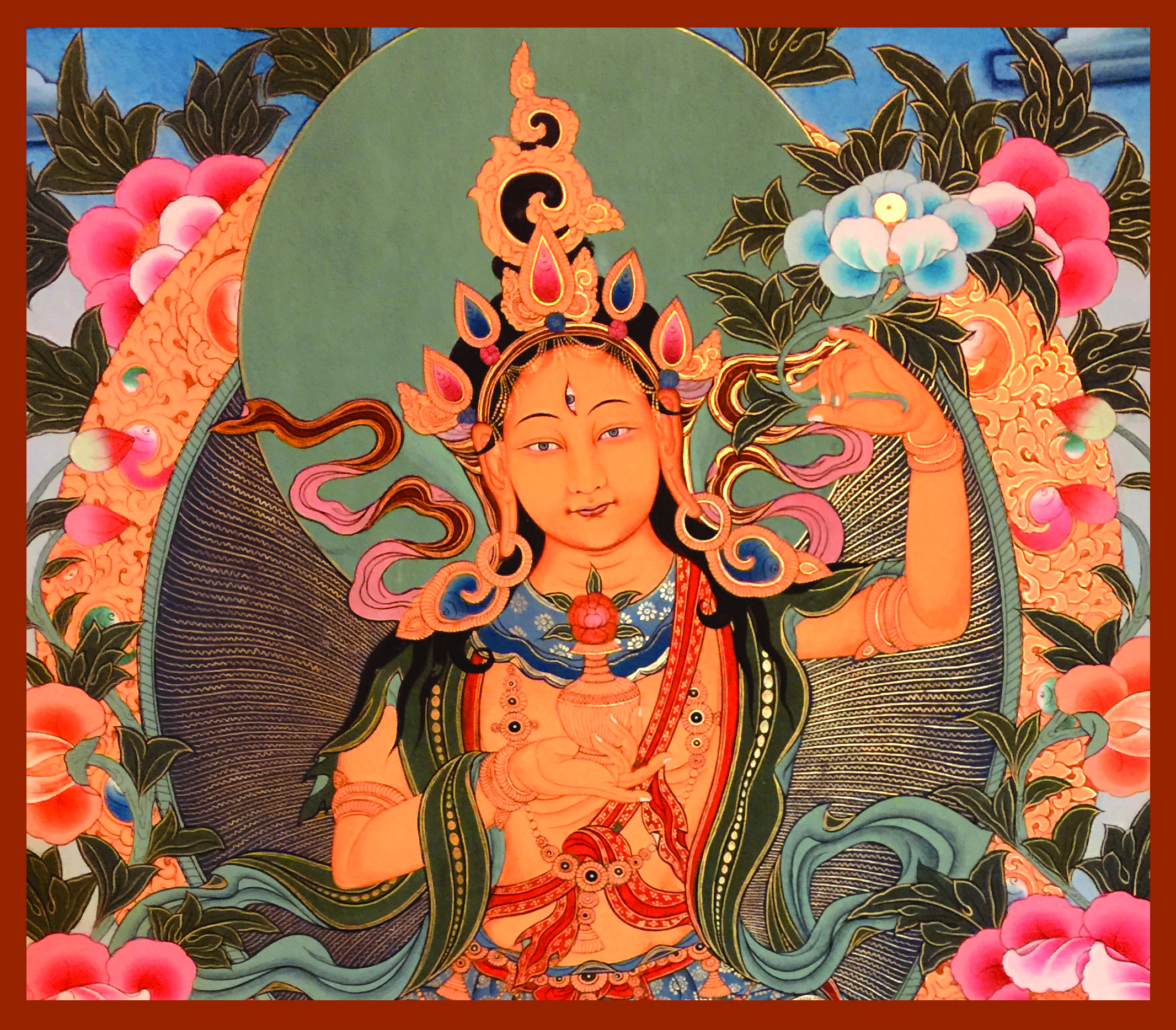
Jamma Chenmo, the Great Loving Mother, is a Buddha who manifests as a loving mother to care for each and every sentient being as though they were her only child. In her manifestation as one of the Four Transcendent Buddhas of the Yungdrung Bön religious tradition, she is called by the Zhang Zhung name Satrik Érsang.

Buddha Jamma Chenmo, also known as Sherap Jamma, can manifest in any way necessary to act for the welfare of sentient beings. She magically emanates as the Five Wisdom Families who are the manifestation of her enlightened body, the Eight Protectors who are the manifestation of her enlightened speech, the Sixteen Door Openers who are manifestations of her enlightened mind, the thirty-two emanations who are manifestations of her enlightened qualities, the fifty-two emanations that are manifestations of her enlightened activity, the 108 emanations who are the source of many Jamma scriptures, the 360 emanations who keep watch over the five elements of the phenomenal world and every kind of sentient being, the 5,500 emanations that are yungdrung sempa [Sanskrit:bodhisattvas], and the many limitless emanations who are part of her retinue and who work on her behalf.

The Five Wisdom Manifestations of Jamma Chenmo

Jamma Chenmo’s Five Wisdom Family emanations all have a peaceful appearance and collectively embody the five wisdoms and purify the five poisons. These five manifestations are Künsel Jamma, Tabgyi Jamma, Mönlam Jamma, Tukjé Jamma, and Topgyi Jamma. Künsel Jamma, the All-clear Loving Mother, is a fiery golden color.  She has one face, two arms, and two legs. In her right hand, she holds a golden vase of nectar. In her left hand, she holds a udumbara flower. At the flower’s apex is a round mirror symbolizing wisdom. She wears bracelets of crystal, and around her neck is an ornament of forty wisdom tiklés. She is the embodiment of the wisdom of emptiness.

Tapgyi Jamma, Loving Mother of Skillful Means, is white with one face, four arms, and two legs. In her two right hands, she holds a net and a lotus. In her two left hands, she holds a lightening bolt and a yungdrung. She is the embodiment of mirror-like wisdom.

Mönlam Jamma, Loving Mother of Aspiration, is also known as Namkha Dzö Dzinma, Holder of a Sky Treasury. She is green with one face, four arms, and two legs. In her right two hands, she holds a razor and a staff. In her two left hands, she holds a renunciate’s begging bowl and a vase of lustral water. She is the embodiment of the wisdom of equanimity.

Tükjé Jamma, Loving Mother of Compassion, is like the queen of all the khandro and also manifests as the great consort, Chema Ötso. She is red with one face, four arms, and two legs. In her right two hands, she holds a lasso and a sun. In her left two hands, she holds a precious jewel and a victory banner. She is the embodiment of discriminating wisdom.

Topgyi Jamma, Loving Mother of Power, is also known as Nang Si Kün Drakma, Goddess who is renowned throughout the phenomenal universe. She is blue with one face, four arms, and two legs. In her right two hands she holds a dagger and a military banner. In her left two hands, she holds a horoscope and an utpal flower. She is the embodiment of all-accomplishing wisdom.

Jamma Chenmo and her retinue

This cycle of tantric teachings of Künsel Jamma Chenmo are found in the 8th Way of Bön, The Way of the Primordial Shen.

“Although Bön is abundant and plentiful, this Great Vehicle of the Primordial Shen is different from the lower 7th Vehicle. The king of all oral transmissions, those transmissions spoken with words, is the Bön cycle of Künsal Jamma Chenmo.”  

— From Jamma’s 100,000 Empowerments

Raven Cypress Wood ©All Rights Reserved. No content, in part or in whole, is allowed to be used without direct permission from the author.

Don’t want to miss a post? Scroll to the bottom and click “Follow this blog.”

Want to join the mandala of Nine Ways supporters? Follow this link https://ravencypresswood.com/donate/

Anniversary of the Parinirvana of Barlé Lama Tsukphü Gyaltsen Rinpoche 

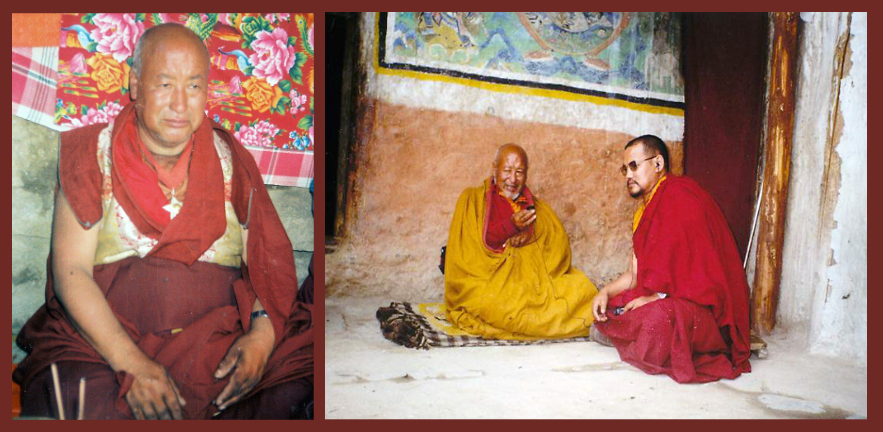
Left: Barlé Rinpoche Right: Barlé Rinpoche with Khenpo Nyima Künchap Rinpoche

Barlé Lama Tsukphü Gyaltsen Rinpoche was the senior lama of Barlé Gompa, formally known as Seteng Yungdrung Shuktsal Ling, located in the village of Barlé in Dolpo, Nepal. On the 27th lunar day of the 4th Tibetan month in the Western year 2000, his outward breath stopped. His body remained in the five-fold meditation posture for three full days. In 2023, this lunar date coincides with June 15th. Some of his ring sel, or precious relics, are now in the village of Ti Chu Rong in the area of Barlé village. Each summer, residents have an opportunity to go and offer their respect and receive blessings from these ring sel.

Barlé Rinpoche was born in 1934 in the district of Barlé and unusual signs appeared at the time of his birth. From the age of five, he was given thorough instruction and training in Tibetan reading, writing, and Yungdrung Bön ritual practices. Although most Barlé lamas are ngakpas, or householder lamas, Barlé Rinpoche did not want to pursue this kind of lifestyle. Instead, at the age of eighteen he received monk’s vows. He traveled to Samling Monastery and stayed there for three years. Later, he received teachings and initiations from His Eminence Yongdzin Tenzin Namdak Rinpoche as well as Sangye Tenzin Rinpoche.

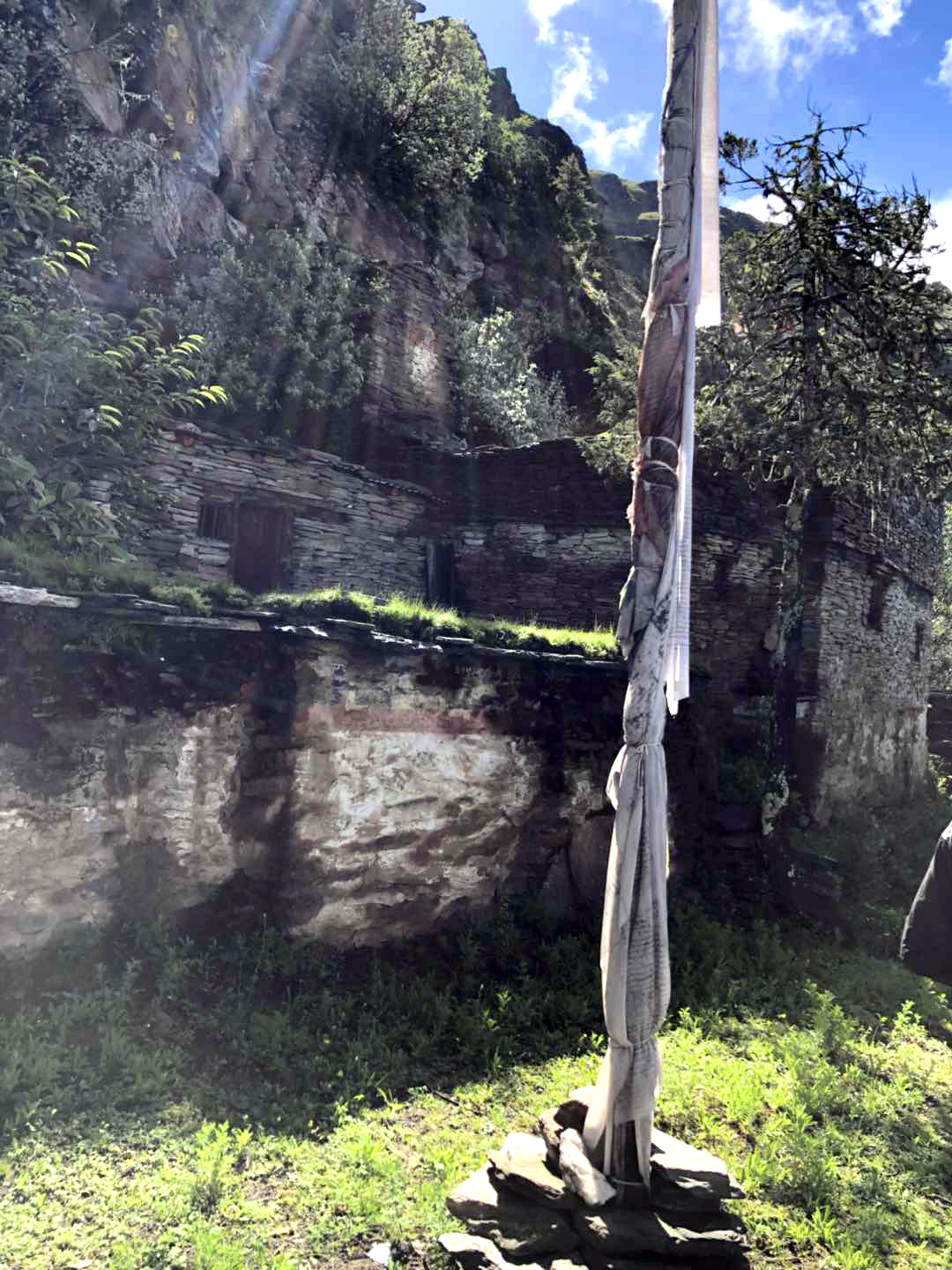
Upon his return to Barlé village, he immediately began looking for an isolated spot to go into retreat. He found an auspicious place about a thirty-minute walk from Barlé Gompa near a rock formation that naturally resembled a chorten. Here, he constructed Drak Gön Hermitage, Stone Temple Hermitage. From 1970 until 2000, he remained in retreat at this hermitage while also working for the benefit of the local residents. He was a skilled calligrapher and wrote many hundreds of pages of sacred text by hand. At the end of his life, he gave many of these texts, to Murig Khenpo Nyima Künchap Rinpoche who was both his relative and a close student from a young age.

The cave hermitage of Barle Rinpoche. Photo credit: Khenpo Nyima Kunchap Rinpoche

Murig Khenpo Nyima Künchap Rinpoche was also born in the village of Barlé. After the parinirvana of Barlé Rinpoche, Khenpo Künchap recognized his reincarnation in the village of Barlé due to the young boy naturally showing the signs of being familiar with the life and private details of his previous incarnation. Given the name Tséwang Rikdzin, he is currently at Menri Monastery in India. Khenpo Nyima Künchap Rinpoche has taken personal responsibility for his well being and education.

Left: Murig Khenpo Künchap Center: H.E. Menri Ponlop Yangtön Thrinley Nyima Rinpoche Right: Barlé Tulku Tsewang Rikdzin in 2022 at Barlé Gompa

Raven Cypress Wood ©All Rights Reserved. No content, in part or in whole, is allowed to be used without direct permission from the author.

Don’t want to miss a post? Scroll to the bottom and click “Follow this blog.”

Want to join the mandala of Nine Ways supporters? Follow this link https://ravencypresswood.com/donate/

Feast Offering to the Deities of the Mother Tantra

Untitled

Mother Tantra deities as painted by Lama Kalsang Nyima. Photo credit: Raven Cypress Wood

On the 21st and 22nd lunar days of the 1st month, Menri Monastery in Dolanji, India will perform a feast offering to the deities of the Mother Tantra according to the Shen tradition. These dates are March 23rd and 24th, 2022 on the Western calendar. This kind of feast offering, known as tsok [Tibetan: tshogs] literally means “collection, accumulation, assembly.”

The source of the Mother Tantra within the Yungdrung Bön religious tradition is the primordial Buddha Küntu Zangpo. It has three cycles: external, internal and secret. Each cycle has a root text and a commentary that was written by the sage Milu Samlek. The main yidam of the Mother tantra is Sangchok Tartuk and his consort Khandro Chema Ötso. Of the two types of either peaceful or wrathful, the tsok of the Mother Tantra is categorized as wrathful.

menri ma gyud tsok 2021

Tsok offerings for the principal deities and retinue of the Mother Tantra. Photo credit: Unknown

For those who have vows with a yidam deity, performing a tsok is an opportunity to repair broken vows or commitments related to the yidam practice and increase merit and wisdom. Having offered to the enlightened beings, we gain more power and energy. Additionally, past negative actions and the obstacles and imbalances of daily life are purified. Qualities such as health, longevity, prosperity, confidence, stability are enhanced. When undergoing a deity retreat, a tsok is performed during the final session of practice each day.

When performing a tsok, the ritual can be done in its condensed, medium-length, or extensive forms. This is determined by the purpose of the tsok, the sponsor, the circumstance, and the umdzé or ritual director of the feast offering. However, every tsok has a similar structure consisting of preparation, preliminaries, prayers related to the specific deity together with their retinue, and the concluding prayers.  In general, once the length of the tsok is determined the necessary sacred substances, offering torma, and food offerings are prepared. Everything must be clean, prepared according to the text, and placed in its proper position in the shrine area. The preliminary practices consist of the usual foundation of setting an boundary in order to keep out obstacles and to keep in the blessings, going for refuge, generating the mind of enlightenment for self and others and admission of wrongdoing and purification.

The tsok offerings are then ritually cleansed with water and incense. The tsok is then empowered through visualization and mantra and becomes delicious, containing the eight qualities of nutrition, as well as limitless auspiciousness and positive qualities. The principal deity are retinue are formally invited to tsok and asked to reside in the objects of support such as the yidam torma or image that has been centrally placed on uppermost level of the shrine. Now that the enlightened deity is present, prostrations are offered. One can also take this opportunity to confess any broken vows or commitments to the deity and receive purification and renewal of those vows.

wrathful tsok

A wrathful tsok offering. Photo credit: Unknown

The eight offering goddesses are imagined to present the eight external offerings to the assembly of deities. Then, rakta mixed with tea is offered and is symbolic of a blood offering. This represents offering the liberation of our desire and attachment. Next, the ritually prepared medicinal alcohol is empowered and presented to the yidam deities which represents offering our wisdom. The tsok is then liberated by being cut. The top-most portion is offered to the deities, and the next portion is offered to the lineage lamas of the practice being performed. The linga torma represents outer enemies and obstacles as well as the inner five poisons, wrong views etc. This torma is now presented to the yidam, liberated by cutting, and then offered while requesting the ordinary and supreme attainments of the practice. The Yungdrung Bön protectors are presented with offerings, the prayer of delighting the deities and the lineage with the tsok is performed, and the prayer of attainment is performed.

“Within this mandala where marvelous things arise,

there is a collection of enjoyable things such as sights, sounds, smells, tastes, things to touch, ornaments, Bön treasures, etc.

Through this unsurpassed cloud of offerings, both actually set out and imagined,

may our sacred commitments be fulfilled!

Through the blessings of having fulfilled our sacred commitments to you,

may the enlightened teachings of the Yungdrung Bön spread!

Dispel into space all external, internal, and secret obstacles!”

And,

“Emaho!

This sacred food is the essence of spiritual attainment.

I will partake of it and receive both the ordinary and the supreme spiritual attainments!”

Then, by eating the tsok, we renew our vows with the yidam deities and receive their blessing and empowerment. We then share the leftovers of the tsok offerings as a charitable gift to those lower beings who are powerless to take part in the tsok and depend upon our generosity to receive its blessings.

The concluding practices include prayers of aspiration and auspicious followed by dedicating all of the virtuous activity performed during the tsok for the benefit of every sentient being within cyclic existence.

For more information about the cycle of Mother Tantra texts, see previous article: https://ravencypresswood.com/2021/12/18/a-brief-introduction-to-the-mother-tantras-of-yungdrung-bon/

Tibetan translations by Raven Cypress Wood

Raven Cypress Wood ©All Rights Reserved. No content, in part or in whole, is allowed to be used without direct permission from the author.

Don’t want to miss a post? Scroll to the bottom and click “Follow this blog.”

Want to join the mandala of Nine Ways supporters? Follow this link https://ravencypresswood.com/donate/

Yungdrung Bön in Mongolia

His Eminence Menri Ponlop Yangtön Thrinley Nyima Rinpoche officiates the opening of Thegchen Zhidé Dargyé LIng. Photo credit: Unknown

On December 19, 2019 a new Yungdrung Bön temple was officially inaugurated by His Eminence Menri Ponlop Yangtön Thrinley Nyima Rinpoche upon the request of its founder, Khenpo Menri Geshe Zöpa Gyatso Rinpoche. The temple is named Thekchen Zhidé Dargyé Ling, Land of the Great Vehicle where Peace and Happiness Flourish. On December 15th, His Eminence performed the rituals for consecrating and opening the eye for the new deity statues for the temple. On December 16th, His Eminence met with special guests and those who helped to establish the new temple.

The public looks on as HE Menri Ponlop Rinpoche officially opens the new temple in Mongolia. Photo credit: Unknown

Beginning on December 17th, HE Menri Ponlop Rinpoche gave the oral transmission for the practice of Sherab Jamma and Laughter of the Khandro to a gathering of monks and laypeople. On December 19th, His Eminence officially opened the new Yungdrung Bön temple, Thekchen Zhidé Dargyé Ling. In attendance were representatives of the Jonang Religious tradition, the Nepal Zhang Zhung organization, the Nepal Bönpo organization, and the Dolpo Tapihritsa School. After His Eminence cut the ribbon, the guests entered the new temple. Representations of enlightened body, speech and mind were presented which was followed by the ritual of the great lama Drenpa Namkha. After the ritual had concluded, each of the representatives had an opportunity to give a short speech.

Afterwards, HE Menri Ponlop Rinpoche spoke about the spread of Yungdrung Bön into Mongolia in the distant past. In 888 A.D., the Mongolian slave Sokpo Trel Lakchen received full ordination as a Yungdrung Bön monk from Muzi Salzang. At that time, he received the ordination name Tribar Tsultrim. Afterwards, Bön declined in Mongolia. Therefore, this is not the first spread of Bön into the country. However, through Khenpo Menri Geshe Zöpa Gyatso Rinpoche the Bön teachings are being restored in Mongolia.

He also relayed a message from His Holiness 34th Menri Trizin Rinpoche that he offered his full support and blessings and gifted the temple a golden statue of Nyammé Sherap Gyaltsen. From Yongdzin Mawé Wangpo Rinpoche, the temple was gifted both scriptures and a large thangkha. HE Menri Ponlop Rinpoche gifted the temple a golden statue of the great lama Drenpa Namkha.

Raven Cypress Wood ©All Rights Reserved. No content, in part or in whole, is allowed to be used without direct permission from the author.

Don’t want to miss a post? Scroll to the bottom and click “Follow this blog.”