Category Archives: Uncategorized

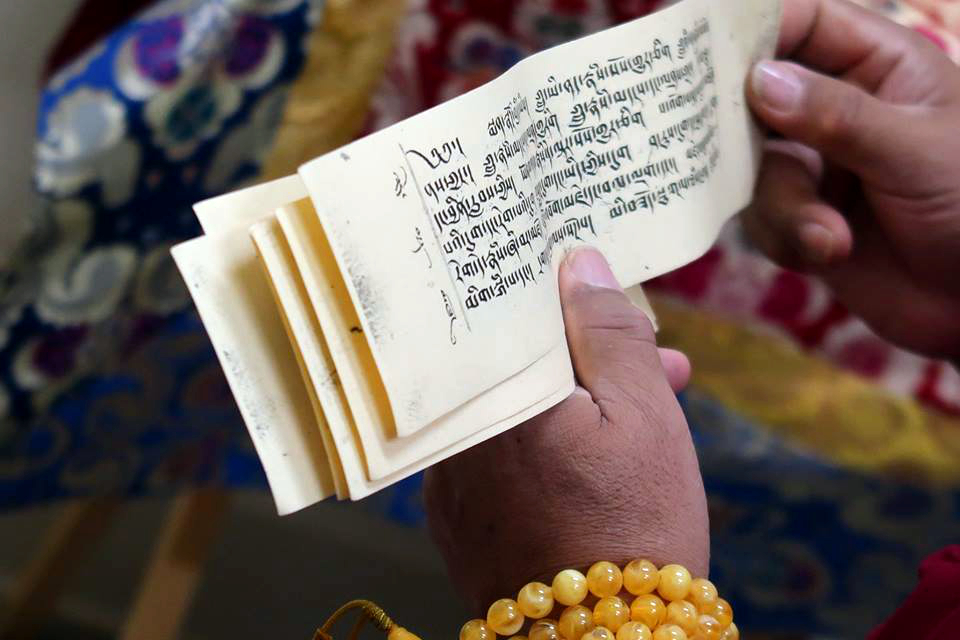
Accumulating Merit & Wisdom

Photo credit: Jana Kolarik

Through recitation of the sacred Yungdrung Bön texts, we accumulate both merit and wisdom. By making a commitment to recite a certain text every day or a specified number of times and then fulfilling that commitment, the power of our practice is amplified. Recitation of the sacred texts is also one of the thirteen Bön activities. See previous post: https://ravencypresswood.com/2018/01/14/the-thirteen-bon-activities/

As a support to the worldwide Yungdrung Bön community, Raven Cypress Wood has provided her translation of select Yungdrung Bön prayers on this website for the personal use of Yungdrung Bön practitioners. See the Publications page of this website at the link below for more information. https://ravencypresswood.com/publications/

“EMAHO!

Enlightened Ones of the ten directions who appeared in the past,

Enlightened Ones of the ten directions who appear in the present,

Enlightened Ones of the ten directions who will appear in the future,

the Mind of the lama is the embodiment of all these Enlightened Ones of the three times.

To the embodiment of all the places of refuge, the root lama,

I pay homage, admit my wrongdoing, present offerings, and supplicate!

Please pacify all obstacles and guide me along the path of liberation!

Bestow your blessings that my wishes will be spontaneously fulfilled!”

— From The Spontaneous Wish-fulfillment of Removing Obstacles from the Path:

The Oral Transmission of Khandro Shérap Lopélma

Raven Cypress Wood ©All Rights Reserved. No content, in part or in whole, is allowed to be used without direct permission from the author.

Don’t want to miss a post? Scroll to the bottom and click “Follow this blog.”
Uplifting Auspiciousness & Good Fortune

His Eminence Menri Ponlop Yangton Thrinley Nyima Rinpoche offering lungta papers to the sky during a ritual to increase good fortune. Photo credit: Unknown

“Having produced within my mind-stream a lack of desire or attachment towards this world, toward friends or enemies, towards material things or property and wealth; and having liberated the knots of greediness regarding subject and object, may I abide in the state of the unmoving, nature of mind!”    

—From the book Indestructible: The Longevity Practice of Tséwang Rikdzin. 

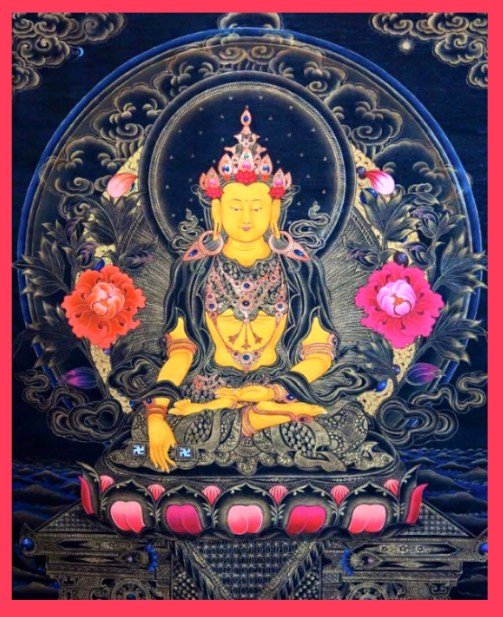
Lama Tséwang Rikdzin was born a human being as one of the twin sons of Lama Drenpa Namkha. But having realized the ultimate result of his practice and thereby transcending cyclic existence, he purified all obscurations and perfected all positive qualities and became an enlightened being. In this way, Lama Tséwang Rikdzin came to be practiced as a yidam deity. Although there are many longevity practices within the Yungdrung Bön religious tradition, the practice of Lama Tséwang Rikdzin has become the longevity practice most commonly performed.

To learn more about the book: http://www.lulu.com/spotlight/SacredSky

Tibetan translation: Raven Cypress Wood ©All Rights Reserved. No content, in part or in whole, is allowed to be used without direct permission from the author.

Don’t want to miss a post? Scroll to the bottom and click “Follow this blog.”

Yungdrung Bön Auspicious Days for Spiritual Practice

The Supreme Shen Buddha Tönpa Shenrap Miwoché.

According to the Yungdrung Bön religious tradition, each month there are auspicious days which are determined by the teaching activities of the Supreme Shen Buddha Tönpa Shenrap. These are lunar dates according to the Tibetan lunar calendar.

30th Day of the Month, New Moon: On this day, Buddha Tönpa Shenrap taught the beings in the formless realm. This is a good day to purify wrong views. The power of any virtuous activity or meditation performed on this day is doubled. Also, because of its significance in the lunar cycle, it is one of the four monthly auspicious days to perform prayers and virtuous activities, and for those with genyen or monastic vows to avoid eating meat.

1st Day of the Month: On this day, Buddha Tönpa Shenrap taught the space gods in the highest and purest of places in the formless realm. This is a good day to purify greed and attachment and engage in acts of generosity.

8th Day of the Month: On this day, Buddha Tönpa Shenrap taught the clear-light gods. This is a good day to purify broken vows and to recite one of the three essence mantras of the Yungdrung Bön tradition. Also, because of its significance in the lunar cycle, it is one of the four monthly auspicious days to perform prayers and virtuous activities, and for those with genyen or monastic vows to avoid eating meat.

14th Day of the Month: On this day, Buddha Tönpa Shenrap taught the Gaden gods of the form realm. This is a good day to purify sexual misconduct and desire.

15th Day of the Month: On this day, Buddha Tönpa Shenrap taught the gods of the desire realm atop Mt. Meru. This is a good day to purify the killing of someone important such as a lama, a family member or another practitioner in either this or a previous life. Also, because of its significance in the lunar cycle, it is one of the four monthly auspicious days to perform prayers and virtuous activities, and for those with genyen or monastic vows to avoid eating meat.

16th Day of the Month: On this day, Buddha Tönpa Shenrap taught the four great gods of the desire realm and the four great kings. This is a good day to purify disagreements or misunderstandings with parents, a lama, or another practitioner from either this or a previous life.

19th Day of the Month: On this day, Buddha Tönpa Shenrap taught the Tsang Ri gods of the form realm. This is a good day to purify any accidental killing.

22nd Day of the Month: On this day, Buddha Tönpa Shenrap taught the demi-gods of the desire realm who reside on the sides of Mt. Meru. This is a good day to purify the killing of a human being or lying to the lama. Also, because of its significance in the lunar cycle, it is one of the four monthly auspicious days to perform prayers and virtuous activities, and for those with genyen or monastic vows to avoid eating meat.

29th Day of the Month: On this day, Buddha Tönpa Shenrap taught the lu [Sanskrit: naga] of the desire realm. This is a good day to purify stealing during this or a previous life.

The practice of the admission of wrongdoing and purification is a powerful and effective method to purify non-virtuous activities of body, speech and mind and repair our sacred vows and commitments. The efficacy of the practice relies upon the so-called “four powers.” These are 1) the power of witness, 2) the power of openly admitting without reservation the actions of wrongdoing and non-virtue, 3) the power of heartfelt remorse, and 4) the power of vowing to not repeat the negative activities.

“The infallible fruit of both good and bad actions is certain. May I be watchful to accept or reject situations! Having depended upon the practice of admitting wrongdoing by means of the four powers, may all karmic potentialities and defilements be purified!”

— From The Ocean of Instructions Regarding the A Tri Teachings by Shardza Tashi Gyaltsen Rinpoche

For the power of witness, the practitioner goes before a sacred object of refuge such as a shrine, a real or visualized image of an enlightened being, or a chorten. Then, the practitioner connects with the actual presence of the enlightened beings in the sky before them. For the second power which is the admission of wrongdoing, the practitioner brings into their awareness all of the non-virtuous activities of body, speech and mind that have been committed in this life, as well as any unremembered activities from this or previous lives. This includes activities of direct or indirect involvement, as well as encouraging or celebrating the non-virtuous activities of others. For the third power, the practitioner generates an intense remorse for all of these actions. For the fourth power, the practitioner makes a firm commitment to not repeat these non-virtuous activities in the future and to instead engage in activities of virtue. In this way, the negative actions and their consequences are purified. At the conclusion of the practice, the practitioner imagines and feels the blessings of the enlightened beings completely purifying them in the form of pure, wisdom light.

“I openly admit to the gathering of buddhas all non-virtue that has arisen from the five poisons from beginning-less time until this very moment. I generate intense remorse for these actions of non-virtue and immorality that I have committed in the past.  I vow that from now on, I will not commit those acts again.  Instead, I will delight in accumulating virtue.” 

— From Homage to the Lord Tönpa Shenrap Miwo

All translations from the Tibetan by Raven Cypress Wood ©All Rights Reserved. No content, in part or in whole, is allowed to be used without direct permission from the author.

Don’t want to miss a post? Scroll to the bottom and click “Follow this blog.”

Passing into Nirvana

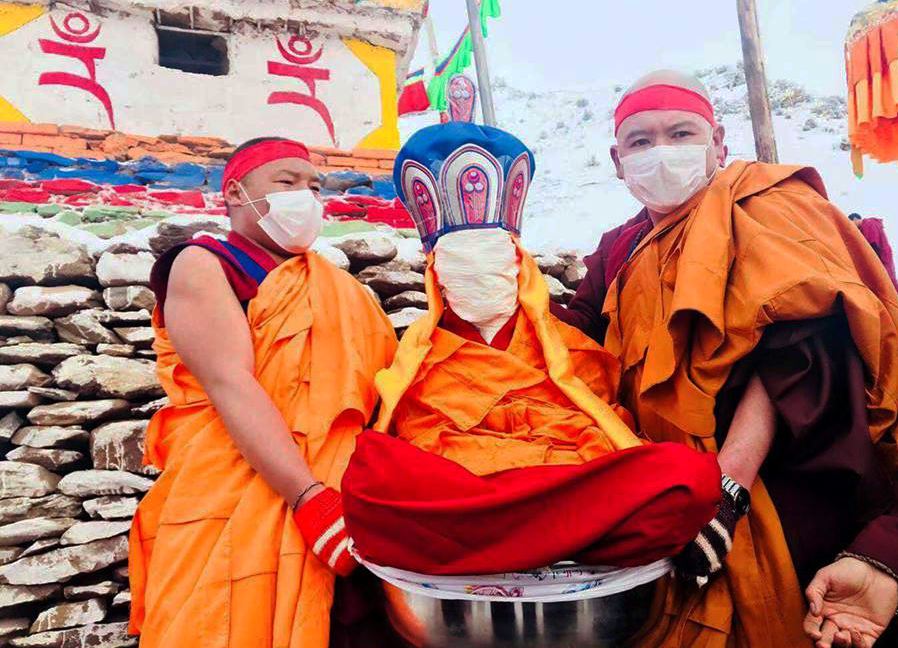
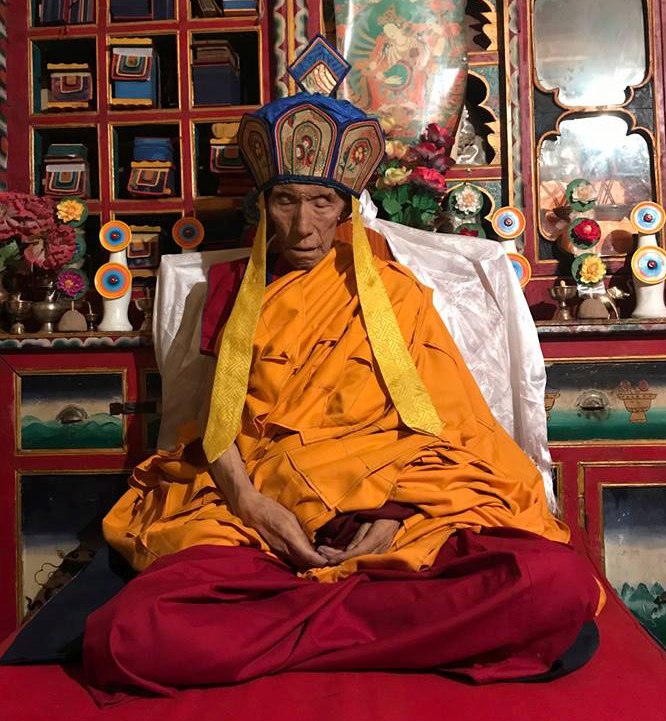
The PongenThroneholder Tise Gyalwa Rinpoche in tukdam. Photo credit: Unknown

On the second day of the first lunar month, Western date February 6, 2019, the abbot of Pongen Yungdrung Dargye Ling Monastery in Kham, Tibet, Khyungkar Tisé Gyalwa Rinpoche entered into the state of tukdam. In general, tukdam refers to a state of meditative stability attained by meditation masters that continues after the external breath of their body has ceased but the internal breath, or winds, remain.  Therefore, the subtle channels through which these winds move remain stable. The area of the body containing the heart chakra remains warm to the touch.  The skin remains soft, and the face retains a glow of vitality. During this time, great care is taken to not disturb the body or interrupt the state of mediation.

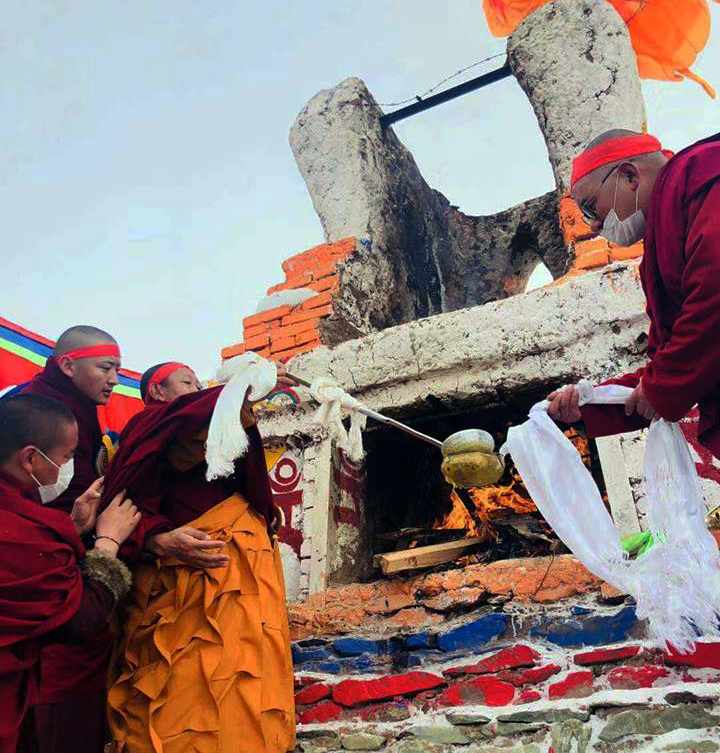
Khyungkar Tise Gyalwa cremation day. Photo credit: Unknown

After an indeterminate number of days, the internal winds cease, the channels collapse, the physical body slumps, and the warmth dissipates from the heart center. At that time, chants related to the cleansing of the sacred body are recited while the physical remains are ritually bathed with water mixed with special herbs.  Sacred seed syllables are then written on the body and the body is wrapped in a pure white cloth.

Cremation stupa. Photo credit: Unknown.

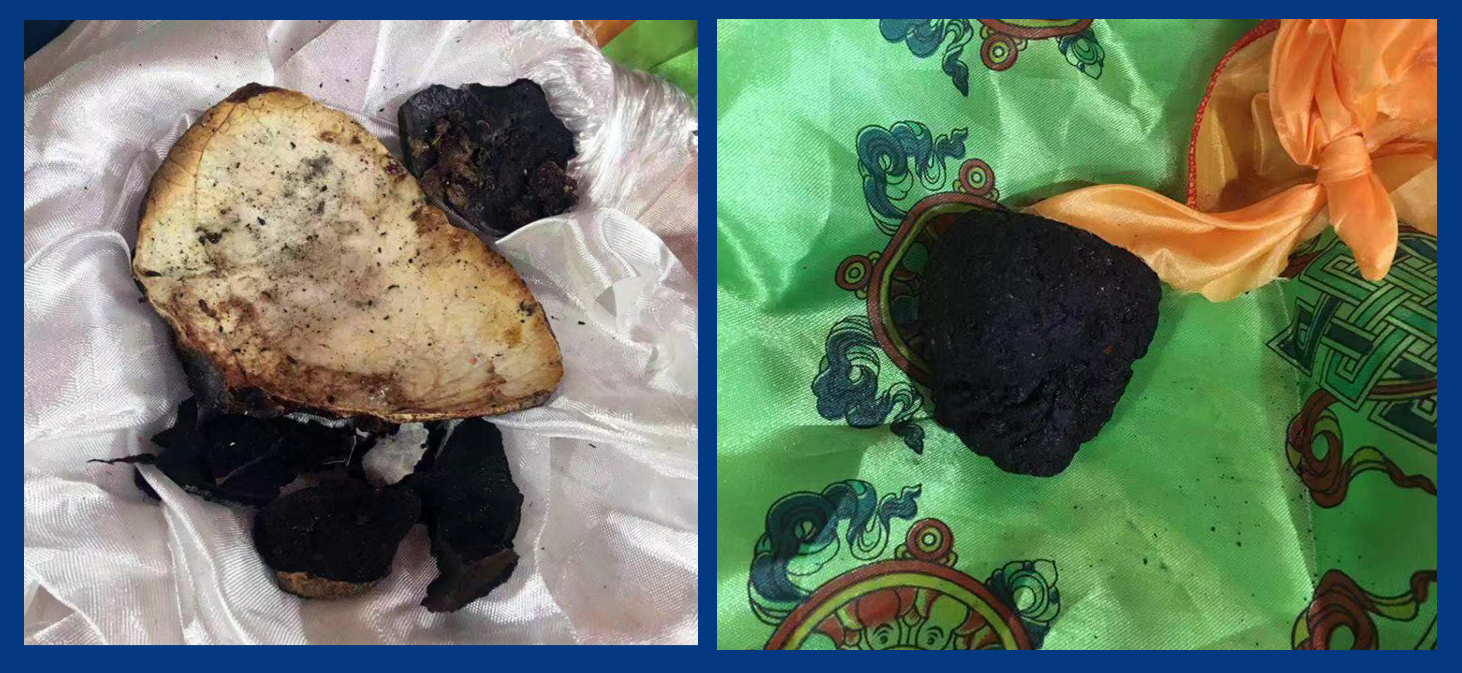
On the 23rd day of the 1st lunar month, Western date February 27th, the physical remains of Tisé Gyalwa Rinpoche were ritually cremated during an elaborate fire ceremony. His skull and heart remained intact and have been kept as sacred relics.

Sacred relics of the Pongen Throneholder Khyungkar Tise Gyalwa Rinpoche. Photo credit: Unknown.

Raven Cypress Wood ©All Rights Reserved. No content, in part or in whole, is allowed to be used without direct permission from the author.

Don’t want to miss a post? Scroll to the bottom and click “Follow this blog.”
Homage to Lord Tönpa Shenrap Miwoché!

Homage to Tonpa Shenrap painted on rock

“I prostrate to Shenrap Nampar Gyalwa, the Precious Wish-fulfilling Jewel!”

The 15th day of the 1st lunar month has traditionally been the day for Bönpos to celebrate the human birth of Lord Tönpa Shenrap Miwoché, founder of the Yungdrung Bön religious tradition. In 2019, this date coincides with February 19th on the Western calendar.

However, in recent times, the scholar and Yungdrung Bön master H. E. Yongdzin Tenzin Namdak Rinpoche has discovered through his research that the actual date is the 15th day of the 12th lunar month. See previous post: https://ravencypresswood.com/2019/01/19/passing-beyond-worldly-existence/

Raven Cypress Wood ©All Rights Reserved. No content, in part or in whole, is allowed to be used without direct permission from the author.

Don’t want to miss a post? Scroll to the bottom and click “Follow this blog.”