Category Archives: Tibetan Language

Now Available! A Blazing Mala of Wish-Fulfilling Jewels: A Compilation of Daily Prayers from the Yungdrung Bön Religious Tradition

In 2024, Gary Freeman was on pilgrimage in Nepal with a group of Geshe Sonam Gurung’s students and had seen some beautiful murals of various manifestations of Sipé Gyalmo. Inspired by these images, he contacted me and generously offered to sponsor translation of prayers related to these specific manifestations. In the past, Gary and his wife Adriana sponsored the English translation of the healing waters practice of Sigyal Drakngak. Because of their request and sponsorship, this practice was translated into multiple languages, published, used by disciples worldwide during the Covid-19 pandemic, and continues to be used by regular practice groups. So, even though I was in the midst of finalizing translations for a forthcoming book on the MA TRI tantra, I set that aside to happily translate a few prayers. After sending the finished translations to Gary, I thought that it would be wonderful if they were also available to with the worldwide Yungdrung Bön community. With that in mind, I decided to create a small booklet of prayers focusing on female protectors that could be used by the faithful while on pilgrimage. 

After a couple of weeks, I decided that the booklet was finished and went back to working on the MA TRI translations. However, I was constantly considering other prayers that would be beneficial additions. I would then add an additional prayer and again decide that it was complete. After doing this a few times, I surrendered to totally focusing on the pilgrimage booklet. Weeks turned to many months and the booklet grew to a 200 page book. And so, A Blazing Mala of Wish-fulfilling Jewels was born. It is a compilation of prayers and practices of the Yungdrung Bön religious tradition with an emphasis on female buddhas, protectors, and yogis. Being composed by enlightened ones or realized masters, these prayers carry power beyond that of ordinary words. When performed with faith and devotion, their profundity is inconceivable. When performed in conjunction with instruction and oral transmission from an authentic Yungdrung Bön master, their power and effectiveness are exponentially multiplied. These prayers are used for awakening the heart and mind, offering devotion, accumulating merit and wisdom, removing obstacles, protecting and increasing the life force, making aspirations, and so on. The book is formatted similar to a traditional Tibetan prayer book in that one prayer seamlessly follows another in an unbroken way. Thus, it is like a mala with each prayer like an individual bead being connected by the strong thread of Bön wisdom within the verses. When used with faith and devotion, the prayers become like blazing, wish-fulfilling jewels.

Most of the compositions are from my personal collection of Tibetan language prayer books and were translated over the course of many years. Some were translated in response to a request from a single individual, others were translated from a request by a Yungdrung Bön lama to be used for a one-time teaching or event, and others are prayers that have become part of my own practice. A select few were translated specifically to be included in the book. I am delighted to now share them with the worldwide Yungdrung Bön community.

The English language translations in the first half of the book are followed by the Tibetan language text with corresponding phonetics. The end of the book contains a brief Glossary of Terms and Notes section but there are no explanations of the meaning of the prayers or instructions for their use. In that way, use of A Blazing Mala of Wish-fulfilling Jewels assumes that the reader has at least some basic familiarity with the material, the Yungdrung Bön religious tradition, and with the language and terms used within the prayers. The book follows the traditional structure of beginning with prayers of homage and supplication to the lamas, followed by supplications and invocations of the peaceful and wrathful deities, and concluding with prayers of aspiration and dedication. My wish is that this book will be a support for happiness and spiritual development for generations to come. 
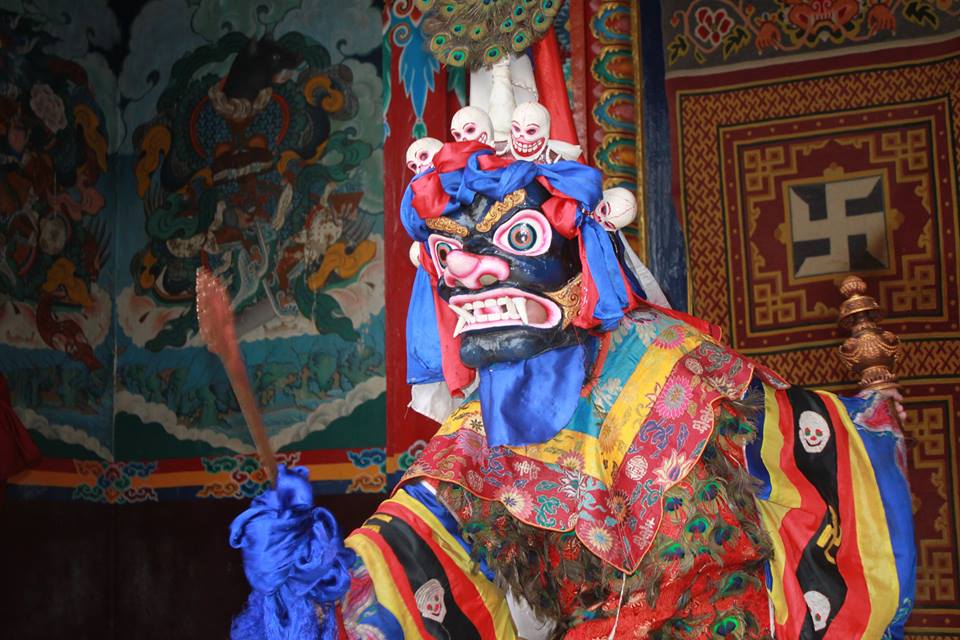
Yeshe Walmo sacred dance at Menri Monastery in India

“Mother Yeshé Walmo, together with your powerful, magical emanations, you guard both the teachings and those who keep their vows, and you cut the life force of those who break their vows. You liberate the discordant into space and guide along the path of liberation. I, an only child, constantly call out to my mother. Does the single mother’s ears not hear me? I, an only child, constantly yearn for my mother. Does the single mother’s heart not consider me? Sole Mother, I, the Shen practitioner who calls upon you, am accepting hardships, aspiring to enlightenment, relying on solitary places, carrying the lama at my crown, and practicing with my mind in the midst of diversions and distractions. Single Mother, lead me along the path! Sole Mother, fulfill my wishes! Sole Mother, dispel my obscurations!”

Extract from The Heartdrop Invocation of Yeshé Walmo’s Vitality

In the coming days, A Blazing Mala of Wish-Fulfilling Jewels will be available for purchase from the major book distributors such as Amazon and Barnes and Noble. Until then it can be purchased from Ligmincha International’s Windhorse Store: https://windhorse.store/product/a-blazing-mala-of-wish-fulfilling-jewels-by-raven-cypress-wood/ Or directly from Lulu here: https://www.lulu.com/shop/raven-wood/a-blazing-mala-of-wish-fulfilling-jewels/paperback/product-e7wm7j6.html?page=1&pageSize=4

English Language Translations Table of Contents

  • CLEANSING RITE SUPPLICATION
  • CLEANSING WITH WATER
  • FUMIGATING WITH INCENSE
  • MANTRAS OF THE FIVE DAILY OFFERINGS
  • HOMAGE TO THE EIGHTH UNIVERSAL GUIDE, BUDDHA TÖNPA SHENRAP MIWOCHÉ        
  • SUPPLICATION TO LORD TAPIHRITSA
  • COMPLETELY PURE AND CHANGELESS OFFERINGS TO THE LAMA, AN ORNAMENT OF WISH-GRANTING JEWELS
    • The Stages of Visualization
    • Request to Remain
    • Prostrations
    • Admission of Wrongdoing and Purification
    • Mandala Offering
    • The Five Offerings
    • Praise of the Enlightened State
    • Requesting Accomplishments
    • Aspiration Prayer
  • DÉ CHEN GYALPO, SUPPLICATION TO THE GREAT, UNEQUALED LORD        
  • A VICTORIOUS PALACE OF PRAISE FOR THE UNEQUALED LORD, SHERAP GYALTSEN          
  • GOING FOR REFUGE
  • GENERATING THE MIND OF ENLIGHTENMENT
  • SUPPLICATION TO THE LORD OF REFUGE, THE SUPREME 33RD THRONE-HOLDER OF MENRI, LUNGTOK TENPÉ NYIMA RINPOCHE
  • SUPPLICATION TO THE LORD OF REFUGE, THE GREAT 34TH THRONE-HOLDER OF MENRI, LUNGTOK DAWA DARGYAL RINPOCHE
  • SUPPLICATION TO THE LORD OF REFUGE, MENRI YONGDZIN LOPÖN TENZIN NAMDAK RINPOCHE
  • SUPPLICATION TO THE LORD OF REFUGE, MENRI PÖNLOP YANGTÖN TRINLEY NYIMA RINPOCHE
  • HOMAGE TO BUDDHA SATRIK ÉRSANG
  • PRAISE AND BENEFIT OF JAMMA’S MANTRA
    • Homage
    • Going for Refuge
    • Admission and Purification of Wrongdoing and Misdeeds
    • Focusing the Mind
    • Generating the Mind
    • Introduction
    • Main Text
    • Benefits
    • Praise of the Recitation
    • Aspiration
  • SUPPLICATION TO JAMMA
    • The Visualization
    • The Recitation
  • PRESENTING THE FIVE OFFERINGS TO THE GATHERING OF JAMMA DEITIES           
  • MANTRAS OF JAMMA’S FIVE WISDOM MANIFESTATIONS
  • SUPPLICATION TO TUKJÉ JAMMA, THE COMPASSIONATE LOVING MOTHER           
  • THE HEART SUTRA OF THE MOTHER OF THE GREAT VEHICLE, THE YUM DŌ           
  • SUPPLICATION TO KHANDRO CHOZA BÖNMO
  • FUMIGATION OFFERING TO BLACK MULE SIPÉ GYALMO
  • SIGYAL KA TÖ, ALPHABETICAL PRAISE OF THE SUPREME MOTHER SIPÉ GYALMO   
  • ALPHABETICAL PRAISE TO A VISION OF BLACK MULE SIPÉ GYALMO
  • SIGYAL’S ENTRUSTED ACTIVITY
  • TO A VISION OF SIGYAL
  • A FLAMING LIGHTNING BOLT, THE SECRET INVOCATION OF THE QUEEN OF PHENOMENAL EXISTENCE
  • INVOCATION OF RED MULE SIPE GYALMO
  • INVOCATION OF YESHÉ WALMO
  • THE HEARTDROP INVOCATION OF YESHÉ WALMO’S VITALITY
  • INVOCATION OF THE THREE WATCHWOMEN, THE JARAMA SUM
  • A BRIEF INVOCATION OF CHAMMO LAM LHA, GODDESS OF TRAVEL           
  • PRESENTING OFFERINGS TO YESHÉ WALMO
  • PRESENTING OFFERINGS TO THE THREE SUPREME JEWELS
  • FOOD OFFERING PRAYER
  • SUPPLICATION TO THE SACRED PLACE OF BÖNRI WHERE BLESSINGS ARE QUICKLY ATTAINED      
  • THE THREE ESSENCE MANTRAS OF YUNGDRUNG BÖN, THE NYINGPO NAMSUM   
  • GENERAL MAWÉ SENGÉ MANTRA
  • LONGEVITY MANTRA FROM THE TSÉWANG JARIMA
  • TSÉWANG BÖ YULMA MANTRA
  • MEDICINE BUDDHA MANTRA
  • MANTRA FOR DAILY WATER OR DRINK
  • THE SYLLABLES OF THE ALI KALI, THE CAUSE FOR ENLIGHTENED WORDS AND SOURCE OF THE SCRIPTURES
  • MANTRA OF THE BLAZING GODDESS, TSUKTOR BARMA
  • SUPPLICATION TO THE GREAT LAMA DRENPA NAMKHA AND HIS TWO SONS FOR THEIR SWIFT BLESSINGS
  • SENDING OUT AND GATHERING BACK OF THE MA TRI RECITATION 
    • Praising the Recitation
  • A CONDENSED WHITE BURNT FOOD OFFERING
    • The Invitation
    • Offering and Dedicating
    • Supplement to the Burnt Food Offering
  • THE BAR CHE LAM SEL, THE SPONTANEOUS WISH-FULFILLMENT OF REMOVING OBSTACLES FROM THE PATH
  • ASPIRATION PRAYER TO THE WORLDLY GODS AND GUARDIANS
  • EIGHT-BRANCHED ASPIRATION PRAYER
    • The Branch of Inviting
    • The Branch of Prostrating
    • The Branch of Making Offerings
    • The Branch of Admitting Wrongdoing
    • The Branch of Subsequently Being Delighted
    • The Branch of Supplicating
    • The Branch of Aspiration Prayers
    • The Branch of Dedicating
  • TSÉWANG’S PRECIOUS MALA OF BENEFICIAL ASPIRATION PRAYERS
  • THE DAILY RECITATION OF THE THREE-FOLD ASPIRATION PRAYER, THE MÖNLAM NAM SUM       
    • The Jewel Mönlam
    • Aspiration Prayer of Wish-fulfilling Jewels
    • Namgyal’s Torma Aspiration Prayers
    • Aspiration Prayer of the Ten Grounds
    • Becoming Peaceful
    • Dedication
    • Aspirations of Lord Gyalwa Düpa
    • Aspirations and Dedication
    • The One Hundred Syllable Mantra, Yig Gya
    • Dedication
  • A CONDENSED PRAYER OF ASPIRATION
  • THE BARDO MÖNLAM, LAMA GUR ZHOK’S PRECIOUS MALA OF ASPIRATION PRAYERS FOR THE BARDO
  • WORDS OF TRUTH ASPIRATION PRAYER
  • ASPIRATION PRAYER FOR THE CONTINUATION OF THE TEACHINGS

Tibetan Language Table of Contents

  • བོད་སྐད་ཡིག་དང་སྒྲ་གདངས།        
  • ཁྲུས་གསོལ།
  • ཁྲུས་ཀྱིས་བཀྲུས་པ།
  • སྤོས་ཀྱིས་བསང།
  • མཆོད་པ་རྣམ་ལྔ་བསྙེན་པ།
  • རྣམ་འདྲིན་བརྒྱད་པ་སངས་རྒྱས་སྟོན་པ་གཤེན་རབ་མི་བོ་ལ་ཕྱག་འཚལ།
  • ཏ་པི་ཧྲི་ཙ་གསོལ་འདེབས།
  • བླ་མའི་མཆོད་པ་རྣམ་དག་འགྱུར་མེད།  བསམ་འཕེལ་ནོར་བུའི་རྒྱན་ཞེས་བྱ་བ་བཞུགས།
    • བསྐྱེད་རིམ།
    • བཞུགས་སུ་གསོལ་བ།
    • ཕྱག་འཚལ།
    • བཤགས་པ།
    • མནྡལ་འབུལ།
    • རྣམ་ལྔ།
    • སྐུ་བསྟོད།
    • དངོས་གྲུབ་ཞུ་བ།
    • སྨོན་ལམ།
  • རྗེ་མཉམ་མེད་ཆེན་པོའི་གསོལ་འདེབས།         
  • རྗེ་མཉམ་མེད་ཤེས་རབ་རྒྱལ་མཚན་གྱི་བསྟོད་པ་རྣམ་རྒྱལ་ཁང་བཟང།        
  • སྐྱབས་སུ་འགྲོ་བ།
  • སེམས་བསྐྱེད་པ།
  • སྐྱབས་རྗེ་སྨན་རིའི་ཁྲི་འཛིན་སོ་གསུམ་པ་མཆོག་གི་གསོལ་འདེབས།
  • སྐྱབས་རྗེ་སྨན་རིའི་ཁྲི་འཛིན་སོ་བཞི་པ་ཆེན་པོའི་གསོལ་འདེབས།    
  • སྐྱབས་རྗེ་སྨན་རིའི་ཡོངས་འཛིན་སློབ་དཔོན་རིན་པོ་ཆེ་མཆོག་གི་གསོལ་འདེབས།       
  • སྨན་རིའི་དཔོན་སློབ་རིན་པོ་ཆེའི་གསོལ་འདབེས།
  • ས་ཏྲིག་ཨེར་སངས་སྐུ་ལ་ཕྱག་འཚལ་ལོ།        
  • བྱམས་མའི་སྔགས་བསྟོད་པ་ཕན་ཡོན་བཅས་བཞུགས།    
    • ཕྱག་འཚལ།
    • སྐྱབས་ཡུལ་བསྒོམ་པ།
    • བཤགས་པ།
    • སེམས་བཟུང་བ།  
    • སེམས་བསྐྱེད།    
    • ངོ་སྤྲོད།  
    • གཞུང་གི་དོན།     
    • ཕན་ཡོན།
    • འཛབ་བསྟོད།     
  • བྱམས་མ་གསོལ་འདེབས།   
    • དགོངས་རིམ།     
    • ཚིག་བཤད།       
  • བྱམས་མའི་ཚོགས་ལ་མཆོད་པ་རྣམ་ལྔ་འབུལ།   
  • བྱམས་མ་རིག་ལྔ་འཛབ།   
  • བྱམས་མའི་གསོལ་འདེབས།
  • ཡུམ་མདོ།  ཐེག་པ་ཆེན་པོ་ཡུམ་ཀྱི་སྙིང་པོ་ཞེས་བྱ་བའི་མདོ་བཞུགས།         
  • ཅོ་ཟ་བོན་མོ་གསོལ་འདེབས།
  • སྲིད་རྒྱལ་དྲེའུ་ནག་མོའི་བསང་མཆོད་རིན་ཆེན་གཏེར་སྤུངས་བཞུགས།        
  • མ་མཆོག་སྲིད་རྒྱལ་གྱི་ཀ་བསྟོད་།      
  • སྲིད་རྒྱལ་དྲེའུ་ནག་ཞལ་གཟིགས་མ་ཡི་ཀ་བསྟོད།         
  • སྲིད་རྒྱལ་འཕྲིན་བཅོལ།      
  • སྲིད་རྒྱལ་ཞལ་གཟིགས་བཞུགས།     
  • ཡང་ཟབ་ནམ་མཁའ་མཛོད་ཆེན་ལས།
  • རྒྱུད་ཉི་འགྲེལ་ལས་བྱུང་བའི་སྲིད་རྒྱལ་དྲེའུ་དམར་མོའི་བསྐུལ་པ་བཞུགས།    
  • ཡེ་ཤེས་དབལ་མོའི་བསྐུལ་པ།         
  •  ཡེ་ཤེས་དབལ་མོའི་སྲོག་བསྐུལ་སྙིང་གི་ཐིག་ལེ་བཞུགས་སོ།        
  • བྱ་ར་མ་གསུམ་བསྐུལ་པ་བཞུགས། བསྒྲགས་པ་སྐོར་གསུམ        
  • ལྕམ་མོ་ལམ་ལྷ་བསྐུལ་ཆུང་བཞུགས།  
  • ཡེ་ཤེས་དབལ་མོར་མཆོད་འབུལ།     
  • དཀོན་མཆོག་གསུམ་ལ་མཆོད་འབུལ།  
  • ཟས་མཆོད།       
  • བོན་རི་གནས་ཀྱི་གསོལ་འདེབས་བྱིན་རླབས་མྱུར་འགྲུབ་བཞུགས།  
  • སྙིང་པོ་རྣམས་གསུམ།       
  •  སྤྱི་སྨྲ་སེང་བསྙེན་པ།
  • ཚེ་དབང་བྱ་རི་མའི་བསྙེན་པ།
  • ཚེ་དབང་བོད་ཡུལ་མའི་བསྙེན་པ།
  • སྨན་ལྷའི་བསྙེན་པ།
  • ཆུའམ་བཏུང་བའི་རིགས་ལ་བསྙེན་པ།
  • བཀའ་རྒྱུ་ལུང་གི་འབྱུང་གནས་ཨ་ལི་ཀ་ལི་ཡིག་ཆུང་བཞུགས་སོ།
  • གཙུག་ཏོར་འབར་མའི་གཟུངས་བཞུགས་སོ།
  • བླ་ཆེན་དྲན་པ་ཡབ་སྲས་ཀྱི་གསོལ་འདེབས་བྱིན་བརླབས་མྱུར་འབྱུང་བཞུགས་སོ།
  • མ་ཏྲིའི་འཛབ་ཀྱི་འཕྲོ་འདུ།
  • དཀར་གསུར་བསྡུས་པ།
    •  གསུར་བསྔོའི་ཁ་སྐང་།
  • མཁའ་འགྲོ་ཤེས་རབ་བློ་འཕེལ་ཞལ་ལུང་བར་ཆད་ལམ་སེལ་བསམ་པ་ལྷུན་གྲུབ་བཞུགས་སོ།
  • ལྷ་དང་སྲུང་མ་འཁོར་བའི་སྨོན་ལམ་བཞུགས།
  • སྨོན་ལམ་ཡན་ལག་བརྒྱད་པ་བཞུགས།
  •   ཚེ་དབང་སྨོན་ལམ་དོན་འདུས་རིན་ཆེན་ཕྲེང་བ་བཞུགས།
  • རྒྱུན་འདོན་སྨོན་ལམ་རྣམ་གསུམ་དབུ་ཕྱོགས་བཞུགས་སོ།
    • ནོར་བུ་སྨོན་ལམ།
    • ཡིད་བཞིན་ནོར་བུ་དམ་པའི་སྨོན་ལམ།
    • རྣམ་རྒྱལ་གྱི་གཏོར་མའི་སྨོན་ལམ་བཞུགས།
    • སྨོན་ལམ་རྣམ་གསུམ་ས་བཅུའི་སྨོན་ལམ།
    • ཞི་བར་གྱུར་ཅིག
    • བསྔོ་བོ།
    • རྗེ་རྒྱལ་བ་འདུས་པའི་སྨོན་ལམ།
    • སྨོན་ལམ་དང་ངོ་བོ།
    • ཡིག་བརྒྱ།
    • ངོ་བོ།
    • སྨོན་ལམ་མདོར་བསྡུས།
  • བླ་མ་གུར་ཞོག་པས་མཛད་པའི་བར་དོའི་སྨོན་ལམ་རིན་ཆེན་ཕྲེང་བ་བཞུགས།
  • བདེན་ཚིག་སྨོན་ལམ།
  • བསྟན་རྒྱས་སྨོན་ལམ་བཞུགས་སོ།

Raven Cypress Wood ©All Rights Reserved. No content, in part or in whole, is allowed to be used without direct permission from the author.

Did you enjoy this content? This article is made possible by generous donors who want content like this to continue to be available.

Join the mandala of Nine Ways supporters by donating through one of the services listed below.

It’s easy through Paypal, Zelle, or Venmo using the email: RCW108@gmail.com

Don’t want to miss a post? Scroll to the bottom and click “Follow this blog.”
Annual Reading of the Enlightened Teachings of Lord Buddha Tönpa Shenrap

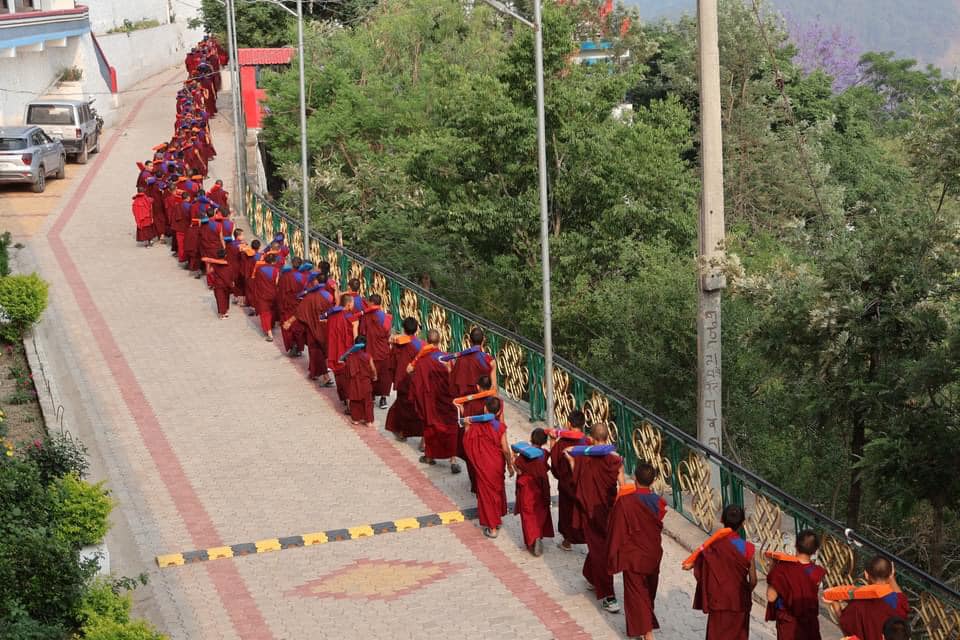
Nuns of Rayna Menling reading from the teachings of Buddha Tönpa Shenrap

Each year at Pal Shenten Menri Monastery and Rayna Menling Nunnery on the 14th and 15th lunar days of the 4th month, the enlightened teachings of Lord Buddha Tönpa Shenrap Miwoché are read out loud. In 2025, these dates coincide with June 10th and 11th on the Western calendar. The sacred volumes containing these teachings are carried by both the ordained and laypeople as they circumambulate the temple. As a sign of respect for the sacredness of these texts, they are carried above the waist. Most often, they are carried on the shoulder. After bringing them into the temples, offerings such as incense are presented, and the text are distributed to the ordained for two full days of reading. Reading the scriptures aloud is considered one of the thirteen activities for a meaningful human life. (See previous article: https://ravencypresswood.com/2020/03/21/the-thirteen-yungdrung-bon-activities-for-a-meaningful-human-life/) For those inspired to read the words of Buddha Tönpa Shenrap on these days, The Beneficial Mantric Praise of Künsal Jamma Chenmo, The Jamma Ngak Tö, is considered a root text for the practice of Sherap Jamma that was spoken by the Buddha himself. Through the verses of praise for each of the syllables of Jamma’s root mantra, the profundity of the innumerable manifestations of Jamma is revealed. The teaching and transmission for this text has been widely shared in both the East and West.

“The mantra of the twenty-one victors, the praise of the Victorious Jamma of Bön, was spoken by the Victor Tönpa Shenrap. These twenty-one verses are, without exception, beyond cyclic existence and a completely pure practice. By reciting out loud the twenty-one praises, one will obtain immeasurable benefits. Praise to Tönpa Shenrap for revealing these twenty-one praises of the root mantra!”

Extract from The Beneficial Mantric Praise of Künsal Jamma Chenmo
His Holiness the 34th Menri Trizen, His Eminence Menri Pönlop Rinpoche, and other monks of Menri Monastery carry texts containing the words of Buddha Tönpa Shenrap.

The canon of sacred Yungdrung Bön texts is divided into two categories. The first category of texts contains the teachings of the primordial enlightened ones and Lord Buddha Tönpa Shenrap. This category is known as Ka [Tibetan: bka’] meaning “enlightened words or speech.” These texts are further divided into four primary categories: (1) Dō [Tibetan: mdo], Sutra, (2) Bum [Tibetan: ‘bum], The Hundred Thousand, (3) Gyü [Tibetan: rgyud], Tantra, and (4) Dzö [Tibetan: mdzod] The Treasury. In some catalogues, there can also be a fifth category of miscellaneous texts. Although each Yungdrung Bön temple in Tibet had a significant collection of Ka scriptures, the collections were not necessarily complete. This was especially due to repeated persecution throughout history of the Yungdrung Bön tradition which necessitated the hiding of texts. It is thought that only one complete collection survived. According to a catalogue of the Ka done by the 23rd abbot of Menri there are a total of 175 volumes. This number can vary according to various collections due to the availability of texts that could be copied, whether only main titles were counted as a volume, and so on. Regardless, the Sutra section contains texts such as the hagiography of Buddha Tönpa Shenrap, The Ritual Practice of the Medicine Buddha, The Root Scripture for Jamma, the four volumes of medical texts, and so on. The Hundred Thousand section contains the sixteen volumes of the Khams Gyé, The Unsurpassed Scripture Regarding the Eight Realms, the Yum Dō, The Heart Sutra of the Mother of the Great Vehicle, and so on. The Tantra section includes the Buddha’s teachings of the Mother Tantras, the Father Tantras, Phurba, Walsé, and so on. The Treasury section includes the teachings of dzogchen such as The Aural Transmission of Zhang Zhung.

“Gyajin, a ruler of the gods, rose from his seat and, having removed his upper robe from one of his shoulders, he set his right knee upon the ground. Having placed his hands together, he made a request of The Teacher with these words: “Free from the fault of wrongdoing, you have perfected every good quality. You are the source from which arises all happiness and exalted qualities. Good omniscient Shenrap, what should one do to practice or make use of the Essence of the Mother of the Great Vehicle?”

In response to that, Shenrap bestowed his teaching. 

“Gyajin, ruler of the gods, and all you yungdrung sempa, when practicing or making use of the Essence of the Mother of the Great Vehicle, all phenomena that arise from worldly existence, that arise as precious ornaments, that arise as an appearance, that arise from emptiness, that arise from individual clarity, that arise from self-awareness, that arise from the changeless and indestructible vast expanse, or that arise from equanimity; are neither appearance nor emptiness, neither existent nor nonexistent, neither eternal nor nothingness, neither born nor negated. Why is that? All of those, in every way, are unobjectifiable. Even their self-nature is unobjectifiable. Therefore, they are primordially without a source and without a birth. They have no beginning. Abiding within the equanimity of no beginning is the unfabricated, perfected, single sphere.

Extract from The Heart Sutra of the Mother of the Great Vehicle to be published in the forthcoming A Mala of Blazing, Wish-fulfilling Jewels: A Collection of Daily Practices of the Yungdrung Bön Religious Tradition by Raven Cypress Wood
Monks and nuns of Menri Monastery circumambulating with the scriptures of the Ka.

The second category of canonical texts is known as the Ka Ten [Tibetan: bka’ brten], Relying upon the Words. The Bön canon is referred to within Bön texts as the Ka and the Ka Ten. (This differs from the Buddhist canon which is referred to as the Kangyur and the Tengyur.) The Ka Ten includes commentaries, practices, rituals, and so on that rely upon the scriptures of the Ka for the root text. In order for a text to be included in the Ka Ten, it must undergo a rigorous and methodical analysis. There are over 300 volumes included within the Ka Ten. Some catalogues do not include texts after the 14th century which are thought to be mainly texts of the New Bön tradition. Other catalogues do include these texts as well as the collective writings of other Bön sages such as Shardza Tashi Gyaltsen. Additionally, many texts are incredibly rare and are guarded from outsiders. Therefore, few if any copies of these texts exist. Some texts are considered valid to be included in the Ka Ten by some, while being considered invalid and thus excluded by others. Titles can be included within unrelated volumes or counted individually, and so on. Even so, it is generally accepted that there are over 300 volumes of Ka Ten scriptures. These volumes include commentaries and practices based upon scriptures of the Ka such as The Practice Manual of the Aural Transmission of Zhang Zhung by Dru Gyalwa Yungdrung, scriptures of philosophy and logic, biographies, historical accounts, compositions of sacred songs, poetry, and advice for disciples, collections of liturgical texts, and so on.

I, of inferior intelligence, but for the benefit of beings and for the sake of explaining at least part of the meaning, will explain the Sky Ladder to Freedom, an Abridged Commentary of the Meaning of the Heart’s Blood of Bön, the Mantric Praise of Jamma. If one were able to explain the commentary on the merits of Jamma in great detail including the characteristics of each of the deities, it would amount to twenty-one great chapters in many volumes. ”  

Extract from A Sky-Ladder to Freedom: An Abridged Commentary Regarding the Meaning of the Words of the Mantric Praise of Jamma, the Deity Who Protects From All Things composed by the great 23rd abbot of Menri Monastery His Holiness Nyima Tenzin Rinpoche
Traditionally wrapped and labeled Yungdrung Bön scriptures.

Tibetan translations by Raven Cypress Wood

Raven Cypress Wood ©All Rights Reserved. No content, in part or in whole, is allowed to be used without direct permission from the author.


This article is made possible by generous donors who want content like this to continue to be available. Want to join the mandala of Nine Ways supporters? Follow this link https://ravencypresswood.com/donate/


Don’t want to miss a post? Scroll to the bottom and click “Follow this blog.”

A Wheel of Sound

Dra Khor at the entrance to the temple of Triten Norbutsé Monastery near Kathmandu, Nepal. Photo credit: Raven Cypress Wood

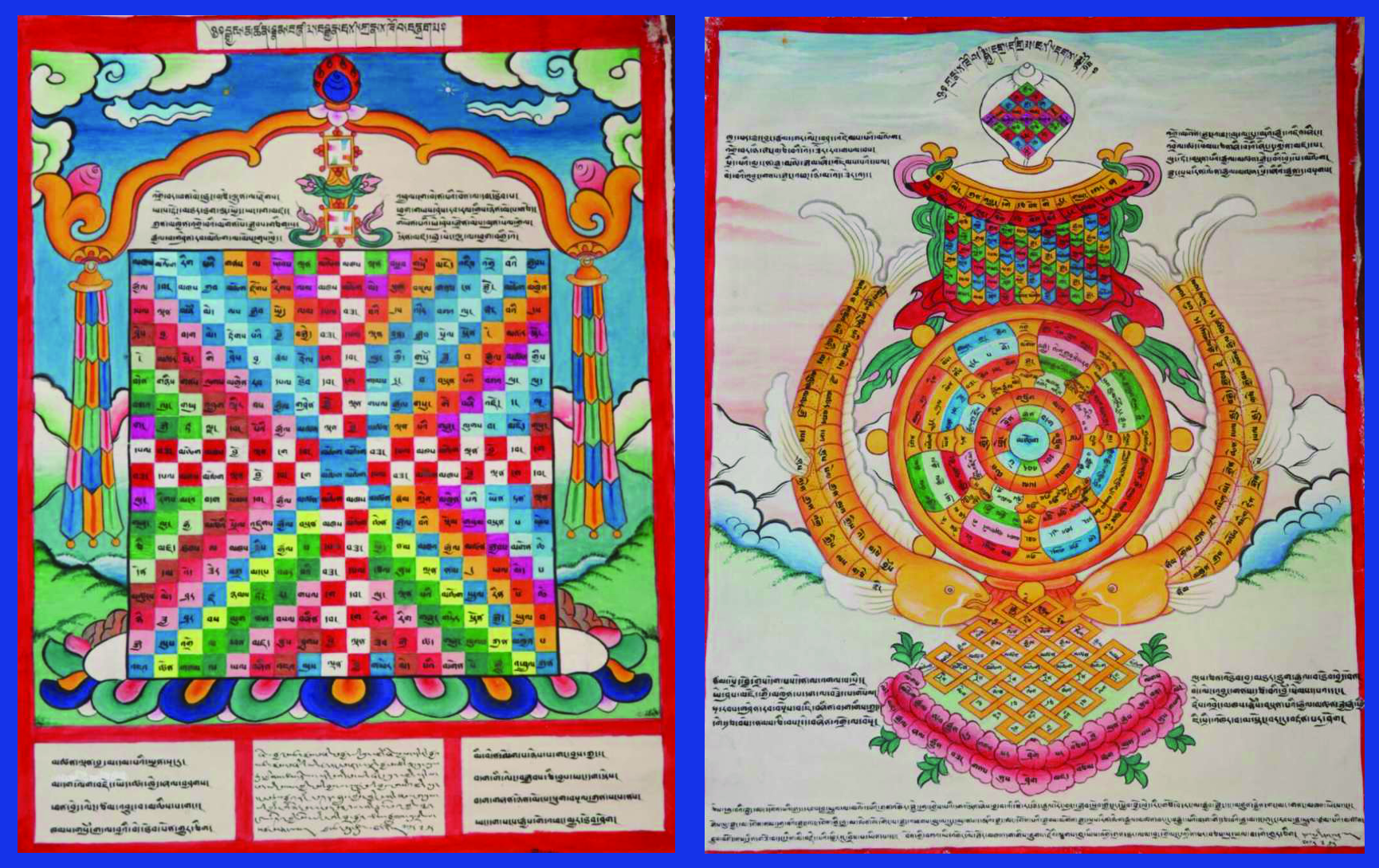
Within the Yungdrung Bön religious tradition there is a style of poetry that is considered an advanced art and is often used to praise spiritual masters or states of realization. The poetic verse is written in a kind of graph in which each syllable is written within its own geometric space often in contrasting colors that form patterns or images. These syllables then intersect with other lines of poetry or verse. The arrangement of syllables must be made in such a way that they must make sense with each intersecting syllable.

There are easier and more difficult versions of this poetic style. The easier style can be read left to right and top to bottom. The more difficult styles can be read left to right, top to bottom, diagonally, and from bottom to top. This style of poetry is called Künzang Khorlo་or the short form Kün Khor, Wheel of All Goodness. However, it is also often referred to simply as dra khor, a wheel of sound.

Examples of dra khor styles created by graduates of the Gyalrong Dialectic School. Originally published at: https://www.himalayabon.com/news/2018-04-16/1250.html

The top image of a dra khor in this article hangs in the entrance way of Triten Norbutsé Monastery located near Kathmandu, Nepal. This dra khor praises the founder of Menri Monastery and the realized master who is considered the second buddha, His Holiness Nyammé Sherap Gyaltsen Rinpoché. The well-known “De Chen Gyalpo” prayer in his honor is featured within the yellow, diagonal squares.

“De chen gyal po kün zang gyal wa du,

mi jé zung den sherap ma wé seng,

dzam ling bön gyi tsuk gyen nyam mé pa,

shé rap gyal tsen zhap la sol wa deb.


King of great bliss, embodiment of Küntu Zangpo and Gyalwa Düpa,

You are like the wisdom deity Mawé Sengé,

Never forgetting what you have perceived,

You are the unequaled crown ornament of the Bönpo world.

At the feet of Sherap Gyaltsen, I pray!”

The first line begins with the syllable “de” inside the yellow square located in the top left corner and reads diagonally downward to the center. Moving the Bön way, counter-clockwise, the second line begins with the syllable “mi” inside the yellow square in the bottom left corner and reads diagonally upward to the center. The third line begins with the syllable “dzam” inside the yellow square in the bottom right corner and reads diagonally upward to the center. The fourth and final line begins with the syllable “shé” inside the yellow square in the top right corner and reads diagonally downward to the center.

When the top line is read straight across, the first syllable “de” in the top left corner now becomes part of the word “dewar” “blissfully” and the line praises the realization of Nyammé Sherap Gyaltsen Rinpoché.

“You are the very essence of the three bodies of those who have blissfully gone; with unobscured, exalted knowledge, you embody the entirety of Bön.”

Examples of dra khor styles created by graduates of the Gyalrong Dialectic School. Originally published at: https://www.himalayabon.com/news/2018-04-16/1250.html

To begin a dra khor, the number of boxes needed is determined by the number of syllables in the poem. Once a design is determined and the boxes are drawn, a single syllable is drawn inside each box. Each dra khor can contain either a single poem or multiple poems or verse relating to a single subject or theme. These dra khor are often placed in the entrances of temples as they are considered to be objects of auspiciousness and blessing.

Examples of dra khor from the collected works of Mawang Kunga Rangdrol Rinpoche.

Beginning with the first establishment of a Yungdrung Bön dialectic school in exile in 1978 at Tashi Menri Ling, His Eminence Yongdzin Tenzin Namdak Rinpoché reformed the curriculum to include subjects originally taught in the renowned dialectic school of Yeru Wensaka and to also include subjects that were previously taught individually rather than as an organized part of the studies. In this way, he aimed to preserve traditional knowledge that was in danger of being lost. One of the subjects added to the mandatory curriculum was poetry. The current dialectic school teaches poetry according to three aspects: 1) style and meaning, 2) rhyming and meter and 3) symbolic meaning.

The complete Dra Khor inside the temple of Triten Norbutsé Monastery near Kathmandu, Nepal. Photo credit: Raven Cypress Wood

All translations and content by Raven Cypress Wood ©All Rights Reserved. No content, in part or in whole, is allowed to be used without direct permission from the author.

Don’t want to miss a post? Scroll to the bottom and click “Follow this blog.”
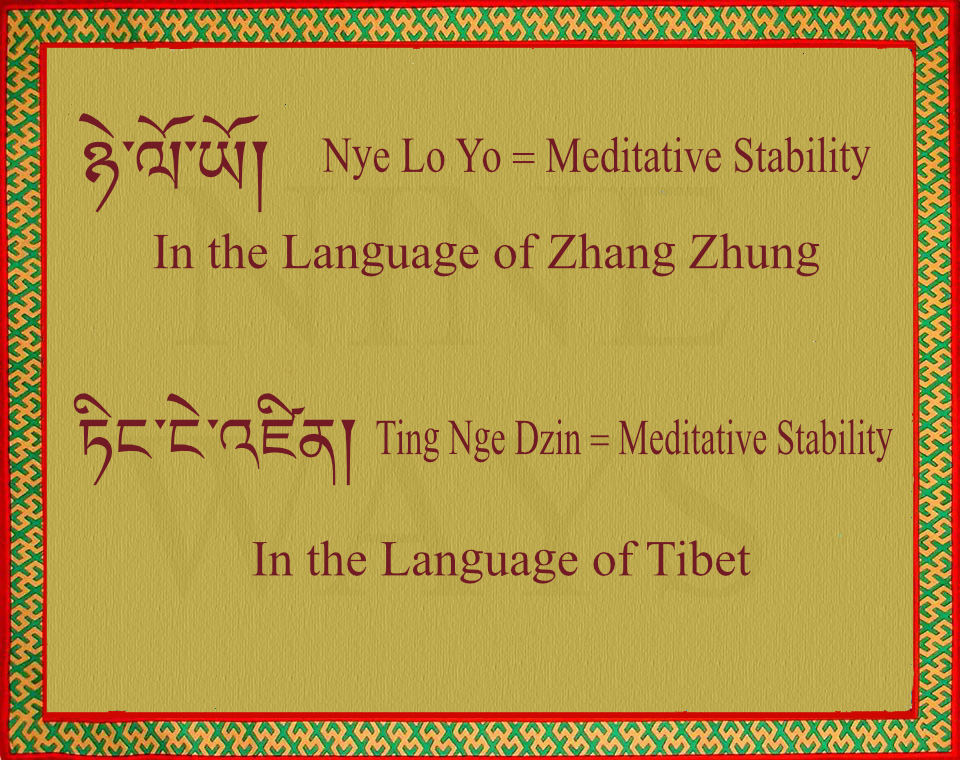
In the Language of Zhang Zhung…

Adding Virtue to Everyday Actions

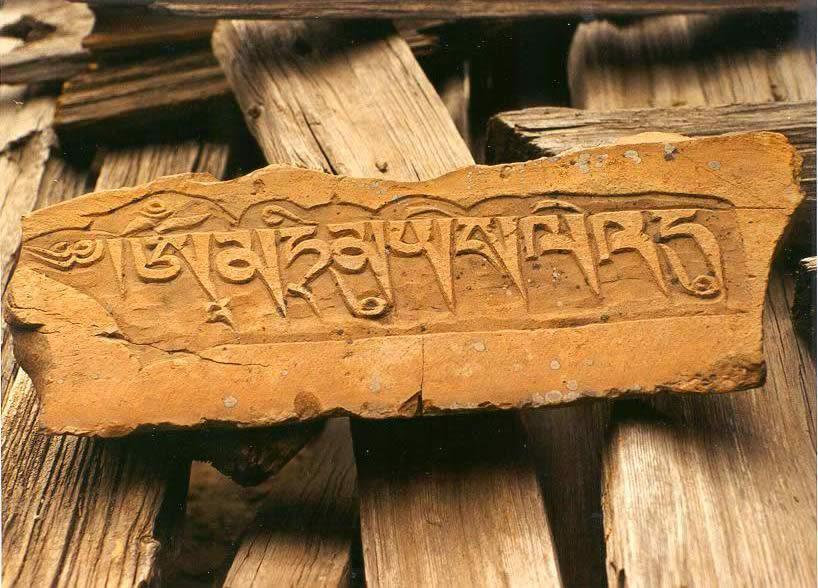
MA TRI mantra above a doorway. Photo credit: Unknown

From the Dechok Rinchen Dronma’i Phen Yön, The Benefits of the Recitation Practice of the Precious Lamp, also known as The Thirty-two Benefits of the MA TRI Mantra:

“(6) This recitation practice is a precious lamp.  Anyone who has generated the mind of compassion, if they write out the mantra and put it above the doorway of the retreat place or throughout the community, then just by entering these places one will attain liberation.  Entering practice is the benefit of this precious lamp.”

~Translation from Tibetan to English by Raven Cypress Wood ©All Rights Reserved

The MA TRI mantra is one of the three essence mantras of the Yungdrung Bön tradition. The complete mantra is:་OM MA TRI MU YÉ SA LÉ DU.