Author Archives: Raven Cypress Wood
Sacred Scriptures
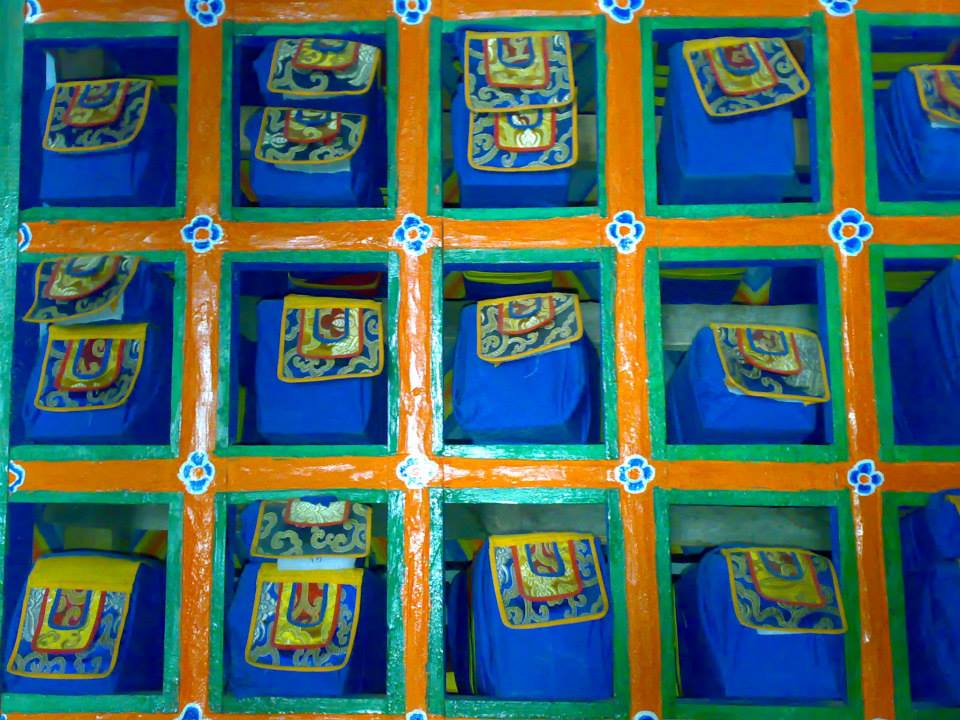
Yungdrung Bon texts within the Yangton Gompa in Dolpo, Nepal
Mantra of Purification
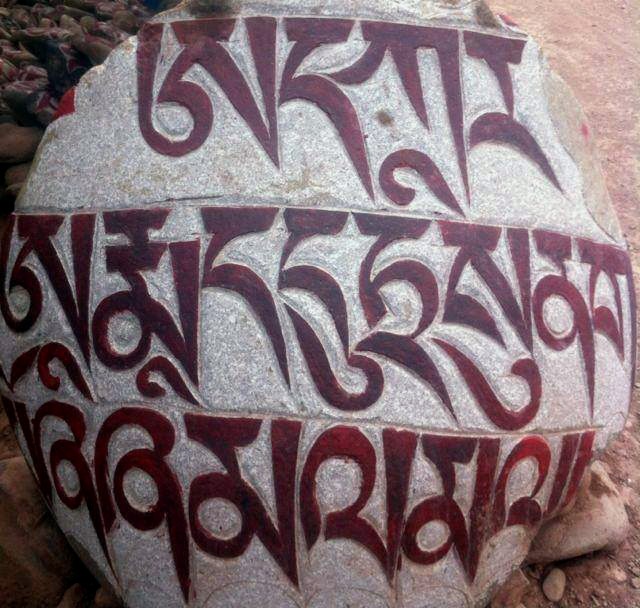
“AH KAR AH MÉ DU TRI SU NAK PO ZHI ZHI MAL MAL”
~One of the three principal mantras of the Yungdrung Bön tradition.
The Seven Causal Means for Developing the Mind of Enlightenment
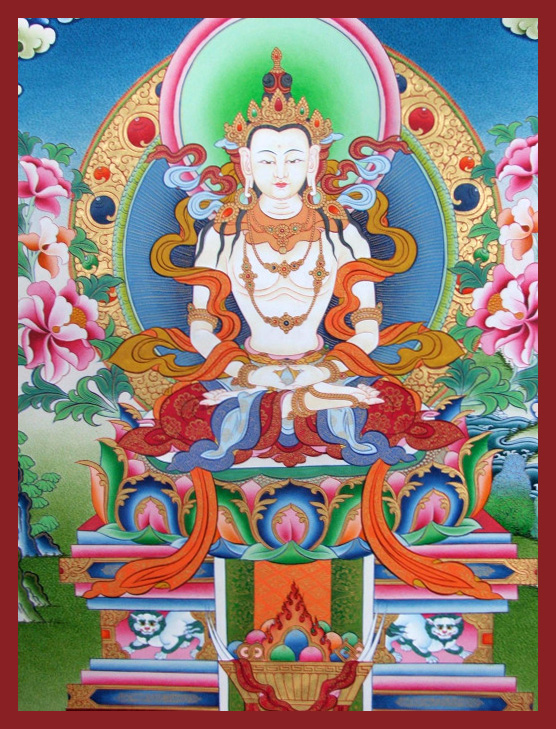
The enlightened deity, Shenlha Okar, embodies all positive qualities including immeasurable compassion
Compassion is the foundation of all Yungdrung Bön teachings. Developing unbiased, unbounded compassion is one of the foundational and primary practices. When this quality is perfected and fully realized, it is known as Jang Chub Sem, the Mind of Enlightenment. To aid this development, the Yungdrung Bön teachings give seven progressive steps, or causes, for developing this perfected compassion within one’s mind-stream.
- Ma Shé, Knowing the Mother: Recognizing that throughout our many lifetimes, each sentient being has at one time been our mother. We open ourselves to realizing our connection with each sentient being, whether human or nonhuman.
- Drin Dren, Remembering Their Kindness: Remembering and reflecting in detail about the kindness that you have received from other sentient beings throughout countless lifetimes.
- Drin du Zö, Returning the Kindness: Generating the feeling of wanting to repay the kindness of other sentient beings.
- Jampa, Love: Generating the feeling and wish that all other sentient beings experience happiness.
- Nying Jé, Compassion: Generating the feeling and wish that all other sentient being be free from pain and suffering.
- Lhak Sam, Profound Altruistic Motivation: Without hesitation, acting on behalf of the welfare of other sentient beings from a motivation of wanting to remove their suffering. This action is ultimately engaging fully in spiritual practice in order to attain realization and the capacity to help other sentient beings.
- Jang Chub Sem, the Mind of Enlightenment: The fully perfected, impartial and unbounded mind of immeasurable compassion.
The Seventh Way: The Way of the White AH
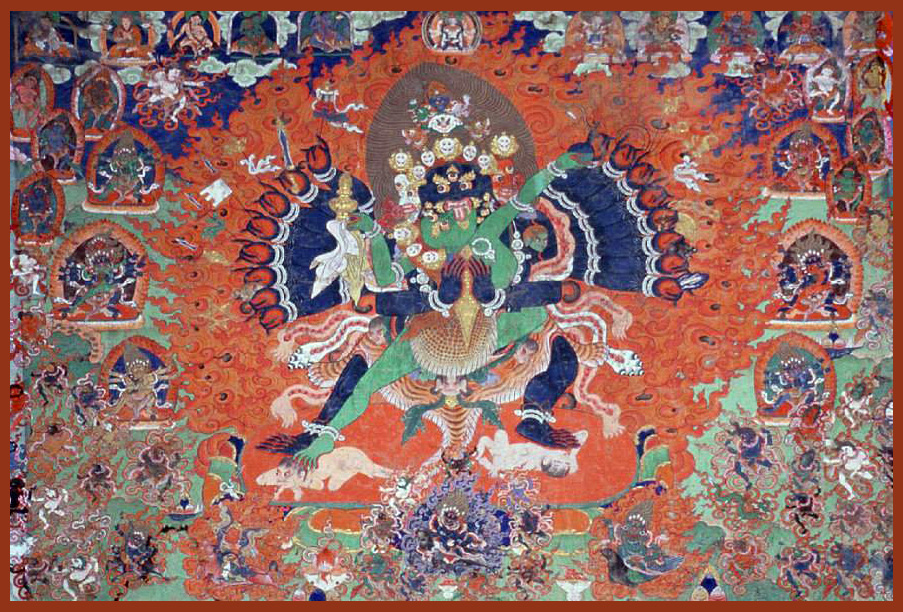
The enlightened wrathful deity, Walse Ngampa
Among the Nine Ways of Bön, The Seventh Way is The Way of the White AH. This Seventh Way is the first of the Nine Ways of Bön whose view is transformation rather than renunciation or avoidance. Rather than avoiding the five poisons, they taken upon the path and transformed into the five positive qualities. Hatred and anger are transformed into love, confusion and mental dullness are transformed into wisdom, pride is transformed into peacefulness, desire and attachment are transformed into generosity, and envy and jealousy are transformed into openness. To support this practice, the vessel of the external environment is transformed into a divine palace and the beings within are transformed into gods and goddesses.
The Seventh Way has many requirements of ritual items, ritual activity, deity visualization, mandala construction and rules of conduct. In general there are three primary categories of: support, accomplishment, and activity. Within the category of support, there are three outer, three inner, and three ritual preparations. Within the category of accomplishment, there are eighteen branches: six regarding the base, six regarding the path, and six regarding the result. Within the category of activity, there are nine divisions that can be directly correlated to each of the Nine Ways.
 Nine Ways