
Tsok zhing according to MenriThe Yungdrung Bon Merit Field of the Menri Tradition
In the Yungdrung Bön tradition, the place where the deities and objects of veneration are gathered is called the “Tsok Zhing”, the “Field of Accumulation”. It is also sometimes translated as the “Field of Merit” or the “Merit Field” because what is being accumulated by paying homage and making offerings to this place is merit, or virtue. This is the Merit Field according to the Menri Tradition from a drawing done by the great master and scholar HE Yongdzin Tenzin Namdak Rinpoche.
Yidams are deities who have their own individual cycles of practice with the aim of acquiring the qualities and blessings of the yidam being meditated upon. In general, these cycles of practice are centered around an individual retreat in which the practitioner focuses upon self-transformation into the deity, recitation of the deity’s mantra, along with any other ritual or meditation specific to the deity which support the attainment of the deities qualities and blessings. There are yidams specific to a family lineage, to monastic lineages as well as personal yidams. Some of the vows associated with yidam practice are general to all, and some vows are specific to each yidam. Some yidams are represented more than once to signify their different tantric cycles.

#2-4, 14 & 18: The Five Supreme Embodiments of the Father Tantra (See previous post:https://ravencypresswood.com/2016/06/05/the-five-supreme-embodiments/)
1. Zhiwa Künnang Khyappa: This yidam represents all peaceful yidams
2. Trowo Tsochok Khagying: This yidam is an embodiment of the Enlightened Mind of Buddha Tönpa Shenrap Miwoche.
3. Walsé Ngampa: This yidam is an embodiment of the Enlightened Body of Buddha Tönpa Shenrap Miwoche.

The Yidam Walse Ngampa, Embodiment of the Enl ightened Body
4. Lhago Tokpa: This yidam is an embodiment of the Enlightened Speech of Buddha Tönpa Shenrap Miwoche.
5. Sangwa Ying Rol
6. Tséwang Rikdzin: As a long life deity, this yidam is white in color.
7. Magyü Sangchok Tartuk: This yidam is the principal deity of the Mother Tantra and is also known as Tukjé Galpo.
8. Drenpa Namkha
9. Bumpa
10. Rampa
11. Rolpa
12. Dütsi Yungdrung Khyilwa
13. Takla Pudri Marpo
14. Gekho Sangwa Drakchen: This yidam is the embodiment of the Enlightened Qualities of Buddha Tönpa Shenrap Miwoche.
15. Trowo Druksé Chempa: This yidam is the Embodiment of the Enlightened Activities of Buddha Tönpa Shenrap Miwoche.
16. Meri Walchen Gekho
17. Chidul Yidam Gyatso Trogyal Raksha Khagying
18. Sangpur
19. Walsé Khyungnak Trowo Karpo
20.Wal Khyung Marpo
Yidams of the Other Tantras
#22-#25 The Four Principal Enlightened Ones (See previous post https://ravencypresswood.com/2016/08/20/the-four-principal-enlightened-ones/)
21. Gyepa Kunnang Khyapa
22. Tönpa Shenrap Miwo
23. Sipa Sangpo Bumtri
24. Lhachen Shenlha Ökar
25. Yumchen Satrik Érsang
26. Shenrap Nampar Gyalwa
27. Namdak
28. Jamma
29. Mélha
30. Kéngtsé Lenmé
31. Sherab Mawé Séngé

The Yidam Mawe Senge
32. Dülchok Tönpa Tritsuk Gyalwa
33. Jamma
34. Namdak
35. Mönlam Taye
36. Menlha
37. Künying
38. Gényen Tékpa Lha
39. Jamden
40. Dükhor
41. Künrik
42. Gyalwa Gyatso
43. Namjom
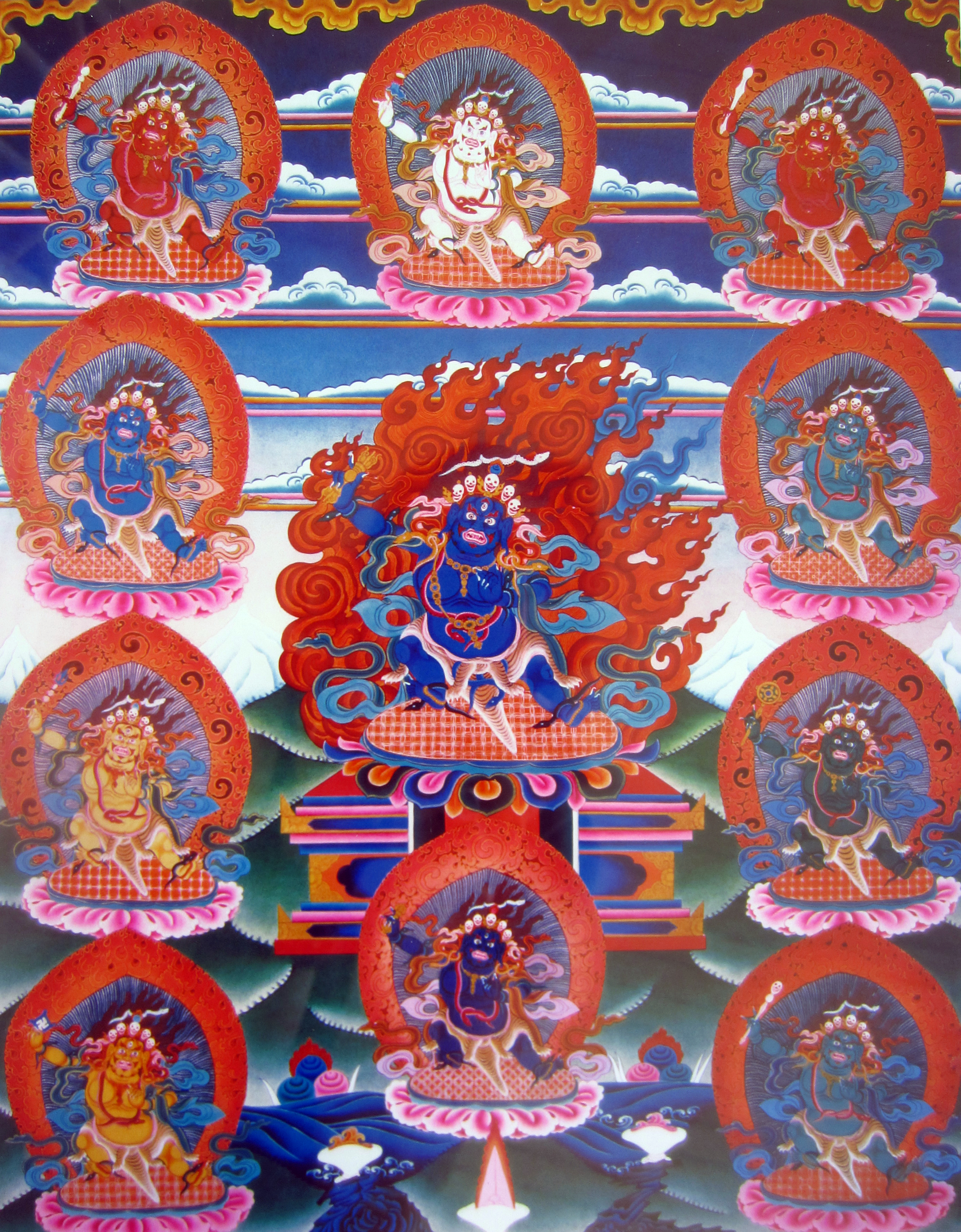
The Yidam Namjom, aka Nampar Jompa, and his emanations.

 Nine Ways