Author Archives: Raven Cypress Wood

Passing into Nirvana

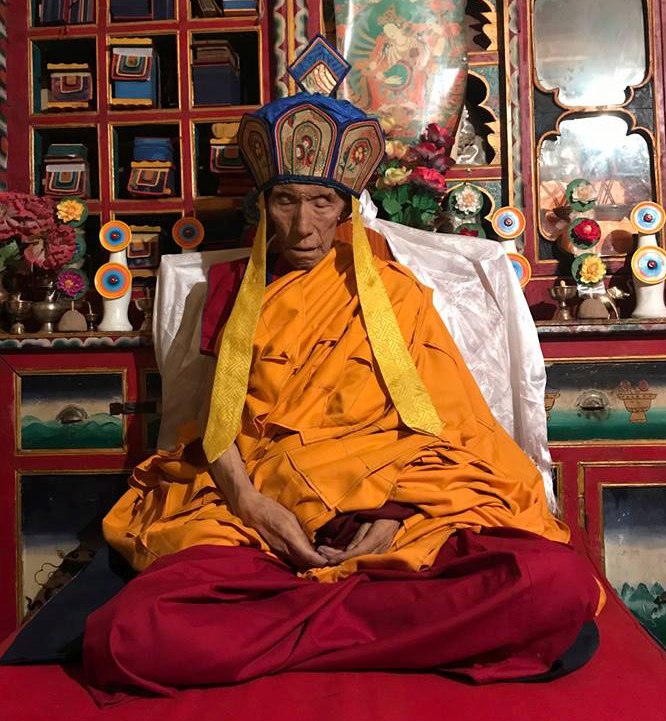
The PongenThroneholder Tise Gyalwa Rinpoche in tukdam. Photo credit: Unknown

On the second day of the first lunar month, Western date February 6, 2019, the abbot of Pongen Yungdrung Dargye Ling Monastery in Kham, Tibet, Khyungkar Tisé Gyalwa Rinpoche entered into the state of tukdam. In general, tukdam refers to a state of meditative stability attained by meditation masters that continues after the external breath of their body has ceased but the internal breath, or winds, remain.  Therefore, the subtle channels through which these winds move remain stable. The area of the body containing the heart chakra remains warm to the touch.  The skin remains soft, and the face retains a glow of vitality. During this time, great care is taken to not disturb the body or interrupt the state of mediation.

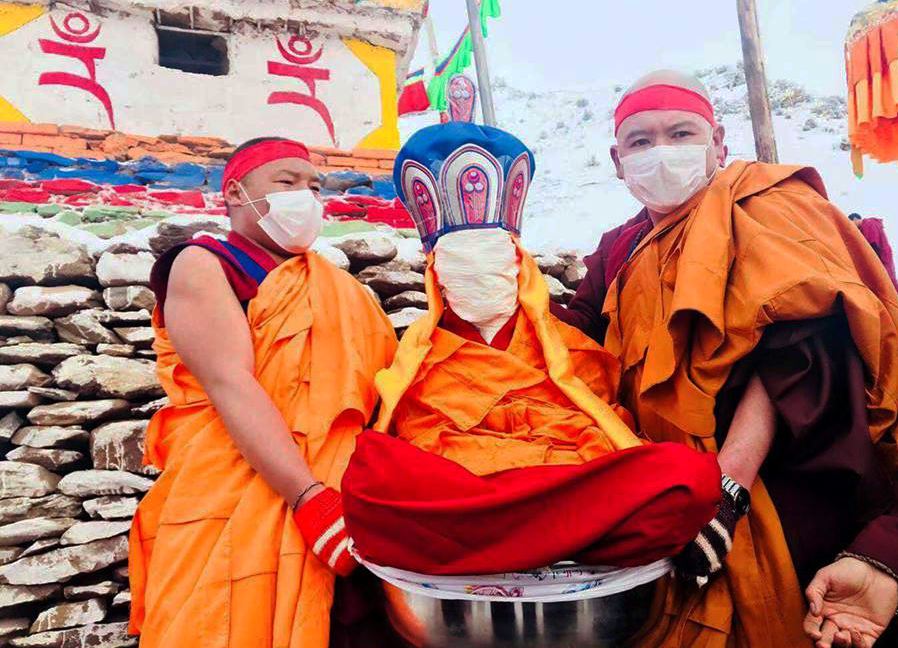
Khyungkar Tise Gyalwa cremation day. Photo credit: Unknown

After an indeterminate number of days, the internal winds cease, the channels collapse, the physical body slumps, and the warmth dissipates from the heart center. At that time, chants related to the cleansing of the sacred body are recited while the physical remains are ritually bathed with water mixed with special herbs.  Sacred seed syllables are then written on the body and the body is wrapped in a pure white cloth.

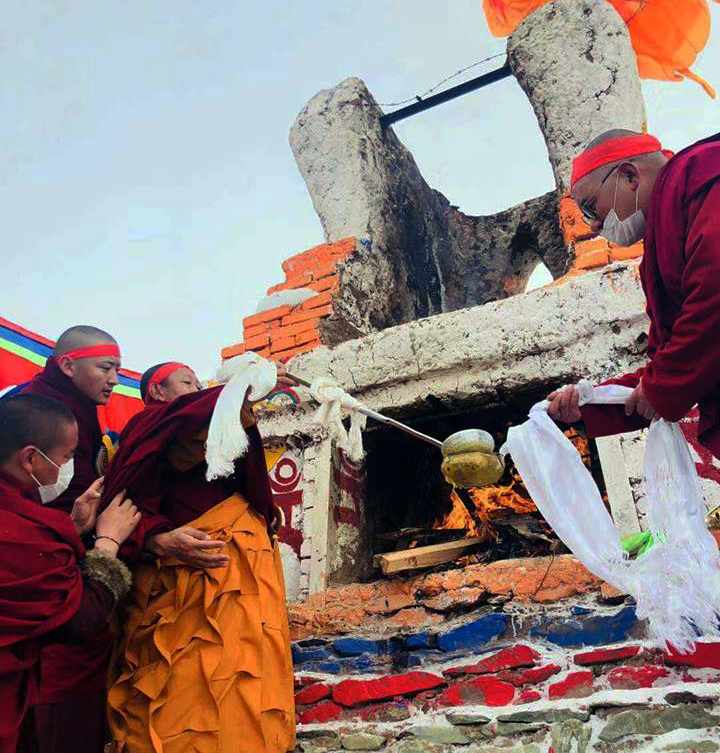
Cremation stupa. Photo credit: Unknown.

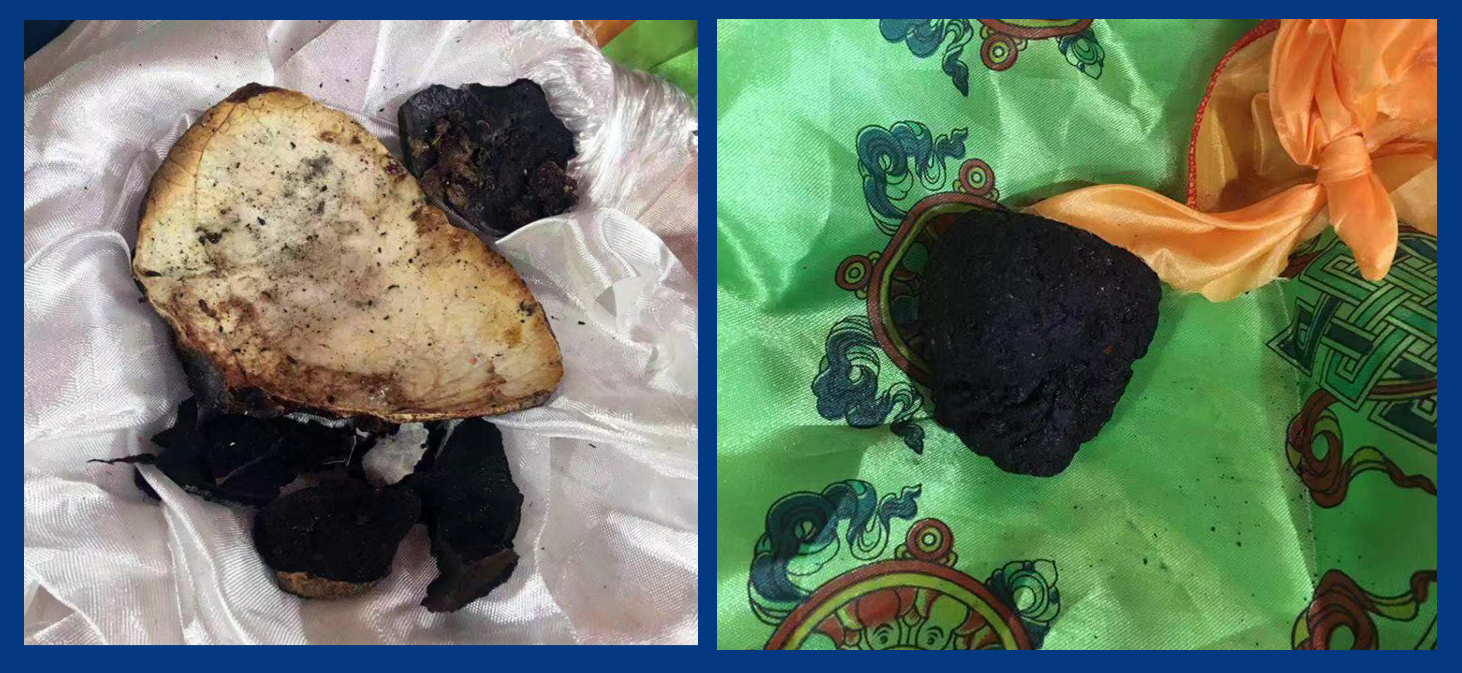
On the 23rd day of the 1st lunar month, Western date February 27th, the physical remains of Tisé Gyalwa Rinpoche were ritually cremated during an elaborate fire ceremony. His skull and heart remained intact and have been kept as sacred relics.

Sacred relics of the Pongen Throneholder Khyungkar Tise Gyalwa Rinpoche. Photo credit: Unknown.

Raven Cypress Wood ©All Rights Reserved. No content, in part or in whole, is allowed to be used without direct permission from the author.

Don’t want to miss a post? Scroll to the bottom and click “Follow this blog.”

Homage to Lord Tönpa Shenrap Miwoché!

Homage to Tonpa Shenrap painted on rock

“I prostrate to Shenrap Nampar Gyalwa, the Precious Wish-fulfilling Jewel!”

The 15th day of the 1st lunar month has traditionally been the day for Bönpos to celebrate the human birth of Lord Tönpa Shenrap Miwoché, founder of the Yungdrung Bön religious tradition. In 2019, this date coincides with February 19th on the Western calendar.

However, in recent times, the scholar and Yungdrung Bön master H. E. Yongdzin Tenzin Namdak Rinpoche has discovered through his research that the actual date is the 15th day of the 12th lunar month. See previous post: https://ravencypresswood.com/2019/01/19/passing-beyond-worldly-existence/

Raven Cypress Wood ©All Rights Reserved. No content, in part or in whole, is allowed to be used without direct permission from the author.

Don’t want to miss a post? Scroll to the bottom and click “Follow this blog.”

The Twelve Animals of Tibetan Astrology: The Pig

In Tibetan astrology, there is a twelve-year cycle.  Each of these years is characterized by a different animal and associated with one of the five elements.  Therefore, a full cycle of the twelve animals being associated with each of the five elements is sixty years.  The twelve animals according to the Yungdrung Bön texts are the Rat, Elephant, Tiger, Rabbit, Dragon, Horse, Snake, Sheep, Garuda, Monkey, Dog and Pig.  Each animal is associated with a specific element for its life-force as well as a specific direction which is determined by the life-force element.  Not only are these twelve animals associated with specific years, they are also associated with specific months, days and hours.

Feb 05, 2019 begins the Tibetan New Year, or Losar, and the year of the Earth Pig.  People born during a Pig year will have an emphasis of the specific qualities associated with the symbol of the Pig.  (These years correspond with the Tibetan lunar calendar and begin sometime between late January and early April.)   According to Tibetan astrology, the element which governs the life-force of the Pig is Water and its positive direction is North.  So, if a Pig person wanted to strengthen their life-force, they would focus upon strengthening the element of Water internally and externally.  Because the positive direction is North, facing this direction while meditating, engaging in healing practices or just relaxing and taking deep breaths is beneficial.

In general as an astrological symbol, the Pig person is honest and uncomplicated. A Pig person is straight-forward, but not in an aggressive way. They are often seen as “good, down-to-earth” people by others. This is because the Pig person does not harbor hidden agendas. They can be trusted and relied upon. In general, they have many friends to whom they are generous and jovial, and are always willing to be helpful. However, the Pig person can have difficulty setting boundaries and saying ‘no.’ And because they tend to be naive, it is possible for them to be taken advantage of by others. Although the Pig person is generous, they also enjoy having money for themselves and living in leisure and comfort. For this reason, the pursuit of pleasure and entertainment can become imbalanced and lead to excess.

The Pig’s soul day is Wednesday and its life-force day is Tuesday.  These are the best days for beginning new projects and activities that are meant to increase or develop something.  The obstacle day is Saturday.  This day is best for purification and letting things go.  It is not a favorable day for beginning new activities or risky activities.

Pig years include: 1935, 1947, 1959, 1971, 1983, 1995, 2007, and 2019

If you were born during a previous year of the Pig, this year as well as other Pig years are considered a time of vulnerability to obstacles. This same astrological principal applies for all of the other eleven animal signs during their associated year. Therefore, it is recommended to engage in practices that support vitality, good fortune and spiritual merit such as hanging prayer flags, having a soul and life-force retrieval ritual performed, restoring any deterioration or violation of one’s spiritual commitments or any damaged relationship with one’s spiritual brothers and sisters, and/or performing prayers and rituals to remove obstacles. In general, making an effort to engage more with virtuous activities of body, speech and mind and committing to engage less with non-virtuous activities is supportive. According to the words of Buddha Tönpa Shenrap Miwoché, the practice of developing sincere unbiased and unlimited compassion is the greatest of all protections.

A common prayer within the Yungdrung Bön tradition that is used to remove obstacles is the Bar Che Lam Sel, The Spontaneous Wish-fulfillment of Removing Obstacles from the Path. The English, Spanish and Portuguese translations of this prayer are offered free for personal use on the Nine Ways Publications page. Click on the Publications tab above and scroll down to the download links for the prayer.

Raven Cypress Wood© All Rights Reserved

Don’t want to miss a post? Scroll to the bottom and click “Follow this blog.”

Homage to the Lama

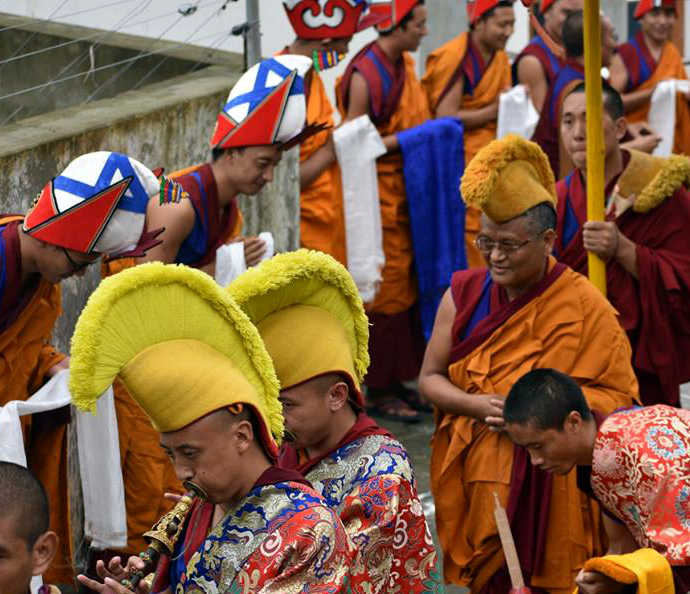
His Eminence Menri Ponlop Yangton Thrinley Nyima Rinpoche is welcomed back to Menri Monastery after traveling abroad. Photo credit: Unknown

Don’t want to miss a post? Scroll to the bottom and click “Follow this blog.”

Our Otherworldly Neighbors, the Lu

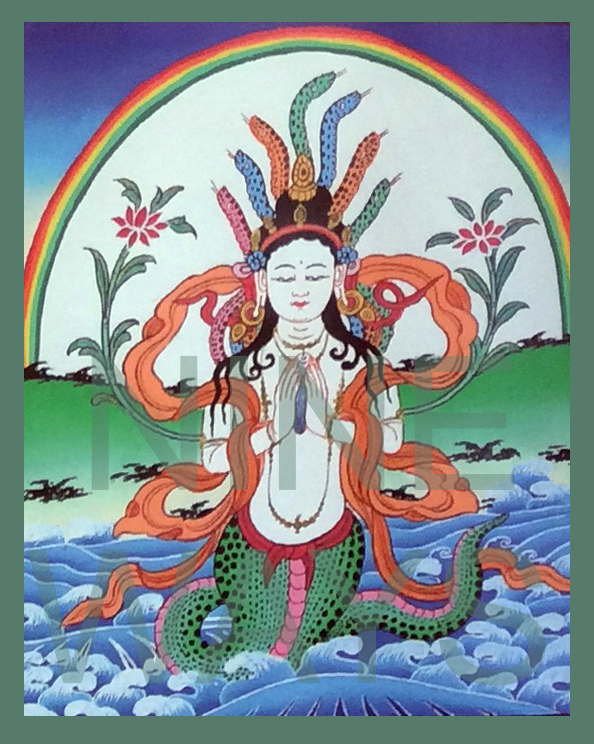
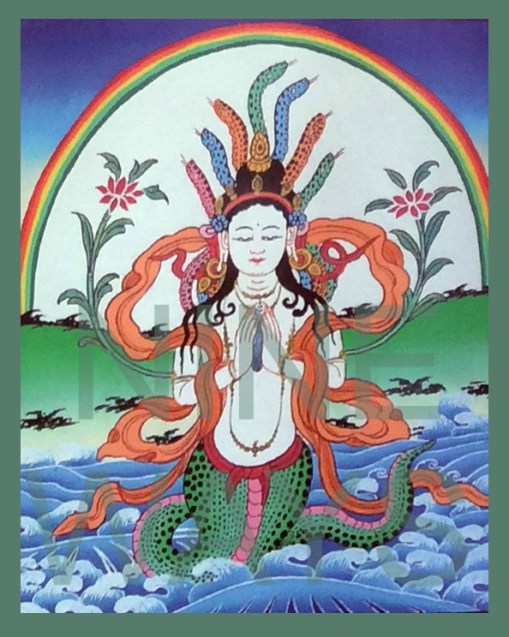
A depiction of a lu belonging to the royal class

According to the ancient teachings of Lord Tönpa Shenrap Miwoché, the phenomenal universe can be divided in to three worlds: the world of the gods above, the world of the lu [Sanskrit: naga] below, and the world of humans in-between. Interactions between the lu and human beings are especially common due to the fact that we share the same environment. Although the lu are most often associated with bodies of water such as lakes, springs, wells, and waterfalls; they also inhabit cliffs, rocks, trees, and abandoned places such as castles and fortresses.

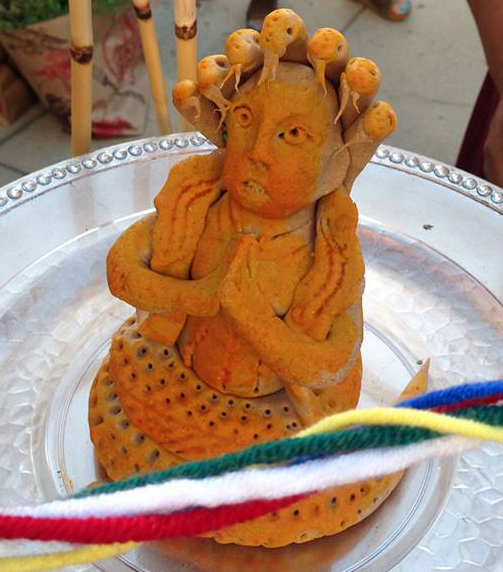
The different kinds of lu can be categorized in many ways. They can be divided into their five main societal classes: the white royal class, the yellow merchant class, the red priest class, the green servant class, and the mixed-color outcast class. They can be categorized according to their overall demeanor of being either generally peaceful or generally aggressive. Or, among the four kinds of guests* they can be categorized as members of the second, third, or fourth guests. As members of the powerful second guests of exalted qualities, there are eight great lu who act as benevolent protectors. As members of the third guests, some lu are among the magically powerful eight classes of beings who can be helpful when happy, but who can also become aggressive and destructive when they feel that they have been slighted. Lastly, as members of the fourth guests who are in need of our charity, some lu take the form of animals such as snakes or various aquatic creatures. They are often depicted as having a lower body similar to a snake, and an upper body similar to a human.
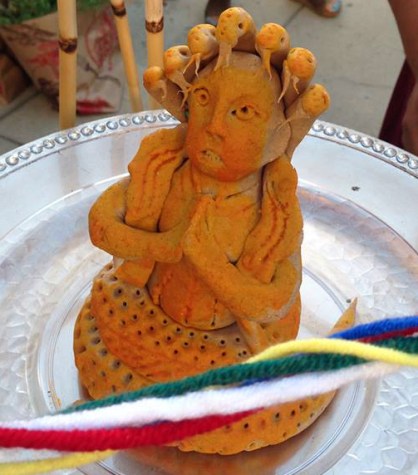
A ritual lu effigy created with tsampa by Murig Geshe Nyima Kunchap Rinpoche.

Any human activity that creates unpleasant smells, pollution, or destruction of the environment can cause the lu to become upset, or to be afflicted with illness and misfortune. When this occurs, the lu sometimes take action to stop the destruction. Some lu even engage in acts of revenge such as causing illness, epidemics, loss of property, or natural disasters to humans. Specific illnesses are associated with the lu such as boils, abscesses, skin diseases, leprosy, and infertility to name a few. For this reason, the enlightened Lord Tönpa Shenrap taught ritual methods to communicate with the lu, purify what we have polluted, restore harmony and make amends, as well as methods to subdue the aggressive-natured lu who are not satisfied with peaceful methods. Even for peaceful lu, it is important to communicate with them and present peacemaking gifts in the correct way. For example, according to the Yungdrung Bön religious calendar, there are specific days during each lunar month in which the lu are either more receptive to our requests, or not receptive at all.
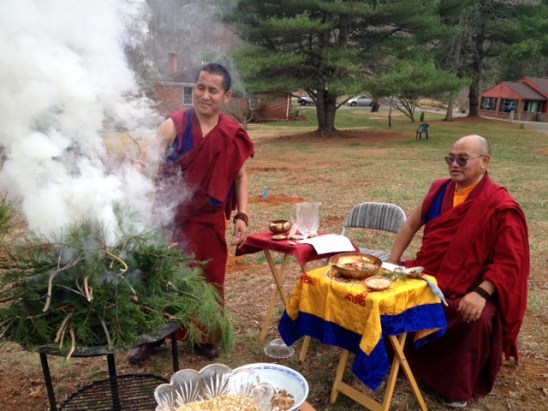
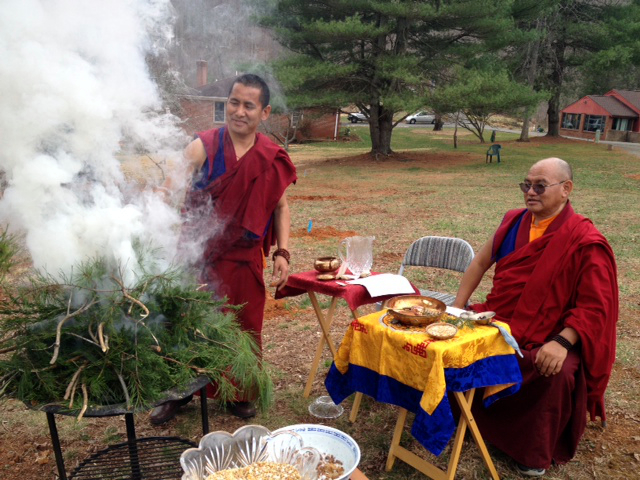
Geshe Nyima Kunchap and Geshe Tenzin Yangton performing the Lu Sang, or The Purifying Smoke Offering for the Lu. Photo credit: Raven Cypress Wood

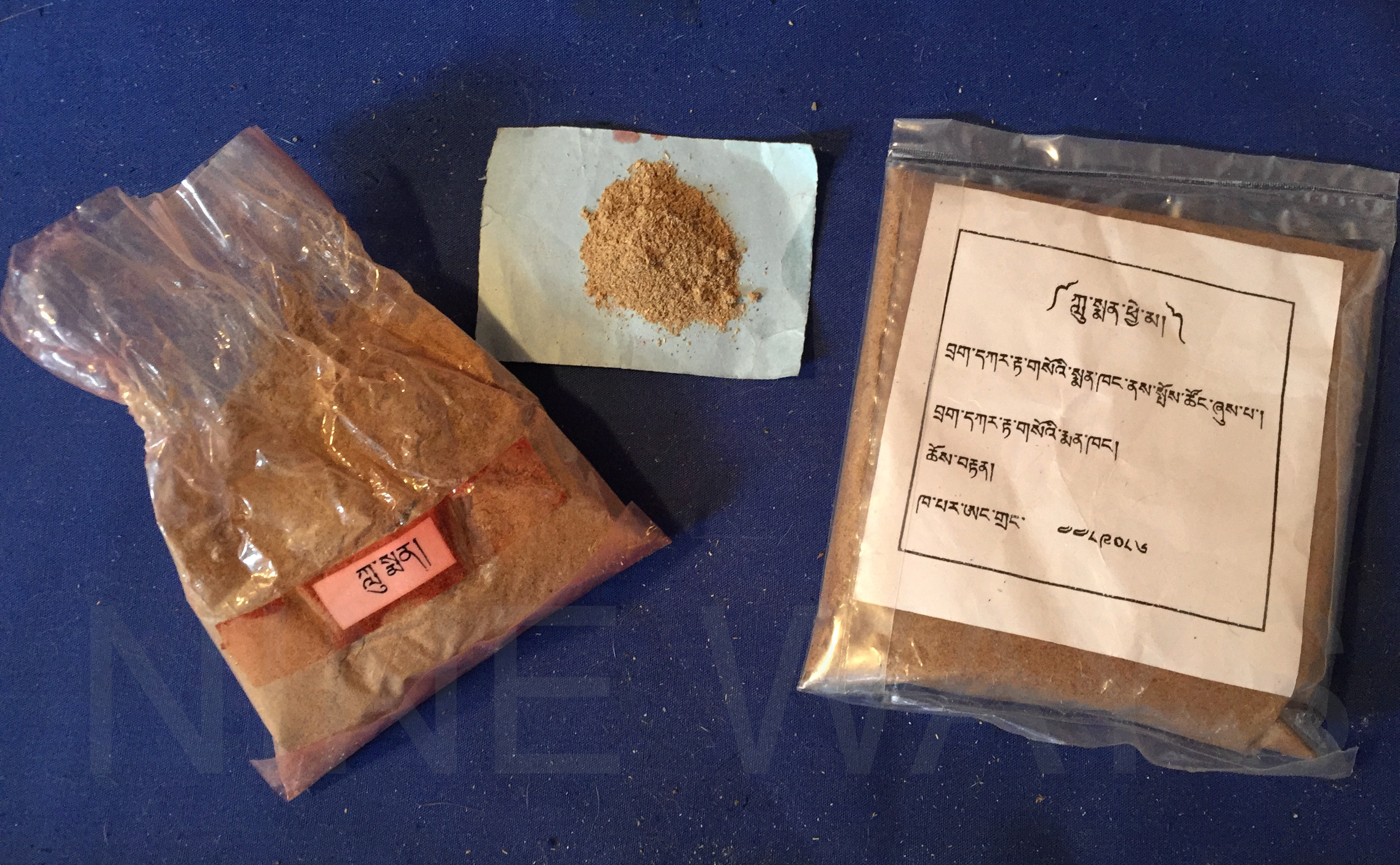
Essential to the ritual offerings for the lu is lu men, or lu medicine. Lu medicine contains: the three white things: milk, unsalted butter, and unsalted cheese; the three sweet things: rock sugar, honey, and brown sugar or molasses; the five grains: rice, wheat, barley, millet, and peas; the five precious things: gold, silver, turquoise, coral, and pearl or conch shell; peacock feathers, Choerospoldia axillaris, kidney-shaped Canavalia gladiate, liver-colored and liver-shaped Entada phaseoloides, sea foam, Bombax ceiba flower buds and flowers, crocodile claw-shaped herbal medicine, right-turning (Bön direction) conch shell, amber, hand-shaped Gymademnia, Terminalia Checula, Terminalia belerica Roxb, Emblica Officinalis, and Meconops. All of these substances are dried and ground into a fine powder and then mixed.

Lu medicine. Photo credit: Raven Cypress Wood

“Through the positive qualities of purifying all of you lu, for both myself and others, may human illness and contagious diseases be stopped!

Act to protect our longevity and our life-force! Act to guard our families and turn back misfortune!

Act to increase our influence and good fortune! Act to bring an abundance of personal power!

Act to connect me with my wealth and resources! Act as a protector and guardian to me!

Selected excerpt from The Purifying Smoke Offering for the Lu translated by Raven Cypress Wood ©2010
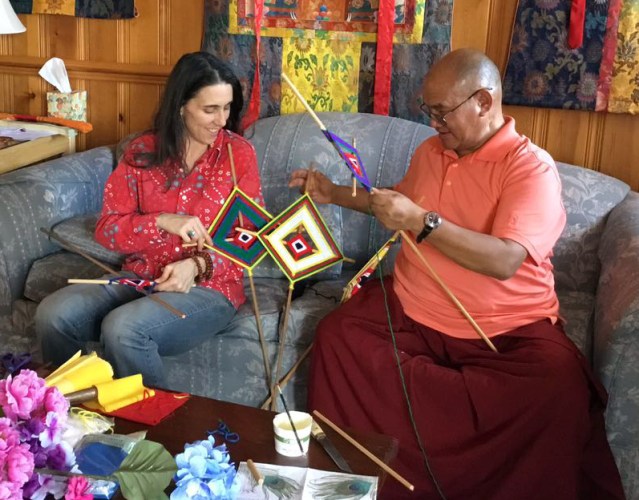
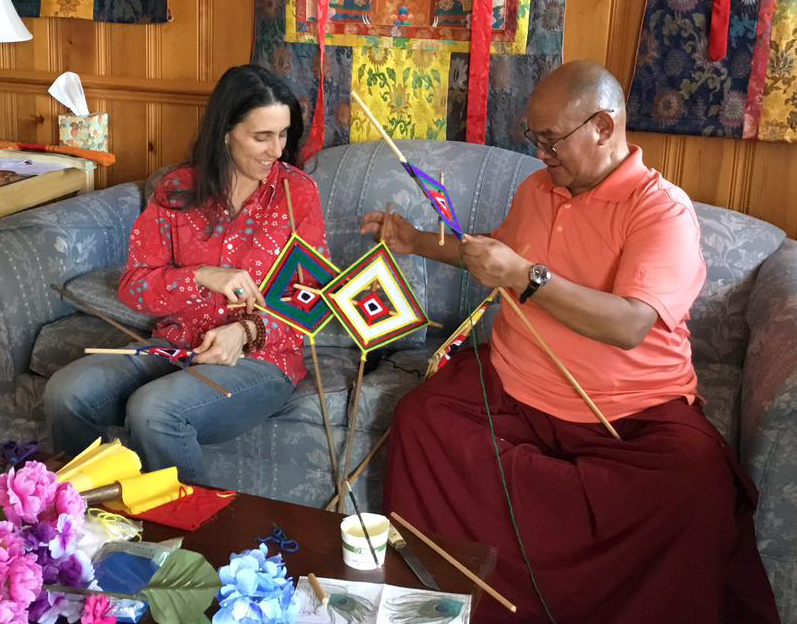
Murig Geshe Nyima Kunchap Rinpoche and Raven Cypress Wood prepare lu namkha for the lu ritual of Offering an Ocean of Milk to the Lu. Photo credit: Geshe Tenzin Yangton

On January 26, 2019 at Ligmincha International’s Serenity Ridge Retreat Center in the United States, Murig Geshe Nyima Künchap Rinpoche will be giving a half-day teaching related to the lu, their relationship to humans, how to determine if they have been disturbed, and proper methods to restore harmony. He will be teaching from the Lu Tor, The Ritual of Regularly Giving Torma to the Lu; and the Lu Sang, The Purification and Offering through Smoke for the Lu. Those in attendance will receive transmission for both of these practices. The following day on January 27th, the public is invited as he performs the Lu Ter, Lu Tor, and Lu Sang rituals. For more information or to register, follow the link below:

http://serenityridge.ligmincha.org/retreats-and-programs/428-lu-retreat-january-26-27-2019.html

*The First Guests are the respected guests who are the enlightened beings. The Second Guests are the guests of exalted qualities who are the enlightened and unenlightened benevolent guardians and protectors. The Third Guests are the eight classes of beings. The Fourth Guests are the guests of charity who are beings within the six realms of cyclic existence minus the gods and the demi-gods.

Raven Cypress Wood ©All Rights Reserved. No content, in part or in whole, is allowed to be used without direct permission from the author.

Don’t want to miss a post? Scroll to the bottom and click “Follow this blog.”