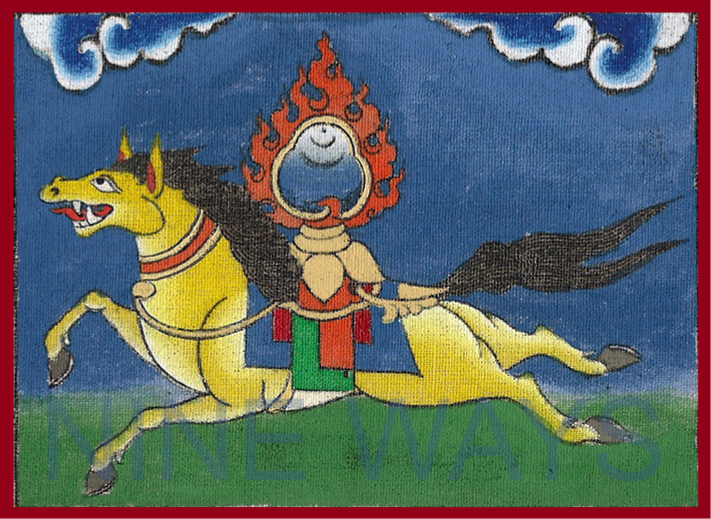
“Lungta” is a compound of two words: “lung” and “ta.” To have a deeper understanding of lungta, it is necessary to look at its two variant spellings. Both words are pronounced exactly the same, but the different spellings have different meanings. The written form “lungta” is a standard phonetic rendering of the Tibetan. To illustrate the different Tibetan spellings for those unfamiliar with the Tibetan syllabary, the standard Wylie transliteration method of Romanizing the Tibetan language can be used. The spelling difference applies to the first syllable of the first word. Transliterated from the Tibetan, the original spelling is klung rta and begins with the syllable “ka.” The modern, changed spelling is rlung rta and begins with the syllable “ra.” Although these syllables are silent and do not change the pronunciation, they do influence the meaning of the word.
The modern spelling is rlung rta. By itself, the word “rlung” means “wind.” This refers to wind from its most subtle form of energy to the most gross manifestation as an external element. “Ta,” the main syllable of the second word transliterates as “rta,” and means “horse.” This spelling is the same for both words. “Horse” in this context refers to the supreme horse which is endowed with extraordinary qualities somewhat similar to the mythic horse Pegasus. Because the horse was the mode of traveling with the greatest speed in ancient times, it symbolizes the swift reversal of bad fortune to good fortune, illness to health, poverty to prosperity, ignorance to wisdom, and so on. Therefore, the compound “rlung rta” literally translates to “windhorse.” The symbol of this, also known as a windhorse, can be seen in the center of many prayer flags carrying a flaming, wish-fulfilling jewel. In modern Tibetan astrological texts, all references to lungta are spelled with “ra” as the first syllable.
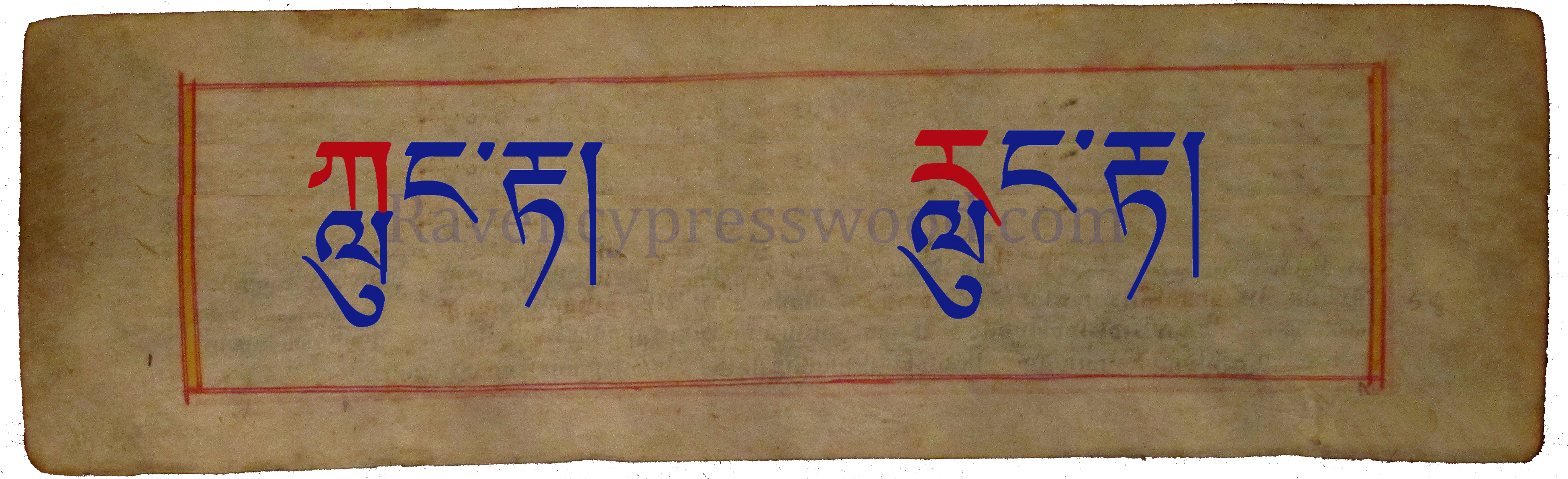
In many Bön texts, especially the ancient texts, lungta is spelled with the syllable “ka” as “klung” which can be translated as “fortune,” and sometimes as “river.” Some Tibetan dictionaries list one of the meanings of “klung” as “the element of space.” For the Bönpo, every Tibetan syllable is associated with a specific elemental characteristic, and the syllable “ka” arises from the element of space. The syllable “ra” arises from the element of fire. More specifically, the syllable “ka” is related to the vast, pervasive quality of space. This understanding points to the function of the force of lungta [klung rta]. It is a pervasive, protective force. As one of the five natal energies, it acts to support the other four natal energies of health, personal power or wangtang, vitality, and soul to have a quality of pervasiveness and to support them from diminishing. The compound “klung rta” refers to an individual’s force of good fortune and field of protection. If an individual’s lungta is strong, it enlivens the other four natal energies and naturally protects from negativity. Lungta has the ability to pervade everywhere like the sun. And like the sun, it can be experienced as being diminished or blocked due to external circumstances.
In this way, an individual’s lungta can be experienced as being weaker or stronger, increasing or diminishing. For example, each year is astrologically associated with one of the five elements. Inevitably, some years will be in a conflicting relationship with an individual’s natal lungta element. The year 2022 is ruled by the element of water. For individuals whose lungta is ruled by the element of fire, the element of water is in an enemy relationship with the element of fire that governs their lungta. When this occurs, lungta can be experienced as becoming weaker or blocked and result in chronic bad luck, obstacles to success, disharmony in relationships, and so on. Within the Yungdrung Bön, there are many methods to remove what is blocking the flow of lungta and thereby restore and strengthen it. One of the easiest and most common methods is the raising of prayer flags. Particularly, raising prayer flags of the same color as the element associated with an individual’s lungta. The element/color associations of the five elements are: earth=yellow, water=blue, fire=red, wind/wood=green, and space/metal=white. Additional practices that are effective methods to increase lungta include practices that strengthen the element associated with the lungta, rituals such as the fumigation and offering of smoke, performing acts of virtue and devotion such as circumambulating chortens or making satsa, reciting mantra and/or prayers, and practicing with the internal winds are all effective methods to increase lungta. The specific method used depends upon the knowledge, circumstance, and capacity of the individual. When the force of the lungta is strong there is a feeling of ease and flow to life. There are auspicious circumstances, success, good fortune, harmony, and a general feeling of well-being and support. Any task that is undertaken is successful and supportive circumstances naturally occur.
For more information about raising prayer flags, see previous article: https://ravencypresswood.com/2020/02/15/the-immeasurable-benefit-of-raising-prayer-flags/ For more information about the ritual of fumigation and offering of smoke, see: https://ravencypresswood.com/2021/11/19/new-book-release-sacred-smoke-the-ritual-practice-of-fumigation-and-offering-in-the-yungdrung-bon-religious-tradition/
“May my life force and vitality increase! May the strength of my body increase! May my personal power increase! May my lungta be well developed! May my soul and prosperity increase! May all lungta, soul, and prosperity that have decreased become well developed! May external, internal, and secret obstacles be cleared! May these wishes bring the accomplishment of all goals and intentions!”
-Prayers on a Yungdrung Bön lungta prayer flag
Tibetan translation by Raven Cypress Wood ©All Rights Reserved. No content, in part or in whole, is allowed to be used without direct permission from the author.
Did you enjoy this content? This article is made possible by generous donors who want content like this to continue to be available. Don’t want to miss a post? Scroll to the bottom and click “Follow this blog.”
Join the mandala of Nine Ways supporters by donating through one of the services listed below.


 Nine Ways