Blog Archives

91st Anniversary of the Parinirvana of Shardza Tashi Gyaltsen Rinpoche

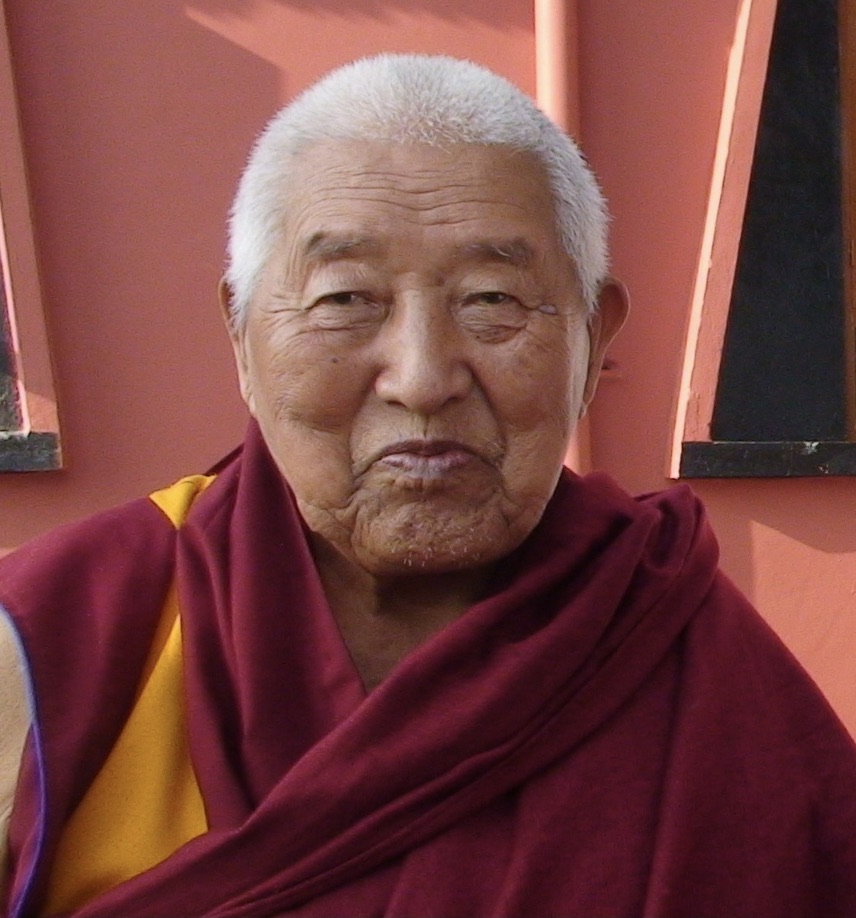
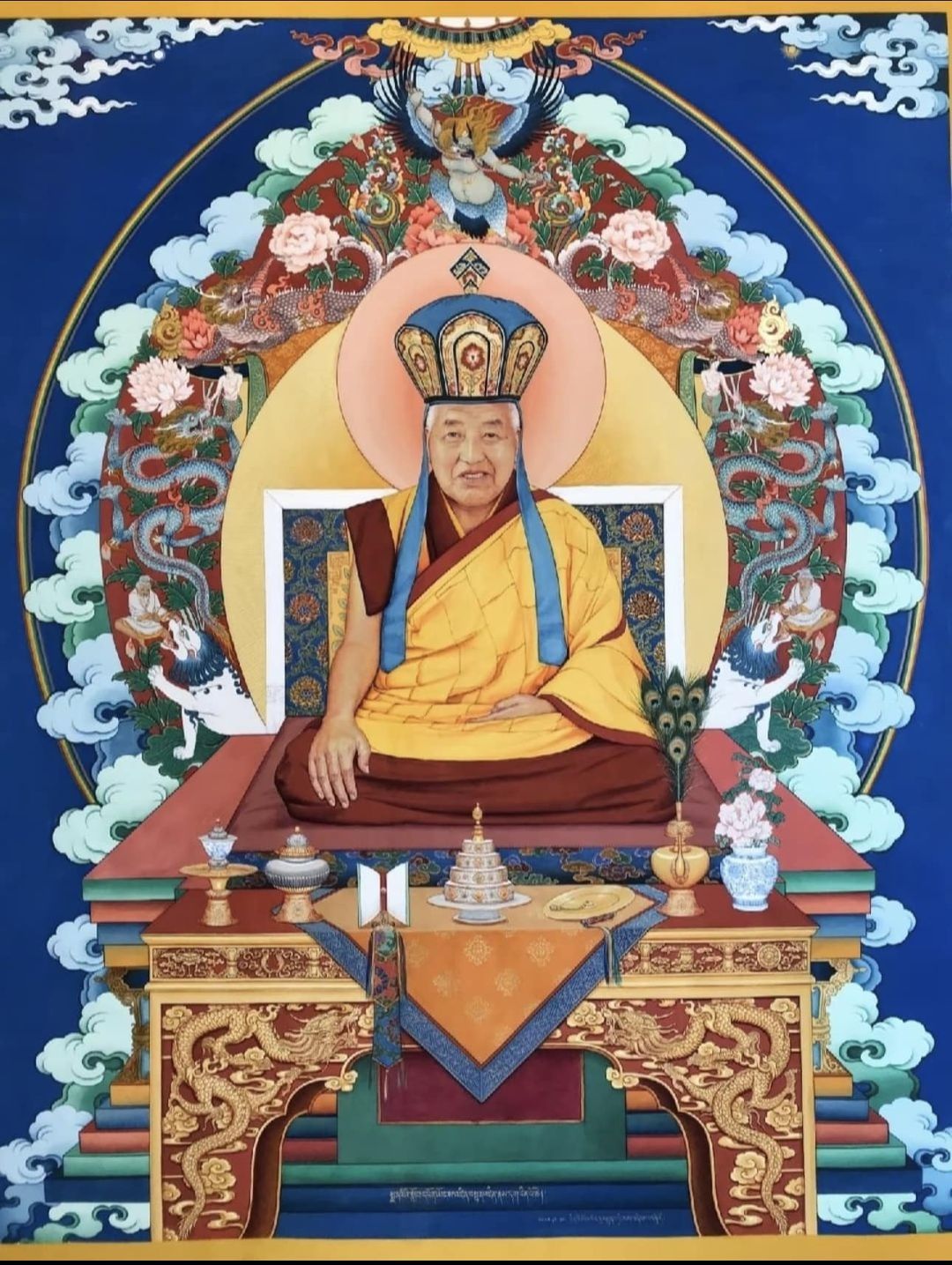
Shardza Tashi Gyaltsen Rinpoche

The 13th lunar day of the 4th lunar month is the anniversary of the parinirvana and the attainment of the rainbow body of Shardza Tashi Gyaltsen Rinpoche. In 2025, this date coincides with June 9th. Shardza Rinpoche was a Yungdrung Bön monk, teacher, scholar, and realized practitioner of the modern age. Born in 1859 in Kham, Tibet, at the age of nine an esteemed lama told his parents that he should become a monk. Being their only son, the parents refused. Shardza soon became quite ill. Seeing that their son was not recovering, the parents agreed to allow him to take ordination. At this, Shardza quickly recovered. He was the attendant for his root lama, Tenzin Wangyal, for many years. At the age of eighteen, he took the full vows of a Yungdrung Bön monk from the abbot of Yungdrung Ling Monastery.

Shardza Tashi Gyaltsen Rinpoche depicted as a yogi with long hair and a white robe

Throughout his life, Shardza Rinpoche was known for a disciplined adherence to every vow that he had taken throughout his life. Although his view and practice were vast and high, he maintained diligence in performing virtue and avoiding the smallest non-virtue. He continually performed the preliminary practices and recited many millions of mantra, especially the SA LÉ Ö mantra. He composed many concise practices for purifying negativity and accumulating merit and wisdom, such as his Aspiration Prayer of Giving and Receiving. (For the publicly available English translation, go to the Publications page of this website. For a brief explanation of the prayer, see previous article: https://ravencypresswood.com/2020/01/31/an-aspiration-prayer-of-giving-and-receiving-gift-translation/ )

“For those with a great deal of negative actions in this lifetime, having requested a remedy because they will certainly ripen during future lifetimes, the remedy of performing virtue is very powerful. Having ripened negative actions, the mere exhaustion of that karma (through pain and/or illness), enlightenment is certain. Therefore, this pain and illness of yours is very amazing when it is voluntarily accepted!

Even now, whenever more pain or illness arises, continuing to persevere with your religious practices, venerations, and acts of pure virtue would be incredibly amazing!

When you imagine that there will be no unhappiness in the future (due to this negative karma being exhausted), supremely praise the emptiness of that particular pain or illness.

Be inspired by the power of this antidote, even when what you don’t want arises.

Take the suffering and misery of others onto yourself by adopting others’ happiness and suffering through the practice of giving and receiving.” 

Shardza Rinpoche’s advice to the female practitioner Khandro Wangi Dronma. 
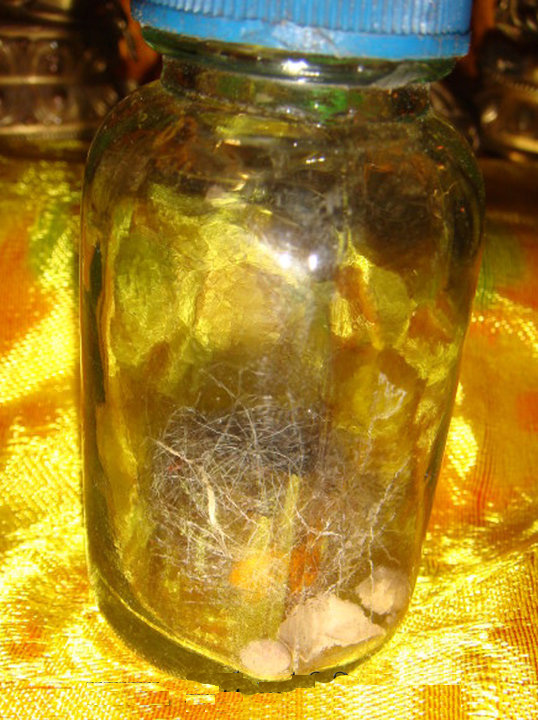
Hair and nails of Shardza Tashi Gyaltsen that were recovered after his attainment of the rainbow body
Hair and nails of Shardza Tashi Gyaltsen Rinpoche that were recovered after his attainment of the rainbow body

He taught a multitude of disciples, organized the reconstruction of temples, went on pilgrimages, and spent a great deal of time in isolated retreat. A prolific writer, he wrote at length on subjects such as Bön history, instructions for the practice of Tibetan yoga, preliminary practices for Dzogchen, condensed summaries of each of the None Ways of Bön, and detailed instructions for the advanced practice of inner heat, known as Tummo. When Shardza Rinpoche was 75 years old, his disciples noticed that his behavior changed. He seemed more casual and became delighted when playing with children. He was seen doing miraculous things such as walking without his feet touching the ground or setting his bowl down in space.

In 1934 at the age of 76 during an offering ceremony, he began to spontaneously sing songs of realization.  A few days later, he sewed himself inside a tent and forbid any of his disciples to open it.  The next day, rainbow lights began appearing above and around the tent. After three days, the ground shook. By the 4th day, rainbow-colored mist was seen coming through the seams of the tent. On that 4th day, Shardza’s disciple Tsultrim Wangchuk, afraid that his lama’s body would completely disappear and leave nothing as an object of veneration and inspiration, opened the tent. He found Shardza’s body enveloped in rainbow light, levitating in midair, and shrunken to the proportional size of a one year old child. The area around his heart was still warm but most of the nails of the hands and feet had fallen onto the seat below. For the next forty-nine days, a multitude of disciples came to pay their respect and receive blessings. After that, the precious remains were placed into a reliquary chorten. From time to time, many people have reported seeing clear or rainbow-colored light emanating from this reliquary chorten.

Shardza Tashi Gyaltsen’s reliquary chorten at his retreat center in Amdo, Tibet

Raven Cypress Wood ©All Rights Reserved. No content, in part or in whole, is allowed to be used without direct permission from the author.

Don’t want to miss a post? Scroll to the bottom and click “Follow this blog.”

Want to join the mandala of Nine Ways supporters? Follow this link https://ravencypresswood.com/donate/ It’s easy through Paypal, Zelle, and Venmo.

Annual Reading of the Enlightened Teachings of Lord Buddha Tönpa Shenrap

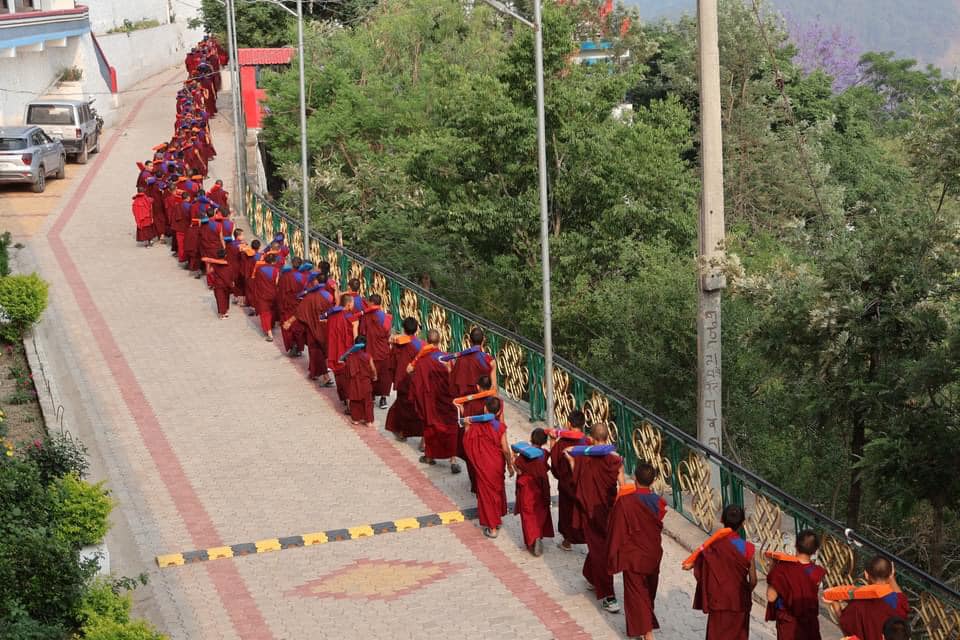
Nuns of Rayna Menling reading from the teachings of Buddha Tönpa Shenrap

Each year at Pal Shenten Menri Monastery and Rayna Menling Nunnery on the 14th and 15th lunar days of the 4th month, the enlightened teachings of Lord Buddha Tönpa Shenrap Miwoché are read out loud. In 2025, these dates coincide with June 10th and 11th on the Western calendar. The sacred volumes containing these teachings are carried by both the ordained and laypeople as they circumambulate the temple. As a sign of respect for the sacredness of these texts, they are carried above the waist. Most often, they are carried on the shoulder. After bringing them into the temples, offerings such as incense are presented, and the text are distributed to the ordained for two full days of reading. Reading the scriptures aloud is considered one of the thirteen activities for a meaningful human life. (See previous article: https://ravencypresswood.com/2020/03/21/the-thirteen-yungdrung-bon-activities-for-a-meaningful-human-life/) For those inspired to read the words of Buddha Tönpa Shenrap on these days, The Beneficial Mantric Praise of Künsal Jamma Chenmo, The Jamma Ngak Tö, is considered a root text for the practice of Sherap Jamma that was spoken by the Buddha himself. Through the verses of praise for each of the syllables of Jamma’s root mantra, the profundity of the innumerable manifestations of Jamma is revealed. The teaching and transmission for this text has been widely shared in both the East and West.

“The mantra of the twenty-one victors, the praise of the Victorious Jamma of Bön, was spoken by the Victor Tönpa Shenrap. These twenty-one verses are, without exception, beyond cyclic existence and a completely pure practice. By reciting out loud the twenty-one praises, one will obtain immeasurable benefits. Praise to Tönpa Shenrap for revealing these twenty-one praises of the root mantra!”

Extract from The Beneficial Mantric Praise of Künsal Jamma Chenmo
His Holiness the 34th Menri Trizen, His Eminence Menri Pönlop Rinpoche, and other monks of Menri Monastery carry texts containing the words of Buddha Tönpa Shenrap.

The canon of sacred Yungdrung Bön texts is divided into two categories. The first category of texts contains the teachings of the primordial enlightened ones and Lord Buddha Tönpa Shenrap. This category is known as Ka [Tibetan: bka’] meaning “enlightened words or speech.” These texts are further divided into four primary categories: (1) Dō [Tibetan: mdo], Sutra, (2) Bum [Tibetan: ‘bum], The Hundred Thousand, (3) Gyü [Tibetan: rgyud], Tantra, and (4) Dzö [Tibetan: mdzod] The Treasury. In some catalogues, there can also be a fifth category of miscellaneous texts. Although each Yungdrung Bön temple in Tibet had a significant collection of Ka scriptures, the collections were not necessarily complete. This was especially due to repeated persecution throughout history of the Yungdrung Bön tradition which necessitated the hiding of texts. It is thought that only one complete collection survived. According to a catalogue of the Ka done by the 23rd abbot of Menri there are a total of 175 volumes. This number can vary according to various collections due to the availability of texts that could be copied, whether only main titles were counted as a volume, and so on. Regardless, the Sutra section contains texts such as the hagiography of Buddha Tönpa Shenrap, The Ritual Practice of the Medicine Buddha, The Root Scripture for Jamma, the four volumes of medical texts, and so on. The Hundred Thousand section contains the sixteen volumes of the Khams Gyé, The Unsurpassed Scripture Regarding the Eight Realms, the Yum Dō, The Heart Sutra of the Mother of the Great Vehicle, and so on. The Tantra section includes the Buddha’s teachings of the Mother Tantras, the Father Tantras, Phurba, Walsé, and so on. The Treasury section includes the teachings of dzogchen such as The Aural Transmission of Zhang Zhung.

“Gyajin, a ruler of the gods, rose from his seat and, having removed his upper robe from one of his shoulders, he set his right knee upon the ground. Having placed his hands together, he made a request of The Teacher with these words: “Free from the fault of wrongdoing, you have perfected every good quality. You are the source from which arises all happiness and exalted qualities. Good omniscient Shenrap, what should one do to practice or make use of the Essence of the Mother of the Great Vehicle?”

In response to that, Shenrap bestowed his teaching. 

“Gyajin, ruler of the gods, and all you yungdrung sempa, when practicing or making use of the Essence of the Mother of the Great Vehicle, all phenomena that arise from worldly existence, that arise as precious ornaments, that arise as an appearance, that arise from emptiness, that arise from individual clarity, that arise from self-awareness, that arise from the changeless and indestructible vast expanse, or that arise from equanimity; are neither appearance nor emptiness, neither existent nor nonexistent, neither eternal nor nothingness, neither born nor negated. Why is that? All of those, in every way, are unobjectifiable. Even their self-nature is unobjectifiable. Therefore, they are primordially without a source and without a birth. They have no beginning. Abiding within the equanimity of no beginning is the unfabricated, perfected, single sphere.

Extract from The Heart Sutra of the Mother of the Great Vehicle to be published in the forthcoming A Mala of Blazing, Wish-fulfilling Jewels: A Collection of Daily Practices of the Yungdrung Bön Religious Tradition by Raven Cypress Wood
Monks and nuns of Menri Monastery circumambulating with the scriptures of the Ka.

The second category of canonical texts is known as the Ka Ten [Tibetan: bka’ brten], Relying upon the Words. The Bön canon is referred to within Bön texts as the Ka and the Ka Ten. (This differs from the Buddhist canon which is referred to as the Kangyur and the Tengyur.) The Ka Ten includes commentaries, practices, rituals, and so on that rely upon the scriptures of the Ka for the root text. In order for a text to be included in the Ka Ten, it must undergo a rigorous and methodical analysis. There are over 300 volumes included within the Ka Ten. Some catalogues do not include texts after the 14th century which are thought to be mainly texts of the New Bön tradition. Other catalogues do include these texts as well as the collective writings of other Bön sages such as Shardza Tashi Gyaltsen. Additionally, many texts are incredibly rare and are guarded from outsiders. Therefore, few if any copies of these texts exist. Some texts are considered valid to be included in the Ka Ten by some, while being considered invalid and thus excluded by others. Titles can be included within unrelated volumes or counted individually, and so on. Even so, it is generally accepted that there are over 300 volumes of Ka Ten scriptures. These volumes include commentaries and practices based upon scriptures of the Ka such as The Practice Manual of the Aural Transmission of Zhang Zhung by Dru Gyalwa Yungdrung, scriptures of philosophy and logic, biographies, historical accounts, compositions of sacred songs, poetry, and advice for disciples, collections of liturgical texts, and so on.

I, of inferior intelligence, but for the benefit of beings and for the sake of explaining at least part of the meaning, will explain the Sky Ladder to Freedom, an Abridged Commentary of the Meaning of the Heart’s Blood of Bön, the Mantric Praise of Jamma. If one were able to explain the commentary on the merits of Jamma in great detail including the characteristics of each of the deities, it would amount to twenty-one great chapters in many volumes. ”  

Extract from A Sky-Ladder to Freedom: An Abridged Commentary Regarding the Meaning of the Words of the Mantric Praise of Jamma, the Deity Who Protects From All Things composed by the great 23rd abbot of Menri Monastery His Holiness Nyima Tenzin Rinpoche
Traditionally wrapped and labeled Yungdrung Bön scriptures.

Tibetan translations by Raven Cypress Wood

Raven Cypress Wood ©All Rights Reserved. No content, in part or in whole, is allowed to be used without direct permission from the author.


This article is made possible by generous donors who want content like this to continue to be available. Want to join the mandala of Nine Ways supporters? Follow this link https://ravencypresswood.com/donate/


Don’t want to miss a post? Scroll to the bottom and click “Follow this blog.”

Traditional 18,042nd Anniversary of the Human Birth of Buddha Tönpa Shenrap Miwoché

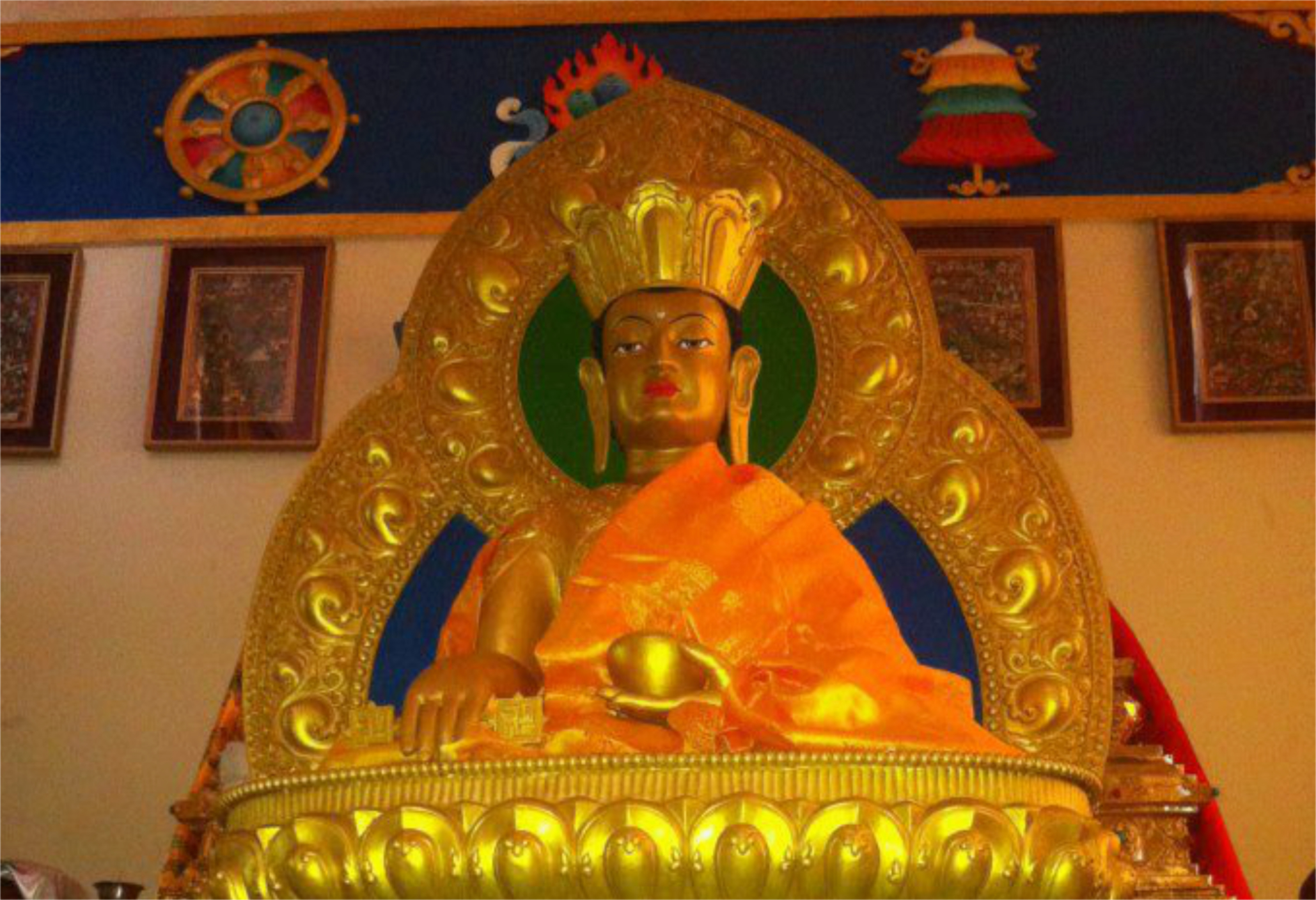
Buddha Tönpa Shenrap Miwoché. Photo credit: Raven Cypress Wood

Although in recent times the historical date of Buddha Tönpa Shenrap’s human birth has been stated to be the 15th day of the 12th month by the scholar His Eminence Yongdzin Tenzin Namdak Rinpoché, it continues to be a tradition to also celebrate the Buddha’s birth on the 15th lunar day of the 1st month which is the date that has been celebrated through countless generations. In 2025, this date coincides with March 14th on the Western calendar.

This day is an especially auspicious day to recite the following Homage to Tönpa Shenrap Miwo. Both His Eminence Yongdzin Tenzin Namdak Rinpoche and Menri Pönlop Yangtön Trinley Nyima Rinpoche recite this prayer before giving teachings.

“སྟོན་པའི་རྒྱལ་པོ་འཁོར་བ་འདྲེན་པའི་དཔལ། མུན་པའི་ཚོགས་རྣམས་འཇོམས་བྱེད་སྒྲོན་མེའི་འོད། མ་རིག་ནད་གདུང་སེལ་བ་སྨན་པའི་གཙོ། མི་ཡི་མཆོག་ཏུ་གྱུར་པ་དམུ་ཡི་རྒྱལ། དུག་ལྔའི་འདམ་དང་མཚོ་སྐེམས་མེ་ཆེན་དཔུང་། མཚན་དང་དཔེ་བྱད་སྡན་པའི་གཟི་འཕགས་པོ། དཀའ་བ་སྣ་ཚོགས་དང་དུ་བླངས་ནས་ནི། མཛད་པ་སྣ་ཚོག་མཐར་རུ་ཕྱིན་མཛད་ཅིང་། གཟིགས་ཚད་བཞི་དང་དགོངས་ཚད་དྲུག་གཉིས་ཀྱིས། བྱམས་པ་ཆེན་པོས་འཁོར་བ་སྒྲོལ་མཛད་པའི། གཤེན་རབ་སྤྲུལ་པའི་སྐུ་ལ་ཕྱག་འཚལ་ལོ།

tönpé gyal po khor wa dren pé pel, mün pé tsok nam jom jé drön mé ö, ma rik né dung sel wa men pé tso,
mi yi chok tu gyur pa mu yi gyal, duk ngé dam dang tso kem mé chen pung, tsen dang pé jé den pé zi pak po, ka wa na tsok dang du lang né ni, dzé pa na tsok tar ru chin dzé ching, zik tsé zhi dang gong tsé druk nyi kyi, jam pa chen pö khor wa dröl dzé pé, shen rap trül pé ku la chak tsal lo

Homage to the Eighth Universal Guide, Sangyé Tönpa Shenrap Miwo

King of Teachers, you are a glorious guide out of cyclic existence. A lamp who dispels all darkness, you are the principal physician who clears away the torment of ignorance and illness.

Most supreme among humanity, you are a King of the Mu lineage. You are a mighty fire that dries up the ocean and swamp of the five poisons. You have the major and minor marks of a noble sage.

Having undertaken many various hardships, and having completed a diversity of activities, by means of the four kinds of valid perception and the six kinds of valid enlightened intention, through great love, you liberate from cyclic existence. I prostrate to the emanated body of the highest Shen!”

butter lamps close at angle

“Homage to the enlightened dimension of the All-knowing Tülku!

Namo!  You are a supreme teacher, one who has gone beyond bliss, an authentic and completely enlightened being, a manifested buddha and teacher, Tönpa Shenrap Miwo. You have the wisdom of omniscience and possesses both great compassion and skillful means. You are without emotional afflictions and have cut all defilements. You possess power and clear self awareness. A marvelous emanation, You have cleared all obstructions and destroyed the door to birth into cyclic existence. You clearly know the path to release. You have gone beyond suffering and cleansed all karmic potentialities. An ordained person who guides the way, you have the thirty-two major marks and the eighty-one minor characteristics. You have the 108 exalted qualities of excellence, and knowledge of the forty letters and the sixty-one radiating lights. You possess the 80 good qualities of meditative stability, and are the source of the sixty-one wisdoms of knowledge and other qualities. These attributes are fully perfected and inexhaustible.

Your face is like the sun and moon, and you see throughout the ten directions. A hundred thousand light rays emanate from your divine body. You are adorned with ornaments which are like rainbows, and your divine body is so beautiful that one does not know how to look away. In your right hand, you hold a golden chakshing painted with a turquoise yungdrung which shows that you are lord of the three thousand-fold universe and conqueror of this world system. Your left hand holds the mudra of equipoise which shows that you have destroyed the door to birth into cyclic existence.”

Excerpt from Homage to the Enlightened Dimension of the Omniscient Tülku, Remembering the Skillful Means of His Hundred Thousand Virtuous Acts

Tibetan translations by Raven Cypress Wood

Raven Cypress Wood ©All Rights Reserved. No content, in part or in whole, is allowed to be used without direct permission from the author.


This article is made possible by generous donors who want content like this to continue to be available. Want to join the mandala of Nine Ways supporters? Follow this link https://ravencypresswood.com/donate/


Don’t want to miss a post? Scroll to the bottom and click “Follow this blog.”

Sacred Dances of the Tibetan New Year

Losar cham dance at Triten Norbutse Monastery. Photo credit: Unknown

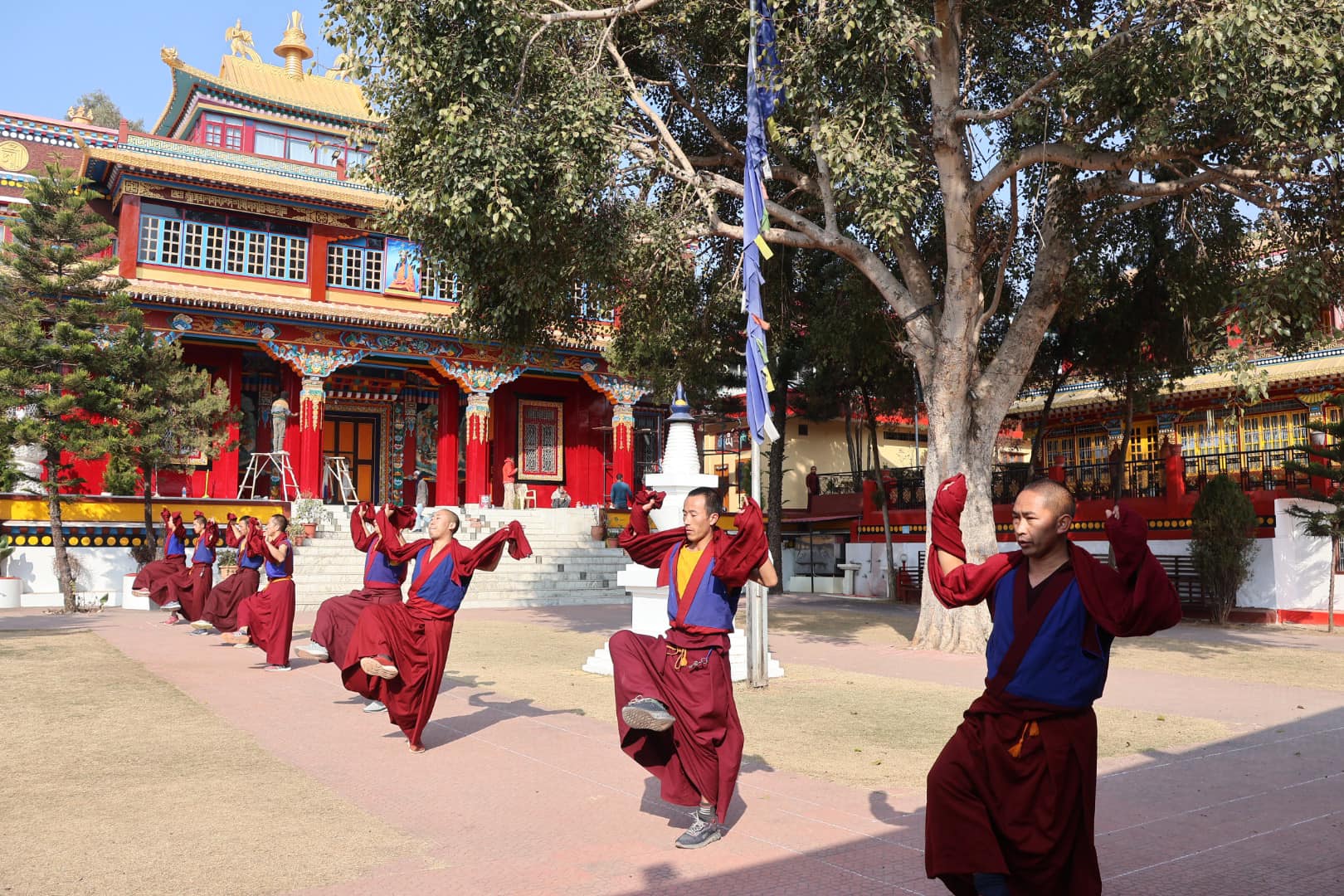
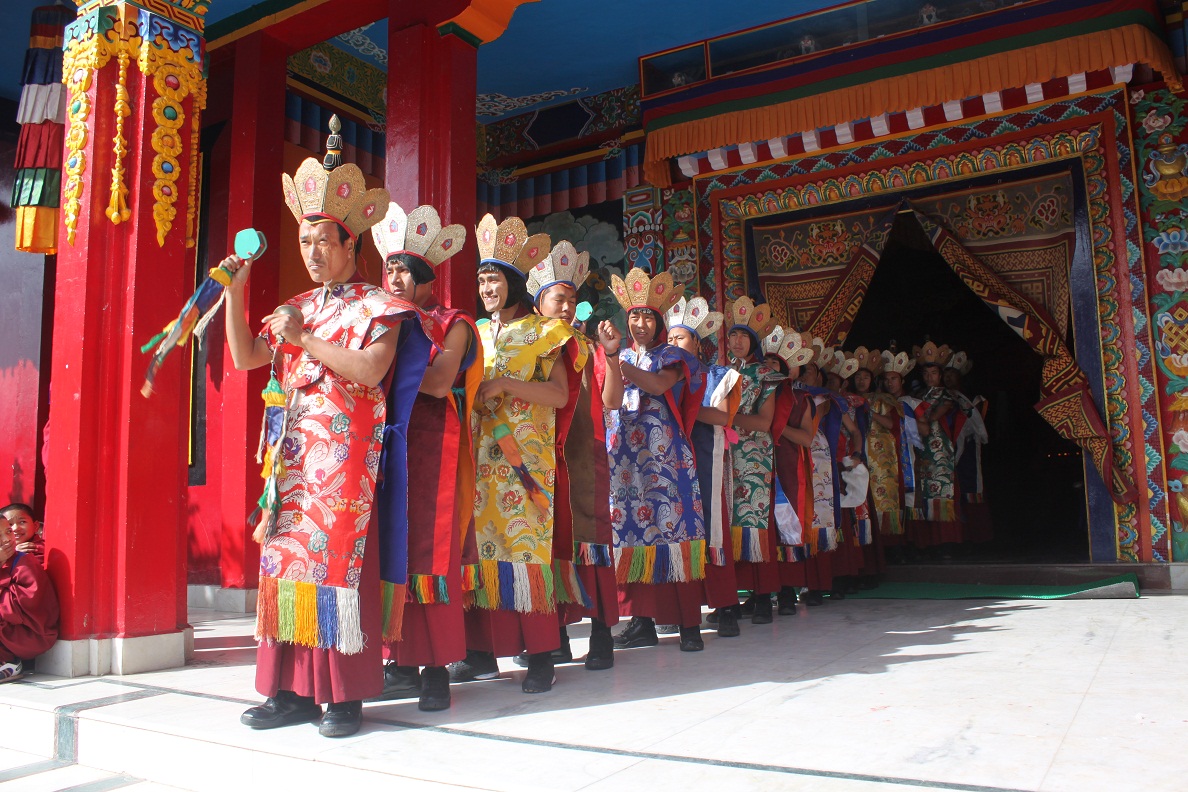
Sacred dances are performed as part of the Tibetan New Year celebrations and monastic rituals each year. Although many of these dances were historically performed in secret, over the centuries it became customary to allow the public to view the dance performances. Sacred dance exists in both Buddhist and Yungdrung Bön religious traditions as a means of conveying wisdom related to the path of enlightenment as well as the mundane world. Sacred dances, Tibetan: cham, are performed by both monks and laypeople. Each cham has its own unique steps, gestures, costume, and accompanying instruments. When an ordained person wears the dress and ornaments of a deity and performs the dance, they dissolve attachment to their own identity and merge with the enlightened body, speech, and mind of the deity. In this way, the dances are to be viewed not as worldly entertainment, but with devotion and the pure view that one is in the presence of the actual deity and receiving a multitude of inconceivable blessings. In this way, illness, obstacles, and negative influences are pacified; and health, longevity, and prosperity are strengthened.

Monks of Menri Monastery undergoing a performance exam for the cham dances of 2024. Photo credit: Unknown

His Holiness the 33rd Menri Trizin Lungtok Tenpé Nyima Rinpoche is widely credited with personally rescuing the Bön traditional sacred dances from obscurity. He was a student in Amdo and had responsibility for the dances for six years. During the first three years, he performed at the end of the line of dancers which indicates being new to the dance and needing to follow others. The final three years, he performed at the beginning of the line as the dance master who leads all the other dancers. He trained both monks and nuns to perform the cham and was able to preserve the complete performance instructions for the dances.

His Holiness 33rd Menri Trizin demonstrates sacred dance steps at Menri Monastery. Photo credit: Unknown

Among the variety of cham within the Yungdrung Bön religious tradition, there are three cycles of sacred dance that are commonly performed: (1) Sacred Dance of the Mother Tantra, (2) Sacred Dance of the Nine Zema Sisters, and (3) Sacred Dance of the Nine Indestructible Shenraps. 

The Sacred Dance of the Mother Tantra was not commonly performed for the public until after the 15th century. The Buddhist Mother Tantra cham dance is similar in that it also demonstrates the path of liberation and shares the characteristic of the dancers wearing black hats with black coverings hanging in front of the eyes. This cham is performed after first creating the mandala of the Mother Tantra, inviting the collective Mother Tantra deities, and then performing a feast offering. The steps of the dance are divided into three categories that are named according to the first three characters of the Tibetan syllabary: KA, KHA, and GA. During the KA steps, all of the deities are invited with the sound of the large drum. With the KHA steps, the six emanations of Sipé Gyalmo, the forty peaceful and wrathful deities, the forty-five female guardians, and the thirty-five supreme deities of space are presented with offerings. With the GA steps, the four kinds of enlightened activity are accomplished and blessings are bestowed. This dance has been greatly supported by the Shen family, the descendants of the the enlightened Lord Tönpa Shenrap Miwoché.

Mother Tantra cham with its characteristic black hats. Photo credit; Unknown

The Sacred Dance of the Nine Zema Sisters depicts the beginning of our three thousand-fold world system according to Yungdrung Bön cosmology. According to one account, the goddess Lhamo Chucham Gyalmo and Lha Gö Tokpa produced twenty-seven eggs. From the first nine eggs emerged the Zema Gu, or the nine Zema sisters who have animal heads and human bodies. These nine sisters were appointed as protectors by Takla Mebar. It is said that this dance began with the tertön Shenchen Luga who discovered the associated text in 1017 CE.

During the dance, the dancers wear animal masks that represent each of these nine sisters. From the twenty-seven eggs emerged the twenty-seven sisters. In the early days of Tibet, all twenty-seven sisters were depicted in the dance. This cosmology is so deeply rooted in Tibetan history that the country of Tibet was once referred to as “born from an egg.” The nine zema sisters depicted in the dance are:

  1. Blue Dragon-headed
  2. Dark-green Snake-headed
  3. Black Garuda-headed
  4. White Lion-headed
  5. Red Bear-headed
  6. Dark-red Wolf-headed
  7. Dark-brown Tiger-headed
  8. Yellow-green Garuda-headed
  9. Female Lu with a Hungry Mouth

This dance has fifteen different kinds of steps:

  1. Guiding Along the Path Steps
  2. Tiger Steps
  3. Gait of a Lion Steps
  4. Peaceful and Wrathful Steps
  5. Meri Steps
  6. Mother Tantra steps
  7. Wrathful Manner Steps 
  8. Welcome Steps
  9. Energy Moving Steps 
  10. Drawing the Arrow
  11. Taming the Sky
  12. Taming the Earth
  13. Shooting Four
  14. Sipé Gyalmo Steps
  15. Cycle of Bön Lamas Steps
Monk dancers dressed as the six emanations of the protector Sipé Gyalmo. Photo credit: Unknown

Sacred Dance of the Indestructible Shenraps is different from the other dances in that there are many lead dancers. It has been performed since the 15th century every year on the 29th day of the 12th lunar month as instructed by the founder of Menri Monastery, His Holiness the 1st Menri Trizin Nyammé Sherap Gyaltsen. This sacred dance depicts nine religious protectors of the Yungdrung Bön tradition that have all taken vows to protect the religion and its followers. The dance has nine distinct types of steps that each have a precise meaning. The nine protectors depicted in the dance are:

  1. Sipé Gyalmo who is the principal of the dance
  2. Mudü who is the chief of the fierce dré and srin spirits
  3. Tsen who is chief of the powerful tsen dré spirits
  4. Absé Gyalwa who is another chief of the powerful tsen spirits
  5. Nyipangsé who is a gyalpo or king spirit of Zhang Zhung
  6. Dzam Ngon who is also known as Blue Dzambhala or Kubera and is a wealth deity
  7. Sheltrap Chen
  8. Drakpa Sengé
  9. Tago
Monk dancers emerge from the meditation hall to perform before the crowd at Menri Monastery. Photo credit: Unknown

Tibetan translations by Raven Cypress Wood

Raven Cypress Wood ©All Rights Reserved. No content, in part or in whole, is allowed to be used without direct permission from the author.


This article is made possible by generous donors who want content like this to continue to be available. Want to join the mandala of Nine Ways supporters? Follow this link https://ravencypresswood.com/donate/


Don’t want to miss a post? Scroll to the bottom and click “Follow this blog.”

Happy Year of the Female Wood Snake

February 28, 2025 begins the Year of the Female Wood Snake. Today is an auspicious day to perform the fumigation offering known as sang, or lha sang, in order to remove negativity and increase good fortune, wealth, merit, and all positive circumstances. (For more information about the sang ritual within the Yungdrung Bön religious tradition, see previous article: https://ravencypresswood.com/2021/11/19/new-book-release-sacred-smoke-the-ritual-practice-of-fumigation-and-offering-in-the-yungdrung-bon-religious-tradition/ ) 

“Emaho!

May the king of longevity grant long life without sickness!

May the king of wishes grant complete fulfillment!

May the king of merit cause it to steadily increase!

May the king of aspiration prayers accomplish whatever is requested!

May the king of result support us to manifest the state of enlightenment!

May we obtain the auspiciousness of a changeless body!

May we obtain the auspiciousness of unceasing speech!

May we obtain the auspiciousness of an undeluded mind!

May we have the auspiciousness of the body, speech, and mind of a victorious one!

Excerpt from Prayer of Auspiciousness within Sacred Smoke: A Ritual Practice of Purification and Offering in the Yungdrung Bön Religious Tradition

 Raven Cypress Wood ©All Rights Reserved. No content, in part or in whole, is allowed to be used without direct permission from the author.
This article is made possible by generous donors who want content like this to continue to be available. Want to join the mandala of Nine Ways supporters? Follow this link https://ravencypresswood.com/donate/
Don’t want to miss a post? Scroll to the bottom and click “Follow this blog.”