Blog Archives

The Time to Practice The Greatly Fierce, Secret Gekhö

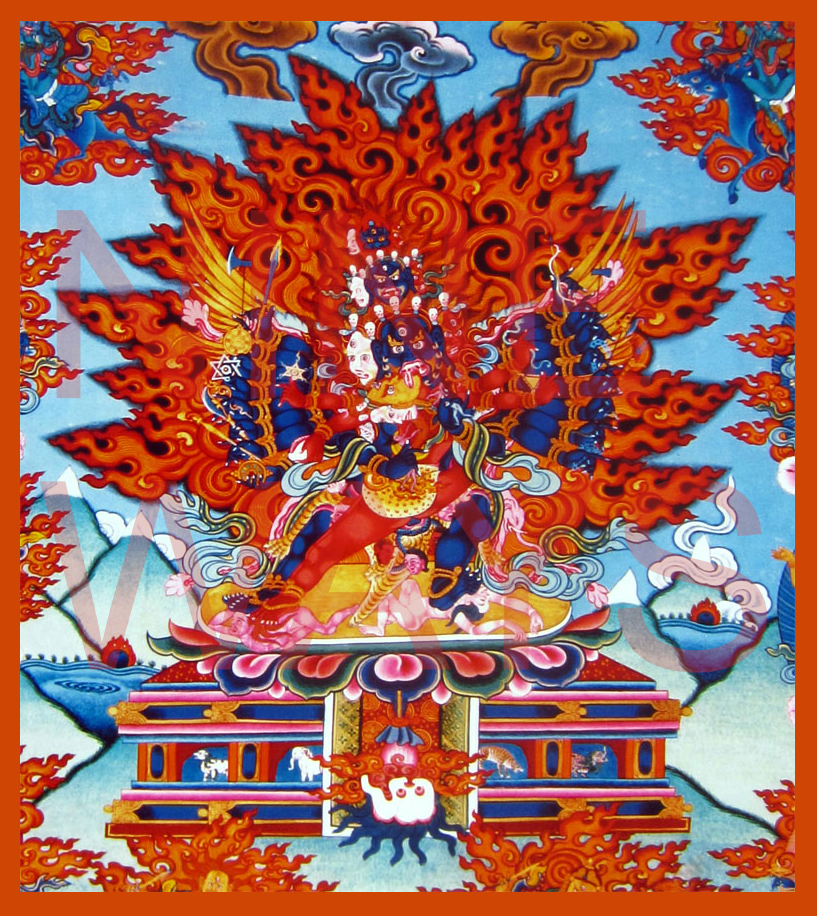
Walchen Gekho with his consort, Queen of the Drala

Each year from the 22nd-29th lunar days of the Eighth Tibetan month, Menri Monastery in Dolanji, India holds an intensive retreat for the fierce yidam Walchen Gekhö. Specifically, they perform the practice from the text compiled by the Second Buddha Nyammé Sherap Gyaltsen Rinpoche, “Gekhö Sangwa Drakchen, The Greatly Fierce, Secret Gekhö.” In 2023, these lunar dates correspond with October 6th-13th on the Western calendar.

The tantric cycle of Gekhö contains 360 deities. Within the cycle of the Father Tantras, Walchen Gekhö is the manifestation of enlightened quality among the Five Supreme Embodiments. (See previous post: https://ravencypresswood.com/2016/06/05/the-five-supreme-embodiments/

Gekhö is a deity associated with the ancient land of Zhang Zhung, and his tantric practice was widespread throughout the kingdom. In the Zhang Zhung language, “Gekhö” means “demon tamer.” It is said that he originally descended upon the sacred mountain of Gang Tisé (also known as Mount Kailash), and that he and his retinue dwell there. However, even though there is a close association with an earthly abode, he is not a worldly guardian. Rather, he is the embodiment of enlightened quality that manifests as a meditational deity who protects Yungdrung Bön practitioners.

“In order to lead those who have not gained realization, Walchen Gekhö possesses the Five Bodies and the Five Primordial Wisdoms. Through the truth of pacification, and through these forceful, wrathful means, those who are untamed will be tamed!”

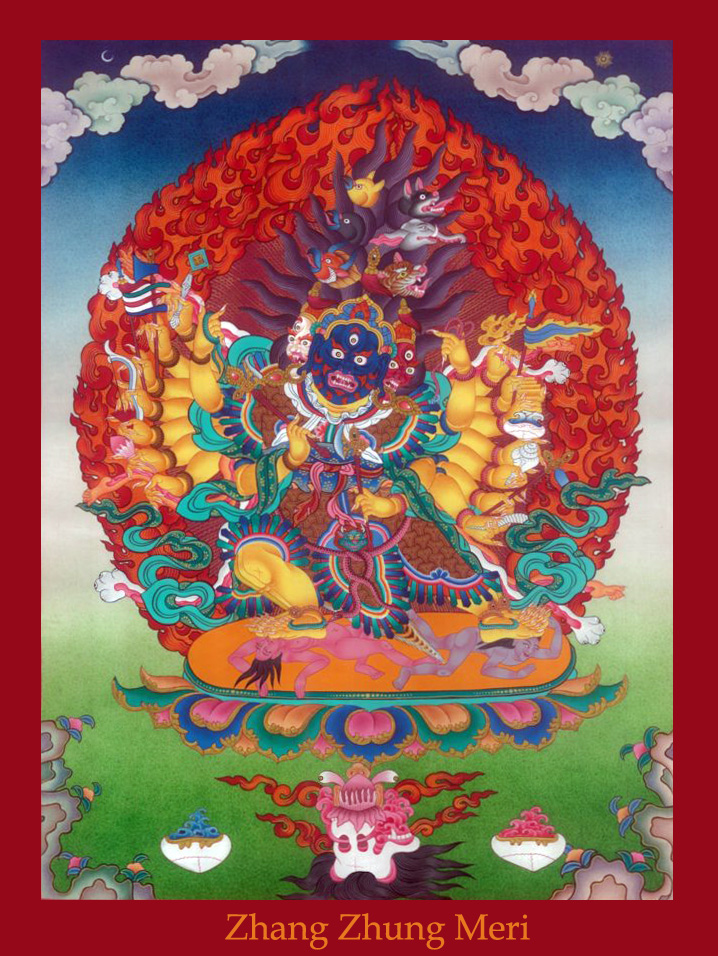
From the Essence Practice of the Fierce Champion, Zhang Zhung Meri

One manifestation of Walchen Gekhö is Zhang Zhung Meri. This yidam deity is closely associated with the dzogchen practice of the Zhang Zhung Nyen Gyü, The Aural Transmission of Zhang Zhung. The view of dzogchen is, by definition, perfected and beyond needing to apply any methods to develop or perfect it. However, because the practitioners of dzogchen have not yet fully realized this primordial perfection, the deity Zhang Zhung Meri offers protection and support while they are on the path of realization.

“É AH

Namo!

Buddhas of the three times, please listen and pay heed to me!

Having ignorance and a body of flesh, because of the influence of the material body and the afflictive emotions, I am not connected with the five wisdom bodies but are connected with deluded thoughts and afflictive emotions. I offer this open admission of wrongdoing to the buddhas of the three times. Please bestow the vivid accomplishment of the Five Enlightened Bodies to me!

Without the activities of compassionate, skillful means, and because of the afflictive emotion of pride that grasps at an identity, I have committed wrongdoing by elevating myself and lowering others, and I have acted from wrong views. I request tolerance from Ati Muwér! Please bestow the accomplishment of being equal to the changeless state!

Not equal with the state of powerful compassion, and overcome with the contamination of the cumulative actions of ignorance and hatred such as causing killing and condemnation, I openly admit my wrongdoing to the state of Walchen Gékhö. Please bestow the accomplishment of uninterrupted compassion! 

Because of anger and hatred that are produced, and not having a mind of loving kindness, I have been involved in killing and cutting the life force. I openly admit my wrongdoing to the gathering of Gékhö deities. Please bestow the accomplishment of being endowed with compassion and a mind of loving kindness!

Because of not being endowed with a state of clear wisdom, I have been lazy and acted from a clouded mind and delusion. I have improperly exploited and taken advantage of others. I openly admit my wrongdoing to the root deity Walchen Gékhö. Please bestow the accomplishment of a state of all-clear wisdom!

Because of having a hateful mind and not speaking truthfully, through pride and meaningless words, I have accumulated anguish [for others]. Because of the activity of deluded speech, I could become mute [in the future]. I openly admit my wrongdoing to the root deity Walchen Gékhö. Please bestow the accomplishment of a pleasant voice of truthful words!

Not having a mind of supreme generosity and devotion, I have been overcome by attachment, desire, and aggression. Because of the karma of improper, aggressive desire, I could become a cannibal-like spirit [in the future]. I openly admit my wrongdoing to the root deity Walchen Gékhö. Please bestow the accomplishment of a great rainfall of generosity!

Without a suitable intellect and not being broadminded, and because of the influence of jealousy, I have exalted myself and lowered others. Because of that, I could always be born as a human in an outlying, savage place [in the future]. I openly admit my wrongdoing to the root deity Walchen Gékhö. Please bestow the accomplishment of an easygoing, greatly broad mind! 

Not endowed with the compassionate state of the four elements, and with an imperfect nature in respect to the four times, I grasp the illusory body. I openly admit my wrongdoing to the state of the four mothers who are doorkeepers of the four times. Please bestow the accomplishment of overcoming phenomenal appearances!

From compassion, the four emanated sons display a spectacular form and perform wrathful activity. Enemies and obstructers are their servants who are entrusted to act. I openly admit my wrongdoing to the four youths who are emanations. Please bestow the accomplishment of attaining generosity and the two accomplishments! 

Not connected with the skillfulness of the primordial nature where there is no duality of true or untrue words, whatever is in contradiction to the enlightened mind of Kuji Mangké, I openly admit to the state that is equal with the natural mind. Please bestow the accomplishment of attaining the fulfillment of compassionate activities!” 

From The Irreversible Golden Razor, Scripture for the Accomplishment of the Secret, Greatly Fierce Demon Subduer, Walchen Gékhö

All translations from the Tibetan by Raven Cypress Wood ©All Rights Reserved

Raven Cypress Wood ©All Rights Reserved. No content, in part or in whole, is allowed to be used without direct permission from the author.

Don’t want to miss a post? Scroll to the bottom and click “Follow this blog.”

Want to join the mandala of Nine Ways supporters? Follow this link https://ravencypresswood.com/donate/ It’s easy through Paypal and Zelle.

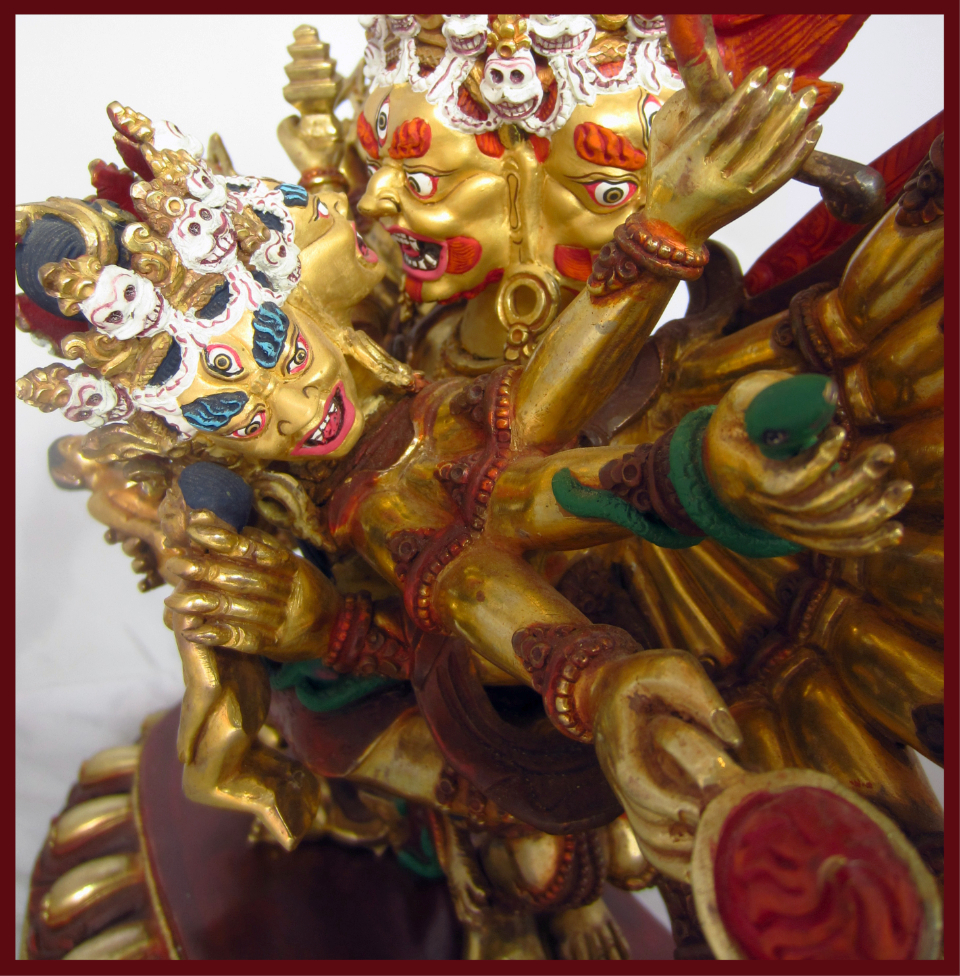
Walchen Gekhö and consort statue. Photo credit: Raven Cypress Wood

A Time of Fasting & Asceticism for Body, Speech, and Mind

Nuns in Rayna Menling Nunnery in Dolanji, India. Photo credit: Unknown

Each year in every Bönpo monastery, the 1st-7th days of the 8th lunar month is a time of observing strict vows of discipline and ascetic behavior as practiced by the founder of the Yungdrung Bön religious tradition, Lord Buddha Tönpa Shenrap Miwo. In 2023, these dates coincide with September 15th-22nd.

This is the ritual of Ka Tup, ascetic fasting. Specifically, there are three kinds of ascetic fasting. Fasting through the body which involves limiting food and drink, and being diligent to avoid non-virtue of the body such as physically harming others, stealing, and so on. Fasting through the speech involves stopping meaningless speech, gossip, harsh words, and so on. And, fasting through the mind which involves stopping thoughts driven by the five poisons especially thoughts of harming others.

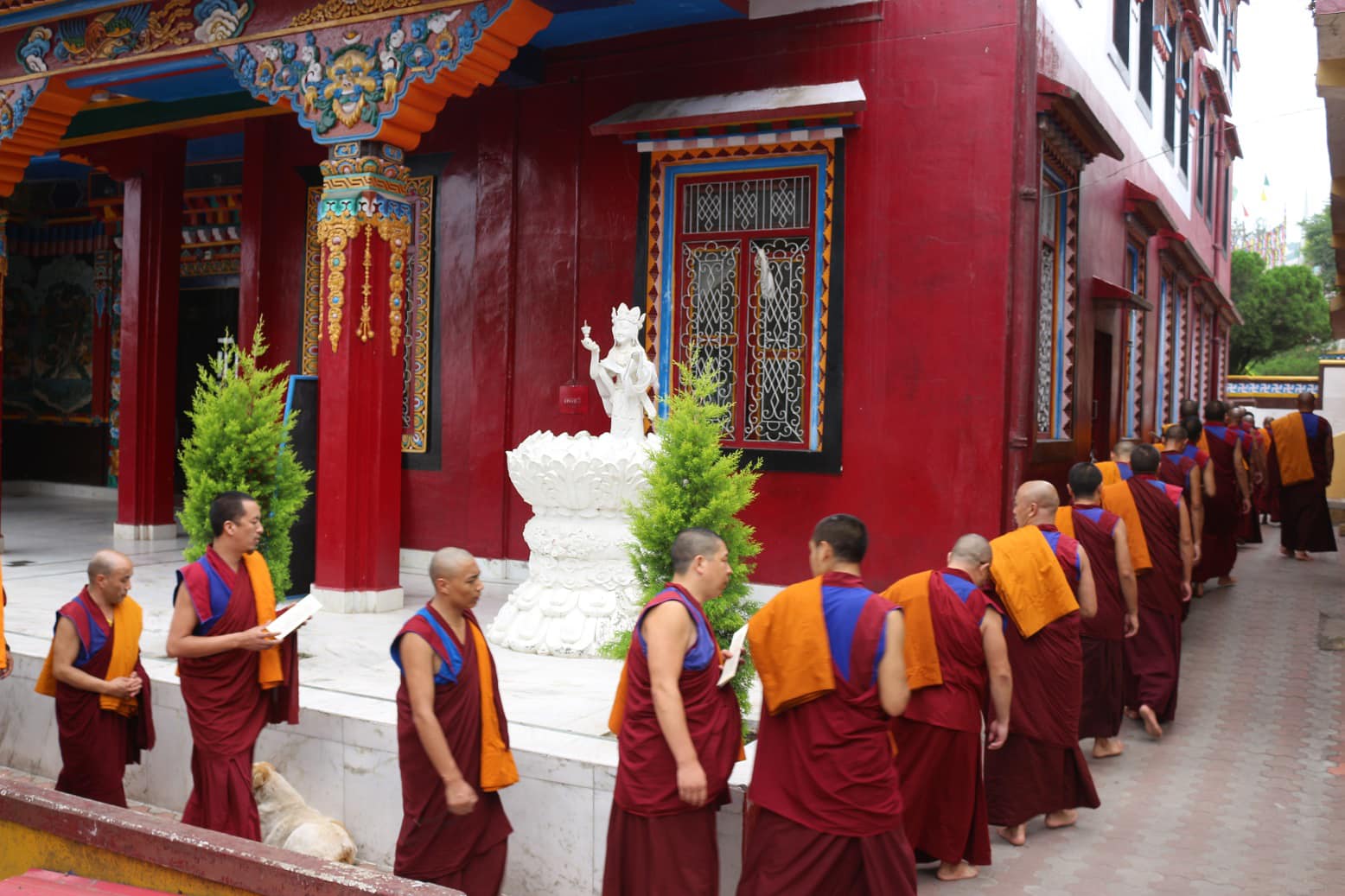
During these seven days, the monks and nuns will get up before sunrise, go to the temple, and prostrate in the presence of the images of the thousand buddhas. Then after breakfast, they will gather in their respective temples and receive explanations and advice according to monastic discipline, the proper way to dress and conduct themselves, the difference between monks’ and nuns’ vows, and so on. After the final meal at mid-day, they will circumambulate the temples and recite the DU TRI SU mantra of purification. They continue these practices until 11 p.m. and then rise again at 4 a.m. the next day.

Monks within Triten Norbutsé Monastery. Photo credit: Unknown

When Lord Tönpa Shenrap was 31 years old, he took a vow to live as an ascetic. He removed his princely robes and jewels and ritually bathed with lustral water in order to show a method of purification. He left all of his possessions, associates, and disciples to practice alone in isolation. Some of his disciples supported his decision but many others turned away from him to continue their worldly affairs. The day after his public vow at dawn, he arose and recited the names of the thousand buddhas. He then went to the great temple of Shampo Lhatsé. At the first light of sunrise, he circumambulated and recited the names of the thousand buddhas. When the sun has fully risen, he recited the three essence mantras of the Yungdrung Bön. After that, he wrote down the rules of disciple for those who receive ordination. He decided which foods he would and would not allow for himself and then he transformed into a shang shang bird and flew into the sky.

He practiced asceticism for a total of three years. The first year, during the daytime he practiced in the outward form of a bird. Each day, he only took a single grain of rice that was offered by the swan king, and a single dewdrop of water. At night, he assumed the form of a human being. During that year, he practiced virtue and taught the gods that dwell at the summit of Mt. Meru. The second year, during the daytime, he practiced in the outward form of a monkey. Each day, he only took a single fruit that was offered by the monkey king. During that year, he practiced virtue and ministered to the Four Great Kings and the multitude of spirits that were their associates. The third year, he practiced in the outward form of a human being. Each day he only took one small vegetable that was offered by the Shang shang king [a bird with a human head], a single leaf containing the essence of honey that was offered by the bee king, and a palmful of water that was offered by the turtle king.

Monks circumambulating the Menri temple in Dolanji, India during Ka Tup. Photo credit: Unknown

Thus, he demonstrated a method of overcoming desire and attachment. He did not need to do this for himself because he was already an enlightened being. However, he showed this example for the benefit of others an example for others. Living in this way, Tönpa Shenrap became very emaciated. The demon prince who had previously been creating great obstacles for him spied on him to assess his practice. At seeing his condition, the demon was overwhelmed and perplexed at why such a powerful being would choose such a course of action. To this, Buddha Tönpa Shenrap began to teach the demon prince and his troops the truth of impermanence and how desire and attachment cause great suffering. He then instructed them in the skillful method of renunciation a way to overcome suffering and misery and attain freedom and happiness. In this way, he completed his 9th deed of renouncing cyclic existence and showing the path of renunciation.

Raven Cypress Wood ©All Rights Reserved. No content, in part or in whole, is allowed to be used without direct permission from the author.

Don’t want to miss a post? Scroll to the bottom and click “Follow this blog.”

Want to join the mandala of Nine Ways supporters? Follow this link https://ravencypresswood.com/donate/ It’s easy through Paypal and Zelle.

More Than Just a Writing System: The Power and Significance of the Tibetan Syllabary

The Tibetan Syllabary in the traditional columns and rows. Left: Uchen script. Right: Umé script

More than an ordinary writing system used to convey conceptual information in written form, the Tibetan syllabary has profound significance and power. The syllables themselves are respected and treated as sacred. No object is allowed to be placed on top of a written scripture, not even a statue of the Buddha himself. On a Yungdrung Bön shrine, the written texts always have the highest position. This is due in part because it is from the written scriptures that disciples can directly receive guidance from the enlightened ones in order to alleviate suffering, develop wisdom, and to ultimately be liberated from the cycle of birth, suffering, and death.

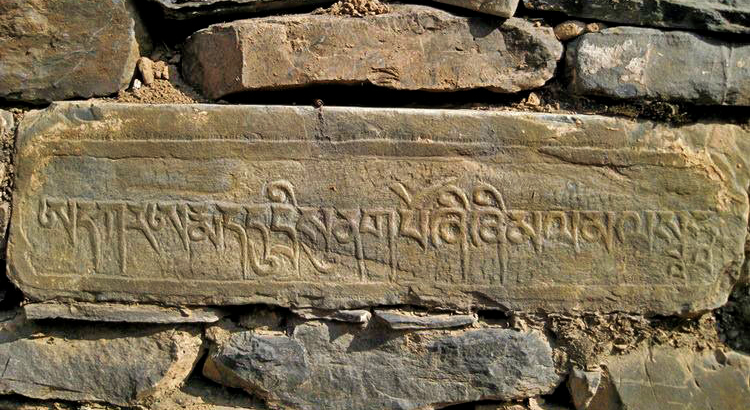
The Tibetan script is a syllabary rather than an alphabet. Each character is a complete syllable containing an inherent vowel sound. There are thirty consonants and five vowels and it is collectively known as the Ali Kali. The syllabary is traditionally learned by categorizing the consonants into four columns and eight rows. In this way, syllables with similar characteristics of aspiration and tone are grouped together. Each of the consonants has the inherent vowel sound of “AH.” This vowel sound can be changed by adding any of the other four vowels to a syllable. A single syllable can have meaning as a word, or multiple syllables can be put together to form a word. The Tibetan language is read left to right and from top to bottom.

According to the Chi Pung tantra, each of these sounds originated from ultimate reality as the spontaneous movement of compassion and manifested as magical syllables that are without inherent substance, yet have defining characteristics. One of these defining characteristics is the particular location within the physical body from which their sound is produced. According to various textual sources, there can be either five or eight different locations from which these sounds arise.

“The syllables for communicating arise from the chest, the throat, the palate, the tongue, the teeth, the lips, and the crown of the head. AH pervades the body.”

— From the Chi Pung

Another unique characteristic of the syllables is that they are also categorized by gender. In general, all the consonants are masculine and all the vowels are feminine. More specifically, they can each be categorized according to five different genders of being either masculine, neutral, feminine, very feminine, or barren.

  • Masculine: KA, CHA, TA, PA, TSA
  • Neutral: KHA, CHHA, THA, PHA, TSHA
  • Feminine: GA, JA, DA, BA, DZA, WA, ZHA, ZA, A, YA, SHA
  • Very Feminine: NGA, NYA, NA, MA
  • Barren: RA, LA, HA

A more subtle characteristic of the syllables is their association with the five elements of space, wind, fire, water, and earth.

  • Space: KA, KHA, GA, NGA, HA
  • Wind: I, TSA, TSHA, DZA, NYA, YA, SHA
  • Fire: É, RA
  • Water: Ū, PA, PHA, BA, BHA, MA, WA
  • Earth: DA, THA, TA, NA, LA, SA

The ALI KALI is also recited and visualized as a mantra of great power. According to the instructions by Shardza Tashi Gyaltsen, the ALI KALI is visualized as purifying and blessing the internal subtle channels of light within the physical body as a method to prepare for the practice of Tummo, or inner heat. It is also used to purify previous negative expressions of speech, and to bless and empower present and future expressions of speech. Having transformed one’s self into the enlightened deity of speech, Chetak Ngomé, the ALI KALI is recited while visualizing the syllables spinning on the tongue while both radiating out to the enlightened beings and then returning and dissolving blessings and purification of speech into the tongue of the practitioner.

The ALI KALI in a ritual text. Photo credit: Raven Cypress Wood

A OM HUNG RAM DZA

A AA I II U UU RI RI LI LI É ÉÉ Ō ŌŌ ANG A༔ 

KA KHA GA GHA NGA  CHA CHHA JA JHA NYA TA THA DA DHA NA TA THA DA DHA NA 

PA PHA BA BHA MA  TSA TSHA DZA DZHA WA   ZHA ZA AH YA RA LA SHA SA HA AH

RAKSHA RAKSHA

— The ALI KALI mantra from The ALI KALI, the Cause for Enlightened Words and Source of the Scriptures

“This ALI KALI destroys the negativities of speech and increases the power of mantra recitation by 100,000 times. In the morning when the crow leaves its nest, recite it twenty-one times. In the evening when the crow returns to its nest, recite it twenty-one times. Do this recitation continuously and as isolated speech without being interrupted with ordinary speech.”

— From The ALI KALI, the Cause for Enlightened Words and Source of the Scriptures

When used individually or as a mantra, the Tibetan syllables become sa bön, or seed syllables, that arise spontaneously in primordial space and give birth to the presence of enlightened beings and enlightened qualities. Their meaning and purpose is beyond concept. Although the syllables of a mantra can be explained according to their qualities, they are not like sentences that have a mere conceptual meaning that conveys information.

The Tibetan word for a mantra that is recited is nyenpa. When the recitation is joined with an action or visualization, it is dzab. When a mantra is written or printed in order to hold its specific power and energy such as being written on the back of a deity thangkha, or placed in a statue, prayer wheel, sa tsa, etc., it is known as a zung.

Khenpo Nyima Kunchap Rinpoche adding the zung of enlightened body, speech, mind, quality, and action to the back of an image of Tapihritsa.

Raven Cypress Wood ©All Rights Reserved. No content, in part or in whole, is allowed to be used without direct permission from the author.

Don’t want to miss a post? Scroll to the bottom and click “Follow this blog.”

Want to join the mandala of Nine Ways supporters? Follow this link https://ravencypresswood.com/donate/ It’s easy through Paypal and Zelle.

Menri Monastery: Annual Retreat of the Great Loving Mother

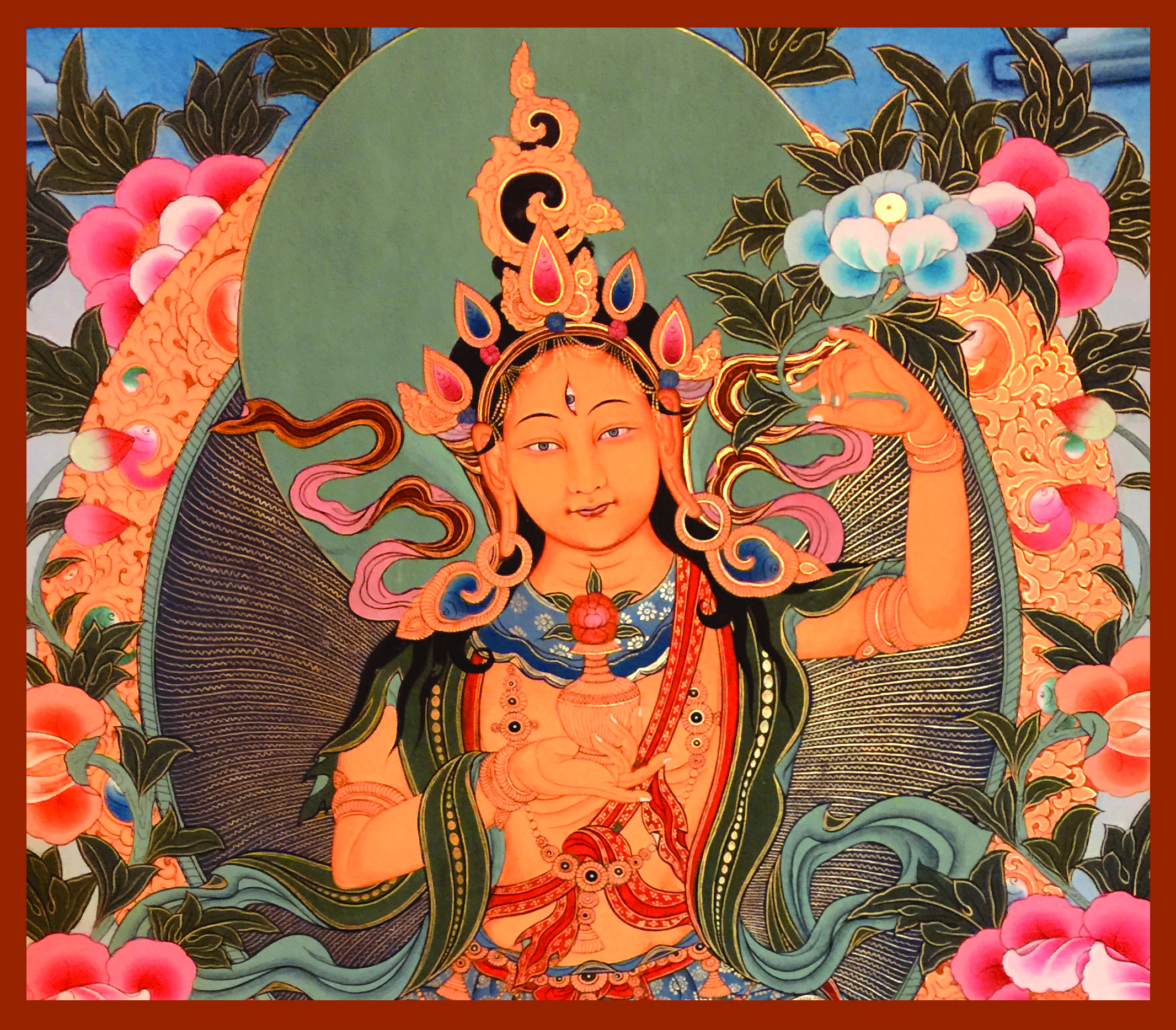
Jamma Chenmo, the Great Loving Mother

Each year during the 23rd-29th lunar days of the 5th month, members of the Menri Monastery ordained community undergo a retreat for Jamma Chenmo, the Great Loving Mother. This year, those lunar dates coincide with July 10th-16th, 2023 on the Western calendar.

Jamma Chenmo, the Great Loving Mother, is a Buddha who manifests as a loving mother to care for each and every sentient being as though they were her only child. In her manifestation as one of the Four Transcendent Buddhas of the Yungdrung Bön religious tradition, she is called by the Zhang Zhung name Satrik Érsang.

Buddha Jamma Chenmo, also known as Sherap Jamma, can manifest in any way necessary to act for the welfare of sentient beings. She magically emanates as the Five Wisdom Families who are the manifestation of her enlightened body, the Eight Protectors who are the manifestation of her enlightened speech, the Sixteen Door Openers who are manifestations of her enlightened mind, the thirty-two emanations who are manifestations of her enlightened qualities, the fifty-two emanations that are manifestations of her enlightened activity, the 108 emanations who are the source of many Jamma scriptures, the 360 emanations who keep watch over the five elements of the phenomenal world and every kind of sentient being, the 5,500 emanations that are yungdrung sempa [Sanskrit:bodhisattvas], and the many limitless emanations who are part of her retinue and who work on her behalf.

The Five Wisdom Manifestations of Jamma Chenmo

Jamma Chenmo’s Five Wisdom Family emanations all have a peaceful appearance and collectively embody the five wisdoms and purify the five poisons. These five manifestations are Künsel Jamma, Tabgyi Jamma, Mönlam Jamma, Tukjé Jamma, and Topgyi Jamma. Künsel Jamma, the All-clear Loving Mother, is a fiery golden color.  She has one face, two arms, and two legs. In her right hand, she holds a golden vase of nectar. In her left hand, she holds a udumbara flower. At the flower’s apex is a round mirror symbolizing wisdom. She wears bracelets of crystal, and around her neck is an ornament of forty wisdom tiklés. She is the embodiment of the wisdom of emptiness.

Tapgyi Jamma, Loving Mother of Skillful Means, is white with one face, four arms, and two legs. In her two right hands, she holds a net and a lotus. In her two left hands, she holds a lightening bolt and a yungdrung. She is the embodiment of mirror-like wisdom.

Mönlam Jamma, Loving Mother of Aspiration, is also known as Namkha Dzö Dzinma, Holder of a Sky Treasury. She is green with one face, four arms, and two legs. In her right two hands, she holds a razor and a staff. In her two left hands, she holds a renunciate’s begging bowl and a vase of lustral water. She is the embodiment of the wisdom of equanimity.

Tükjé Jamma, Loving Mother of Compassion, is like the queen of all the khandro and also manifests as the great consort, Chema Ötso. She is red with one face, four arms, and two legs. In her right two hands, she holds a lasso and a sun. In her left two hands, she holds a precious jewel and a victory banner. She is the embodiment of discriminating wisdom.

Topgyi Jamma, Loving Mother of Power, is also known as Nang Si Kün Drakma, Goddess who is renowned throughout the phenomenal universe. She is blue with one face, four arms, and two legs. In her right two hands she holds a dagger and a military banner. In her left two hands, she holds a horoscope and an utpal flower. She is the embodiment of all-accomplishing wisdom.

Jamma Chenmo and her retinue

This cycle of tantric teachings of Künsel Jamma Chenmo are found in the 8th Way of Bön, The Way of the Primordial Shen.

“Although Bön is abundant and plentiful, this Great Vehicle of the Primordial Shen is different from the lower 7th Vehicle. The king of all oral transmissions, those transmissions spoken with words, is the Bön cycle of Künsal Jamma Chenmo.”  

— From Jamma’s 100,000 Empowerments

Raven Cypress Wood ©All Rights Reserved. No content, in part or in whole, is allowed to be used without direct permission from the author.

Don’t want to miss a post? Scroll to the bottom and click “Follow this blog.”

Want to join the mandala of Nine Ways supporters? Follow this link https://ravencypresswood.com/donate/

Advice for Spiritual Practitioners from the 8th Century Master, Drenpa Namkha

20th Century Bhutanese mural depicting Drenpa Namkha

In general, there have been three separate manifestations of Drenpa Namkha. Each was a reincarnation of the previous manifestation. There was Drenpa Namkha of Tazik, Drenpa Namkha of Zhang Zhung, and Drenpa Namkha of Tibet. Having attained the ultimate accomplishment of complete enlightenment, Drenpa Namkha is also practiced as a meditational deity, or yidam.

During his physical manifestations, in addition to protecting many of the Yungdrung Bön texts from destruction, he also composed many commentaries and practices to guide sincere spiritual practitioners. According to his advice, there are three things that a spiritual practitioner must have in order to attain the state of the Three Enlightened Bodies. They are:

  1. The Seven Things to Meditate Upon 
  2. The Three Applications 
  3. The Three Detachments 

The Seven Things to Meditate Upon:

  • Impermanence
  • The difficulty of acquiring a precious human birth
  • The faults of cyclic existence
  • The truth of cause and effect
  • Compassion
  • Refuge and Generating the Mind of Enlightenment
  • Emptiness

The Three Applications:

  • Having understood the faults of cyclic existence, one must apply the practice of refuge.
  • Having understood the truth of cause and effect, one must apply the avoidance of non-virtuous actions.
  • Having developed loving kindness and compassion, one must act to benefit other sentient beings.

The Three Detachments:

  • Having understood impermanence and the faults of cyclic existence, one should detach from this life.
  • Having experienced great compassion, one should detach from self benefit.
  • Having meditated on emptiness, one should detach from grasping things as inherently existing.

Free, publicly available English translations of The Truth of Impermanence and Aspiration Prayer of Giving and Receiving have been made available for personal use. For the links to download these prayers, go to the Publications page of this website: https://ravencypresswood.com/publications/

For more information about the great spiritual master Drenpa Namkha, see previous article: https://ravencypresswood.com/2016/05/06/practice-of-the-great-lama-drenpa-namkha/

Raven Cypress Wood ©All Rights Reserved. No content, in part or in whole, is allowed to be used without direct permission from the author.

Don’t want to miss a post? Scroll to the bottom and click “Follow this blog.”

Want to join the mandala of Nine Ways supporters? Follow this link https://ravencypresswood.com/donate/