Blog Archives

Anniversary of the Passing Away of Kyabgön Dawa Gyaltsen Rinpoche

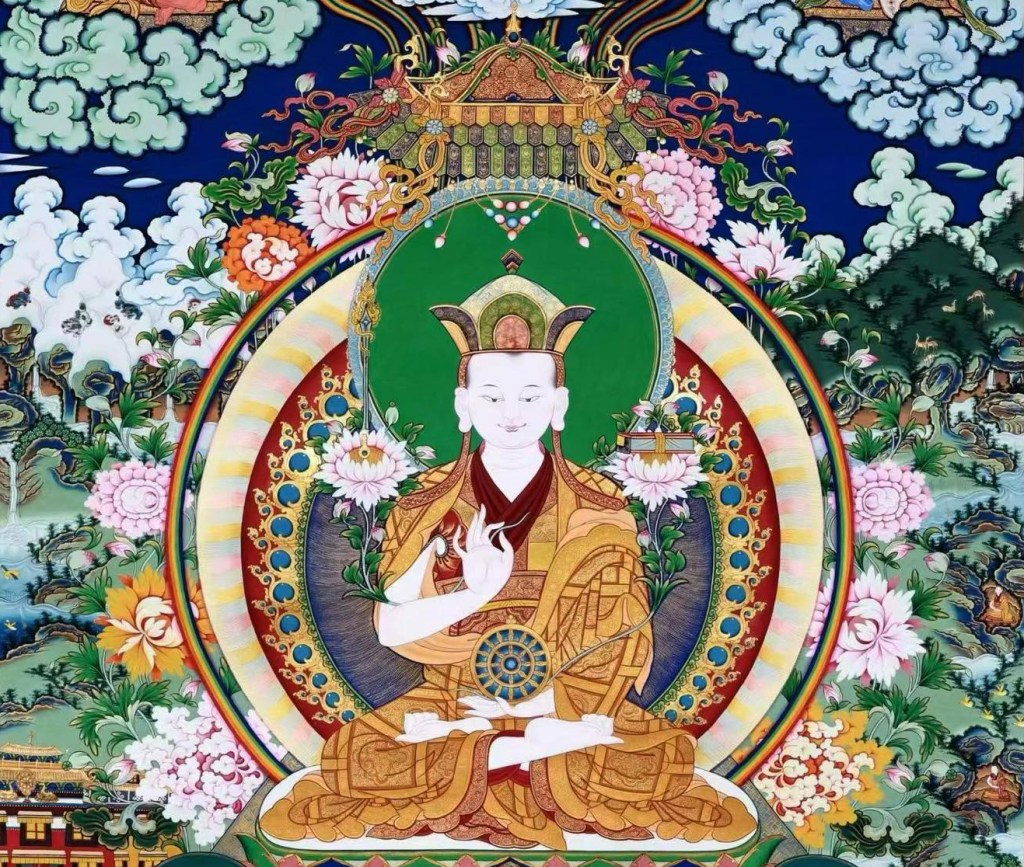
Kyabgön Dawa Gyaltsen

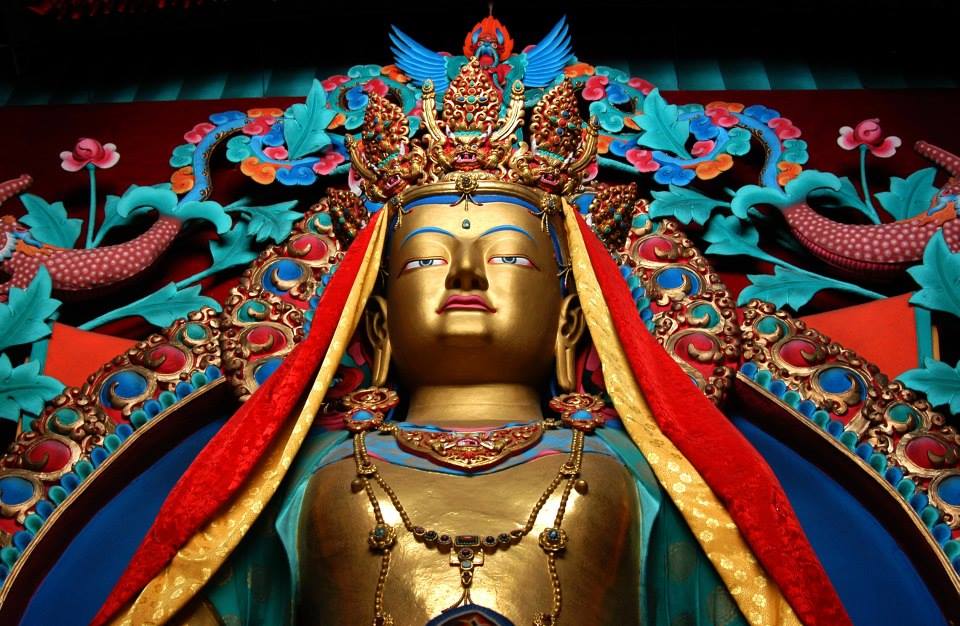
The anniversary of the passing away of Kyagön Dawa Gyaltsen Rinpoche is the 7th and 8th lunar days of the 11th month. In 2025, these dates coincide with December 26th & 27th on the Western calendar. He was born during the Fire Dragon year of 1796 and founded Ralak Yungdrung Ling Monastery on the bank of the Yarlung Tsangpo River in 1834. This monastery developed into one of the largest and most prestigious centers for learning within the Yungdrung Bön tradition. It was renowned for its extensive library and the fact that it had its own woodblocks to print texts. The monastery contained many golden statues including a gilt-copper image of Nampar Gyalwa that was two-stories high.  It also contained reliquary stupas enshrining the remains of previous abbots. In 1965 during the cultural revolution, the monastery was burned to the ground. In 1982, two monks who had been in residence at the monastery prior to its destruction began the process of reconstruction.

Ralak Yungdrung Ling Monastery in Tibet. Photo credit: Unknown.

Supplication Prayer to the Lord of Refuge Dawa Gyaltsen

“You, a teacher born into the Amdo family lineage of Nangzhik, you spread the unrivaled Bön teachings of the White AH throughout your homeland.

You embody the essence of all buddhas by having having perfected the exalted qualities of the major and minor characteristics.

I pay homage to the Buddha who manifested in human form!”

— Translated from the Tibetan by Raven Cypress Wood

Reliquary containing the sacred relics of Kyabgön Dawa Gyaltsen. Photo credit: Unknown

At the age of sixty-seven during the water dog year of 1862 on the auspicious 8th lunar day of the middle winter month at mid-day, the warmth of his body and his consciousness concentrated at the center of his heart. His eyes looked straight ahead, unmoving. After the third sounding of the syllable “Pé!” related to the transference of consciousness practice, he left the shell of his physical body for the great bliss space of absolute reality.

Raven Cypress Wood ©All Rights Reserved. No content, in part or in whole, is allowed to be used without direct permission from the author.

Did you enjoy this content? This article is made possible by generous donors who want content like this to continue to be available. Don’t want to miss a post? Scroll to the bottom and click “Follow this blog.”

Join the mandala of Nine Ways supporters by donating through one of the services listed below.

9,842nd Anniversary of the Buddha’s Twelfth Deed: Demonstrating the Truth of Impermanence

Lord Buddha Tönpa Shenrap Miwoché lying in the sleeping lion posture and obtaining parinirvana in the presence of gods, humans, and lu.  

On the new moon day of the 1st Winter month in the Water Hare year, Lord Buddha Tönpa Shenrap Miwoché demonstrated the truth of impermanence by leaving behind the container of his physical body and transcending worldly suffering. In 2025, the anniversary of this date coincides with December 19th on the Western calendar. Any virtuous activity performed through the three doors of body, speech, or mind on this day is greatly multiplied.

At the age of eighty-two shen years (8,200 human years), the enlightened Lord Buddha Tönpa Shenrap Miwoché began to display the truth of impermanence for sentient beings by allowing the constituents of his physical body to become weak and to manifest illness. Alarmed, his disciples performed rituals and administered medicine. In order to demonstrate the effectiveness of these methods according to relative truth, the Buddha temporarily recovered.

However, after a brief time had passed, he caused his physical condition to again weaken. This provided an opportunity for the Buddha to give teachings to his disciples regarding the process of death. Before leaving his physical human body, the Buddha spoke with his assembly of disciples and entrusted them with the responsibility of being lineage holders for particular teachings. He then prophesied regarding the future of his teachings including his teachings of mind, the time period when the written scriptures would no longer exist but would continue only by being held in the mind.

Lord Buddha Tönpa Shenrap Miwoché

“After I pass into nirvana, for 1,800 years the legacy of the teachings made during the presence of a Buddha’s body will be completed. Then, after my representative appears, my teachings of speech will remain for 10,000 human years. After that, the teachings of mind will remain for another 10,000 human years. After the teachings of mind come to an end, the average human lifespan will eventually decrease to only ten years. At that time, the future Teacher will appear. Those connected to me and my teachings, having reached the irreversible stage on the path, will dwell in liberation in the realm of absolute reality.”

At dusk on the new moon day of the 1st Winter month at the Nine-leveled Yungdrung Mountain, Lord Buddha Tönpa Shenrap Miwoché adopted the posture of a sleeping lion and demonstrated the accomplishment of passing beyond suffering. After the cremation of his physical body, the relics from the ash were distributed among the gods, humans, and the lu [Sanskrit: naga] as objects of faith and devotion.

After that, the assembly of disciples led by Aza Sangwa prepared vast and unsurpassed offerings and then presented them to the Teacher. Aza Sangwa then sang this verse:

“Highest Shen, having perfected renunciation and realization, you have blissfully departed. With compassion for beings, you took on a human form as the Victorious One. To you who took on this form, I prostrate!

Noble son of the Victorious One, glory of beings, you took on a form for the sake of migrating beings, a self-arisen emanation body. You sat upon the throne of the universal monarch and guided beings through the Nine Ways. In the realm of absolute reality, your nature is spontaneously perfect. Appearing as an tülku, you contemplated the welfare of beings. In the billion world systems of this pure realm, you emanated a billion emanations to tame. To you who fully tames, I prostrate!

For the difficult to tame sentient beings of cyclic existence, you deeply contemplate them with wisdom and loving compassion. You pacify their suffering and misery, causing them to abandon the lower realms and to be established on the path of liberation. To the perfect guide, I prostrate!

The Teacher, the glorious lamp of omniscience, although passing into nirvana in the vast expanse of the nature of phenomena, in order for your unceasing compassion to remain, you established the three aspects of the teachings as your legacy. To the Victorious One, I prostrate! 

Holy son of the Victorious One, although you were without any need for practice or attainment while experiencing various hardships, you perfected practice and attainment as an example for the benefit of migrating beings. To you who has perfects attainments, I prostrate!

Although there is no birth or death in the Victorious One’s body, in order to demonstrate with an example that phenomena with characteristics are impermanent, you showed the manner of passing into nirvana into the vast expanse of the true nature of phenomena. To the one who is completely accomplished, I prostrate!

Extract from the Zi Ji

Having offered this praise, the entire assembly prostrated, circumambulated, and made offerings. As a result, all the realms of the world intensely trembled. From the sky, many bright lights shone forth. From the intermediate space, many melodious sounds resounded. From the earth, many beautiful flowers bloomed. Among the realms tamed by the Teacher, countless sentient beings from the realms of the gods, the demi-gods, humans, animals, hungry ghosts, and hell beings attained buddhahood. Those who remained behind were filled with great joy and became extremely attentive to the Yungdrung Bön teachings. Then, the Teacher’s pronouncements were finalized and compiled into precious volumes totaling sixty thousand, that were enshrined within the sacred site of Trimon Gyalzhe.

The parinirvana of Lord Buddha Tönpa Shenrap Miwoché is observed each year by monks, nuns, and lay practitioners worldwide. Photo credit: Unknown

One year later, an assembly of thirteen yungdrung sempa [Sanskrit: bodhisattvas] compiled the teachings of Lord Buddha. Time passed, and the era of being able to rely upon the physical presence of the Buddha drew to  a close. Then began the era of relying upon the Buddha’s speech. Lord Tönpa Shenrap’s successor, Mucho Demdruk, descended from the sky into Olmo Lungring and began to turn the wheel of Yungdrung Bön for gods and humans. Among his disciples were “the six intellectual ornaments of the world.” These six scholars translated the teachings of Lord Buddha into their respective native languages of Tazik, India, China, and Trom and therefore were able to spread the teachings of enlightenment in every direction.

Raven Cypress Wood ©All Rights Reserved. No content, in part or in whole, is allowed to be used without direct permission from the author.

Did you enjoy this content? This article is made possible by generous donors who want content like this to continue to be available. Don’t want to miss a post? Scroll to the bottom and click “Follow this blog.”

Join the mandala of Nine Ways supporters by donating through one of the services listed below.
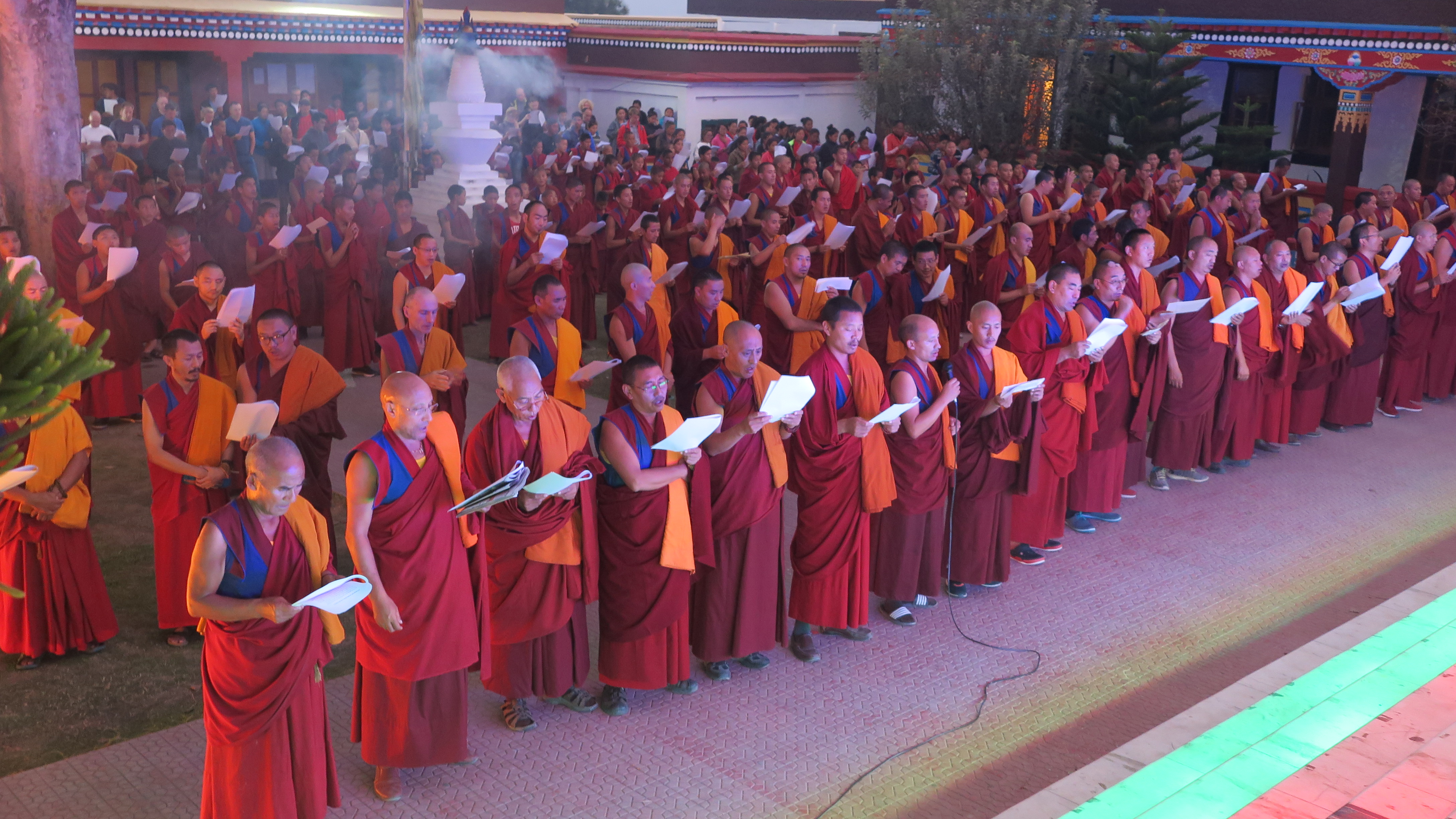
Recitation of The Great Mantra at Samling

Ritual inside Samling Temple

From the 25th lunar day of the 9th month until the New Moon day of the 30th, Déden Samten Ling will conduct their annual practice and recitation of The Precious Lamp. These dates correspond with November 14th-20th, 2025 on the Western calendar. Déden Samten Ling, or simply Samling, is located in Dolpo, Nepal near the Tibet border and has been greatly beneficial to Yungdrung Bön especially in the preservation of its sacred scriptures. (For more about Samling, see previous article: https://ravencypresswood.com/2019/08/03/the-monastery-of-blissful-meditation-deden-samten-ling/

The Precious Lamp is the tantra of The Great Mantra of Yungdrung Bön, the mantra known as the MA TRI. Lord Tönpa Shenrap himself spoke about the benefits of the MA TRI mantra especially for sentient beings living during the dark era and encountering obstacles to practice and achievement.

“This Precious Lamp, the extracted heart essence of all of those who have gone to bliss, is the fundamental essence of the entire collection of sacred teachings. It is the quintessential essence of all Bön. It is the ultimate of all recitations. It is the highest of all views. It is the innermost essence of all meditations. It is the fulfillment of all activities. It is the most superior of all results. It is the heart elixir of the principal teachings. It is a sacred connection for sentient beings during a dark time. It is a key to the collection of sacred teachings. It is the lamp of the collection of oral transmissions. It is the refined gold of the quintessential instructions. It opens the door of intellectual confusion. It is a lamp that clears away the darkness of ignorance. So that sentient beings during the five hundred years-long time of darkness will not have to exert themselves in meditation or accomplishment, this mantra recitation is the practice advice. For those reasons, it is a sufficient recitation.”

“As for this Sufficient Recitation that is a Precious Lamp, for ordinary men and women at the time when their awareness becomes free from its physical container, if they merely remember this mantra when the four elements of their body disintegrate, that alone will keep them from descending to a lower rebirth and they will attain a blissful place of liberation. This mantra is a precious lamp of sufficient remembering.

If anyone who has generated the mind of enlightenment writes the mantra and places it above the doorway of a retreat place or a home, whoever enters that doorway will attain liberation. This mantra is a precious lamp of sufficient entering.”

Extract from The Thirty-two Benefits of the Sufficient Recitation that is a Precious Lamp
The MA TRI mantra displayed above the main door of a home.

The MA TRI mantra can be recited by anyone and is not required to be kept secret. It is one of Yungdrung Bön’s three essence mantras and is known as The Great Mantra. The complete mantra is OM MA TRI MU YÉ SA LÉ DU. There are many different melodies for its recitation. According to the text, when compassion is generated and its melody recited out loud, any sentient beings whose ear sense power perceives the mantric melody will attain liberation.

The profundity of the MA TRI mantra is inconceivable. It is said that if one wears it on the body, physical obscurations will be purified. If one recites it with speech, verbal obscurations will be purified. If one thinks of it in the mind, mental obscurations will be purified. If one recites the syllables continuously, there is no doubt that one will be reborn in a blissful realm immediately after death.

“The benefits of reciting this mantra just once are greater than filling all the worlds with the five precious substances and making offerings to the buddhas. All the aims of this life and the next will be accomplished.”

Commentary on the MA TRI mantra by Shardza Tashi Gyaltsen
Each of the syllables of the MA TRI have a specific color that corresponds with the deity that manifest from their essence

Although the power of a mantra is not limited to what can be expressed through language and therefore cannot be defined through concepts, it is possible to make associations of the syllables with their manifested expression to give some idea of their unique significance. For the MA TRI mantra, the associations are:

  • OM has the nature of the state of Tönpa Shenrap Miwo Künlé Nampar Gyalwa who is principally related to a skillful method of compassionately taming migrating beings.
  • MA has the essence of Tükjé Jamma, the source of everything, the vast expanse of the mother’s womb, and the basis for omniscience. It represents the characteristics of the great mother Tukjé Jamma who is principally associated with wisdom.
  • TRI is the seed syllable of Mucho Demdruk who protects from heat and cold through great love. He is the Subduing Shen of the hell realms. Hatred dissolves into the vast expanse of love.
  • MU is the seed syllable of Sangwa Ngangring who satisfies hunger and thirst through great generosity. He is the Subduing Shen of the hungry ghosts. Desire and attachment dissolve into the vast expanse of generosity.
  • is the seed syllable of Tisang Rangzhi who removes stupidity and muteness with great wisdom. He is the Subduing Shen of the animals. Mental dullness dissolves into the vast expanse of wisdom.
  • SA is the seed syllable of Drajin Pungpa who tames jealousy through great openness. He is the Subduing Shen of humans. Jealousy dissolves into the vast expanse of great openness.
  • is the seed syllable of Chegyal Parti who destroys pride through great peacefulness. He is the Subduing Shen of the demi-gods. Pride dissolves into the vast expanse of peace.
  • DU is the seed syllable of Yeshen Tsukpu who tames laziness through great zeal. He is the Subduing Shen of the gods. Laziness dissolves into the vast expanse of diligence.
MA TRI prayer flags

Prayer flags of the MA TRI mantra are currently available for purchase from the Nine Ways Shop. Their small size is perfect for hanging above doorways. Visit the Nine Ways Shop by clicking the link at the top of this page. Items sold support the construction of a memorial chorten for Yangtön Lama Tashi Gyaltsen. [Please note that items only ship within the continental United States.]

Raven Cypress Wood ©All Rights Reserved. No content, in part or in whole, is allowed to be used without direct permission from the author.

Did you enjoy this content? This article is made possible by generous donors who want content like this to continue to be available. Don’t want to miss a post? Scroll to the bottom and click “Follow this blog.”

Join the mandala of Nine Ways supporters by donating through one of the services listed below.

The Zhang Zhung Nyen Gyü, Nyam Gyü, & The Chak Tri: How are They Related?

The Nine Buddhas, the Twenty-four Masters, Tapihrista, and the three protectors of the Zhang Zhung Nyen Gyü

Although this website purposely does not share or discuss the dzogchen teachings or practices, this article explains the relationship of three separate texts within one of the most treasured cycle of dzogchen teachings: The Zhang Zhung Nyen Gyü, The Aural Transmission from Zhang Zhung. Of the three, sometimes counted as four, primary lineages of dzogchen in the Yungdrung Bön tradition, the Zhang Zhung Nyen Gyü stands out as being especially treasured. Although the other scriptures were hidden or kept secret during the persecution of the 8th century C.E in Tibet, the Zhang Zhung Nyen Gyü was given protected status by the persecuting king. Thus, the transmission of this high teaching from one master to the ear of one student down through generations was never broken. Although it has traditionally been kept very secret, due to changing circumstances in modern times the protectors of the scripture have given permission to allow the teaching to be shared more openly.

The Zhang Zhung Nyen Gyu: The full title of the text is The Zhang Zhung Nyen Gyu Ka Gyü Kor Zhi, The Four Cycles of the Enlightened Words of the Aural Transmission of Zhang Zhung. It is commonly referred to as either The Nyen Gyü or The Kor Zhi. This is the root text. The source of these teachings is the primordial enlightened one, Küntu Zangpo. The teachings were transmitted mind-to-mind from Küntu Zangpo through eight other enlightened ones to Sangwa Düpa. This Sangwa Düpa was born a prince of Tazik and is considered by Bönpos as the previous incarnation of Shakyamuni Buddha. He transmitted the teaching using both his awareness and spoken words to a human, a lu [Sanskrit: naga], and a god. These three disciples are the beginning of the lineage known as the twenty-four masters who all successively attained the rainbow body of light as a sign of the ultimate realization of dzogchen. From there, the transmission continued to the esteemed yogi Nangzher Lopo who was instrumental in protecting the Zhang Zhung Nyen Gyü from having to be hidden in order to not be destroyed during the time of persecution. With permission from Tapihritsa, he first wrote down the core teachings given to him by Dawa Gyaltsen and Tapihritsa in the 8th century C.E.. These included teachings such as The Four Goodnesses, The Six Lamps, The Twenty-One Nails, and so on. In the 10th century, Pöngyal Tsenpo, aka Pönchen Tsenpo, translated those teachings from Zhang Zhung into Tibetan and also wrote down descriptions of the Trul Khor movements.

Later in the 11th century, Yangtön Chenpo Sherap Gyaltsen, a member of the esteemed Yangtön clan of Dolpo, received the full transmissions for the upper and lower systems of teachings, thus uniting them. He wrote down this compilation of teachings as well as commentaries. He is considered to have had great kindness for disciples by writing the complete teachings of the Nyen Gyud and Nyam Gyü down for the first time as they are known and practiced today in order to make it easier for their study and practice. However, it is believed that by writing down the secret teachings, an obstacle was created and his lifespan was shortened because he died at the age of 63 rather than the prophesied age of 75. (For a fuller list of the lineage lamas of the Zhang Zhung Nyen Gyü, see previous article: https://ravencypresswood.com/2015/01/18/the-field-of-accumulation-the-aural-transmission-of-zhang-zhung/ )

The Zhang Zhung Nyen Gyü is a relatively large volume containing titles such as The Twelve Small Tantras and its corresponding commentary, The Twenty-one Nails and its corresponding commentary, The Six Lamps and its corresponding commentary, instructions on the practice of trul khor and tsa lung, the story of Tapihritsa and Nangzher Lopo including teachings of The Four Goodnesses, Quintessential Instructions for practicing with the mind, Self-purification of the Six Destinies, invocations of the Zhang Zhung Nyen Gyü guardians Nyipangsé and Menmo Namchi Gunggyal, and so on. Some volumes begin with chapters dedicated to short biographies of the lineage masters.

Yangtön Chenpo Sherap Gyaltsen

The Nyam Gyu: The more complete title is The Zhang Zhung Nyen Gyü Nyam Gyü, The Experiential Transmission of the Aural Lineage of Zhang Zhung. This is commonly known as The Nyam Gyü, The Experiential Transmission. This text is a collection of spiritual experiences and subsequent advice and pith instructions of the masters practicing the Zhang Zhung Nyen Gyü. There is a condensed collection, a medium-length collection, and an expanded collection of pith instructions. Perhaps best known is the condensed collection of pith instructions known as the Tor Bu. This was written down in the 11th Century by Orgom Kündul at the request of Yangtön Chenpo.

The Chak Tri: This text is commonly known as The Chak Tri, The Practice Manual. In the 13th century C.E., Druchen Gyalwa Yungdrung, esteemed abbot of Yeru Wensaka Monastery, received the single transmission of the Zhang Zhung Nyen Gyü. He went on to compile the practice manual for the Zhang Zhung Nyen Gyü in order to organize the teachings into a logical sequence of practice. In addition to creating a step-by-step guide for the Zhang Zhung Nyen Gyü teachings, he also included bits of his own advice for teachers guiding students in their spiritual development. The Chak Tri has twelve chapters which are sometimes grouped into five general categories.

  • Chapter One contains the hagiography of many of the lineage masters of the Zhang Zhung Nyen Gyü.
  • Chapter Two contains the chanted prayers and verses for the ngondro or preliminary practices. 
  • Chapter Three contains the actual instruction and visualization practices for the nine preliminary practices. 
  • Chapter Four contains instructions for the primary meditation practice of dzogchen. These instructions include practices for recognizing and stabilizing the mind.
  • Chapter Five contains instructions concerning the view of dzogchen.
  • Chapter Six contains instructions regarding dzogchen meditation.
  • Chapter Seven contains instructions regarding integration of the view with the behavior and activities of a dzogchen practitioner.
  • Chapter Eight contains instructions and clarifications regarding the result of Dzogchen practice.
  • Chapter Nine contains instructions for practices to remove obstacles and strengthen realization.  
  • Chapter Ten contains instructions on the yogic exercises of trul khor to remove obstacles and enhance meditative experience.
  • Chapter Eleven contains instructions regarding the forty-nine day dark retreat.
  • Chapter Twelve contains instructions regarding the yogic exercises of tsa lung to remove obstacles and enhance meditative experience. 
Depiction of Dru Gyalwa Yungdrung

Did you enjoy this content? This article is made possible by generous donors who want content like this to continue to be available.

Join the mandala of Nine Ways supporters by following this link: https://ravencypresswood.com/donate/

It’s easy through Paypal, Zelle, or Venmo. RCW108@gmail.com

Don’t want to miss a post? Scroll to the bottom and click “Follow this blog.”

Special Day for Healing Waters Practice

His Eminence Menri Yongdzin Pönlop Yangtön Thrinley Nyima Rinpoche gives blessed water for cleansing obscurations and bestowing blessings to the school children of the Tapriza School in Dolpo, Nepal.

The 5th lunar day of the 7th month each year is a powerful day for receiving blessed water or for practicing with water for cleansing or healing. In 2025, this lunar date corresponds with August 28th. Healing from blessed water or other types of medicine taken on this day will continue to have amplified power for seven days.

A belief shared among many religious traditions is that particular bodies of water can bestow purification, healing, eternal youth, or special knowledge. Within the Yungdrung Bön religious tradition, there are many rituals to imbue water with the blessings and power of the enlightened ones in order to wash away negativities and provide healing and protection. This kind of water and its associated ritual cleansing is known as trü [Tibetan: khrus]. There are daily practices of ritual washing that are performed at dawn in order to cleanse the body, speech, and mind. In particular, this is one of the practices adopted by genyen, or lay practitioners with vows. In Shardza Tashi Gyaltsen’s Thirteen Daily Yogas, he gives instructions for external, internal, and secret cleansing using water. According to one’s current practice, the source of purification is from Buddha Sherap Jamma, Shenlha Ökar, or Küntu Zangpo.

“OM, From the nature of enlightened body, speech, and mind from the mandala of the completely pure Bön essence, a stream of three tiklés descend. This is water of the great unborn enlightened body. May the stains of the physical body become purified! This is water of the great unceasing enlightened speech. May the stains of speech become purified! This is water of the great undeluded enlightened mind. May the stains of mind become purified! Having purified the obscurations of body, speech, and mind of myself and the limitless sentient beings, may we be endowed with the completely pure three trainings!”

— From Stainless Majestic Splendor

One of the most widespread healing practices using water is Nampar Jompa’s Healing Waters Mantra practice. The enlightened deity Nampar Jompa has a wrathful appearance with a blue-colored body with serpents as ornaments on his arms, legs, waist, and hair.

Nampar Jompa

“I, myself, as the deity Nampar Jompa hold in my right hand a vessel filled with elixir.  In my left hand, I hold a mirror which removes all illness and injury.  Having washed with this healing water, I clearly imagine that any remaining contamination is washed away because of this medicine.”  

— From The Practice of the Washing Rite within Nampar Jompa’s Healing Waters Mantra

At the conclusion of the practice after the practitioner has transformed into the deity Nampar Jompa, empowered the water with mantra, and then washed with the water, the practice text concludes with a notation emphasizing the power of the practice.

“Thus, through this supplication prayer of the washing rite, having purified all traces of previous illness and negative external influences, just like the overflow of water from a crystal vessel, imagine that all negativity and illness leave from the tips of the fingers and toes, the nostrils and the secret place.

There is no place what-so-ever for the creation of even the smallest thing to arise.  Not even a single atom remains that needs to be purified!”

Sigyal Drakngak Walmo, the enlightened deity who protects from contagious disease through empowered water

During the global pandemic of Covid-19, many Yungdrung Bön lamas advised their disciples to engage with the mantra and practice of Sigyal Drakngak who is one of the most wrathful manifestations of Sipé Gyalmo who specifically protects from infectious disease through the use of empowered water. Translation of this text, The Heartdrop of Si Gyal that is All-pervasive and Clears Away Afflictive Emotions and Illness, has been published in both English and French. Because this is a restricted text, it is available only for those who have received transmission for the practice. (If you have received transmission and would like to order a copy of the translation, email Raven Cypress Wood at the email address listed below with the name of the teacher and the year that you received transmission and you will be given the ordering information.)

“OM! This water of nectar has the nature of wisdom and medicine. May all negative karma, afflictive emotions and discursive thoughts of migrating beings be washed away! May all illness, external negative forces, karmic potentialities, and contaminations be purified!”

— From The Heartdrop of Si Gyal that is All-pervasive and Clears Away Afflictive Emotions and Illness

In addition to the practices specifically using water as a method of purification, healing, or empowerment, there are practices and mantra that can be used to transform water from an ordinary substance to one that is imbued with extraordinary qualities. Again in Shardza Rinpoche’s Thirteen Daily Yogas, he suggests using the following mantra for all daily liquids in order to transform them into nectar: SO OM MA MA MU YE A OM HUNG TING NAM DÜTSI SO TA. One should recite the mantra seven or twenty-one times, blow onto the liquid, and then drink while visualizing that it has become the nectar of wisdom. 

Also, the great mantra, OM MA TRI MU YÉ SA LÉ DU, has extraordinary power and can be recited one hundred times or more, without the interruption of ordinary speech, then blown onto clean water used for drinking or cleansing. According to the chapter within the MA TRI tantra entitled The Thirty-two Benefits of the Sufficient Recitation of the Precious Lamp:

“Anyone affected by contaminated energy, latent karmic potentialities, misfortune, or defilements, having recited this MA TRI mantra into pure, clean water, if they ritually wash for seven mornings, even karmic defilements will be purified.”

— From The Thirty-two Benefits of the Recitation Practice of the Precious Lamp

The Heartdrop of Jamma is an aural transmission from Khandro Sherap Lo Pélma who is a manifestation of Sherap Jamma and a deity who is specifically practiced in order to develop the intellect. In The Heartdrop of Jamma, the practitioner uses the power of the mantric syllables to transform each aspect of their body into one of Jamma’s countless manifestations. This text is commonly recited by Yungdrung Bön families after the final meal of the day. This texts lists many benefits of its recitation including the use of water.

“If you recite the mantra to good quality water mixed with powdered, medicinal incense containing blessed medicine and the six excellent substances, and then cleanse with that water, all illness and sickness caused by negative forces will be pacified and all defilements and contaminations will be purified.” 

— From The Heartdrop of Jamma

The English, Spanish, and French translations of The Heartdrop of Jamma have been published and are available to anyone through this link: https://www.lulu.com/search?page=1&q=raven+cypress+wood&pageSize=10&adult_audience_rating=00

Did you enjoy this content? This article is made possible by generous donors who want content like this to continue to be available.

Join the mandala of Nine Ways supporters by following this link: https://ravencypresswood.com/donate/

It’s easy through Paypal, Zelle, or Venmo. RCW108@gmail.com

Don’t want to miss a post? Scroll to the bottom and click “Follow this blog.”