Blog Archives

Now Available! A Blazing Mala of Wish-Fulfilling Jewels: A Compilation of Daily Prayers from the Yungdrung Bön Religious Tradition

In 2024, Gary Freeman was on pilgrimage in Nepal with a group of Geshe Sonam Gurung’s students and had seen some beautiful murals of various manifestations of Sipé Gyalmo. Inspired by these images, he contacted me and generously offered to sponsor translation of prayers related to these specific manifestations. In the past, Gary and his wife Adriana sponsored the English translation of the healing waters practice of Sigyal Drakngak. Because of their request and sponsorship, this practice was translated into multiple languages, published, used by disciples worldwide during the Covid-19 pandemic, and continues to be used by regular practice groups. So, even though I was in the midst of finalizing translations for a forthcoming book on the MA TRI tantra, I set that aside to happily translate a few prayers. After sending the finished translations to Gary, I thought that it would be wonderful if they were also available to with the worldwide Yungdrung Bön community. With that in mind, I decided to create a small booklet of prayers focusing on female protectors that could be used by the faithful while on pilgrimage. 

After a couple of weeks, I decided that the booklet was finished and went back to working on the MA TRI translations. However, I was constantly considering other prayers that would be beneficial additions. I would then add an additional prayer and again decide that it was complete. After doing this a few times, I surrendered to totally focusing on the pilgrimage booklet. Weeks turned to many months and the booklet grew to a 200 page book. And so, A Blazing Mala of Wish-fulfilling Jewels was born. It is a compilation of prayers and practices of the Yungdrung Bön religious tradition with an emphasis on female buddhas, protectors, and yogis. Being composed by enlightened ones or realized masters, these prayers carry power beyond that of ordinary words. When performed with faith and devotion, their profundity is inconceivable. When performed in conjunction with instruction and oral transmission from an authentic Yungdrung Bön master, their power and effectiveness are exponentially multiplied. These prayers are used for awakening the heart and mind, offering devotion, accumulating merit and wisdom, removing obstacles, protecting and increasing the life force, making aspirations, and so on. The book is formatted similar to a traditional Tibetan prayer book in that one prayer seamlessly follows another in an unbroken way. Thus, it is like a mala with each prayer like an individual bead being connected by the strong thread of Bön wisdom within the verses. When used with faith and devotion, the prayers become like blazing, wish-fulfilling jewels.

Most of the compositions are from my personal collection of Tibetan language prayer books and were translated over the course of many years. Some were translated in response to a request from a single individual, others were translated from a request by a Yungdrung Bön lama to be used for a one-time teaching or event, and others are prayers that have become part of my own practice. A select few were translated specifically to be included in the book. I am delighted to now share them with the worldwide Yungdrung Bön community.

The English language translations in the first half of the book are followed by the Tibetan language text with corresponding phonetics. The end of the book contains a brief Glossary of Terms and Notes section but there are no explanations of the meaning of the prayers or instructions for their use. In that way, use of A Blazing Mala of Wish-fulfilling Jewels assumes that the reader has at least some basic familiarity with the material, the Yungdrung Bön religious tradition, and with the language and terms used within the prayers. The book follows the traditional structure of beginning with prayers of homage and supplication to the lamas, followed by supplications and invocations of the peaceful and wrathful deities, and concluding with prayers of aspiration and dedication. My wish is that this book will be a support for happiness and spiritual development for generations to come. 

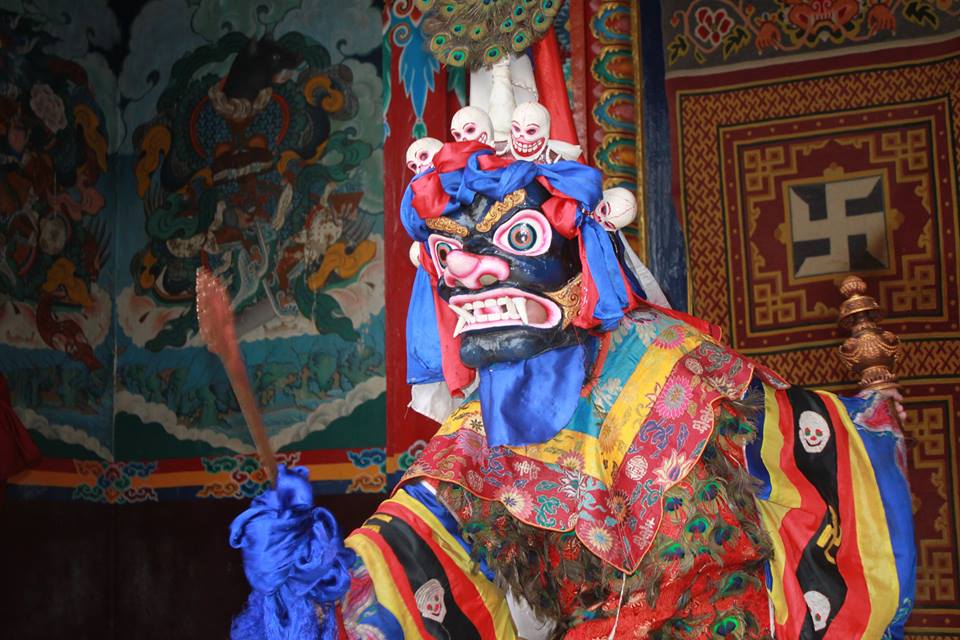
Yeshe Walmo sacred dance at Menri Monastery in India

“Mother Yeshé Walmo, together with your powerful, magical emanations, you guard both the teachings and those who keep their vows, and you cut the life force of those who break their vows. You liberate the discordant into space and guide along the path of liberation. I, an only child, constantly call out to my mother. Does the single mother’s ears not hear me? I, an only child, constantly yearn for my mother. Does the single mother’s heart not consider me? Sole Mother, I, the Shen practitioner who calls upon you, am accepting hardships, aspiring to enlightenment, relying on solitary places, carrying the lama at my crown, and practicing with my mind in the midst of diversions and distractions. Single Mother, lead me along the path! Sole Mother, fulfill my wishes! Sole Mother, dispel my obscurations!”

Extract from The Heartdrop Invocation of Yeshé Walmo’s Vitality

In the coming days, A Blazing Mala of Wish-Fulfilling Jewels will be available for purchase from the major book distributors such as Amazon and Barnes and Noble. Until then it can be purchased from Ligmincha International’s Windhorse Store: https://windhorse.store/product/a-blazing-mala-of-wish-fulfilling-jewels-by-raven-cypress-wood/ Or directly from Lulu here: https://www.lulu.com/shop/raven-wood/a-blazing-mala-of-wish-fulfilling-jewels/paperback/product-e7wm7j6.html?page=1&pageSize=4

English Language Translations Table of Contents

  • CLEANSING RITE SUPPLICATION
  • CLEANSING WITH WATER
  • FUMIGATING WITH INCENSE
  • MANTRAS OF THE FIVE DAILY OFFERINGS
  • HOMAGE TO THE EIGHTH UNIVERSAL GUIDE, BUDDHA TÖNPA SHENRAP MIWOCHÉ        
  • SUPPLICATION TO LORD TAPIHRITSA
  • COMPLETELY PURE AND CHANGELESS OFFERINGS TO THE LAMA, AN ORNAMENT OF WISH-GRANTING JEWELS
    • The Stages of Visualization
    • Request to Remain
    • Prostrations
    • Admission of Wrongdoing and Purification
    • Mandala Offering
    • The Five Offerings
    • Praise of the Enlightened State
    • Requesting Accomplishments
    • Aspiration Prayer
  • DÉ CHEN GYALPO, SUPPLICATION TO THE GREAT, UNEQUALED LORD        
  • A VICTORIOUS PALACE OF PRAISE FOR THE UNEQUALED LORD, SHERAP GYALTSEN          
  • GOING FOR REFUGE
  • GENERATING THE MIND OF ENLIGHTENMENT
  • SUPPLICATION TO THE LORD OF REFUGE, THE SUPREME 33RD THRONE-HOLDER OF MENRI, LUNGTOK TENPÉ NYIMA RINPOCHE
  • SUPPLICATION TO THE LORD OF REFUGE, THE GREAT 34TH THRONE-HOLDER OF MENRI, LUNGTOK DAWA DARGYAL RINPOCHE
  • SUPPLICATION TO THE LORD OF REFUGE, MENRI YONGDZIN LOPÖN TENZIN NAMDAK RINPOCHE
  • SUPPLICATION TO THE LORD OF REFUGE, MENRI PÖNLOP YANGTÖN TRINLEY NYIMA RINPOCHE
  • HOMAGE TO BUDDHA SATRIK ÉRSANG
  • PRAISE AND BENEFIT OF JAMMA’S MANTRA
    • Homage
    • Going for Refuge
    • Admission and Purification of Wrongdoing and Misdeeds
    • Focusing the Mind
    • Generating the Mind
    • Introduction
    • Main Text
    • Benefits
    • Praise of the Recitation
    • Aspiration
  • SUPPLICATION TO JAMMA
    • The Visualization
    • The Recitation
  • PRESENTING THE FIVE OFFERINGS TO THE GATHERING OF JAMMA DEITIES           
  • MANTRAS OF JAMMA’S FIVE WISDOM MANIFESTATIONS
  • SUPPLICATION TO TUKJÉ JAMMA, THE COMPASSIONATE LOVING MOTHER           
  • THE HEART SUTRA OF THE MOTHER OF THE GREAT VEHICLE, THE YUM DŌ           
  • SUPPLICATION TO KHANDRO CHOZA BÖNMO
  • FUMIGATION OFFERING TO BLACK MULE SIPÉ GYALMO
  • SIGYAL KA TÖ, ALPHABETICAL PRAISE OF THE SUPREME MOTHER SIPÉ GYALMO   
  • ALPHABETICAL PRAISE TO A VISION OF BLACK MULE SIPÉ GYALMO
  • SIGYAL’S ENTRUSTED ACTIVITY
  • TO A VISION OF SIGYAL
  • A FLAMING LIGHTNING BOLT, THE SECRET INVOCATION OF THE QUEEN OF PHENOMENAL EXISTENCE
  • INVOCATION OF RED MULE SIPE GYALMO
  • INVOCATION OF YESHÉ WALMO
  • THE HEARTDROP INVOCATION OF YESHÉ WALMO’S VITALITY
  • INVOCATION OF THE THREE WATCHWOMEN, THE JARAMA SUM
  • A BRIEF INVOCATION OF CHAMMO LAM LHA, GODDESS OF TRAVEL           
  • PRESENTING OFFERINGS TO YESHÉ WALMO
  • PRESENTING OFFERINGS TO THE THREE SUPREME JEWELS
  • FOOD OFFERING PRAYER
  • SUPPLICATION TO THE SACRED PLACE OF BÖNRI WHERE BLESSINGS ARE QUICKLY ATTAINED      
  • THE THREE ESSENCE MANTRAS OF YUNGDRUNG BÖN, THE NYINGPO NAMSUM   
  • GENERAL MAWÉ SENGÉ MANTRA
  • LONGEVITY MANTRA FROM THE TSÉWANG JARIMA
  • TSÉWANG BÖ YULMA MANTRA
  • MEDICINE BUDDHA MANTRA
  • MANTRA FOR DAILY WATER OR DRINK
  • THE SYLLABLES OF THE ALI KALI, THE CAUSE FOR ENLIGHTENED WORDS AND SOURCE OF THE SCRIPTURES
  • MANTRA OF THE BLAZING GODDESS, TSUKTOR BARMA
  • SUPPLICATION TO THE GREAT LAMA DRENPA NAMKHA AND HIS TWO SONS FOR THEIR SWIFT BLESSINGS
  • SENDING OUT AND GATHERING BACK OF THE MA TRI RECITATION 
    • Praising the Recitation
  • A CONDENSED WHITE BURNT FOOD OFFERING
    • The Invitation
    • Offering and Dedicating
    • Supplement to the Burnt Food Offering
  • THE BAR CHE LAM SEL, THE SPONTANEOUS WISH-FULFILLMENT OF REMOVING OBSTACLES FROM THE PATH
  • ASPIRATION PRAYER TO THE WORLDLY GODS AND GUARDIANS
  • EIGHT-BRANCHED ASPIRATION PRAYER
    • The Branch of Inviting
    • The Branch of Prostrating
    • The Branch of Making Offerings
    • The Branch of Admitting Wrongdoing
    • The Branch of Subsequently Being Delighted
    • The Branch of Supplicating
    • The Branch of Aspiration Prayers
    • The Branch of Dedicating
  • TSÉWANG’S PRECIOUS MALA OF BENEFICIAL ASPIRATION PRAYERS
  • THE DAILY RECITATION OF THE THREE-FOLD ASPIRATION PRAYER, THE MÖNLAM NAM SUM       
    • The Jewel Mönlam
    • Aspiration Prayer of Wish-fulfilling Jewels
    • Namgyal’s Torma Aspiration Prayers
    • Aspiration Prayer of the Ten Grounds
    • Becoming Peaceful
    • Dedication
    • Aspirations of Lord Gyalwa Düpa
    • Aspirations and Dedication
    • The One Hundred Syllable Mantra, Yig Gya
    • Dedication
  • A CONDENSED PRAYER OF ASPIRATION
  • THE BARDO MÖNLAM, LAMA GUR ZHOK’S PRECIOUS MALA OF ASPIRATION PRAYERS FOR THE BARDO
  • WORDS OF TRUTH ASPIRATION PRAYER
  • ASPIRATION PRAYER FOR THE CONTINUATION OF THE TEACHINGS

Tibetan Language Table of Contents

  • བོད་སྐད་ཡིག་དང་སྒྲ་གདངས།        
  • ཁྲུས་གསོལ།
  • ཁྲུས་ཀྱིས་བཀྲུས་པ།
  • སྤོས་ཀྱིས་བསང།
  • མཆོད་པ་རྣམ་ལྔ་བསྙེན་པ།
  • རྣམ་འདྲིན་བརྒྱད་པ་སངས་རྒྱས་སྟོན་པ་གཤེན་རབ་མི་བོ་ལ་ཕྱག་འཚལ།
  • ཏ་པི་ཧྲི་ཙ་གསོལ་འདེབས།
  • བླ་མའི་མཆོད་པ་རྣམ་དག་འགྱུར་མེད།  བསམ་འཕེལ་ནོར་བུའི་རྒྱན་ཞེས་བྱ་བ་བཞུགས།
    • བསྐྱེད་རིམ།
    • བཞུགས་སུ་གསོལ་བ།
    • ཕྱག་འཚལ།
    • བཤགས་པ།
    • མནྡལ་འབུལ།
    • རྣམ་ལྔ།
    • སྐུ་བསྟོད།
    • དངོས་གྲུབ་ཞུ་བ།
    • སྨོན་ལམ།
  • རྗེ་མཉམ་མེད་ཆེན་པོའི་གསོལ་འདེབས།         
  • རྗེ་མཉམ་མེད་ཤེས་རབ་རྒྱལ་མཚན་གྱི་བསྟོད་པ་རྣམ་རྒྱལ་ཁང་བཟང།        
  • སྐྱབས་སུ་འགྲོ་བ།
  • སེམས་བསྐྱེད་པ།
  • སྐྱབས་རྗེ་སྨན་རིའི་ཁྲི་འཛིན་སོ་གསུམ་པ་མཆོག་གི་གསོལ་འདེབས།
  • སྐྱབས་རྗེ་སྨན་རིའི་ཁྲི་འཛིན་སོ་བཞི་པ་ཆེན་པོའི་གསོལ་འདེབས།    
  • སྐྱབས་རྗེ་སྨན་རིའི་ཡོངས་འཛིན་སློབ་དཔོན་རིན་པོ་ཆེ་མཆོག་གི་གསོལ་འདེབས།       
  • སྨན་རིའི་དཔོན་སློབ་རིན་པོ་ཆེའི་གསོལ་འདབེས།
  • ས་ཏྲིག་ཨེར་སངས་སྐུ་ལ་ཕྱག་འཚལ་ལོ།        
  • བྱམས་མའི་སྔགས་བསྟོད་པ་ཕན་ཡོན་བཅས་བཞུགས།    
    • ཕྱག་འཚལ།
    • སྐྱབས་ཡུལ་བསྒོམ་པ།
    • བཤགས་པ།
    • སེམས་བཟུང་བ།  
    • སེམས་བསྐྱེད།    
    • ངོ་སྤྲོད།  
    • གཞུང་གི་དོན།     
    • ཕན་ཡོན།
    • འཛབ་བསྟོད།     
  • བྱམས་མ་གསོལ་འདེབས།   
    • དགོངས་རིམ།     
    • ཚིག་བཤད།       
  • བྱམས་མའི་ཚོགས་ལ་མཆོད་པ་རྣམ་ལྔ་འབུལ།   
  • བྱམས་མ་རིག་ལྔ་འཛབ།   
  • བྱམས་མའི་གསོལ་འདེབས།
  • ཡུམ་མདོ།  ཐེག་པ་ཆེན་པོ་ཡུམ་ཀྱི་སྙིང་པོ་ཞེས་བྱ་བའི་མདོ་བཞུགས།         
  • ཅོ་ཟ་བོན་མོ་གསོལ་འདེབས།
  • སྲིད་རྒྱལ་དྲེའུ་ནག་མོའི་བསང་མཆོད་རིན་ཆེན་གཏེར་སྤུངས་བཞུགས།        
  • མ་མཆོག་སྲིད་རྒྱལ་གྱི་ཀ་བསྟོད་།      
  • སྲིད་རྒྱལ་དྲེའུ་ནག་ཞལ་གཟིགས་མ་ཡི་ཀ་བསྟོད།         
  • སྲིད་རྒྱལ་འཕྲིན་བཅོལ།      
  • སྲིད་རྒྱལ་ཞལ་གཟིགས་བཞུགས།     
  • ཡང་ཟབ་ནམ་མཁའ་མཛོད་ཆེན་ལས།
  • རྒྱུད་ཉི་འགྲེལ་ལས་བྱུང་བའི་སྲིད་རྒྱལ་དྲེའུ་དམར་མོའི་བསྐུལ་པ་བཞུགས།    
  • ཡེ་ཤེས་དབལ་མོའི་བསྐུལ་པ།         
  •  ཡེ་ཤེས་དབལ་མོའི་སྲོག་བསྐུལ་སྙིང་གི་ཐིག་ལེ་བཞུགས་སོ།        
  • བྱ་ར་མ་གསུམ་བསྐུལ་པ་བཞུགས། བསྒྲགས་པ་སྐོར་གསུམ        
  • ལྕམ་མོ་ལམ་ལྷ་བསྐུལ་ཆུང་བཞུགས།  
  • ཡེ་ཤེས་དབལ་མོར་མཆོད་འབུལ།     
  • དཀོན་མཆོག་གསུམ་ལ་མཆོད་འབུལ།  
  • ཟས་མཆོད།       
  • བོན་རི་གནས་ཀྱི་གསོལ་འདེབས་བྱིན་རླབས་མྱུར་འགྲུབ་བཞུགས།  
  • སྙིང་པོ་རྣམས་གསུམ།       
  •  སྤྱི་སྨྲ་སེང་བསྙེན་པ།
  • ཚེ་དབང་བྱ་རི་མའི་བསྙེན་པ།
  • ཚེ་དབང་བོད་ཡུལ་མའི་བསྙེན་པ།
  • སྨན་ལྷའི་བསྙེན་པ།
  • ཆུའམ་བཏུང་བའི་རིགས་ལ་བསྙེན་པ།
  • བཀའ་རྒྱུ་ལུང་གི་འབྱུང་གནས་ཨ་ལི་ཀ་ལི་ཡིག་ཆུང་བཞུགས་སོ།
  • གཙུག་ཏོར་འབར་མའི་གཟུངས་བཞུགས་སོ།
  • བླ་ཆེན་དྲན་པ་ཡབ་སྲས་ཀྱི་གསོལ་འདེབས་བྱིན་བརླབས་མྱུར་འབྱུང་བཞུགས་སོ།
  • མ་ཏྲིའི་འཛབ་ཀྱི་འཕྲོ་འདུ།
  • དཀར་གསུར་བསྡུས་པ།
    •  གསུར་བསྔོའི་ཁ་སྐང་།
  • མཁའ་འགྲོ་ཤེས་རབ་བློ་འཕེལ་ཞལ་ལུང་བར་ཆད་ལམ་སེལ་བསམ་པ་ལྷུན་གྲུབ་བཞུགས་སོ།
  • ལྷ་དང་སྲུང་མ་འཁོར་བའི་སྨོན་ལམ་བཞུགས།
  • སྨོན་ལམ་ཡན་ལག་བརྒྱད་པ་བཞུགས།
  •   ཚེ་དབང་སྨོན་ལམ་དོན་འདུས་རིན་ཆེན་ཕྲེང་བ་བཞུགས།
  • རྒྱུན་འདོན་སྨོན་ལམ་རྣམ་གསུམ་དབུ་ཕྱོགས་བཞུགས་སོ།
    • ནོར་བུ་སྨོན་ལམ།
    • ཡིད་བཞིན་ནོར་བུ་དམ་པའི་སྨོན་ལམ།
    • རྣམ་རྒྱལ་གྱི་གཏོར་མའི་སྨོན་ལམ་བཞུགས།
    • སྨོན་ལམ་རྣམ་གསུམ་ས་བཅུའི་སྨོན་ལམ།
    • ཞི་བར་གྱུར་ཅིག
    • བསྔོ་བོ།
    • རྗེ་རྒྱལ་བ་འདུས་པའི་སྨོན་ལམ།
    • སྨོན་ལམ་དང་ངོ་བོ།
    • ཡིག་བརྒྱ།
    • ངོ་བོ།
    • སྨོན་ལམ་མདོར་བསྡུས།
  • བླ་མ་གུར་ཞོག་པས་མཛད་པའི་བར་དོའི་སྨོན་ལམ་རིན་ཆེན་ཕྲེང་བ་བཞུགས།
  • བདེན་ཚིག་སྨོན་ལམ།
  • བསྟན་རྒྱས་སྨོན་ལམ་བཞུགས་སོ།

Raven Cypress Wood ©All Rights Reserved. No content, in part or in whole, is allowed to be used without direct permission from the author.

Did you enjoy this content? This article is made possible by generous donors who want content like this to continue to be available.

Join the mandala of Nine Ways supporters by donating through one of the services listed below.

It’s easy through Paypal, Zelle, or Venmo using the email: RCW108@gmail.com

Don’t want to miss a post? Scroll to the bottom and click “Follow this blog.”

Summer Ritual at Menri Monastery: The Great Secret Dō Ritual of The Vast Sky

Representation of the phenomenal world with its wondrous and desirable contents created at Menri Monastery

During the 12th-16th lunar days of the 5th lunar month, Menri Monastery together with the Rayna Menling Nunnery will conduct the annual Kha Long Sangwé Dō Chen, The Great Secret Dō Ritual of the Vast Sky. In 2025, these dates correspond with July 7th-11th. The purpose of this elaborate ritual cycle is to pacify or expel obstacles and malevolent energies, rebalance the five elements, attract good fortune, longevity, and positive circumstances, and to bring healing and harmony to the environment and its seen and unseen inhabitants. This ritual was taught directly by the enlightened Lord Tönpa Shenrap Miwoché as a skillful method to work with external, worldly forces that interfere with the happiness and success of sentient beings. These teachings are part of the Second Way of Bön, The Way of the Shen of the Phenomenal World. As in every teaching and ritual of the Yungdrung Bön, the foundation of the practice is unbiased, unlimited compassion. Even when so-called “malevolent spirits” are expelled because of their unwillingness to stop harming others, the expulsion is from a base of compassion for both those being harmed as well as for those causing the harm. By interrupting their harmful actions towards others, it also prevents them from accumulating negative karma. Additionally, every ritual concludes with prayers of aspiration that all beings be happy and peaceful, and ultimately to realize the ultimate state of enlightenment that is beyond any kind of suffering or unhappiness.

To support the ritual of The Great Secret Dō Ritual of the Vast Sky, a representation of the phenomenal world is created along with all the good and precious things within it. These things are offered to the enlightened ones, the worldly protectors, powerful spirits, and all the six kinds of sentient beings. By offering to the deities, the accumulation of merit is increased and previous negative actions are purified. By offering to the worldly protectors, they are delighted and continue to fulfill their vows of protection and bestowing abundance. By offering to the powerful spirits, we bring harmony to our relationship with them and pay any debts that might invoke their retribution. By giving to all the six kinds of sentient beings, we fulfill their desires and their minds become peaceful and satisfied.

His Eminence Menri Pönlop Thrinley Nyima Rinpoche instructing the monks in creating namkha

About Namkha

In addition to the many offerings of torma, precious gems, foodstuffs, flowers and greenery, fragrant smells, soft materials, and so on; this ritual makes abundant use of the ritual object known as a namkha. The Tibetan term namkha literally translates as “sky” or “external space.” This term is often translated as “thread-cross.” There are many different kinds of namkha that have a diversity of form and function. Just as the shape, color, ingredients, and use of a torma is determined by its ritual purpose, so is the shape, color, and function of a namkha determined by its ritual purpose. As for the actual construction, a namkha is created by affixing thin pieces of bamboo or wood together to establish a frame. Then, beginning at the center and working outward, strands of colored wool, yarn, or thread are used to weave a net-like pattern over the frame. The length of the wood or bamboo is notched to allow the colored strands to catch and stay in place. There is a great variation in framework and patterns. For example, if the namkha is being used as a temporary abode of a deity or spirit, the pattern and colors used will be representative of the physical characteristics and hand objects of that deity or spirit. Namkha are used as a dwelling for deities or spirits during a ritual, to attract or repel specific energies and qualities, for protection from danger and disease, and as offerings, among other purposes.

Namkha created for the fire ritual of the deity Duk Kar, the White Umbrella Goddess

Dō Rituals

Buddha Tönpa Shenrap Miwoché taught 365 different types of rituals. The Great Secret Dō Ritual of the Vast Sky is categorized as a type of ritual. Because many of the dō rituals make use of namkha, some Western scholars have erroneously stated that the terms [Tibetan: mdos] and namkha are synonymous. This is incorrect. There are dō rituals that do not use namkha, and there are many namkha that are used in rituals other than those categorized as dō. In general, dō rituals are the most important of the ransom rituals used for eliminating harm to the life force, diseases, danger, and other disturbances from nonhuman beings. In general, the nonhuman beings causing harm are offered an exchange of desirable things for the release of those being harmed. Namkha are used to invite the enlightened deities who are the objects of refuge for the ritual, and the protectors who subdue the malevolent forces. Other types of namkha are made as offerings to the deities and gifts of exchange for the ransom. Still other types of namkha act as supports for the return of the life force, and the rebalancing of the external, internal, and secret five elements. There are different kinds of dō rituals in order to appeal to the variety of nonhuman beings that create disturbances for humanity and the environment.

Namkha of various auspicious symbols

The scripture for the Kha Long Sangwé Dō Chen is almost one thousand pages in length. It includes chapters dedicated to instructions for the construction of ritual items, texts for the ransom rituals for men, women, and children, rituals for stopping and healing illness and contagious disease, rituals for renewing and fulfilling sacred vows, rituals for calling upon the magically powerful and benevolent worldly protectors, rituals for strengthening the life force and prosperity, rituals for appeasing the many kinds of nonhuman spirits, rituals for forcefully repelling negative forces, and so on. The overall purpose of all of these rituals is to bring peace and happiness within the world of appearances, and to generate faith in the Yungdrung Bön teachings which will guide all sentient beings to the ultimate goal of liberation from all the suffering of cyclic existence.

Raven Cypress Wood and Khenpo Nyima Künchap Rinpoche prepare namkha for an elaborate ritual offering to the lu [Sanskrit: naga]

Raven Cypress Wood ©All Rights Reserved. No content, in part or in whole, is allowed to be used without direct permission from the author.

Did you enjoy this content? This article is made possible by generous donors who want content like this to continue to be available. Join the mandala of Nine Ways supporters by following this link: https://ravencypresswood.com/donate/

Don’t want to miss a post? Scroll to the bottom and click “Follow this blog.”

Celebration of the 90th Birthday of H. H. the 14th Dalai Lama Gyalwa Rinpoche & Statement Regarding the Continuation of the Dalai Lama Lineage

July 6th is celebrated as the birthday of the one born as Lhamo Döndrup, recognized at the age of two and formally installed at the age of fifteen, as the leader of the Geluk school of Tibetan Buddhism and therefore both the spiritual and secular leader of Tibet. Upon his enthronement, he was renamed Jetsun Jampel Ngawang Lobsang Yeshe Tenzin Gyatso: Holy Lord, Gentle Glory, Compassionate Defender of the Faith who is an Ocean of Wisdom. He is known as Yizhin Norbu Rinpoche, the Precious Wish-fulfilling Jewel, and referred to as Gyalwa Rinpoche, Most Precious Conqueror, by Tibetans. He is known around the world as His Holiness the 14th Dalai Lama.

The title Dalai Lama was first given in 1578 C.E. to Sonam Gyatso, leader of the Geluk school of Tibetan Buddhism, by the Mongolian leader Altan Kahn who had just received teachings from him. The term Dalai Lama is a combination of the Mongolian word dalai meaning ocean, and the Tibetan word lama commonly meaning spiritual master and literally translated as mother of the soul, or highest mother. Sonam Gyatso became known as the 3rd Dalai Lama because the two previous leaders of the Geluk school were posthumously awarded the title. Beginning with the 5th Dalai Lama in the 17th century, the authority and influence of the Dalai Lamas expanded beyond sectarian boundaries into all schools of Tibetan Buddhism as well as becoming enjoined with the secular function of governing the country of Tibet.

Upon the occasion of his 90th birthday, His Holiness the 14th Dalai Lama has issued a public statement regarding the continuation of the Dalai Lama lineage.

Statement Affirming the Continuation of the Institution of Dalai Lama

(Translated from the original Tibetan)

On 24 September 2011, at a meeting of the heads of Tibetan spiritual traditions, I made a statement to fellow Tibetans in and outside Tibet, followers of Tibetan Buddhism, and those who have a connection with Tibet and Tibetans, regarding whether the institution of the Dalai Lama should continue. I stated, “As far back as 1969, I made clear that concerned people should decide whether the Dalai Lama’s reincarnations should continue in the future.”

I also said, “When I am about ninety I will consult the high Lamas of the Tibetan Buddhist traditions, the Tibetan public, and other concerned people who follow Tibetan Buddhism, to re-evaluate whether or not the institution of the Dalai Lama should continue.”

Although I have had no public discussions on this issue, over the last 14 years leaders of Tibet’s spiritual traditions, members of the Tibetan Parliament in Exile, participants in a Special General Body Meeting, members of the Central Tibetan Administration, NGOs, Buddhists from the Himalayan region, Mongolia, Buddhist republics of the Russian Federation and Buddhists in Asia including mainland China, have written to me with reasons, earnestly requesting that the institution of the Dalai Lama continue. In particular, I have received messages through various channels from Tibetans in Tibet making the same appeal. In accordance with all these requests, I am affirming that the institution of the Dalai Lama will continue.

The process by which a future Dalai Lama is to be recognized has been clearly established in the 24 September 2011 statement which states that responsibility for doing so will rest exclusively with members of the Gaden Phodrang Trust, the Office of His Holiness the Dalai Lama. They should consult the various heads of the Tibetan Buddhist traditions and the reliable oath-bound Dharma Protectors who are linked inseparably to the lineage of the Dalai Lamas. They should accordingly carry out the procedures of search and recognition in accordance with past tradition.

I hereby reiterate that the Gaden Phodrang Trust has sole authority to recognize the future reincarnation; no one else has any such authority to interfere in this matter.

Dalai Lama

Dharamshala

21 May 2025

His Holiness the 14th Dalai Lama with His Eminence Yongdzin Tenzin Namdak Rinpoche.

Around the world on this day, devotees will begin the day with a large fumigation and smoke offering, and then present offerings and prayers to an image of His Holiness the Dalai Lama. Especially on this day, there will be many prayers for his long and healthy life.

Prayer for the Long Life of His Holiness the 14th Dalai Lama

Gang ri ra wé kor wé zhing kham su
In a heavenly realm, surrounded by a chain of snow mountains,

Pen dang dé wa ma lü jung wé né
The source of all happiness and help for beings

Chenrezik wang Tenzin Gyatso yi
Is Tenzin Gyatso, Chenrezik in person.

Shyap pé kal gyé bar du ten gyur chik
May his life be secure for hundreds of eons!

Raven Cypress Wood ©All Rights Reserved. No content, in part or in whole, is allowed to be used without direct permission from the author.

Did you enjoy this content? This article is made possible by generous donors who want content like this to continue to be available. Join the mandala of Nine Ways supporters by following this link: https://ravencypresswood.com/donate/

Don’t want to miss a post? Scroll to the bottom and click “Follow this blog.”

91st Anniversary of the Parinirvana of Shardza Tashi Gyaltsen Rinpoche

Shardza Tashi Gyaltsen Rinpoche

The 13th lunar day of the 4th lunar month is the anniversary of the parinirvana and the attainment of the rainbow body of Shardza Tashi Gyaltsen Rinpoche. In 2025, this date coincides with June 9th. Shardza Rinpoche was a Yungdrung Bön monk, teacher, scholar, and realized practitioner of the modern age. Born in 1859 in Kham, Tibet, at the age of nine an esteemed lama told his parents that he should become a monk. Being their only son, the parents refused. Shardza soon became quite ill. Seeing that their son was not recovering, the parents agreed to allow him to take ordination. At this, Shardza quickly recovered. He was the attendant for his root lama, Tenzin Wangyal, for many years. At the age of eighteen, he took the full vows of a Yungdrung Bön monk from the abbot of Yungdrung Ling Monastery.

Shardza Tashi Gyaltsen Rinpoche depicted as a yogi with long hair and a white robe

Throughout his life, Shardza Rinpoche was known for a disciplined adherence to every vow that he had taken throughout his life. Although his view and practice were vast and high, he maintained diligence in performing virtue and avoiding the smallest non-virtue. He continually performed the preliminary practices and recited many millions of mantra, especially the SA LÉ Ö mantra. He composed many concise practices for purifying negativity and accumulating merit and wisdom, such as his Aspiration Prayer of Giving and Receiving. (For the publicly available English translation, go to the Publications page of this website. For a brief explanation of the prayer, see previous article: https://ravencypresswood.com/2020/01/31/an-aspiration-prayer-of-giving-and-receiving-gift-translation/ )

“For those with a great deal of negative actions in this lifetime, having requested a remedy because they will certainly ripen during future lifetimes, the remedy of performing virtue is very powerful. Having ripened negative actions, the mere exhaustion of that karma (through pain and/or illness), enlightenment is certain. Therefore, this pain and illness of yours is very amazing when it is voluntarily accepted!

Even now, whenever more pain or illness arises, continuing to persevere with your religious practices, venerations, and acts of pure virtue would be incredibly amazing!

When you imagine that there will be no unhappiness in the future (due to this negative karma being exhausted), supremely praise the emptiness of that particular pain or illness.

Be inspired by the power of this antidote, even when what you don’t want arises.

Take the suffering and misery of others onto yourself by adopting others’ happiness and suffering through the practice of giving and receiving.” 

Shardza Rinpoche’s advice to the female practitioner Khandro Wangi Dronma. 
Hair and nails of Shardza Tashi Gyaltsen that were recovered after his attainment of the rainbow body
Hair and nails of Shardza Tashi Gyaltsen Rinpoche that were recovered after his attainment of the rainbow body

He taught a multitude of disciples, organized the reconstruction of temples, went on pilgrimages, and spent a great deal of time in isolated retreat. A prolific writer, he wrote at length on subjects such as Bön history, instructions for the practice of Tibetan yoga, preliminary practices for Dzogchen, condensed summaries of each of the None Ways of Bön, and detailed instructions for the advanced practice of inner heat, known as Tummo. When Shardza Rinpoche was 75 years old, his disciples noticed that his behavior changed. He seemed more casual and became delighted when playing with children. He was seen doing miraculous things such as walking without his feet touching the ground or setting his bowl down in space.

In 1934 at the age of 76 during an offering ceremony, he began to spontaneously sing songs of realization.  A few days later, he sewed himself inside a tent and forbid any of his disciples to open it.  The next day, rainbow lights began appearing above and around the tent. After three days, the ground shook. By the 4th day, rainbow-colored mist was seen coming through the seams of the tent. On that 4th day, Shardza’s disciple Tsultrim Wangchuk, afraid that his lama’s body would completely disappear and leave nothing as an object of veneration and inspiration, opened the tent. He found Shardza’s body enveloped in rainbow light, levitating in midair, and shrunken to the proportional size of a one year old child. The area around his heart was still warm but most of the nails of the hands and feet had fallen onto the seat below. For the next forty-nine days, a multitude of disciples came to pay their respect and receive blessings. After that, the precious remains were placed into a reliquary chorten. From time to time, many people have reported seeing clear or rainbow-colored light emanating from this reliquary chorten.

Shardza Tashi Gyaltsen’s reliquary chorten at his retreat center in Amdo, Tibet

Raven Cypress Wood ©All Rights Reserved. No content, in part or in whole, is allowed to be used without direct permission from the author.

Don’t want to miss a post? Scroll to the bottom and click “Follow this blog.”

Want to join the mandala of Nine Ways supporters? Follow this link https://ravencypresswood.com/donate/ It’s easy through Paypal, Zelle, and Venmo.

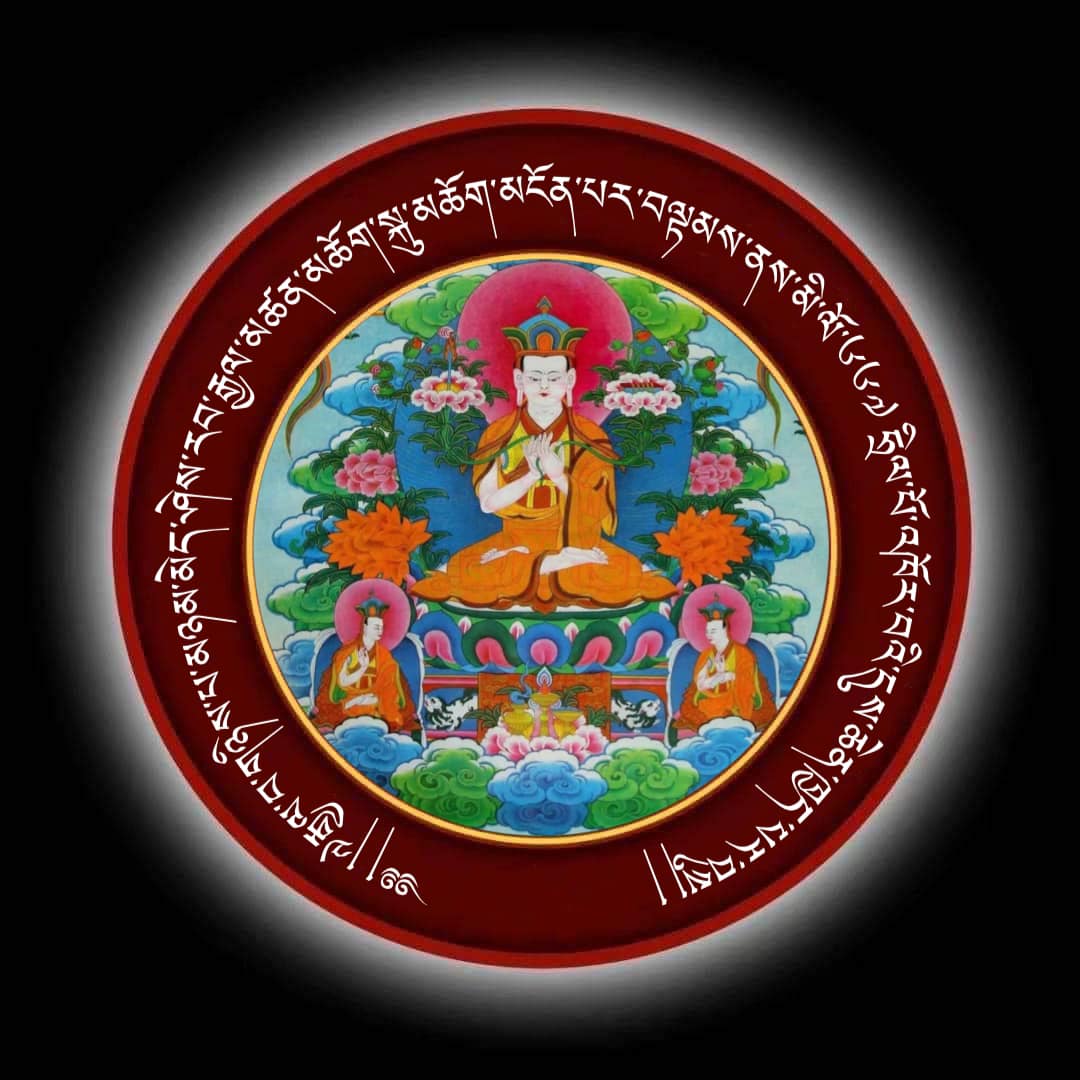
669th Birth Anniversary of the Second Buddha, H.H. the 1st Menri Trizin Nyammé Sherap Gyaltsen

Nyamme Sherap Gyaltsen Rinpoche

The 5th day of the 1st lunar month is the birth celebration of His Holiness the 1st Menri Trizin Nyammé Sherap Gyaltsen Rinpoché who is known as the second buddha in the Yungdrung Bön religious tradition. In 2025, this date coincides with March 4th on the Western calendar. His Holiness Nyammé Sherap Gyaltsen Rinpoché was a reincarnation of Yikyi Khye’u Chung, one of Buddha Tönpa Shenrap Miwoche’s sons. He reunited the three transmission lineages of sutra, tantra and dzogchen that had become widely dispersed, and he founded one of the largest Yungdrung Bön monasteries in Tibet, Tashi Menri Ling.

Born in 1356 C.E. in the region of Gyalrong into the esteemed Dru lineage, as a child, he could recite mantra and read scripture without having studied. At the age of ten, he decided to become a monk. In 1387 C.E. at the age of 31, he entered the prestigious Yeru Wensaka monastery and eventually became its abbot. While he was traveling in Eastern Tibet, Yeru Wensaka was destroyed by flooding and mudslides. Upon returning, he searched the ruins of the monastery for any salvageable artifacts. With these precious objects, he established Tashi Menri Monastery on higher ground within the same valley. It was 1405 C.E. and he was 50 years old.

Cloak belonging to the precious lord Nyammé Sherap Gyaltsen Rinpoche. Photo credit: Unknown

In 1415 C.E. at the age of 60, he left the shell of his physical body. His body levitated high into the air, but due to the fervent prayers of his disciples, the body returned to the earth. During the cremation, rainbows appeared and a large bird circled three times around the cremation area before disappearing into the West.
Today,  Bönpos will spend the day with their eyes looking skyward. If they are lucky enough to be visited by a vulture on this day, it is said to be an auspicious sign of having directly received the blessings of the one known as the Second Buddha, the Unequaled One, His Holiness Nyammé Sherap Gyaltsen Rinpoché.

Among his numerous writings, is the commonly recited Eight-branched Aspiration Prayer, Mönlam Yenlak Gyepa. When offering aspiration prayers, we imagine that every sentient being is offering the prayers in unison with us. This limitless group of beings includes humans, nonhumans, unseen spirits, and those we consider “enemies.” All sound is perceived as the sound of the prayer being recited and the vastness of space is imagined as filled with buddhas and bodhisattvas that are delighted by the virtuous activity that spontaneously activates their immeasurable compassion. By offering the prayers in this way, and then dedicating the merit of the practice for the welfare of all sentient beings, the power of the practice is inconceivable and the benefit is sealed and can never be destroyed. 

The English language translation of the Eight-branched Aspiration Prayer, Mönlam Yenlak Gyepa is publicly available for personal use and can be downloaded from the Publications page of this website. Click on the Publications tab above and then scroll down to the download link.

The Writings of His Holiness Nyammé Sherap Gyaltsen Rinpoche*

Cycle of Supplication and Aspiration Prayers

  • Praise of the Four Supreme Places of Refuge
  • Offering and Praise to Mawé Sengé
  • Supplication Prayer to the Mawé Sengé Lineage
  • Praise of Venerable Essence of [the] Dru [Family Lineage]
  • Eight Characteristics of Tséwang’s Eight Sacred Places
  • Stages of Chanted Supplications
  • Eight-branched Aspiration Prayer, A Ladder to Freedom
  • Homage to the Charactristics of the Aural Transmission Shenraps
  • The Gift of the Physical Body
  • Condensed Peaceful Chö of Gifting the Body
  • Command for the Gods and Demons                            

Cycle of Fumigation and Fulfillment

  • Stages of Preliminary Practices for a Completely Pure Fumigation Offering
  • A Small Collection Regarding the Medicine Deity Generation Stage
  • Supplication and Requesting Consideration from the Marvelous Ones
  • Invocation of the Practice Lineage
  • Special Fulfillment
  • A Completely Pure River of Requesting Consideration and Supplication
  • Burnt Offerings of the Treasury of Precious Terma
  • General Fulfillment from a Bundle of Precious Terma
  • A Precious Mala of Fumigation Offerings
  • Fumigation Offering to the Powerful Ones
  • Fumigation Offering to Sigyal
  • Fumigation Offering to Black Mule Sigyal from the Precious Terma
  • Sigyal’s Manifested Realization
  • Sigyal’s Threadcross Practice
  • A Brief Paper on Sigyal’s Threadcross
  • A Brief Paper on Black Mule Sigyal’s Feast Offering
  • Short Fulfillment Practice of Black Mule Sigyal
  • Practice of the Black Net Threadcross
  • The Shining Lamp of Realization of the Red and Black Threadcross
  • Commandments for the Avowed Guardians of the Teachings
  • Important Points regarding the Fulfillment of Midü Jampa
  • Fumigation Offering to Midü
  • Offering and Fulfillment to Drak Tsen
  • Fumigation Offering to Drak Tsen
  • Invocation of Nyipangsé
  • Command for Nyipangsé
  • Command for the Queen of the Drala
  • Gyalpo Sheltrap Torma Offering and Fulfillment
  • A Brief Invocation of Sheltrap
  • Praise in Appreciation of the Fumigation Offering
  • Supplement to the Fumigation Offering
  • Generation Stage for the Fulfillment Torma
Celebration of Nyammé Sherap Gyaltsen Rinpoche. Photo credit: Unknown

Cycle of Supplementary Texts for the Practices of Accomplishment

  • Destroying the Door to Negative Rebirths
  • Realization of the Completely Pure Lotus of the Vast Expanse
  • Mantric Accomplishment of Shenrap Nampar Gyalwa
  • Fire Offerings of Nampar Gyalwa
  • Realization of the Yungdrung Sutra of the Vast Expanse
  • Going for Refuge according to the Vast Expanse
  • Practice of Künzang’s Luminous AH
  • Stages of Meditative Stabilization
  • Text for Künzang’s Luminous AH
  • Stages of Realization for Walsé
  • Accomplishing the Essential Through the Realization of Walsé
  • Purification and Increase of Torma
  • Accomplishment of Sending Out and Gathering Back with Mantra Accumulation
  • Practice of the Secret Mantra Lineage
  • Realization of Black Garuda Walsé
  • Clarifying the Realization of Black Garuda Walsé
  • Expanding the Realization of the Amazing Trowo 
  • Secret Quintessential Instructions for the General Practice of the Amazing Trowo
  • Invitation, Homage, and Confession of Wrongdoing for the Reversal Practice of the Great Red Trowo
  • Inviting the Wisdom Zema
  • Aspiration Prayer for Threadcross Practice
  • A Lamp that Clarifies the Meditative Focus of Secret, Greatly Wrathful Gekhö
  • Supplication to the Gekhö Lineage
  • Complete Supplication, A Rainshower of Blessings
  • Practice of the Secret Wrathful Lineage
  • The Irreversible Mantra of Gekhö, A Golden Razor
  • Supplement to Presenting Offerings to the Gekhö Deities
  • Realization of Walpur, Ornaments of Fire
  • Fulfillment of the Walpur Lineage
  • Outline for the Empowerment and Teachings of Walpur, A Rainshower of Blessings
  • Empowerment and Teachings of Walpur, A Rainshower of Blessings
  • Realization of Tséwang Tartuk
  • Accomplishment of Tséwang Tartuk
  • Fire Offerings to Tséwang
  • Introduction for Empowerments
  • Musical Notations for Festivals

Cycle of Science

  • Tikles and Channels of Relics and the Physical Body of Those Gone to Bliss
  • Clarification regarding the characteristics of colored powders, A Magical Mirror

Cycle of Authoritative Commentaries

  • Analyzing the Characteristics of The Magical Lamp Text
  • Analyzing the Characteristics of The Magical Lamp Autocommentary
  • Clarification of the Limits of All Knowable Things
  • Commentary Regarding the Sutric and Tantric Explanations of the Stages of the Vehicles
  • Text of the Grounds and the Paths
  • Autocommentary of Text of the grounds and the paths
  • A Clear Lamp for the Path of Liberation
  • Commentary Regarding the Clear Explanation of the Abridged Kham Gyé
  • Commentary Regarding the Two Truths in the Middle Way, A Magical Lamp
  • A Commentary of Clear Advice Regarding Monastic Discipline
  • Commentary of Condensed Discipline
  • Renewing Monastic Discipline
  • Commentary Regarding Cosmology
  • Clarifying Secret Points
  • Detailed Analysis of the Secret Vows
  • Hidden Commentary on the Mind of Enlightenment, Mandala of the Sun

* Although this list is extensive, it is not the complete list of compositions

Raven Cypress Wood ©All Rights Reserved. No content, in part or in whole, is allowed to be used without direct permission from the author.

Don’t want to miss a post? Scroll to the bottom and click “Follow this blog.”

This website has always been supported by the donations of the worldwide Yungdrung Bön community. Want to join the mandala of Nine Ways supporters? Follow this link https://ravencypresswood.com/donate/ It’s easy through Paypal and Zelle.