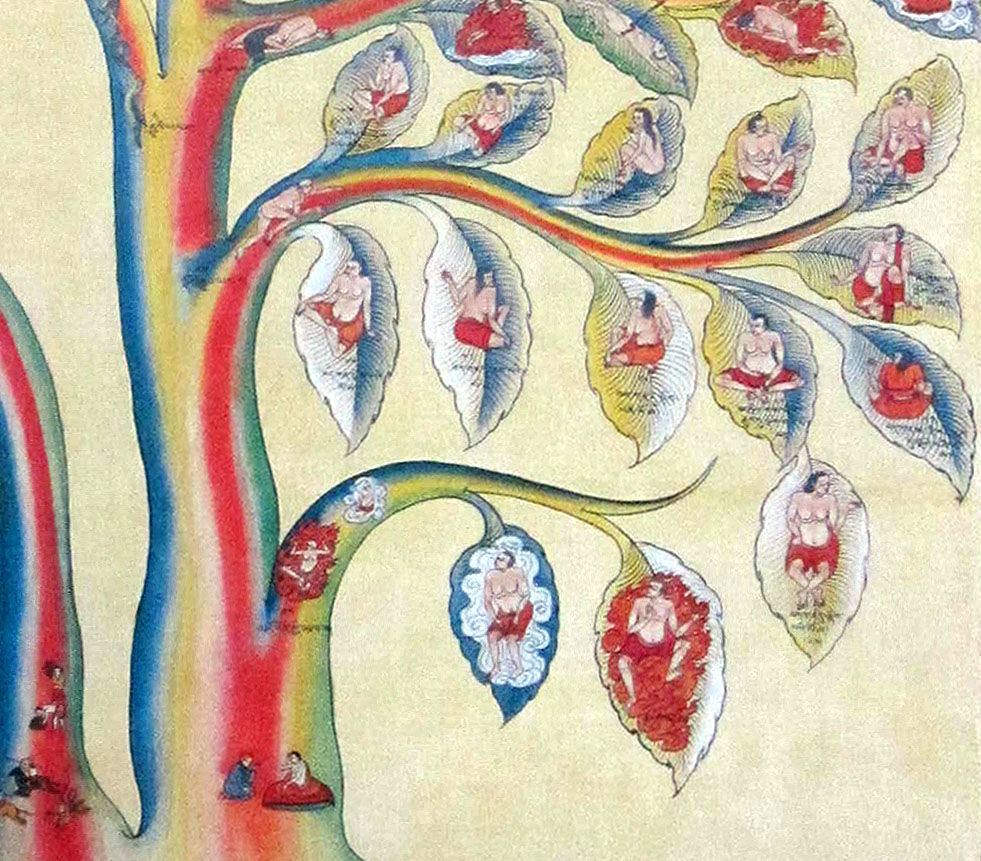
Detail from the tree of health and illness which shows the root, branches and leaves of both health and illness. Photo credit: Raven Cypress Wood
The First of the Nine Ways of Bön is The Way of the Shen of Prediction and contains methods of divination, astrology, healing rituals and medical diagnosis which deal directly with the concerns of this present, worldly life. As in all of the Nine Ways, the basis for all practice is compassion. Although the ultimate goal is enlightenment and complete release from the suffering and misery of cyclic existence, the perspective of The Way of the Shen of Prediction is upon the individual’s immediate circumstances during this very lifetime. Within the Yungdrung Bön tradition, the knowledge related to the divination, astrology, healing, and medical diagnosis is vast. In the words of the Buddha Lord Tönpa Shenrap Miwo:
“In general, there are 360 different kinds of divination. There are 360 kinds of astrological calculation. There are 360 kinds of ritual and 21,000 methods of diagnosis in order to avert the danger of death.”
Divination or mo, This is a method through which one can obtain guidance for worldly questions such as, “Will my new project be successful?” or “Will my travel be safe?” If the answer is negative, the text will either recommend a different course of action or suggest an antidote such as prayers or ritual that could change the projected course of events for the positive. It is common to ask a lama for a divination for any number of reasons such as success of new projects, buying or selling a home, traveling, health, or marriage.
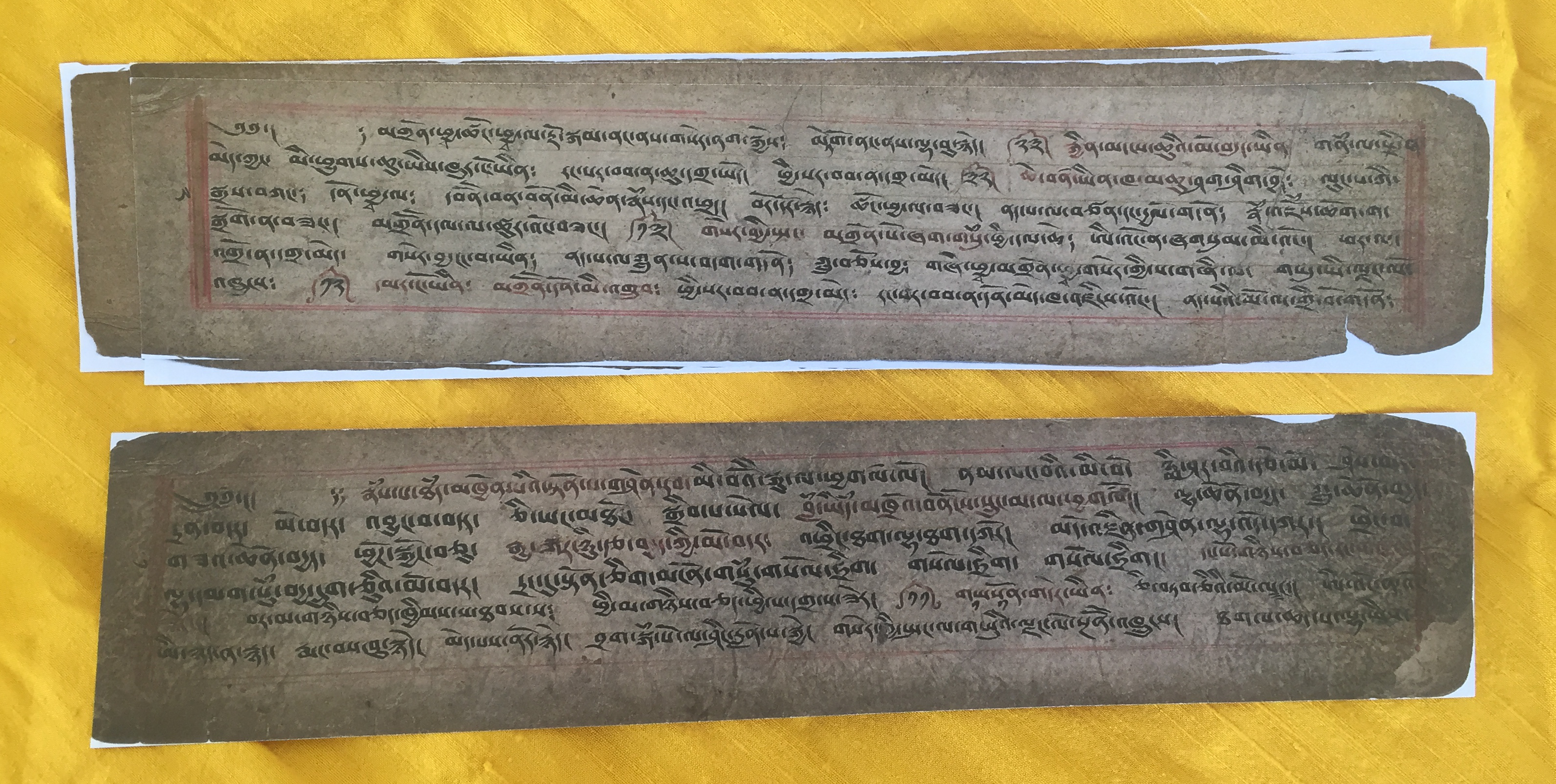
Copy of an old text detailing a method of divination taught directly by Lord Tönpa Shenrap. Photo credit: Raven Cypress Wood
There are four categories of divination within Yungdrung Bön tradition: 1) using a mala or die, 2) using the drala, or powerful protective spirits who are considered messengers of the gods, 3) dreams, and 4) reading signs and symbols. For each of these methods, it is necessary to receive instructions, transmission and empowerment. Then, a prescribed individual retreat is undertaken in order to receive the blessings and power of the respective deity associated with the divination.

Astrological deities and symbols of the Yungdrung Bön. Photo credit: Raven Cypress Wood
Astrology or tsi, is a method to determine the harmony or disharmony with the external forces of the universe as well as a calculation of the flow of time. For example, the Tibetan New Year begins somewhere between the beginning of February and the end of March. The exact date is determined astrologically. Each year is characterized by one of the five elements and by one of twelve animals which are alternatively male or female. The qualities of this element and animal combination are identified with every individual born within that year. Subsequently, it is possible to use astrology in order to calculate the probable effect of any given year upon an individual in relation to health, success, wealth etc. For example, someone born in the year of the Male Wood Rat (1984) would have their force of good luck ruled by the wood element. The year 2013 of the Western calendar was a Female Water Snake year and the year’s force of good luck is ruled by the water element. Because the wood element and the water element have a naturally positive relationship, the Male Wood Rat person is likely to have a very positive year related to their force of good luck. It takes sixty years in order to complete the cycle of twelve animals and five elements.
Astrological calculations are important in order to ascertain the most favorable date and time for important events such as religious festivals, marriages, travel, significant business dealings, healing rituals, funerals, etc. In this way, the events that take place can be in harmony with the natural energies of the universe and therefore amplify the positive outcome.

A Yungdrung Bön monk prepares for a longevity and life ransom ritual. Photo credit: Geshe Chapur Lhundrup Rinpoche.
Ritual or to, ritual methods used to prevent or stop harm coming from unseen, external forces. According to the texts, what we perceive as empty space is actually crowded with beings that are invisible to us. Because humanity damages and pollutes the external environment without consideration for these other beings, we cause harm and offense to these unseen spirits who then seek repayment or revenge. This can lead to sudden unexplained loss or illness that is resistant to medical cure.
Once divination or astrology has established that the source of the disturbance is one or more of these external unseen forces, a specific ritual is advised in order to restore health and harmony. Traditionally, a lama is asked to come to the home in order to perform the necessary ritual. The family hosts the lama and the assistants for the duration of the ritual. Some rituals are concluded in a single day. Others may can take many days to complete.
Medical Diagnosis or men, is a method of diagnosing the cause of a physical illness and prescribing a medicine to bring about a cure. The root of health is awareness and virtuous behavior, and the root of illness is ignorance and non-virtuous behavior. This idea is expounded at great length in the Yungdrung Bön medical texts. Health is the balance of the qualities of wind, bile and phlegm within the body. Illness is the weakness, damage or excess of any or all of these qualities. The hot or cold nature of the imbalance is also taken into consideration.
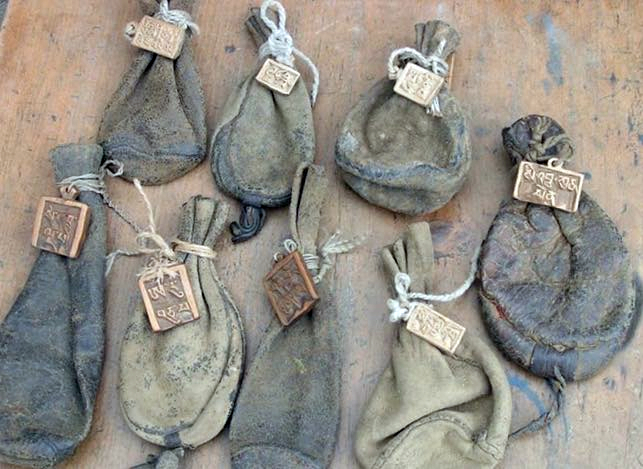
Old-style Tibetan medicine bags. Photo credit: Dr. Nyima Gurung.
When diagnosing the root cause of an illness, the doctor will use the three techniques for diagnosis: 1) seeing, 2) touching, and 3) questioning. These include observing the general demeanor of the patient, listening to the sound of their voice, studying the appearance and shape of their tongue, examining the qualities of their urine, and feeling the multiple pulses of both wrists. The doctor will also question the patient about their behavior, diet and the onset of symptoms.
When prescribing medicine, the Tibetan doctor gives herbal medicines that are to be taken at specific times of day. Medicine is most effective when taken at the time that the disease is most active or at the designated time of the affected organ. Additionally, the doctor will give advice for diet and behavior, sometimes prescribing that a patient be more generous and less greedy, or to spend more time with spiritual practice and less time with mindless distraction. Prevention of disease includes the discrimination of beneficial and harmful activities as well as an appropriate diet with a proper balance of rest and activity.
Raven Cypress Wood ©All Rights Reserved. No content, in part or in whole, is allowed to be used without direct permission from the author.
Don’t want to miss a post? Scroll to the bottom and click “Follow this blog.”


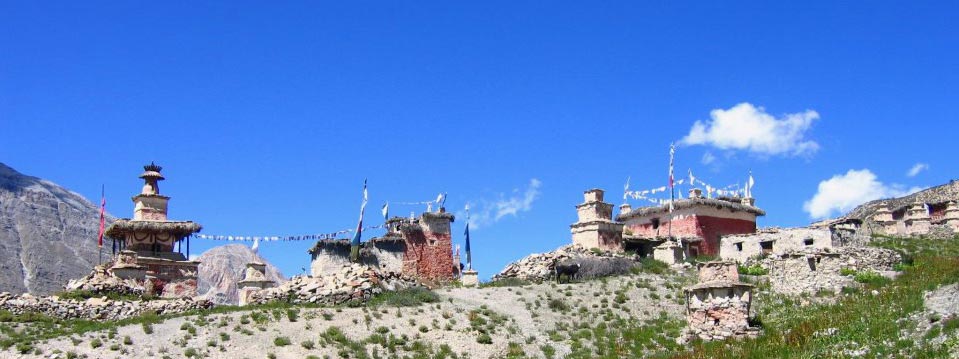

 Nine Ways