The Royal Tibetan New Year, known as Losar, is the 1st lunar day of the 1st lunar month. In 2026, this date coincides with February 18th on the Western calendar. This year, the worldwide New Year’s celebrations for Bönpos will be minimized in recognition of the parinirvana of His Eminence Yongdzin Tenzin Namdak Rinpoche in 2025. Religious prayers and rituals will be performed but the usual recreational celebrations, dances, and recreational gatherings will not held.
In the weeks leading up to Losar, both monasteries and households are busy with preparations such as deep cleaning, buying new clothes, and clearing old debts. During this time, it is customary to make many fried Tibetan treats known as khapsé that are used both for offerings to the deities and as festive snacks for the many New Year’s guests. These special treats have traditionally been reserved for special occasions and are a symbol of the Tibetan New Year. Dough is kneaded and then rolled to the desired thickness according to the type of khapsé being made which is most often long strips that look like simple braids but can also take the shape of elaborate flowers and knots. Sometimes food coloring is added to the dough to make it more colorful and festive. However, the first shapes that are made from the dough are not treats to be eaten, but are offerings for the god of the hearth. This scorpion-shaped being together with long twisted offerings and are placed on a clean place on the hearth in order to avert any accidents that might occur while cooking with the boiling hot oil for many hours. This offering remains in place until the full moon.

Although each region of Tibet makes their own unique style of khapsé, it is always a communal event because the amount of labor and many hours involved in producing the quantity of khapsé needed to ensure that there will be enough to distribute to family and friends during the first two weeks of New Year’s celebrations. The khapsé that are offered to the Losar shrine and to respected lamas in the monasteries and nunneries are shaped like a two-headed ladle and stacked one upon the other. This stack of ladle-shaped khapsé is called a derga. Some traditions place the khapsé so that the “ladle” is facing up and can be filled with candies and smaller, ornate khapsé. Other traditions believe that it is important to place the “ladle” facing down so that the good luck for the New Year does not escape. However, even these downward facing khapsé are decorated with candies before they are offered.

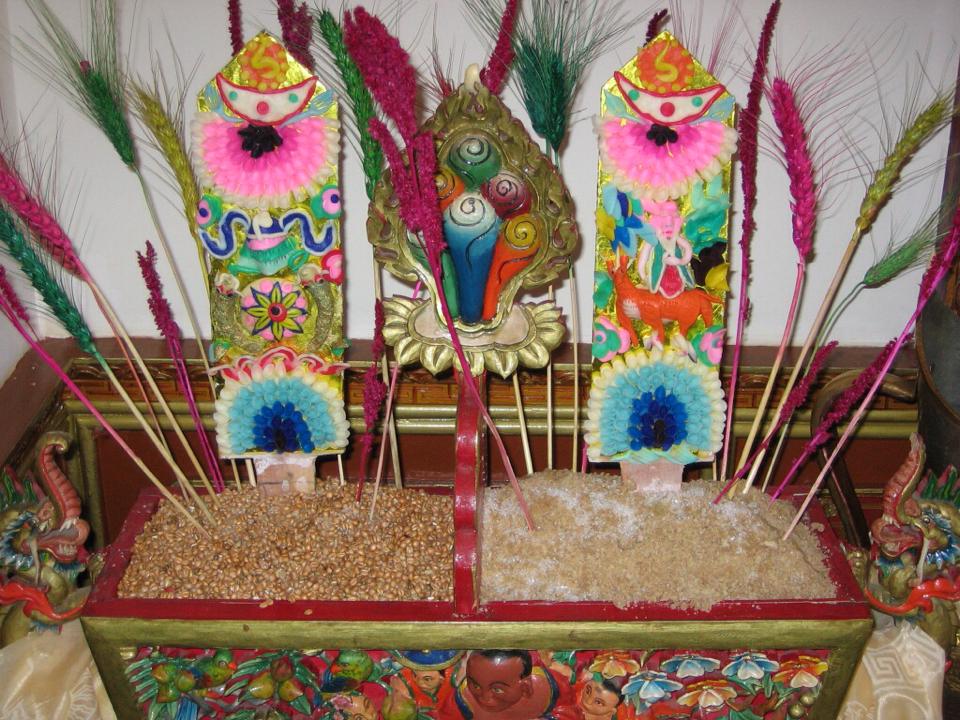
In addition to the khapsé, it is important to prepare a chemar bo, an ornate, wooden, container with two inner compartments. The left side is filled with wheat topped with salt, and the right side is filled with roasted barley flour, known as tsampa, topped with a few slices of butter. It is further decorated a tsédro, a piece of wood that is carved and or painted with the eight auspicious symbols. This is an important symbol or wealth, prosperity, and good luck for the coming year. Other items for the Losar shrine include young wheat grass that has been planted in small pots that symbolize good harvest. This is known as lo pü, the first harvest. A sheep’s head made of butter, dough, clay, or ceramic is another symbol of prosperity and good fortune, especially for communities that continue to rely upon sheep and goat herds for their livelihood. Additionally, there are offerings of beer, sweet rice, fresh water, blocks of black tea, plates of butter, nuts, dried fruit, fresh flowers, and so on.

In the monasteries and nunneries, Losar includes many end-of-year prayers and rituals including the sacred dances called cham. On the 25th lunar day of the 12th month, there is a test for the cham dancers and those chanting the melodies. On the 26th day, all of the offering torma are made. The extensive ritual of the wrathful yidam deity Phurba, known as the Tro Phur Gutor Chenmo, begins the ceremonial conclusion of the previous year. This ritual lasts for three days and includes many sacred dances as well as elaborate rituals for removing obstacles and negativity. This ritual begins on the 27th lunar day and concludes on the evening of the 29th lunar day with the removal of the main prayer flag from the courtyard. In 2026, these dates coincide with February 14th-February 16th. The main prayer flag for the New Year is raised on the 5th lunar day of the 1st month which is the celebration of Nyammé Sherap Gyaltsen Rinpoche, the founder of Menri Monastery and its first throne-holder. In 2026, this day coincides with February 22nd. During the time between removal of the old prayer flag and raising the new one, the rules of monastic discipline are slightly relaxed.
For householders, the 29th lunar day which is called nyi shu gu, is a time to clean their homes and clear their debts from the previous year. In 2026, this date coincides with February 16th. That evening, a dokpa ritual for sending away negativity is performed. The family shares a special stew of nine ingredients called gu tük. Although there can be regional variations, according to His Eminence Menri Pönlop Rinpoche, these nine ingredients are meat, wheat, barley, rice, cheese, corn, troma (a himalayan root vegetable), salt, and water. Cooked within the stew are balls of dough which contain items meant to be a playful divination that reveals the character of the family members who receive them in their bowl of stew. Alternatively, the name of these items can be written on a small piece of paper and placed inside the balls of dough. There can be variations of the specific items but in general they are:
- A ball with cotton inside that means the recipient will have good health all year.
- A ball with a dried chili inside means the recipient is sharp-tongued.
- A ball with a white stone inside means the recipient is good-hearted.
- A ball with a piece of charcoal inside means the recipient is black-hearted or has bad habits.
- A ball with a piece of paper inside means the recipient is always trying to sneak something for themselves.
- A ball with a piece of twisted string inside means the recipient has a strong and stable mind.
- A ball with a dried pea inside means the recipient is cunning.
- A ball with salt inside means that the recipient is a pleasant person.
- A ball with onion inside means that the recipient has an unpleasant smell.

Everyone saves a small amount of the last of their stew to be used as a ransom payment for the negative spirits of the previous year. This ritual payment settles any karmic debts that they might have with negative spirits so that they become satisfied and happy and have no reason to cause them harm. An effigy representing these spirits is made and must include each of the five senses. Along with the leftover stew, each person also makes a karmic debt torma known as a changbu. This is a small ball of roasted barley flour made into dough that has been rubbed over the body from head to toe in order to absorb all illness and negative energy. Then, the ball of dough is rolled into a thin strip the width of the hand and squeezed so that each of the fingers make an impression into the dough. Women make the impression with their left hands, and men use their right hands. This changbu is then placed with the other gifts around the effigy together with a piece of hair and a small string from the clothing of each family member. A small candle is placed in front of the effigy and then lit.
Before the effigy is carried out, a prayer is recited to formally present the gifts to the spirits and request that by accepting these gifts of ransom, they not cause any harm. The following prayer is from the dokpa ritual of the enlightened fierce deity Nampar Jompa.

“OM
Come here, all you spirits who have a commitment to the teachings of the Buddha! Come all gods, humans, and demi-gods, all spirits that cause harm or disease, all male and female demons. Without excluding anyone, all you spirits, come! Accept this ransom torma which repays my karmic debts. Do not cause harm to this family or community and don’t create any obstacles to our spiritual practice! Now, each of you happily return to your homes and listen to the noble teachings of the Buddha. SO OM BA DZRA TRO TA SUM TRI GHA TSA YA GHA TSA YA NÖ JÉ JUNG PO A MU KHA RA YA HUNG PÉ”
Once the prayer is complete, a family member takes the effigy, facing forward and held below the waist, and leaves it at a crossroads, or an energetically rough place in the negative direction of the outgoing year. When returning home, this person must not look back. When they arrive, they must be ritually cleansed with water before they enter the house. For 2025, the outgoing Year of the Wood Snake, the negative direction for making the dokpa ransom is North.
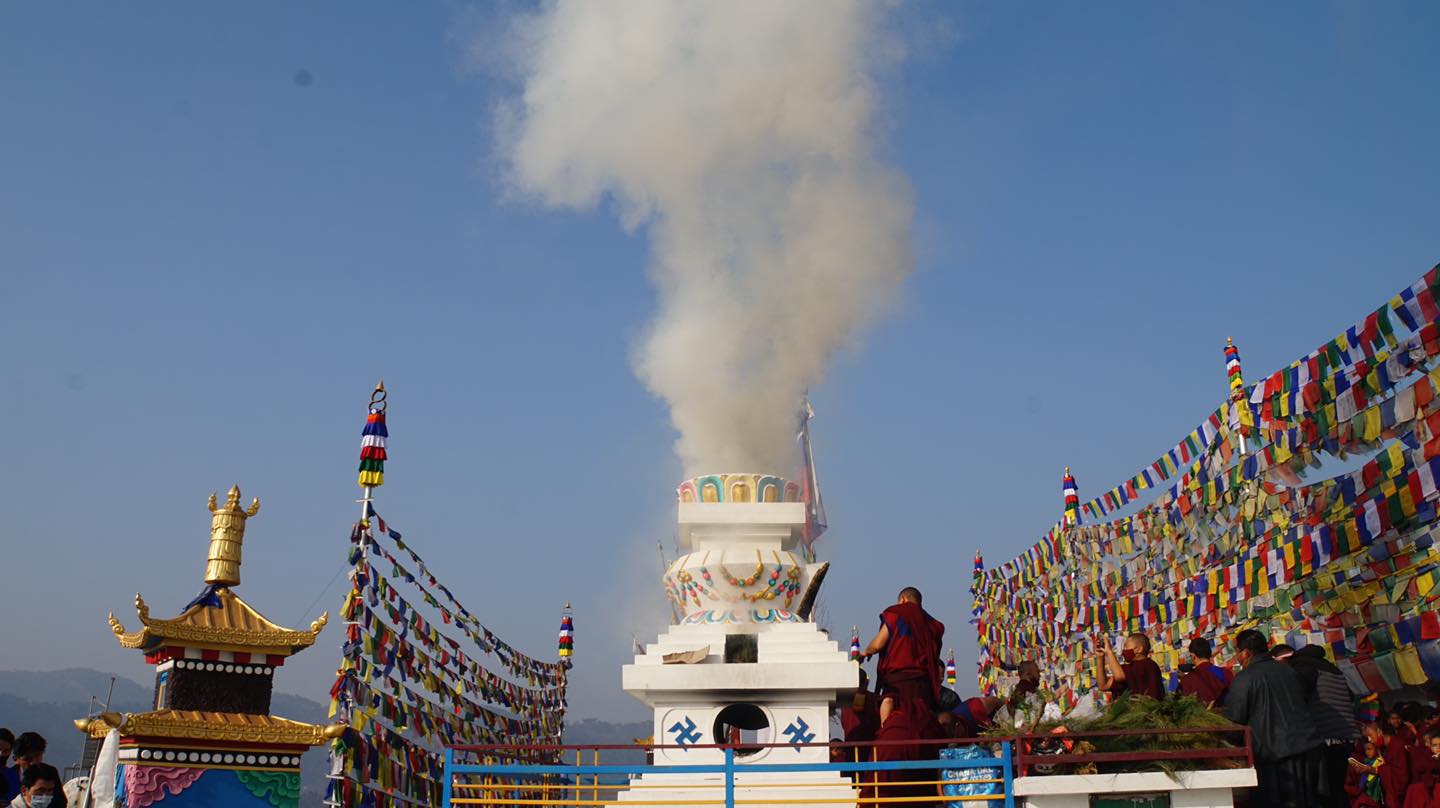
On the 30th lunar day, New Year’s Eve, homes are decorated, shrines are cleaned, and fresh offerings are placed on them. It is common for people to be awake most of the night completing preparations for the next day. One of the first prayers and rituals that are performed in the New Year is the early morning fumigation offering known as sang. (For more information about the sang ritual within the Yungdrung Bön religious tradition, see previous article: https://ravencypresswood.com/2021/11/19/new-book-release-sacred-smoke-the-ritual-practice-of-fumigation-and-offering-in-the-yungdrung-bon-religious-tradition/ )
The first spring water of the New Year is considered very auspicious, and it is common for people to go directly to the community well after midnight to try and be the first person to collect water and offer it on their shrine. On New Year’s Day, everyone stays at home or only leaves to go to the monastery in order to pray and make offerings. On the 2nd and 3rd days of the New Year, it is customary to spend time visiting friends and family in order to strengthen the positive energy and harmonious bonds for the coming year.
Raven Cypress Wood ©All Rights Reserved. No content, in part or in whole, is allowed to be used without direct permission from the author.
Did you enjoy this content? This article is made possible by generous donors who want content like this to continue to be available. Don’t want to miss a post? Scroll to the bottom and click “Follow this blog.”
Join the mandala of Nine Ways supporters by donating through one of the services listed below.

 Nine Ways