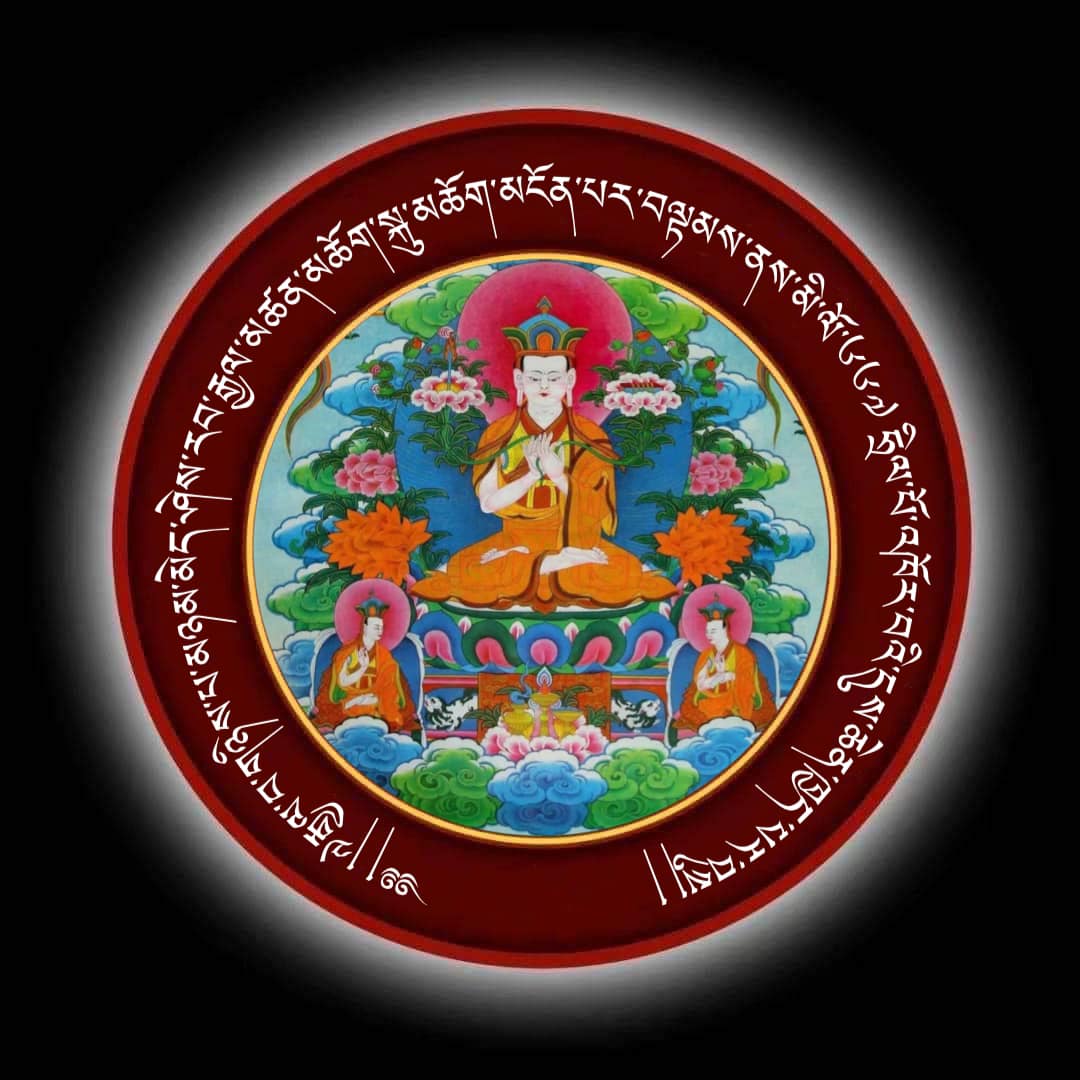
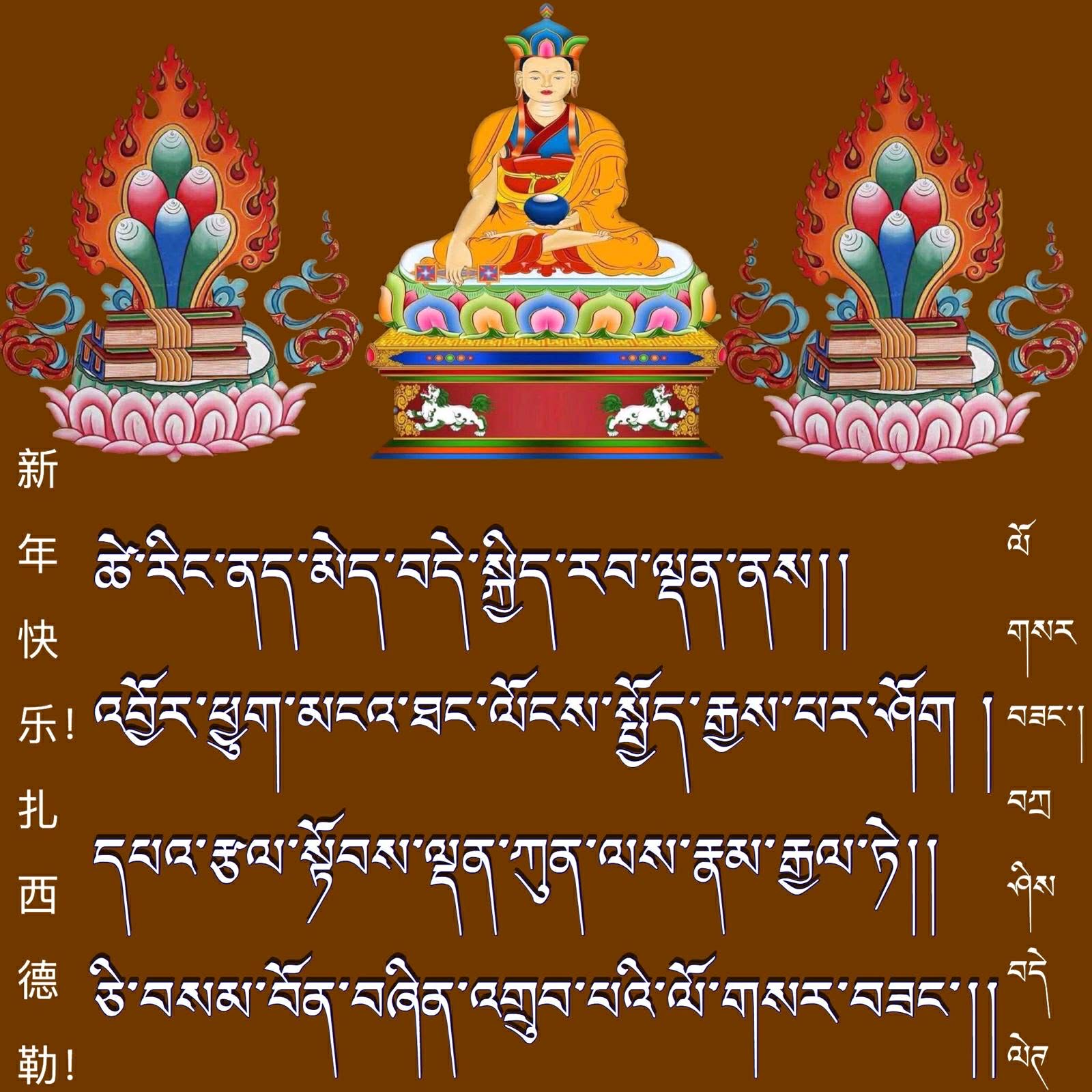
The 5th day of the 1st lunar month is the birth anniversary of the founder of Menri Monastery, the Mother monastery of Yungdrung Bön, Nyammé Sherap Gyaltsen Rinpoche. He is also known as The Second Buddha in the Yungdrung Bön religious tradition. In 2026, this lunar date coincides with February 22nd on the Western calendar.The unrivaled Nyammé Sherap Gyaltsen Rinpoché was a reincarnation of Yikyi Khye’u Chung, one of Buddha Tönpa Shenrap Miwoche’s sons. He reunited the three transmission lineages of sutra, tantra, and dzogchen that had become widely dispersed without any single person having the transmissions for all three lineages.
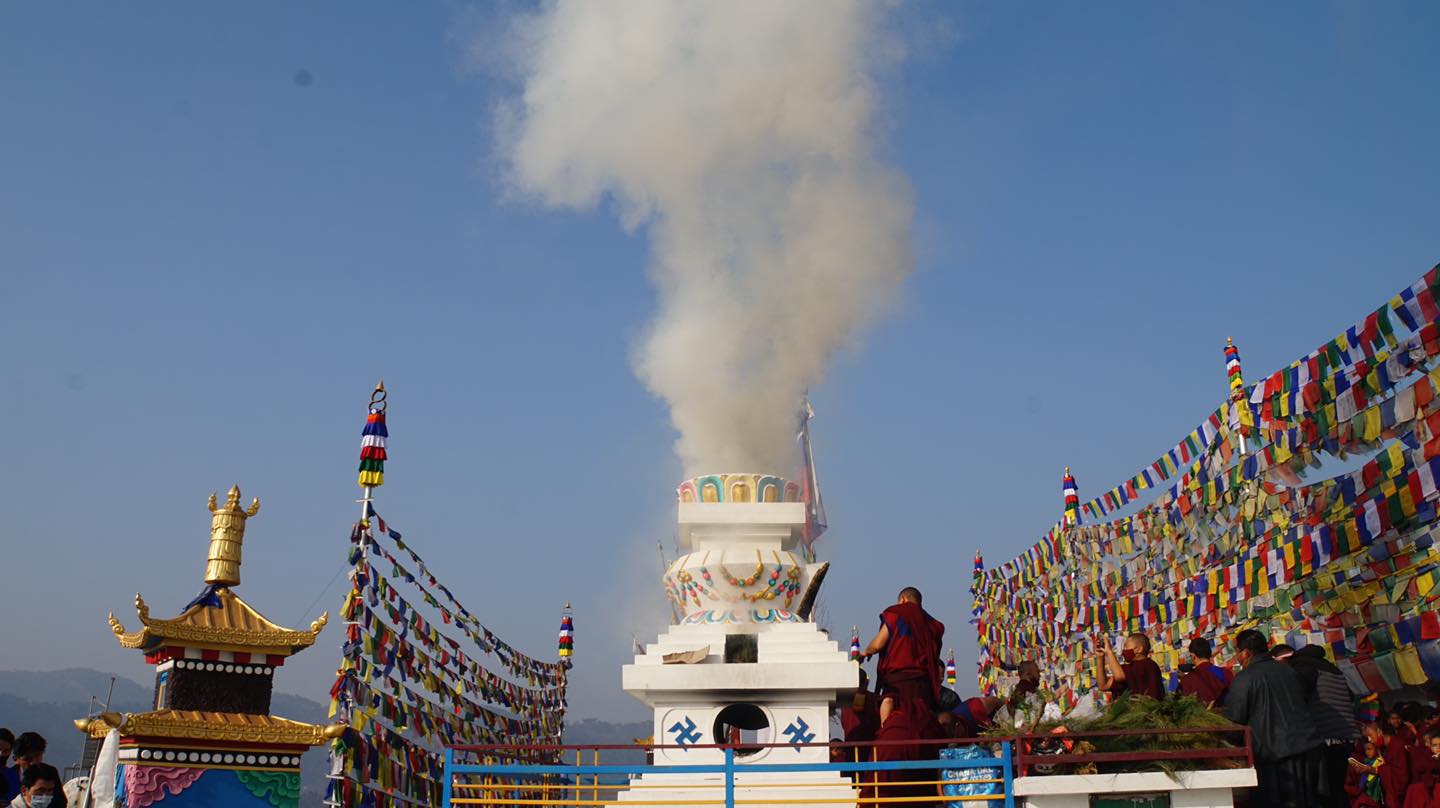
Each year on the 29th lunar day of the 12th month, the large, main prayer flag at Yungdrung Bön monasteries is taken down. From that time until the birth celebration of Nyammé Sherap Gyaltsen, the rules of monastic discipline are slightly relaxed. Then, early on the morning of the birth celebration, accompanied by a fumigation offering, a new prayer flag is raised whose color corresponds to the elemental color of the New Year. For the Year of the Fire Horse, the color of the flag will be red.
On this day, Bönpos will spend the day with their eyes looking skyward. If they are lucky enough to be visited by a vulture on this day, it is said to be an auspicious sign of having directly received the blessings of the one known as the Second Buddha, the Unequaled One, Nyammé Sherap Gyaltsen Rinpoché.
Cloak belonging to the precious lord Nyammé Sherap Gyaltsen Rinpoche. Photo credit: Unknown
Born in 1356 C.E. in the region of Gyalrong into the esteemed Dru lineage, as a child, he could recite mantra and read scripture without having studied. At the age of ten, he decided to become a monk. In 1387 C.E. at the age of 31, he entered the prestigious Yeru Wensaka monastery and eventually became its abbot. While he was traveling in Eastern Tibet, Yeru Wensaka was destroyed by flooding and mudslides. Upon returning, he searched the ruins of the monastery for any salvageable artifacts. With these precious objects, he established Tashi Menri Monastery on higher ground within the same valley. It was 1405 C.E. and he was 50 years old.
In 1415 C.E. at the age of 60, he left the container of his physical body. His body began levitating high into the air, but due to the fervent prayers of his disciples, it returned to the earth. During the cremation ceremony, rainbows appeared and a large bird circled three times around the cremation area before disappearing into the West.
Supplication to Nyammé Sherap Gyaltsen
“You are a king of great bliss and the embodiment of Künzang Gyalwa Düpa.
You are like the wisdom deity Mawé Sengé, never forgetting what you have perceived.
You are the unequaled crown ornament of the Bönpo world.
At the feet of Sherap Gyaltsen, I supplicate!”
The Writings of His Holiness Nyammé Sherap Gyaltsen Rinpoche*
Cycle of Supplication and Aspiration Prayers
Praise of the Four Supreme Places of Refuge
Offering and Praise to Mawé Sengé
Supplication Prayer to the Mawé Sengé Lineage
Praise of Venerable Essence of [the] Dru [Family Lineage]
Eight Characteristics of Tséwang’s Eight Sacred Places
Stages of Chanted Supplications
Eight-branched Aspiration Prayer, A Ladder to Freedom
Homage to the Charactristics of the Aural Transmission Shenraps
The Gift of the Physical Body
Condensed Peaceful Chö of Gifting the Body
Command for the Gods and Demons
Cycle of Fumigation and Fulfillment
Stages of Preliminary Practices for a Completely Pure Fumigation Offering
A Small Collection Regarding the Medicine Deity Generation Stage
Supplication and Requesting Consideration from the Marvelous Ones
Invocation of the Practice Lineage
Special Fulfillment
A Completely Pure River of Requesting Consideration and Supplication
Burnt Offerings of the Treasury of Precious Terma
General Fulfillment from a Bundle of Precious Terma
A Precious Mala of Fumigation Offerings
Fumigation Offering to the Powerful Ones
Fumigation Offering to Sigyal
Fumigation Offering to Black Mule Sigyal from the Precious Terma
Sigyal’s Manifested Realization
Sigyal’s Threadcross Practice
A Brief Paper on Sigyal’s Threadcross
A Brief Paper on Black Mule Sigyal’s Feast Offering
Short Fulfillment Practice of Black Mule Sigyal
Practice of the Black Net Threadcross
The Shining Lamp of Realization of the Red and Black Threadcross
Commandments for the Avowed Guardians of the Teachings
Important Points regarding the Fulfillment of Midü Jampa
Fumigation Offering to Midü
Offering and Fulfillment to Drak Tsen
Fumigation Offering to Drak Tsen
Invocation of Nyipangsé
Command for Nyipangsé
Command for the Queen of the Drala
Gyalpo Sheltrap Torma Offering and Fulfillment
A Brief Invocation of Sheltrap
Praise in Appreciation of the Fumigation Offering
Supplement to the Fumigation Offering
Generation Stage for the Fulfillment Torma
Celebration of Nyammé Sherap Gyaltsen Rinpoche. Photo credit: Unknown
Cycle of Supplementary Texts for the Practices of Accomplishment
Destroying the Doors to Negative Rebirths
Realization of the Completely Pure Lotus of the Vast Expanse
Mantric Accomplishment of Shenrap Nampar Gyalwa
Fire Offerings of Nampar Gyalwa
Realization of the Yungdrung Sutra of the Vast Expanse
Going for Refuge according to the Vast Expanse
Practice of Künzang’s Luminous AH
Stages of Meditative Stabilization
Text for Künzang’s Luminous AH
Stages of Realization for Walsé
Accomplishing the Essential Through the Realization of Walsé
Purification and Increase of Torma
Accomplishment of Sending Out and Gathering Back with Mantra Accumulation
Practice of the Secret Mantra Lineage
Realization of Black Garuda Walsé
Clarifying the Realization of Black Garuda Walsé
Expanding the Realization of the Amazing Trowo
Secret Quintessential Instructions for the General Practice of the Amazing Trowo
Invitation, Homage, and Confession of Wrongdoing for the Reversal Practice of the Great Red Trowo
Inviting the Wisdom Zema
Aspiration Prayer for Threadcross Practice
A Lamp that Clarifies the Meditative Focus of Secret, Greatly Wrathful Gekhö
Supplication to the Gekhö Lineage
Complete Supplication, A Rainshower of Blessings
Practice of the Secret Wrathful Lineage
The Irreversible Mantra of Gekhö, A Golden Razor
Supplement to Presenting Offerings to the Gekhö Deities
Realization of Walpur, Ornaments of Fire
Fulfillment of the Walpur Lineage
Outline for the Empowerment and Teachings of Walpur, A Rainshower of Blessings
Empowerment and Teachings of Walpur, A Rainshower of Blessings
Realization of Tséwang Tartuk
Accomplishment of Tséwang Tartuk
Fire Offerings to Tséwang
Introduction for Empowerments
Musical Notations for Festivals
Cycle of Science
Tikles and Channels of Relics and the Physical Body of Those Gone to Bliss
Clarification regarding the characteristics of colored powders, A Magical Mirror
Cycle of Authoritative Commentaries
Analyzing the Characteristics of The Magical Lamp Text
Analyzing the Characteristics of The Magical Lamp Autocommentary
Clarification of the Limits of All Knowable Things
Commentary Regarding the Sutric and Tantric Explanations of the Stages of the Vehicles
Text of the Grounds and the Paths
Autocommentary of Text of the grounds and the paths
A Clear Lamp for the Path of Liberation
Commentary Regarding the Clear Explanation of the Abridged Kham Gyé
Commentary Regarding the Two Truths in the Middle Way, A Magical Lamp
A Commentary of Clear Advice Regarding Monastic Discipline
Commentary of Condensed Discipline
Renewing Monastic Discipline
Commentary Regarding Cosmology
Clarifying Secret Points
Detailed Analysis of the Secret Vows
Hidden Commentary on the Mind of Enlightenment, Mandala of the Sun
* Although this list is extensive, it is not the complete list of compositions
Did you enjoy this content? This article is made possible by generous donors who want content like this to continue to be available. Don’t want to miss a post? Scroll to the bottom and click “Follow this blog.”
Join the mandala of Nine Ways supporters by donating through one of the services listed below.
May you live long, be free of illness, and have happiness and joy! May your wealth, power, and resources increase! May you possess bravery and strength, and be victorious over everything! May this new year bring you good fortune and every wish come true, just as you wish them to be!
Did you enjoy this content? This article is made possible by generous donors who want content like this to continue to be available. Don’t want to miss a post? Scroll to the bottom and click “Follow this blog.”
Join the mandala of Nine Ways supporters by donating through one of the services listed below.
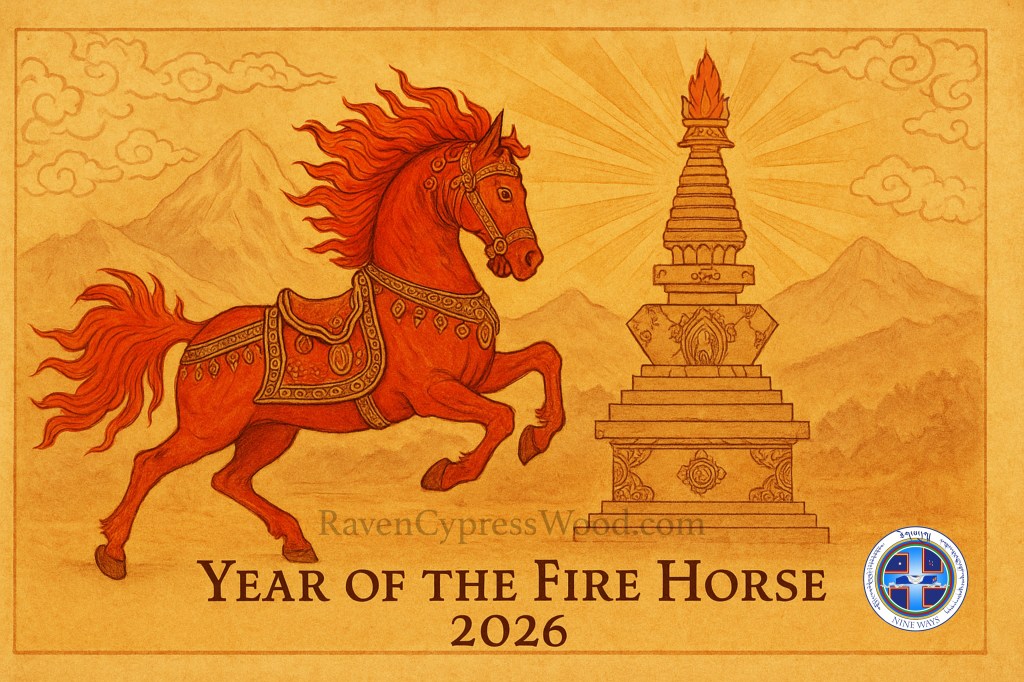
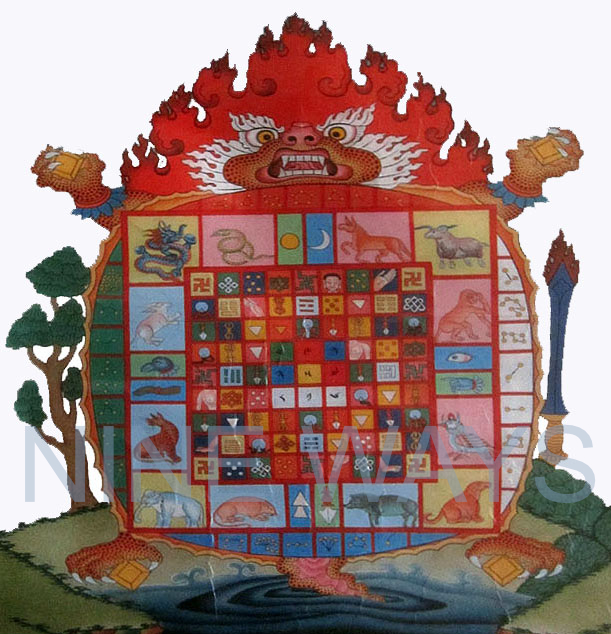
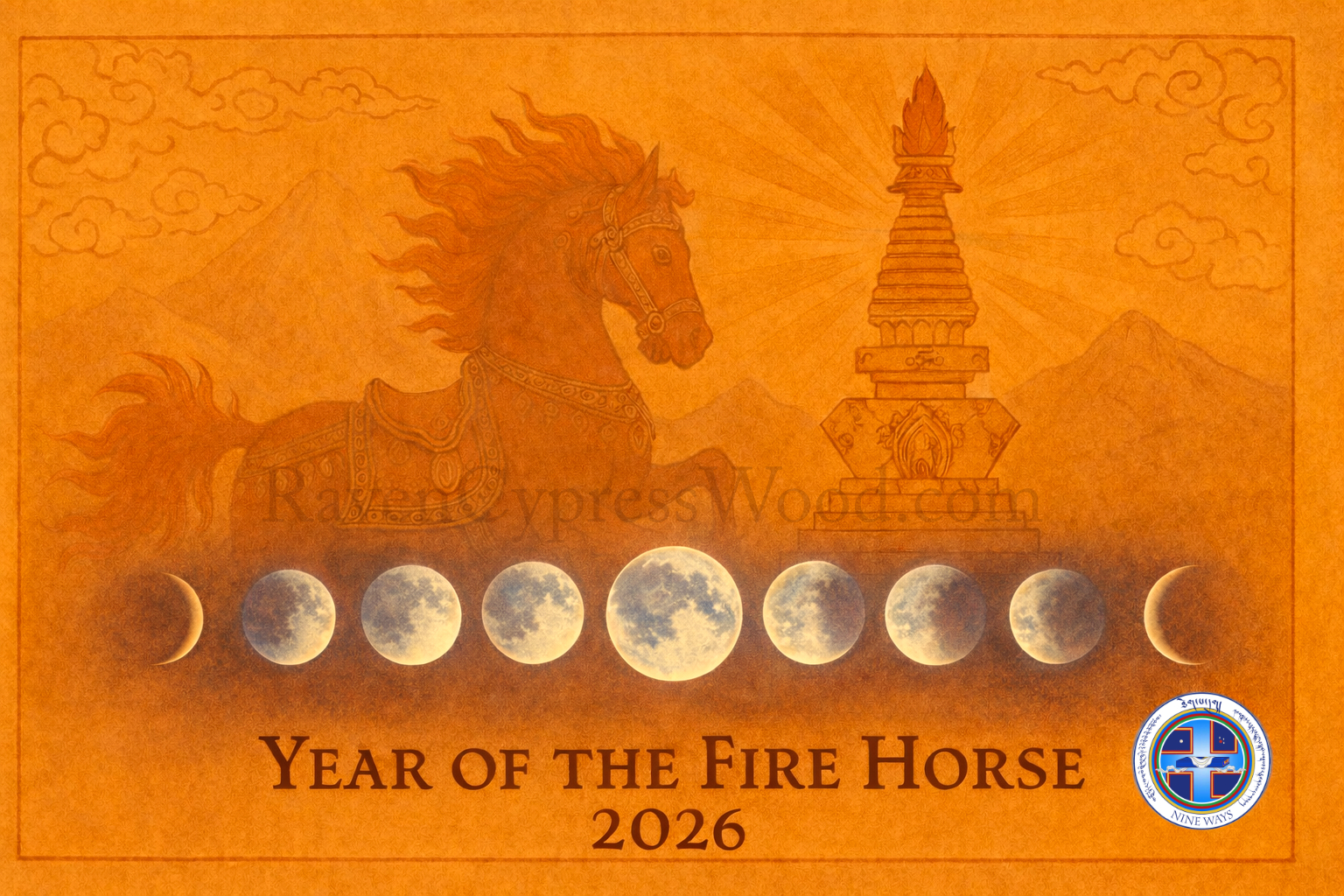
February 18, 2026 begins the Tibetan lunar year of the Male Fire Horse. In general according to Tibetan astrology, it is believed that this will be a year where the common people will be happier, have more influence over their own lives, and will act more from a motivation of virtue. Although there is a risk of drought because of less rainfall, there will be less illness and hunger overall. For those individuals born during this Year of the Fire Horse, their vitality will be governed by the element of FIRE, their physical health will be governed by the element of WATER, their charisma or personal power will be governed by the element of FIRE, their lungta, or element of good luck, will be governed by the element of METAL or SPACE, and their soul will be governed by the element of WOOD or WIND. Everyone has these same five natal energies governed by one of the five elements. Each year, these natal energies are in relation to the elemental energies of that specific year. There are five different possible kinds of relationships between the elements that are symbolically described as mother, son, friend, neutral, or enemy. The calculation of these relationships determines an overall potential for how the energetic forces of the year might be experienced by the individual.
For anyone born during a previous year of the Horse who thus has the natal sign of Horse, this year, as well as other Horse years, is considered a time of vulnerability to obstacles. This same astrological principle applies for each of the other eleven animal signs. Therefore, it is recommended to make an effort to engage more with virtuous activities of body, speech, and mind and to engage less with non-virtuous activities as a method to avert obstacles. According to the words of Buddha Tönpa Shenrap Miwoché, the practice of developing sincere unbiased and unlimited compassion is the greatest of all protections. Additionally, each year specific prayers and rituals are suggested in accordance with specific obstacles that have a potential to arise.
Natal Animal Signs and Recommendations to Avert Obstacles
During the year of the Fire Horse of 2026, the following natal signs have varying possibilities for obstacles during the year. They are listed below from most likely to least likely. In order to avert obstacles and challenges, the astrological text gives corresponding recommendations. Often it is recommended to avoid certain activities or environments, and to engage in activities that avert the risk and/or strengthen qualities that might be challenged or weakened. These prayers and rituals can be performed by the individual practitioner or they can be sponsored to be performed by another qualified practitioner such as by monks or nuns. For this reason, the names of the specific prayers and rituals in Tibetan are included below to make it easier for Western practitioners to make these requests. Anyone needing help in making arrangements with the nuns at Radna Menling can contact Raven Cypress Wood at RCW@Gmail.com. It is also possible to sponsor prayers and rituals with monks at either Menri Monastery or Triten Norbutse. H.E. Menri Pönlop Rinpoche’s center in the United States, Khyungdzong Wödsel Ling is assisting with this in collaboration with the monks at Menri Monastery.
What Natal Tibetan Astrological Animal Sign are You?
Because the date of the Tibetan New Year is calculated according to a lunar calendar, the date changes each year. Additionally, this date is vastly different from the Western New Year that is based upon a solar calendar. Therefore, one must know the date of Losar during the birth year in order to ascertain the natal sign. For the aid of the reader, Nine Ways is providing a link to a Tibetan Calendar Converter. Simply type the birth year into the search box at the top and click “Make Calendar.” This will render a Tibetan lunar calendar for that year. If you were born before the beginning date of the rendered calendar, type in the previous year and scroll to the bottom. This is applicable especially to those born in January and February. Calendar link: https://www.lotsawahouse.org/Static/tools/phugpa.html
For those natal animal signs that are under the influence of adverse indications for the Year of the Fire Horse, the Yungdrung Bön religious tradition is rich in methods to reverse, neutralize, or balance these conditions and to strengthen positive conditions. Some natal signs are given multiple suggestions to avert obstacles, but it is not necessary to complete each activity. These suggested prayers and rituals can be performed by the practitioner, another qualified practitioner or lama, or by a renunciate group of monks or nuns.
For those with the natal sign of Horse born after the Tibetan New Year of 1930, 1942, 1954, 1966, 1978, 1990, 2002, or 2014, it is important to avoid sick people and also to not to begin new construction on homes or other construction projects that are for personal use. However, if it must be done or if one has to be near those who are ill, it is important to perform prayers and rituals to avert obstacles. Performing a longevity practice, receiving a longevity empowerment, or reciting a longevity mantra is strongly recommended in order to support the lifespan and the vitality. Recommended prayers and rituals to avert obstacles: (It is not necessary to do every recommendation.)
Recitation of the Kham Chen Dönpa. The Kham Chen is the Perfection of Wisdom, or [Sanskrit: Prajnaparamita] scriptures in the Yungdrung Bön. These scriptures are comprised of sixteen volumes. The source and embodiment of the scriptures is the female Buddha Sherap Lopelma, an emanation of Sherap Jamma. She has given us The Heartdrop of Jamma and stated that reciting this short text with faith and devotion is the same as reciting the entire Ka section of the Yungdrung Bön canon which is the collection of the teachings given by the buddhas and is comprised by hundreds of volumes. The English, Spanish, and French language translations are available here: https://www.lulu.com/search?sortBy=RELEVANCE&page=1&q=raven+cypress+wood&pageSize=10&adult_audience_rating=00
བརྒྱ་བཞི།
Four Hundred Offerings, Gya Zhi. This is a ritual that includes an offering of one hundred butter lamps, one hundred tsa tsa, one hundred food offering torma, and one hundred ransom effigies. It can be performed by the individual or sponsored.
Hundred Thousand Recitations, Bum Dönpa. There are a number of scriptures included in this category. This recitation can be performed by the individual or sponsored.
ལྡོག་གཟུངས།
Reversing Mantras, Dok Zung. This is a text filled with mantras that have the power to reverse or repel obstacles and negative energies. It can be performed by the individual or sponsored.
གེགས་ལྡོག
Reversing Obstacles, Gek Dok. This ritual is specifically for reversing or repelling obstacles. This recitation can be performed by the individual or sponsored.
དགེ་སློང་བཞི་སྡེ་ལ་དྲོ་དྲངས་བ།
Offering Four Renunciates a Meal, Gé Long Zhidé la Dro Drangwa. Here, a meal is provided for four monks or nuns as a way to remove obstacles.
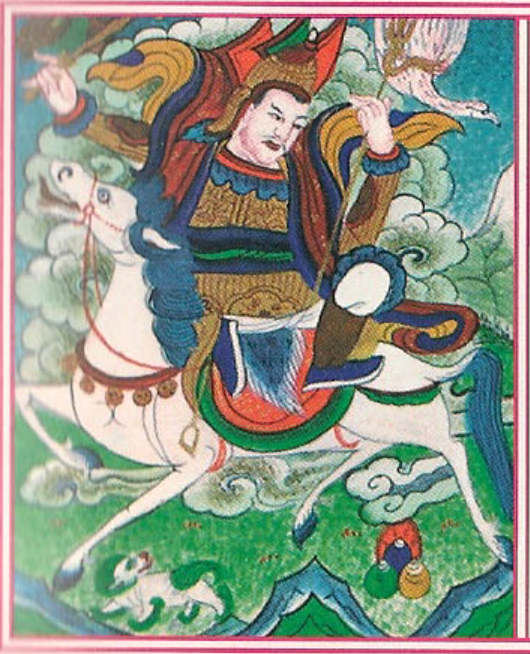
For those with the natal sign of Rat born after the Tibetan New Year in 1936, 1948, 1960, 1972, 1984, 1996, 2008, and 2020: these people have less of a chance for a significant obstacle than those with a Horse sign, but it is still significant. Therefore, it is recommended to avoid legal issues if possible, to engage in practices to raise the lungta such as raising prayer flags, and to invoke their personal protectors known as Drala. Dra La translates as warrior or guardian deity for the enemy or opponent. They are an ancient class of powerful guardians. Each individual has their own personal drala that protects them. It is also very effective and beneficial to repair or construct roads or trails especially between a community and a temple or hermitage. For example, the nuns of Radna Menling are now raising funds to repair and fortify the road to their nunnery. Supporting this endeavor is a way to avert obstacles. (This is a link to the GOFUNDME page created by Sandrine Perkins to support the road construction for the nuns: https://www.gofundme.com/f/road-from-menri-monastery-to-ratna-menling-nunnery) Recommended prayers and rituals to avert obstacles:
མདོ་མང།
Many Sutras Recitation, Do Mang. This is recitation of a text that is a compilation of supplications, invocations, Praises, and Aspirational Prayers. Recitation of this text can be done by the individual or sponsored.
སྒྲ་བླ་གསོལ་བ།
Supplication of the Drala, Drala Solwa. See above paragraph for description. Recitation of this text can be done by the individual or sponsored.
རྒྱལ་མཚན་རྩེ་མོ།
Raising a Victory Banner on the Summit, Gyaltsen Tsémo. In general, this is a ritual for raising the lungta, or force of good luck. It includes raising prayer flags and/or invoking the deities of good luck and prosperity. For more about the energetic force of lungta, see previous article: https://ravencypresswood.com/2022/04/16/what-is-lungta/. Recitation of this text can be done by the individual or sponsored.
Constructing or Repairing Roads, Lam Chö. See above paragraph for description and opportunity to engage in this practice.
སྲོག་བསླུ་ཚེ་ཐར།
Life Force Ransom and Rescuing Life, Sok Lu Tsé Thar. This is a ransom offering and rescue of animals that are destined to be slaughtered. These animals are given consecrations and empowerments and marked so that it is known that they are forever not to be harmed or killed. When animals are released, they should be released in a supportive environment and in conditions that provide for their needs. Saving the life of a human being who has been sentenced to death is the greatest tsé thar. For more about the Tsé Thar ritual, see previous article: https://ravencypresswood.com/2020/04/15/how-to-restore-the-lifespan-by-saving-the-life-of-other-beings/
Depiction of the Dra la
For those with the natal sign of Tiger or Dog born after the Tibetan New Year in 1938, 1950, 1974, 1986, 1998, 2010, and 2022 (For Tiger) and 1934, 1946, 1958,1970, 1982, 1994, 2006, and 2018 (For Dog): They have a lesser chance of encountering a significant obstacle than Rat signs, but it is recommended to make offerings to accumulate merit, especially through the Gya Zhi, The Four Hundred Offerings. In this ritual ceremony a total of four hundred offerings are made: one hundred butter lamps, one hundred food offering torma, one hundred tsa tsa, and one hundred ransom effigies. It is also recommend to invoke one’s drala as described above. Recommended prayers and rituals to avert obstacles:
བརྒྱ་བཞི།
Four Hundred Offerings, Gya Zhi. This is a ritual that includes an offering of one hundred butter lamps, one hundred tsa tsa, one hundred food offering torma, and one hundred ransom effigies in order to accumulate merit.
སྒྲ་བླ་གསོལ་བ།
Supplication of the Drala, Drala Solwa. See above for description. Recitation of this text can be done by the individual or sponsored.
For those with the natal sign of Garuda or Rabbit born after the Tibetan New year in 1933, 1945, 1957, 1969, 1981, 1993, 2005, or 2017 (for Garuda) or 1927, 1939, 1951, 1963, 1975, 1987, 1999, 2011, or 2023 (for Rabbit): it is recommended to avoid starting a personal business, to limit long distance travel, to recite the Medicine Buddha mantra or sutra, and to not take risks with one’s health. It is also recommended to perform or sponsor a Tsé Thar, Life Release. Recommended prayers and rituals to avert obstacles:
སྲོག་བསླུ་ཚེ་ཐར།
Life Force Ransom and Releasing the Life, Sok Lu Tsé Thar. See above for description. This can be done by the individual or sponsored.
སྨེན་ལྷའི་འདོན་པ།
Menla Dönpa, Medicine Buddha recitation of sutra or mantra. This can be done by the individual.
Life Force Ransom and Releasing the Life, Sok Lu Tsé Thar.
For males with the natal sign of Dog (years are above) and females with the natal sign of Dragon born after the New Year in1928, 1940, 1952, 1988, 1964, 1976, 1988, 2000, 2012, or 2024: During this year, the “sky door is open towards them.” Thus, if they are having construction done on their home, the roof should not be put on this year. This will block the sky door and can create obstacles. Recommended prayers and rituals to avert obstacles:
གནམ་མཁའི་སྙིང་པོ།་
Essence of the Sky, Namké Nyingpo. Recitation of this text can be done by the individual or sponsored.
གནམ་སྒོ་གཅོད་པ།
Destroying the Sky Door, Nam Go Chöpa. Recitation of this text can be done by the individual or sponsored.
For males with the natal sign of Pig and females with the natal sign of Snake: During this year, the “earth door is open towards them.”Thus, it is recommended to not dig into the earth such as for construction and to recite or sponsor the recitation of the Sa’i Nyingpo, Essence of the Earth or Destroying the Earth Door.
ས་ཡི་སྙིང་པོ།
Essence of the Earth, Sayi Nyingpo. Recitation of this text can be done by the individual or sponsored.
ས་སྒོ་གཅོད་པ།
Destroying the Earth Door, Sa Go Chöpa. Recitation of this text can be done by the individual or sponsored.
Gu Mik, Nine Eyes: According to Tibetan astrology, there is also a calculation known as Gu Mik, Nine Eyes. This applies to anyone whose age is a multiple of nine during the Year of the Fire Horse, i.e. in 2026, anyone aged nine, eighteen, twenty-seven, and so on. For these ages, it is recommended to perform the Gu Mik Choka, The Nine Eyes Correcting Ritual. However, it is very important to note that when someone is born, Tibetan Astrology considers them to be one year old and at their subsequent birthday, they are two years old. According to Western calculation, they are only one year old at their subsequent birthday. Therefore, from a Western calculation, these individuals are one year younger. For accuracy, it is important to always confirm the animal sign rather than the listed age when referencing astrological texts or information. This calculation has been done for 2026 and is given below.
Born After Losar in:
Natal Sign
Tibetan Age in 2026
Western Age in 2026
2018
ཁྱི། Dog
9
8
2009
གླང་། Ox/Elephant
18
17
2000
འབྲུག Dragon
27
26
1991
ལུག། Sheep
36
35
1982
ཁྱི། Dog
45
44
1973
གླང་། Ox/Elephant
54
53
1964
འབྲུག Dragon
63
62
1955
ལུག། Sheep
72
71
1946
ཁྱི། Dog
81
80
1937
གླང་། Ox/Elephant
90
89
1928
འབྲུག Dragon
99
98
Those born after Tibetan New year in 2018, 2010, 2002, 1994, 1986, 1978, 1970, 1962, 1954, 1946, 1938, and 1930, and before the following Tibetan New year; it is important to avoid funerals and especially keep a distance from dead bodies, to limit construction of personal projects, and to keep the place in the home where food is cooked clean and free of defilements during the year of the Fire Horse. If these things do happen, it is important to cleanse by means of cleansing rituals using water. For example, the practice of Nampar Jompa is commonly used to empower water that is then used for cleansing contamination in these kinds of situations.
For any other natal signs, it is generally considered either a good or neutral year although looking in detail at each of the five natal, elemental relationships mentioned above will provide more detailed information.
Qualities of the Horse as a Natal Astrological Birth Sign
In general, the Horse is very energetic with an active mind. It is inspired, motivated and charming. It wants adventure and exploration rather than to stay at home. It is always on the move and in excess this can become a kind of instability or an inability to stick with things long enough to complete them. This life of excitement can sometimes give way to impatience. The Horse can be quite charming, likes to talk, and therefore finds it difficult to keep secrets. Although it appears independent, because of the fear of failure the Horse relies upon the validation and support of friends and family.
The Horse’s positive direction is South. The Horse’s soul day is Tuesday and the life-force day is Friday. These are the best days for beginning new projects and activities that are meant to grow and increase. The obstacle day is Wednesday. This day is best for cleansing and letting things go. It is not a favorable day for beginning new things.
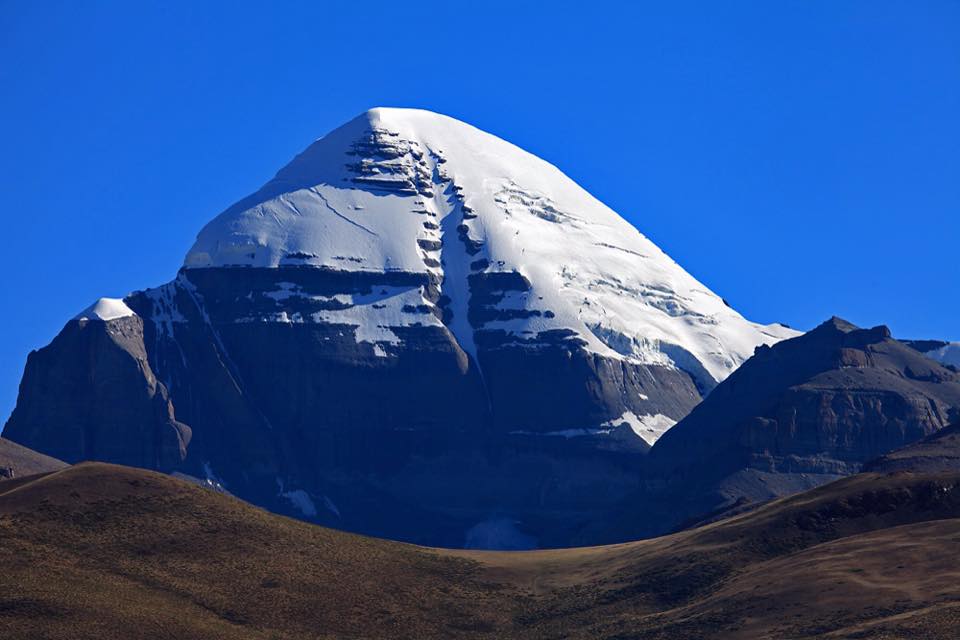
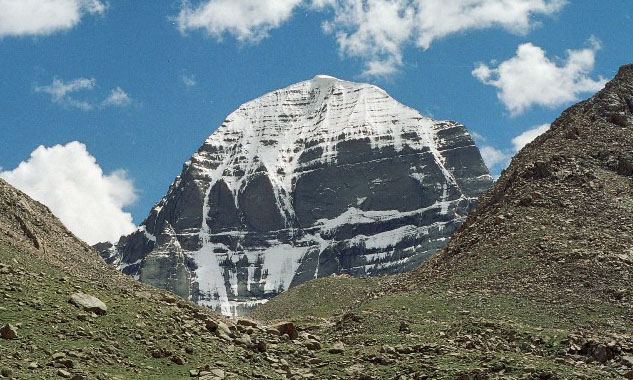
The Southern face of Mount Tisé
Gangkar Tisé
Every sacred site has its own special year when pilgrimage to it is considered especially auspicious. Horse years are especially auspicious times for pilgrimage to the sacred sites of Mount Tisé and Kongpo Bönri.
Although Mount Tisé, or Gang Tisé, is commonly known as Mt. Kailash, it was given the name of Gangkar Tisé by Buddha Tönpa Shenrap himself. In ancient times it was known as Gang Nyen Yabak Shara in reference to a mountain god that resided there. During his time at the mountain teachings and performing miracles, Buddha Tönpa Shenrap renamed it Gangkar Tisé. Gangkar meaning white snow, Ti meaning water, and Sé meaning protector.
Mount Tisé is located in the western part of the Tibetan Plateau. It rises to an altitude of 21,778 feet and is the source of four rivers: the Indus, the Sutlej, the Brahmaputra, and the Ghaghara. Nearby is the sacred Lake Manasarovar and the texts speak of their interwoven relationship.
In 1844 C.E., the Yungdrung Bön sage Karu Drupwang Tenzin Rinchen Gyaltsen, also known simply as Karu Drupwang Rinpoche, wrote a pilgrimage guide to Mount Tisé entitled, An Index of Gang Tisé. This pilgrimage guidebook has become the definitive guide to this sacred mountain and the surrounding area. In H.E. Yongdzin Rinpoche’s pilgrimage guide to Tisé, he frequently quotes from Karu Drupwang Rinpoche’s guidebook. In it, Karu Rinpoche gives detailed descriptions of the mountain’s attributes and the deities and protectors that gather and abide there.
“Especially from the depths of its body, a single, white syllable AH radiates light into the sky which dissolves into this sacred place, blessing it. Therefore, this place is indistinguishable from the enlightened body Künzang. The four corners are like heaps of jewels, and is where all rikdzin and khandro gather on auspicious days to turn the wheel of tsok offerings that increase attainments, clear obstacles, and bestow both the supreme and common accomplishments.”
“Moreover, there are thirteen hidden secret caves, thirteen divine bathing pools, thirteen chortens of sacred relics, and thirteen unchanging landmarks. There are three sites of enlightened body, speech, and mind, three sites of the three protectors, and four manifestations of wisdom and miracles.”
Buddha Tönpa Shenrap traveled to this mountain on his way to Tibet in order to introduce the Yungdrung Bön teachings to the Tibetan population under the guise of retrieving his stolen horses from a group of demons that were trying to provoke him. During his time at Mount Tisé, he was joined by five hundred sempa [Sanskrit: bodhisattvas] and divine, human, and lu [Sankrit: naga] disciples. At the mouth of each of the four rivers that originate here, he taught a specific scripture and left the print of his divine feet in the rocks.
The Northern face of Mount Tisé
Throughout history countless yogis and yoginis such as Tonggyung Tuchen, Lishu Taring, Choza Bönmo, Drenpa Namkha, and Tséwang Rikdzin, to name only a few, practiced and performed miracles here. The warmth and energy of their blessings remain and can be felt. The mountain has many cave, bathing pools, self-appearing syllables, and countless miraculous signs. As for the benefits of this great sacred site, Karu Rinpoche writes this:
“Regarding the benefits of this great mountain, if elaborated, it would be beyond comprehension. But if a few essential points are summarized, this great mountain of snow is known as The Mountain of Enlightenment. It is said that if one takes a step here, even if one tries to go to the lower realms after dying, one will not be able to. If one meditates, practices, circumambulates, frees lives, performs rituals, accumulates merit, gives generously, raises prayer flags, builds stone mounds, or performs any good deeds whether large, medium, or small, all are multiplied by eighteen billion. On auspicious days, this number is even greater. In particular, during the Year of the Horse, the multiplication is beyond imagining.”
Kongpo Bonri
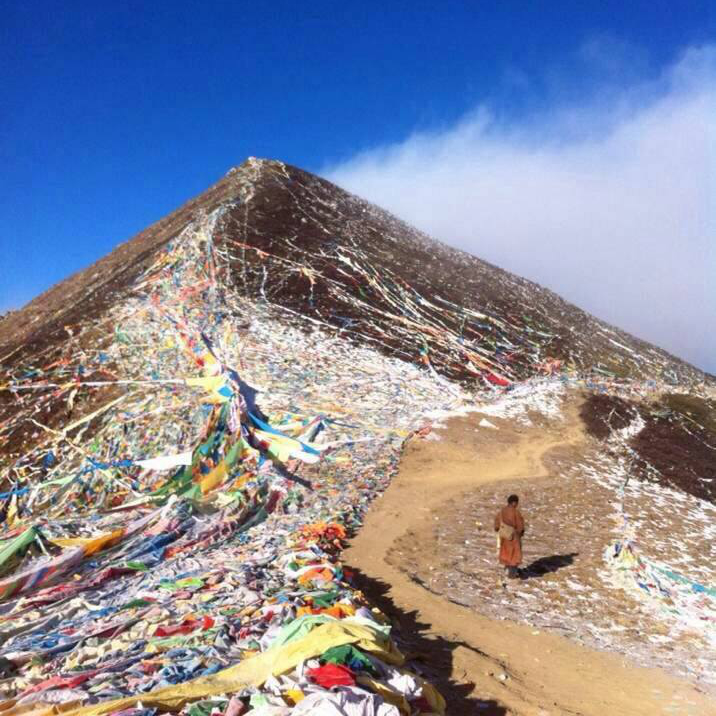
There is one sacred mountain in Tibet that both Buddhists and Bönpo circumambulate counter-clockwise, the Bön way. That mountain is Kongpo Bönri, the Bön Mountain. Located in Southeastern Tibet on the Northern bank of the Yarlung River, Bönri rises to over 14,700 feet in altitude. In general, it is heavily forested and circumambulation of the mountain takes three to seven days. Tourists generally begin their pilgrimage from the Eastern slope.
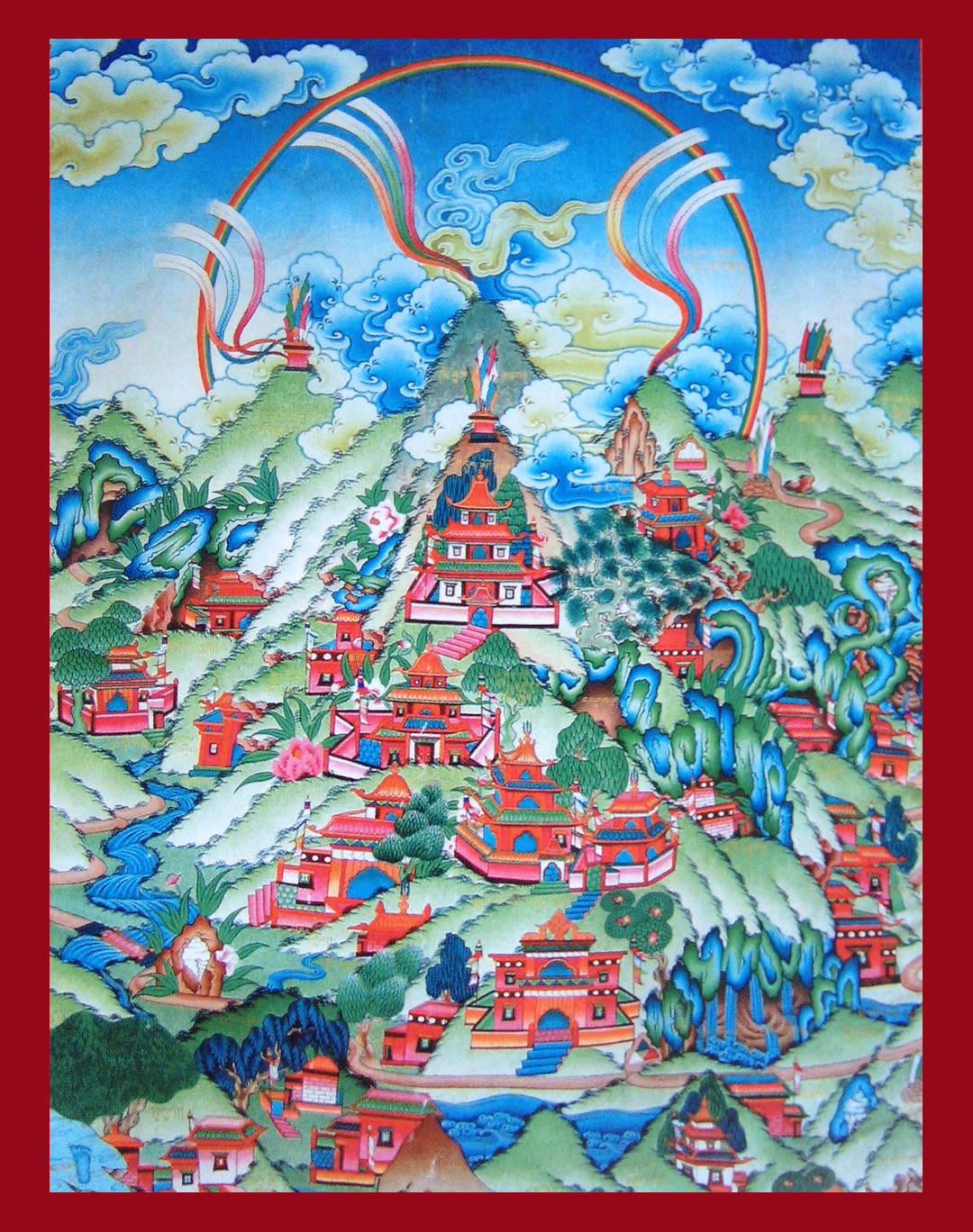
The demon Khyappa having stolen seven of Buddha Tönpa Shenrap’s horses, took them to the Kongpo valley in Southeastern Tibet and hid them beneath the castle of the king of Kongpo. Seeing this as an opportunity to introduce the Yungdrung Bön teachings into Tibet, Tönpa Shenrap followed him. Reaching the Kongpo valley, the demon tried to block the Buddha’s approach with a mountain. Pushing this demon mountain down with the power of his mind, Lord Tönpa Shenrap manifested another mountain in its place in the shape of a spearhead that would be for the benefit of his followers. This was Kongpo Bönri.
Kongpo Bönri, the sacred Bön Mountain
As time passed, visits and pilgrimages to this sacred site became quite rare. However, in the Iron Horse year of 1330 C.E., Togden Ripa Druksé, at the age of 41, opened a sacred door to Bönri. He had been prophesied as an emanation of Takla Mebar that would have such realization that whoever touched his lotus feet would attain liberation within three lifetimes. He spent many years at Bönri practicing and performing miracles. Since that time during Horse Years, the Great Horse Pilgrimage takes place. This is a pilgrimage to Bönri from the faithful around the world regardless of their religious affiliation.
The famed Tulku Loden Nyingpo, born in 1360 C.E., visited Kongpo Bönri and wrote five songs praising the wonderful qualities of the sacred mountain and the incredible events that took place there. However, it was the Tertön Sangye Lingpa, born in 1705 C.E., that wrote the much cited pilgrimage guide entitled A Mala of Wish-Fulfilling Trees, A Guide to Bönri. It is said that whoever encounters the great sacred mountain of Bonri which embodies the mind of enlightenment, will have the obscurations of their past lives purified. Even those who merely pray to it with their minds will have their obscurations washed away.
Path of circumambulation on Kongpo Bönri. Photo credit: The Thousand Stars Foundation
“At its crown, a host of lamas, rikdzin, and deities reside. At its throat, groups of peaceful and wrathful yidams brilliantly shine. At its heart, is a luminous assembly of mother and sister khandro. At its belly, Bön guardians and religious protectors gather. At its secret place, are perfectly established, sacred burial grounds. In the surrounding area, are assemblies of guardians, lords of terma, nyen, medicine goddesses, local earth goddesses, gods, and lu. I supplicate to the supremely sacred place, the great Bönri!”
Other historically significant Horse Year events for the Bönpo include:
In the Fire Horse year of 914 B.C.E, the great lama Drenpa Namkha and Öden Barma are born.
In the Fire Horse year of 1486 C.E., the treasure discoverer Patön Lundrup Palzang discovered a portion of the Mother Tantra scripture.
In the Iron Horse year of 1810 C.E., Kündun Sonam Lodrö ascended the golden throne of Menri Monastery, becoming its 22nd abbot.
In the Wood Horse year of 1834 C.E., as a result of strong encouragement by the 22nd Menri Trizin Kündun Sonam Lodrö, Nangtön Dawa Gyaltsen founded the esteemed Ralak Yungdrung Ling Monastery on the banks of the Yarlung Tsangpo River.
Did you enjoy this content? This article is made possible by generous donors who want content like this to continue to be available. Don’t want to miss a post? Scroll to the bottom and click “Follow this blog.”
Join the mandala of Nine Ways supporters by donating through one of the services listed below.
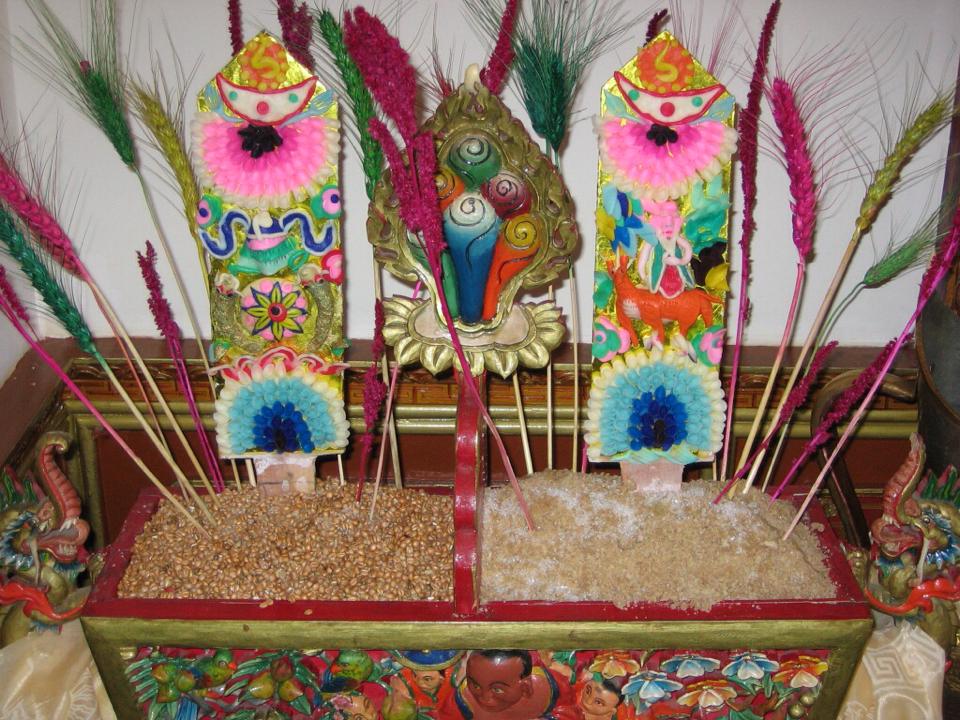
A chemar bo with wheat, tsampa, salt, and auspicious symbols. Photo credit: Raven Cypress Wood
The Royal Tibetan New Year, known as Losar, is the 1st lunar day of the 1st lunar month. In 2026, this date coincides with February 18th on the Western calendar. This year, the worldwide New Year’s celebrations for Bönpos will be minimized in recognition of the parinirvana of His Eminence Yongdzin Tenzin Namdak Rinpoche in 2025. Religious prayers and rituals will be performed but the usual recreational celebrations, dances, and recreational gatherings will not held.
In the weeks leading up to Losar, both monasteries and households are busy with preparations such as deep cleaning, buying new clothes, and clearing old debts. During this time, it is customary to make many fried Tibetan treats known as khapsé that are used both for offerings to the deities and as festive snacks for the many New Year’s guests. These special treats have traditionally been reserved for special occasions and are a symbol of the Tibetan New Year. Dough is kneaded and then rolled to the desired thickness according to the type of khapsé being made which is most often long strips that look like simple braids but can also take the shape of elaborate flowers and knots. Sometimes food coloring is added to the dough to make it more colorful and festive. However, the first shapes that are made from the dough are not treats to be eaten, but are offerings for the god of the hearth. This scorpion-shaped being together with long twisted offerings and are placed on a clean place on the hearth in order to avert any accidents that might occur while cooking with the boiling hot oil for many hours. This offering remains in place until the full moon.
Khapsé offerings to the hearth to avert accidents and bad luck. Photo credit: Raven Cypress Wood
Although each region of Tibet makes their own unique style of khapsé, it is always a communal event because the amount of labor and many hours involved in producing the quantity of khapsé needed to ensure that there will be enough to distribute to family and friends during the first two weeks of New Year’s celebrations. The khapsé that are offered to the Losar shrine and to respected lamas in the monasteries and nunneries are shaped like a two-headed ladle and stacked one upon the other. This stack of ladle-shaped khapsé is called a derga. Some traditions place the khapsé so that the “ladle” is facing up and can be filled with candies and smaller, ornate khapsé. Other traditions believe that it is important to place the “ladle” facing down so that the good luck for the New Year does not escape. However, even these downward facing khapsé are decorated with candies before they are offered.
His Holiness the 34th Menri Trizin with an offering of Losar khapsé known as derga. Photo credit: Unknown
In addition to the khapsé, it is important to prepare a chemar bo, an ornate, wooden, container with two inner compartments. The left side is filled with wheat topped with salt, and the right side is filled with roasted barley flour, known as tsampa, topped with a few slices of butter. It is further decorated a tsédro, a piece of wood that is carved and or painted with the eight auspicious symbols. This is an important symbol or wealth, prosperity, and good luck for the coming year. Other items for the Losar shrine include young wheat grass that has been planted in small pots that symbolize good harvest. This is known as lo pü, the first harvest. A sheep’s head made of butter, dough, clay, or ceramic is another symbol of prosperity and good fortune, especially for communities that continue to rely upon sheep and goat herds for their livelihood. Additionally, there are offerings of beer, sweet rice, fresh water, blocks of black tea, plates of butter, nuts, dried fruit, fresh flowers, and so on.
Tibetan khapsé. Photo credit: Raven Cypress Wood
In the monasteries and nunneries, Losar includes many end-of-year prayers and rituals including the sacred dances called cham. On the 25th lunar day of the 12th month, there is a test for the cham dancers and those chanting the melodies. On the 26th day, all of the offering torma are made. The extensive ritual of the wrathful yidam deity Phurba, known as the Tro Phur Gutor Chenmo, begins the ceremonial conclusion of the previous year. This ritual lasts for three days and includes many sacred dances as well as elaborate rituals for removing obstacles and negativity. This ritual begins on the 27th lunar day and concludes on the evening of the 29th lunar day with the removal of the main prayer flag from the courtyard. In 2026, these dates coincide with February 14th-February 16th. The main prayer flag for the New Year is raised on the 5th lunar day of the 1st month which is the celebration of Nyammé Sherap Gyaltsen Rinpoche, the founder of Menri Monastery and its first throne-holder. In 2026, this day coincides with February 22nd. During the time between removal of the old prayer flag and raising the new one, the rules of monastic discipline are slightly relaxed.
For householders, the 29th lunar day which is called nyi shu gu, is a time to clean their homes and clear their debts from the previous year. In 2026, this date coincides with February 16th. That evening, a dokpa ritual for sending away negativity is performed. The family shares a special stew of nine ingredients called gu tük. Although there can be regional variations, according to His Eminence Menri Pönlop Rinpoche, these nine ingredients are meat, wheat, barley, rice, cheese, corn, troma (a himalayan root vegetable), salt, and water. Cooked within the stew are balls of dough which contain items meant to be a playful divination that reveals the character of the family members who receive them in their bowl of stew. Alternatively, the name of these items can be written on a small piece of paper and placed inside the balls of dough. There can be variations of the specific items but in general they are:
A ball with cotton inside that means the recipient will have good health all year.
A ball with a dried chili inside means the recipient is sharp-tongued.
A ball with a white stone inside means the recipient is good-hearted.
A ball with a piece of charcoal inside means the recipient is black-hearted or has bad habits.
A ball with a piece of paper inside means the recipient is always trying to sneak something for themselves.
A ball with a piece of twisted string inside means the recipient has a strong and stable mind.
A ball with a dried pea inside means the recipient is cunning.
A ball with salt inside means that the recipient is a pleasant person.
A ball with onion inside means that the recipient has an unpleasant smell.
A ransom effigy surrounded by karmic debt tormas of handprinted dough that have been painted red. Photo credit: Raven Cypress Wood
Everyone saves a small amount of the last of their stew to be used as a ransom payment for the negative spirits of the previous year. This ritual payment settles any karmic debts that they might have with negative spirits so that they become satisfied and happy and have no reason to cause them harm. An effigy representing these spirits is made and must include each of the five senses. Along with the leftover stew, each person also makes a karmic debt torma known as a changbu. This is a small ball of roasted barley flour made into dough that has been rubbed over the body from head to toe in order to absorb all illness and negative energy. Then, the ball of dough is rolled into a thin strip the width of the hand and squeezed so that each of the fingers make an impression into the dough. Women make the impression with their left hands, and men use their right hands. This changbu is then placed with the other gifts around the effigy together with a piece of hair and a small string from the clothing of each family member. A small candle is placed in front of the effigy and then lit.
Before the effigy is carried out, a prayer is recited to formally present the gifts to the spirits and request that by accepting these gifts of ransom, they not cause any harm. The following prayer is from the dokpa ritual of the enlightened fierce deity Nampar Jompa.
The enlightened deity, Nampar Jompa
“OM
Come here, all you spirits who have a commitment to the teachings of the Buddha! Come all gods, humans, and demi-gods, all spirits that cause harm or disease, all male and female demons. Without excluding anyone, all you spirits, come! Accept this ransom torma which repays my karmic debts. Do not cause harm to this family or community and don’t create any obstacles to our spiritual practice! Now, each of you happily return to your homes and listen to the noble teachings of the Buddha. SO OM BA DZRA TRO TA SUM TRI GHA TSA YA GHA TSA YA NÖ JÉ JUNG PO A MU KHA RA YA HUNG PÉ”
Once the prayer is complete, a family member takes the effigy, facing forward and held below the waist, and leaves it at a crossroads, or an energetically rough place in the negative direction of the outgoing year. When returning home, this person must not look back. When they arrive, they must be ritually cleansed with water before they enter the house. For 2025, the outgoing Year of the Wood Snake, the negative direction for making the dokpa ransom is North.
Fumigation and offering ritual of sang at Menri Monastery. Photo credit: Unknown
The first spring water of the New Year is considered very auspicious, and it is common for people to go directly to the community well after midnight to try and be the first person to collect water and offer it on their shrine. On New Year’s Day, everyone stays at home or only leaves to go to the monastery in order to pray and make offerings. On the 2nd and 3rd days of the New Year, it is customary to spend time visiting friends and family in order to strengthen the positive energy and harmonious bonds for the coming year.
Did you enjoy this content? This article is made possible by generous donors who want content like this to continue to be available. Don’t want to miss a post? Scroll to the bottom and click “Follow this blog.”
Join the mandala of Nine Ways supporters by donating through one of the services listed below.
The auspicious day of March 3, 2026 is the first full moon of the Year of the Fire Horse and marks the traditional birth anniversary of Buddha Tönpa Shenrap as well as the birth anniversary of His Eminence Menri Pönlop Yangtön Trinley Nyima Rinpoche. This is an especially auspicious time to perform virtue and receive vows because the power of the activity is greatly multiplied. By taking a vow of nonviolence to abstain from eating meat from compassionate loving kindness during this time, unimaginable spiritual merit and benefit for both self and others is generated. One can accept this vow for a single day, multiple days, or for the entire Fire Horse year. The names of all those who take the vow and submit the form below will be offered to His Eminence Menri Pönlop Rinpoche on February 27th for the benefit of his long life and indestructible good health. Information on taking the vow and submitting the form are below.
Compassion, Virtue, and the Importance of Taking a Vow
In the Yungdrung Bön tradition, and many other wisdom traditions throughout the world, one of the foundational precepts is that of nonviolence towards other beings. Violence and harm towards others originates from the arising of one or more of the five poisons of ignorance, anger, attachment, greed, or jealousy as a thought that develops into harmful speech or harmful actions. As spiritual practitioners, our practice is to diminish the five poisons and to develop wisdom and realization. By being mindful of the actions of our body, speech, and mind, and training ourselves towards acts of virtue and compassion for others, not only does this reduce our own suffering and confusion, but it also brings greater meaning to our life and expands our view beyond that of temporary, worldly concerns and desires.
In our modern world, it is rare to need to kill animals and eat their flesh in order to survive. We now have many other choices available to us. Therefore, it is not necessary to eat food that has been the cause for animals to experience such great suffering and fear. Additionally, because of the desire to eat meat, others are engaged in the nonvirtue of breeding, keeping, and slaughtering animals which in turn creates a cause of suffering for them.
However, just being a vegetarian is not necessarily an act of virtue. When cows only eat grass it is not an act of virtue because they have not made a choice to not eat meat as an act of compassion. It is just their nature. Similarly, many people abstain from eating meat for a variety of reasons that are not related to compassion for other beings. This is good, but it is not an act of virtue. By refraining from eating meat as a result of generating compassion and a wish that others not suffer, makes it an act of virtue. By first accepting this as a vow and then fulfilling that vow, not only is there benefit from the virtuous activity but there is also the benefit and merit of having fulfilled a sacred vow. Doing this on an auspicious day greatly multiplies the power of these virtuous acts. (For more about virtue and nonvirtue, see this previous article: https://ravencypresswood.com/2024/10/26/buddha-tonpa-shenraps-instructions-for-lay-practitioners-part-1-of-3-right-mind-right-conduct/) The benefits of saving animals from slaughter are so great that both Yungdrung Bön and Buddhism have specific rituals for this special act of compassion.
A goat that has been saved from ever being slaughtered wears the five-colored cloth of having been consecrated and empowered.
The 19th century Yungdrung Bön master Khyungtrul Jigmé Namkha Rinpoche gave the following advice to both the ordained and the laypeople of Khyunglung Gurgyam regarding eating meat:
“It is said that meat is the cause of suffering, wrongdoing, and negative rebirths. If it is possible to give it up, it is much better. Even if you have a very great desire to eat meat, do not accumulate this defilement every day. Those who eat meat are lacking in the exalted quality of compassion.”
In the Yungdrung Bön religious tradition, it is common to take a vow of abstaining from eating any kind of animal meat as a temporary vow. These vows are often observed by laypeople during the four auspicious days each month which are the full moon, new moon, and two quarter moon days. Anyone performing a healing ritual, especially any kind of longevity practice, abstains from eating meat. After the death of a loved one, it is an especially powerful act of virtue to accept a vow of abstaining from meat for a full year and dedicating the merit of that virtue for the deceased.
TheSeven Causal Means of Cultivating Compassion and the Mind of Enlightenment for the Benefit of Others
The Yungdrung Bön religious tradition gives a specific, seven-point practice to train the mind to generate compassion for others. This practice can be applied to any situation, especially when feeling kindness and compassion seem difficult.
མ་ཤེས། Ma shé: knowing the mother. We remind ourselves that at some point throughout our limitless lifetimes, every sentient being as acted as as our kind mother by offering her body for our birth, and caring for us to keep us alive and safe, even in the face of danger and hardships.
དྲིན་དྲན། Din den: being grateful. We Feel grateful for their great kindness and sacrifice.
དྲིན་དུ་བཟོས། Din du zö: repaying the kindness. Feeling grateful, we generate the desire to repay their kindness.
བྱམས་པ། Jam pa: loving kindness. We generate loving kindness towards them a wish that they experience happiness.
སྙིང་རྗེ། Nying jé: compassion. We generate a wish that this person not experience suffering.
ལྷག་བསམ། Lak sam: a special kind of motivation, “I will do it!” We firmly decide to act in order to bring them happiness and remove their suffering.
བྱང་ཆུབ་སེམས། Jang chup sém: the mind of enlightenment. Having decided to act, we engage in acts and practices not only for our own benefit, but for the benefit of others and their release from suffering.
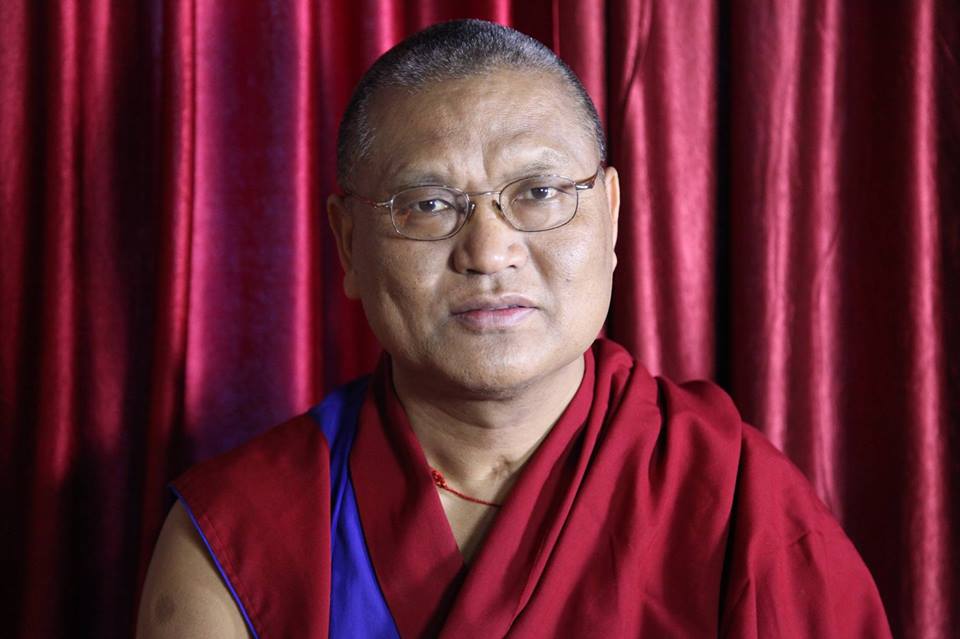
His Eminence Menri Pönlop Trinley Nyima Rinpoche
Take the Vow, Fulfill the Commitment, Dedicate the Merit, and Make Aspirations for the Future
It is said that it is possible to go before any image of an enlightened one, a chorten [Sanskrit: stupa], or a sacred text, prostrate with devotion, and accept a vow. Although this is considered a real vow, it is also considered unstable because there is no living witness. Because of the absence of a witness or community that is aware of the vow that has been taken, it is easier for the vow to be broken. Therefore, everyone who submits the form below with the details of their sacred vow will have their name given to H.E. Menri Pönlop Yangtön Trinley Nyima Rinpoche who will act as the sacred witness of their vow. These names will be given to him together with a monetary offering and a prayer for his long and healthy life.
In this short video, Raven Cypress Wood talks about how taking the vow, even for a single day, can bring meaning to your life and develop the Four Immeasurable Qualities: https://youtu.be/8jQlrNXFmvU
The Vow and How to Formerly Accept It
The actual vow is to accept the complete abandonment of eating any kind of animal flesh from a mind of compassionate loving kindness for the avowed time period. Additionally, one aspires to refrain from all harmful actions of body, speech, and mind.
The time period for the vow can be the single, auspicious dayof March 3, 2026. The time period for the day is marked from dawn of March 3rd until dawn of March 4th. Or, one can choose to take the vow for every full moon day of the Year of the Fire Horse. [Days are marked as described above and the lunar dates for these specific days are listed at the bottom of this article.] Or, one can choose to take the vow for every full moon day AND every new moonday. Or, one can choose to take the vow for all four auspicious days each month which are the full moon, the new moon, the lunar 8th day, and the lunar 22nd day. Or, one can choose to take the vow for the entire Year of the Fire Horse from the first full moon day of March 3rd until the dawn of the next lunar year on February 7, 2027.
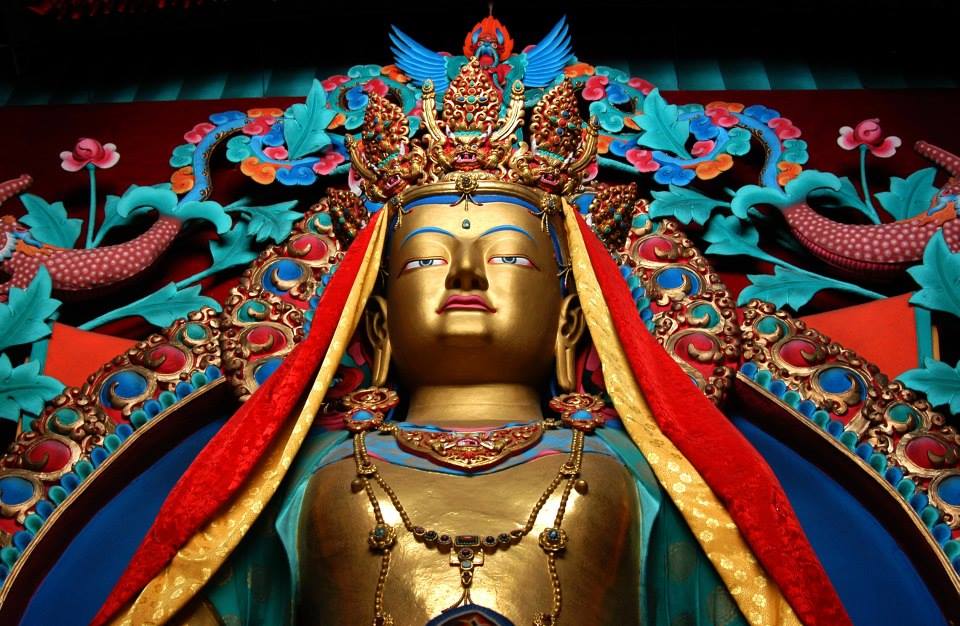
To accept the vow, fill out the form below and submit as soon as possible. Then, on February 27th (the day the commitments will be offered to H.E. Menri Pönlop Rinpoche*) in the morning go before a sacred image, chorten, or scripture of the Yungdrung Bön and perform three prostrations with devotion. If none of these sacred supports are available, it is possible to use the image of Buddha Tönpa Shenrap at the top of this article as a sacred image. If one knows the practices of guru yoga, refuge, and generating the mind enlightenment, perform these as the foundation. If not, imagine the sky is infinitely filled with enlightened ones who spontaneously radiate the pure light of their immeasurable compassion to you, penetrating your body, speech, and mind with their blessings. Generate a wish to develop within yourself this same kind of wisdom and immeasurable compassion. As part of that practice of compassion, accept the vow of nonviolence with these words:
“Because of wanting others to not suffer and instead to experience happiness, I vow to refrain from eating meat for [state time period you have decided to keep the vow]. During this time, may I not cause any harm to others through the actions of my body, speech, or mind, and may the seeds of this virtuous activity increase and ripen into a beneficial result for all sentient beings that is unimaginable!”
In The Wish-fulfilling Jewel of Daily Practice, Shardza Tashi Gyaltsen Rinpoche details thirteen daily yogas to be performed as a way to integrate the activities of daily life into spiritual practice. As a support for keeping sacred vows that have been taken, he gives the following advice:
“Each day at sunrise, remember the vows you have previously taken and generate the intention to guard them so that they do not degenerate.”
*If it is not possible to perform the acceptance of the vow on this day, then it is fine to do so between February 27th and March 2nd.
The Deadline for submission of the form has expired.
Lunar Dates for Auspicious Days During the Year of the Fire Horse
Did you enjoy this content? This article is made possible by generous donors who want content like this to continue to be available. Don’t want to miss a post? Scroll to the bottom and click “Follow this blog.”
Join the mandala of Nine Ways supporters by donating through one of the services listed below.






 Nine Ways