Blog Archives

18,043rd Anniversary of Buddha Tönpa Shenrap’s First Deed: The Deed of Taking Birth in Human Form

first-deed-w-watermark
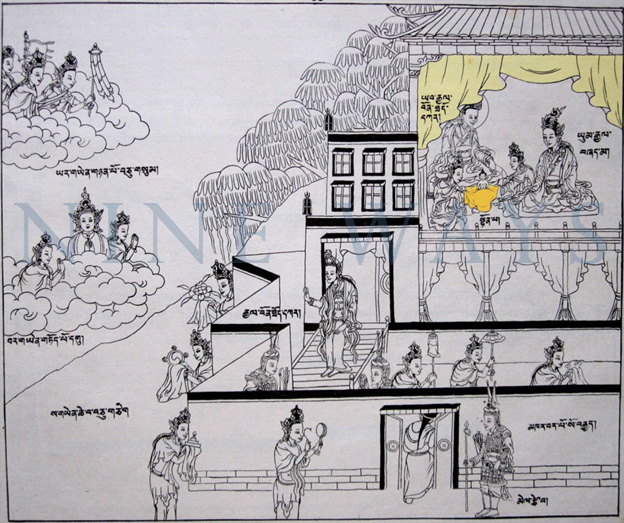
Buddha Tönpa Shenrap Miwoché being received by gods and goddesses at the royal palace of Barpo Sogyé

The 15th day of the 12th lunar month is the 18,043rd birth anniversary of the founder of the Yungdrung Bön religious tradition, Buddha Tönpa Shenrap Miwoché. In 2026, this lunar day coincides with February 1st. This is an especially auspicious time to perform acts of virtue and take sacred vows.

In the ancient past, there were three brothers named Dakpa, Salwa, and Shépa who lived in a pure world and who had studied and mastered the Yungdrung Bön teachings. With the power of their clairvoyance, they could see sentient beings within the three thousand-fold universe creating karma and experiencing suffering by being trapped in the cycle of birth, aging, sickness, death, and rebirth. They felt great compassion for these beings and went before the god of compassion, Shenlha Ökar and asked how they could help rescue sentient beings from their suffering and misery. Shenlha Ökar instructed them to go into the world one after another in order to guide beings out of suffering with the Yungdrung Bön teachings. Dakpa, being the eldest, went first to the planet Earth and ministered to sentient beings. Dakpa was born as a human being and took the name Togyal Yékhyen. For a thousand years, he taught both humans and non-human beings and countless sentient beings were liberated. Afterward, he presented an account of his time on earth to various wisdom deities and asked how it might be possible to liberate those beings who he had been unable to tame. The wisdom deities responded that even though the Yungdrung Bön was all that was needed, even the light of the sun that pervades everywhere cannot illuminate a windowless house, or a north-facing cave. Thus, sentient beings that persist in their wrongdoing because of being afflicted with the passion of their five poisons are very difficult to tame. Thus, Buddha Togyal Yékhyen wrote his teachings down with turquoise ink on ivory-colored paper and then went to see the middle brother, Salwa. He addressed him with these words:

“Although countless sentient beings have been liberated through my activities, I have left the earth and cyclic existence. After some time has passed, it will be appropriate for you to begin your work of liberating sentient beings from cyclic existence through the teachings of Yungdrung Bön.”

Time passed, and as acts of virtue declined on the earth, so did the energy of loving kindness. The generations of benevolent kings passed and the teachings of Buddha Togyal Yékhyen faded from the world. As the era came to an end, there was destruction of the land and civilizations by floods, fire, and earthquakes. After a period of emptiness, a new time period began. Salwa left his pure abode and descended to the realms of the gods to prepare for a birth of flesh and blood as a human being. He was born on earth in the land of Tazik Olmo Lungring as a prince in the Southern palace of Barpo Sogyé 18,043 years ago. He was given the name Shenrap because he was born into the Shen clan and was the highest within this clan, Rap. He was named Miwoché because he had taken a great human form. His personal name was Künlé Namgyal, Completely Victorious Over Everything. A total of seven buddhas had manifested in cyclic existence in the eons prior to his birth. This is why he is known as the eighth buddha, or the eighth guide of sentient beings. Because he was already an enlightened being and beyond cyclic existence, his taking birth in the human realm is considered a great deed of compassion.

He was born just before sunrise on the 15th day of the 12th lunar month to King Gyalbon Thökar and Queen Gyal Zhema. He had all of the major and minor marks of an enlightened being. A gathering of gods from above, a gathering of deities from intermediate space, and a gathering of powerful earth spirits all circumambulated the palace and proclaimed that they had arrived in order to be the first disciples of Tönpa, The Teacher.
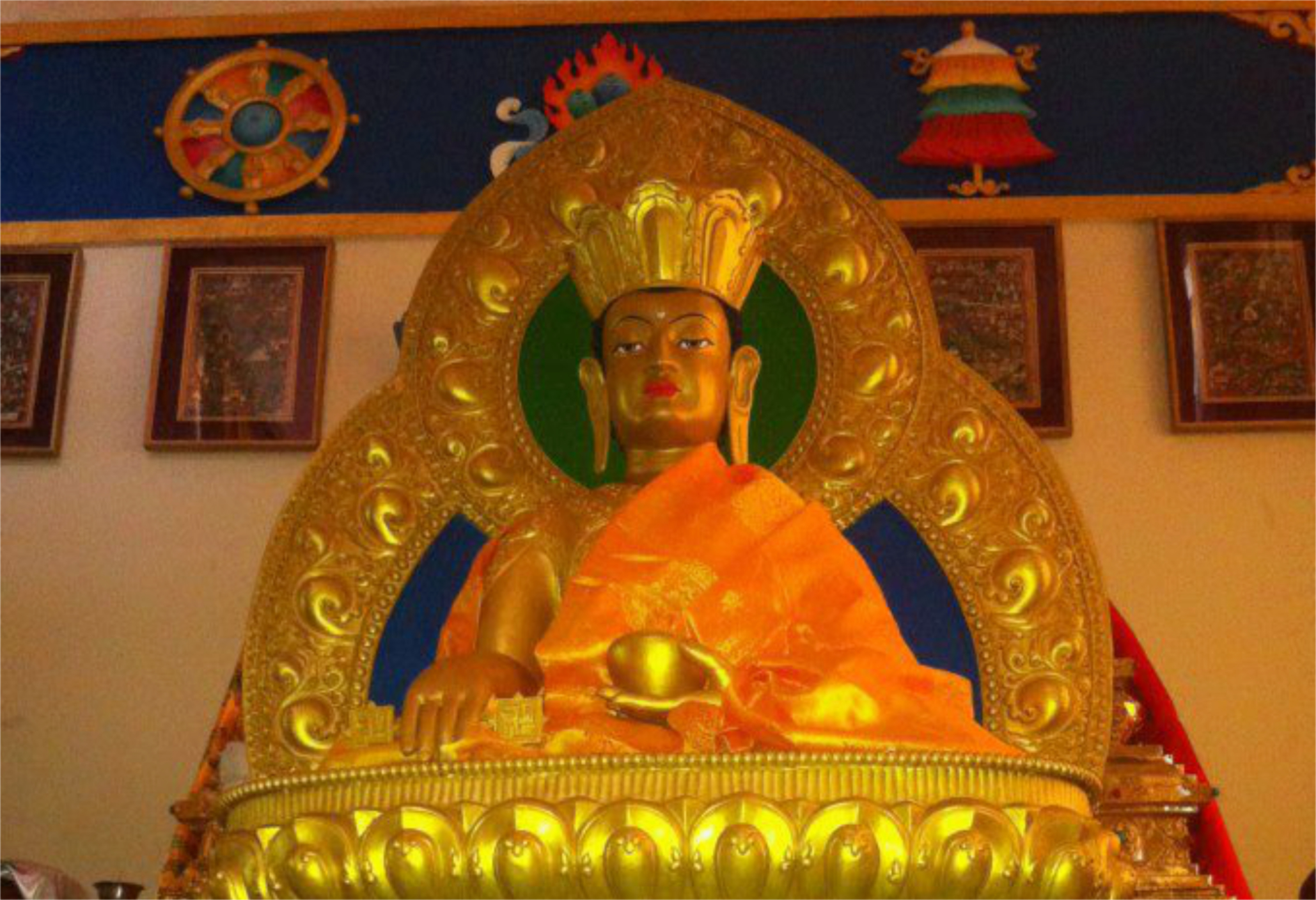
Buddha Tönpa Shenrap Miwoché

This is an especially auspicious day to recite the following Homage to Tönpa Shenrap Miwo. Many masters, including Menri Pönlop Yangtön Trinley Nyima Rinpoche, recite this prayer before giving teachings.

སྟོན་པའི་རྒྱལ་པོ་འཁོར་བ་འདྲེན་པའི་དཔལ། མུན་པའི་ཚོགས་རྣམས་འཇོམས་བྱེད་སྒྲོན་མེའི་འོད། མ་རིག་ནད་གདུང་སེལ་བ་སྨན་པའི་གཙོ། མི་ཡི་མཆོག་ཏུ་གྱུར་པ་དམུ་ཡི་རྒྱལ། དུག་ལྔའི་འདམ་དང་མཚོ་སྐེམས་མེ་ཆེན་དཔུང་། མཚན་དང་དཔེ་བྱད་སྡན་པའི་གཟི་འཕགས་པོ། དཀའ་བ་སྣ་ཚོགས་དང་དུ་བླངས་ནས་ནི། མཛད་པ་སྣ་ཚོག་མཐར་རུ་ཕྱིན་མཛད་ཅིང་། གཟིགས་ཚད་བཞི་དང་དགོངས་ཚད་དྲུག་གཉིས་ཀྱིས། བྱམས་པ་ཆེན་པོས་འཁོར་བ་སྒྲོལ་མཛད་པའི། གཤེན་རབ་སྤྲུལ་པའི་སྐུ་ལ་ཕྱག་འཚལ་ལོ།

tön pé gyal po khor wa dren pé pel, mün pé tsok nam jom jé drön mé ö, ma rik né dung sel wa men pé tso, mi yi chok tu gyur pa mu yi gyal, duk ngé dam dang tso kem mé chen pung, tsen dang pé jé den pé zi pak po, ka wa na tsok dang du lang né ni, dzé pa na tsok tar ru chin dzé ching, zik tsé zhi dang gong tsé druk nyi kyi, jam pa chen pö khor wa dröl dzé pé, shen rap trül pé ku la chak tsal lo

“Homage to the Eighth Guide of the Universe, Sangyé Tönpa Shenrap Miwo

King of Teachers, you are a glorious guide out of cyclic existence. A lamp who dispels all darkness, you are the principal physician who clears away the torment of ignorance and illness.

Most supreme among humanity, you are a King of the Mu lineage. You are a mighty fire that dries up the ocean and swamp of the five poisons and you have the major and minor marks of a noble sage.

Having undertaken many various hardships and having completed a diversity of activities, by means of the four kinds of valid perception and the six kinds of valid enlightened intention, and through great love, you liberate from cyclic existence. I prostrate to the emanated body of the highest Shen!”
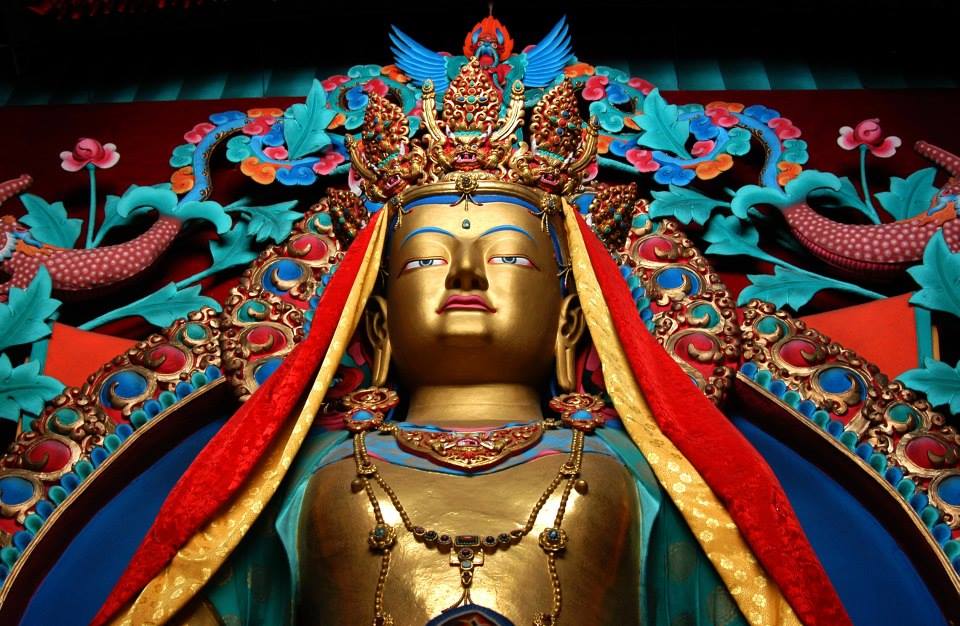
Buddha Tönpa Shenrap Miwoché

Bring Meaning & Benefit to 2026 by Taking a Vow of Nonviolence for 1 Day, Multiple Days, or a Full Year

The auspicious day of March 3, 2026 is the first full moon of the Year of the Fire Horse and marks the birth anniversary of His Eminence Menri Pönlop Yangtön Trinley Nyima Rinpoche. This is an especially auspicious time to perform virtue and receive vows because the power of the activity is greatly multiplied. By taking a vow of nonviolence to abstain from eating meat from compassionate loving kindness during this time, unimaginable spiritual merit and benefit for both self and others is generated. One can accept this vow for a single day, multiple days, or for the entire Fire Horse year. The names of all those who take the vow will be offered to His Eminence Menri Pönlop Rinpoche on February 27th for the benefit of his long life and indestructible good health. Follow this link for more information and to fill out and submit the form for your personal vow of nonviolence. https://ravencypresswood.com/2026/01/24/bringing-meaning-benefit-to-2026-by-taking-a-vow-of-nonviolence-for-1-day-multiple-days-or-a-full-year/

In this short video, Raven Cypress Wood talks about how taking the vow, even for a single day, can bring meaning to your life and develop the Four Immeasurable Qualities: https://youtu.be/8jQlrNXFmvU

His Eminence Menri Pönlop Yangtön Trinley Nyima Rinpoche

Raven Cypress Wood ©All Rights Reserved. No content, in part or in whole, is allowed to be used without direct permission from the author.

Did you enjoy this content? This article is made possible by generous donors who want content like this to continue to be available. Don’t want to miss a post? Scroll to the bottom and click “Follow this blog.”

Join the mandala of Nine Ways supporters by donating through one of the services listed below.

The Monastery of Blissful Meditation: Déden Samten Ling

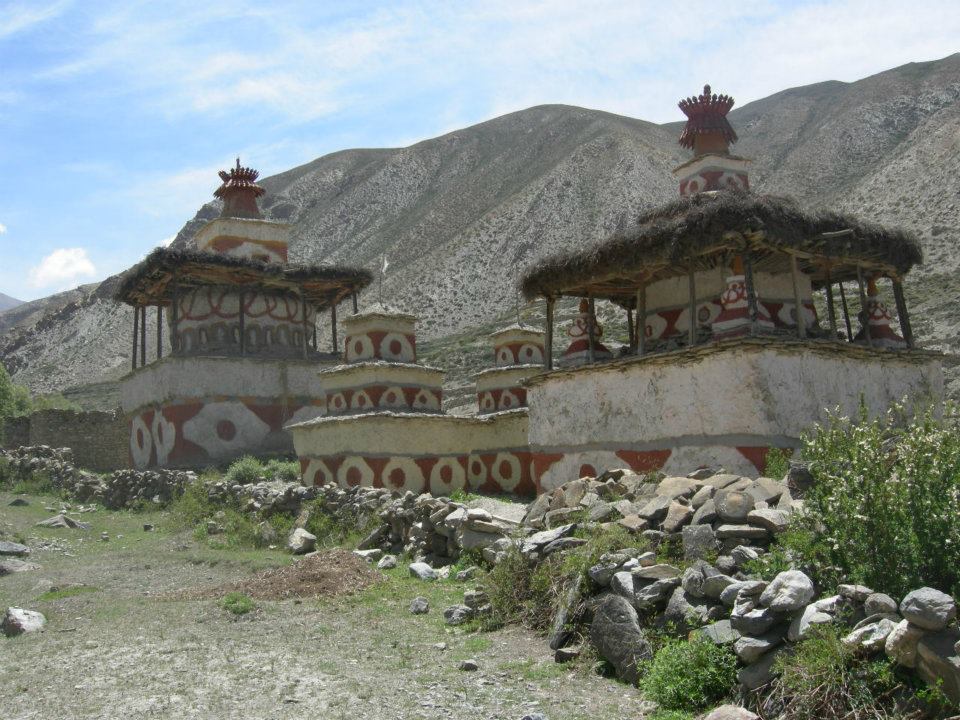
Samling Temple complex. Photo credit: Unknown

The high altitude temple of Déden Samten Ling, or in its shortened form simply Samling, has been significant in the preservation of the Yungdrung Bön religious tradition. The main temple was established more than 900 years ago by Yangtön Gyaltsen Rinchen in a remote and mountainous region of Dolpo, Nepal near the Tibetan border. Since that time, this monastery, as well as others in Dolpo, has been maintained by a hereditary line of lamas within the Yangtön family. (For more information about the prestigious Yangtön family lineage, see previous post: https://ravencypresswood.com/2017/05/27/yangton-sherap-gyaltsen/)

map of dolpo copy

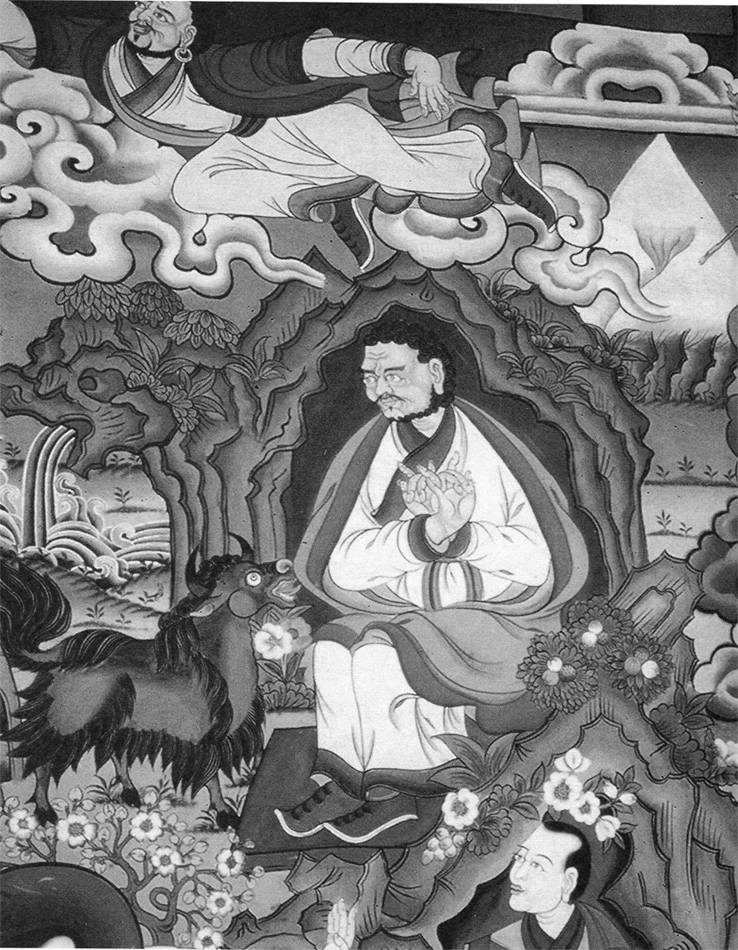
According to a text detailing the history of the Yangtön family lineage, some time during the 13th century Yangtön Gyaltsen Rinchen was staying near Mt. Tisé in Western Tibet [Mt. Kailash] when he was visited in a dream by the Bönpo sage and great lama Drenpa Namkha who instructed him to travel to Dolpo and build a temple. Having traveled the long distance to Dolpo and searched throughout its rugged terrain, Yangtön Gyaltsen Rinchen had a series of auspicious dreams while staying in the area of Bijer that convinced him that he had finally found the proper place to construct a Yungdrung Bön temple.

Chortens of Samling. Photo credit: Unknown.

He became the first of many Yangtön lamas at Samling to collect and preserve sacred Yungdrung Bön texts. Because of this, many volumes of scripture have been preserved throughout the course of many centuries. It was during a trip to Samling Monastery in 1961 C.E. that Dr. David Snellgrove discovered a copy of the Zi Ji, a hagiography of Buddha Tönpa Shenrap. He subsequently wrote and published extracts from this text as one of the first English language translations of a Yungdrung Bön text, The Nine Ways of Bön. The Zi Ji volume that he consulted for his translation was estimated to be approximately 400 years old.

Currently, Lama Sherap Tenzin Rinpoche is the head of the monastery.  He was born in 1953 C.E. and has received extensive religious training and has been trained in the science of Tibetan medicine.

Left: H.E. Menri Ponlop Yangtön Thrinley Nyima Rinpoche, Center: H.H. 33rd Menri Trizin Rinpoche, Right: Yangtön Lama Sherap Tenzin Rinpoche. Photo credit: Unknown.

Nine Ways has a new Shop! Click the tap at the top of this page to see what practice support items are available. Currently, the Nine Ways Shop is fundraising in support of a memorial chorten that will be built in Tsarka Dolpo, Nepal for Yangtön Lama Tashi Gyaltsen. For more information about this chorten, go to this article: https://ravencypresswood.com/2025/10/18/in-support-of-a-memorial-chorten-for-yangton-lama-tashi-gyaltsen-rinpoche/

Raven Cypress Wood ©All Rights Reserved. No content, in part or in whole, is allowed to be used without direct permission from the author.

Did you enjoy this content? This article is made possible by generous donors who want content like this to continue to be available. Don’t want to miss a post? Scroll to the bottom and click “Follow this blog.”

Join the mandala of Nine Ways supporters by donating through one of the services listed below.
Yungdrung Bön Auspicious Days for Spiritual Practice

The Supreme Shen Buddha Tönpa Shenrap Miwoché.

According to the Yungdrung Bön religious tradition, each month there are auspicious days which are determined by the teaching activities of the Supreme Shen Buddha Tönpa Shenrap. These are lunar dates according to the Tibetan lunar calendar.

30th Day of the Month, New Moon: On this day, Buddha Tönpa Shenrap taught the beings in the formless realm. This is a good day to purify wrong views. The power of any virtuous activity or meditation performed on this day is doubled. Also, because of its significance in the lunar cycle, it is one of the four monthly auspicious days to perform prayers and virtuous activities, and for those with genyen or monastic vows to avoid eating meat.

1st Day of the Month: On this day, Buddha Tönpa Shenrap taught the space gods in the highest and purest of places in the formless realm. This is a good day to purify greed and attachment and engage in acts of generosity.

8th Day of the Month: On this day, Buddha Tönpa Shenrap taught the clear-light gods. This is a good day to purify broken vows and to recite one of the three essence mantras of the Yungdrung Bön tradition. Also, because of its significance in the lunar cycle, it is one of the four monthly auspicious days to perform prayers and virtuous activities, and for those with genyen or monastic vows to avoid eating meat.

14th Day of the Month: On this day, Buddha Tönpa Shenrap taught the Gaden gods of the form realm. This is a good day to purify sexual misconduct and desire.

15th Day of the Month: On this day, Buddha Tönpa Shenrap taught the gods of the desire realm atop Mt. Meru. This is a good day to purify the killing of someone important such as a lama, a family member or another practitioner in either this or a previous life. Also, because of its significance in the lunar cycle, it is one of the four monthly auspicious days to perform prayers and virtuous activities, and for those with genyen or monastic vows to avoid eating meat.

16th Day of the Month: On this day, Buddha Tönpa Shenrap taught the four great gods of the desire realm and the four great kings. This is a good day to purify disagreements or misunderstandings with parents, a lama, or another practitioner from either this or a previous life.

19th Day of the Month: On this day, Buddha Tönpa Shenrap taught the Tsang Ri gods of the form realm. This is a good day to purify any accidental killing.

22nd Day of the Month: On this day, Buddha Tönpa Shenrap taught the demi-gods of the desire realm who reside on the sides of Mt. Meru. This is a good day to purify the killing of a human being or lying to the lama. Also, because of its significance in the lunar cycle, it is one of the four monthly auspicious days to perform prayers and virtuous activities, and for those with genyen or monastic vows to avoid eating meat.

29th Day of the Month: On this day, Buddha Tönpa Shenrap taught the lu [Sanskrit: naga] of the desire realm. This is a good day to purify stealing during this or a previous life.

The practice of the admission of wrongdoing and purification is a powerful and effective method to purify non-virtuous activities of body, speech and mind and repair our sacred vows and commitments. The efficacy of the practice relies upon the so-called “four powers.” These are 1) the power of witness, 2) the power of openly admitting without reservation the actions of wrongdoing and non-virtue, 3) the power of heartfelt remorse, and 4) the power of vowing to not repeat the negative activities.

“The infallible fruit of both good and bad actions is certain. May I be watchful to accept or reject situations! Having depended upon the practice of admitting wrongdoing by means of the four powers, may all karmic potentialities and defilements be purified!”

— From The Ocean of Instructions Regarding the A Tri Teachings by Shardza Tashi Gyaltsen Rinpoche

For the power of witness, the practitioner goes before a sacred object of refuge such as a shrine, a real or visualized image of an enlightened being, or a chorten. Then, the practitioner connects with the actual presence of the enlightened beings in the sky before them. For the second power which is the admission of wrongdoing, the practitioner brings into their awareness all of the non-virtuous activities of body, speech and mind that have been committed in this life, as well as any unremembered activities from this or previous lives. This includes activities of direct or indirect involvement, as well as encouraging or celebrating the non-virtuous activities of others. For the third power, the practitioner generates an intense remorse for all of these actions. For the fourth power, the practitioner makes a firm commitment to not repeat these non-virtuous activities in the future and to instead engage in activities of virtue. In this way, the negative actions and their consequences are purified. At the conclusion of the practice, the practitioner imagines and feels the blessings of the enlightened beings completely purifying them in the form of pure, wisdom light.

“I openly admit to the gathering of buddhas all non-virtue that has arisen from the five poisons from beginning-less time until this very moment. I generate intense remorse for these actions of non-virtue and immorality that I have committed in the past.  I vow that from now on, I will not commit those acts again.  Instead, I will delight in accumulating virtue.” 

— From Homage to the Lord Tönpa Shenrap Miwo

All translations from the Tibetan by Raven Cypress Wood ©All Rights Reserved. No content, in part or in whole, is allowed to be used without direct permission from the author.

Don’t want to miss a post? Scroll to the bottom and click “Follow this blog.”

The 84,000 Doors of Bön at Your Fingertips

mala

“The mala represents the destined connection with the Enlightened Beings.  The mala string represents the 84,000 doors of Bön.  The head bead represents the principal teacher.  The counting beads represent the Six Subduing Shen, the six enlightened Shen who tame the six realms of cyclic existence.”  ~from The Advice of Lishu Taring

The mala is called treng wa in Tibetan.  It consists of one hundred eight counting beads and one larger main bead, often referred to as the ‘head bead’ or the ‘lama bead’.  Malas can have spacer beads which are not counted during recitation of a mantra but are used for decorative purposes or to lengthen the mala and enable it to fit onto an individual’s wrist.  Various kinds of counters are often added to the mala so that the practitioner can keep count of the mantra recitations. Malas can be made from various materials.  Traditionally, these materials were symbolic because of their energetic qualities.  For example, tantric practitioners would often use malas made of bone to represent impermanence.

Before a mala is used, the practitioner will have it consecrated by a lama.  This blesses it and also removes any contamination that the materials might carry with them that could be an obstacle to obtaining the benefit of the recitations.  Although there are one hundred eight beads, a single round of recitations is counted as one hundred.  In this way, if any beads have accidentally been skipped during the recitation, they are accounted for with the ‘extra’ eight beads.  Many practices require a commitment to recite a minimum of one hundred thousand repetitions of a mantra.  Therefore, these ‘extra’ beads ensure that the commitment has been fulfilled.  In general, during recitation, the practitioner is not allowed to eat, drink, talk, sneeze, spit or cough. These activities expel or diminish the specific power of the mantra that is being cultivated.  Once the session of mantra recitation is complete, the mala is rubbed gently between the hands and blown upon by the practitioner.  In this way, the mala becomes further empowered and blessed by the mantra.

The mala is a sacred object and should not be worn as jewelry. It should be kept clean and not be handled by others.  By wearing the mala on the wrist or carrying it in a pocket on the body, it acts as a form of protection.  The mala is also sometimes used for divination or healing purposes.  Lamas will sometimes give away their mala intact, or one bead at a time.  Because of the power of the lama’s practice and recitation, this gift is a great blessing.

Raven Cypress Wood© All Rights Reserved

Practice of The Great Lama, Drenpa Namkha

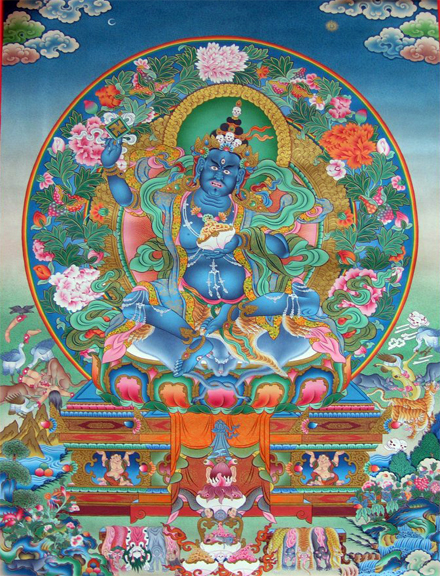
drenpa namkha flying(Mural in Bhutan depicting the Great Lama, Drenpa Namkha)

According to the lunar calendar of the Yungdrung Bön, the 10th day of each month is the day set aside for the practice of the three sages: Drenpa Namkha and his two twin sons, Tséwang Rikdzin and Pema Tongdrul.  On this day, it is appropriate to pay homage and make offerings to these lamas as well as to recite the mantras associated with their respective practices.

The practices of Drenpa Namkha and Tséwang Rikdzin, are widespread in the Yungdrung Bön tradition.   In general, there have been three separate manifestations of Drenpa Namkha. Each was a reincarnation of the previous manifestation. There was the Drenpa Namkha of Tazik, Drenpa Namkha of Zhang Zhung, and Drenpa Namkha of Tibet.  Drenpa Namkha of the ancient kingdom of Zhang Zhung was a prince who lived during 914 BCE. He married an Indian Brahman girl and had twin sons, Tséwang Rikdzin and Pema Tongdrul, who were born in the year 888 BCE. This manifestation of Drenpa Namkha wrote many Dzogchen texts and is often referred to simply as La Chen, or The Great Lama.

Drenpa Namkha edited(As a meditational deity, Drenpa Namkha is most often depicted in a semi-wrathful form, blue in color and holding a yungdrung in his right hand.)

Drenpa Namkha of Tibet was born in the year 753 CE in Southern Tibet. He was an accomplished practitioner and renowned scholar. During this time, the kingdom of Tibet was ruled by King Trisong Detsen. This king had many Bön priest in his court, including Drenpa Namkha.  When the king decided to convert the kingdom to the  new Indian religion of Buddhism, he began to drive out the Bön priests and to destroy their texts. The Bön lamas were given the choice of exile from the kingdom, suicide, or conversion to the new religion. Many lamas chose to escape with texts and to try and preserve the teachings elsewhere. Drenpa Namkha chose to stay and protect the teachings and the texts from within Tibet.  So, at the age of 31, he cut his own hair with a blade of gold and ordained himself a Buddhist with these words,

“A person who has attained realization would not make a distinction between his son and his enemy. I have no partiality for anything. Therefore, I shall be ordained.” (Translation by Samten Karmay from the Treasury of Good Sayings written by Shardza Tashi Gyaltsen.)

 After his conversion, he had many texts hidden within chortens, statues and columns at the monastery of Samye. He continued to compose texts and to teach. Among his many students was the king, Trisong Detsen himself. Years later, the king allowed him to openly return to his practice of the Yungdrung Bön teachings.

“Look upon me with your unbiased compassion morning and night during the past, present and future.  Turn back both seen and unseen enemies! My present and future Refuge and Protector, bless me to accomplish my intentions!”

~From the Prayer to Drenpa Namkha, translated by Raven Cypress Wood

Raven Cypress Wood ©All Rights Reserved. No content, in part or in whole, is allowed to be used without direct permission from the author.

Don’t want to miss a post? Scroll to the bottom and click “Follow this blog.”

Want to join the mandala of Nine Ways supporters? Follow this link https://ravencypresswood.com/donate/ It’s easy through Paypal, Zelle, and Venmo.