Over 18,000 years ago, the founder of the Yungdrung Bon tradition was born into a human body and was known as the Supreme Shen, the Enlightened Teacher, Buddha Tonpa Shenrap Miwoche. He had many students and his teachings flourished in the ancient kingdom called Zhang Zhung.
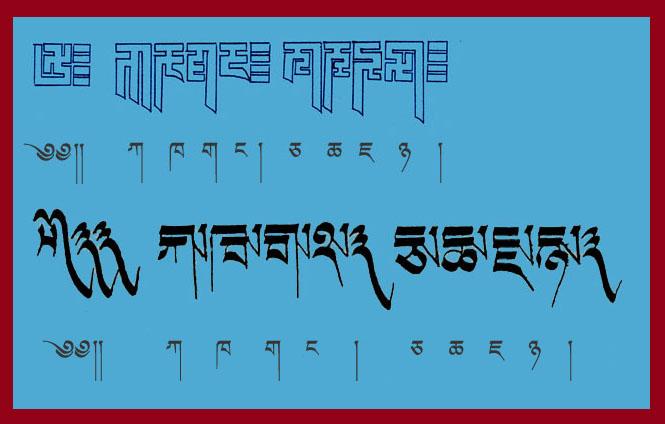
This ancient kingdom included what is now Western Tibet and the sacred Mount Tise, also known as Mount Kailash. The Zhang Zhung language includes forty letters, and according to Yungdrung Bön texts, these ‘Forty Magical Letters’ were taught by Tonpa Shenrap Miwo. The two standard scripts were called Zhang Zhung mar chen and Zhang Zhung mar chung, ‘excellent capital letters of Zhang Zhung’ and ‘excellent lesser letters of Zhang Zhung.’
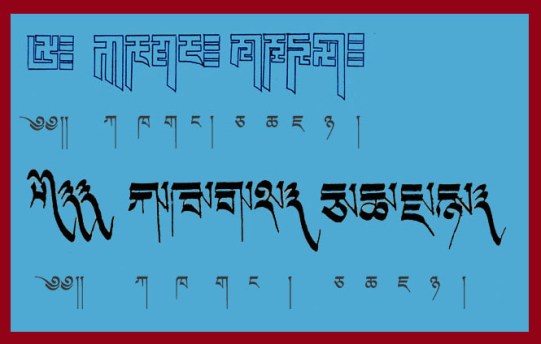
Above, a sample of Zhang Zhung mar chen. Below, a sample of Zhang Zhung mar chung. Both have the corresponding Tibetan script underneath. (Zhang Zhung fonts from the website: himalayabon.com)
The divine words of the Buddha Tonpa Shenrap were written down using this script. Due to the murder of King Ligmincha of Zhang Zhung by king Trisong Detsen of Tibet in the 8th century, the Zhang Zhung kingdom fell and the power and influence of Tibet increased. Therefore, the Zhang Zhung script was transformed and called ‘Tibetan’. According to the ‘Far-reaching Lamp of Clarity’:
“Mar chen was changed into [the formal Tibetan] u chen script, and mar chung was changed into informal script.”

A Yungdrung Bon ritual text begins a section with “According to the language of Zhang Zhung Mar…”
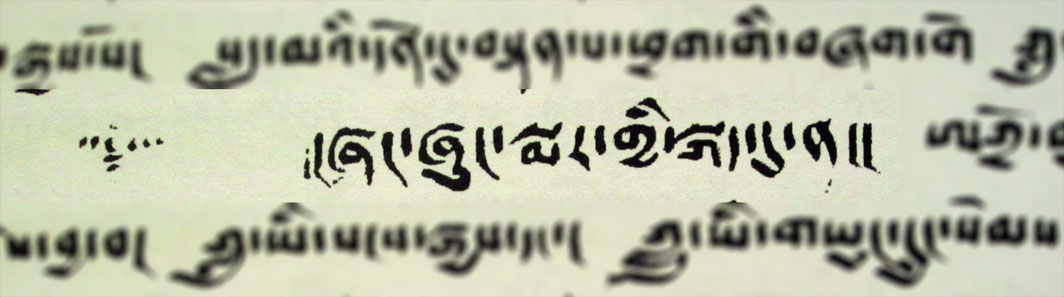
Today, the titles of many Yungdrung Bön texts are written in both the Zhang Zhung mar chen script as well as in the Tibetan script. Additionally, many Zhang Zhung words are found within the texts and even significant section headings are given in both the Zhang Zhung and Tibetan language.
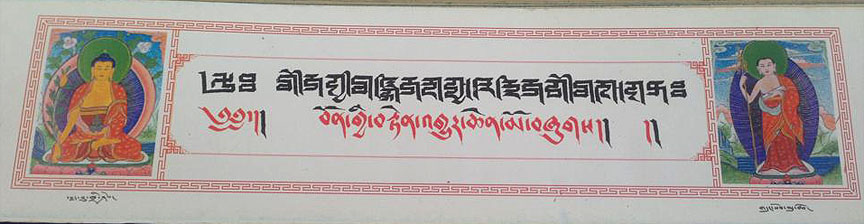
The title page from a Yundgrung Bon text with the title written in Zhang Zhung script above and Tibetan script underneath.
For more information regarding the Zhang Zhung language: (all English language sources)
- The Light of Kailash Vol 1 and 2 by Chogyal Namkhai Norbu Rinpoche
- A Lexicon of ZhangZhung and Bonpo Terms edited by Yasuhiko Nagano & Samten Karmay
- Zhang Zhung-Tibetan-English Contextual Dictionary by Namgyal Nyima





 Nine Ways