Category Archives: Yungdrung Bon Monasteries

Feast Offering to the Deities of the Mother Tantra

Untitled

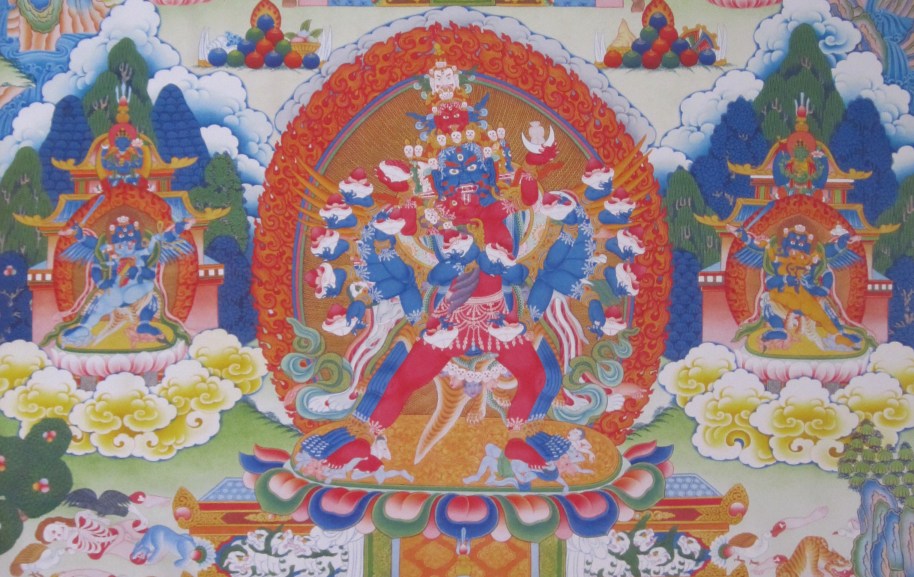
Mother Tantra deities as painted by Lama Kalsang Nyima. Photo credit: Raven Cypress Wood

On the 21st and 22nd lunar days of the 1st month, Menri Monastery in Dolanji, India will perform a feast offering to the deities of the Mother Tantra according to the Shen tradition. These dates are March 23rd and 24th, 2022 on the Western calendar. This kind of feast offering, known as tsok [Tibetan: tshogs] literally means “collection, accumulation, assembly.”

The source of the Mother Tantra within the Yungdrung Bön religious tradition is the primordial Buddha Küntu Zangpo. It has three cycles: external, internal and secret. Each cycle has a root text and a commentary that was written by the sage Milu Samlek. The main yidam of the Mother tantra is Sangchok Tartuk and his consort Khandro Chema Ötso. Of the two types of either peaceful or wrathful, the tsok of the Mother Tantra is categorized as wrathful.
menri ma gyud tsok 2021

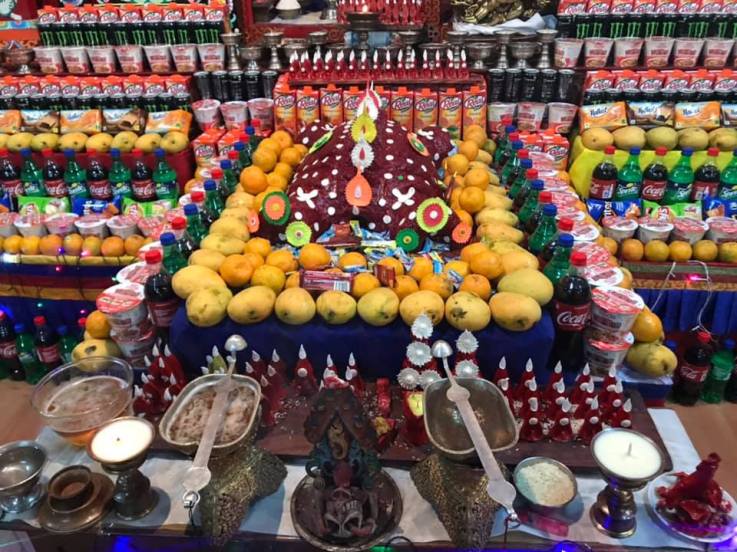
Tsok offerings for the principal deities and retinue of the Mother Tantra. Photo credit: Unknown

For those who have vows with a yidam deity, performing a tsok is an opportunity to repair broken vows or commitments related to the yidam practice and increase merit and wisdom. Having offered to the enlightened beings, we gain more power and energy. Additionally, past negative actions and the obstacles and imbalances of daily life are purified. Qualities such as health, longevity, prosperity, confidence, stability are enhanced. When undergoing a deity retreat, a tsok is performed during the final session of practice each day.

When performing a tsok, the ritual can be done in its condensed, medium-length, or extensive forms. This is determined by the purpose of the tsok, the sponsor, the circumstance, and the umdzé or ritual director of the feast offering. However, every tsok has a similar structure consisting of preparation, preliminaries, prayers related to the specific deity together with their retinue, and the concluding prayers.  In general, once the length of the tsok is determined the necessary sacred substances, offering torma, and food offerings are prepared. Everything must be clean, prepared according to the text, and placed in its proper position in the shrine area. The preliminary practices consist of the usual foundation of setting an boundary in order to keep out obstacles and to keep in the blessings, going for refuge, generating the mind of enlightenment for self and others and admission of wrongdoing and purification.

The tsok offerings are then ritually cleansed with water and incense. The tsok is then empowered through visualization and mantra and becomes delicious, containing the eight qualities of nutrition, as well as limitless auspiciousness and positive qualities. The principal deity are retinue are formally invited to tsok and asked to reside in the objects of support such as the yidam torma or image that has been centrally placed on uppermost level of the shrine. Now that the enlightened deity is present, prostrations are offered. One can also take this opportunity to confess any broken vows or commitments to the deity and receive purification and renewal of those vows.

wrathful tsok

A wrathful tsok offering. Photo credit: Unknown

The eight offering goddesses are imagined to present the eight external offerings to the assembly of deities. Then, rakta mixed with tea is offered and is symbolic of a blood offering. This represents offering the liberation of our desire and attachment. Next, the ritually prepared medicinal alcohol is empowered and presented to the yidam deities which represents offering our wisdom. The tsok is then liberated by being cut. The top-most portion is offered to the deities, and the next portion is offered to the lineage lamas of the practice being performed. The linga torma represents outer enemies and obstacles as well as the inner five poisons, wrong views etc. This torma is now presented to the yidam, liberated by cutting, and then offered while requesting the ordinary and supreme attainments of the practice. The Yungdrung Bön protectors are presented with offerings, the prayer of delighting the deities and the lineage with the tsok is performed, and the prayer of attainment is performed.

“Within this mandala where marvelous things arise,

there is a collection of enjoyable things such as sights, sounds, smells, tastes, things to touch, ornaments, Bön treasures, etc.

Through this unsurpassed cloud of offerings, both actually set out and imagined,

may our sacred commitments be fulfilled!

Through the blessings of having fulfilled our sacred commitments to you,

may the enlightened teachings of the Yungdrung Bön spread!

Dispel into space all external, internal, and secret obstacles!”

And,

“Emaho!

This sacred food is the essence of spiritual attainment.

I will partake of it and receive both the ordinary and the supreme spiritual attainments!”

Then, by eating the tsok, we renew our vows with the yidam deities and receive their blessing and empowerment. We then share the leftovers of the tsok offerings as a charitable gift to those lower beings who are powerless to take part in the tsok and depend upon our generosity to receive its blessings.

The concluding practices include prayers of aspiration and auspicious followed by dedicating all of the virtuous activity performed during the tsok for the benefit of every sentient being within cyclic existence.

For more information about the cycle of Mother Tantra texts, see previous article: https://ravencypresswood.com/2021/12/18/a-brief-introduction-to-the-mother-tantras-of-yungdrung-bon/

Tibetan translations by Raven Cypress Wood

Raven Cypress Wood ©All Rights Reserved. No content, in part or in whole, is allowed to be used without direct permission from the author.

Don’t want to miss a post? Scroll to the bottom and click “Follow this blog.”

Want to join the mandala of Nine Ways supporters? Follow this link https://ravencypresswood.com/donate/

Yungdrung Bön in Mongolia

His Eminence Menri Ponlop Yangtön Thrinley Nyima Rinpoche officiates the opening of Thegchen Zhidé Dargyé LIng. Photo credit: Unknown

On December 19, 2019 a new Yungdrung Bön temple was officially inaugurated by His Eminence Menri Ponlop Yangtön Thrinley Nyima Rinpoche upon the request of its founder, Khenpo Menri Geshe Zöpa Gyatso Rinpoche. The temple is named Thekchen Zhidé Dargyé Ling, Land of the Great Vehicle where Peace and Happiness Flourish. On December 15th, His Eminence performed the rituals for consecrating and opening the eye for the new deity statues for the temple. On December 16th, His Eminence met with special guests and those who helped to establish the new temple.

The public looks on as HE Menri Ponlop Rinpoche officially opens the new temple in Mongolia. Photo credit: Unknown

Beginning on December 17th, HE Menri Ponlop Rinpoche gave the oral transmission for the practice of Sherab Jamma and Laughter of the Khandro to a gathering of monks and laypeople. On December 19th, His Eminence officially opened the new Yungdrung Bön temple, Thekchen Zhidé Dargyé Ling. In attendance were representatives of the Jonang Religious tradition, the Nepal Zhang Zhung organization, the Nepal Bönpo organization, and the Dolpo Tapihritsa School. After His Eminence cut the ribbon, the guests entered the new temple. Representations of enlightened body, speech and mind were presented which was followed by the ritual of the great lama Drenpa Namkha. After the ritual had concluded, each of the representatives had an opportunity to give a short speech.

Afterwards, HE Menri Ponlop Rinpoche spoke about the spread of Yungdrung Bön into Mongolia in the distant past. In 888 A.D., the Mongolian slave Sokpo Trel Lakchen received full ordination as a Yungdrung Bön monk from Muzi Salzang. At that time, he received the ordination name Tribar Tsultrim. Afterwards, Bön declined in Mongolia. Therefore, this is not the first spread of Bön into the country. However, through Khenpo Menri Geshe Zöpa Gyatso Rinpoche the Bön teachings are being restored in Mongolia.

He also relayed a message from His Holiness 34th Menri Trizin Rinpoche that he offered his full support and blessings and gifted the temple a golden statue of Nyammé Sherap Gyaltsen. From Yongdzin Mawé Wangpo Rinpoche, the temple was gifted both scriptures and a large thangkha. HE Menri Ponlop Rinpoche gifted the temple a golden statue of the great lama Drenpa Namkha.

Raven Cypress Wood ©All Rights Reserved. No content, in part or in whole, is allowed to be used without direct permission from the author.

Don’t want to miss a post? Scroll to the bottom and click “Follow this blog.”

Yungdrung Bön in Thailand

HH 34 Menri Trizin Rinpoche, Khen Tenpa Yungdrung Rinpoche and the founder of Himalaya Zhang Zhung Dzogchen Ling, Khen Akarpa Rinpoche. Photo credit: Unknown

On December 12, 2019, Himalaya Zhang Zhung Dzogchen Ling celebrated their 10 year anniversary with special guests His Holiness 34th Menri Trizin Lungtok Dawa Dargye Rinpoche and His Eminence Khenchen Lungtok Tenpa Yungdrung Rinpoche. This Yungdrung Bön center was founded in Bangkok, Thailand in 2009 by Khen Rinpoche Akarpa Chime Lozang. Some of the events to mark the special occasion included a talk on the subject of Mawé Sengé, performance of the Three-fold Practice of the Mother Tantra, the sacred dance of the enlightened protector Yeshé Walmo, and offering the body through the practice of chod. Khen Akarpa Rinpoche gave a talk on the view, meditation and conduct according to the unsurpassed vehicle of the great perfection.

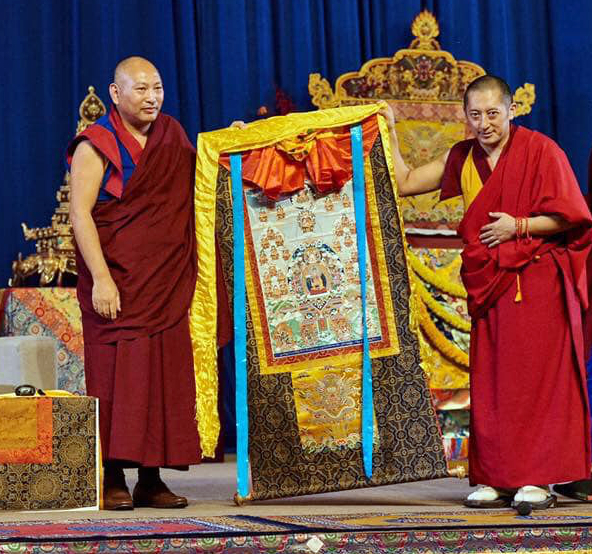
HH 34th Menri Trizin Rinpoche presents Khen Akarpa Rinpoche with a thangkha of the successive Menri abbots. Photo credit: Unknown

Khen Rinpoche Lungtok Tenpa Yungdrung spoke about the history of the great perfection teachings of The Aural Transmission of Zhang Zhung including the five-fold advice of Lama Dawa Gyaltsen. His Holiness 34th Menri Trizin Lungtok Dawa Dargye Rinpoche presented Himalaya Zhang Zhung Dzogchen Ling with a thangkha of the successive abbots of Menri Monastery whose central figure is the saint His Holiness 33rd Menri Trizin Lungtok Tenpé Nyima Rinpoche.

Performance of the sacred dance of the protector Yeshe Walmo. Photo credit: Unknown

Raven Cypress Wood ©All Rights Reserved. No content, in part or in whole, is allowed to be used without direct permission from the author.

Don’t want to miss a post? Scroll to the bottom and click “Follow this blog.”

Homage to the Spiritual Master

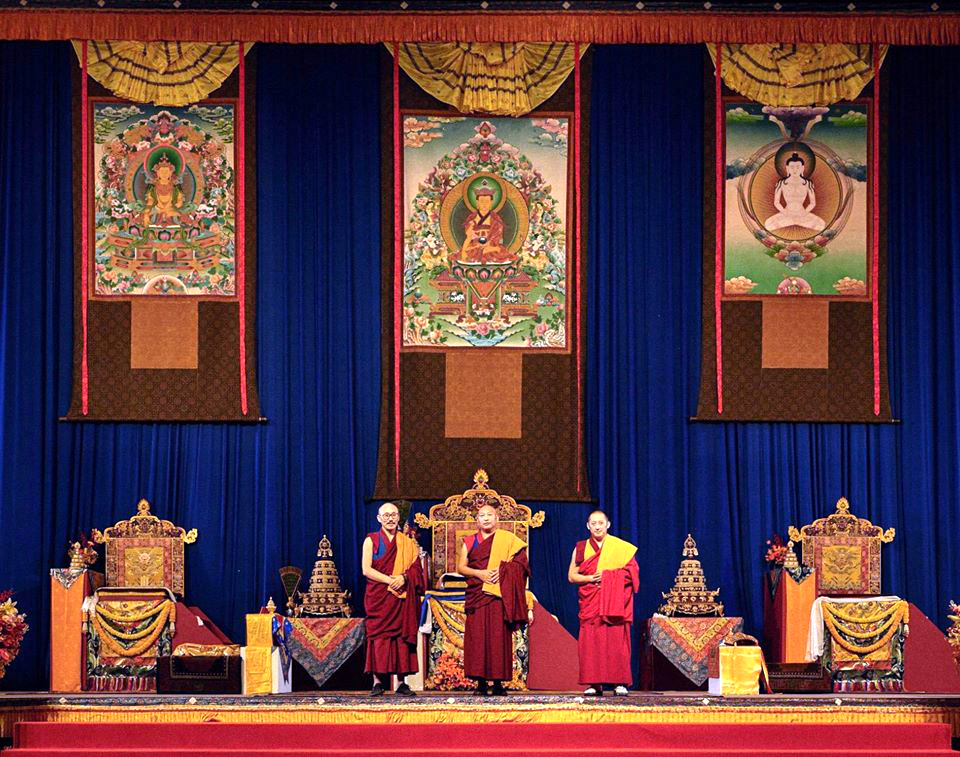
Monks at Menri Monastery welcome HH 34th Menri Trizin Rinpoche upon his return to the monastery. Photo credit: Unknown.

“Above the crown of my head upon a throne of a lotus, sun and moon is the essence of all victorious ones, my kind lama.

I pray to those who have the ability to lead beings out of cyclic existence. Grant your blessings so that I may effortlessly accomplish benefit to self and others!”

— Extract from Tsa Lung Sol Dep, Supplication Prayer for the Practice of the Channels and Winds written by Shardza Tashi Gyaltsen Rinpoche

All translations and content by Raven Cypress Wood ©All Rights Reserved. No content, in part or in whole, is allowed to be used without direct permission from the author.

Don’t want to miss a post? Scroll to the bottom and click “Follow this blog.”

The Monastery of Blissful Meditation: Déden Samten Ling

Samling Temple complex. Photo credit: Unknown

The high altitude temple of Déden Samten Ling, or in its shortened form simply Samling, has been significant in the preservation of the Yungdrung Bön religious tradition. The main temple was established more than 900 years ago by Yangtön Gyaltsen Rinchen in a remote and mountainous region of Dolpo, Nepal near the Tibetan border. Since that time, this monastery, as well as others in Dolpo, has been maintained by a hereditary line of lamas within the Yangtön family. (For more information about the prestigious Yangtön family lineage, see previous post: https://ravencypresswood.com/2017/05/27/yangton-sherap-gyaltsen/)

map of dolpo copy

According to a text detailing the history of the Yangtön family lineage, some time during the 13th century Yangtön Gyaltsen Rinchen was staying near Mt. Tisé in Western Tibet [Mt. Kailash] when he was visited in a dream by the Bönpo sage and great lama Drenpa Namkha who instructed him to travel to Dolpo and build a temple. Having traveled the long distance to Dolpo and searched throughout its rugged terrain, Yangtön Gyaltsen Rinchen had a series of auspicious dreams while staying in the area of Bijer that convinced him that he had finally found the proper place to construct a Yungdrung Bön temple.

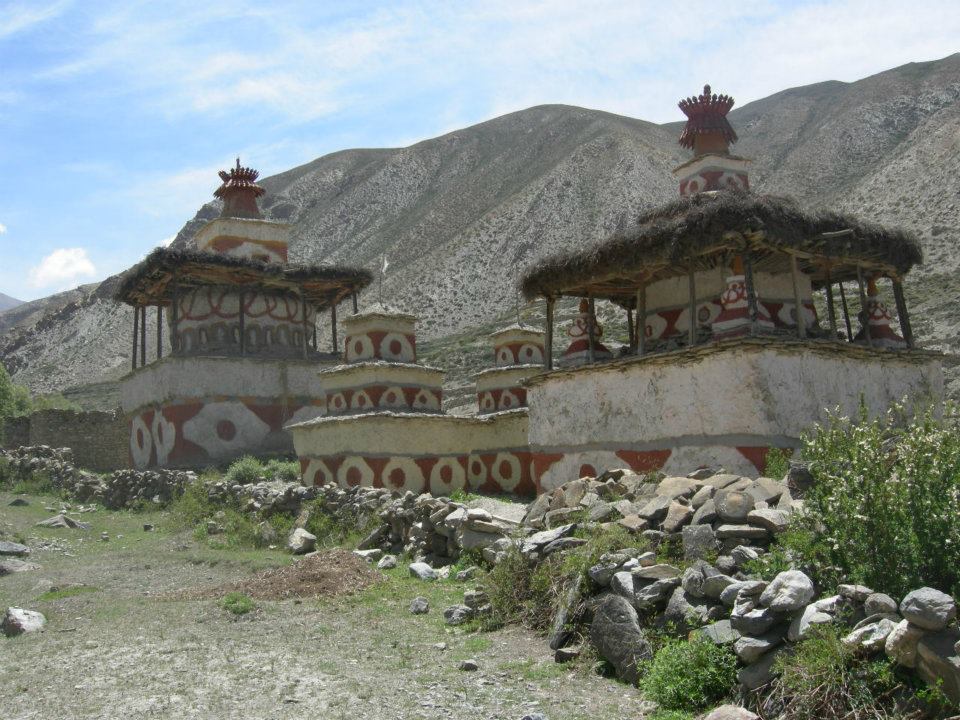
Chortens of Samling. Photo credit: Unknown.

He became the first of many Yangtön lamas at Samling to collect and preserve sacred Yungdrung Bön texts. Because of this, many volumes of scripture have been preserved throughout the course of many centuries. It was during a trip to Samling Monastery in 1961 C.E. that Dr. David Snellgrove discovered a copy of the Zi Ji, a hagiography of Buddha Tönpa Shenrap. He subsequently wrote and published extracts from this text as one of the first English language translations of a Yungdrung Bön text, The Nine Ways of Bön. The Zi Ji volume that he consulted for his translation was estimated to be approximately 400 years old.

Currently, Lama Sherap Tenzin Rinpoche is the head of the monastery.  He was born in 1953 C.E. and has received extensive religious training and has been trained in the science of Tibetan medicine.

Left: H.E. Menri Ponlop Yangtön Thrinley Nyima Rinpoche, Center: H.H. 33rd Menri Trizin Rinpoche, Right: Yangtön Lama Sherap Tenzin Rinpoche. Photo credit: Unknown.

Nine Ways has a new Shop! Click the tap at the top of this page to see what practice support items are available. Currently, the Nine Ways Shop is fundraising in support of a memorial chorten that will be built in Tsarka Dolpo, Nepal for Yangtön Lama Tashi Gyaltsen. For more information about this chorten, go to this article: https://ravencypresswood.com/2025/10/18/in-support-of-a-memorial-chorten-for-yangton-lama-tashi-gyaltsen-rinpoche/

Raven Cypress Wood ©All Rights Reserved. No content, in part or in whole, is allowed to be used without direct permission from the author.

Did you enjoy this content? This article is made possible by generous donors who want content like this to continue to be available. Don’t want to miss a post? Scroll to the bottom and click “Follow this blog.”

Join the mandala of Nine Ways supporters by donating through one of the services listed below.