Category Archives: Uncategorized

New Book Announcement: Escape from Darkness

Escape From Darkness tells the story of Buddha Tönpa Shenrap’s younger daughter, Shenza Nechung. Translated from the medium-length hagiography of the Buddha, the Do Zer Mik, this book chronicles the gripping journey of Shenza Nechung from princess, to prisoner, to spiritual leader among her father’s disciples. Lacking the power of true understanding and stable faith, she was led astray by delusion as a youth. Her mother gave her advice, but it was of no avail.

“My daughter Shenza Nechung was restless, and her mind was not steady. She even had an inauspicious dream. I asked her to pick flowers in the garden and make an offering of them to the temple along with prostrations. I sent her to pick flowers. Her return was taking too long, and when I went to the garden to look for her, she was not there. The garden was empty. I looked for her in the four directions, and she was nowhere to be seen. I called for her in the four directions, and there was not a single trace of her. Now all of you must search for her in the four directions.”

— Extract from Escape from Darkness: The Spiritual Journey of the Buddha’s Daughter, Shenza Nechung

Shenza’s story has been translated from the Tibetan into English for the first time by Sangmo Yangri, Ph.D. She received her Ph.D. in Bön and Buddhist studies in 2013 and has published various articles and taught at Ratna Menling Nunnery. Dr. Yangri is currently a teacher and translator for Lishu Institute in Northern India.

Escape from Darkness, published by Sacred Sky Press, can be purchased through this link: http://www.lulu.com/shop/sangmo-yangri/escape-from-darkness/paperback/product-24121255.html

All translations and content by Raven Cypress Wood ©All Rights Reserved. No content, in part or in whole, is allowed to be used without direct permission from the author.

Don’t want to miss a post? Scroll to the bottom and click “Follow this blog.”
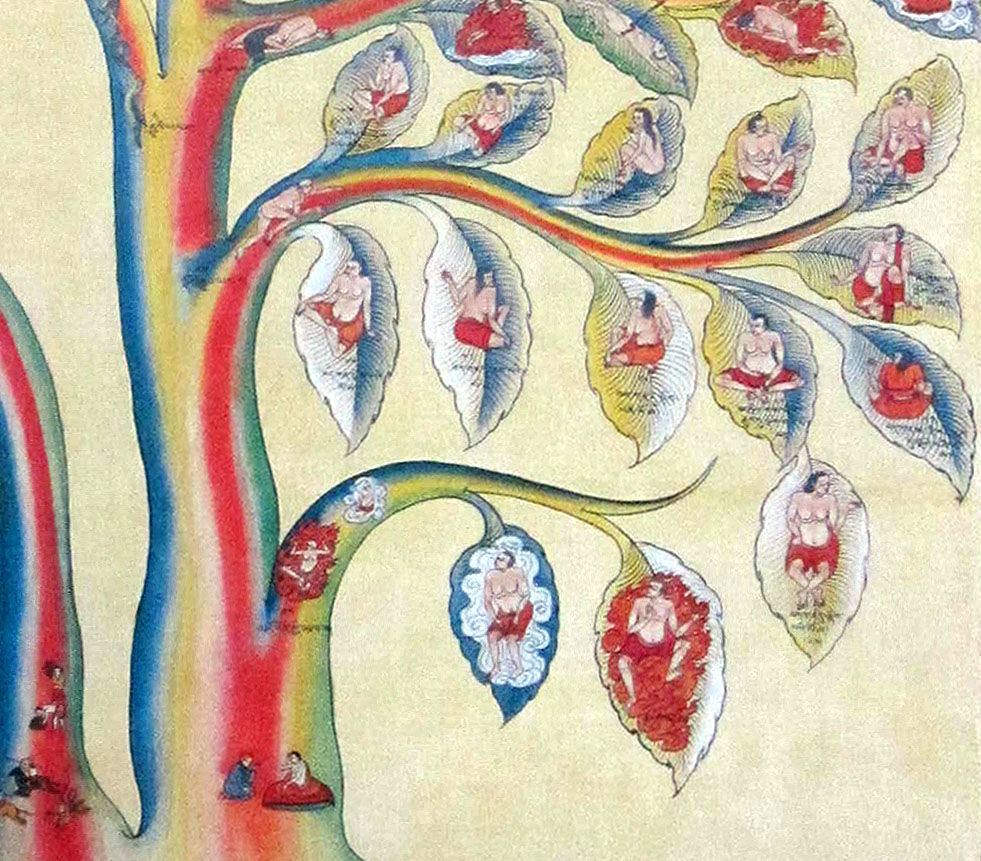
Aspiration of The First Way

The tree of health and illness. Photo credit: Raven Cypress Wood.

Germinating and ripening,

like a blaze of good fortune within the realm of appearance and existence,

giving birth to the positive result of longevity, prosperity, and good harvests,

providing healing for the benefit and happiness of migrating beings in the world;

may we have the auspiciousness of The Way of the Shen of Prediction!*

—Excerpt from The Auspiciousness of the Stages of The Nine Ways

*For more information about The First Way, The Way of the Shen of Prediction, see previous post:

https://ravencypresswood.com/2013/03/27/1st-of-the-nine-ways-divination-astrology-and-medicine/


All content and translations Raven Cypress Wood ©All Rights Reserved. No content, in part or in whole, is allowed to be used without direct permission from the author.

Don’t want to miss a post? Scroll to the bottom and click “Follow this blog.”

Sacred Purification

HH 34th Menri Trizin Lungtok Dawa Dargyal Rinpoche performs a water cleansing ritual. Photo Credit: Unknown.

“Having washed with this healing water, I clearly imagine that all contaminations are washed away because of this medicine.”

—From The Healing Waters Mantra of Nampar Jompa

Tibetan translation Raven Cypress Wood

Raven Cypress Wood ©All Rights Reserved. No content, in part or in whole, is allowed to be used without direct permission from the author.

Don’t want to miss a post? Scroll to the bottom and click “Follow this blog.”
Nangzhig: Largest Yungdrung Bön Monastery in Tibet

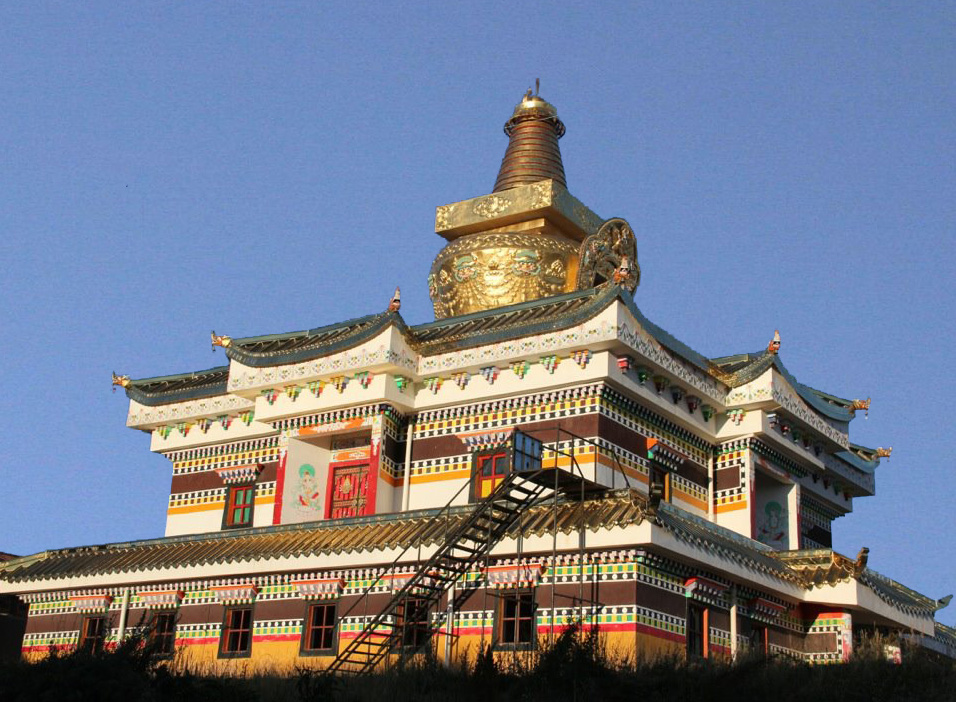
Nangzhig Monastery edit

Nangzhig Monastery’s formal name is Nangzhig Gyaltsen Puntsok Ling, Marvelous Land of the Buddha’s Teachings which Destroys Appearances.  It is also known as Nangzhig Tashi Yungdrung Ling, Land of the Auspicious Yungdrung which Destroys Appearances.  It is located in the Amdo Ngawa region and is the largest Yungdrung Bön monastery in Tibet.  The monastery was founded by Yönten Gyaltsen in 1108.  Similar to many other monasteries, Nangzhig Monastery was destroyed during the cultural revolution that began in 1959 and many of its religious articles were hidden away.  In 1980 when the People’s Republic of China began to allow more religious practice, reconstruction and reinstallment of religious artifacts was organized by Gya ‘Ob Tenzin Wangyal Rinpoche.

Nangzhig monastery complex cropped

The monastery complex is quite extensive and includes multiple temples, multiple dormitories for monks and living quarters for senior lamas, and three large chortens among other structures.   During large festivals, the monastery has the capacity to house two thousand monks.

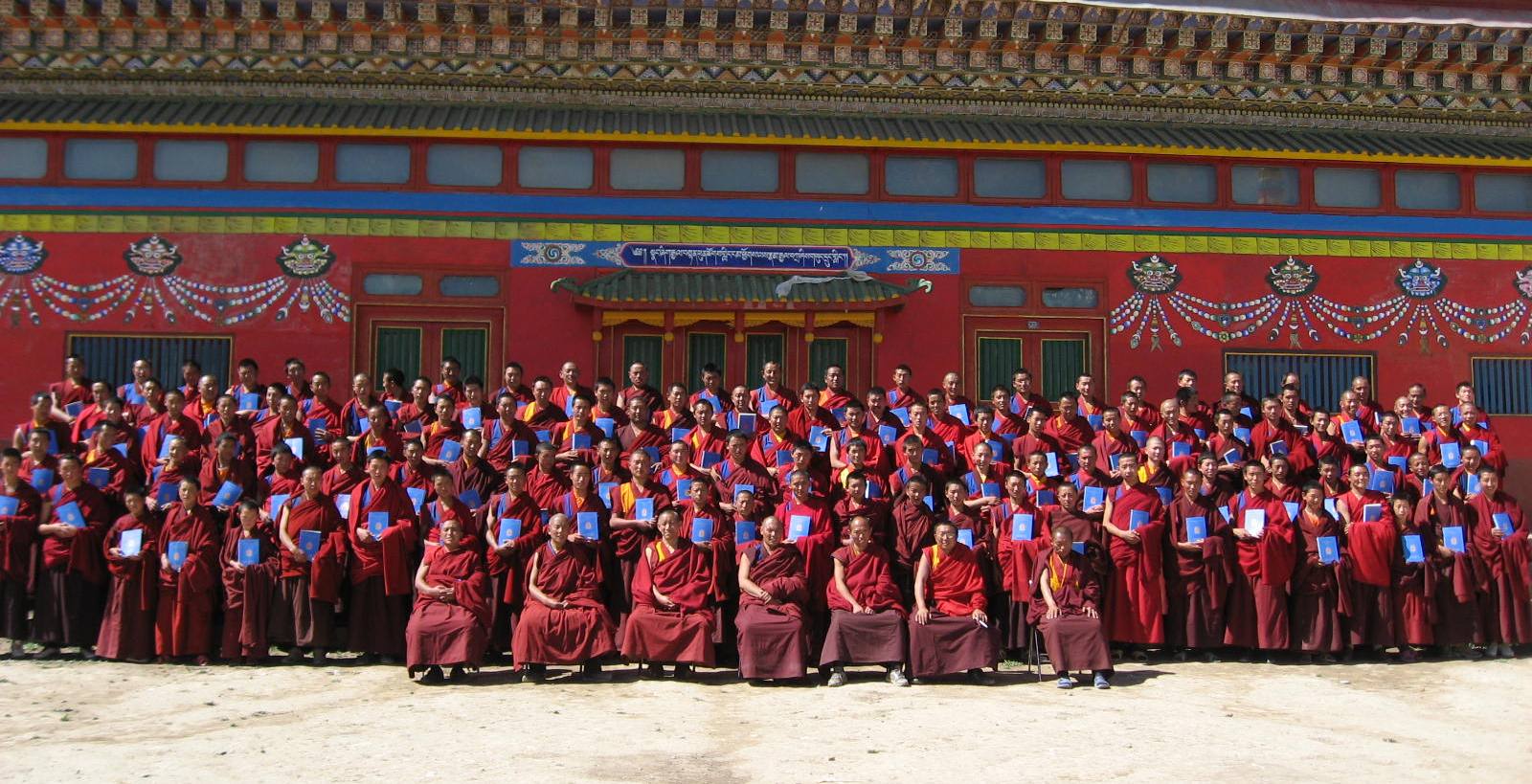
Nangzhig students

Nangzhig Monastery has both a dialectic college and a meditation college.  There are approximately a thousand monks living there and more than two hundred new students arrive each year.  Being a major center for learning and educational exchange in Tibet, the monastery has multiple copies of the Bön canon and over two thousand blocks for printing the texts.  Monks attending the dialectic college must attend classes and debate every day except Sunday and during retreats.  Once the students of the dialectic college have completed ten years of study and successfully passed their final examinations, they receive the degree of Geshe, which is similar to a doctorate of philosophy and religion.  Monks attending the meditation college must complete a three-year retreat based upon the A Tri teachings.

Raven Cypress Wood ©All Rights Reserved. No content, in part or in whole, is allowed to be used without direct permission from the author.

Don’t want to miss a post? Scroll to the bottom and click “Follow this blog.”

The Next Generation of Female Practitioners

Young nuns of Tsüngon Rayna Menling in Dolanji, India. Photo credit: Dorrie Ameen