Category Archives: Uncategorized

Homage to the Spiritual Master

Monks at Menri Monastery welcome HH 34th Menri Trizin Rinpoche upon his return to the monastery. Photo credit: Unknown.

“Above the crown of my head upon a throne of a lotus, sun and moon is the essence of all victorious ones, my kind lama.

I pray to those who have the ability to lead beings out of cyclic existence. Grant your blessings so that I may effortlessly accomplish benefit to self and others!”

— Extract from Tsa Lung Sol Dep, Supplication Prayer for the Practice of the Channels and Winds written by Shardza Tashi Gyaltsen Rinpoche

All translations and content by Raven Cypress Wood ©All Rights Reserved. No content, in part or in whole, is allowed to be used without direct permission from the author.

Don’t want to miss a post? Scroll to the bottom and click “Follow this blog.”

Iconography: Animals Under a Throne

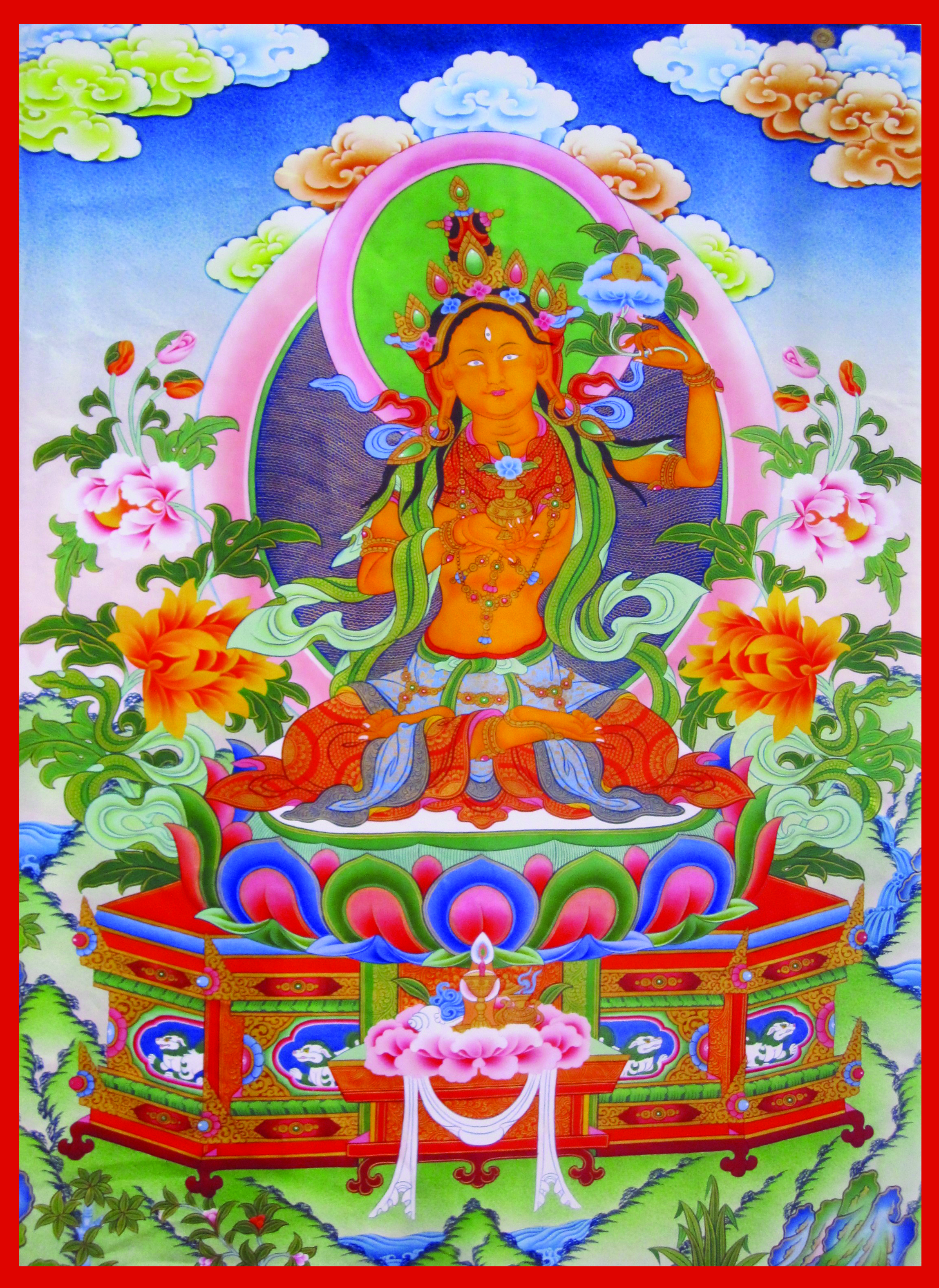
Sherap Jamma with lions underneath her seat as painted by Lama Kalsang Nyima. Photo credit: Raven Cypress Wood

Iconography is the use of images and symbols to convey meaning or concepts especially in a spiritual context. The iconography within the Yungdrung Bön religious tradition is detailed within many volumes of scriptures. Symbolic meanings are specific and often complex depending upon the context. Meaning is attributed to includes composition, proportions, color, hand objects, clothing, ornamentation, etc.  Sometimes, a few of these details are left to the interpretation of the artist but they are most often prescribed within the sacred text.

Elephant throne

A throne depicting elephants under the main figure

The Tibetan thangkha is a painting on canvas that is framed in brocade and has dowels at the top and bottom to enable the painting to be hung and also rolled like a scroll.  These paintings are rolled from the bottom towards the top.  There are often ties at the top that are used to fasten the rolled painting and allow it to be easily carried.

Horse throne

A throne depicting horses under the main figure

An example of the use of iconography within the Yungdrung Bön religious tradition is demonstrated by the images of animals depicted underneath the throne of enlightened deities. This position symbolizes that the deity tames or transforms the quality associated with the animal. According the oral teachings of the preeminent scholar and spiritual master His Eminence Yongdzin Tenzin Namdak Rinpoche, the five common animals depicted in this way symbolize the following:  the lion symbolizes anger, the elephant symbolized ignorance, the garuda symbolizes desire, the horse symbolizes jealousy, and the dragon symbolizes pride.

Garuda throne

A throne depicting garudas under the main figure

For example, although the buddha Sherap Jamma has all of the perfected qualities, emphasis is placed on her teaching sentient beings to transform anger and hatred into love and kindness.  This is symbolized by lions being depicted on the throne underneath her as she sits peacefully.

Throne with all 5 animals

A throne depicting each of the five animals.All translations and content by Raven Cypress Wood ©All Rights Reserved. No content, in part or in whole, is allowed to be used without direct permission from the author.

Don’t want to miss a post? Scroll to the bottom and click “Follow this blog.”


The Mind of the Lama

HE Menri Ponlop Yangton Trinley Nyima Rinpoche helps a student during an exam at Menri Monastery. Photo credit: Unknown.

“EMAHO!

Enlightened Ones of the ten directions who appeared in the past,

Enlightened Ones of the ten directions who appear in the present,

Enlightened Ones of the ten directions who will appear in the future,

the Mind of the lama is the embodiment of all these Enlightened Ones of the three times.”

— Extract from The Spontaneous Wish-Fulfillment of Removing Obstacles from the Path

For more about this important Yungdrung Bön prayer, see https://ravencypresswood.com/publications/

All translations and content by Raven Cypress Wood ©All Rights Reserved. No content, in part or in whole, is allowed to be used without direct permission from the author.

Don’t want to miss a post? Scroll to the bottom and click “Follow this blog.”

Daily Practices: The Cleansing Water Rite

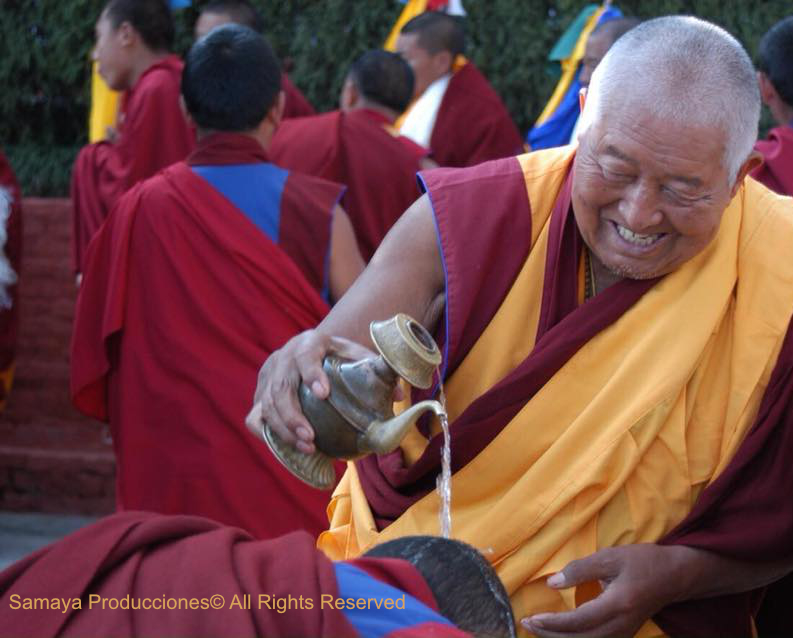
H.E. Yongdzin Tenzin Namdak Rinpoche offers cleansing water to a monk at Triten Norbutse Monastery in Nepal. Photo credit: Samaya Producciones.

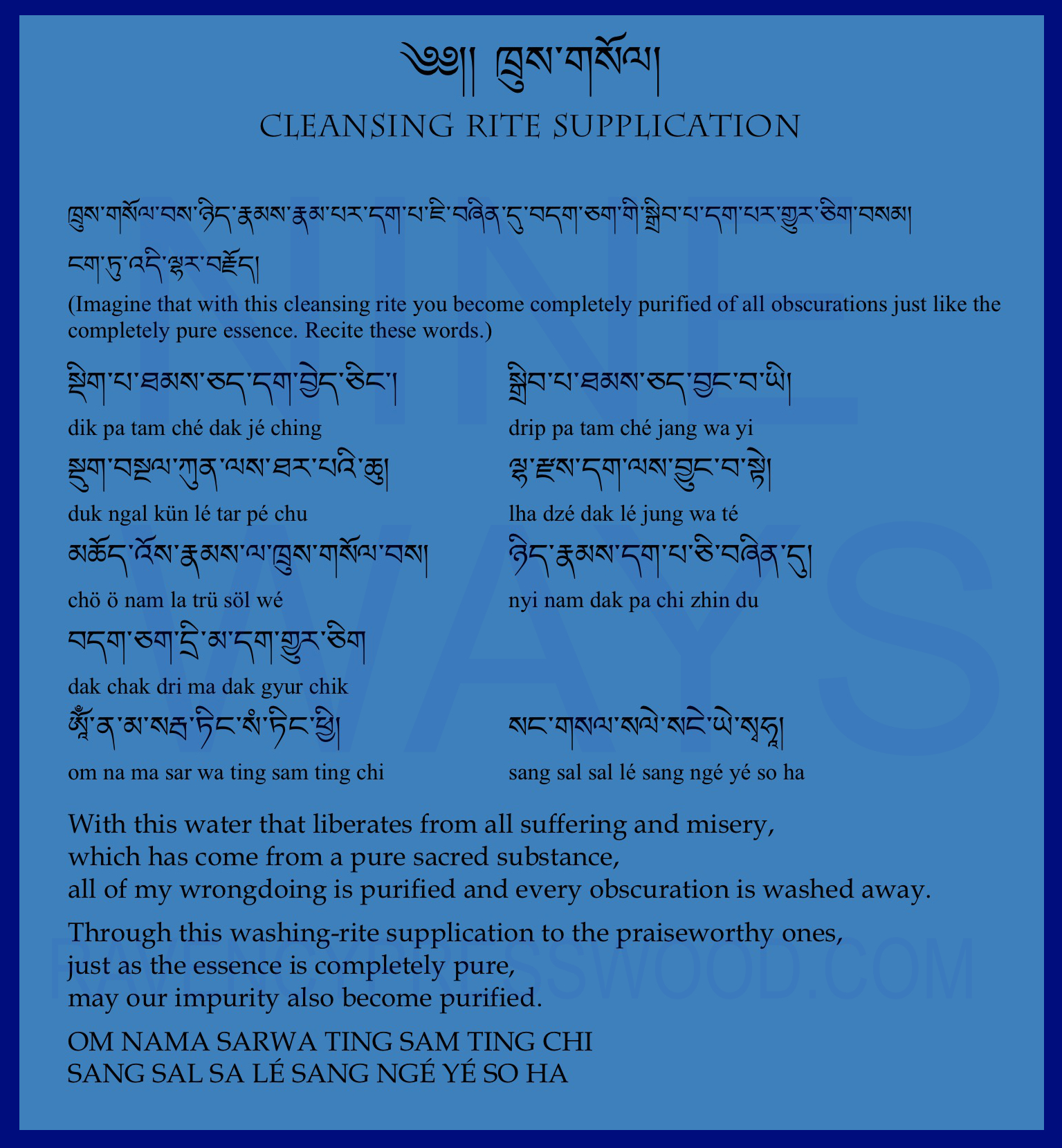
Within the Yungdrung Bön religious tradition, there are many rituals to imbue water with the power to wash away contaminations and defilements. Because they pollute our individual forces of good luck, vitality, power, etc., they can attract negative circumstances or illness, they can decrease our longevity and increase circumstances of disharmony and conflict. Contaminations and defilements are created through many kinds of behavior and environmental factors such as breaking one’s vows or encouraging others to break their vows, interfering with the spiritual practice or virtuous activity of others, negative astrological constellations, etc. Therefore, each morning upon rising, it is traditional for monks, nuns, genyen, and even ordinary practitioners to perform a cleansing water rite. When the rite is performed by a lama for others, the water is poured onto the crown of the head and then a small amount of the water is given to drink. Having done so, the practitioner imagines that even the most subtle obscurations, contaminations and defilements are completely washed away.

“Anyone affected by contaminated energy, latent karmic potentialities, misfortune or defilements, having recited the mantra into clean water and ritually washed, even karmic defilements will be purified.”  

—From Benefits of the Recitation Practice of the Precious Lamp (The MA TRI Mantra)
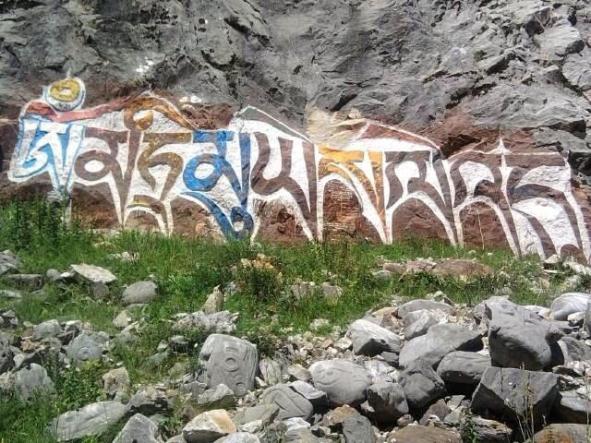
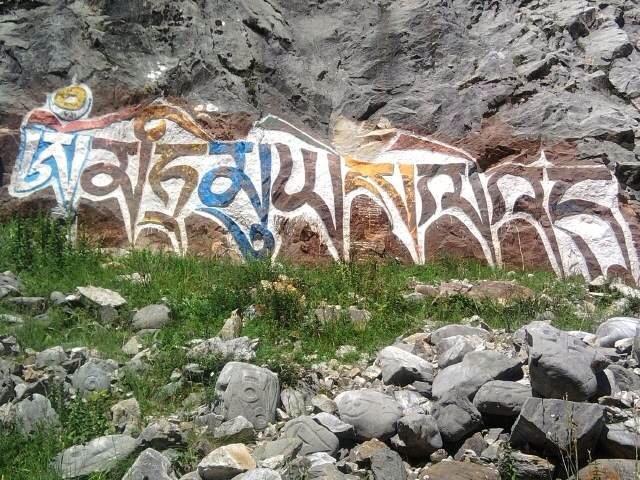
The MA TRI mantra on a cliff face in Tibet. Photo credit: Unknown.

“Having washed with this water, I clearly imagine that any remaining contamination is washed away because of this medicine.

Without exception, any migrating being will be released from all suffering and misery, and illness and injury will be pacified. 

Obstacles along with their causes will be overcome. Both the lifespan and virtuous merit will increase. 

Glory and fame will spread, and the ripening of karma will be purified.”

—From The Cleansing-Rite Mantra of Nampar Jompa

“If you recite the mantra to good quality water mixed with powdered, medicinal incense and then cleanse with that water, all illness and sickness caused by negative forces will be pacified and all defilements and contaminations will be purified.”

—From The Heartdrop of Jamma

(For more information about The Heartdrop of Jamma and its translation, see previous post: https://ravencypresswood.com/2019/07/20/the-practice-of-jamma-chenmo-the-great-loving-mother-2/

All translations and content by Raven Cypress Wood ©All Rights Reserved. No content, in part or in whole, is allowed to be used without direct permission from the author.

Don’t want to miss a post? Scroll to the bottom and click “Follow this blog.”

The Monastery of Blissful Meditation: Déden Samten Ling

Samling Temple complex. Photo credit: Unknown

The high altitude temple of Déden Samten Ling, or in its shortened form simply Samling, has been significant in the preservation of the Yungdrung Bön religious tradition. The main temple was established more than 900 years ago by Yangtön Gyaltsen Rinchen in a remote and mountainous region of Dolpo, Nepal near the Tibetan border. Since that time, this monastery, as well as others in Dolpo, has been maintained by a hereditary line of lamas within the Yangtön family. (For more information about the prestigious Yangtön family lineage, see previous post: https://ravencypresswood.com/2017/05/27/yangton-sherap-gyaltsen/)

map of dolpo copy

According to a text detailing the history of the Yangtön family lineage, some time during the 13th century Yangtön Gyaltsen Rinchen was staying near Mt. Tisé in Western Tibet [Mt. Kailash] when he was visited in a dream by the Bönpo sage and great lama Drenpa Namkha who instructed him to travel to Dolpo and build a temple. Having traveled the long distance to Dolpo and searched throughout its rugged terrain, Yangtön Gyaltsen Rinchen had a series of auspicious dreams while staying in the area of Bijer that convinced him that he had finally found the proper place to construct a Yungdrung Bön temple.

Chortens of Samling. Photo credit: Unknown.

He became the first of many Yangtön lamas at Samling to collect and preserve sacred Yungdrung Bön texts. Because of this, many volumes of scripture have been preserved throughout the course of many centuries. It was during a trip to Samling Monastery in 1961 C.E. that Dr. David Snellgrove discovered a copy of the Zi Ji, a hagiography of Buddha Tönpa Shenrap. He subsequently wrote and published extracts from this text as one of the first English language translations of a Yungdrung Bön text, The Nine Ways of Bön. The Zi Ji volume that he consulted for his translation was estimated to be approximately 400 years old.

Currently, Lama Sherap Tenzin Rinpoche is the head of the monastery.  He was born in 1953 C.E. and has received extensive religious training and has been trained in the science of Tibetan medicine.

Left: H.E. Menri Ponlop Yangtön Thrinley Nyima Rinpoche, Center: H.H. 33rd Menri Trizin Rinpoche, Right: Yangtön Lama Sherap Tenzin Rinpoche. Photo credit: Unknown.

Nine Ways has a new Shop! Click the tap at the top of this page to see what practice support items are available. Currently, the Nine Ways Shop is fundraising in support of a memorial chorten that will be built in Tsarka Dolpo, Nepal for Yangtön Lama Tashi Gyaltsen. For more information about this chorten, go to this article: https://ravencypresswood.com/2025/10/18/in-support-of-a-memorial-chorten-for-yangton-lama-tashi-gyaltsen-rinpoche/

Raven Cypress Wood ©All Rights Reserved. No content, in part or in whole, is allowed to be used without direct permission from the author.

Did you enjoy this content? This article is made possible by generous donors who want content like this to continue to be available. Don’t want to miss a post? Scroll to the bottom and click “Follow this blog.”

Join the mandala of Nine Ways supporters by donating through one of the services listed below.