Category Archives: Uncategorized

Bringing Experiences Outside of Meditation to the Spiritual Path

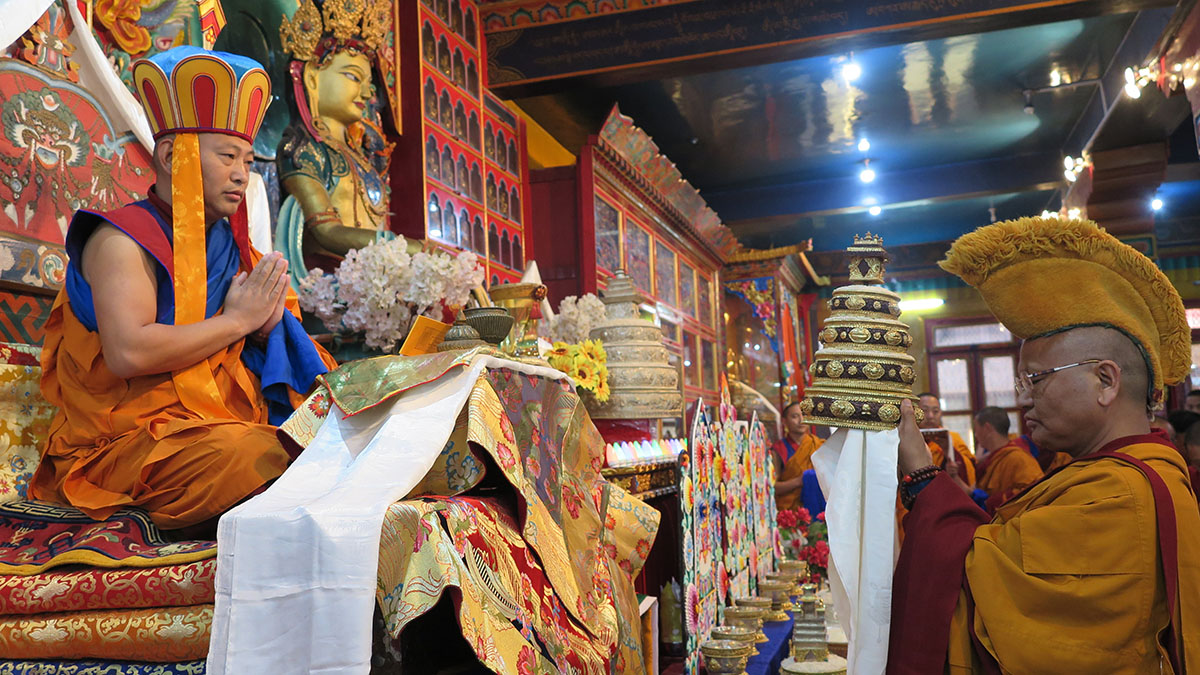
Inside the temple of Triten Norbutse Monastery in Nepal. Photo credit: Raven Cypress Wood

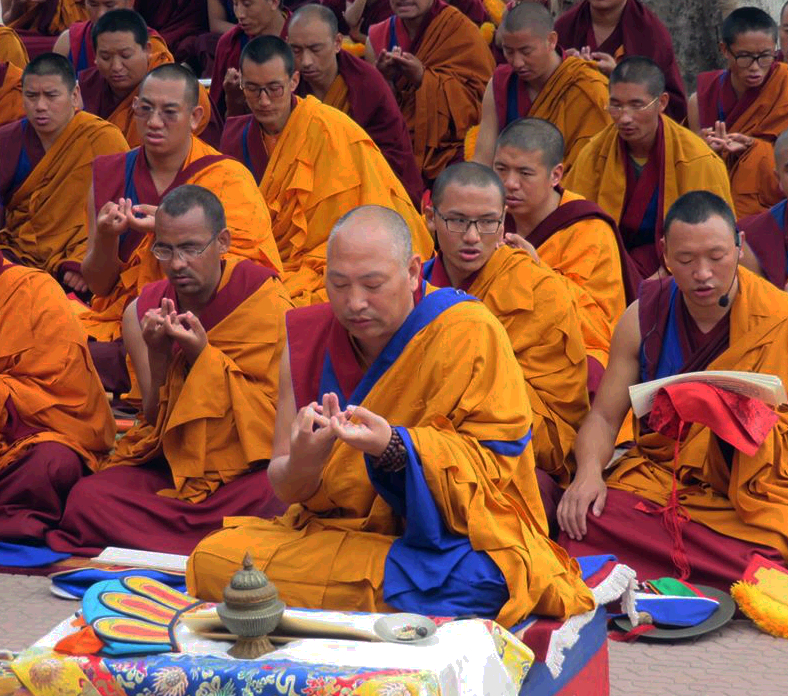
Ripening and loosening the mindstream through mind training and meditation are essential for being able to liberate oneself from the turbulent winds of the five poisons and the continuation of cyclic existence. Additionally, there are many methods for integrating the experiences between meditation sessions into spiritual practice. For those individuals who have a higher capacity, His Holiness the 22nd Menri Trizin Rinpoche has given this tenfold advice for training the mind by bringing experiences outside of meditation practice to the spiritual path. 

  1. Bringing Deprivation and Oppression to the Path: For anyone who takes all of my food and wealth, even though they carry away everything, just like a mother for her child generates a mind of caring, I will dedicate my virtue of the three times for them.
  2. Bringing Destruction to the Path:Without any fault of my own, even if someone is cutting off my head or destroying my body and life force, I will compassionately accept their wrongdoing onto myself and I will guide them along the path of enlightenment.
  3. Bringing Slander and Disregard to the Path:Even though someone continually expresses unpleasant things about me to the entire world, I will maintain a mind of kindness and speak about their good qualities.
  4. Bringing Criticism and Blame to the Path: Even though someone in the midst of a group of many people blames and insults me even though I am blameless, remembering that I practice virtue, I will resolve to respectfully feel happiness towards them.
  5. Bringing Mistreatment from Family Members to the Path:Even though the people that I love such as my mother, father, and children always treat me like an enemy, I will love them with a special kindness like one has for a child that has been stricken with an illness.
  6. Bringing Mistreatment from Strangers to the Path:Even though a person that is equal to me insults and disrespects me because of the influence of their pride, I will be respectful towards them just like the spiritual master that I hold at the crown of my head would act towards them.
  7. Bringing Disadvantages to the Path:Even though I have used up all of my food, money, and possessions, and I am in bed with sickness throughout my body, I will not blame anyone for the happiness of others or my own suffering. Without any [negative] actions in the past, suffering and misery would not exist for me.
  8. Bringing Wealth to the Path:Even though my fame pervades the three thousand-fold universe, I am respected by many people, and I have prosperity like that of a wealth deity; if I do not know that worldly possessions are without essence, I will discern that nothing can fill an empty mind.
  9. Bringing Restraint to the Path:If I do not subdue the enemy of my own five poisons, the enemies from outside will increase. Therefore, with the great abiding nature and the army of compassion I will subdue the illusory enemies of my mind.
  10. Bringing Attachment to the Path:The qualities of desire and attachment are comparable to salty water. No matter how much you drink, thirst only increases. Having immediately renounced whatever material things are desired or yearned for, I will know that what I have is enough and feel content.

— Translated by Raven Cypress Wood from The Forty-three Trainings for an Enlightened Mind composed by His Holiness 22nd Menri Throneholder Sonam Lodro Rinpoche, also known as Sherap Gongyal. 1784-1835

All translations and content by Raven Cypress Wood ©All Rights Reserved. No content, in part or in whole, is allowed to be used without direct permission from the author.

Don’t want to miss a post? Scroll to the bottom and click “Follow this blog.”
The Importance of Mindful Speech

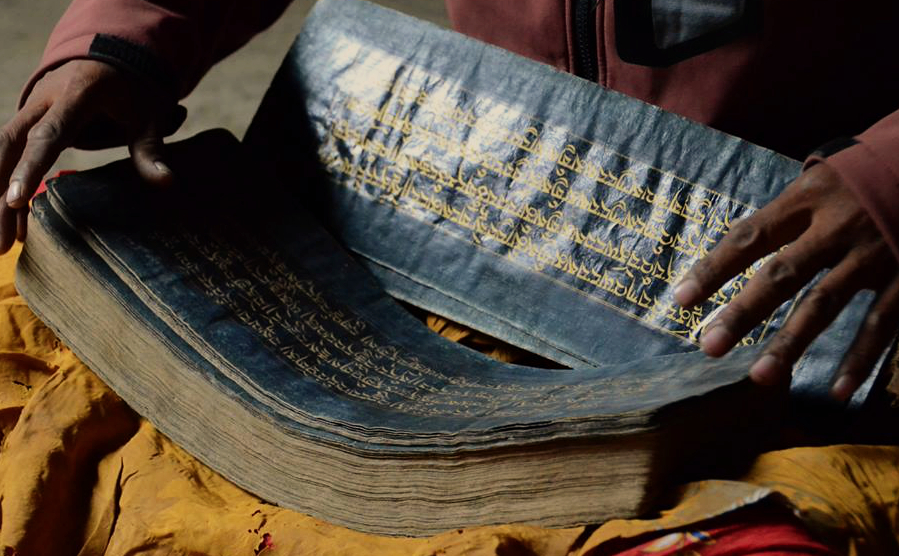
The sacred texts are considered a manifestation of enlightened speech and are respected in the way that they are created, handled, and stored. Scriptures are written with ink of gold, silver, copper, turquoise, or other precious substances.

From the point of view of the Yungdrung Bön religious philosophy, there are three doors through which we act: through the door of the body, through the door of speech, and through the door of the mind. Therefore, all actions whether positive, negative, or neutral are performed through these three doors. From this knowledge, spiritual practitioners apply the guidance of the Ten Virtuous Actions of Body, Speech, and Mind.

The Three Virtuous Actions of the Body:

  1. Rather than killing, protecting the life of other beings.
  2. Rather than stealing, practicing generosity.
  3. Rather than engaging in sexual misconduct or causing others to break their vows, keeping one’s own vows and respecting the vows of others.

The Four Virtuous Actions of Speech:

  1. Rather than lying, speaking the truth.
  2. Rather than creating discord, speaking in a way that brings people together.
  3. Rather than using hurtful speech, speaking gently and kindly.
  4. Rather than gossiping or mindlessly talking, speaking in a useful way or reciting prayers.

The Three Virtuous Actions of the Mind:

  1. Rather than coveting the possessions and accomplishments of others, being generous and open.
  2. Rather than wishing harm to others or feeling resentful, cultivating the desire to help others.
  3. Rather than holding wrong views, practicing the authentic teachings 

The importance of mindful speech is emphasized by it having four guidelines for behavior when the body and mind have only three. According to the esteemed spiritual master Shardza Tashi Gyaltsen Rinpoche in his Most Profound Sky Treasury:

“The conceptual mind is like a king and speech is like his minister. The minister accomplishes the king’s commands but the king alone is useless to do anything.

Similarly, having stopped countless offenses by restraining speech through mindfulness, the negative faults of the mind are never established.”

According to the 22nd Menri Trizin Sonam Lodro Rinpoche, also known as Sherap Gongyal, in his 43 Trainings for an Enlightened Mind:

“Even for someone who has entered into the Great Vehicle, the most superior practice,

if they talk a lot, their concentration can become deluded.

Without commenting on the good or bad of self or others, contemplate what is inexpressible and unmodified.”

And further,

“When harsh words are used to destroy the mind of others,

it will degenerate the practice of generating the mind of enlightenment.

Because of that, it is improper to destroy the mind of others with rough speech.

Therefore, renounce the use of harsh words.”

And his advice for bringing slander and disregard to the spiritual path:

“Even though someone continually expresses unpleasant things about me to the entire world,

I will maintain a mind of kindness and speak about their good qualities.”

The Tibetan syllabary is thought of as sacred rather than just an ordinary alphabet since these are the syllables used to record the guidance and teachings of the buddhas. Because of the sacred nature of the Tibetan syllabary, it is used as a mantra in practices that purify the previous negative expressions of speech as well as bless and empower present and future expressions of speech. Having transformed one’s self into the enlightened deity of speech, Chetak Ngomé, the Tibetan alphabet, known as the ALI KALI or the vowels and consonants, is recited while visualizing the syllables spinning on the tongue while both radiating and receiving wisdom light which purifies and blesses every aspect of speech.

“This ALI KALI destroys the negativities of speech and increases the power of mantra recitation 100,000 times.  In the morning when the crow leaves its nest, recite it 21 times.  In the evening when the crow returns to its nest, recite it 21 times.  Do this recitation continuously and as isolated speech [without interrupting it with ordinary speech]. There is immense power in doing a million recitations.  By doing this, the power and capacity of Lishu Taring blazed.”

— From The ALI KALI, the Cause for Enlightened Words and Source of the Scriptures

Having completed the recitation of any mantra, if the ALI KALI is recited three times at the end, it is said that it will increase the power of the mantra by 100,000 times. Similarly, it is traditional that at the conclusion of any kind of recitation of prayers or mantras, Bönpos will recite the mantra OM DHAR MA BHI SHU DHÉ TSA TRA HUNG PÉ and then blow upon their trengwa, or mala. This specific mantra is said to then empower the ordinary speech of the day with the positive qualities of the recitations.

These are only a few examples of the advice and methods given by the enlightened ones and spiritual masters that teach the importance of mindful speech and how to purify and bless speech in order to support our spiritual development.

All translations and content by Raven Cypress Wood ©All Rights Reserved. No content, in part or in whole, is allowed to be used without direct permission from the author.

Don’t want to miss a post? Scroll to the bottom and click “Follow this blog.”
Ripening the Mind-stream with the Practice of Realizing Impermanence

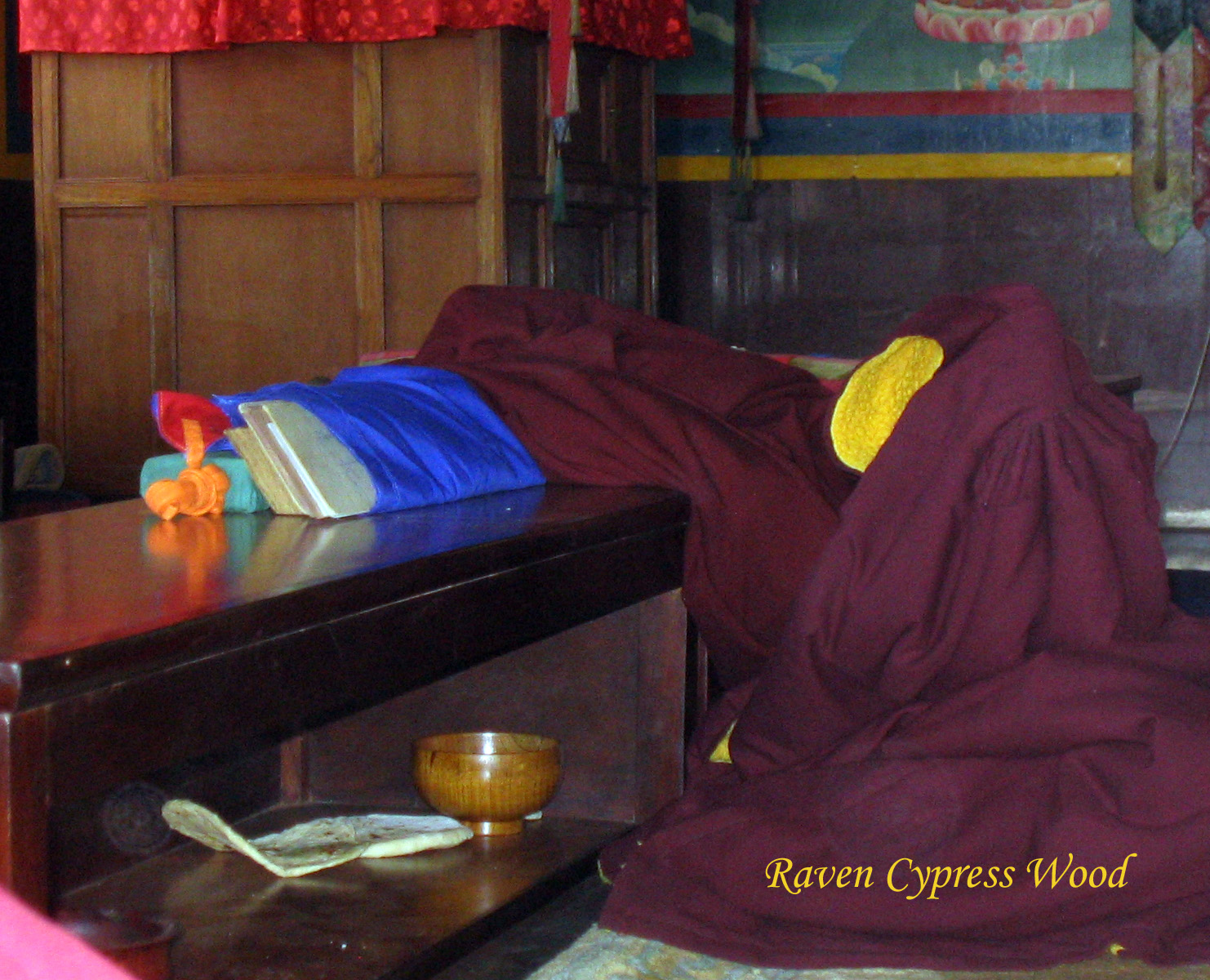
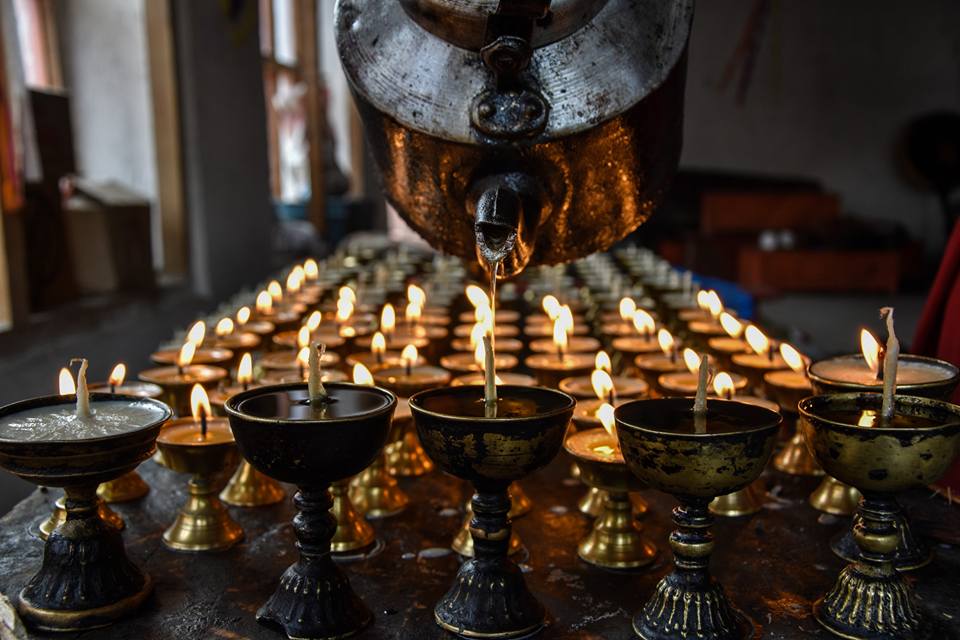
A traditional offering of butter lamps for the deceased. Photo credit: Unknown

In the Yungdrung Bön religious tradition, the practice of realizing impermanence is used as a method to ripen the mind-stream of an individual in order to prepare a solid foundation for further spiritual development. By reflecting upon the truth of the impermanent nature of all worldly phenomena, the wild mind that craves entertainment and distraction, and constantly seeks things to acquire or posses, is tamed. When the truth of impermanence is deeply realized rather than merely understood intellectually, the mind has a more open and relaxed relationship with worldly phenomena. Positive experiences such as love and joy are more appreciated since they are understood to be fleeting. Patience with discomfort and suffering is easier knowing that it too will not last. For the spiritual practitioner, the realization of the truth of impermanence turns the mind away from meaningless distraction and towards the spiritual path.

Traditionally, in order to deeply realize impermanence, the practitioner would reflect upon worldly phenomena. For example, thinking about how each season has come and gone since childhood, or the constant changing of the weather. Often the practitioner would go to the cremation ground or cemetery and reflect upon the fact that no matter how powerful, rich, famous, or adored a human being has ever been, no one has been able to live forever. In modern times, the truth of impermanence can be seen throughout the world.

As a support for the practice of realizing impermanence, the English translation of The Chanted Verse of Impermanence from the Aural Transmission of Zhang Zhung is being made publicly available for personal use. While undergoing the practice of realizing impermanence as a foundational practice, this prayer is chanted before and/or after a fervent period of reflection. Once impermanence has been realized and the mind has been tamed, this prayer can be chanted daily as a reminder and motivation to remain focused upon meaningful activities of body, speech and mind. The translation can be downloaded from this link: https://drive.google.com/file/d/146WL9uyT8u842TVHKnmXJH60CHr5dHJz/view?usp=sharing

“Even though all phenomena change, I alone expect to be permanent.

How sad!

Bless me that the realization of impermanence will arise in my mind-stream!

When thinking of death, I am instantly without distraction, but then I become lazy and procrastinate.

How sad!

Bless me that the realization of impermanence will arise in my mind-stream!”

—From The Chanted Verse of Impermanence

All translations and content by Raven Cypress Wood ©All Rights Reserved. No content, in part or in whole, is allowed to be used without direct permission from the author.

Don’t want to miss a post? Scroll to the bottom and click “Follow this blog.”
The Mind of Generosity

His Holiness 34th Menri Trizin Rinpoche and other Menri monks offering the mandala. Photo credit: Unknown

“OM

With devotion and non-attachment, and for their complete satisfaction,

I offer to the four supreme places a golden mandala of the three thousand-fold universe containing mountains, continents, and clouds of offerings filled with the riches of gods and humans.

May the abundant wealth and success of all migrating beings be established!”

— From the publication The Heartdrop of Jamma, the Loving Mother

For more information or to order the publication, see previous post: https://ravencypresswood.com/2019/07/20/the-practice-of-jamma-chenmo-the-great-loving-mother-2/


Practicing Generosity and Non-attachment

His Eminence Menri Ponlop Yangtön Thrinley Nyima Rinpoche being offered a mandala representing all inner and outer offerings. Photo credit: Unknown

“Mandala Offering

Emaho!

Within a golden mandala of a boundless buddha realm are arranged heaps of beautiful and brightly shining precious jewels.

These vast clouds of offerings, both real and imagined, that include the completely fulfilling and marvelous wealth and riches of both gods and humans,

I and all other sentient beings present this offering to the three precious jewels in order to perfect the two accumulations of merit and wisdom.

Please accept this with your compassionate blessings!”

— From The Accomplishment of Purifying Defilements with DU TRI SU, A Lamp that Clears Away the Darkness and Shakes the Depths of Cyclic Existence

All translations and content by Raven Cypress Wood ©All Rights Reserved.

No content, in part or in whole, is allowed to be used without direct permission from the author.

Don’t want to miss a post? Scroll to the bottom and click “Follow this blog.”