Category Archives: Uncategorized

Developing the Mind of a Warrior with Immeasurable, Indestructible Compassion

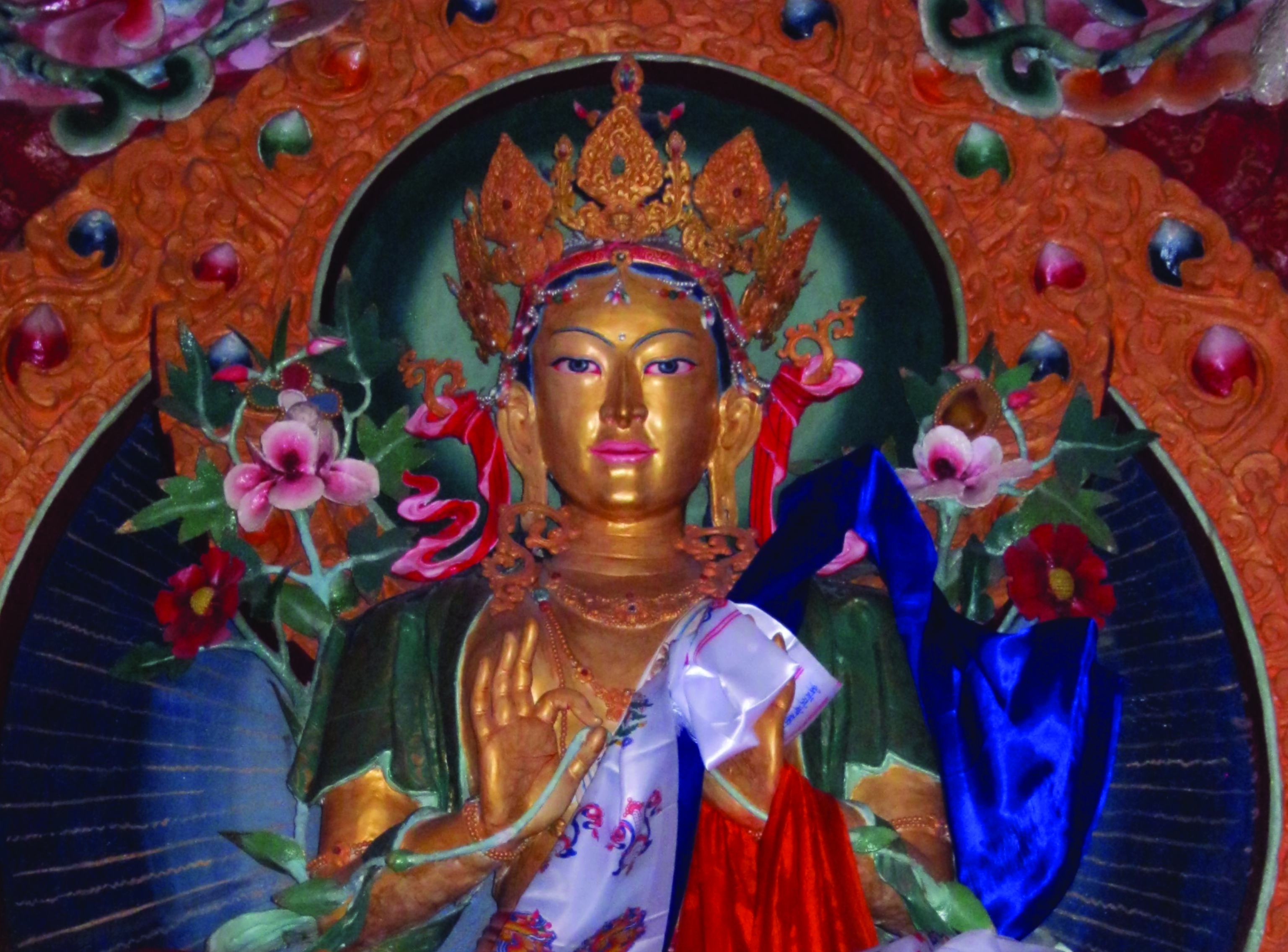
The Buddha and Loving Mother, Satrik Érsang

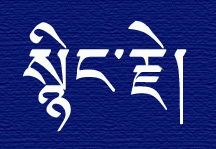
One of the Four Immeasurable Qualities is compassion, Tibetan: snying rje, pronounced nying jé.  The definition of compassion is the wish that others not experience suffering. Therefore, nying jé is the practice and aspiration that all beings be free from suffering and the causes of suffering. This feeling of genuine compassion is developed towards all sentient beings without preference or bias, and until the quality is completely perfected and unshakeable. When this quality is perfected and fully realized, it is known as jang chub sem, the mind of enlightenment. Those practitioners who have developed this quality are known as sempa, Tibetan: sems dpa’, mind warriors or mind heroes. (Sanskrit: bodhisattva). There are three types of sempa: (1) yungdrung sempa: indestructible mind warriors, (2) yungdrung sempa sems pa chen po, great indestructible mind warriors, and (3) yungdrung sempa sems pa len mépa, indestructible, non-returning mind warriors. As practitioners, we aspire to develop our minds in the same way as the sempa and therefore obtain the capacity to be of benefit to other sentient beings.

Nying jé written in Tibetan uchen script

In the presence of the places of refuge visualized in the sky in front of you, earnestly reflect that not even one single sentient being, during this or previous lifetimes, has not acted as your mother, father, child or friend. These sentient beings are wandering throughout cyclic existence. Generate a genuine feeling of how worthy of compassion is all of their suffering and misery. “Now, because I am powerless to help those sentient beings who are as vast as the sky, I will obtain buddhahood while enclosed in this physical body. I will patiently lead and guide them until cyclic existence is empty.” Think in this way and perform the recitation.

From the Aural Transmission of Zhang Zhung preliminary practice of Establishing a Foundation of Immeasurable Compassion in order to Generate the Mind of Enlightenment

Compassion is the foundation of all Yungdrung Bön teachings. In order to support practitioners in developing this quality, the Yungdrung Bön teachings give seven progressive steps, or causes, for developing perfected compassion within the mind-stream.

  1. Ma Shé, Knowing the Mother: We reflect that throughout our countless lifetimes, every sentient being has at one time been our very own mother.  We open ourselves to deeply experiencing this connection with each sentient being, whether human or nonhuman, friend, enemy, or stranger.
  2. Drin Dren, Remembering Their Kindness: We reflect in detail regarding the kindness that we have received from other sentient beings throughout countless lifetimes. Since each of them have acted as our mother, they have all sacrificed themselves in order to nourish and protect us.
  3. Drin du Zö, Returning the Kindness: Having deeply experienced a feeling of being cared for by the countless sentient beings who are as vast as the sky, we generate a feeling of wanting to repay their kindness.
  4. Jampa, Love: We generate a sincere feeling and wish that all these sentient beings experience happiness and have the causes for happiness.
  5. Nying Jé, Compassion: We generate a feeling and wish that all these sentient beings be free from suffering and misery.
  6. Lhak Sam, Profound Altruistic Motivation: Engaging in spiritual practice in order to attain realization and develop the capacity to help other sentient beings, we open ourselves to the spontaneous actions that arise from the foundation of compassion.
  7. Jang Chub Sem, the Mind of Enlightenment: Again and again having practiced in this way and ripened our mind-stream, we obtain the fully perfected, unbiased and indestructible mind of immeasurable compassion.

Among all sentient beings who are as limitless as the sky, not even a single one has not been my mother, father, child, or friend. They are in the thick darkness of churning cyclic existence, how sad!

For the sake of all of those, I will establish the foundation of complete buddhahood and engage in this profound practice. Having obtained the path of liberation and bliss, I will continually think of sending loving kindness to them.

From The Practice to Continuously Maintain Regarding the Precious Lamp that Shakes the Depths of Cyclic Existence, the MA TRI Tantra, Composed by Drenpa Namkha

From the Forty-three Trainings for an Enlightened Mind composed by Sherap Gongyal Rinpoché:

The sentient beings of the three worlds have the same nature as my mother and father. What benefit is my own happiness when they are suffering? Because of that, in order to liberate the limitless sentient beings from the ocean of suffering and misery, I generate the mind of enlightenment.

And,

Without exception, suffering and misery arise from desiring happiness for only myself. A perfect buddha arises from a mind that benefits others.

And,

Rejoice in benefiting others with this condition of having attained a completely pure human body, and without distraction, work single-pointedly to accomplish being of benefit to others as though it is of the greatest importance.

Regardless of whether a practitioner is of lower capacity or the highest, or if they are practicing a causal vehicle or the highest dzogchen view, Buddha Tönpa Shenrap has taught that the foundation for all of these is compassion.

Because it unites method and compassion,

how marvelous is the great Bön!

Buddha Tönpa Shenrap instructing his disciples regarding the Nine Ways of Bön in the Zi Ji

Translations from Tibetan by Raven Cypress Wood ©All Rights Reserved. No content, in part or in whole, is allowed to be used without direct permission from the author.

Don’t want to miss a post? Scroll to the bottom and click “Follow this blog.”

Want to join the mandala of Nine Ways supporters? Follow this link https://ravencypresswood.com/donate/
Calling for Protection

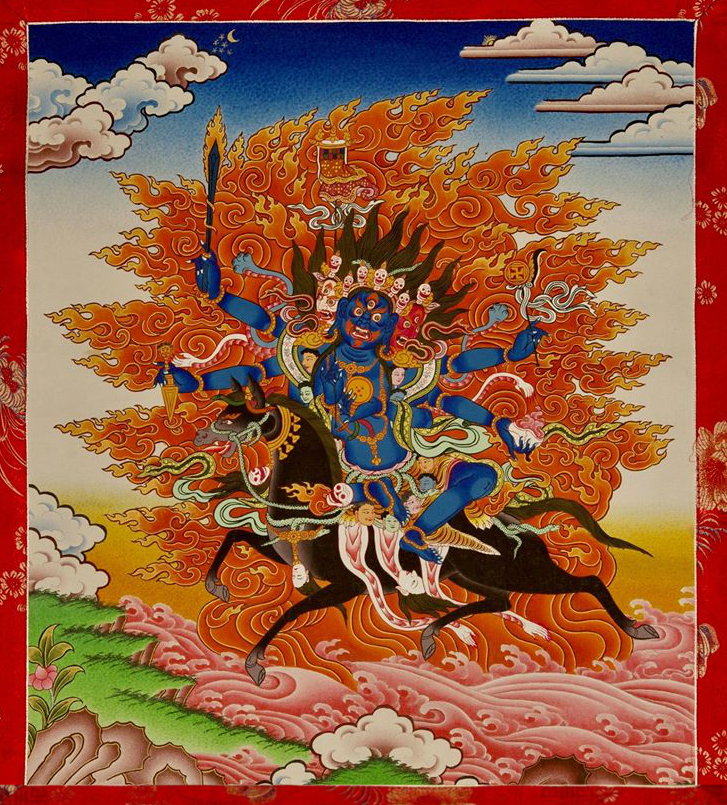
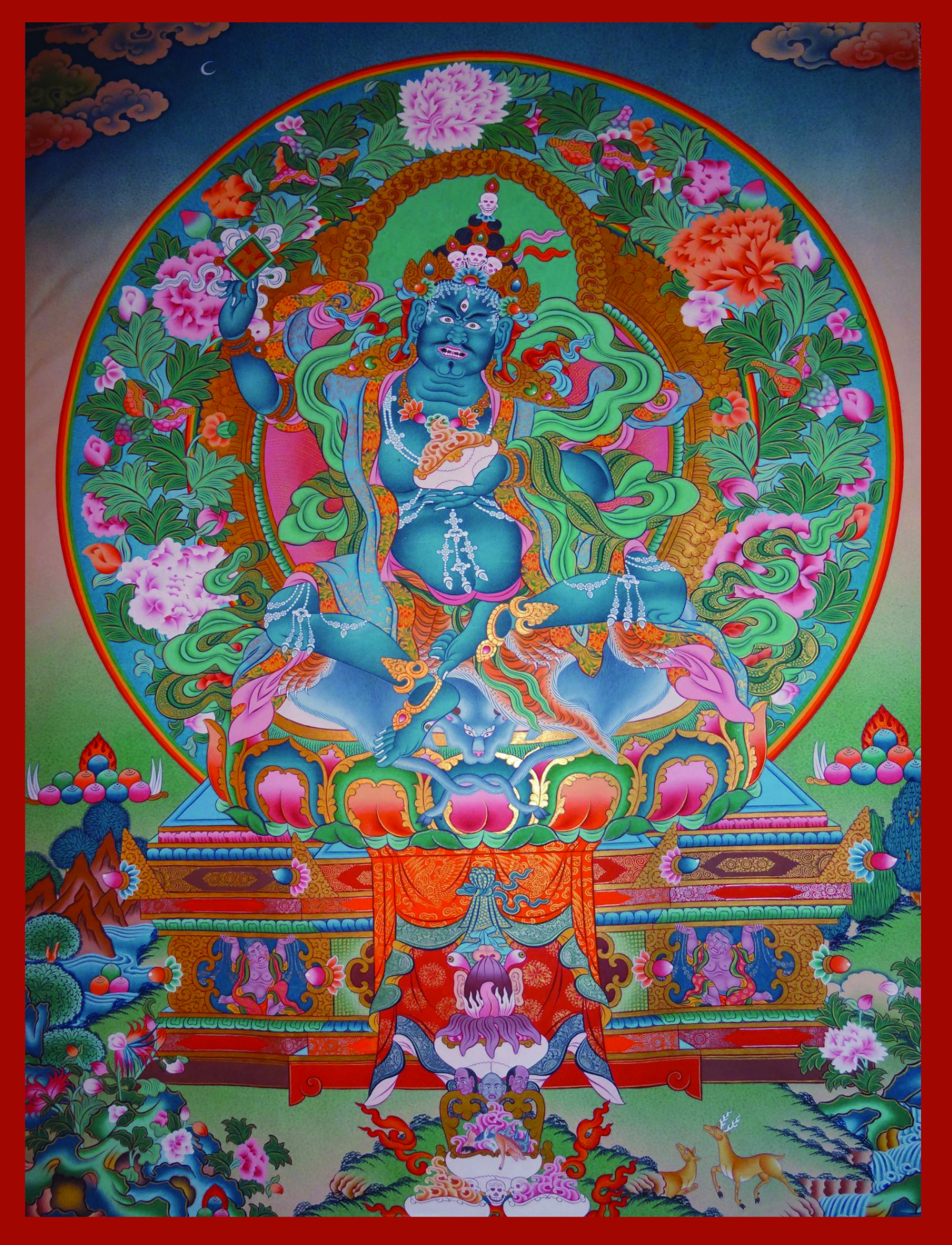
Sipé Gyalmo riding a black mule

In the Yungdrung Bön religious tradition, one of the principal enlightened protectors is the Queen of Existence, Sipé Gyalmo. She has countless manifestations and emanations. The external manifestation of the Queen of Existence is Zangza Ringtsun. The internal manifestation is Tukjé Jamma. And the secret manifestation is Sipé Gyalmo.

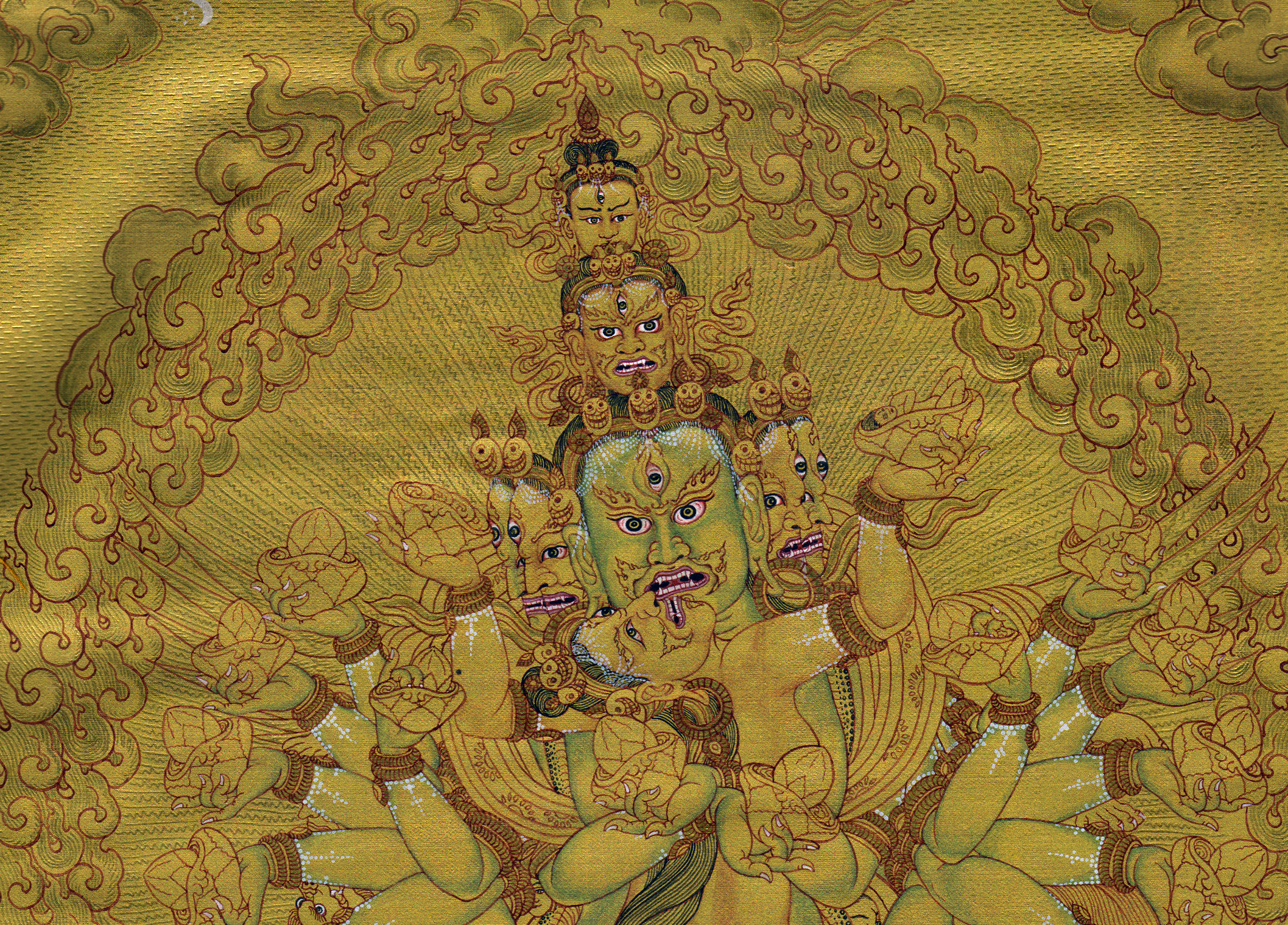
Sipé Gyalmo manifests riding a red mule, riding a black mule, and standing with a hundred heads and thousands of arms and legs. Her Body emanations are the Six Manifestation of Day and Night who each arise during a particular cycle of time during every twenty-four hour period. These six manifestations are White Sipé Gyalmo of Dawn, Golden Sipé Gyalmo of Sunrise, Red Sipé Gyalmo of Mid-day, Maroun Sipé Gyalmo of Sunset, Black Sipé Gyalmo of Evening, and Dark-blue Sipé Gyalmo of Midnight.

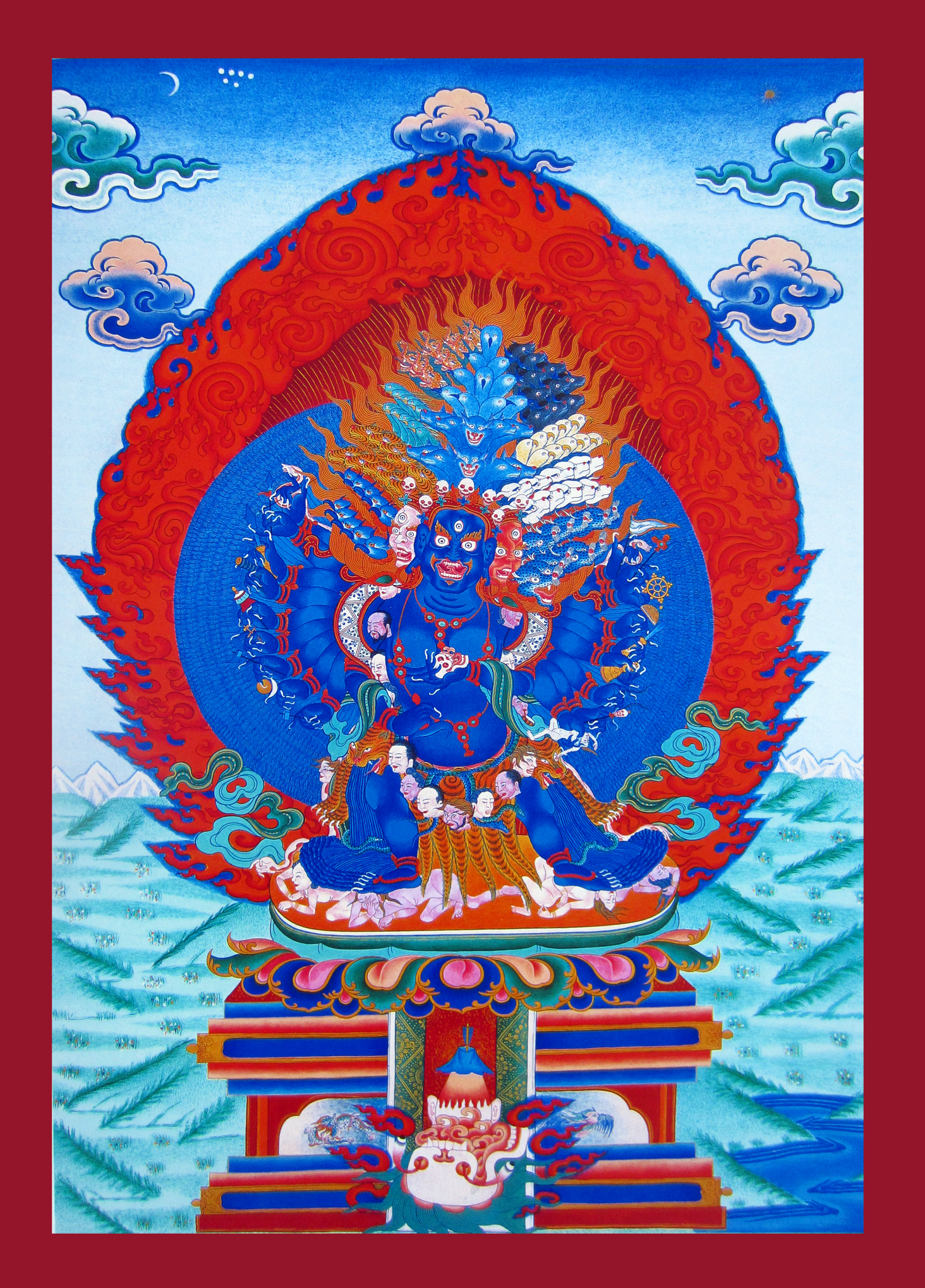
There is an often-used divination practice that relies upon the clairvoyance of these six manifestations. For a practitioner to be qualified to perform this divination, they must undergo a strict Sipé Gyalmo yidam retreat for at least seven days, or continue longer until they have received the clear signs of being empowered by Sipé Gyalmo. The manifestation that is practiced in this retreat is her manifestation who stands majestically with a hundred heads and thousands of arms and legs.

Sipé Gyalmo with a hundred heads

Yeshé Walmo and Drak Ngak Walmo are both manifestations of Sipé Gyalmo and are similar in appearance. However, Drak Ngak Walmo wears an ornament of a skull mala and dances upon a human-like figure that represents all negative forces. She has a practice specifically for protecting against contagious illnesses and pandemics.

SO MA MA DZA JO✶

Emaho!

Mother of the vast expanse of the Bönku, which is primordially pure and free from elaboration,

in order to establish the Bön teachings in the Land of Snow,

merely by calling out to you Single Mother Sipé Gyalmo,

wherever you are, please come!

Protect me from bridges, boats, and narrow passageways, as well as from contagious illnesses!

— excerpt from Alphabetical Praise of the Supreme Mother Sipé Gyalmo contained within the book Sacred Smoke: The Ritual Practice of Fumigation and Offering in the Yungdrung Bön Religious Tradition by Raven Cypress Wood

✶ This is the general short mantra for Sipé Gyalmo.

Sigyal Drak Ngak who protects against contagious illness

Having performed Mother Sigyal’s practice in successive previous lifetimes,

you have lovingly protected me like a mother protects her very own child.

Like the body with its shadow, you surround me with your love and affection.

I supplicate to you single-pointedly from my heart!

Never being separated and through your loving compassion,

protect me well with your four kinds of peaceful, expansive, powerful and wrathful activities!

Without hesitation and with no exceptions, please act to accomplish whatever goal or intention that I wish for!

Sigyal’s Entrusted Activity composed by Shardza Tashi Gyaltsen Rinpoche

For more information about Sacred Smoke: The Ritual Practice of Fumigation and Offering in the Yungdrung Bön Religious Tradition, see previous post: https://ravencypresswood.com/2021/11/19/new-book-release-sacred-smoke-the-ritual-practice-of-fumigation-and-offering-in-the-yungdrung-bon-religious-tradition/

Translations from Tibetan by Raven Cypress Wood ©All Rights Reserved. No content, in part or in whole, is allowed to be used without direct permission from the author.

Don’t want to miss a post? Scroll to the bottom and click “Follow this blog.”

Want to join the mandala of Nine Ways supporters? Follow this link https://ravencypresswood.com/donate/
New Book Release – Sacred Smoke: The Ritual Practice of Fumigation and Offering in the Yungdrung Bön Religious Tradition

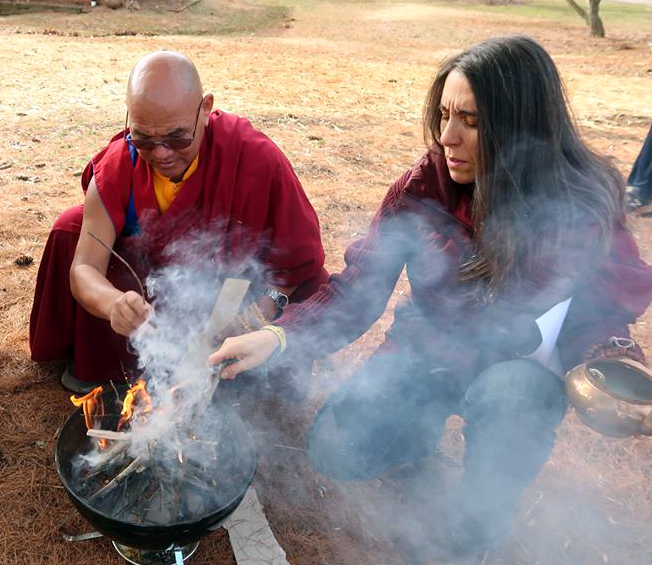
Sacred Sky Press has just released the publication of Sacred Smoke: The Ritual Practice of Fumigation and Offering in the Yungdrung Bön Religious Tradition by Raven Cypress Wood. This book is both an in-depth overview and a practice manual for the ritual commonly known as sang [Tibetan: bsang]. Performed as a daily practice as well as on special occasions, the sang ritual of fumigation and offering is pervasive throughout both the Yungdrung Bön and Buddhist traditions because of its important relevance to ordinary people, lay practitioners, and monastics. The practice of sang is categorized within the Second Way of the Nine Ways of Bön and uses fragrant smoke to clear defilements from both the environment and its inhabitants.

The author and Murig Khenpo Nyima Künchap Rinpoche prepare to perform the sang ritual for the lu.

The first part of Sacred Smoke introduces the reader to the sang ritual and provides a deeper understanding of the source, meaning, and purpose of the ritual. This includes descriptions of the kinds of defilements beings purified, the recipients of the offerings, and the benefits of performing the ritual.

It is called removal because it removes the negative from the positive. It is called removal because it removes the defiled from the pure. It is called removal because it removes poverty. It is called removal because it removes obstructions.

—Lord Buddha Tönpa Shenrap Miwoche describing the category of rituals containing the sang practice in Sacred Smoke: The Ritual Practice of Fumigation and Offering in the Yungdrung Bön Religious Tradition

And,

For ordinary people, performing the sang ritual and receiving its benefits can increase their faith in the truth of the teachings of Buddha Tönpa Shenrap. For them, the sang ritual can be an entrance to the higher teachings of enlightenment by creating a basis of faith in the practices.

—Excerpt from Sacred Smoke: The Ritual Practice of Fumigation and Offering in the Yungdrung Bön Religious Tradition

The second part of Sacred Smoke provides the liturgical texts needed for the ritual including the original Tibetan with phonetics and the corresponding English translations. In addition to the sang ritual prayers according to the Menri tradition, Sacred Smoke includes texts for performing the sang ritual composed by the esteemed 23rd Menri Trizin, the sang ritual for the lu, and invocations to Blue Dzmbhala and Chammo Lamlha, the goddess of travel. Detailed instructions are given for how to perform the the ritual in either an extensive and more elaborate way, or a condensed version.

You who have incredible magical power, lords of intermediate space, lords of the earth and lords of the rivers and lakes who judge between right and wrong;

You are living here alongside human beings in this wonderful land.

You, great rulers of this area, when invited by this practitioner, please come to this place of offerings.

—Excerpt from Fumigation Offering for Any Area, included within Sacred Smoke: The Ritual Practice of Fumigation and Offering in the Yungdrung Bön Religious Tradition

Sacred Smoke: The Ritual Practice of Fumigation and Offering in the Yungdrung Bön Religious Tradition by Raven Cypress Wood is a 175 page hardcover with black and white images. It can be purchased from the distributor from this link: https://www.lulu.com/en/us/shop/raven-cypress-wood/sacred-smoke/hardcover/product-977vd8.html?page=1&pageSize=4

Raven Cypress Wood is also the author of other Sacred Sky Press publications including:

Indestructible: The Longevity Practice of Tséwang Rikdzin https://www.lulu.com/en/us/shop/raven-cypress-wood/indestructible-the-longevity-practice-of-tsewang-rikdzin/hardcover/product-1g2pdvkp.html?page=1&pageSize=4

The Heartdrop of Jamma, the Loving Mother https://www.lulu.com/en/us/shop/raven-cypress-wood/jamma-nying-tik-color/paperback/product-1g274888.html?page=1&pageSize=4

The Time to Engage with the Practices of the Great Lama and his Twin Sons

The Great Lama Drenpa Namkha

Within the Yungdrung Bön religious tradition, the 10th lunar day of each month is dedicated to the practice of the great lama Drenpa Namkha and his two sons, Tséwang Rikdzin and Pema Tongdrol. From now until the Tibetan New Year on March 3rd 2022, these lunar days coincide with the Western dates:

  • November 14th 2021
  • December 13th 2021
  • January 12th 2022
  • February 11th 2022

Namo!

With the yearning, single-pointed devotion of my body, speech, and mind, I and the group of mothers, the other sentient beings who are equal to the far reaches of the sky, go for refuge to the Bönku Küntu Zangpo.

We go for refuge to the Great Lama Drenpa Namkha.

We go for refuge to Nyima Öden Barma.

We go for refuge to the protector of migrating beings, Tséwang Rikdzin.

We go for refuge to the Great Mother Tukjé Kündrol.

We go for refuge to Trogyal Yungdrung Tongdrol.

We go for refuge to the tertön Khyung Gö Tsal.

We for refuge to Patön Gyalwa Shérab.

We go for refuge to Patön Döndrup Bum.

We go for refuge to Nyammé Palden Zangpo.

We go for refuge to Patön Namkha Zangpo.

We go for refuge to Chang Chup Semden Palchok Zangpo.

We go for refuge to Tenzin Rikdzin Namgyal.

We go for refuge to Rikdzin Lhundrup Palzang.

We go for refuge to Drendral Tenpa Özer.

We go for refuge to the protector of migrating beings, Namkha Gyalpo.

We go for refuge to the kind root lama.

We go for refuge to the compassionate guide lama, who has the blessings of the lamas of the lineage.

We go for refuge to the knowledge holders and yungdrung sempa of the male lineage.

We go for refuge to the group of khandro of the female lineage.

We go for refuge to the holy lamas of the lineage of the accomplishment of longevity.

Through your compassion radiating as light from unmanifested space, please bestow the accomplishment of indestructible longevity to me!

— From The Longevity Practice of Drenpa Namkha

Tibetan translation by Raven Cypress Wood

Raven Cypress Wood ©All Rights Reserved. No content, in part or in whole, is allowed to be used without direct permission from the author.

Don’t want to miss a post? Scroll to the bottom and click “Follow this blog.”

The 23rd Annual Debate According to the Yeru Tradition

Monks at Menri Monastery debate during the 22nd annual Yeru tradition debate

From the 1st-30th of the 9th lunar month, Western calendar dates October 7th – November 4th 2021, Pal Shenten Menri Ling Monastery in India held its 23rd Annual Debate According to the Yeru Tradition for the benefit of educating the dialectic school students. These debate sessions are held according to the tradition of the renowned Yeru Wensaka tradition and are based upon a text of logic written by Azha Drogön Lodro Gyaltsen Rinpoche (1198-1263). He was the 8th abbot of Yeru Wensaka Monastery and many of his writings form a major part of the dialectic school curriculum. His text of logic, A Summary of the Valid Cognition of Suchness, A Treasury of Knowledge, is considered the foundation of philosophy. Because it is very old and unique, it is quite difficult to understand. He is considered to have been an emanation of the wisdom deity Mawé Sengé, and had visions of the Great Lama Drenpa Namkha who bestowed upon him instructions and transmissions, as well as secret instructions regarding the practice of the wisdom protector Yeshé Walmo.

The Yungdrung Bön monastic center of Yeru Wensaka in Tsang, Tibet was founded in 1072 by the esteemed Dru family lineage in order to promote the study of philosophy. It was the main Yungdrung Bön study center until it was destroyed by flood in 1386 and replaced with the construction of Menri Monastery in 1405.

Menri monks engaging in debate

During this month-long training, students in the dialectic school will rise early and continue their study, memorization, and recitation practice late into the night. Subjects that are studied and debated include the two truths, the three valid means of cognition, the way of establishing an object of valid cognition, and so forth. Students practice together as a group and also invite His Holiness 34th Menri Trizin Rinpoche and His Eminence Menri Pönlop Rinpoche to witness performances of formal debate, and to give their commentary regarding the difficult points of the philosophical text.

The cycle of debate within the Yungdrung Bön is used as a means to cut the three obscurations to knowledge of (1) not understanding, (2) misunderstanding, and (3) doubt, especially as it relates to the nature of ultimate reality. This is done by applying systematic logical reasoning to a particular view or position in order to ascertain if the view can be established as either true or untrue. This is done through using syllogisms. Syllogism is a type of argument that applies deductive reasoning to form a conclusion regarding the validity or lack of validity of a given thesis. In Tibetan philosophical debate, the syllogism takes the form of a thesis and a proof stated together in a single sentence. This is presented by one or two monks who are seated. They are the defenders of the thesis. One or more monks stand before the defenders and, using only scriptural quotations and proceeding from one logical step to the next, try to prove that the thesis cannot be established as valid. They are the opponents. The opponents are restricted in their response to either state that the major premise of the thesis is not true, the minor premise of the thesis is not true, or to accept the thesis as true. The defenders must give consistent responses without contradicting their original statement. In this way, wrong views are clarified through logical reasoning.

two sitting monks defend their posited statement

A video of the special debate retreat at Menri Monastery has been created by Menri Media and can be viewed here: https://www.youtube.com/watch?v=DAR8oDPQ2ag Monastic debates can appear quite aggressive. However, it is important to remember that the energy of defending and attacking is not toward each other but towards the statement, or idea, that has been presented. The choreography of those attacking a statement as a wrong view is an outward expression of the power of wisdom. Even the particular spot on the hands that is strongly clapped together is considered to be the area of a channel through which wisdom flows.

Raven Cypress Wood ©All Rights Reserved. No content, in part or in whole, is allowed to be used without direct permission from the author.

Don’t want to miss a post? Scroll to the bottom and click “Follow this blog.”

Want to join the mandala of Nine Ways supporters? Follow this link https://ravencypresswood.com/donate/