Category Archives: Translation

Adding Virtue to Everyday Actions

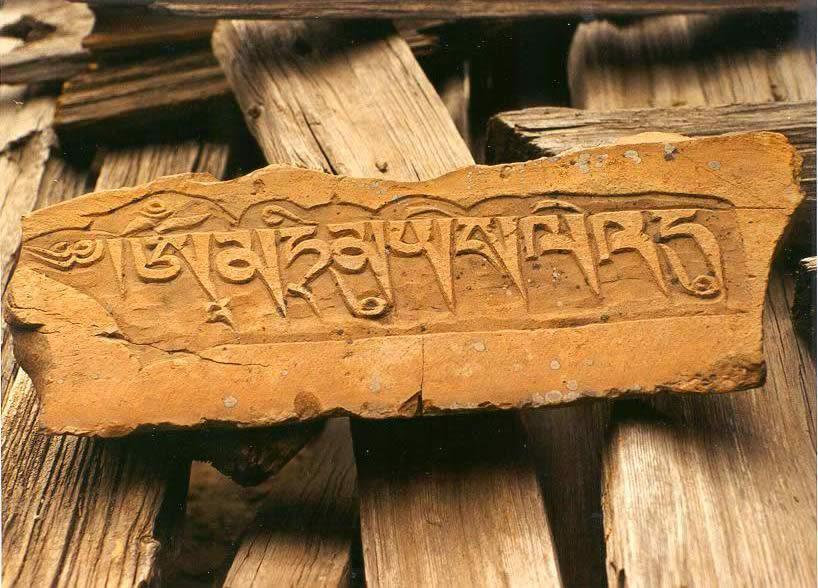
MA TRI mantra above a doorway. Photo credit: Unknown

From the Dechok Rinchen Dronma’i Phen Yön, The Benefits of the Recitation Practice of the Precious Lamp, also known as The Thirty-two Benefits of the MA TRI Mantra:

“(6) This recitation practice is a precious lamp.  Anyone who has generated the mind of compassion, if they write out the mantra and put it above the doorway of the retreat place or throughout the community, then just by entering these places one will attain liberation.  Entering practice is the benefit of this precious lamp.”

~Translation from Tibetan to English by Raven Cypress Wood ©All Rights Reserved

The MA TRI mantra is one of the three essence mantras of the Yungdrung Bön tradition. The complete mantra is:་OM MA TRI MU YÉ SA LÉ DU.


A Prayer of Aspiration to the Root Lama

HE Menri Lopon at menri 2016 on throne

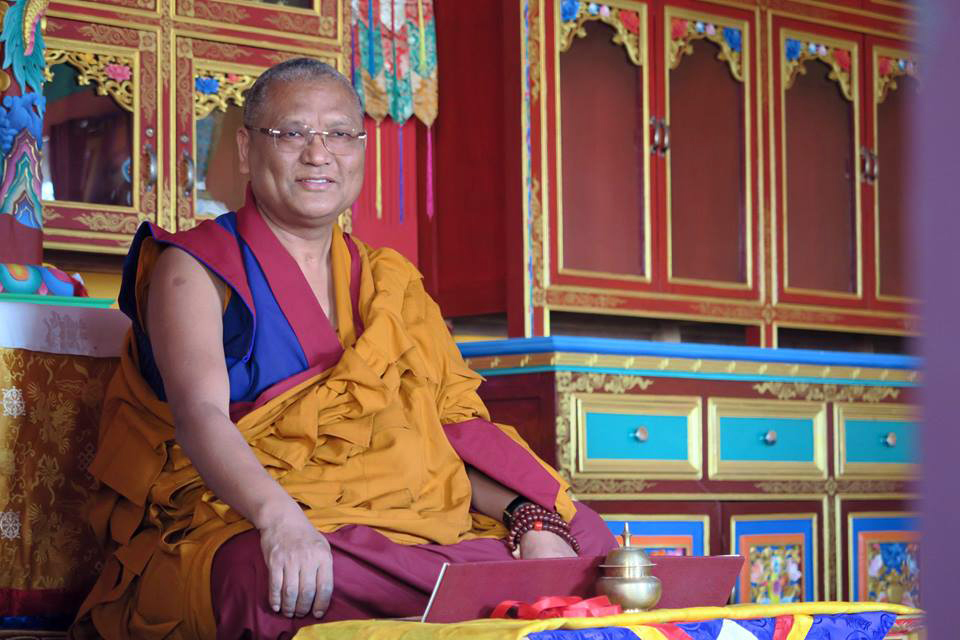
His Eminence Menri Lopon Yangton Thrinley Nyima Rinpoche

Nyima Tenzin Monlam Pecha TIB 2

A Condensed Prayer of Aspiration

I pray to the Supreme Refuge, my root lama,

During this and all my future lives,

May I directly realize the nature of my mind, free from elaboration,

And may I have the capability to continually practice without interruption!”

~Written by 25th Menri Trizen HH Nyima Tenzin Rinpoche B. 1813-D. 1875.  Translated by Raven Cypress Wood©


The Ten Perfections of the Yungdrung Bön

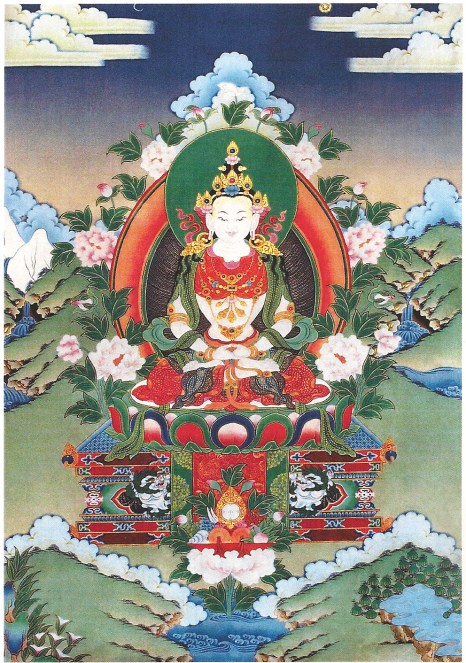
The Enlightened deity, Shenlha Okar, embodies all perfected, positive qualities.

In the Yungdrung Bön tradition, the practice of the Ten Perfections has vast and profound benefits.  For example, in the Mother Tantra it is said that the practice of the Ten Perfections is one of the primary practices in order to prepare for the intermediate state after death.  The Ten Perfections are: Generosity, Moral Discipline, Patience, Zeal, Concentration, Power, Compassion, Aspiration, Skillful Means and Wisdom.

1- Generosity: In Tibetan, Jin pa.  In general, there are three kinds of generosity: 1-generosity with possessions, 2- generosity of giving protection, and 3-generosity of sharing the sacred teachings.  This kind of generosity is without expectation of anything in return and therefore diminishes attachment and self-centeredness.  In the Yungdrung Bön tradition, there are four daily practices of generosity: offering of fumigating smoke, the water offering, offering of burnt food, and the symbolic offering of one’s own body.

2- Moral Discipline: In Tibetan, Tsultrim. In general, this refers to ethical behavior and the practice of discipline in abandoning the non-virtuous activities of body, speech and mind.  There are external, internal and secret teachings related to moral discipline.

3- Patience: In Tibetan, Zöpa. This refers to being patient and accepting of others as well as being patient with our own spiritual practice and development.  Additionally, it is the practice of being patient when we are suffering.

4- Zeal: In Tibetan, Tsöndru.  Specifically, it is an energetic and enthusiastic kind of effort.  The feeling of joy and enthusiasm in performing any kind of spiritual practice or virtuous action is the practice of tsöndru.  If you are not enthusiastic about something, even a small hindrance can feel like an insurmountable obstacle.

5- Concentration: In Tibetan, Samten.  In order to fulfill any intention, it is important to have the ability to focus and to not become distracted.  Concentration is needed for both study and meditation.

6- Power: In Tibetan, Tob.  Whatever practice or virtuous activity that you are performing, you need energy and strength.  This is the opposite of lack of confidence.

7- Compassion: in Tibetan, Nyingjé. Whatever specific practice we are focused upon, our foundation should be compassion.  Specifically, compassion is the heartfelt wish that every sentient being be released from their suffering and misery.

8- Aspiration: In Tibetan, Monlam.  In this practice, we cultivate a sincere wish for our spiritual development and realization so that we can be of benefit to both our self and others.  This practice inspires us to continue.  Aspiration can be as vast as possible.  It does not mean that it is something that has to be accomplished in this lifetime.  For example, we develop compassion and pray that we may be of benefit to all sentient beings.  Once enlightenment is attained, enlightened beings return to help sentient beings due to the power of their previous aspiration and not because of any force of desire or karma.

9- Skillful Means: In Tibetan, Tab. In general, this refers to the act of dedicating the merit of all of the virtuous activity of our body, speech and mind for the benefit of every sentient being without exception.  Dedication is the skillful means to prevent exhausting the merit that has been accumulated during our practice.

10- Wisdom: In Tibetan, Yeshe.  In general, this refers to understanding the laws of cause and effect and discriminating between accepting or rejecting actions according to their virtue or non-virtue.  Principally, it is understanding the ultimate view, the true nature.

“Having cleansed all defilements of the conceptual mind, may non-conceptual wisdom arise within my mind-stream!

Having pacified all obstacles to virtue and all adverse circumstances, may I accomplish all my wishes and complete the ten virtues!

Having spread the teachings and lived a long time, may I benefit all sentient beings who come into contact with me!

When the great time of impermanence arrives at the moment of death, may unobscured, unimpeded, innate self-awareness appear!”

~Excerpt from the Tsewang Monlam, Tsewang’s Precious Garland of Aspiration Prayers.  Translated by Raven Cypress Wood© All Rights Reserved

Raven Cypress Wood ©All Rights Reserved. No content, in part or in whole, is allowed to be used without direct permission from the author.

Don’t want to miss a post? Scroll to the bottom and click “Follow this blog.”
The Five Buddha Families of the Yungdrung Bon

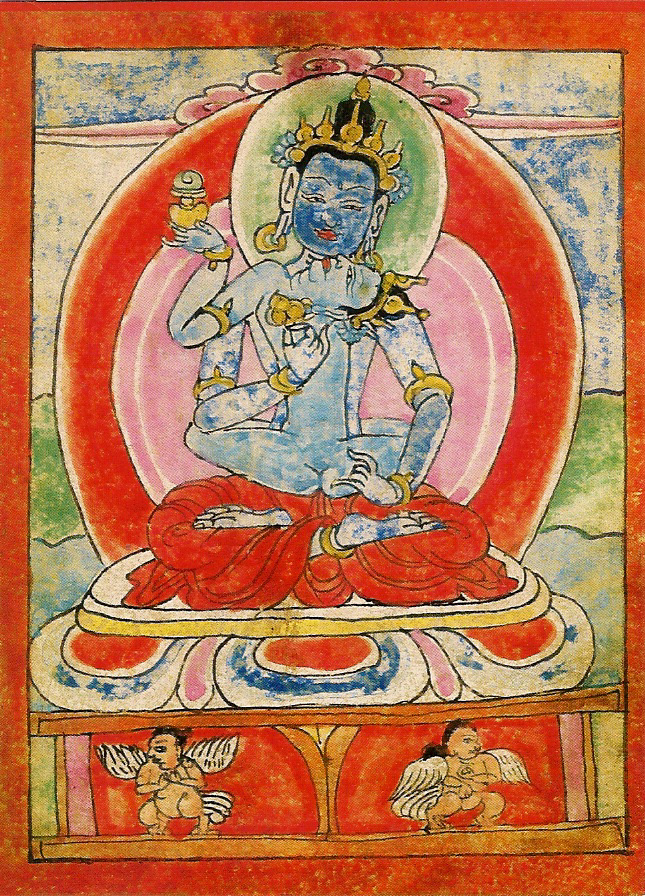
Salwa Rangjung and consort

Within the Yungdrung Bön tradition, there are the Five Buddha Families.  Each deity is associated with specific colors, hand objects, wisdoms, elements. organs, impure aspects that are purified, etc.  Here are listed a few of these characteristics along with a line of scripture from the prayer known to Western students as The Precious Garland, an aspirational prayer to support those who have recently died.

Salwa Rangjung is associated with the Eastern direction. This deity is yellow in color, associated with the pure dimension of the element of earth and the consort is the khandro of the earth element.  This deity is associated with Mirror-like Wisdom and the Yungdrung Family.

“When the energy of the earth element dissolves into the water…and the yellow light of one’s own self appears, may I recognize it as the enlightened dimension of Salwa Rangjung.”

Gawa Dondrup and consort

Gawa Döndrup is associated with the Southern direction. This deity is blue in color, associated with the pure dimension of the element of water and the consort is the khandro of the water element.  This deity is associated with All-accomplishing Wisdom and the Precious Jewel Family.

“When the energy of the water element dissolves into the fire…and the pure essence of the water arises as a blue light, may I recognize it as the enlightened dimension of Gawa Döndrup.”

Jetak Ngome and consort

Jetak Ngomé is associated with the Western direction. This deity is red in color, associated with the pure dimension of the element of fire and the consort is the khandro of the fire element.  This deity is associated with Discriminating Wisdom and the Lotus Family.

“When the energy of the fire element dissolves into the wind…and the red light of one’s own self appears, may I recognize it as the enlightened dimension of Jetak Ngomé.”

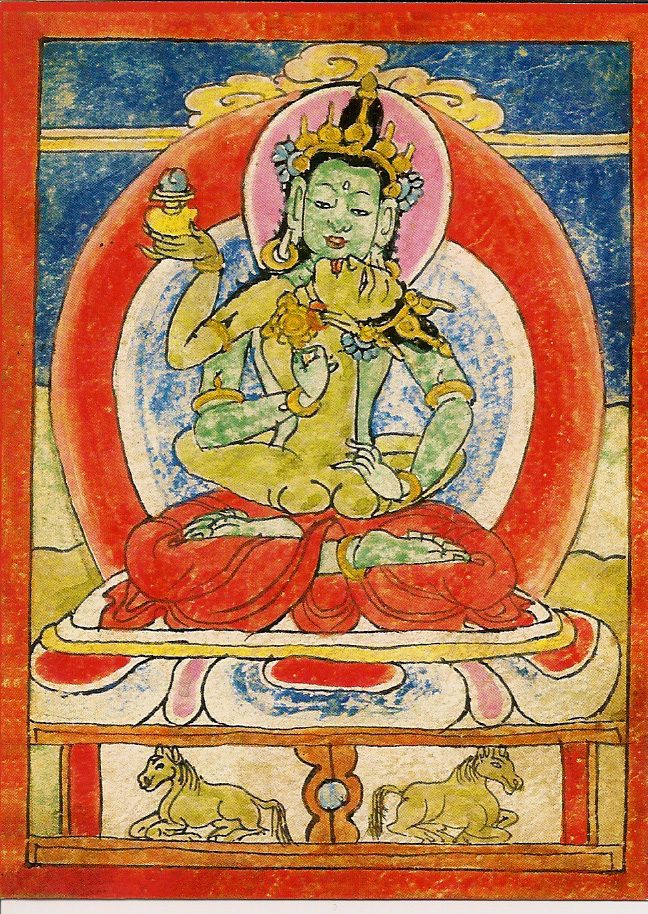
Gelha Garchuk and consort

Gelha Garchuk is associated with the Northern direction. This deity is green in color, associated with the pure dimension of the element of wind and the consort is the khandro of the wind element.  This deity is associated with the Wisdom of Equanimity and the Dharma Wheel Family.

“When the energy of the wind element dissolves into the consciousness…and the green light of one’s own self appears, may I recognize it as the enlightened dimension of Gelha Garchuk.”

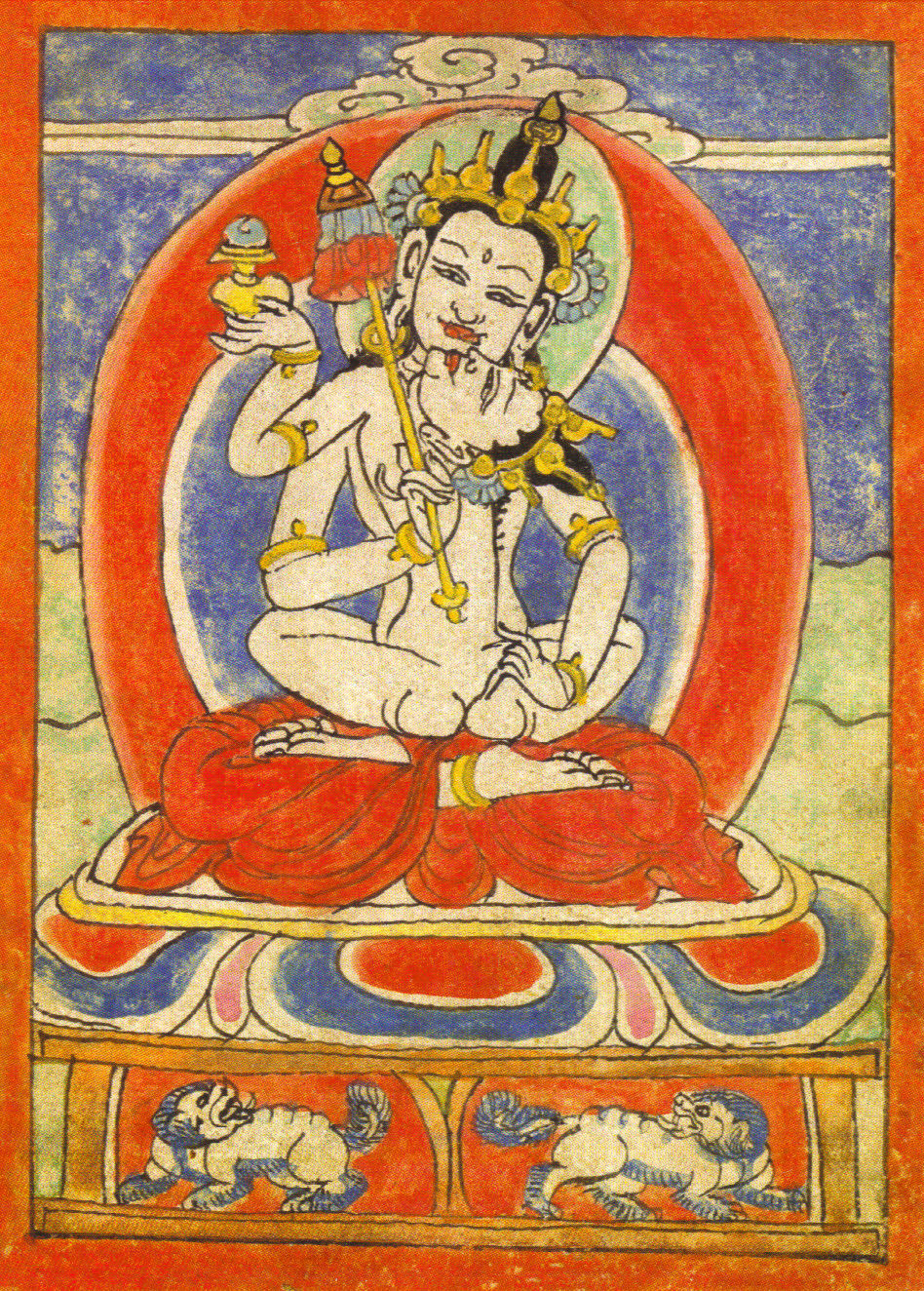
Kunnang Khyappa and consort

Kunnang Khyappa is the central deity of the Five Buddha Families. This deity is white in color, associated with the pure dimension of the element of space, and the consort is the khandro of space. This deity is associated with the Wisdom of Emptiness and the Suchness Family.

“When consciousness dissolves into the base-of-all…and the intermediate state of clear light arises, may I recognize it as the enlightened dimension of Kunnang Khyappa.  Having recognized these experiences as illusory, may I awaken into the self-aware absolute reality!”

Translated from the Tibetan by Raven Cypress Wood

The Precious Spiritual Guide

His Eminence Menri Lopon Yangton Thrinley Nyima Rinpoche participating in a Yungdrung Bon offering ritual. Photo credit: Unknown

“The holy lama is the source of everything.  With body, speech and mind one should respectfully cultivate faith and zeal.” Founder of the Yungdrung Bön spiritual tradition, the Enlightened Lord Tönpa Shenrap Miwoché