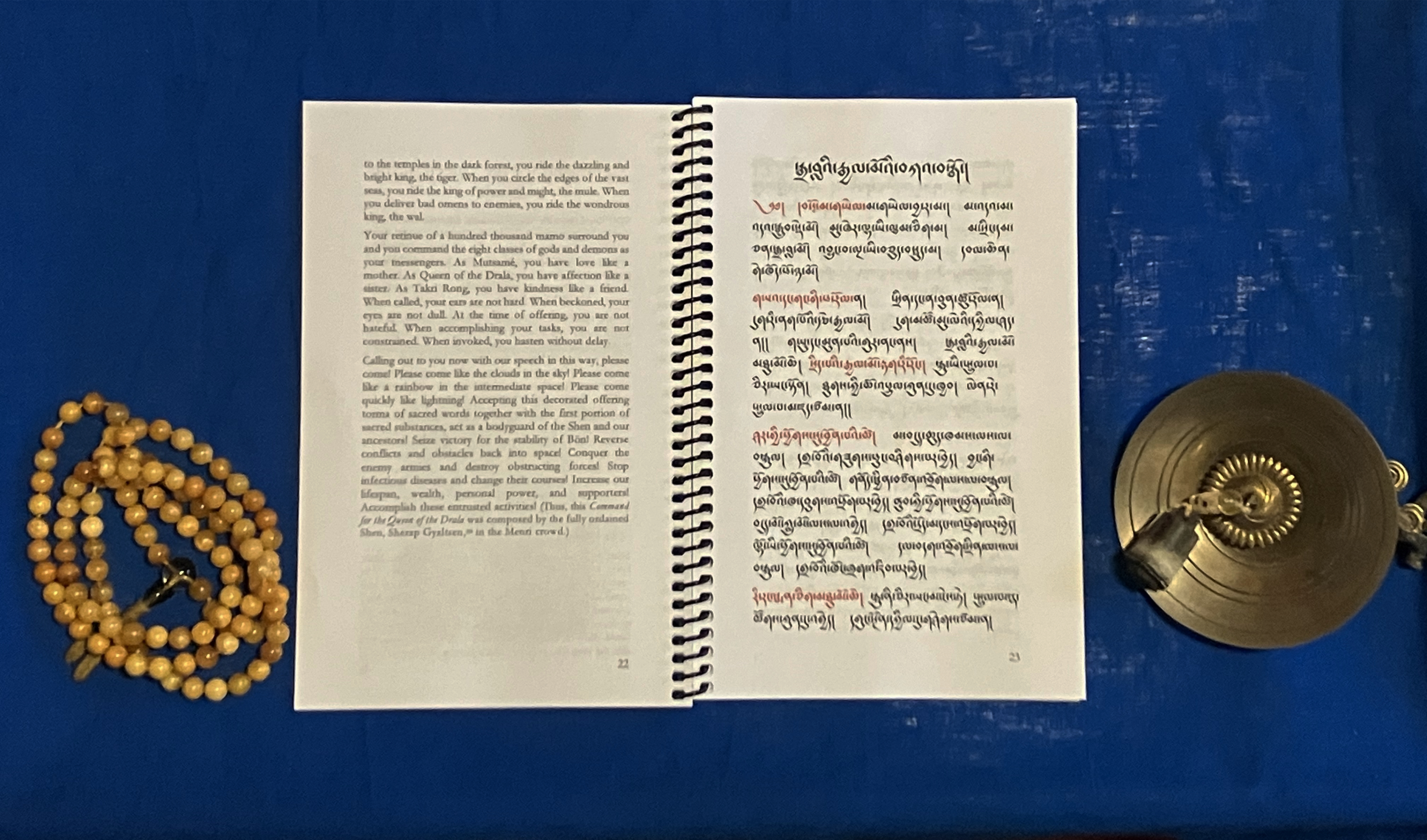
After multiple requests by the Yungdrung Bön faithful to have English translations related to invoking the drala available in order to prevent, harmonize, and/or avert disruptions or harm caused by astrological influences, Nine Ways is happy to announce publication of Summoning the Drala: Protection and Support from Primordial Guardians. There is both a spiral bound color book and an eBook available. Only the print book contains the Tibetan language prayers and corresponding phonetics for recitation. There is an introduction that gives a brief explanation of the drala and how to make offerings. Prayers include the preliminary practices of requesing consideration, generating the mind of enlightenment, going for refuge, water cleansing, and fumigation with incense. Then follows the newly translated Essential Invocation of the Drala which is a prayer given by Buddha Tönpa Shenrap, and Command for the Queen of the Drala which was composed by the one known by Bönpos as The Second Buddha, the unrivaled Nyammé Sherap Gyaltsen, founder of Menri Monastery and the one who united the three lineage transmissions of sutra, tantra, and dzogchen. The practice booklet concludes with the hundred syllable mantra, a dedication of merit, and symbolic images of armor and weapons that can be used for making offerings to the drala. Both the print booklet and the eBook are available here: https://www.lulu.com/search?sortBy=RELEVANCE&page=1&q=drala&adult_audience_rating=00
Table of Contents
Introduction
The Tügkar, Drala, Changseng, and Nyen
Making Offerings
Summoning the Drala
Requesting Consideration
Going for Refuge
Generating the Mind of Enlightenment
Cleansing with Water
Fumigating with Incense
Essential Invocation of the Drala
Command for the Drala Queen
The One Hundred Syllable Mantra
Dedication
Appendix
Endnotes
This booklet is meant to be an immediate support for those in need rather than an in-depth study of the subject material. These specific prayers were chosen because they are frequently recommended as expedient ways to invoke support and neutralize harm by calling upon the drala who are a primordial class of worldly protecters. Especially, from the view of astrology, each year brings both supportive and challenging aspects to each individual. For those whose yearly Tibetan astrological calculation indicates a probability for obstacles, one of the recommended methods for support is to call upon the drala. (To know more about who can benefit from invoking the drala during the current year of the Fire Horse, see previous article: https://ravencypresswood.com/2026/02/14/2026-the-year-of-the-male-fire-horse/)
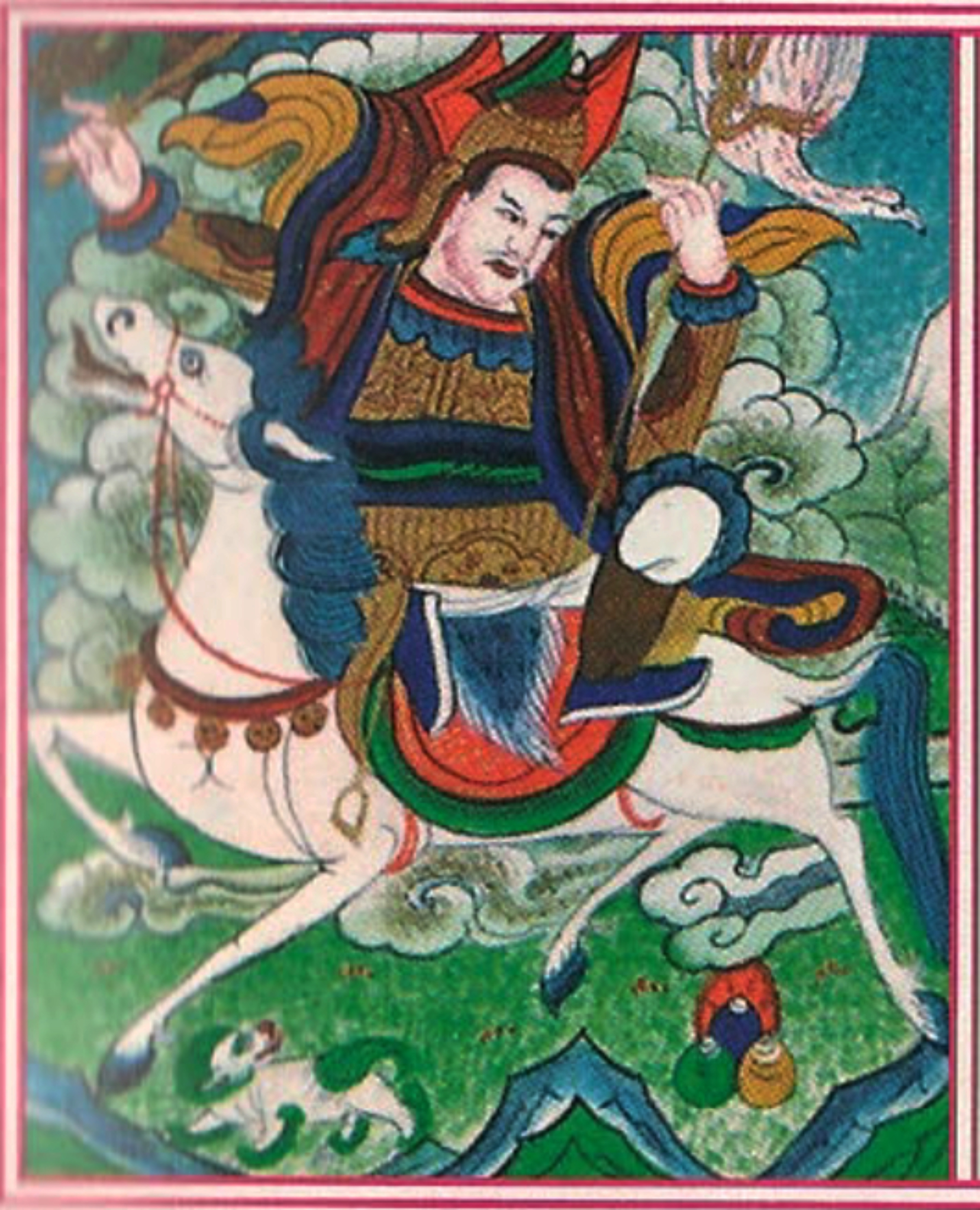
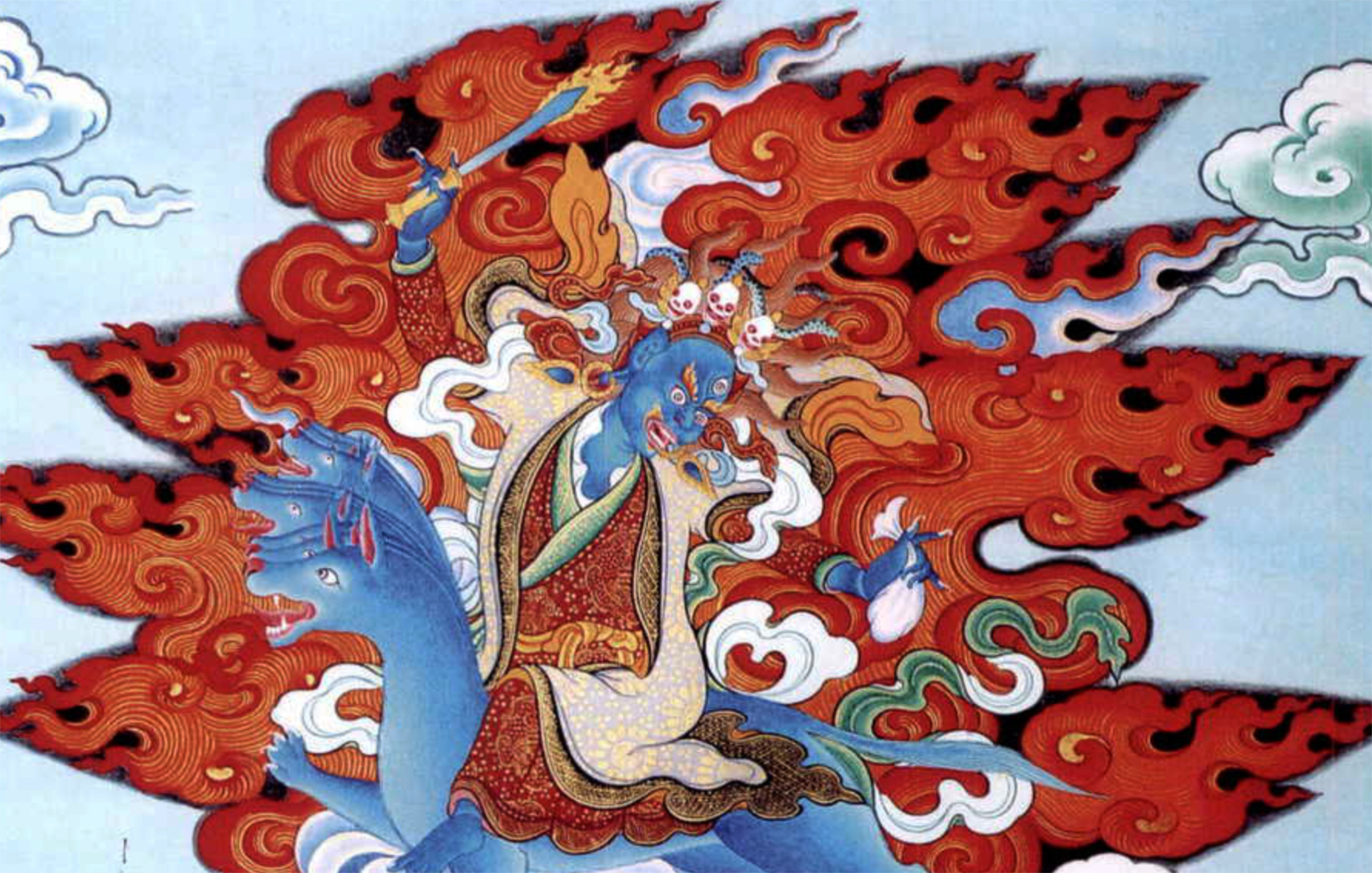
“From our great ancestor of the past, Mu Chuk Khorlo, until the present victors of Bön and beyond, we have relied upon you as our close allies and made offerings to the drala of the ancestral lineages from generation to generation. Now, at our time of need, when we call upon the army of gods because of enemies, we beseech you to come quickly without delay!”
Did you enjoy this content? This article is made possible by generous donors who want content like this to continue to be available. Don’t want to miss a post? Scroll to the bottom and click “Follow this blog.”
Join the mandala of Nine Ways supporters by donating through one of the services listed below.
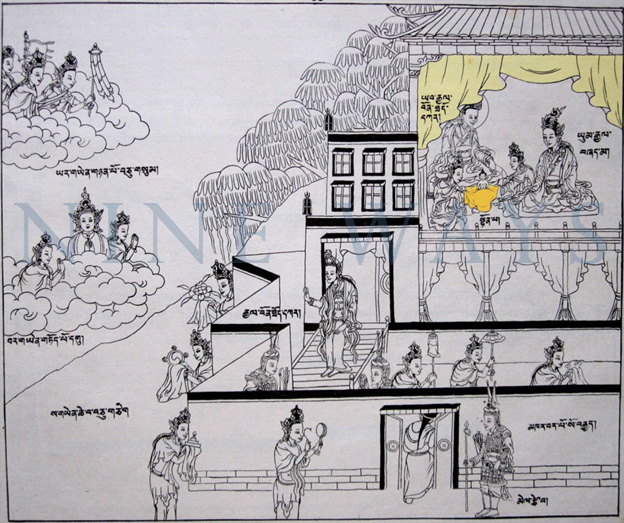
Buddha Tönpa Shenrap Miwoché being received by gods and goddesses at the royal palace of Barpo Sogyé
The 15th day of the 12th lunar month is the 18,043rd birth anniversary of the founder of the Yungdrung Bön religious tradition, Buddha Tönpa Shenrap Miwoché. In 2026, this lunar day coincides with February 1st. This is an especially auspicious time to perform acts of virtue and take sacred vows.
In the ancient past, there were three brothers named Dakpa, Salwa, and Shépa who lived in a pure world and who had studied and mastered the Yungdrung Bön teachings. With the power of their clairvoyance, they could see sentient beings within the three thousand-fold universe creating karma and experiencing suffering by being trapped in the cycle of birth, aging, sickness, death, and rebirth. They felt great compassion for these beings and went before the god of compassion, Shenlha Ökar and asked how they could help rescue sentient beings from their suffering and misery. Shenlha Ökar instructed them to go into the world one after another in order to guide beings out of suffering with the Yungdrung Bön teachings. Dakpa, being the eldest, went first to the planet Earth and ministered to sentient beings. Dakpa was born as a human being and took the name Togyal Yékhyen. For a thousand years, he taught both humans and non-human beings and countless sentient beings were liberated. Afterward, he presented an account of his time on earth to various wisdom deities and asked how it might be possible to liberate those beings who he had been unable to tame. The wisdom deities responded that even though the Yungdrung Bön was all that was needed, even the light of the sun that pervades everywhere cannot illuminate a windowless house, or a north-facing cave. Thus, sentient beings that persist in their wrongdoing because of being afflicted with the passion of their five poisons are very difficult to tame. Thus, Buddha Togyal Yékhyen wrote his teachings down with turquoise ink on ivory-colored paper and then went to see the middle brother, Salwa. He addressed him with these words:
“Although countless sentient beings have been liberated through my activities, I have left the earth and cyclic existence. After some time has passed, it will be appropriate for you to begin your work of liberating sentient beings from cyclic existence through the teachings of Yungdrung Bön.”
Time passed, and as acts of virtue declined on the earth, so did the energy of loving kindness. The generations of benevolent kings passed and the teachings of Buddha Togyal Yékhyen faded from the world. As the era came to an end, there was destruction of the land and civilizations by floods, fire, and earthquakes. After a period of emptiness, a new time period began. Salwa left his pure abode and descended to the realms of the gods to prepare for a birth of flesh and blood as a human being. He was born on earth in the land of Tazik Olmo Lungring as a prince in the Southern palace of Barpo Sogyé 18,043 years ago. He was given the name Shenrap because he was born into the Shen clan and was the highest within this clan, Rap. He was named Miwoché because he had taken a great human form. His personal name was Künlé Namgyal, Completely Victorious Over Everything. A total of seven buddhas had manifested in cyclic existence in the eons prior to his birth. This is why he is known as the eighth buddha, or the eighth guide of sentient beings. Because he was already an enlightened being and beyond cyclic existence, his taking birth in the human realm is considered a great deed of compassion.
He was born just before sunrise on the 15th day of the 12th lunar month to King Gyalbon Thökar and Queen Gyal Zhema. He had all of the major and minor marks of an enlightened being. A gathering of gods from above, a gathering of deities from intermediate space, and a gathering of powerful earth spirits all circumambulated the palace and proclaimed that they had arrived in order to be the first disciples of Tönpa, The Teacher.
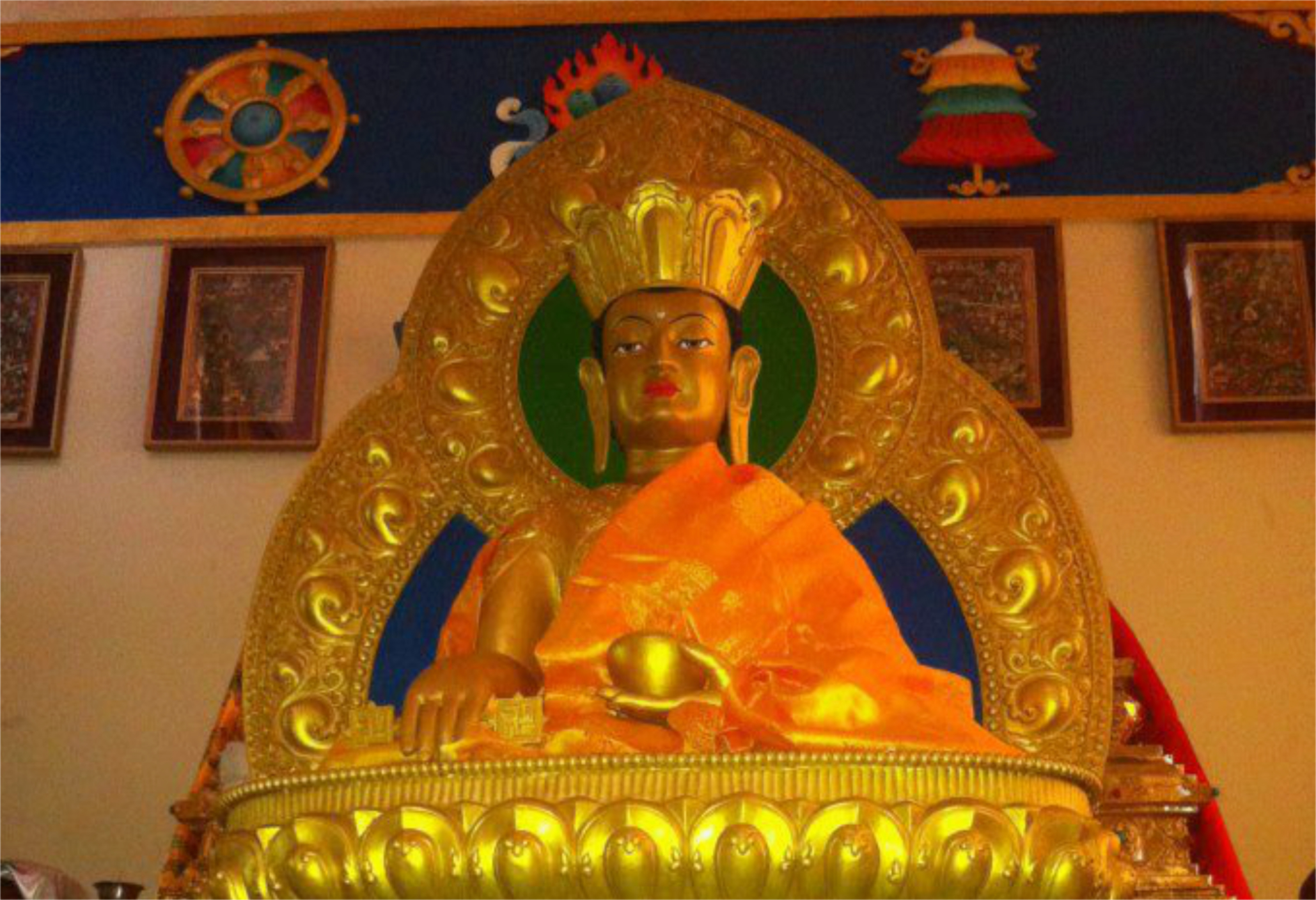
Buddha Tönpa Shenrap Miwoché
This is an especially auspicious day to recite the following Homage to Tönpa Shenrap Miwo. Many masters, including Menri Pönlop Yangtön Trinley Nyima Rinpoche, recite this prayer before giving teachings.
tön pé gyal po khor wa dren pé pel, mün pé tsok nam jom jé drön mé ö, ma rik né dung sel wa men pé tso, mi yi chok tu gyur pa mu yi gyal, duk ngé dam dang tso kem mé chen pung, tsen dang pé jé den pé zi pak po, ka wa na tsok dang du lang né ni, dzé pa na tsok tar ru chin dzé ching, zik tsé zhi dang gong tsé druk nyi kyi, jam pa chen pö khor wa dröl dzé pé, shen rap trül pé ku la chak tsal lo
“Homage to the Eighth Guide of the Universe, Sangyé Tönpa Shenrap Miwo
King of Teachers, you are a glorious guide out of cyclic existence. A lamp who dispels all darkness, you are the principal physician who clears away the torment of ignorance and illness.
Most supreme among humanity, you are a King of the Mu lineage. You are a mighty fire that dries up the ocean and swamp of the five poisons and you have the major and minor marks of a noble sage.
Having undertaken many various hardships and having completed a diversity of activities, by means of the four kinds of valid perception and the six kinds of valid enlightened intention, and through great love, you liberate from cyclic existence. I prostrate to the emanated body of the highest Shen!”
Did you enjoy this content? This article is made possible by generous donors who want content like this to continue to be available. Don’t want to miss a post? Scroll to the bottom and click “Follow this blog.”
Join the mandala of Nine Ways supporters by donating through one of the services listed below.
The auspicious day of March 3, 2026 is the first full moon of the Year of the Fire Horse and marks the traditional birth anniversary of Buddha Tönpa Shenrap as well as the birth anniversary of His Eminence Menri Pönlop Yangtön Trinley Nyima Rinpoche. This is an especially auspicious time to perform virtue and receive vows because the power of the activity is greatly multiplied. By taking a vow of nonviolence to abstain from eating meat from compassionate loving kindness during this time, unimaginable spiritual merit and benefit for both self and others is generated. One can accept this vow for a single day, multiple days, or for the entire Fire Horse year. The names of all those who take the vow and submit the form below will be offered to His Eminence Menri Pönlop Rinpoche on February 27th for the benefit of his long life and indestructible good health. Information on taking the vow and submitting the form are below.
Compassion, Virtue, and the Importance of Taking a Vow
In the Yungdrung Bön tradition, and many other wisdom traditions throughout the world, one of the foundational precepts is that of nonviolence towards other beings. Violence and harm towards others originates from the arising of one or more of the five poisons of ignorance, anger, attachment, greed, or jealousy as a thought that develops into harmful speech or harmful actions. As spiritual practitioners, our practice is to diminish the five poisons and to develop wisdom and realization. By being mindful of the actions of our body, speech, and mind, and training ourselves towards acts of virtue and compassion for others, not only does this reduce our own suffering and confusion, but it also brings greater meaning to our life and expands our view beyond that of temporary, worldly concerns and desires.
In our modern world, it is rare to need to kill animals and eat their flesh in order to survive. We now have many other choices available to us. Therefore, it is not necessary to eat food that has been the cause for animals to experience such great suffering and fear. Additionally, because of the desire to eat meat, others are engaged in the nonvirtue of breeding, keeping, and slaughtering animals which in turn creates a cause of suffering for them.
However, just being a vegetarian is not necessarily an act of virtue. When cows only eat grass it is not an act of virtue because they have not made a choice to not eat meat as an act of compassion. It is just their nature. Similarly, many people abstain from eating meat for a variety of reasons that are not related to compassion for other beings. This is good, but it is not an act of virtue. By refraining from eating meat as a result of generating compassion and a wish that others not suffer, makes it an act of virtue. By first accepting this as a vow and then fulfilling that vow, not only is there benefit from the virtuous activity but there is also the benefit and merit of having fulfilled a sacred vow. Doing this on an auspicious day greatly multiplies the power of these virtuous acts. (For more about virtue and nonvirtue, see this previous article: https://ravencypresswood.com/2024/10/26/buddha-tonpa-shenraps-instructions-for-lay-practitioners-part-1-of-3-right-mind-right-conduct/) The benefits of saving animals from slaughter are so great that both Yungdrung Bön and Buddhism have specific rituals for this special act of compassion.
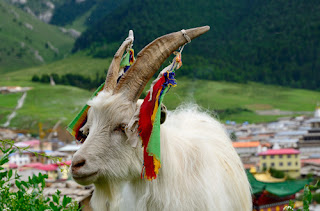
A goat that has been saved from ever being slaughtered wears the five-colored cloth of having been consecrated and empowered.
The 19th century Yungdrung Bön master Khyungtrul Jigmé Namkha Rinpoche gave the following advice to both the ordained and the laypeople of Khyunglung Gurgyam regarding eating meat:
“It is said that meat is the cause of suffering, wrongdoing, and negative rebirths. If it is possible to give it up, it is much better. Even if you have a very great desire to eat meat, do not accumulate this defilement every day. Those who eat meat are lacking in the exalted quality of compassion.”
In the Yungdrung Bön religious tradition, it is common to take a vow of abstaining from eating any kind of animal meat as a temporary vow. These vows are often observed by laypeople during the four auspicious days each month which are the full moon, new moon, and two quarter moon days. Anyone performing a healing ritual, especially any kind of longevity practice, abstains from eating meat. After the death of a loved one, it is an especially powerful act of virtue to accept a vow of abstaining from meat for a full year and dedicating the merit of that virtue for the deceased.
TheSeven Causal Means of Cultivating Compassion and the Mind of Enlightenment for the Benefit of Others
The Yungdrung Bön religious tradition gives a specific, seven-point practice to train the mind to generate compassion for others. This practice can be applied to any situation, especially when feeling kindness and compassion seem difficult.
མ་ཤེས། Ma shé: knowing the mother. We remind ourselves that at some point throughout our limitless lifetimes, every sentient being as acted as as our kind mother by offering her body for our birth, and caring for us to keep us alive and safe, even in the face of danger and hardships.
དྲིན་དྲན། Din den: being grateful. We Feel grateful for their great kindness and sacrifice.
དྲིན་དུ་བཟོས། Din du zö: repaying the kindness. Feeling grateful, we generate the desire to repay their kindness.
བྱམས་པ། Jam pa: loving kindness. We generate loving kindness towards them a wish that they experience happiness.
སྙིང་རྗེ། Nying jé: compassion. We generate a wish that this person not experience suffering.
ལྷག་བསམ། Lak sam: a special kind of motivation, “I will do it!” We firmly decide to act in order to bring them happiness and remove their suffering.
བྱང་ཆུབ་སེམས། Jang chup sém: the mind of enlightenment. Having decided to act, we engage in acts and practices not only for our own benefit, but for the benefit of others and their release from suffering.
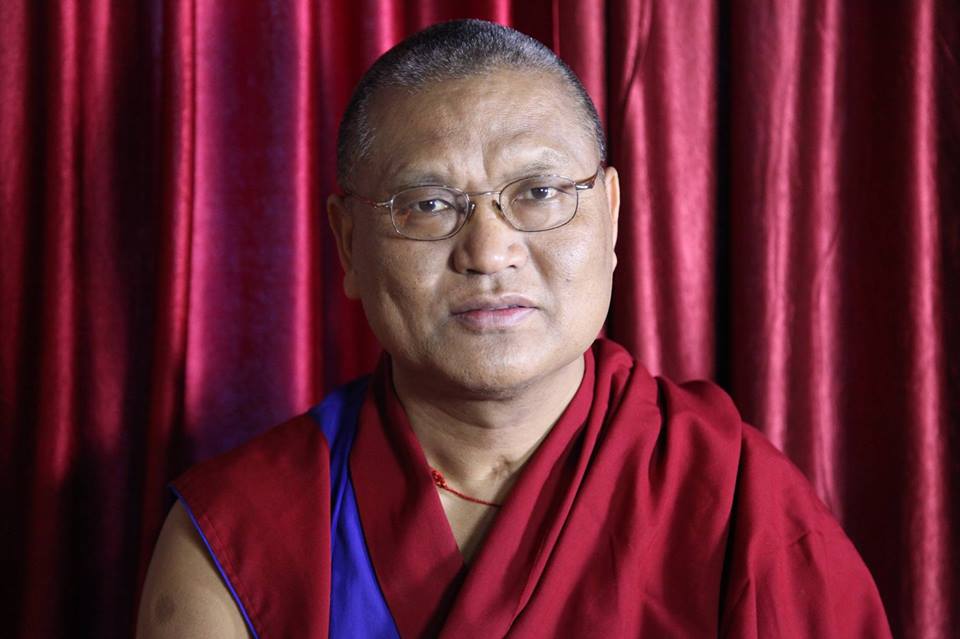
His Eminence Menri Pönlop Trinley Nyima Rinpoche
Take the Vow, Fulfill the Commitment, Dedicate the Merit, and Make Aspirations for the Future
It is said that it is possible to go before any image of an enlightened one, a chorten [Sanskrit: stupa], or a sacred text, prostrate with devotion, and accept a vow. Although this is considered a real vow, it is also considered unstable because there is no living witness. Because of the absence of a witness or community that is aware of the vow that has been taken, it is easier for the vow to be broken. Therefore, everyone who submits the form below with the details of their sacred vow will have their name given to H.E. Menri Pönlop Yangtön Trinley Nyima Rinpoche who will act as the sacred witness of their vow. These names will be given to him together with a monetary offering and a prayer for his long and healthy life.
In this short video, Raven Cypress Wood talks about how taking the vow, even for a single day, can bring meaning to your life and develop the Four Immeasurable Qualities: https://youtu.be/8jQlrNXFmvU
The Vow and How to Formerly Accept It
The actual vow is to accept the complete abandonment of eating any kind of animal flesh from a mind of compassionate loving kindness for the avowed time period. Additionally, one aspires to refrain from all harmful actions of body, speech, and mind.
The time period for the vow can be the single, auspicious dayof March 3, 2026. The time period for the day is marked from dawn of March 3rd until dawn of March 4th. Or, one can choose to take the vow for every full moon day of the Year of the Fire Horse. [Days are marked as described above and the lunar dates for these specific days are listed at the bottom of this article.] Or, one can choose to take the vow for every full moon day AND every new moonday. Or, one can choose to take the vow for all four auspicious days each month which are the full moon, the new moon, the lunar 8th day, and the lunar 22nd day. Or, one can choose to take the vow for the entire Year of the Fire Horse from the first full moon day of March 3rd until the dawn of the next lunar year on February 7, 2027.
To accept the vow, fill out the form below and submit as soon as possible. Then, on February 27th (the day the commitments will be offered to H.E. Menri Pönlop Rinpoche*) in the morning go before a sacred image, chorten, or scripture of the Yungdrung Bön and perform three prostrations with devotion. If none of these sacred supports are available, it is possible to use the image of Buddha Tönpa Shenrap at the top of this article as a sacred image. If one knows the practices of guru yoga, refuge, and generating the mind enlightenment, perform these as the foundation. If not, imagine the sky is infinitely filled with enlightened ones who spontaneously radiate the pure light of their immeasurable compassion to you, penetrating your body, speech, and mind with their blessings. Generate a wish to develop within yourself this same kind of wisdom and immeasurable compassion. As part of that practice of compassion, accept the vow of nonviolence with these words:
“Because of wanting others to not suffer and instead to experience happiness, I vow to refrain from eating meat for [state time period you have decided to keep the vow]. During this time, may I not cause any harm to others through the actions of my body, speech, or mind, and may the seeds of this virtuous activity increase and ripen into a beneficial result for all sentient beings that is unimaginable!”
In The Wish-fulfilling Jewel of Daily Practice, Shardza Tashi Gyaltsen Rinpoche details thirteen daily yogas to be performed as a way to integrate the activities of daily life into spiritual practice. As a support for keeping sacred vows that have been taken, he gives the following advice:
“Each day at sunrise, remember the vows you have previously taken and generate the intention to guard them so that they do not degenerate.”
*If it is not possible to perform the acceptance of the vow on this day, then it is fine to do so between February 27th and March 2nd.
The Deadline for submission of the form has expired.
Lunar Dates for Auspicious Days During the Year of the Fire Horse
Did you enjoy this content? This article is made possible by generous donors who want content like this to continue to be available. Don’t want to miss a post? Scroll to the bottom and click “Follow this blog.”
Join the mandala of Nine Ways supporters by donating through one of the services listed below.
Nuns of Rayna Menling reading from the teachings of Buddha Tönpa Shenrap
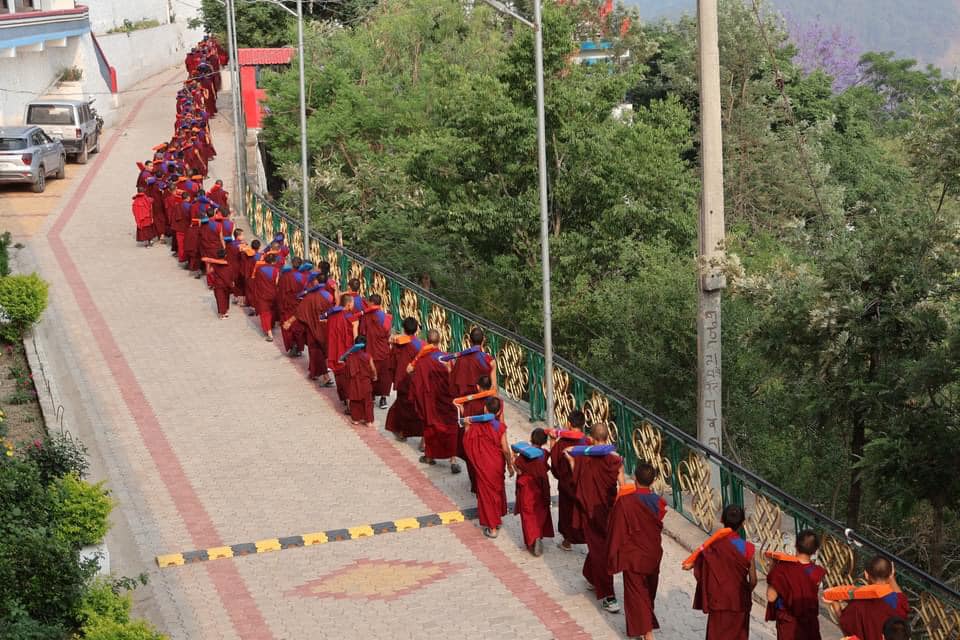
Each year at Pal Shenten Menri Monastery and Rayna Menling Nunnery on the 14th and 15th lunar days of the 4th month, the enlightened teachings of Lord Buddha Tönpa Shenrap Miwoché are read out loud. In 2025, these dates coincide with June 10th and 11th on the Western calendar. The sacred volumes containing these teachings are carried by both the ordained and laypeople as they circumambulate the temple. As a sign of respect for the sacredness of these texts, they are carried above the waist. Most often, they are carried on the shoulder. After bringing them into the temples, offerings such as incense are presented, and the text are distributed to the ordained for two full days of reading. Reading the scriptures aloud is considered one of the thirteen activities for a meaningful human life. (See previous article: https://ravencypresswood.com/2020/03/21/the-thirteen-yungdrung-bon-activities-for-a-meaningful-human-life/) For those inspired to read the words of Buddha Tönpa Shenrap on these days, The Beneficial Mantric Praise of Künsal Jamma Chenmo, The Jamma Ngak Tö, is considered a root text for the practice of Sherap Jamma that was spoken by the Buddha himself. Through the verses of praise for each of the syllables of Jamma’s root mantra, the profundity of the innumerable manifestations of Jamma is revealed. The teaching and transmission for this text has been widely shared in both the East and West.
“The mantra of the twenty-one victors, the praise of the Victorious Jamma of Bön, was spoken by the Victor Tönpa Shenrap. These twenty-one verses are, without exception, beyond cyclic existence and a completely pure practice. By reciting out loud the twenty-one praises, one will obtain immeasurable benefits. Praise to Tönpa Shenrap for revealing these twenty-one praises of the root mantra!”
Extract from The Beneficial Mantric Praise of Künsal Jamma Chenmo
His Holiness the 34th Menri Trizen, His Eminence Menri Pönlop Rinpoche, and other monks of Menri Monastery carry texts containing the words of Buddha Tönpa Shenrap.
The canon of sacred Yungdrung Bön texts is divided into two categories. The first category of texts contains the teachings of the primordial enlightened ones and Lord Buddha Tönpa Shenrap. This category is known as Ka [Tibetan: bka’] meaning “enlightened words or speech.” These texts are further divided into four primary categories: (1) Dō [Tibetan: mdo], Sutra, (2) Bum [Tibetan: ‘bum], The Hundred Thousand, (3) Gyü [Tibetan: rgyud], Tantra, and (4) Dzö [Tibetan: mdzod] The Treasury. In some catalogues, there can also be a fifth category of miscellaneous texts. Although each Yungdrung Bön temple in Tibet had a significant collection of Ka scriptures, the collections were not necessarily complete. This was especially due to repeated persecution throughout history of the Yungdrung Bön tradition which necessitated the hiding of texts. It is thought that only one complete collection survived. According to a catalogue of the Ka done by the 23rd abbot of Menri there are a total of 175 volumes. This number can vary according to various collections due to the availability of texts that could be copied, whether only main titles were counted as a volume, and so on. Regardless, the Sutra section contains texts such as the hagiography of Buddha Tönpa Shenrap, The Ritual Practice of the Medicine Buddha, The Root Scripture for Jamma, the four volumes of medical texts, and so on. The Hundred Thousand section contains the sixteen volumes of the Khams Gyé, The Unsurpassed Scripture Regarding the Eight Realms, the Yum Dō, The Heart Sutra of the Mother of the Great Vehicle, and so on. The Tantra section includes the Buddha’s teachings of the Mother Tantras, the Father Tantras, Phurba, Walsé, and so on. The Treasury section includes the teachings of dzogchen such as The Aural Transmission of Zhang Zhung.
“Gyajin, a ruler of the gods, rose from his seat and, having removed his upper robe from one of his shoulders, he set his right knee upon the ground. Having placed his hands together, he made a request of The Teacher with these words: “Free from the fault of wrongdoing, you have perfected every good quality. You are the source from which arises all happiness and exalted qualities. Good omniscient Shenrap, what should one do to practice or make use of the Essence of the Mother of the Great Vehicle?”
In response to that, Shenrap bestowed his teaching.
“Gyajin, ruler of the gods, and all you yungdrung sempa, when practicing or making use of the Essence of the Mother of the Great Vehicle, all phenomena that arise from worldly existence, that arise as precious ornaments, that arise as an appearance, that arise from emptiness, that arise from individual clarity, that arise from self-awareness, that arise from the changeless and indestructible vast expanse, or that arise from equanimity; are neither appearance nor emptiness, neither existent nor nonexistent, neither eternal nor nothingness, neither born nor negated. Why is that? All of those, in every way, are unobjectifiable. Even their self-nature is unobjectifiable. Therefore, they are primordially without a source and without a birth. They have no beginning. Abiding within the equanimity of no beginning is the unfabricated, perfected, single sphere.“
Extract from The Heart Sutra of the Mother of the Great Vehicle to be published in the forthcoming A Mala of Blazing, Wish-fulfilling Jewels: A Collection of Daily Practices of the Yungdrung Bön Religious Tradition by Raven Cypress Wood
Monks and nuns of Menri Monastery circumambulating with the scriptures of the Ka.
The second category of canonical texts is known as the Ka Ten [Tibetan: bka’ brten], Relying upon the Words. The Bön canon is referred to within Bön texts as the Ka and the Ka Ten. (This differs from the Buddhist canon which is referred to as the Kangyur and the Tengyur.) The Ka Ten includes commentaries, practices, rituals, and so on that rely upon the scriptures of the Ka for the root text. In order for a text to be included in the Ka Ten, it must undergo a rigorous and methodical analysis. There are over 300 volumes included within the Ka Ten. Some catalogues do not include texts after the 14th century which are thought to be mainly texts of the New Bön tradition. Other catalogues do include these texts as well as the collective writings of other Bön sages such as Shardza Tashi Gyaltsen. Additionally, many texts are incredibly rare and are guarded from outsiders. Therefore, few if any copies of these texts exist. Some texts are considered valid to be included in the Ka Ten by some, while being considered invalid and thus excluded by others. Titles can be included within unrelated volumes or counted individually, and so on. Even so, it is generally accepted that there are over 300 volumes of Ka Ten scriptures. These volumes include commentaries and practices based upon scriptures of the Ka such as The Practice Manual of the Aural Transmission of Zhang Zhung by Dru Gyalwa Yungdrung, scriptures of philosophy and logic, biographies, historical accounts, compositions of sacred songs, poetry, and advice for disciples, collections of liturgical texts, and so on.
I, of inferior intelligence, but for the benefit of beings and for the sake of explaining at least part of the meaning, will explain the Sky Ladder to Freedom, an Abridged Commentary of the Meaning of the Heart’s Blood of Bön, the Mantric Praise of Jamma. If one were able to explain the commentary on the merits of Jamma in great detail including the characteristics of each of the deities, it would amount to twenty-one great chapters in many volumes. ”
Extract from A Sky-Ladder to Freedom: An Abridged Commentary Regarding the Meaning of the Words of the Mantric Praise of Jamma, the Deity Who Protects From All Things composed by the great 23rd abbot of Menri Monastery His Holiness Nyima Tenzin Rinpoche
Traditionally wrapped and labeled Yungdrung Bön scriptures.
This article is made possible by generous donors who want content like this to continue to be available. Want to join the mandala of Nine Ways supporters? Follow this link https://ravencypresswood.com/donate/
Don’t want to miss a post? Scroll to the bottom and click “Follow this blog.”
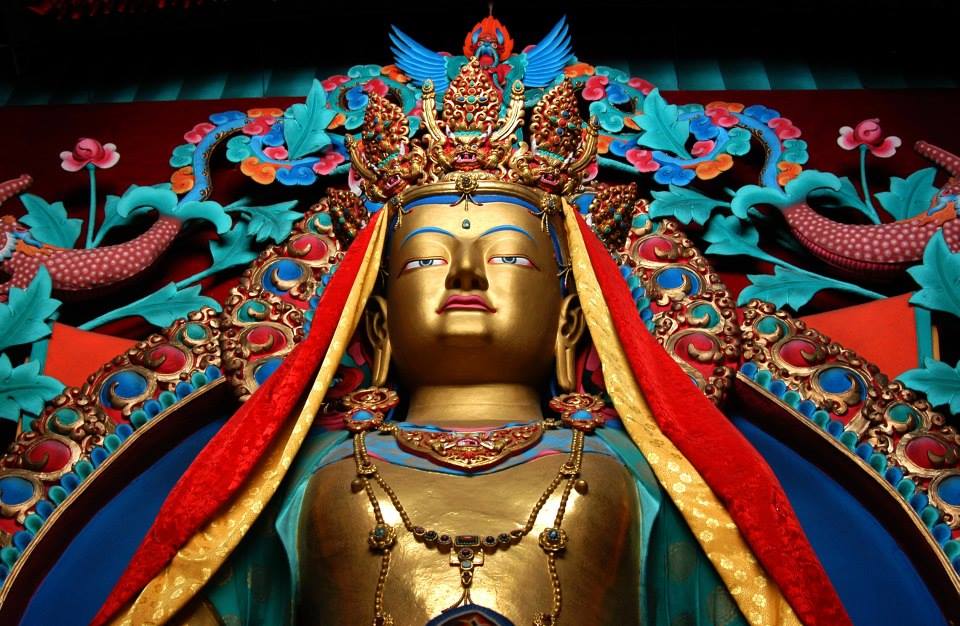
Buddha Tönpa Shenrap Miwoché. Photo credit: Raven Cypress Wood
Although in recent times the historical date of Buddha Tönpa Shenrap’s human birth has been stated to be the 15th day of the 12th month by the scholar His Eminence Yongdzin Tenzin Namdak Rinpoché, it continues to be a tradition to also celebrate the Buddha’s birth on the 15th lunar day of the 1st month which is the date that has been celebrated through countless generations. In 2025, this date coincides with March 14th on the Western calendar.
This day is an especially auspicious day to recite the following Homage to Tönpa Shenrap Miwo. Both His Eminence Yongdzin Tenzin Namdak Rinpoche and Menri Pönlop Yangtön Trinley Nyima Rinpoche recite this prayer before giving teachings.
tönpé gyal po khor wa dren pé pel, mün pé tsok nam jom jé drön mé ö, ma rik né dung sel wa men pé tso, mi yi chok tu gyur pa mu yi gyal, duk ngé dam dang tso kem mé chen pung, tsen dang pé jé den pé zi pak po, ka wa na tsok dang du lang né ni, dzé pa na tsok tar ru chin dzé ching, zik tsé zhi dang gong tsé druk nyi kyi, jam pa chen pö khor wa dröl dzé pé, shen rap trül pé ku la chak tsal lo
Homage to the Eighth Universal Guide, Sangyé Tönpa Shenrap Miwo
King of Teachers, you are a glorious guide out of cyclic existence. A lamp who dispels all darkness, you are the principal physician who clears away the torment of ignorance and illness.
Most supreme among humanity, you are a King of the Mu lineage. You are a mighty fire that dries up the ocean and swamp of the five poisons. You have the major and minor marks of a noble sage.
Having undertaken many various hardships, and having completed a diversity of activities, by means of the four kinds of valid perception and the six kinds of valid enlightened intention, through great love, you liberate from cyclic existence. I prostrate to the emanated body of the highest Shen!”
“Homage to the enlightened dimension of the All-knowing Tülku!
Namo! You are a supreme teacher, one who has gone beyond bliss, an authentic and completely enlightened being, a manifested buddha and teacher, Tönpa Shenrap Miwo. You have the wisdom of omniscience and possesses both great compassion and skillful means. You are without emotional afflictions and have cut all defilements. You possess power and clear self awareness. A marvelous emanation, You have cleared all obstructions and destroyed the door to birth into cyclic existence. You clearly know the path to release. You have gone beyond suffering and cleansed all karmic potentialities. An ordained person who guides the way, you have the thirty-two major marks and the eighty-one minor characteristics. You have the 108 exalted qualities of excellence, and knowledge of the forty letters and the sixty-one radiating lights. You possess the 80 good qualities of meditative stability, and are the source of the sixty-one wisdoms of knowledge and other qualities. These attributes are fully perfected and inexhaustible.
Your face is like the sun and moon, and you see throughout the ten directions. A hundred thousand light rays emanate from your divine body. You are adorned with ornaments which are like rainbows, and your divine body is so beautiful that one does not know how to look away. In your right hand, you hold a golden chakshing painted with a turquoise yungdrung which shows that you are lord of the three thousand-fold universe and conqueror of this world system. Your left hand holds the mudra of equipoise which shows that you have destroyed the door to birth into cyclic existence.”
Excerpt from Homage to the Enlightened Dimension of the Omniscient Tülku, Remembering the Skillful Means of His Hundred Thousand Virtuous Acts
This article is made possible by generous donors who want content like this to continue to be available. Want to join the mandala of Nine Ways supporters? Follow this link https://ravencypresswood.com/donate/
Don’t want to miss a post? Scroll to the bottom and click “Follow this blog.”





 Nine Ways