Category Archives: Tibetan Lamas

The Field of Accumulation: The Lamas of Pure Discipline, The Monastic Lineage

Tsok zhing according to Menri

In the Yungdrung Bön tradition, the place where the deities and objects of veneration are gathered is called the “Tsok Zhing”, the “Field of Accumulation”.  It is also sometimes translated as the “Field of Merit” or the “Merit Field” because what is being accumulated by paying homage and making offerings to this place is merit, or virtue.  This is the Merit Field according to the Menri Tradition from a drawing done by the great master and scholar HE Yongdzin Tenzin Namdak Rinpoche.
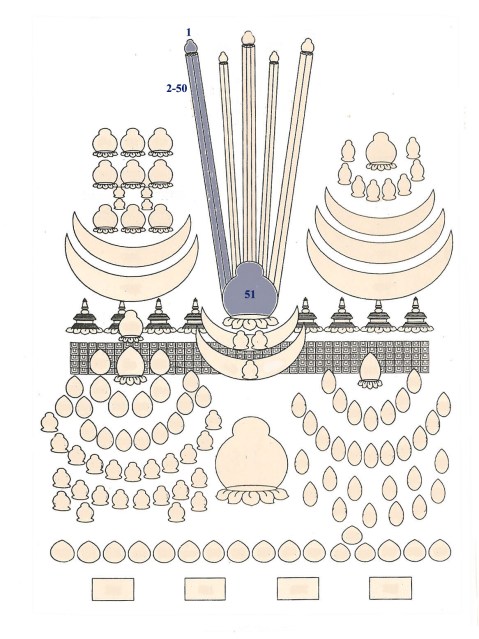
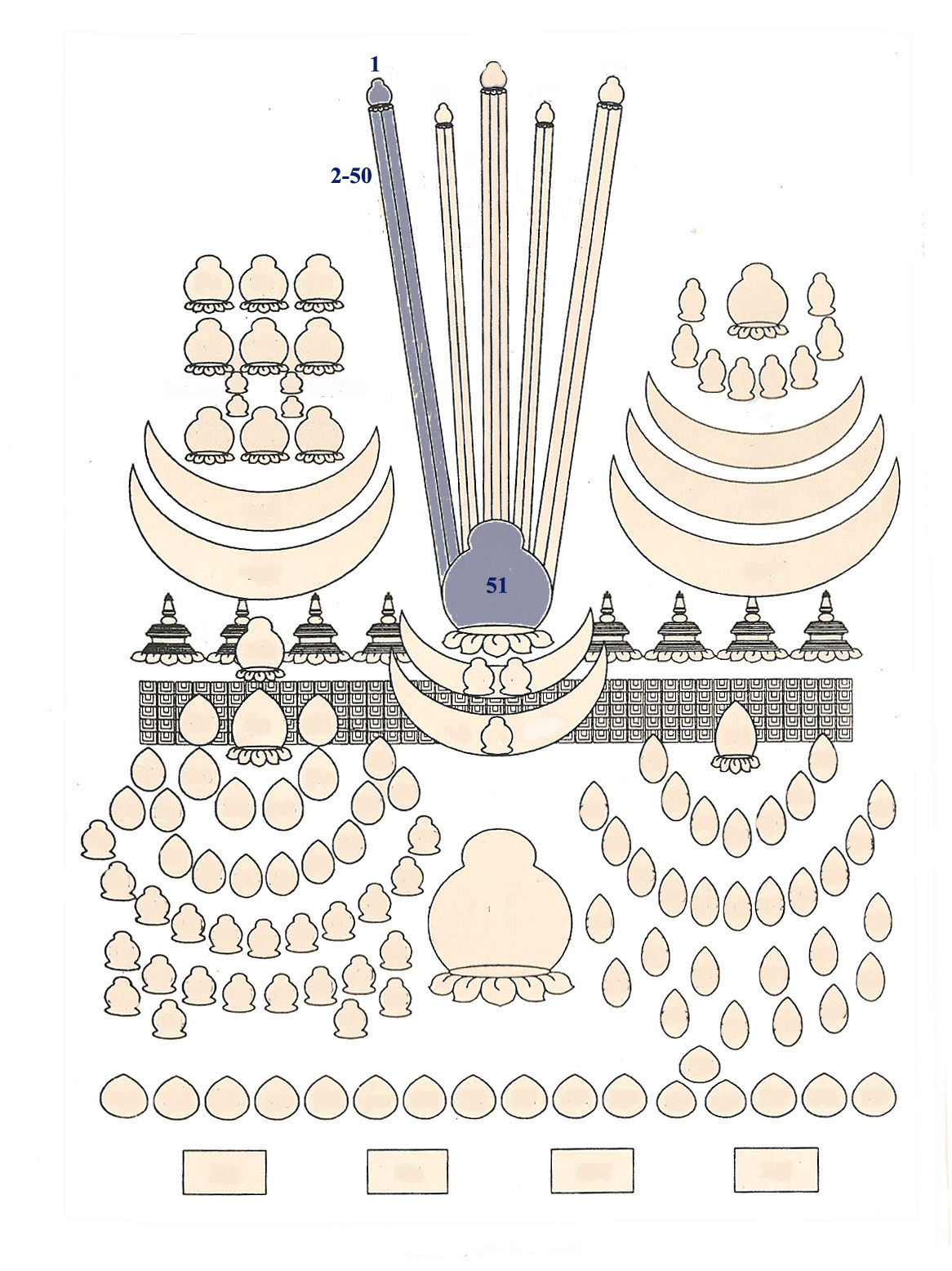
Outline guide for tsok zhing Lineage of Monks

This is the lineage of monastic discipline.  These lineage masters have all taken monk’s vows and therefore wear the appropriate clothing to distinguish them from laypeople.

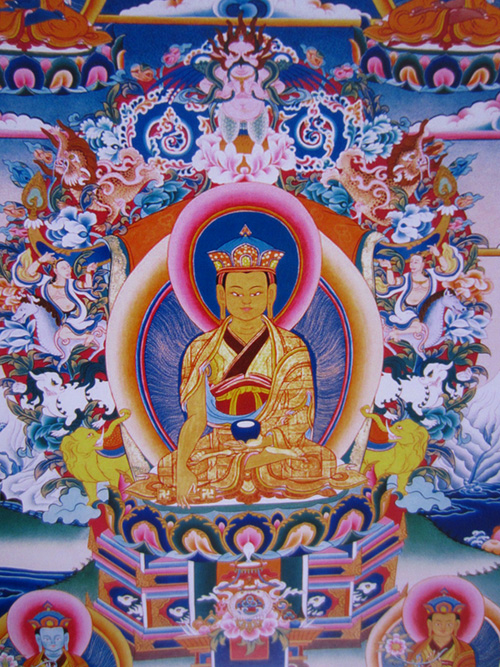
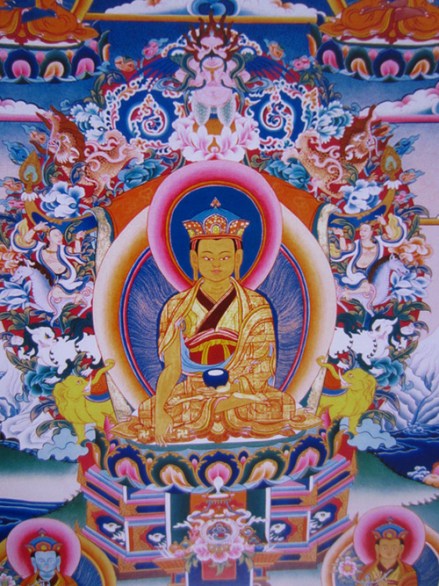
1. Tritsuk Gyalwa. 16,017 BC – 7,817 BC.  This is the name that the enlightened Lord Tönpa Shenrap Miwoche received upon taking ordination as a monk at the age of 31.  Although he was already a completely enlightened being, he showed the example of taking the path of renunciation.
Tritsuk Gyalwa clearer and smaller

Lord Tonpa Shenrap showing the path of renunciation as the monk Tritsuk Gyalwa

2. Tsukshen Gyalwa

3. Drangsong Gyalwa.  He was one of Tönpa Shenrap’s eight sons.  His birth name was Tobu Bumsang.

4. Tsukse Mawo

5. Tridé Gungdrak

6. Mucho Demdruk

7. Mutsa Trahé.  He was from the ancient land of Tazik.  He was one of The Six Translators who wrote down the words of Lord Tönpa Shenrap into their respective languages and brought them to their respective countries.

8. Tridé Öpo

9. Lhang Lhang Tsukphü

10. Dangwa Yi Ring 

11. Thukar Yeshé

12. Gung Rum Yeshe

13. Ölha Selbar

14. Dzütrul Yeshé

15. Yeshé Tsultrim

16. Yungdrung Tsultrim

17. Tsukphü Tsultrim

18. Gachu Gyalwa

19. Yagong Gyalwa

20. Détsun Rabsel

21. Jotsün Yeshé

22. Muzi Salzang.  He was a manifestation of Mucho Demdruk.  During a time of suppression, he retreated to a cave and went into a meditation of cessation, stopping all thoughts and sensations.  Hundreds of years later, Tribar Tsultrim came upon him in the cave.

23. Tribar Tsultrim.  He was the manifestation of Tsukshen Gyalwa.  He was born a prince but due to external circumstances, he was banished to Mongolia and became a slave of a local ruler.  One day, while looking after the ruler’s horses, he wandered into a cave that looked dark at the entrance but light on the inside.  Once inside the cave, he saw a figure that resembled a monk but whose hair had grown down to the ground and become entangled.  The karmic connection immediately ripened and he joyfully began prostrating and requesting that the monk awake from his meditation.  Day after day, he returned to the cave.  First, one of the monk’s eyebrows moved, then a portion of his face.  On the third day, he yelled at the slave, “Are you a human or non-human obstacle?”  The slave replied that he desired to become his disciple.  The monk agreed and gave him full ordination.  The monk in the cave was Muzi Selzang.

24. Gyalwa Tsukphü.  He was the manifestation of Tobu Bumsang, son of Lord Tönpa Shenrap.

25. Tsukphü Tsultrim.  He was the manifestation of Tsukse Mawo.

26. Lachen Mutur. He was born in 952 AD.  He was also known by his monastic name, Sherap Tsultrim.  He had many disciples, both Yungdrung Bön and Buddhist.  He gave his disciples the four signs of monastic ordination which were, Upper and lower garments, a lotus hat and a meditation mat that were all blue.  He said that if the articles could not be entirely blue, then they should have parallel seams of blue thread.  He was a manifestation of Mutsa Trahé.

27. Nyö Tsün Rinchen Gyaltsen.  He was the manifestation of Tridé Öpo.

28. Nyö Künga Tsultrim.  He was the manifestation of Lhang Lhang Tsukpü.

29. Gar Rinchen Tsukpü.  He was the manifestation of Dangwa Yi Ring

30. Trapü Tsultrim.  He was the manifestation of Tuk Kar Yeshé.

31. Nyöla Drukpa Tsultrim Yeshé.  He was the manifestation of Gang Rum Tsukpü.

32. Sheltsün Yungdrung.  He was the manifestation of Ölha Salwar.

33. Gur Tsün Yungdrung Gyaltsen.  He was the manifestation of Yeshé Tsultrim.

34. Khenlop Namnyi

35. Me’u Gongdzö Ritropa. 1038-1096.  He was the manifestation of Sertok Chejam and founder of the AH Tri Lineage of Dzogchen teachings.  (See previous post, The Saint.)

 After these lamas, the lineage splits into four different lines according to the families of Dru, Zhu, Pa and Shen. The following is the lineage of the 1st Abbot of Menri Monastery, Nyammé Sherap Gyaltsen.

 36. Métön Sherab Ödzer

37. Shentön Namkha Gyaltsen.  He was the manifestation of the great lama, Drenpa Namkha.

38. Yorpo Métön Drakpa Pal.  He was a manifestation of the great lama, Drenpa Namkha.

39. Dütsi Gyaltsen.  He was the manifestation of Lhatri of Zhang Zhung.

40. Darma Gyaltsen.  He was the manifestation of Hripa Gyermé.

41. Tsultrim Lama

42. Drogön Martön Gyallé

43. Bartang Zhangtön Sonam

44. Sumtön Lhabum

45. Shentön Drogön Lodro Gyaltsen

46. Shentön Yeshé Lodro.  In 1173, he built the temple of Darding Sergo Tramo Tsukla Khang in Darding.

47. Men Gongwa Dülwa Lodro

48. Men Gongwa Sherap Lodro

49. Gya Rongwa Yungdrung Yeshé

50. Drutön Tsultrim Yeshé.  He was the Abbot who gave vows to Nyammé Sherap Gyaltsen.

51. Nyammé Sherap Gyaltsen. 1356-1415.  He is known as the Second Buddha and was the founder and 1st abbot of Tashi Menri Monastery in Tibet.  (See previous post, Celebration of the Second Buddha.)

Gathering of Power

His Eminence Menri Lopon Thrinley Nyima Rinpoche leads the community during a tantric ritual at the Yungdrung Bon monastery of Menri in India


The Field of Accumulation: The Lineage of the Profound Guidance through AH

Tsok zhing according to Menri

In the Yungdrung Bön tradition, the place where the deities and objects of veneration are gathered is called the “Tsok Zhing”, the “Field of Accumulation”.  It is also sometimes translated as the “Field of Merit” or the “Merit Field” because what is being accumulated by paying homage and making offerings to this place is merit, or virtue.  This is the Merit Field according to the Menri Tradition from a drawing done by the great master and scholar HE Yongdzin Tenzin Namdak Rinpoche.

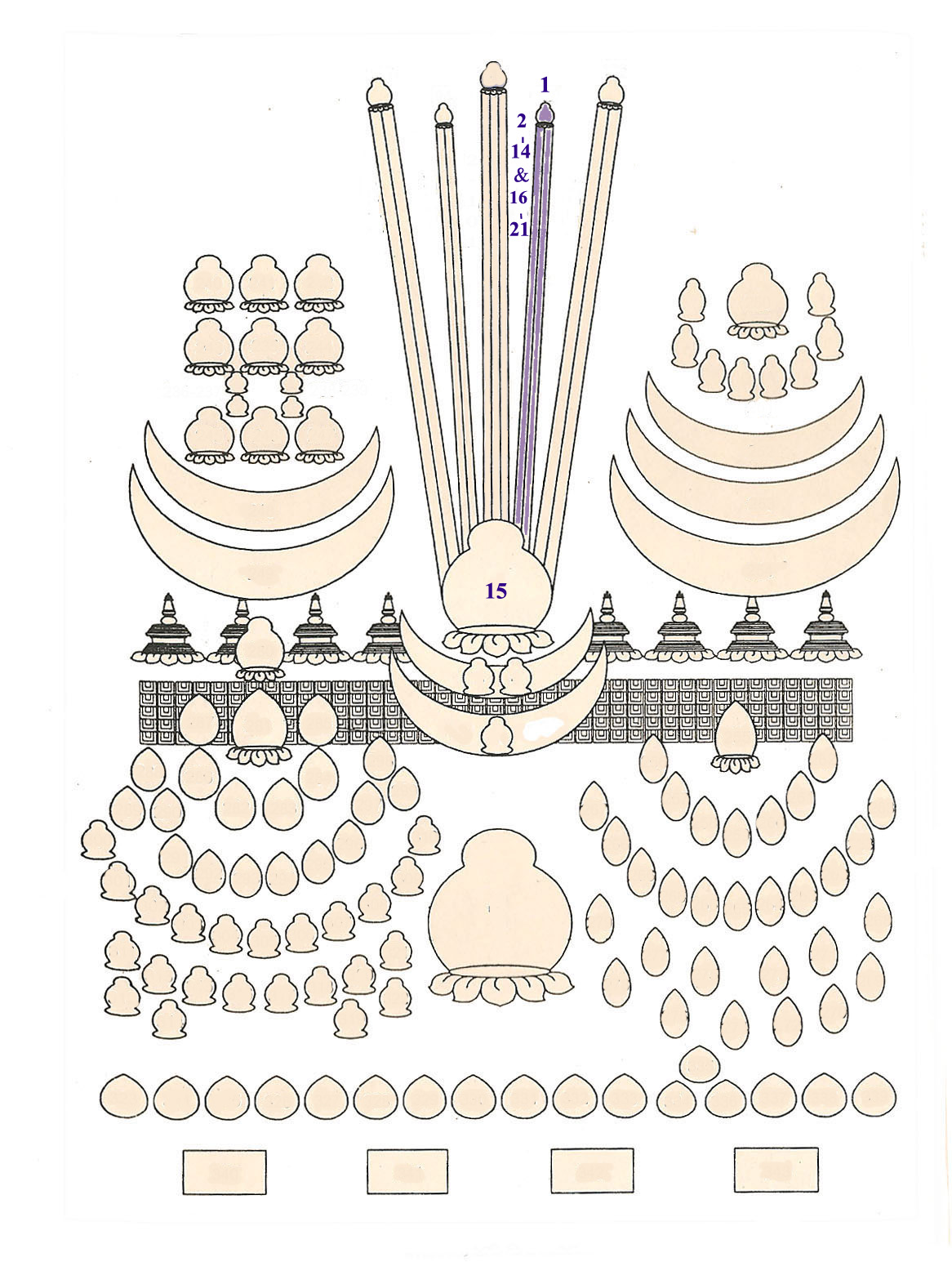
Outline guide for tsok zhing AH tri

The Lineage of the Profound Guidance through AH, also known as the AH Tri, is one of three lineages of Dzogchen teachings in the Yungdrung Bön tradition.  (See previous posts regarding The Aural Transmission of Zhang Zhung and the Renowned Three Cycles of Dzogchen.) This lineage of Dzogchen teachings was closely associated with the Dru family.  From Menri Abbot Nyammé Sherap Gyaltsen until Menri Abbot Kunzang Gyaltsen, the lineage was passed down through the abbots of Menri Monastery.

1. Founder of the lineage, Me’u Gongdzö Ritropa.  He is often referred to simply as Dampa, “The Sage” or “The Saint”. (See previous post, The Saint.)  He exhibited many signs of accomplishment such as flying through the sky and leaving his hand and foot prints in stone. Although his primary focus was upon his meditation, he also wrote a number of texts.   In addition to material he collected from other sources, he added his own gong ter, or mind treasure, to this collection.  He organized the practice of the A Tri into 80 meditation sessions.

Teacher of the Me'u Lineage, The Saint, The Supreme Gongdzo Ritropa

Founder of the AH Tri Lineage of Dzogchen teachings, The Saint, The Supreme Gongdzo Ritropa Rinpoche

2. Gomchen Barwa.  He was an unconventional person and became a great yogi.  He was known for odd and somewhat dramatic displays.  One day, Gongdzo Ritropa took Gomchen to a grassy area that was quite wet.  The lama knew that Gomchen was known to have been quite athletic in his youth.  So he told him to make a great leap. In doing so, Gomchen slipped and violently fell down.  In that very instant, he achieved spiritual realization without interruption.  Rather than taking ordination, he remained a laymen his entire life. He had many disciples and attained the rainbow body of light.

3. Kyunggom Joyung.

4. Dampa Tsulshé.

5. Drogön Yorpo Mepal.  He composed a commentary for the Guidance through AH teachings.

6.  Dutsi Gyaltsen.

7. A Zha Lodro Gyaltsen, 1198-1263.  He condensed the number of meditation sessions to 30.

8. Dru Dulwa Gyaltsen. 

9. Druchen Gyalwa Yungdrung, 1242-1290 A.D.  He was born into the Dru family in the area of Yeru Wensaka in Central Tibet.  He received his monk vows from his older brother, Dru Dulwa Rinpoche.  He was once the abbot of Yeru Wensaka Monastery which was founded by his family.  He further condensed the number of meditation sessions of the Guidance through AH to 15 and composed the fundamental practice text  “AH Tri Practice in 15 Sessions”.

10. Dru Namkha Odzer.  He was the younger brother of Dru Gyalwa Yungdrung.

11. Dru Sonam Gyaltsen, 1268-1321.  He was the nephew of Dru Gyalwa Yungdrung.

12. Dru Sonam Lodro, 1277-1341.

13. Dru Namgyal Kara

14. Rinchen Lodro.  His mother was from the Dru family.

15. Nyammé Sherap Gyaltsen, 1356-1415.  He is known as the Second Buddha and founded Tashi Menri Monastery in Tibet.  (See previous post, Celebration of the Second Buddha.)

16. Rinchen Gyaltsen.  He became abbot of Menri Monastery in 1415.

17. Namkha Yeshe.  He became abbot of Menri Monastery in 1446.

18. Kunzang Gyaltsen.  He became abbot of Menri Monastery in 1464.

19. Lodro Gyaltsen.

20. Tenpa Özer.

21. Nyima Özer.

The Field of Accumulation: The Lineage of the Three-fold Cycle of Dzogchen Proclamations

Tsok zhing according to Menri

Tsok zhing according to MenriThe Yungdrung Bon Merit Field of the Menri Tradition

In the Yungdrung Bön tradition, the place where the deities and objects of veneration are gathered is called the “Tsok Zhing”, the “Field of Accumulation”.  It is also sometimes translated as the “Field of Merit” or the “Merit Field” because what is being accumulated by paying homage and making offerings to this place is merit, or virtue.  This is the Merit Field according to the Menri Tradition from a drawing done by the great master and scholar HE Yongdzin Tenzin Namdak Rinpoche.

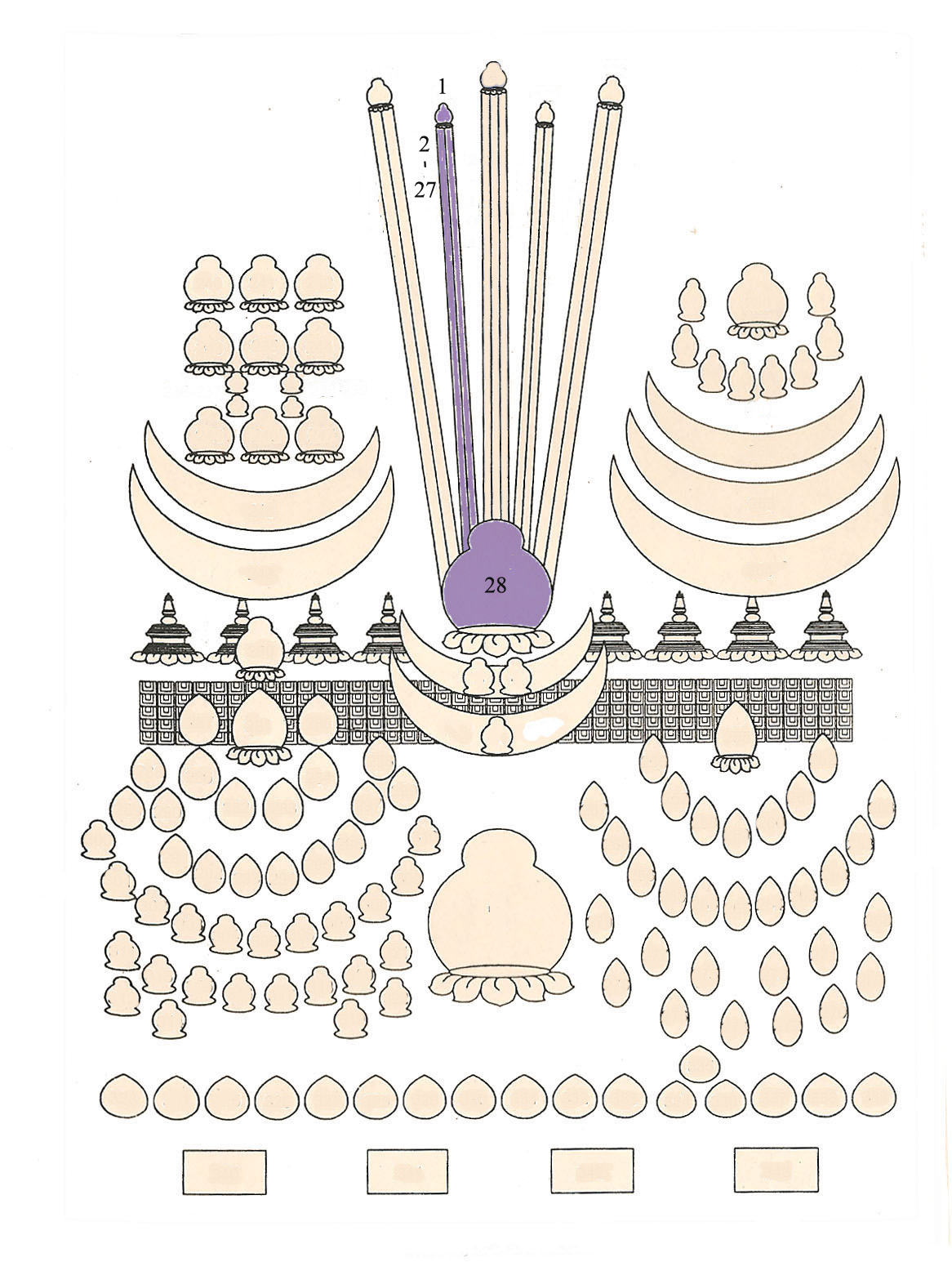
Outline guide for tsok zhing Dzogchen Drakpa Korsum

Diagram highlighting the placement of the Dzogchen Lineage within the Merit Field thangkha.

#1-28 depicts the Lineage of the Three-fold Cycle of Dzogchen Proclamations. In Tibetan, the Dzogchen Drakpa Korsum Gyü.

1. The source of the lineage, the White Light Deity, Shenlha Ökar.  He appears in the form of dzok ku, the enlightened Body of the Perfected Qualities and wears the corresponding ornaments.  His compassion is all-pervasive.

2. The Five Victorious Families who have gone beyond bliss, aka The Five Buddha Families.

3. Chimé Tsukphü.  He was the previous existence of the enlightened Lord Tönpa Shenrab Miwoche immediately before descending from heaven to earth.

4. Lhashen Yongsu Dakpa.  He was the shen of the gods who received the teachings from Chimé Tsukphü.

5. Milu Samlek.  He was the shen of the humans who received the teachings from Chime Tsukphü. He was born a prince in the ancient land of Tazik as his father, the king, was about to die.  He was known for his intelligence even as a young man.

#6-10  The Transmission of the Changeless Sages

6. Lushen Yeshé Nyingpo.  He is the shen of the lu, aka nagas, who received the teachings from Chime Tsukphü.

7. Ödzer Pakmé.  He was a master from Tazik.

8. Münpo Künsal

9. Trulshen Nangden

10. Sangwa Düpa.  He was a chief disciple of Chimé Tsukphü. He was born a prince of Tazik.

Translator and great yogi, Lama Tonggyung Tuchen

#11-14 The Transmission of the Scholarly Translators

11. Tonggyung Tüchen

12. Sé Bön Shari Uchen 

13. Chétsa Kharbu

14. Nyachen Lishu Taring.  A king and queen found a beautiful young girl in a forest. They named her Takza Liwer. Some time later, through the performance of ritual, she transformed herself into a man. However, she was still female when she wrote the root text for The Three-fold Cycle of Dzogchen Proclamations in the 8th century.  As a male, he became heir to the kingdom and was called Nyachen Lishu Taring.

15. Dé Bön Gyimtsa Machung  

16. Drupchen Chogye

17. Choza Bönmo

18. Zhotön Ngödrup Drakpa. He was an emanation of Lishu Taring and a tertön, or treasure revealer,  who rediscovered hidden texts behind a statue of Vairochana in Lhodrak that were hidden by Lishu Taring during a time of persecution for the Yungdrung Bön.

19. Gyaton Jodé

20. Zhikpo Nangseng

21. Kyotön Ngakpal

22. Yotön Lhunpal

23. Sengé Drukdra

24. Bönzhik Lodé

25. Tokden Yungrin

26. Khetsün Sherdrüp

27. Yonten Sengé

28. The Second Victor and founder of Tashi Menri Monastery, Nyammé Sherap Gyalsten 1356-1415.

Direct Descendants of the Enlightened Lord Tönpa Shenrap Miwoché

Over 18, 000 years ago, in the ancient realm of Olmo Lungrik, the founder of the Yungdrung Bön spiritual tradition was born.  The enlightened Lord Tönpa Shenrap Miwoche was born into the human realm as a prince.  He later adopted the life as a monastic in order to display the path of renunciation to his followers.  However, prior to this, he was married and had sons and daughters.  The direct descendants of this Shen lineage have continued until this very day.  Currently, there are two sons who are direct descendants of Lord Tönpa Shenrap.

Heir to the Shen Lineage, Tsukpu Namdrol Rinpoche, during a visit to the Yungdrung Bon monastery of Gangru Dargye located in Khyungpo, Tibet

Lamas of the Shen lineage

The two sons of the Shen lineage who are direct descendants of the Lord Tonpa Shenrap.

In November of 2014, His Holiness, the supreme 33rd Menri Trizen Lungtok Tenpé Nyima offered prayers to both descendants.

Shen Tsukpu Namdrol Rinpoche

Shen Tsukpu Namdrol Gyaltsen Rinpoche

prayer to Shen Tsukpu namdrol Gyaltsen written by 33 Menri trizen 2

Prayer of Stability for the Shen Heir, the Supreme Tsukpu Namdrol Gyaltsen

EMAHO!

Highest praise for the best of crown ornaments,

   Storehouse of the ocean of sutra, tantra and unsurpassed division of teachings,

From the proper understanding of the profound meaning of the innermost essence,

May the victory banner of liberation and realization be established!

Murik Shen Yungdrung Nyima

Murik Shen Yungdrung Rangdrol Nyima Rinpoche

Shen prayer to Yungdrung Nyima

Prayer for the Shen Heir, the Supreme Murik Shen Yungdrung Rangdrol Nyima

EMAHO!

Essence of the king of doctrines, the supreme Yungdrung Bön,

Distilled essence of the teachings of renunciation, transformation and liberation,

Having raised a stronghold through the dynamic energy of self-liberated awareness,

May the sun disc of realization and liberation eternally appear!

Composed by 33rd Menri Trizen Luntok Tenpé Namdak Rinpoche on the Western date of 11/26/2014

Translated by Raven Cypress Wood

The original article first appeared on the Tibetan language website Himalayan Bön and can be viewed here: http://www.himalayabon.com/article/poem/2015-01-02/518.html