Category Archives: Tibetan Culture & History
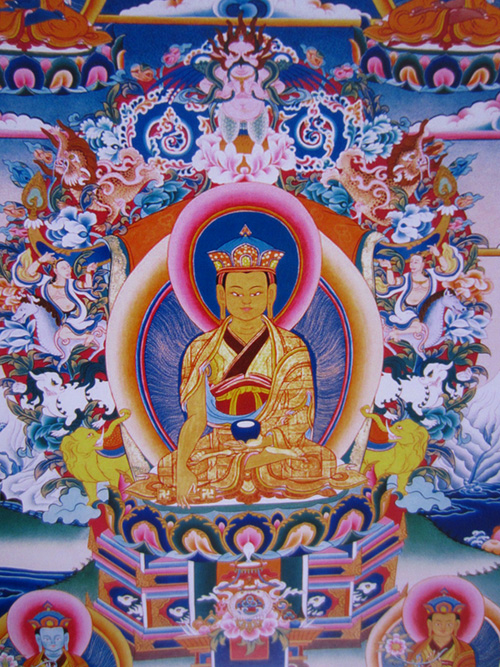
Buddha Tönpa Shenrap’s Ninth Deed: The Deed of Complete Awareness
Because Lord Tönpa Shenrap possessed complete awareness of the suffering of cyclic existence, and out of compassion for sentient beings, he demonstrated a skillful method for sentient beings to release themselves from suffering and misery and to attain liberation. This method was the path of renunciation. Being an enlightened being, he did not need to do this for himself but chose to demonstrate this path as an example for his followers of Yungdrung Bön. Therefore, at the age of 31 (according to shen years which equal 3,100 human years), he announced to his family and disciples that he would leave worldly activities behind and devote himself completely to the path of renunciation.
He removed his jewelry and silk robes, and then cut off his hair with a sword. Leaving behind all of his possessions, he went to a higher realm in order to receive ordination from a disciple of the Enlightened One of the previous eon. Returning to earth, he devoted himself to the practice of fasting, disciplined behavior, and teaching the Four Thoughts that Turn the Mind to various groups of demons. After this, he retired to the nine-storied yungdrung mountain in order to practice in solitude. Upon entering into the path of renunciation, many of his disciples abandoned him and his teachings and returned to their worldly activities. However, a few disciples of greater capacity remained with him on the mountain, and to them he taught the highest view, the Great Perfection.
Raven Cypress Wood ©All Rights Reserved. No content, in part or in whole, is allowed to be used without direct permission from the author.
Don’t want to miss a post? Scroll to the bottom and click “Follow this blog.”
The Yellow Monk’s Hat
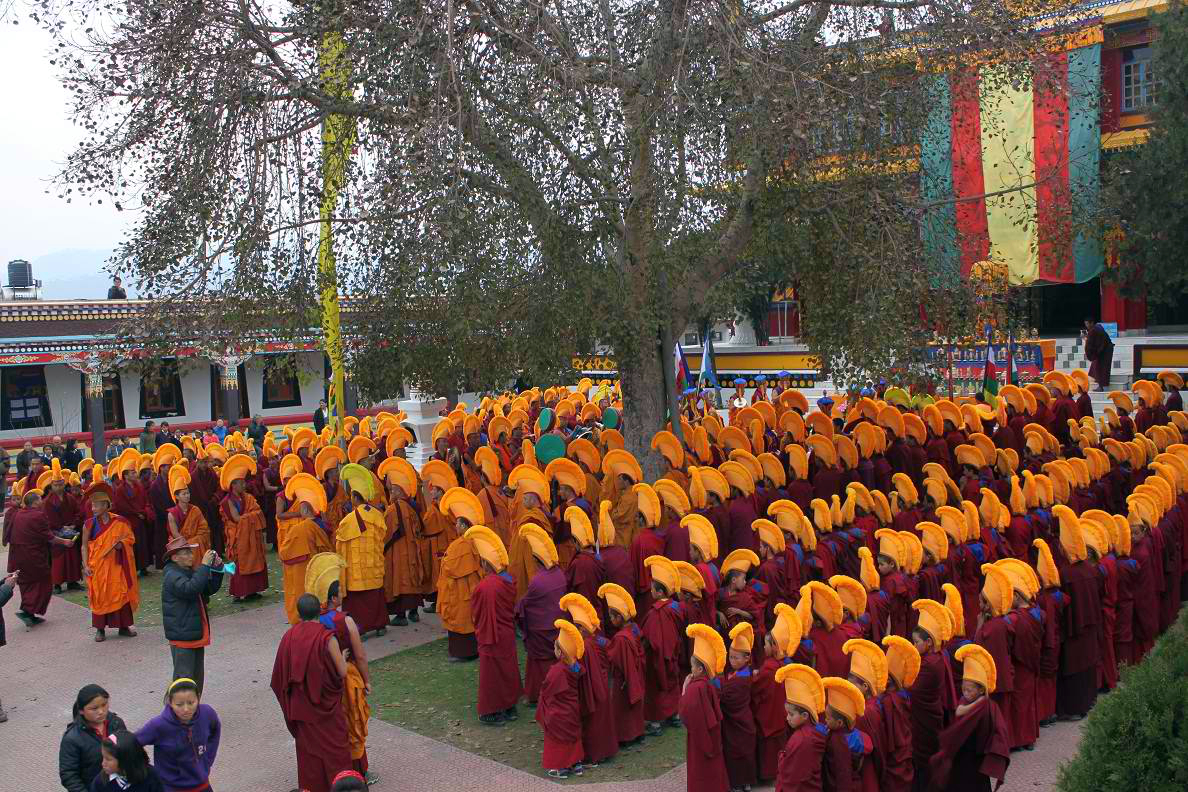
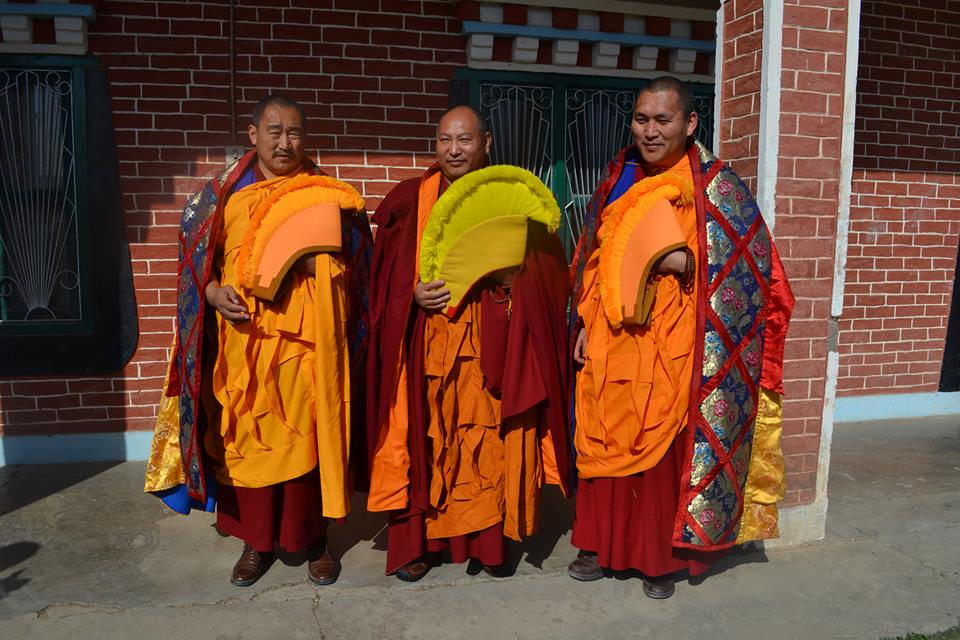
The yellow hat is one of the necessary religious articles of clothing for a monk. Each detail of the hat is symbolic. For example, “the clear, deep blue lining of the inside symbolizes the Bönku, the empty aspect of the Bön essence, the source of all phenomena. The yellow, feathered tassles along the length of the very top symbolize the Enlightened Ones of the good eon continuously being at the top of one’s head. The countless, yellow threads standing parallel symbolize hearing the limitless collection of the cycle of teachings.
The four corners beyond the ear symbolize taming those who are not trained through the four qualities which positively influence others. (These four are 1) Generosity, 2) Gentle speech, 3) Meaningful activity, and 4) Having one’s actions be consistent with one’s words.) The encircling red cord symbolizes condensing into one the many doors of Bön.”
Translated from Tibetan by Raven Cypress Wood© All Rights Reserved
Tibetan Kings of the Yarlung Dynasty & the Yungdrung Bön
At the time when the first ruler of Tibet was established, the empire of Zhang Zhung was vast, the practice of Yungdrung Bön was flourishing and the Buddhism of India founded by Shakyamuni had not yet entered the territory of Tibet. The principality of Tibet consisted of minor kingdoms but was not yet unified under the rule of a single monarch. In order to consolidate power, the leaders of central and eastern Tibet decided to appoint a sole ruler of the entire realm.
During this time, it is said that Nyatri Tsenpo, the first king of Tibet, appeared and was chosen to rule over the Tibetans. His ancestry is of other-worldy origins and has been variously detailed as descending from either the gods or the powerful theurang spirits. In either case, it is believed that his power and magnificence were greater than that of a normal human being. It was believed that he had a supernatural connection to heaven known as a mu cord, which resulted in his being able to ascend the cord and return to heaven upon his death. Therefore, he did not leave a corpse behind. This was true of all of the first seven Tibetan kings.
The Thirty-Four Tibetan Kings of the Yarlung Dynasty*
1-7 The Seven Tri of the Sky, During their reign, the teachings of Yungdrung Bön flourished. Connected with the celestial sphere by a mu cord, these kings are said to have ascended to heaven by this cord at the time when their sons were old enough to rule, thereby not leaving a corpse behind.
12-17 The Six Good Ones Upon the Earth, During their reign, lamas of the Zhang Zhung empire acted as the Royal Bön Shen
18-25 The Eight Dé of the Water, During their reign, the teachings of Dzogchen were spread
26-30 The Five Tsen of the Middle
31-34 The Four Bönpo Kings of Prosperity, During their reign, the Yungdrung Bön teachings and practices flourished under the guidance of many knowledgeable lamas.
- NyatriTsenpo: He was anointed the first king of Tibet in the Wood Mouse year of 1136 BC
- Mutri Tsenpo, son of Nyatri Tsenpo: During his reign, thirty-seven Yungdrung Bön practice centers were established. During their reign, the Yungdrung Bön teachings and practices flourished under the guidance of many knowledgeable lamas.
- Dingtri Tsenpo, son of Mutri Tsenpo
- Sotri Tsenpo, son of Tingtri Tsenpo
- Dingtri Tsenpo, son of Sotri Tsenpo
- Daktri Tsenpo, son of Dingtri Tsenpo
- Siptri Tsenpo (aka Tride Yakpo), son of Daktri Tsenpo who was enthroned at the age of thirteen.
- Drigum Tsenpo, son of Siptri Tsenpo. Although he practiced Yungdrung Bön in his youth, he feared the power of the Bön Shen and therefore began the first suppression of Yungdrung Bön. (See previous post: The Second Spread of the Yungdrung Bön in Tibet. https://ravencypresswood.com/2016/10/16/the-second-spread-of-the-yungdrung-bon-in-tibet/) Because his mu cord with heaven was severed during his battle with Lo Ngam Ta Dzi, he was the first Tibetan King to leave a corpse behind after his death.
- Lo Ngam Ta Dzi: He ruled Tibet for thirteen years after having killed the eighth Tibetan King Drigum Tsenpo, marrying the king’s daughter, and sending the rest of his family into exile.
- Pude Gung Gyal, aka Tolek Tsenpo: He was the son of the eighth Tibetan King Drigum Tsenpo who returned from exile in order to claim his right to the throne, and who invited the yogi Tong Gyung Tuchen to Tibet in order to reestablish the Yungdrung Bön teachings
- (Unnamed by most historical sources including the Dar rGyas gSal Ba’i sGron Ma. It is theorized that there was no appropriate heir immediately after the death of Pude Gung Gyal and that power was wielded for a time by a minister.)
- Ah Sholek Tsenpo, son of Tolek Tsenpo
- De Sholek, son of Ah Sholek Tsenpo
- Te Sholek, son of De Sholek
- Guru Lek, son of Te Sholek
- Drong Zherlek, son of Guru Lek
- Sho lek, son of Drong Zherlek
- Zanam Zindé, son of Sho lek
- Dé Namtrul Zhungtsen, son of Za Nam Zin Dé
- Se Nol Nam Dé, son of Dé Nam Trulzhung Tsen
- Se Nol Dé, son of Se Nol Nam Dé
- Dé Nol Nam, son of Se Nol Dé
- Dé Nolpo, son of Dé Nol Nam
- Dé Gyalpo, son of Dé Nolpo
- Dé Srintsen, son of Dé Gyalpo
- Gyal Toro Lobtsen, son of Dé Srintsen
- Tri Tsen Nam
- Tri Dra Pungtsen
- Tri Tokje Toktsen: He invited many Bön Shen to Tibet from Zhang Zhung and therefore strengthened ties between to the two countries.
- To To Ri Nyentsen: He led an army into India and claimed many small Indian territories. During his reign, the first contact was made with Indian Buddhism. However, it did not have a large impact.
- Trinyen Zungtsen
- Drong Nyen Déru
- Takri Nyenzik: He was born blind but his eyesight was restored by the royal Bön Shen of the court, Khu Bön Mangjé Lopo.
- Namri Songtsen: During his reign, Chinese influenced medicine and astrology were introduced into the country of Tibet.
*Due to political reasons, historical lists of the Tibetan Kings differ among Buddhist and Bön accounts as well as differing among texts within the same tradition. I have relied upon the Yungdrung Bön text: Dar rGyas gSal Ba’i sGron Ma written by Pa Ton Tengyal Zangpo in 1345.
Raven Cypress Wood© All Rights Reserved